Category: Broccoli

  • Fungicide Evaluation for Alternaria Head Rot (Pin Rot) of Broccoli

    Broccoli head rot, also known as pin rot, can cause significant problems, especially in fall broccoli production in Salinas Valley. Two types of head rot are affecting broccoli, including bacterial head rot and Alternaria head rot (Koike 2010). Differences between those two types can be seen at: https://ucanr.edu/blogs/blogcore/postdetail.cfm?postnum=3861. Here we focus on the Alternaria head rot, caused by the fungi Alternaria spp.

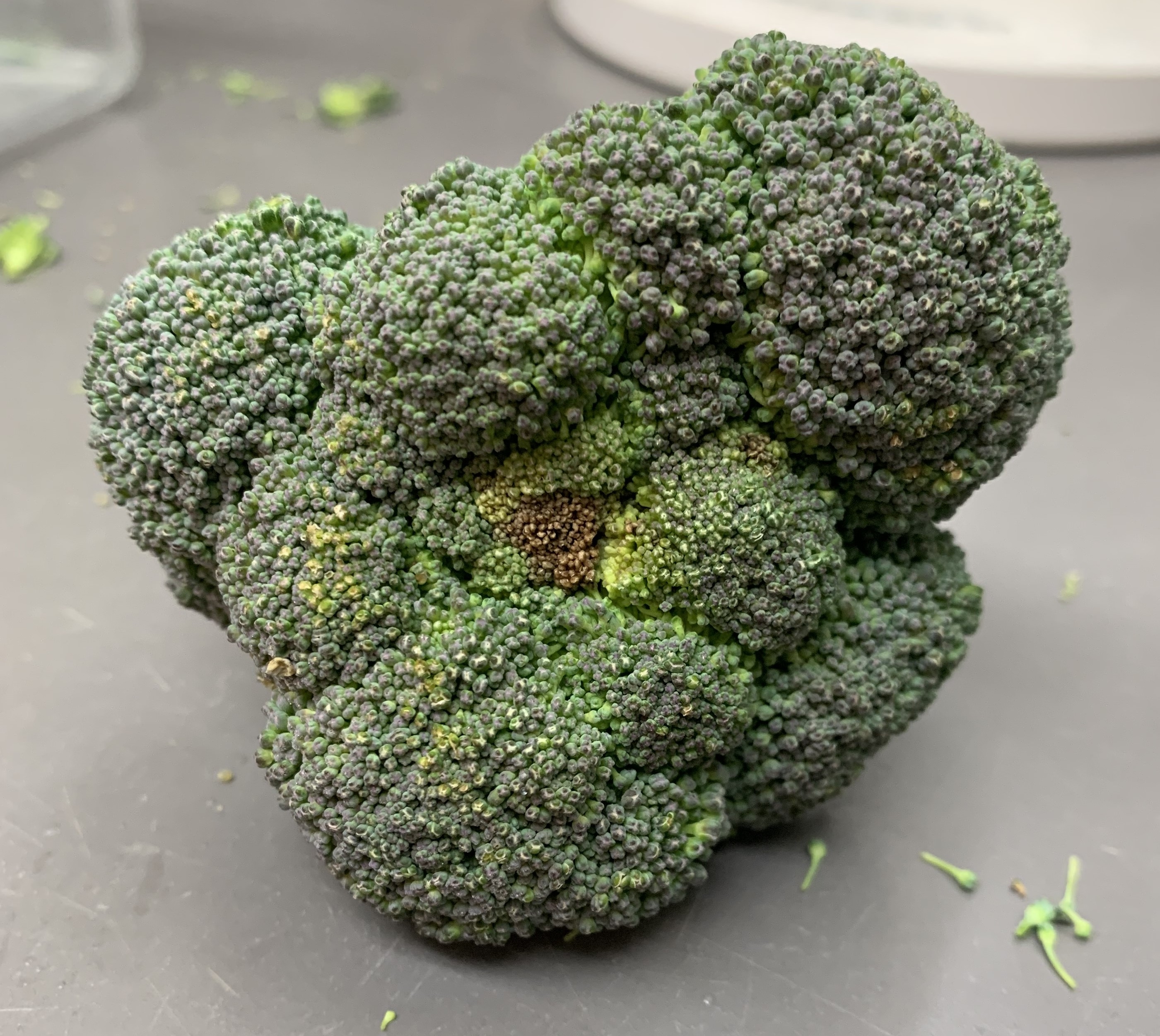
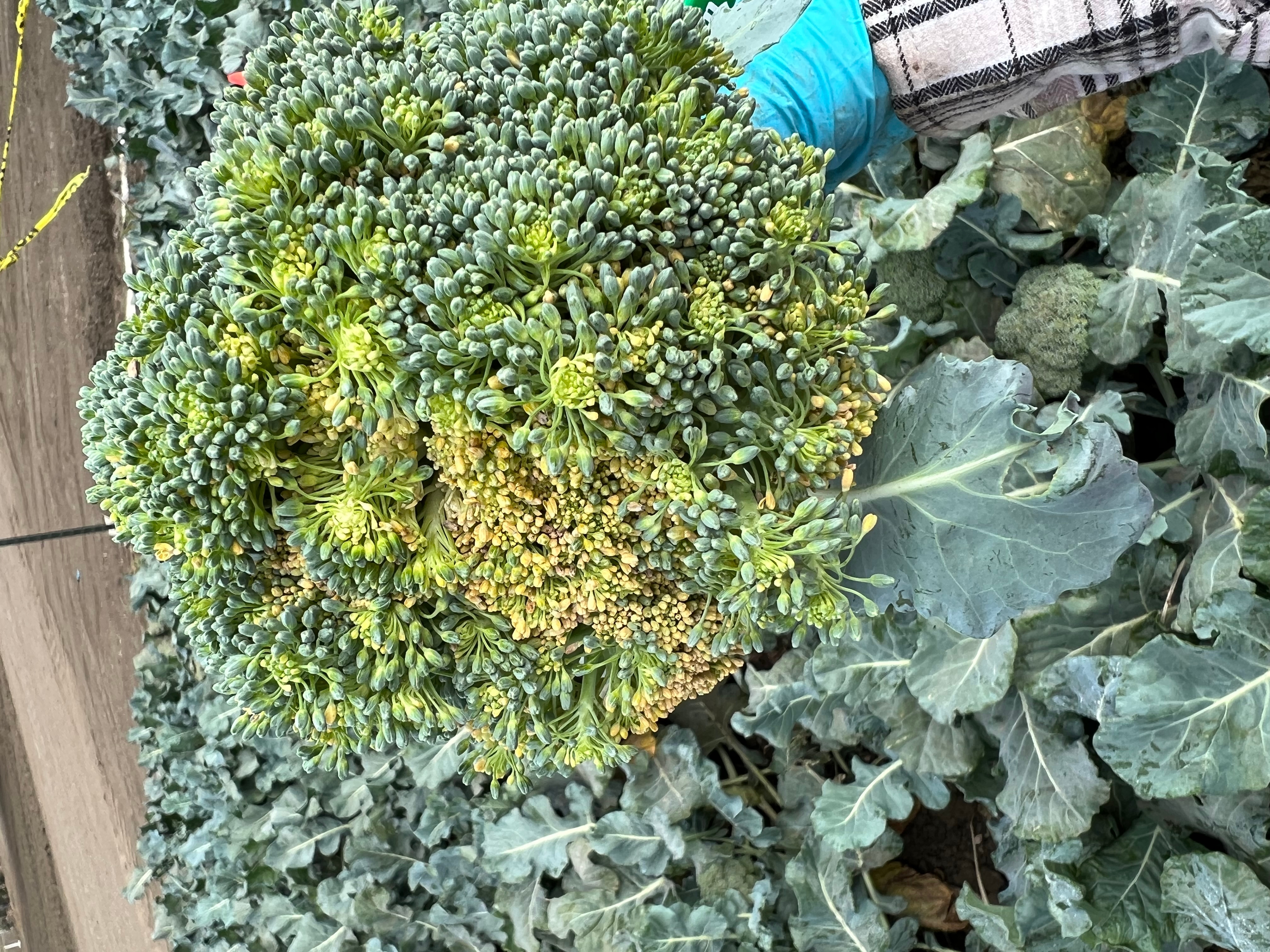
    Symptoms. All aboveground parts of broccoli are subject to infection including heads and leaves. Head rot symptoms start as yellow spots and then turn brown and black (photo 1). The infection can spread from buds to stems (photo 2). With secondary bacteria or fungi infection, further decay occurs.The initial yellow spots resemble brown bead (photo 3), a broccoli disorder that can potentially be caused by excessive temperature, poor growth, or nutrient and water deficiency. However, the brown bead doesn’t rot the stem, and no sign of fungi is presented on the buds. For uncertain cases, scraping the buds to see if the stem rot or fungi are presented is a useful technique. Leaf spot symptoms start as small yellow spots on the old leaves and then form dark, concentrical rings like a target (photo 4). The old spots may become brittle and split open or fall out as shot holes. The high number of leaf spots per plant indicates a higher disease pressure and could be a signal for fungicide application.

    Photo 1. Broccoli Alternaria head rot

    Photo 3. Broccoli brown bead

    Photo 4. Alternaria leaf spot on broccoli

    Management. The disease is favored by prolonged wetness from rain, dew, and fog. Fungal spores are spread by winds and splashing water. Cultural practices to promote leaf drying or prevent leaf wetness may reduce disease severity. Some growers have seen the benefits of using drip irrigation instead of overhead irrigation. An early harvest before rainfall could also reduce disease risk. Variety effects on disease tolerance might play a role. Lumpy broccoli heads tend to accumulate water which may further weaken the plant tissues and become a suitable target for the pathogens. Finally, there are a number of fungicides that have activity against the disease. More frequent fungicide applications should occur during wet weather which is favored by the disease.

    Research update: fungicide evaluation.

    Methods. One fungicide trial was conducted in a commercial broccoli field to test the efficacy of select fungicides for controlling broccoli head rot in 2023 fall. Broccoli ‘Centennial’ were direct seeded on 27 July, 2023. Seven fungicide treatments and a nontreated control were arranged in a randomized complete block design with four replications. Each plot consisted of two seedlines of broccoli that was 30-ft long on the 40-inch wide bed. On each side of the plot was a nontreated guard bed. Treatments were applied with a CO2-pressurized backpack sprayer calibrated to deliver 35 gpa at 30 psi using a double TeeJet 8004E flat fan nozzles. Fungicide applications were made on 4 October and 16 October. All treatments were applied with non-ionic surfactant Dyne-Amic 0.08% v/v. Alternaria head rot incidence was evaluated at harvest on 23 October, 2023. Disease incidence was expressed as the percentage of the number of plants with Alternaria head rot in the total number of plants within the middle 15 ft of the plot. Data were analyzed using analysis of variance (ANOVA) and the Tukey test to separate means at P<0.05. The total rainfall received one month before harvest was 0.57 inches. The average, minimum, and maximum temperatures were 62°F, 53°F, and 75°F, respectively.

    Results (Table 1). The disease pressure in this trial area was low with nontreated control having 14.0% head rot. However, significant differences occurred among treatments for the % Alternaria head rot. All treatments reduced % Alternaria head rot numerically, while Pydiflumetofen+Fludioxonil, Azoxystrobin, Fluxapyroxad+Pyraclostrobin, Fluopyram+Trifloxystrobin, and Pyraclostrobin had significantly lower % Alternaria head rot than nontreated control. And they had statistically similar % Alternaria head rot. These results also showed that single FRAC 11, premixes with FRAC 7 and 11, and premixes with FRAC 7 and 12 provided good control of Alternaria head rot; single FRAC 7 provided fair control of Alternaria head rot.

    Table 1. Disease incidence of Alternaria head rot at harvest

    zProduct and Rate/A in this trial: Boscalid (Endura 9 oz), Penthiopyrad (Fontelis 30 fl oz), Pydiflumetofen+ Fludioxonil (Miravis Prime 11.4 oz), Azoxystrobin (Quadris 15.5 fl oz), Fluxapyroxad+ Pyraclostrobin (Priaxor 8.2 fl oz), Fluopyram+ Trifloxystrobin (Luna Sensation 7.6 fl oz), Pyraclostrobin (Cabrio 16 oz). xNumbers in a column followed by the same letter are not significantly different based on Tukey’s significant difference test (P<0.05). yFRAC: Fungicide Resistance Action Committee. — By Yu-Chen Wang, Plant Pathology Farm Advisor, UC Cooperative Extension

    Thanks to the cooperating growers and PCAs for assisting the trial. Thanks for the technical assistance from Carlos Rodriguez.

  • Microgreens Offer Chance to Grow Vegetables for Customized Health Needs

    Broccoli is well known for its particular flavor, healthy properties, and ability to help ward off certain types of cancer, but there’s more to this veggie than the florets found in salad bars, stir fries, and your favorite broccoli cheese soup.

    As proof that good things can come in small packages, baby broccoli — one type of “microgreen” — packs as much as four times the number of cancer-fighting antioxidants as its adult counterpart. On top of that, you can grow them easily and rapidly to ensure that you have a ready supply.

    “Broccoli microgreens are young and tender greens harvested when the first true leaf appears,” explained Tianbao Yang, plant physiologist at the Agricultural Research Service’s Food Quality Laboratory in Beltsville, MD. “As compared to their mature counterparts, broccoli microgreens contain higher amounts of phytonutrients and minerals.”

    Phytonutrients are natural compounds in plants that may help prevent disease. In particular, broccoli contains large amounts of glucosinolates, which change into other chemicals during the cooking process and digestion. Studies have shown that these chemicals help reduce the development and growth of various diseases, including prostate, breast, colon, skin, bladder, and oral cancers.

    According to Yang, glucosinolates are antioxidants mainly found in cruciferous plants, such as broccoli, kale, radish, and cabbage. Epidemiologic studies suggest a correlation between consuming broccoli with reduced effects of aging, asthma, and other chronic pulmonary diseases.

    These natural health benefits are not hard to find, Yang said. “Microgreens are easy to grow and handle and have a short production cycle. They are a good choice for urban farming and controlled environment agriculture.”

    Microgreens may be an option for people who want to garden but have limited — or no — outdoor space to grow their own produce. Home gardeners can grow microgreens indoors or outside, in soil or hydroponically— that is, in water. Not only that, but broccoli microgreens may be ready to harvest in as little as a week. Information on hydroponic gardening is readily available from many online sources.

    Yang offered two simple tips that home gardeners can use to get even more healthful benefits from their baby broccoli: adding calcium salt to the hydroponic solution or applying it as a spray; and/or putting the sprouts under ultraviolet B (UVB) light for 1-2 hours per day.

    Both calcium salt and UVB induce a stress response in the plants that promotes the production of glucosinolates. The methods can be used together or separately.

    Yang believes that, in the future, it could be possible to grow personalized vegetables for specific populations with chronic diseases.

    “Fruits and vegetables are an important part of diet,” Yang said. “They are rich in a variety of phytochemicals and minerals that are beneficial to human health. Controlled environment agriculture provides the opportunity to manipulate plant growth conditions and design beneficial nutrients. Microgreens are one of the best candidates for this.” — By Scott Elliott, USDA-ARS Office of Communications

  • CA Utilized Vegetable Production Value Shows Slight Decline

    California leads the nation in vegetable production, accounting for 39% of the U.S. vegetable acreage. The value of California’s 2020 utilized vegetable production dropped 0.9% to $7.68 billion compared to 2019’s value of $7.74 billion according to the USDA National Agricultural Statistics Service, Pacific Regional Field Office.

    Despite the decrease in state’s overall total value of utilized production, crops showing an increase included broccoli, cantaloupe, lettuce of all types, sweet potatoes, and tomatoes. California fresh market and processing vegetable growers planted 939,700 acres of principal vegetable crops in 2020, down 3% from 2019. Utilized production totaled 433.8 million hundred weight up slightly from 2019’s 431.7 million hundred weight.

    USDA NASS recently posted the Vegetables 2020 Summary for vegetables grown during the 2020 crop year in California and across the U.S. The report includes survey data collected for acreage, production, marketing year price and value collected on an annual basis for 26 vegetable and melon crops in the U.S. Questionnaire content, survey timetables, and survey administration are state specific. Data are gathered by telephone interviews, mail-out/mail-back, faxed questionnaires, and personal interviews.

    Family favorites grown in California include artichokes, broccoli, carrots, garlic, tomatoes, and more. For a copy of the full report, visit Vegetables 2020 Summary. Just interested in California? Here are comments on 2020 crops where The Golden State is the largest producer. The data reflects U.S. numbers:

    Artichokes: Total production in 2020 totaled 812,000 cwt, down 15% from 2019. Planted area was estimated at 5,900 acres, down 11% from the previous year. Area harvested, at 5,800 acres, was down 12% from 2019. The value of the crop totaled $62.6 million, 16% below the previous season. Utilized production totaled 792,500 cwt, all of which was for the fresh market. In California, artichokes enjoyed a routine spring with strong supplies and steady demand. The March increase could be attributed to consumers pushing the demand for healthy vegetables. The pandemic temporarily impacted labor availability and elevated production costs, but generally favorable weather resulted in good quality and production.

    Broccoli: Total production in 2020 totaled 15.8 million cwt, down 5% from 2019. Planted area was estimated at 100,900 acres, down 4% from the previous year. Area harvested, at 100,300 acres, was also down 4% from 2019. The value of the crop totaled $875 million, 3% more than the previous year. Utilized production totaled 15.8 million cwt, of which 15.3 million cwt was for the fresh market and 25,060 tons for processing. In California, the pandemic caused a variety of changes in the marketplace. Most notably was the decreased demand from the food service industry for broccoli. Growers plowed under broccoli due to limited demand by the hospitality industry.

    Cabbage: Total production in 2020 totaled 23.7 million cwt, up 6% from 2019. Planted area was estimated at 60,600 acres, down 3% from the previous year. Area harvested, at 58,600 acres, was down 3% from 2019. The value of the crop totaled $428 million, 16% less than the previous season. Utilized production totaled 23.6 million cwt, of which 19.1 million cwt was for the fresh market and 224,241 tons for processing. In California, weather during the planting in the fall of 2019 and through head development in 2020 was favorable. No reports of pathogen impact were reported for the crop.

    Cantaloupes: Total production in 2020 totaled 11.3 million cwt, a slight increase from 2019. Planted areas was estimated at 41,000 acres, down 15% from the previous year. Area harvested, at 40,600 acres, down 15% from 2019. The value of the crop total was $296 million, an increase of 24% from previous year. The utilized production was 11.3 million cwt, all of which was for the fresh market. In California, lack of rainfall during the spring months and high temperatures during the summer months provided ideal growing conditions for cantaloupes compared to last year.

    Carrots: Total production in 2020 totaled 31.1 million cwt, down 6% from 2019. Planted area was estimated at 69,900 acres, down 4% from the previous year. Area harvested, at 69,700 acres, was down 3% from 2019. The value of the crop totaled $716 million, 7% less than the previous year. Utilized production totaled 31.1 million cwt, of which 22.3 million cwt was for the fresh market and 441,787 tons for processing. In California, the largest producing State, the carrot market was steady through the spring of the year. In the heavily farmed central portion of the Cuyama Valley, where a lot of California’s carrots are grown, the water table continued to drop in 2020.

    Cauliflower: Total production in 2020 totaled 9.0 million cwt, down 11% from 2019. Planted area was estimated at 42,500 acres, down 6% from the previous year. Area harvested, at 42,200 acres, was down 7% from 2019. The value of the crop totaled $346 million, 25% less than the previous season. Utilized production totaled 8.9 million cwt, of which 8.8 million cwt was for the fresh market and 2,724 tons for processing. In California, growers have seen dramatic movement of cauliflower during the pandemic. This year has seen generally shrinking volume from the beginning of February, and lower volume than the previous two year since the beginning of March. Pricing is below the prior two years and continues decreasing, although price has not stabilized, the rate of decrease has slowed.

    Celery: Total production in 2020 totaled 16.1 million cwt, up 2% from 2019. Planted area was estimated at 29,200 acres, up 4% from the previous year. Area harvested, at 28,800 acres, increased 2% from the previous year. The value of the crop totaled $359 million, down 24% from previous year. Utilized production for 2020 totaled 16.1 million cwt, up 2% from 2019.
    In California, growers reported higher production but price dropped considerably.

    Garlic: Total production in 2020 totaled 3.46 million cwt, down 10% from 2019. Planted area was estimated at 24,700 acres, unchanged from the previous year. Area harvested, at 24,700 acres, was unchanged from 2019. The value of the crop totaled $264 million, 12% less than the previous season. Utilized production totaled 3.46 million cwt, of which 1.21 million cwt was for the fresh market and 112,385 tons for processing. In California, producers were tempered by soil borne pathogens that reduced yield in some areas, though overall the growing season experienced favorable weather.

    Honeydew: Total production in 2020 totaled 2.36 million cwt, down 9% from 2019. Planted area was estimated at 7,600 acres, down 25% from the previous year. Area harvested, at 7,600 acres, was also down 25% from 2019. The value of the crop totaled $49.2 million, down 11% from the previous season. Utilized production totaled 2.36 million cwt, all of which was for the fresh market. In California, lack of rainfall during the spring months and high temperatures during the summer months provided ample growing conditions for honeydew compared to last year.

    Head lettuce: Total production in 2020 totaled 40.7 million cwt, down 3% from 2019. Planted area was estimated at 114,000 acres, down 2% from the previous year. Area harvested, at 112,900 acres, was down 3% from 2019. The value of the crop totaled $1.25 billion, 12% less than the previous season. Utilized production totaled 40.7 million cwt, all of which was for the fresh market. In California, the largest producing State, higher than normal temperatures in the central valley resulted in substantial losses. In the coastal region, warm weather and wildfires affected supplies later in the year. Significant occurrences of crop disease also contributed to a tight market, prompting concerns of shortages in other parts of the country. Some producers in Arizona and California have allowed some head lettuce to die in the field or to be disced under, due to decreased sales to food service companies.

    Leaf lettuce: Total production in 2020 totaled 15.6 million cwt, up 25% from 2019. Planted area was estimated at 62,900 acres, up 9% from the previous year. Area harvested, at 61,700 acres, was also up 8% from 2019. The value of the crop totaled $800 million, 23% more than the previous season. Utilized production totaled 15.6 million cwt, all of which was for the fresh market. In California, some growers did not harvest their fields during the spring in response to market conditions, but demand improved as the year progressed. There was a small amount of heat damage to the crop, but yields were up significantly from the previous year. Quality was reported to be fair and demand was strong enough to keep prices up. However, some producers in Arizona and California have allowed some leaf lettuce to die in the field or to be disced under, due to decreased sales to food service companies.

    Romaine lettuce: Total production in 2020 totaled 30.3 million cwt, up 11% from the 2019 total. Planted area was estimated at 93,100 acres, up 4% from the previous year. Area harvested, at 91,500 acres, was up 4% from 2019. The value of the crop totaled $948 million, 8% more than the previous season. Utilized production totaled 30.3 million cwt, all of which was for the fresh market. In California, there were quality issues in the late summer crop as instances of Sclerotinia and Impatiens Necrotic Spot Virus were found in the Central Coast region. In November, there was a voluntary recall of Romaine lettuce due to a potential outbreak of E.coli. Overall, yields were up from a year ago. Some producers in Arizona and California have allowed Romaine lettuce to die in the field or to be disced under, due to decreased sales to food service companies.

    Onions: Total production in 2020 totaled 75.2 million cwt, up 8% from 2019. Planted area was estimated at 134,700 acres, up 2% from the previous year. Area harvested, at 132,800 acres, was up 3% from 2019. The value of the crop totaled $878 million, 12% less than the previous year. Utilized production totaled 73.5 million cwt, of which 49.5 million cwt was for the fresh market and 1.20 million tons were for processing. In California, the largest producing State, growers reported the summer being too hot too early. Later in the summer there wasn’t enough sun when wildfires blanketed the state in smoke for months.

    Bell peppers: Total production in 2020 totaled 11.7 million cwt, up 1% from 2019. Planted area was estimated at 38,100 acres, up 1% from the previous year. Area harvested, at 37,100 acres, was up 1% from 2019. The value of the crop totaled $479 million, 11% less than the previous year. Utilized production totaled 11.7 million cwt, of which 8.22 million cwt was for the fresh market and 171,808 tons for processing. In California, the summer turned very hot early, which quickly turned bad as fires ravaged through large portions of the state burning cropland and producing a thick layer of smoke blocking the sun for months. Some producers had to divert peppers intended for fresh market to processors as state lockdowns caused stoppages in the supply chain.

    Spinach: Total production in 2020 totaled 7.23 million cwt, down 24% from 2019. Planted area was estimated at 56,800 acres, down 14% from the previous year. Area harvested, at 56,200 acres, was also down 14% from 2019. The value of the crop totaled $439 million, 28% less than the previous season. Utilized production totaled 7.23 million cwt, of which 6.45 million cwt was for the fresh market and 39,204 tons for processing. In California, the largest producing State, the coastal regions experienced damaging cold temperatures in early spring, bringing yields down below last year. Acreage decreased after some growers responded to a drop in demand by plowing under their fields.

    Sweet potatoes: Total production in 2020 totaled 30.7 million cwt, down 4% from 2019. Planted area was estimated at 158,000 acres, up 7% from the previous year. Area harvested, at 156,800 acres, was up 7% from 2019. The value of the crop totaled $726 million, 10% more than the previous season. Utilized production totaled 30.6 million cwt, of which 23.9 million cwt was for the fresh market and 331,638 tons for processing.

    Tomatoes: Total production in 2020 totaled 241 million cwt, up 1% from 2019. Planted area was estimated at 280,000 acres, down 1% from the previous year. Area harvested, estimated at 272,900 acres, was down slightly from 2019. The value of the crop totaled $1.66 billion, 4% more than the previous season. Utilized production totaled 239 million cwt, of which 12.6 million cwt was for the fresh market and 11.3 million tons for processing. In California, there were no major issues during planting, but higher than average temperatures in late spring affected early crop yields. Inconsistent weather patterns throughout the growing season prompted short interruptions in the flow of ripe tomatoes. Wildfires that raged through the state in late summer and early fall slowed the processing tomato harvest. Crop quality varied by region and disease pressure was low. Due to a lack of rain, water availability continued to be a concern.

    For more agricultural statistics, visit www.nass.usda.gov.

  • Andrew & Williamson/Good Farms, Rancho Guadalupe & Dynasty Farms Support Food Banks

    In one of the first agreements of its kind between California producers and a county food bank, two farms will begin providing, at a reasonable rate, produce to the Alameda County Community Food Bank, allowing it to provide additional much-needed fresh fruit and vegetables to a growing number of residents in need of assistance. This innovative pilot program assists the food banks while keeping the agricultural supply chain together which is critical to the future of food supply.

    “We are excited that our members have the opportunity to collaborate with like-minded organizations such as the Alameda County Food Bank who support initiatives like Food as Medicine. The COVID-19 pandemic has focused our efforts on building and supporting the health and wellbeing of our broader communities; ensuring the future of fresh produce plays a paramount role in our efforts. This partnership enables our food supply chain to stay intact and therefore our producers can continue to grow fresh produce at the same level,” says Kirti Mutakar, Chief Executive Officer of UnitedAg.

    “When the COVID-19 crisis hit, and the foodservice operations all came to a standstill overnight, millions of jobs were lost and with it the demand for our produce. To bring more diverse options to the foodbank, and at the same time recover our cost to grow and harvest it, creative solutions were necessary to take care of those who need it most and help keep agriculture whole,” says A.J. Cisney, General Manager of Rancho Guadalupe.

    Deliveries will begin May 5, with nearly 4,000 pounds of strawberries from Andrew & Williamson / Good Farms, Rancho Guadalupe, and over 7,000 crowns of broccoli from Dynasty Farms. These are foods that have not been regularly available at the food banks. The pilot program hopes to expand into the larger state network of food banks (California Association of Food Banks) and increase its product offerings. UnitedAg Member Farms are hopeful this concept will grow into something bigger.

    About UnitedAg

    Founded in 1980, UnitedAg is a multi-commodity member-owned agricultural trade association dedicated to providing innovative healthcare solutions for a strong and healthy agricultural industry. Our over 1,000 agriculture affiliated member organizations network and share creative ways to transform our ever-changing industry. UnitedAg strives to bring innovative health benefits and solutions to agribusiness by meeting our member’s employee health benefits needs, advocating for ag with lawmakers and helping members comply with regulations.  Based in Irvine, Calif., UnitedAg has offices in Oxnard, Corona, Salinas, Fresno and Santa Maria.

  • Dealing with Diamondback Moth

    It has been a couple of “rough” weeks managing the diamondback moth (DBM), Plutella xylostella (Lepidoptera: Plutellidae), in the Central Coast. Based on my conversations with some PCAs, we are managing large populations of this moth, resulting in high infestations in cole crops like broccoli and Brussel sprouts. Larvae of this insect will typically feed on the underside of the leaves, rasping the epidermis and generating this characteristic “window panning” that results on perforations later on (Fig. 1). Diamondback larvae will also feed on the plant’s growing points, floral stalks, and even on flower buds.

    Fig.1. Characteristic window panning injury from Diamondback larva feeding on a broccoli leaf.

    It seems like populations have been building up during early summer in our area, resulting in enough individuals, at this point, generating significant injury in cole crops. PCAs have been recommending spraying several different insecticides to reduce the infesting populations in affected fields, since damage has been beyond tolerable. For instance, after one of my field visits, I was able to spot affected larvae in treated fields (Fig. 2). Treatments are working, I believe we need to continue being ahead of future DMB infestations.

    Fig. 2. Dark colored insecticide-poisoned and dead Diamondback larva collected from an insecticide treated broccoli field.

    Some information to consider:


    • Scout early. If you have transplants or direct seeded seedlings, pay a visit more often. We are dealing with a large DBM population right now. There will be a high chance that those fields may ended having DMB earlier than expected during this time of the year.
    • Use of adjuvants. The waxy nature of cole crop leaves represents a challenge for insecticide deposition in the canopy. Make sure that you are using a spreader/sticker adjuvant to potentially reduce any pesticide “sliding off” from the waxy leaves.
    • Rotate pesticides. Consider using different classes of insecticides, before using different active ingredients within the same class. For instance, using an avermectin and then a diamide, instead of using chlorantraniliprole and cyantraniliprole (two different active ingredients within the diamide class) back to back. Using different modes of actions will help to delay potential issues of developing insecticide resistance in our DBM populations.