“California leads the world in leafy greens production and innovation. Industry and food safety officials are proud to partner on this in-depth scientific study protecting public health.” — CDFA Secretary Karen Ross
The U.S. Food and Drug Administration is announcing the launch of a multi-year study to improve food safety through enhanced understanding of the ecology of human pathogens in the environment that may cause foodborne illness outbreaks. This initiative is being launched with partners including the California Department of Food and Agriculture (CDFA), the University of California, Davis, Western Center for Food Safety (WCFS), and agricultural stakeholders in the Central Coast of California.
The launch of this study follows a series of E. coli O157:H7 outbreaks in recent years linked to California’s lettuce production regions, particularly the most recent three outbreaks in the fall of 2019 which collectively resulted in 188 people falling ill. In response, FDA launched an investigation, the findings of which are outlined in a report released in May 2020. The FDA also published a Leafy Green STEC Action Plan to address issues associated with leafy green Shiga toxin-producing E.coli (STEC) contamination. This new longitudinal study is included in the action plan, as well as the continuation of a similar study being conducting in the Yuma, Arizona, growing region.
A key component of the Leafy Green STEC Action Plan is the need to address knowledge gaps in order to advance prevention. The multi-year study will examine how pathogens survive and move through the environment and possibly contaminate produce through work with water quality, food safety, and agricultural experts from the Western Center for Food Safety, representatives from various agriculture industries, and members of the leafy greens industry.
Research teams will be collecting and examining samples from the environment including adjacent land, well and surface waters, soil inputs that include compost, dust and animal fecal samples.
The California Central Coast region grows a significant portion of the nation’s leafy greens. The findings from this study will contribute new knowledge on how various environmental factors may influence bacterial persistence and distribution in this region, and how those factors may impact the risk of leafy greens becoming contaminated. Results from this collaboration will lead to improved practices to prevent or mitigate food safety risks, and ultimately enhance the safety of leafy greens grown in California.
Despite the tremendous need, there are currently no preemergence herbicides that are organic-compliant. Steam injected into the soil such that the soil temperatures reach >140°F for 15-20 minutes will kill weed seed in the soil. The effect of this reduction in the seedbank viability results weed control in the treated area that persists for several weeks or months, similar to the effects of a preemergence herbicide.
Two studies were conducted at the USDA Hartnell Farm at Salinas, CA during July to September 2020. Steam was applied to raised beds using a custom-built steam injector. Prior to seeding lettuce, steam was applied in a 4-inch wide band to a depth of 3 inches deep. The steam was supplied by a SF-20 Sioux steam generator at approximately 6 to 9 PSI. Soil temperatures in the treated zone were monitored overnight with Hobo temperature monitors. Treatments tested were steam, steam plus 1% w/w peroxide, and nontreated. Treatments were replicated 4 times and arranged in a randomized complete block design. Peroxide was included as it releases heat when injected into soil, i.e., an exothermic reaction, based on the premise that it supplements the heat released by steam. Data collected were soil temperatures following steaming, weed control, hand weeding times, diseased plant counts, and lettuce yields. Trial 1 was initiated July 1 and harvested August 31, 2020. Trial 2 was initiated July 21 and harvested September 25, 2020. Soil temperature intervals >140°F in the top 4 inches of soil for steam were 88 and 67 minutes for trials 1 and 2, respectively. Similarly, soil temperatures >140°F in the steam + peroxide treatment were 76 and 80 minutes for trials 1 and 2, respectively. In trial 1 steam and steam + peroxide resulted in 90% and 92% weed control relative to the nontreated. In trial 2 steam and steam + peroxide resulted in 66% and 84% weed control, respectively. Steam alone reduced hand weeding times 22% to 35% compared to the nontreated, and steam + peroxide reduced hand weeding times 36% to 40% compared to the nontreated. There were no differences in numbers of plants with lettuce drop (Sclerotinia minor) in trial 1. Compared to the nontreated, lettuce drop incidence in trial 2 was 66% and 59% lower in steam and steam + peroxide treatments, respectively. Lettuce plant diameters in trial 1 found that lettuce grown on steamed soil was 16% larger, but there were no differences in trial 2. Lettuce plants grown on steam + peroxide treated soil were 12% and 23% larger in trials 1 and 2, respectively. There were no treatment effects on yields in either trial 1 or 2.
We are not aware of any commercial scale applicators for lettuce that apply steam in a band to the lettuce bed. However, we are working with Dr. Mark Siemens, an agricultural engineer with the University of Arizona to design a commercial scale applicator. Mark has a prototype applicator built and will be demonstrating it during the winter season in the Yuma Valley. It appears that the design for a steam applicator is not complicated and is well within the capabilities of machine shops in California to build. — By Nelly Guerra & Steven Fennimore, UC Cooperative Extension
In 2020 the incidence of Pythium wilt (caused by Pythium uncinulatum) of lettuce has increased in severity and in the number of affected fields. Pythium infections in lettuce fields have been observed frequently, but not always, occurring with INSV infection. As a result, there has been confusion distinguishing between these two diseases and the role of each of them in causing the problems in fields. In this blog we will discuss these two diseases and explain from our current state of knowledge about the disease dynamics occurring in affected fields.
INSV has been a production problem on lettuce in the Salinas and surrounding valleys for a number of years and in 2020 it continues to be a serious production issue. Pythium wilt of lettuce is a relatively new problem and was first discussed in a blog entry in October 2015 by Steve Koike (https://ucanr.edu/blogs/blogcore/postdetail.cfm?postnum=19327 ). However, in 2019 and 2020 we have seen an increase in the number of acres affected by Pythium wilt as well as the severity within fields. Given that Pythium is a relatively new problem and the extent of the problem suddenly increased, some growers and PCAs are confronting this problem for the first time. To add to the confusion, at times INSV and Pythium infections are occurring together on the same plants which has caused confusion and has led to much speculation about the role of each disease in the observed damage.
Symptoms of INSV
Issues with INSV infections on head and leaf lettuce types are not a new occurrence in the Salinas Valley and many growers and PCAs are familiar with the symptoms and the patterns of infection in the field, especially on romaine. In general, INSV on lettuce causes characteristic patterns of chlorosis and necrosis on the inner leaves of the plant, as well as significant stunting (Photo 1). However, INSV can cause significant necrosis and lesions on and at the base of the ribs of lettuce plants (Photo 2). It should be mentioned that Tomato Bushy stunt virus (TBSV) can cause symptoms that can be confused with INSV and Pythium wilt; however, lettuce dieback symptoms are always seen on the outer, older leaves and the TBSV pathogen is commonly restricted to low-lying areas along the river. In addition, head lettuce varieties and some romaine varieties are resistant to this virus. When in doubt, it is important to have a sample tested. That said, INSV is the overwhelming virus issue facing growers and PCAs in 2020.
Moderate to severe symptoms of INSV on ribs of romaine.
Viral vs. Fungal Symptoms
One important detail about lettuce plants infected with only INSV is that they do not exhibit wilting of the outer leaves of the plant or show root rot or root discoloration. This is important to note because in 2019 and 2020 we have visited many fields where the plants exhibit symptoms of INSV and have wilting older leaves. In these situations, the roots and crowns of the plants should be examined for symptoms caused by soilborne pathogens such as the wilt pathogens (Fusarium and Verticillium), Sclerotinia, and Pythium. Fusarium and Verticillium do not cause rot on the fine roots or crown. However, they always cause characteristic vascular discoloration in the taproot and crown of the plant. Distinguishing these two pathogens without a laboratory evaluation is not advised, but in general, Fusarium occurs earlier in the crop cycle and often causes a red-to-brown discoloration internally along the taproot and at the base of the crown. Symptoms of Verticillium on the above ground parts of head lettuce become obvious close to harvest; the taproot and crown tissue of infected plants have dark brown-to-black discolorations. Plants with INSV can also be infected with Sclerotinia (S. minor) which is recognized by the characteristic rotting of the crown tissue of the plant and the presence of white, cottony growth and small blacksclerotia (Photo 3). Plants infected with Sclerotinia easily break off at the soil line when you gently tug on them. However, if the plants do not break off at the soil line and do not show any rot on the crown tissue but do exhibit rot on the fine feeder roots or lower down on the taproot, then Pythium wilt is suspected and can be verified by laboratory evaluation.
Sclerotinia infection on lettuce. Note that it infects and rots crown tissue of the plant.
Biology and Symptoms of Pythium
Pythium wilt is caused by the water mold, Pythiumuncinulatum. It infects lettuce roots with swimming spores (zoospores) that move to the roots within the water film in the soil. Additionally, it produces a second type of spore (oospore) that allows the pathogen to survive in the soil in the absence of a host plant. Previous studies have reported P. uncinulatum is almost exclusively a pathogen of lettuce and does not cause disease on other vegetable crops. However, it remains unknown whether other crops may contribute to a build-up of the pathogen in the soil. Affected plants will exhibit rotting of the fine and tap roots (Photo 4) and frequently dark discoloration of the inner core of the main root (Photo 5). Symptoms of the above ground parts of the plant include stunting, yellowing, and wilting of the outer leaves and eventual death (Photo 6). Sometimes the plants have a characteristic look where the younger leaves remain upright, but the older leaves are totally wilted down to the soil (Photo 7). This year, we frequently observed fields where plants are infected with Pythium wilt but are also infected with INSV. These mixed infections are confusing and make it more difficult to distinguish what is the cause of the damage. In our experience to date, plants that show foliar symptoms of INSV and that have wilting older leaves are typically infected with both INSV and, in many cases, Pythium wilt. It should be mentioned that we have also observed plants infected with INSV as well as Fusarium.
Pythium wilt infection of fine lettuce roots.Pythium wilt infection on lettuce taproot.Mini romaine infected with Pythium wilt.Romaine infected with INSV and Pythium wilt. Note that the older leaves are wilted and lay on the ground.
The distribution of Pythium wilt in a lettuce field can be variable. Earlier in the summer, fields with this disease typically were infected along the upper or lower ends of the field indicating that the disease may be responding to irrigation or drainage issues. It is possible that there may be a difference in the level of infection between sprinkler and drip irrigated fields, but we cannot say anything definitive at this time. The disease has been found from King City to Castroville. There is a significant difference in the susceptibility of varieties. In fields with multiple leaf type lettuce, we have observed significant differences in susceptibility among varieties with red types being less susceptible (Photo 8). Recently, there have been severe losses in some fields. It is not clear as of this writing, but it is possible that the incidences occurred in response to the heat spells. It is likely that diseased plants were not able to withstand the weather stress due to damaged roots or that extra water applied to address the heat may have stimulated the development of Pythium wilt. Another observation we have made is that at times Pythium mostly infects the fine roots higher up on the root system and in other situations it is more severe at the bottom of the taproot (Photo 9) which may indicate disease initiated farther down on the root system. Given that the disease needs a period of soil saturation for the swimming spores to travel to the roots, issues with soil preparation, drainage and irrigation management may affect the severity of the disease.
Difference in susceptibility of two green leaf lettuces and a green leaf and red leaf lettuce to Pythium.Plant with Pythium wilt infection lower down on the tap root (note the plant on the top with healthy fine roots higher up and infected tip of the tap root).
Research Efforts
Daniel Hasegawa is conducting research on the epidemiology and spread of thrips and INSV. JP Dundore Arias is working on a project with the California Leafy Greens Research Board monitoring the occurrence of Pythium wilt in the Salinas Valley. He is also characterizing isolates of this disease to better understand the organism and will be conducting preliminary evaluations of the sensitivity of the organism to fungicides. Given the rapid onset of severe damage of Pythium and the continued severity of INSV, we are trying to better understand these diseases and how they may interact. We are interested in receiving samples of Pythium wilt. Please contact Richard (rifsmith@ucdavis.edu) or JP (jdundorearias@csumb.edu) to submit samples.
Authors: Richard Smith, JP Dundore Arias, Daniel Hasegawa and Steve Koike
Farm Advisor, UCCE Monterey; Plant Pathology Professor, Cal State Monterey Bay; Research Entomologist, USDA ARS; Director, TriCal Diagnostics, respectively
Currently, we are experiencing a prolonged heatwave on the central coast. Heatwaves have become a recurring phenomenon in recent years, especially in late summer. With thousands of acres of cool season vegetables in the ground, irrigation will be critical for keeping crops cool and for supplying enough moisture to meet their water needs.
Crops can be kept cool by maximizing evapotranspiration (ET). As liquid water vaporizes heat is lost from the surfaces of leaves and soil and from the surrounding air, which cools the temperature of the crop. Under water stress leaf stomates close during the hottest period of the day (11 am to 4 pm) and the temperature of the plant tissue can rise above the temperature of the surrounding air. If the temperature becomes too great leaves and other plant parts may become scorched.
Since most ranches have a limited number of wells and personnel to irrigate, it is challenging to assure that each field has adequate soil moisture to prevent plants from overheating. A good strategy is to irrigate just enough to refill the soil profile to the rooting depth of the crop.
To prioritize which fields to irrigate one should consider the water holding capacity and existing level of moisture of the soil, as well as rooting depth and developmental stage of the crop. For example, a lettuce crop near maturity with a high ET demand, growing on a sandy textured soil that feels dry, should probably be irrigated soon. A young lettuce crop with a low ET demand, growing on silt loam soil that still feels moist, likely can be irrigated later without suffering heat damage.
Another consideration for prioritizing which fields to irrigate are recent field operations. A recently transplanted vegetable field may need to be irrigated first but may not need a long irrigation to re-saturate the soil around the roots. A crop that was recently cultivated may have pruned roots, and therefore may need water soon to prevent wilting under these hot conditions.
Table 1 estimates how much moisture is available to a vegetable crop between saturation and moderately dry or dry conditions for different soil textures. This table can be a guide for how much water should be applied to re-saturate the soil. For example, applying 0.42 inches per foot of rooting depth will bring a moderately dry silty clay soil back to saturation. Applying more than this amount of water will likely over-saturate the root zone.
Table 1. Estimated plant-available moisture for different textured soils.
Also, estimating the cumulative crop ET since the last irrigation can guide how long to irrigate. Reference ET values between south Salinas and Soledad during this hot spell have been as high as 0.27 inches per day. If the crop has a full canopy, 0.25 to 0.3 inches for each day since the last irrigation would be a good rule of thumb for how much water to apply as long as the total does not exceed the water holding capacity of the soil.
Lastly, one needs to convert the amount of water to apply to an irrigation run-time. To make this calculation one needs to know the application rate of the irrigation system. For impact sprinklers, the application rate can be estimated using Tables 2-4. Note that pressure and nozzle size have a significant effect on application rate. For drip, the irrigation time will depend on the tape discharge rate and pressure, as well as the spacing of drip lines. Assuming that the drip system is operated at the pressure recommended by the manufacturer (usually 8 to 10 psi) one can use Table 5 to approximate the application rate. For example, for one drip line of medium flow tape (0.45 gpm/100 ft) on 40- inch wide beds the application rate of the drip system is 0.13 inches per hour. If there are several drip lines per bed then multiply the application rate in the table by the number of drip lines.
The appropriate run-time can be estimated by dividing the amount of water to apply by the application rate of the irrigation system. For example, to apply 0.6 inches of water to a field with drip using medium flow tape the water would need to run for 4.6 hours:
Hours to operate the irrigation system = 0.6 inches of water/0.13 inches per hour = 4.6 hours
Summary
Irrigating the right amount of time to bring the soil back to saturation will maximize crop ET during these hot days, and hopefully prevent any heat damage to crops. Also, consider visiting the CropManage website (cropmanage.ucanr.edu) for further guidance on scheduling irrigations. This online tool can assist growers in quickly estimating how much water to apply to meet crop water needs.
Table 2. Sprinkler application rate for varying pressures and nozzle diameters for a solid set spacing of 30 × 30 feet (Rainbird 20JH).
Table 3. Sprinkler application rate for varying pressures and nozzle diameters for a solid set spacing of 30 × 33.3 feet (Rainbird 20JH).
Table 4. Sprinkler application rate for varying pressures and nozzle diameters for a solid set spacing of 30 × 40 feet (Rainbird 20JH).
Table 5. Drip application rates for varying bed widths and tape flow rates estimated for 1 drip line per bed. Multiply the rate in the table by the number of drip lines per bed to determine the actual application rate. (For 3 drip lines on an 80-inch bed multiply by 3)
“— By Michael Cahn, UCCE Farm Advisor, Monterey County”
Answering the nation’s call for enhanced food safety measures, Western Growers (WG) has developed a website to facilitate changes to the Leafy Greens Marketing Agreement (LGMA)-approved Leafy Green Food Safety Guidelines: www.leafygreenguidance.com. The interactive website now easily allows the public to participate in routine discussions and process amendments that will ensure continuous improvement of the leafy green food safety preventive practices.
“As an industry leader in produce safety, Western Growers remains committed to driving the evolution of guidance for preventive food safety programs in leafy greens as well as other commodities,” said Sonia Salas, WG’s assistant vice president of food safety, science & technology. “In a time where COVID-19 is top of mind for all industries, Western Growers is committed to ensuring that the important work of improving food safety continues with broad agricultural industry engagement and complete transparency among leafy green growers. This website will ensure access to that process.”
In 2007 following the E. coli O157:H7 spinach outbreak, WG, working with the leafy green industry, facilitated the development of written best practices for the safe production and harvest of leafy greens, currently known as the Commodity Specific Food Safety Guidelines for the Production and Harvest of Lettuce and Leafy Greens (Leafy Green Guidelines). These guidelines were subsequently adopted by both the California and Arizona LGMAs as the best practices for leafy green growers selling to handlers in their states. Since its first publication, the Leafy Green Guidelines have been updated many times as new research has become available and practices have evolved. This website provides an avenue to systemically amend these best practices and allows users to easily submit comments. A new comment period opens in April 2020.
In addition to simplifying the Leafy Green Food Safety Guidelines amendment process, the website also offers the following:
Master Calendar: calendar that outlines the comment period and deadlines for issues related to agricultural water, field sanitation, soil amendments and concentrated animal feeding operations; entire amendment process at a glance
LGMA Final Document: commodity-specific food safety guidelines for the production and harvest of lettuce and leafy greens
Leafy Green Info Sheet: document explaining how the Leafy Green Food Safety Guidelines amendment process works and the importance of continual incorporation of new science and information
About Western Growers: Founded in 1926, Western Growers represents local and regional family farmers growing fresh produce in Arizona, California, Colorado and New Mexico. Our members and their workers provide half the nation’s fresh fruits, vegetables and tree nuts, including half of America’s fresh organic produce. For generations we have provided variety and healthy choices to consumers. Connect with and learn more about Western Growers on our Twitter and Facebook.
The California Leafy Greens Marketing Agreement (LGMA) is currently accepting sign-up forms from new signatories for the2020/21 fiscal year. Since 2007, handlers of California lettuce, spinach and other leafy greens have protected public health by establishing a culture of food safety on the farm through the California Leafy Greens Marketing Agreement. Buyers of leafy green products look for LGMA certification to see if their suppliers are certified LGMA members; additionally, both Canada and Mexico have regulations in place allowing imports of leafy greens only from LGMA-certified companies.
To participate in the LGMA program from April 1, 2020 – March 31, 2021, handlers must submit a sign-up form to the LGMA office by end of day on April 1, 2020. The form can be downloaded by clicking here.
The LGMA has two sign-up periods: at the beginning of its fiscal year (deadline of April 1st) and halfway through its fiscal year (deadline of October 1st). The April 1st deadline is timely for companies in the Salinas region, while the October 1st deadline accommodates handlers in other regions of the state like the Imperial and San Joaquin Valleys. Current members do not need to sign up again.
Handlers who would like to join the LGMA should verify that they meet the LGMA’s definition of a handler and that they handle at least one of the leafy green products covered under the LGMA program. The LGMA defines a handler as: Any person or entity that handles, processes, ships, or distributes leafy green product for market, whether as owner, agent, employee, broker, or otherwise. This definition does not include retailers or companies that grow, but do not market product.
The leafy green products covered by the LGMA are:
arugula, chard, iceberg lettuce, spinach, baby leaf lettuce, endive, kale, spring mix, butter lettuce, escarole, red leaf lettuce, cabbage, green leaf lettuce, and romaine lettuce
Prospective members should contact Amarachi Okemiri, Member Services + LGMA Tech Director to receive the Membership Information sheet before filling out and returning the sign-up form. Once enrolled in the program, members are subject to compliance audits conducted by California Department of Food and Agriculture inspectors. The goal of these audits is to verify that handlers and their growers comply with the accepted Food Safety Practices of the LGMA. New LGMA Members will be subject to assessment payments on all California grown leafy greens handled by the company during the period of April 1, 2020 – March 31, 2021.
Contact Amarachi Okemiri, Member Services + LGMA Tech Director, or Brooke Palmer, Executive Assistant, with any questions. Email: amarachi@lgma.ca.gov or brooke@lgma.ca.gov. Call the office at 916-441-1240.
Weed control in lettuce and other crops is a key issue this time of year. Purslane is particularly problematic and is adapted to warm conditions and can grow very rapidly especially during July and August. At times growers and PCA’s are disappointed with the efficacy of Kerb on this weed. Kerb is effective in controlling purslane but it is readily leached and, if applied at planting, it can be moved below the zone of germinating weed seeds with the germination water. For instance, 6-8 hours of sprinkler water (1.5 to 2.0 inches) are commonly applied in the first germination water which can move the Kerb below the upper 0.5 inch of soil which is the zone where the weed seeds germinate; the movement of Kerb with the germination water is particularly problematic on sandy soils. Prefar does not leach and thus provides most of the purslane control when the two materials are tank mixed (Figure 1). However, Prefar does not control shepherd’s purse or nightshades which can also be problematic in lettuce fields. Therefore, it would be advantageous to optimize the efficacy of Kerb to maximize the control of purslane as well as other weeds.
In the desert, the use of delayed applications of Kerb has been used for many years. Due to the large amounts of water that are applied in their hot conditions, Kerb is applied in the 2nd or 3rd germination water, approximately 3-5 days following the first germination water, just prior to the emergence of the lettuce seedlings. This technique can also be utilized in the Salinas Valley. We have looked at this technique over the years and have found it to improve the efficacy of Kerb (Figure 2). These data illustrate the loss of control of purslane by Kerb when applied before the 1st germination water, as well as the improvement in efficacy that results when applied following the 1st germination water. It also illustrates the role that Prefar plays in the control of purslane when the efficacy of Kerb is lost by leaching. It should be mentioned that the label states that the maximum amount of Kerb that can be applied through the sprinklers is 2.5 pints/A and the amount used in this trial was for experimental purposes only. Clearly there is benefit from applying the Kerb later in the 2nd or 3rd germination water, however, we observed that applying the Kerb at the end of the 1st germination water also provided improved efficacy of Kerb. Clearly, anything that helps to keep the Kerb in the top 0.5 inch of soil improves its efficacy.
Here are some details that need to be considered regarding the application of Kerb later in the germination phase of the crop: There is a need to use an injection pump and tank. We have typically used a tank with a circulating mechanism to keep the Kerb in suspension while the injection was occurring. The material needs to be injected into the mainline in a location where proper mixing can occur before it begins to flow down the laterals. The most difficult issue that growers face is the compatibility of the injection with surrounding crops. This is probably the greatest challenge and must be carefully thought through before attempting an application.
Another idea that we explored last year was the use of an additive to help retain the Kerb in the upper portion of the soil where it can be most active. However, we did not see improved efficacy in two 2018 trials (data not shown).
Many growers now are now using drip irrigation to germinate lettuce. Grower may apply the same amount of water with drip germination as with sprinklers, but the movement of the water is different which affects a surface applied material differently. With this method of germination, there are a couple of interesting dynamics that occur: 1) Kerb is not pushed too deep by this germination method and effectively reduces weed populations whether injected into the germ water (currently not a registered method of application) or sprayed on the soil surface and activated by the drip germination water (Table 1); and 2) fewer weeds emerge with drip germination than with sprinklers, regardless of the herbicide program.
Figure 1. On left: Kerb at 3.5 pints/A applied at planting; On right Kerb at 3.5 pints/A + Prefar at 1.0 gallon/A applied at planting. The main weed is common purslane which was not controlled by Kerb because it was pushed below the zone of germinating weed seeds by the germination water
Figure 2. Efficacy of Kerb applied at 3.5 pints/A at planting or in the 3rd germination water; crop was romaine. Note that applying the Kerb after the first heavy application of germination water greatly improved its effectiveness.
When cabbage looper moth larvae infest a field, sustainable growers will often try to control the pests by releasing large numbers of predators, such as ladybugs. That way they can avoid spraying expensive and environmentally harmful insecticides.
Still, farmers have mixed results when they supplement their fields with beetles or other predators.
A new study of cabbage crops in New York – a state industry worth close to $60 million in 2017, according to the USDA – reports for the first time that the effectiveness of releasing natural enemies to combat pests depends on the landscape surrounding the field.
“The landscape context can inform how to better use this strategy in field conditions,” said Ricardo Perez-Alvarez, the paper’s first author and a graduate student in the lab of co-author Katja Poveda, associate professor of entomology. Brian Nault, an entomology professor at Cornell AgriTech, is also a co-author.
The paper, “Effectiveness of Augmentative Biological Control Depends on Landscape Context,” was published June 17 in the journal Nature Scientific Reports. It showed that releasing pest predators led to fewer pests, less plant damage and increased crop biomass on farms surrounded by more forest and natural areas and less agricultural land. But on farms predominantly surrounded by other farms, the reverse was true, with more pests and plant damage and reduced crop biomass in spite of added predators.
The reasons behind this phenomenon are complex, and depend on interactions between local predators and those that are added, which can vary on a case-by-case basis. The predators in primarily agricultural landscapes may be less diverse and may then attack the same pests, increasing the potential for competition and negative interactions. Predators also have fewer microhabitats (small-scale physical requirements of an organism or a community of organisms), which can intensify the competition for space and diet.
Simple agricultural landscapes can also increase the likelihood that one predator species will prey on another predator species. For example, smaller predators become vulnerable to larger predators, which then affects the collective effect of multiple predators on pest control.
“Landscape composition influences how predator species interact with one another and thereby mediates the potential consequences for biological pest control,” Perez-Alvarez said.
The study focused on cabbage crops and three cabbage pests (the larvae of the cabbage white butterfly, the diamondback moth and the cabbage looper moth), and their natural enemies. In central New York, there are 156 native predator species and seven parasitoid wasps that prey on these pests. Among these, two generalist predators are commonly used to augment fields with additional pest enemies: the spined soldier bug and the convergent ladybird beetle. These two generally complement each other well because soldier bugs feed on larvae and ladybugs feed on eggs.
In the study, the researchers set up experimental plots on 11 cabbage farms in central New York, which together represented a range of surrounding landscapes from agricultural lands to natural areas.
Each farm had two cabbage plots: one that was left alone so it was exposed to the naturally occurring predators, and another where soldier bugs and ladybugs were added. The researchers then collected a wide range of data that included surveys of pest and predator abundances, plant damage and final crop yields. They also conducted lab experiments to better understand the relationships between predators and how those interactions impact pest control.
Given how complex these predator-predator and predator-pest interactions and their relationships to pest control can be, more study is needed to make specific recommendation to growers. Still, the paper is a first step toward understanding how landscapes influence the effects of augmenting farms with predators for pest control.
The study was funded by National Institute of Food and Agriculture at the United States Department of Agriculture.
Although the Center for Disease Control announced on January 9, 2019 that the recent e-coli outbreak is over, there is another part of the story that doesn’t seem to be getting allot of traction. During the investigation the FDA made the comment that based on the spread of the traceback it’s highly unlikely that it originated from a single farm. I don’t have any first-hand knowledge that hasn’t already been publicly disclosed, but I do understand how the produce supply chain works. A single source could be a possible scenario when you think through how one farm can go to multiple processors and terminal markets. There are two troubling allegations floating around about this outbreak that need put to rest.
First, that the only grower/shipper implicated so far was not a member of the California Leafy Greens Marketing Agreement (LGMA). The LGMA recently sent out a statement confirming that is accurate so that’s not up for further debate. Since it was formed in 2006 the backbone of the LGMA has been that members voluntarily subject themselves to minimum food safety standards verified through unannounced inspections conducted by California Department of Public Health (CDPH) inspectors. The LGMA was never intended to stop all recalls but that through a HACCP type approach to continuously reduce risk starting at the field. Since the marketing agreement was voluntary the failsafe were the commitments made by some of the largest retailers and food service distributors at the time that their buy side would support LGMA members for West Coast sourced leafy greens.
Being a member of the LGMA is not cheap. One recent study suggested that the incremental cost per acre since 2006 to abide by all of the minimum food safety standards and inspections that come with LGMA is close to $180 per acre. A non-LGMA farm can have the most stringent standards in the industry on paper. However, without incurring the incremental costs associated with maintaining “trust but verify” standards, supported by unannounced site audits they would have a substantial cost advantage over LGMA members.
The second issue is how a non-LGMA member can get their leafy greens into the retail and food service channels. Just prior to the outbreak the romaine supply was extremely tight in many areas which was reflected in the USDA Mostly Market reports for romaine. Maybe it’s just coincidence, or maybe there is a hole in the process that the buy side needs to step up and address, especially when the industry is short. This is the second recall situation I am aware of in the past three years where the trace back implicated a California shipper/handler that was not an LGMA member.
I’m not suggesting that somehow LGMA members have a safer product than anyone else. I am suggesting that we owe it to ourselves as an industry and to consumers to ensure that everyone is at least working from the same floor. How high someone wants to go above that floor is an individual business decision. The LGMA may not be the perfect solution to maintaining minimum standards on an industry wide basis, but right now it’s the only solution.
If the buy side isn’t going to step up and support LGMA for leafy greens sourced from the West Coast, especially when supplies are tight, then maybe it’s time to rethink it. When everyone is allowed to revert back to their own standards, then we really have no standards which is where we were in 2006.
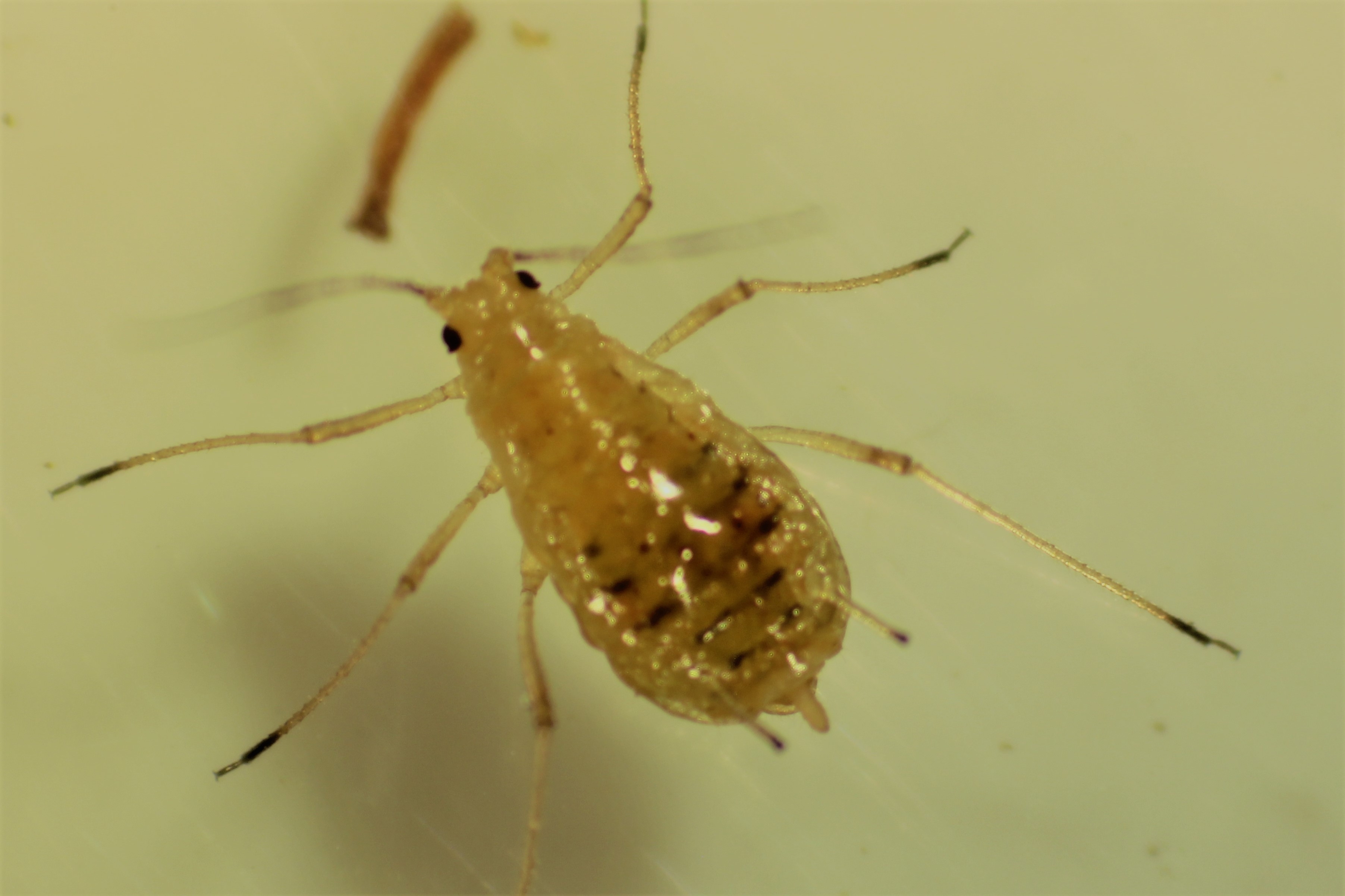
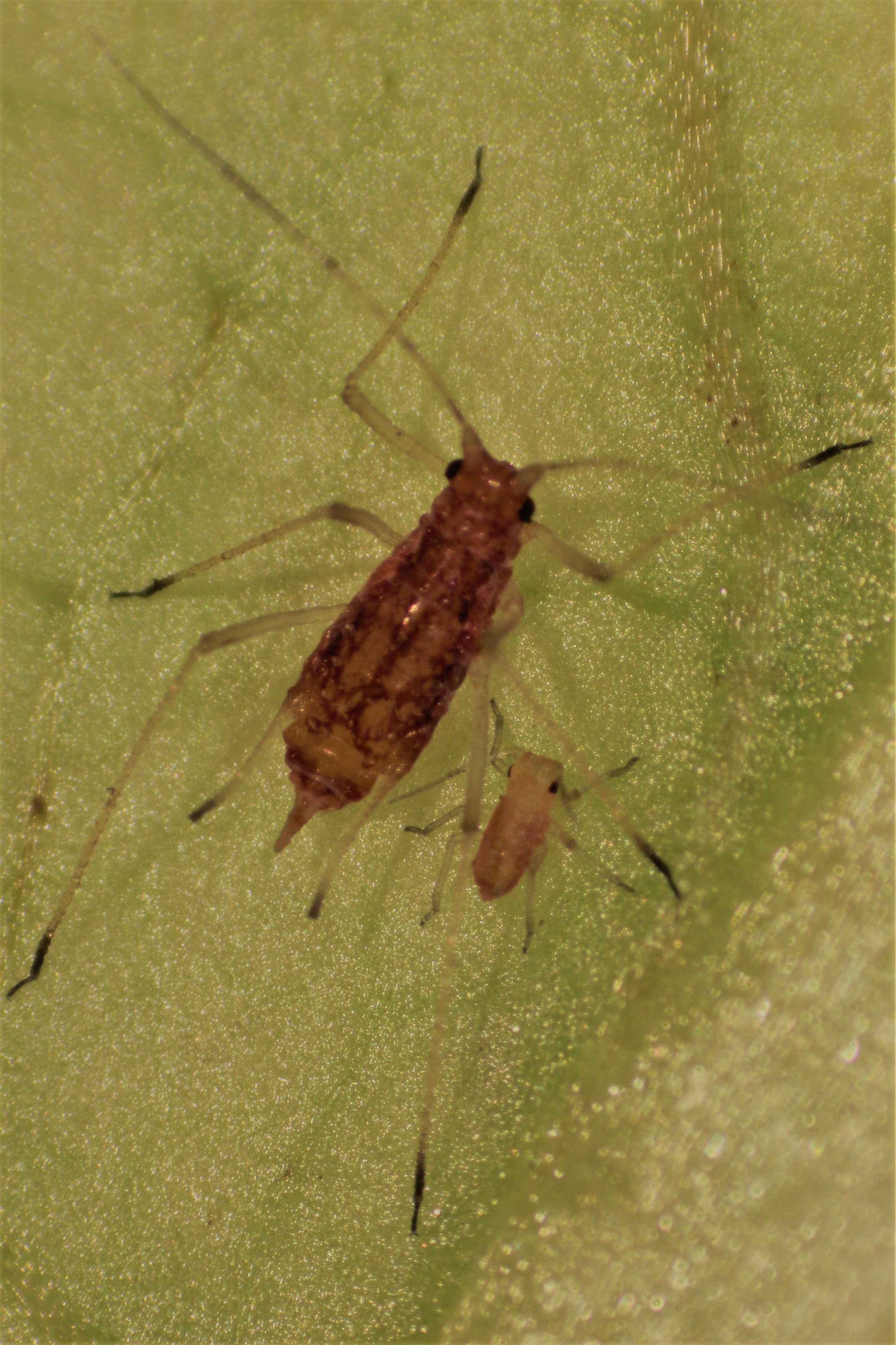
Since last week, I have been receiving samples with “red” aphids to get the identification. It turned out that this time, most of these ‘reddish’ aphids were identified as the lettuce aphid, Nasonovia ribis-nigri (Fig. 1). To me, they look more red-orange; however, their distinct black marks on the abdomen and short cauda (finger-like, short appendage at the end of the abdomen) are some key ID features. These features help to differentiate the lettuce aphid from the other “red” aphid, the potato aphid Macrosiphum euphorbiae (Fig. 2). Yes, we do have two different species of red aphids!
More samples for aphid ID are still coming into the UC Cooperative Extension office. The pattern is still similar to last week. There are mostly lettuce aphids on the submitted samples. I was also able to notice that some samples have mixed populations between the lettuce and the potato aphids, where all the specimens were red.
We have several trial locations where we are scouting for aphids. So far, fields in Soledad have the largest number of aphids documented, as both alates (with wings, collected from yellow sticky cards) and wingless (collected from lettuce samples). If you need further information about the other scouting locations, or would like to double check your aphid ID, please contact or send samples to Alejandro Del-Pozo (adelpozo@ucanr.edu, 831-759-7359).