There were some successes, but a lot of disappointments in California’s 2018 elections. So where do we go from here? What’s a farmer to do in an askew state like California? Check out this brief interview with Emily Rooney, President of the Ag Council of California as she shares her insights from the election and some considerations moving forward.
Category: Industry News
-
Huanglongbing Eradication Status in California Citrus
To date, the deadly citrus greening disease Huanglongbing or HLB has not been found in California’s commercial citrus orchards; however, it’s only a matter of time. HLB strikes continue to be detected in residential areas, and its vector has spread all over the state. Watch this brief interview with Victoria Hornbaker, head of the CDFA’s statewide citrus program, as she shares the current status of the spread of HLB and its vector the Asian citrus psyllid, and CDFA’s eradication efforts. Read more about it in California Fresh Fruit Magazine.
-
Citrus Crop Update with Central Valley Grower Arlen Miller
Harvest of the 2018-2019 citrus crop is underway, and growers are excited to reap the fruits of their labors. Watch this brief interview with third generation Central Valley citrus grower Arlen Miller as he shares his perspective on the coming crop and read more about him and his many diverse varieties of citrus in the coming issue of California Fresh Fruit Magazine.
-
Introducing the Mega Kiwi with California Grower Jerry Kliewer
Jerry Kliewer and his family have been growing kiwifruit in the Central Valley since the 1970s, but they are on to something really BIG now with a new variety they have introduced to America, known as the Mega Kiwi. Watch this brief video interview as Jerry talks about growing this new variety, and read more about it in the November issue of California Fresh Fruit Magazine.
-
New High-Yield Strawberry, Raspberry Varieties Released
By Krisy Gashler
These berries yield like the dickens.
Cornell’s berry breeding program is releasing two new varieties, which will be available for planting in spring 2019: a strawberry, Dickens, and a raspberry, Crimson Treasure. Both varieties produce large fruits with vibrant colors that maintain peak flavor for longer than most heritage varieties.
The new berries are the handiwork of berry breeder Courtney Weber, associate professor in the College of Agriculture and Life Sciences based at Cornell AgriTech in Geneva, New York.
Dickens is a traditional, June-bearing strawberry with high yields and bright red fruit that continues bearing late into the season. The berries are firm, so they hold well on the plant and in the container, Weber said, but not so firm that they have no flavor. Strawberries are the third-leading fruit crop in New York state, but most strawberries sold in supermarkets are from California.
“With New York-grown berries, because we don’t have to ship so far, we can handle a softer fruit. And people notice the softer, sweeter, juicier fruit,” Weber said. “Customers can get supermarket strawberries any day of the week; the reason people make the effort to come to the farm stand or farmers market and buy the local product is because it tastes so much better. Maintaining that flavor is paramount to what we do in our breeding program.”
The Dickens strawberry was first discovered in Weber’s breeding fields in 2002 and was originally noticed for the plant’s hardiness in surviving cold winters, making it especially suitable for New York and other cold-winter climates. Production trials throughout the region have shown Dickens to be an adaptable and consistent producer of high-quality fruit. Dickens has been tested in annual and perennial production systems, without soil fumigation, and found to be tolerant to root rot and other common diseases.
Weber has named his strawberry varieties after his favorite authors, including L’Amour, Clancy, Herriot, Walker and, most recently, Archer. Because this newest berry “yields like the dickens,” Weber decided to name it after prolific English author Charles Dickens.
 The new raspberry, Crimson Treasure, is also very high-yielding, with larger fruit than traditional varieties grown in the region. The well-known Heritage raspberry produces fruit of approximately 2.5 grams, while Crimson Treasure produces berries twice as large – averaging between 4 to 6 grams. That’s typical of what you see with supermarket raspberries, Weber said.
Crimson Treasure is a fall-bearing raspberry with bright-red fruit that holds its color and texture well in storage.
“Color is a big deal. You need fruit that does not darken after you pick them,” Weber said. “A lot of older varieties, after you pick them and put them in the cooler, they darken and then look overripe. This one doesn’t; it holds its color and eating quality well.”
Crimson Treasure was originally discovered in 2012. Weber has worked to speed the process of developing new raspberry varieties because the program has so many international collaborators interested in raspberries. These collaborators plant trial raspberries and collect data, giving Weber more information on disease resistance and other traits that can inform his breeding trials.
The name continues another Weber tradition. This is the third raspberry in the “Crimson” series. Two previously released raspberries were named Crimson Giant and Crimson Night.
Cornell’s berry breeding program is the oldest in the country and is the only one in the Northeastern U.S. The university’s berries are grown all over the world: Crimson Treasure has been planted in trials in New York, California, Mexico and the European Union. The berry program works with commercial partners across North America, in Morocco, Spain and Portugal. Heritage, the most commonly grown raspberry variety in Chile, was developed at Cornell, and two Cornell raspberry varieties, Crimson Night and Double Gold, are under license in Japan.
The Dickens strawberry will be available from Nourse Farms, a licensee in Whately, Massachusetts, 413-665-2658. Crimson Treasure raspberry will be available from North American Plants, a licensee in McMinnville, Oregon, 877-627-4636. For information on licensing opportunities, email Jess Lyga at the Center for Technology Licensing at Cornell University.
Krisy Gashler is a freelance writer for the College of Agriculture and Life Sciences.
-
Dealing with Diamondback Moth
It has been a couple of “rough” weeks managing the diamondback moth (DBM), Plutella xylostella (Lepidoptera: Plutellidae), in the Central Coast. Based on my conversations with some PCAs, we are managing large populations of this moth, resulting in high infestations in cole crops like broccoli and Brussel sprouts. Larvae of this insect will typically feed on the underside of the leaves, rasping the epidermis and generating this characteristic “window panning” that results on perforations later on (Fig. 1). Diamondback larvae will also feed on the plant’s growing points, floral stalks, and even on flower buds.

Fig.1. Characteristic window panning injury from Diamondback larva feeding on a broccoli leaf. It seems like populations have been building up during early summer in our area, resulting in enough individuals, at this point, generating significant injury in cole crops. PCAs have been recommending spraying several different insecticides to reduce the infesting populations in affected fields, since damage has been beyond tolerable. For instance, after one of my field visits, I was able to spot affected larvae in treated fields (Fig. 2). Treatments are working, I believe we need to continue being ahead of future DMB infestations.

Fig. 2. Dark colored insecticide-poisoned and dead Diamondback larva collected from an insecticide treated broccoli field. Some information to consider:
- Scout early. If you have transplants or direct seeded seedlings, pay a visit more often. We are dealing with a large DBM population right now. There will be a high chance that those fields may ended having DMB earlier than expected during this time of the year.
- Use of adjuvants. The waxy nature of cole crop leaves represents a challenge for insecticide deposition in the canopy. Make sure that you are using a spreader/sticker adjuvant to potentially reduce any pesticide “sliding off” from the waxy leaves.
- Rotate pesticides. Consider using different classes of insecticides, before using different active ingredients within the same class. For instance, using an avermectin and then a diamide, instead of using chlorantraniliprole and cyantraniliprole (two different active ingredients within the diamide class) back to back. Using different modes of actions will help to delay potential issues of developing insecticide resistance in our DBM populations.
-
Dealing with Wild Pig Pests on the Farm
Farmers are used to dealing with insect pest and small furry rodents, but how about wild pigs? Now, this is a more common issue in some areas more than others; nonetheless, pigs can wreak a lot of havoc in vineyards, orchards and field crops, so exploring your management options is key. Watch this brief interview with Julie Finzel from the UC Cooperative Extension as she provides some recommendations for growers.
-
Got “Red” Aphids?
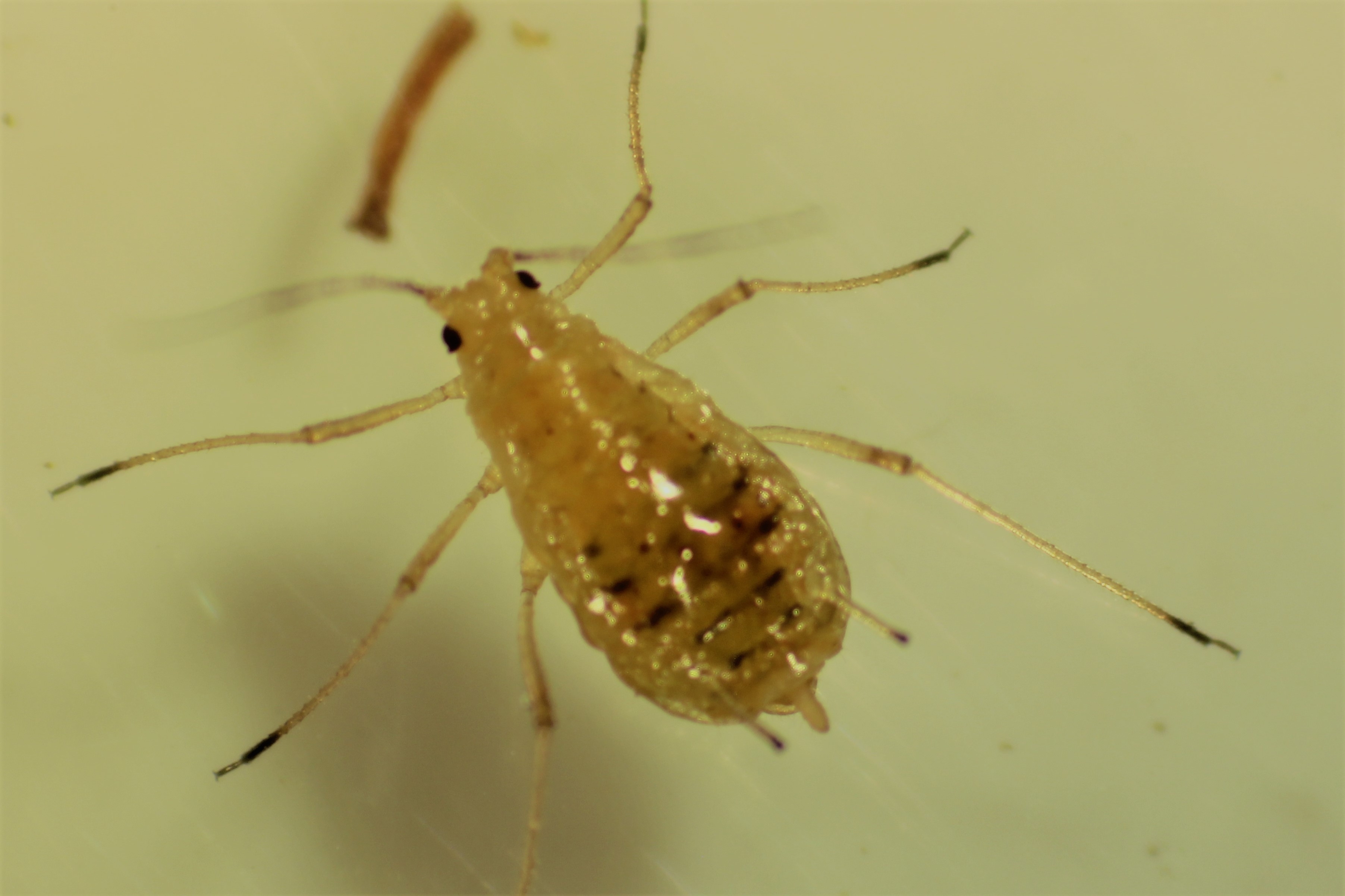
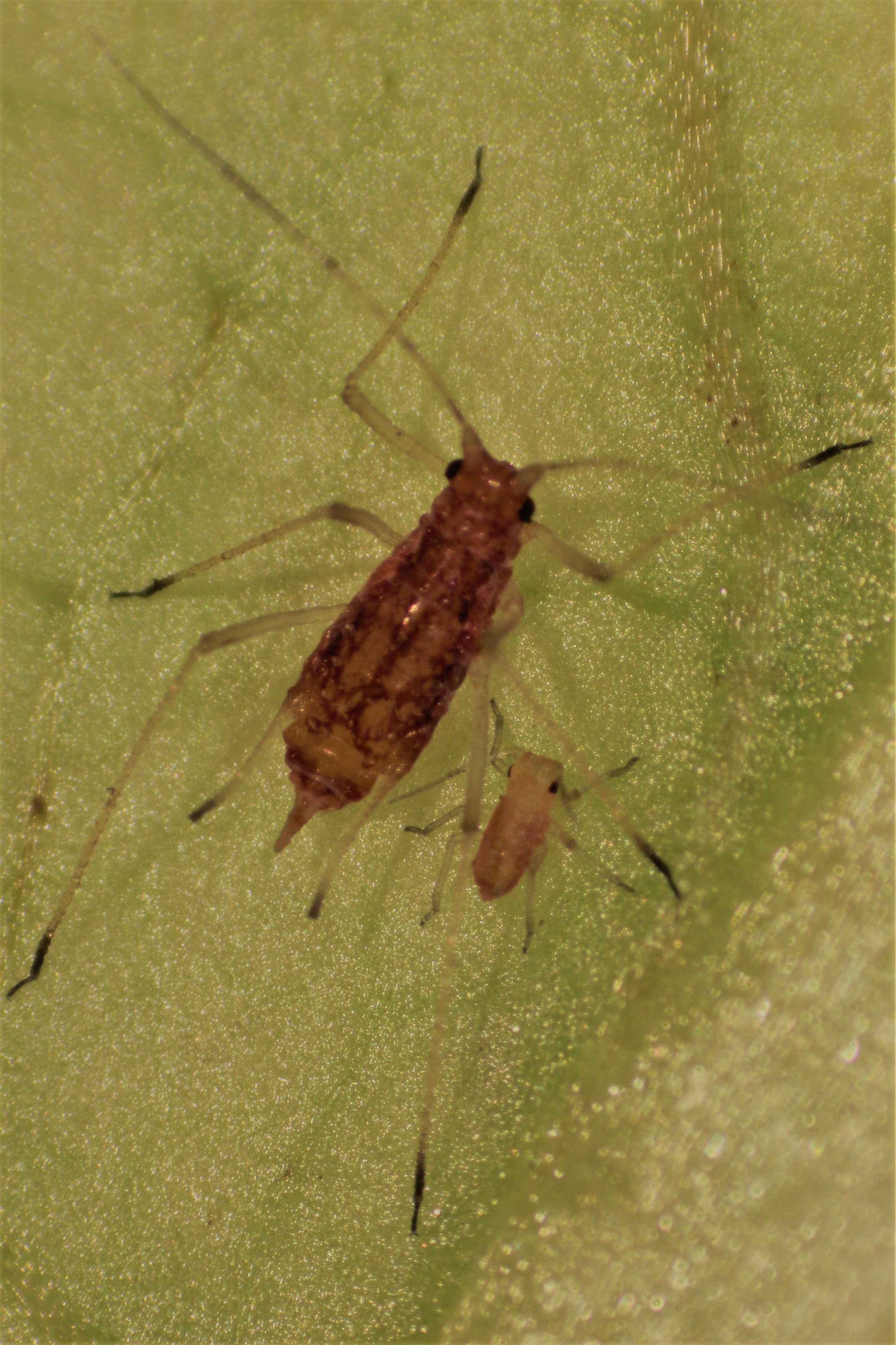
Since last week, I have been receiving samples with “red” aphids to get the identification. It turned out that this time, most of these ‘reddish’ aphids were identified as the lettuce aphid, Nasonovia ribis-nigri (Fig. 1). To me, they look more red-orange; however, their distinct black marks on the abdomen and short cauda (finger-like, short appendage at the end of the abdomen) are some key ID features. These features help to differentiate the lettuce aphid from the other “red” aphid, the potato aphid Macrosiphum euphorbiae (Fig. 2). Yes, we do have two different species of red aphids!
More samples for aphid ID are still coming into the UC Cooperative Extension office. The pattern is still similar to last week. There are mostly lettuce aphids on the submitted samples. I was also able to notice that some samples have mixed populations between the lettuce and the potato aphids, where all the specimens were red.
We have several trial locations where we are scouting for aphids. So far, fields in Soledad have the largest number of aphids documented, as both alates (with wings, collected from yellow sticky cards) and wingless (collected from lettuce samples). If you need further information about the other scouting locations, or would like to double check your aphid ID, please contact or send samples to Alejandro Del-Pozo (adelpozo@ucanr.edu, 831-759-7359).
-
Microbial Soil Amendments to Improve Strawberry Health & Production
In the recent years, interest in biological products – nutrient, biostimulant, soil amendment or pesticide products of plant and microbial origin – is increasing for use in agriculture. While the growth of the organic industry is partly responsible for this interest, an increase in research exploring the potential of these products and a continued emphasis on sustainable agriculture could also be among other contributing factors. In an undisturbed ecosystem, both beneficial and pestiferous arthropods and microorganisms coexist, limiting each other’s proliferation and maintaining a balance. This coexistence is out of balance in an agricultural ecosystem, especially where fumigants and other agricultural inputs are routinely used. Introducing beneficial microbes and organic or inorganic compounds can enhance the soil structure, promote root and plant growth, improve crop health, reduce salt and drought stress, prevent the loss of nutrients, increase the uptake of nutrients and water, and protect against pests and diseases.In a continuous effort to explore the potential of additive, soil amendment, biostimulant, and other products, a new study was conducted in a conventional strawberry field at the Manzanita Berry Farms in Santa Maria. The following treatments were administered at different times, from planting till the end of production season, as requested by the manufacturer.
- Untreated control: Other than the soil incorporated fertilizers during the field preparation, no other nutrient inputs were added during the study.
- Grower standard: Transplants were dipped in Switch 62.5WG (cyprodinil+fludioxonil, at 5 oz/100 gal) before planting and a proprietary nutrient regimen that included administration of a humic acid-based product was followed.
- Innovak Global regimen: Nutrisorb-L (a blend of polyhydroxy carboxylic acids) at 28 fl oz/ac, starting 2 wk after planting and every 3 wk thereafter through drip. Packhard (carboxylic acids with calcium and boron) at 28 fl oz/ac, starting at the first fruit set (early January) and every 2 wk thereafter as a foliar spray.
- TerraVesco regimen: A microbe-rich Vermi-extract (worm extract) at 10% vol/vol as a transplant dip for 3 hours, followed by application through drip at 7.5 gal/ac after planting, and again in December, 2017 and January, 2018.
- Fertum regimen: Transplant dip in 1% vol/vol of Germinal Plus (a product from marine algae), followed by drip applications of Booster (a biostimulant and a natural organic fertilizer made from seaweed) at 0.5 gal/ac in late November and late December, 201; Silicium PK (a biostimulant and a natural organic fertilizer based on silicon enriched with phosphorus, potassium and seaweed extracts) at 0.5 gal/ac late December, 2017 and once a month starting from mid February to early July, 2018; and Foliar (a biostimulant and a natural organic fertilizer from marine algae) at 0.5 gal/ac in mid and late January.
- Shemin Garden regimen: EcoSil (a silica fertilizer) at 800 ml/ac once a month starting from early December, 2017 to May, 2018 through drip, and at 200 ml/ac in early May and June, 2018 as a foliar spray; ComCat (based on a plant extract) at 20 gr/ac and EcoFlora (a consortium of Azotobacter spp., Bacillus spp., Paenibacillus spp., Pseudomonas sp., Trichoderma spp., and Streptomyces spp.) at 12 oz/ac one week after EcoSil through drip until May, 2018 and ComCat at 10 gr/ac and EcoFlora at 12 oz/ac as a foliar spray in May and June, 2018.
- GrowCentia regimen-low: Yeti containing 1% bacterial culture (of Pseudomonas putida, Citrobacter freundii, Comamonas testosterone, and Enterobacter cloacae) and 2% alfalfa extract applied at 0.6 ml/gal through drip for 90 min weekly from the first drip application.
- GrowCentia regimen-high: Yeti at 1 ml/gal through drip for 90 min weekly from the first drip application.
- NanoChem regimen: EX10, a biodegradable fertilizer additive containing thermal polyaspartate at 1 qrt/ac through first drip after planting with follow up applications in early January (first bloom), mid February, and mid May, 2018. The active ingredient binds with cations such as ammonium, calcium, copper, iron, magnesium, manganese, potassium, and zinc and improves their availability for the plant.
- BiOWiSH regimen 1: Formula 1 at 1.33 oz/gal for transplant dip followed by 3.53 oz/ac through drip starting 2 wk after planting and every 4-5 wk thereafter.
- BiOWiSH regimen 2: Formula 1 at 1.33 oz/gal for transplant dip followed by 3.53 oz/ac as a foliar srpay starting 2 wk after planting and every 4-5 wk thereafter.
- BiOWiSH regimen 3: Formula 1 at 1.33 oz/gal for transplant dip followed by 3.53 oz/ac through drip starting 2 wk after planting alternated with a foliar spray every 4-5 wk.
- BiOWiSH regimen 4: Formula 1 at 1.33 oz/gal for transplant dip followed by BiOWiSH Crop 16-40-0, a microbial consortium (Bacillus amyloliquefaciens, B. lichenoformis, B. pumilus, and B. subtilis)at 3.53 oz/ac through drip starting 2 wk after planting and every 4-5 wk thereafter.
Each treatment contained a 165′ long 5.7′ wide bed and replicated four times in a randomized complete block design. A 15′ long plot in the center of the bed was marked and netted for collecting yield and some other parameters that were compared. Strawberry cultivar BG 6-30214 was planted on 7 November, 2017. Other than the untreated control, all other products were administered on top of the grower standard fertility program. However, only the grower standard transplants were dipped in Switch 62.5WG before planting.
Various parameters were measured during the vegetative growth and fruit production periods to evaluate the impact of the treatments on crop growth, health, and yield. Data were analyzed using ANOVA and LSD test was used to separate significant means.
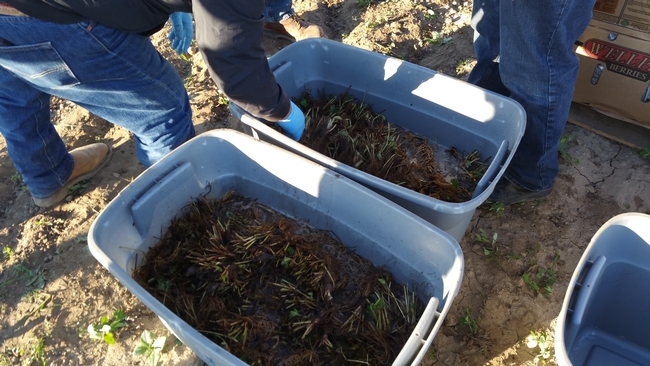
Transplant treatment (above) and drip application (below). Photos by Tamas Zold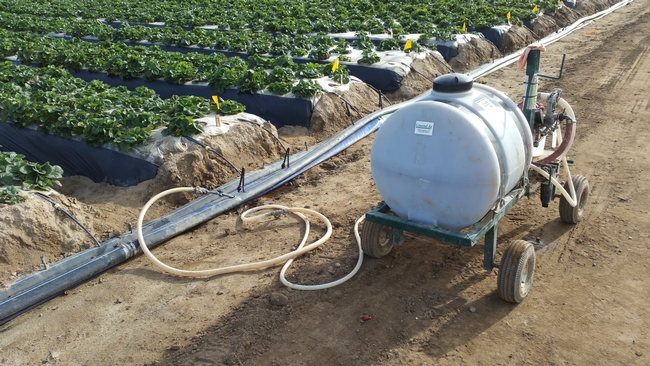
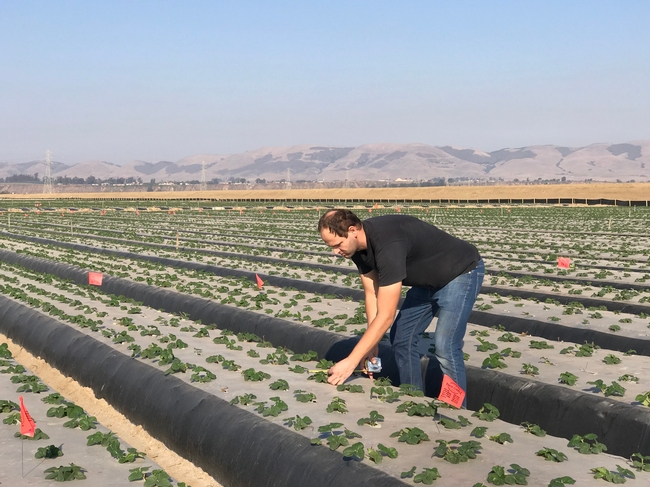
Tamas Zold taking canopy measurements. Photo by Surendra Dara
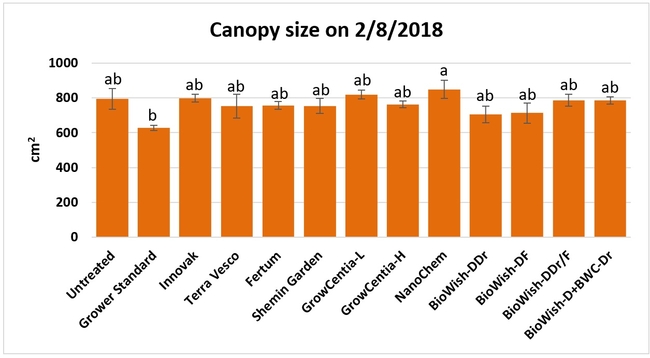
Canopy growth: Canopy growth was observed on 11 December, 2017, 7 and 30 January, and 8 February, 2018 by measuring the size of the canopy along and across the length of the bed from 20 random plants per bed and calculating the area. Canopy size significantly (P = 0.0261) different among the treatments only on the last observation date where plants treated with EX10 and the GrowCentia product at the low concentration were larger than those in the grower standard.
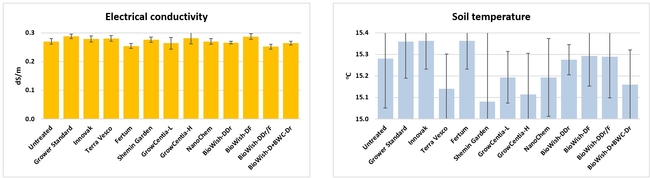
Electrical conductivity and temperature of soil: From two random location on each bed, electrical conductivity (EC in dS/m) and temperature (oC) were measured about 3 inches deep from the surface on 12 and 25 January, 7 February, 19 March, 18 April, and 29 May, 2018. Only soil temperature on 25 January significantly (P = 0.0007) varied among treatments where the difference between the highest (untreated control) and the lowest (Vermi-extract) values was 0.8oC.
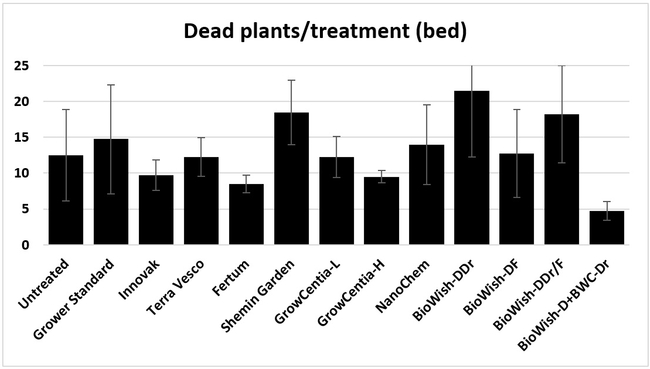
Dead plants: The number of dead plants represents empty spots in the bed due to the death of transplants. There were no obvious signs of disease or a particular stress factor associated with those plants except that they were randomly distributed within each bed and throughout the field. When counted on 18 April, 2018, BiOWiSH regimen 4, Fertum regimen, GrowCentia product at the high rate, and Innovak Global regimen had
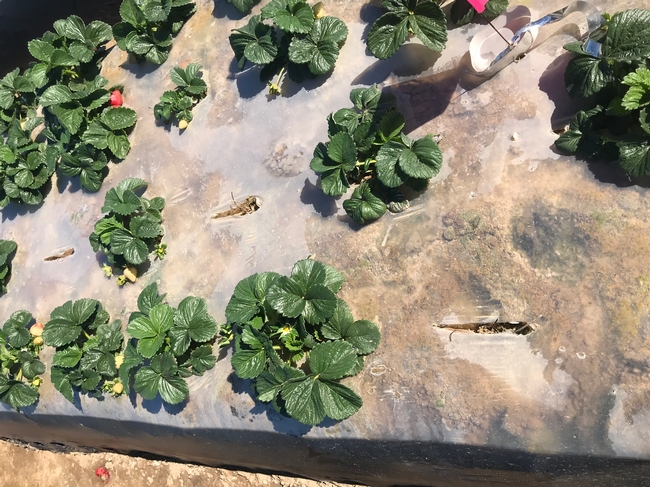
Areas where transplants did not establish. Photo by Surendra Dara
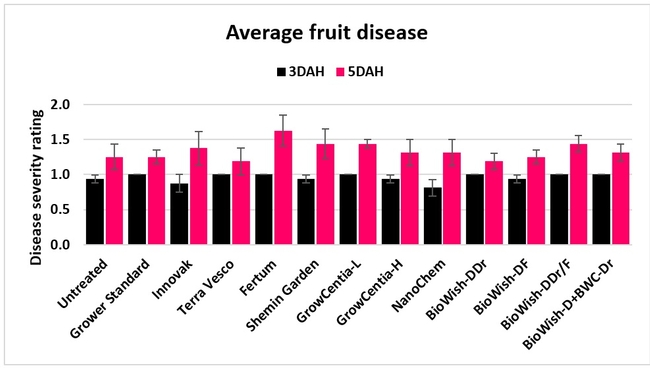
Fruit diseases: Fruit harvested on 12 March, 3 and 13 April, and 17 May, 2018 from each marked plot was incubated at room temperature in dark in plastic containers and the fungal growth was rated 3 and 5 days after harvest (DAH) using a scale of 0 to 4 where 0=no fungal growth, 1=1-25%, 2=26-50%, 3=51-75%, and 4=76-100% fungal growth. Botrytis fruit rot or grey mold was predominant during the first two observation dates and the growth of other fungi (possibly Rhizopus spp.) was also seen during the last two dates. In general, fruit disease occurred at low levels throughout the observation period with
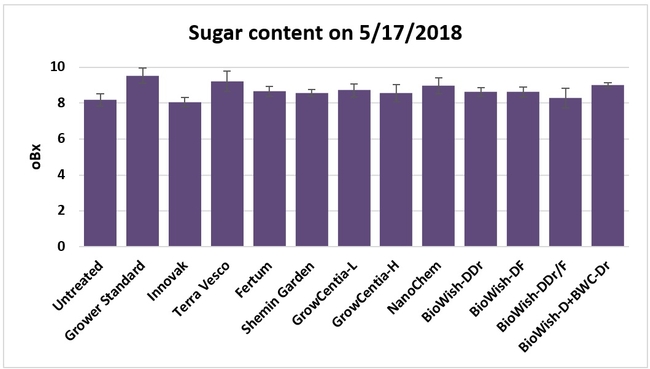
Sugar content in fruit: Sugar content was measured from two harvest-ready berries per bed on 17 May, 2018 using a handheld refractometer. Sugar content varied from 8.06 oBx (Innovak Global regimen) to 9.53 oBx (grower standard).
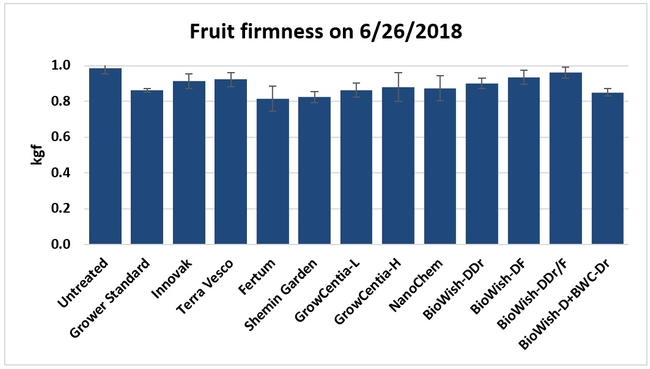
Fruit firmness: Fruit firmness was measured from eight randomly collected harvest-ready berries from each bed on 28 June, 2018. Firmness varied from 0.82 kgf (Fertum and Shemin Garden regimens) to 0.98 kgf (untreated control).
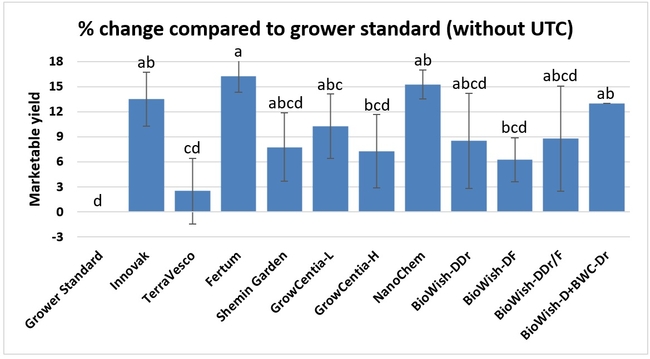
Fruit yield:Strawberries were harvested from 6 February to 22 June, 2018 on 36 dates. When compared to the grower standard, the marketable berry yield was 16.2, 15.1, 13.7, and 13% higher in Fertum regimen, EX10 treatment, Innovak Global regimen, and BiOWiSH regimen 4, respectively. The marketable berry yield was 9.8, 9, 7.5, and 6.8% higher in those respective treatments over the yield from untreated control.
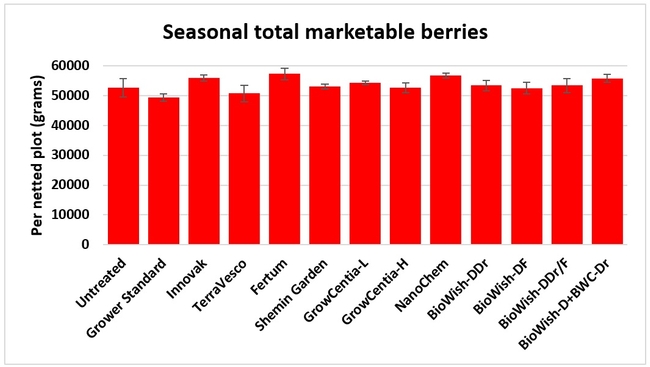 Seasonal marketable yields among all treatments (above) and percentage difference compared to untreated control or grower standard (below).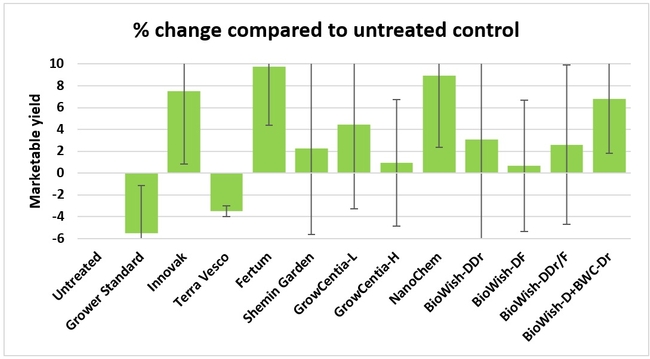
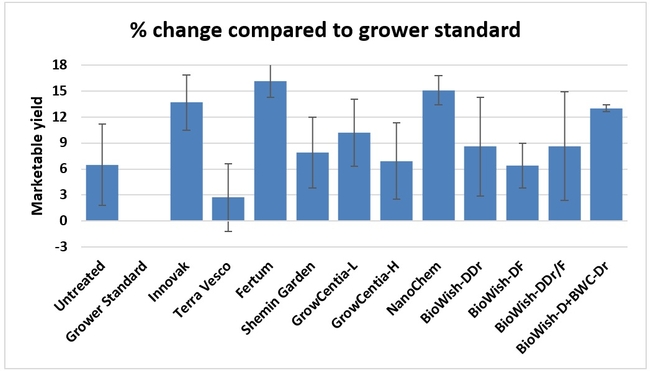 When data were analyzed without the untreated control, there was a significant difference (P = 0.0279) among the treatments where treatment 5 had significantly higher marketable yield than the grower standard and treatments 3, 8, and 11. Percentage difference from grower standard yield was also significantly different (P = 0.0301) among treatments where the Fertum regimen had the highest increase of 16.25.
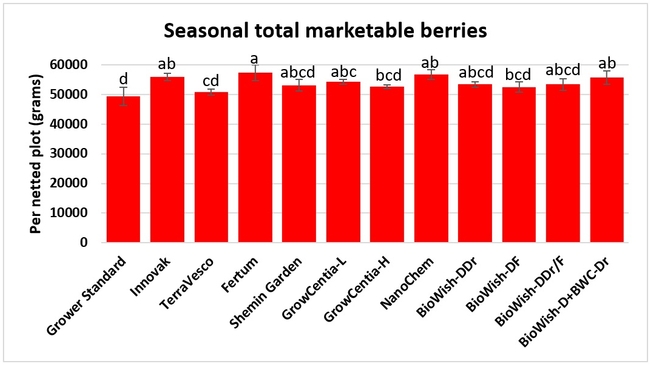 Seasonal marketable yields (above) and percentage difference compared to grower standard (below) when untreated control data were excluded from the analyses.
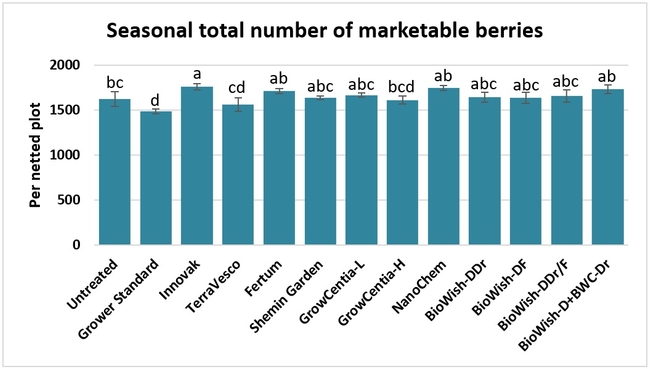
 There was a significant difference (P = 0.0141) among treatments only in the number of marketable berries. There were more than 1700 in Innovak Global regimen, EX10 treatment, and BiOWiSH regimen 4 while grower standard had 1485, Vermi-extract had 1563, and the rest of the treatments had marketable berries in 1600s.
 The average fruit weight was a little over 33 grams in the grower standard and the Fertum regimen whereas the weight varied between 31.9 and 32.7 grams in the rest of the treatments.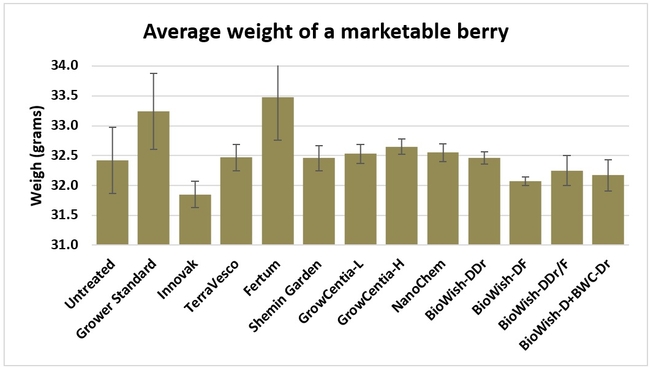
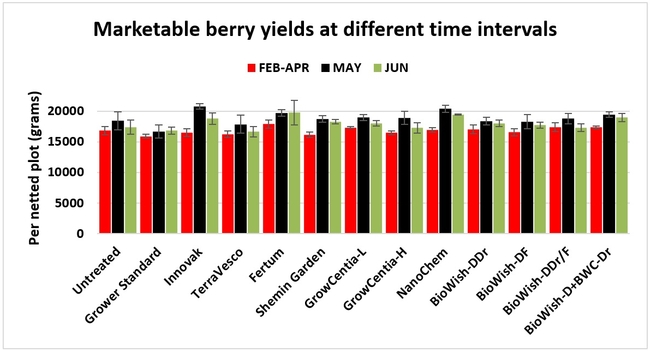
It took 23 harvest dates in three months (from February to April, 2018) to obtain the first third of the total seasonal yield while the remaining two-thirds were obtained from seven harvest dates in May and six dates in June. Marketable fruit yield was higher than the grower standard in all treatments and higher than the untreated control in most treatments.
In general, fruit yields were higher and the pest and disease pressure was lower than usual during the study period. Aleo, a garlic oil based fungicide, at lower label rates was periodically used for disease management and bug vacuums were operated a few times against the western tarnished plant bug as a standard across all treatments.
This study evaluated some treatment regimens as recommended by the collaborating manufacturers and some of them appear to have a potential for use in strawberry production. These results help the manufacturers fine tune their recommendations for achieving better yields through additional studies.
Acknowledgments: We thank the planting and harvest crew at Manzanita Berry Farms for their help with the crop production aspects, Chris Martinez, Tamas Zold, and Maria Murrietta for their technical assistance, Sumanth Dara for statistical analysis, and the support of the industry collaborators who funded the study.
- Author: Surendra K. Dara
- Author: Dave Peck, Manzanita Berry Farms
-
Growing Fresh Market Figs with Steve Schafer
With oncoming groundwater regulations and an increasingly tight water supply, California farmers are searching for alternative crops that require less water, not to mention lower labor costs, and Madera grower Steve Schafer has more recently invested in the fresh fig market for those reasons. Watch his brief interview here and read more about growing figs in California Fresh Fruit Magazine.