Category: Industry News

  • Blueberry Council Details Plan Empowering Industry to ‘Make Blueberries the World’s Favorite Fruit’

    Blueberry Council Details Plan Empowering Industry to ‘Make Blueberries the World’s Favorite Fruit’

    The U.S. Highbush Blueberry Council (USHBC) today announced details around its recently approved 2021-2025 strategic plan, which charts an ambitious course to exponentially grow the volume and value of blueberries domestically and across the globe. The comprehensive plan explains how USHBC will lead demand-driving programs based on shared resources, research and insights that inspire possibilities and sustain the profitable growth of the blueberry industry – ultimately uniting industry stakeholders to work together toward making blueberries the world’s favorite fruit.

    USHBC collects approximately $10 million in assessment dollars from growers and importers of record annually, and the strategic plan addresses how the council will invest that funding to fuel increased blueberry demand and consumption. The plan includes expanded, measurable programmatic goals and tactics for five strategic pillars: integrated marketing communications, health and nutrition, industry services, global business development, and innovation and technology. The health and nutrition pillar will be driven by USHBC’s newly hired first-ever senior director of nutrition and health research, Leslie Wada, Ph.D., RD.

    “Our 2021-2025 strategic plan is the culmination of more input from blueberry industry leaders and strategic partners than ever before, discussed and distilled for over the better part of a year, to create a bold blueprint to boost blueberries worldwide,” said Kasey Cronquist, president of USHBC. “Our intent is that this plan and its guiding vision will positively impact the future beyond the next five years to hopefully the next decade or two of the blueberry industry.”

    USHBC embarked on the strategic plan development in partnership with Rockland Dutton Research & Consulting, drawing on highly relevant experience working with the National Mango Board, World Bank, Beef Checkoff, Hass Avocado Board and more. The work was the most robust planning process in the USHBC’s history, with significant internal and external input from approximately 50 interviews of board members and industry leaders, a survey of 193 industry stakeholders, and discussions with the entire USHBC staff and all partner agencies.

    “We’ve come a long way as a blueberry industry since the USHBC was established 20 years ago, and our exciting, forward-looking vision sets the stage for the next era of growth,” said Shelly Hartmann, chair of USHBC. “I’m proud to have a leading role as we begin to execute our new, unifying strategy to increase demand for blueberries, while strengthening and supporting our growers and stakeholders.”

    As the premier organization completely focused on growing the volume of blueberries sold in the U.S. and around the world, USHBC has driven demand for blueberries through comprehensive consumer promotional efforts and programming in retail, foodservice, export and food manufacturing. In 2019, 49% of U.S. households purchased blueberries — a 25% increase in annual household penetration over the previous six years. Blueberries are now on one in four menus, with 93% more restaurants offering blueberries than in 2005. And, 76% of food manufacturer respondents reported using blueberries in their company’s manufactured products — higher than any other berry.

    USHBC was established in 2000 as an official research and promotion program overseen by USDA’s Agricultural Marketing Services (AMS) division. It’s governed by a 20-member board that periodically adopts strategic plans to guide short- and long-term budget and program decisions.

    To view the 2021-2025 Strategic Plan, visit ushbc.org/about-ushbc.

    About the U.S. Highbush Blueberry Council

    Established in 2000, The U.S. Highbush Blueberry Council (USHBC) is a federal agriculture research and promotion program with independent oversight from the United States Department of Agriculture (USDA). USHBC represents blueberry growers and packers in North and South America who market their blueberries in the United States and overseas, and works to promote the growth and well-being of the entire blueberry industry. USHBC was established by blueberry growers and currently has 2,500 growers, packers and importers. USHBC is committed to providing blueberries that are grown, harvested, packed and shipped in clean, safe environments. Learn more at ushbc.org.
  • CA Farmland Trust Closes 35th Merced County Easement, Owned by Bowles Farming Co

    California Farmland Trust (CFT) is proud to announce the permanent protection of 327 acres of farmland two miles east of Los Banos, California. Farmed and owned by Bowles Farming Company, the addition of the Lone Tree Ranch agricultural conservation easement (ACE) exceeds 17,000 acres of total farmland protected by CFT.

    Bowles Farming Company is a 160-year-old family farm, with agricultural roots stemming back to the mid-1800s. What started as a cattle and meat processing operation, has since vertically integrated into organic and conventional vegetable and fruit operations. The newly protected property is home to various irrigated field crops.

    “California is the right place to grow so many healthy and nutritious crops, and the loss of California farms is a real problem,” said Cannon Michael, president and CEO of Bowles Farming Company. “With our family’s long legacy in farming, we wanted to see this land preserved and not converted to development like so much of the valley’s farmland.”

    The farm involves the sixth generation of the Bowles and Lawrence families, making the desire to protect the historical land even greater. Putting these fields under an easement ensures their farming footprint will be available and secure for years to come.

    “These subset fields under Bowles Farming Company are unique and valuable, in that they contain high quality soils, reliable water sources, produce high-yielding diversified crops, and incorporate practices which help sequester carbon to offset carbon impacts,” said Chelsea Slaton, conservation director at CFT. “With the growth pressure from the City of Los Banos, the protection of this property signifies the importance of productive farmland protection in order to store carbon and sustain the economy in an area designated by the state as a priority population.”

    Funds for this project were made available through the California Strategic Growth Council’s (SGC) Sustainable Agricultural Lands Conservation Program (SALC), in collaboration with the Department of Conservation (DOC). SALC is part of California Climate Investments, a statewide program that puts billions of Cap-and-Trade dollars to work reducing greenhouse gas emissions, strengthening the economy, and improving public health and the environment – particular in disadvantaged communities.

    “This farm has been cared for by two Californian families for over 150 years, and we are thrilled to see the SALC program contribute to its permanent conservation,” said Lynn von Koch-Liebert, executive director at SGC. “Congratulations to the Bowles and Lawrence families and the California Farmland Trust on the easement of this landmark property, which is home to numerous ecological and cultural treasures.”

    CFT has worked to permanently protect farmland throughout six counties, with the majority of its ACEs located in Merced County. This property adds to that extensive portfolio in Merced County, where CFT now holds 35 ACEs, with 11,416 acres protected.

  • Glassy-Winged Sharpshooter Infestation Detected in Solano County

    Glassy-Winged Sharpshooter Infestation Detected in Solano County

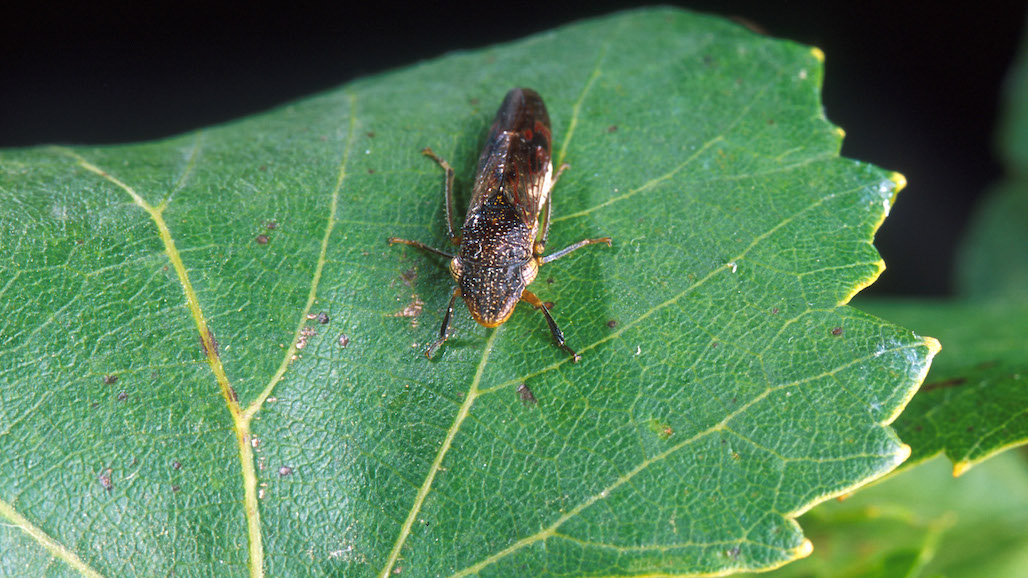
    A local infestation of the glassy-winged sharpshooter (GWSS) has been detected in a residential area of Vacaville in Solano County. The pest is primarily a threat to grapevines because it can spread a fatal bacterium that causes Pierce’s disease (PD); however, the pest and disease can also impact susceptible types of citrus crops. Five adult GWSS were found Oct. 1 in traps set as part of a broad array designed specifically to detect this pest throughout areas of the state that are not infested. Additional traps have since been deployed at a higher density near those two initial detection sites, detecting approximately 35 additional GWSS. Visual surveys of plant material in the area have also detected egg masses in the same neighborhood. No GWSS or egg masses have been detected outside this immediate area.

    Working with the Solano County Agricultural Commissioner’s office and others in the region, the California Department of Food and Agriculture (CDFA) is continuing to survey the area, inform local growers and the broader community, and develop appropriate next steps to eradicate this infestation.

    If agricultural officials determine that pesticide treatments are necessary to eradicate this infestation, treatments would be made by ground equipment only and would consist of applications to the root zone and leaves/branches of the host plants to target adult GWSS and provide long-term, systemic protection against re-infestation. In previous eradication projects for this pest, properties with host plants within a 150-meter radius around each detection site were treated.

    Residents of affected properties will be invited to a public meeting with officials from CDFA, the county agricultural commissioner’s office, the Department of Pesticide Regulation and the Office of Environmental Health Hazard Assessment to address residents’ questions and concerns. Residents would be notified in writing at least 48 hours in advance of any treatment.

    GWSS is an invasive and aggressive vector of PD, which is considered one of the most devastating diseases of grapevines in the world. It currently infests 12 California counties, with established populations across Southern California. While grapevines are the pest’s most famous target, other crops and ornamental plants such as almonds, citrus, stone fruit and various shade trees are also at risk from the PD’s strain of the bacterium.

    For additional information and details on the infestation, please visit CDFA’s website here— Citrus Pest & Disease Prevention Program

  • Bountiful Crop of Organic CA Citrus Now Shipping From Fruit World

    Bountiful Crop of Organic CA Citrus Now Shipping From Fruit World

    Fruit World, a family-owned, flavor-focused grower-shipper of organic and conventional fruit, has announced they expect a robust citrus season, particularly for this year’s organic lemon crop. Promotable volumes of organic lemons from California’s desert region are anticipated through early March. Fruit World will also offer a diverse citrus program throughout the season, including organic and conventional mandarins, organic oranges, and organic specialty citrus such as sweet limes and Minneola tangelos.
    “This year’s organic lemon crop is looking very strong—both in terms of volume and quality—and we’re seeing exceptional taste, appearance, and juiciness,” shared Bianca Kaprielian, Fruit World co-founder and CEO. “This year’s desert volume makes for great ad opportunities through March, with our Central Valley ranches filling out availability through May.”

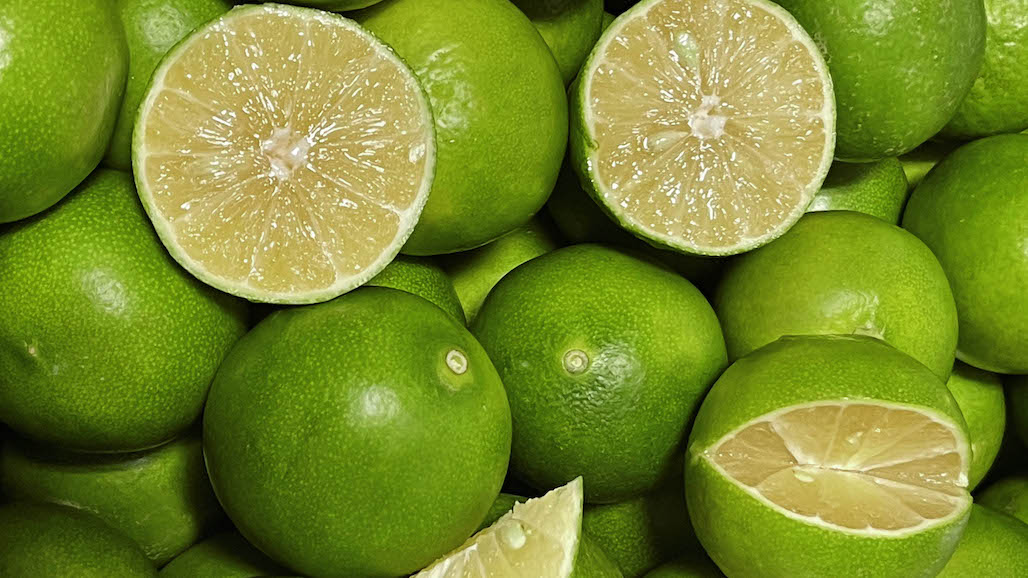
    Fruit World also expects a strong organic specialty citrus program this year. “This is our second year offering organic sweet limes, and we are already delivering promotable volumes which should last into December,” Kaprielian added. “This variety pairs the classic fresh lime flavor with exceptional sweetness, making them perfect for juicing, as a salad topping, or even cut into wedges as a snack because they are so sweet.”

    Fruit World’s flagship mandarin program will kick off in early November, starting with stem & leaf Satsumas and their proprietary Early Dulce mandarin variety. Organic Satsumas and Clementines will start in November, with additional varieties available into April.

    A lighter than typical season is expected for mandarins this year, a concern seen industry-wide due to excessive heat in May and June paired with last year’s large crop set affecting this year’s bloom. “To establish high flavor and exceptional color right from the start of the season, we plan to start shipping mandarins and navels about two weeks later than usual and have a slightly earlier end to the season,” noted CJ Buxman, co-founder of Fruit World and organic citrus grower. “This shift also allows us to ensure uninterrupted supply of high-quality fruit throughout the season.”

    In addition, the company has already started shipping the popular organic Rio Red grapefruit variety. “Our California-grown Rio Reds are top-notch quality and have beautiful interior color. We’ve seen strong demand, partly due to last season’s freeze in Mexico and Texas which affected the overall grapefruit supply,” said Buxman.

    Navel oranges will start shipping at the end of October, followed by Minneola tangelos in early December, with the season rounding out with Cara Caras and blood oranges starting in January.

    As they plan for the future, Fruit World is expanding their specialty citrus program by planting organic mandarinquats, kumquats, lemonade lemons and more that will be available in upcoming seasons. The company also has a significant amount of mandarin and navel acreage in transition from conventional to organic, including heirloom navels in their second year of transition, so coming years should see increased organic volume.

    For more information or to place an order, call (559) 650-0334 or visit fruitworldco.com.

  • Assembly Bill 535 Supporting California Olive Oil Becomes Law

    Assembly Bill 535 Supporting California Olive Oil Becomes Law

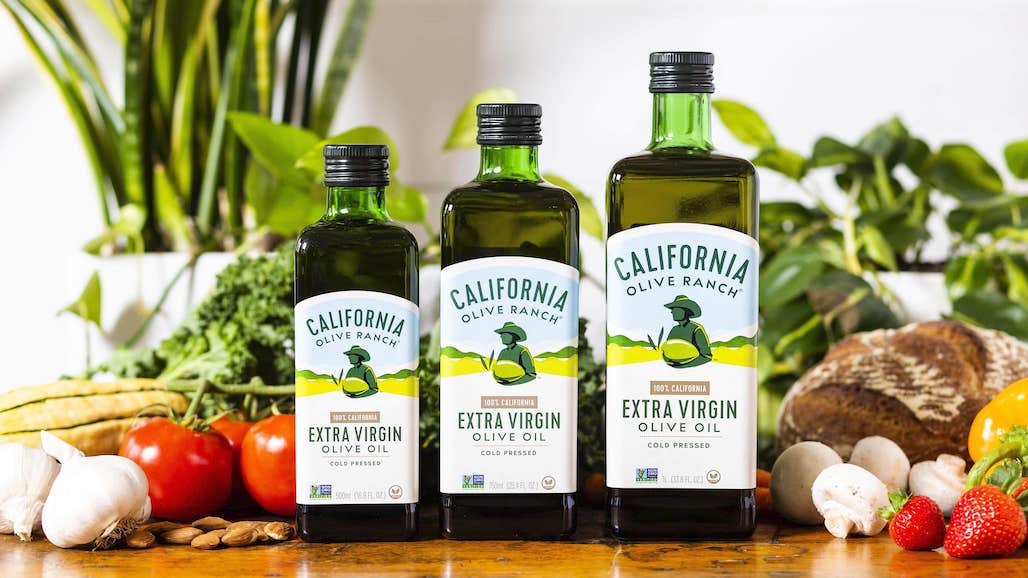
    Assembly Bill 535 was signed into law by Governor Gavin Newsom last week. The bill, introduced by Assemblymember Ceclia Aguiar-Curry, establishes guidelines for how companies can use the word “California” on olive oil labels and other marketing materials.

    While the OOCC does not have authority to lobby and did not take a position on this bill, the new ruling is critically important to the goals of our organization: ensuring California olive oil is accurately labeled so that customers can have confidence in the quality of California olive oil and all California olive oil is trusted and valued.

    The bill was supported by a group of California olive oil producers who launched a Truth in Labeling informational campaign.

    According to a press release from Assemblymember Aguiar-Curry, consumers associate California produced olive oils with quality and demand has steadily increased over time. This increase in demand has led to companies using the word “California” on labels, even if the product only contains a small percentage of oil from olives actually produced in the state.

    Aguiar-Curry carried the bill because she believes misleading labeling causes confusion among consumers. It also places 100 percent California olive oil farmers and producers at a competitive disadvantage because of the greater regulatory burden and higher costs, and hurts the reputation of California olive oil as a trusted product.

    The guideline for olive oil labeling that Assembly Bill 535 provides consumers with clear and transparent information about the oil they are purchasing. The bill will require companies to disclose the minimum percentage of California olive oil present in their product and in the same size as the word “California” on their product label, packaging and marketing materials.

    The bill does not prohibit or restrict blending oils from different sources and destinations, it only requires the term “California” be used in a way that truthfully and clearly represents the actual amount of California-grown olives used in the product.

    With this bill, supporters hope to strengthen the integrity of California olive oils as a premium and trusted product.  Olive Oil Commission of California

  • California Avocado Acreage Drops (Acreage And Condition Analysis Report)

    California Avocado Acreage Drops (Acreage And Condition Analysis Report)

    The California Avocado Commission gathers critical yield forecasting data to make informed budgeting and marketing decisions by partnering with Land IQ to conduct an annual acreage survey. Data from this survey is then compiled in a database for use by the Commission. In addition, Land IQ releases a yearly report for public consumption. The 2021 Statewide Avocado Acreage and Condition report is now available on the California avocado growers website.

    Highlights from the report are as follows:

    • Total planted acreage in 2021 was 51,988 acres, a reduction of about 2,000 acres from 2020
      • 46,727 producing acres
      • 2,668 new/young acres
      • 2,592 topped/stumped acres
    • The five major avocado growing counties — Ventura, San Diego, Santa Barbara, Riverside and San Luis Obispo — accounted for 96% of planted acreage
      • Ventura — 38%
      • San Diego — 29%
      • Santa Barbara — 13%
      • Riverside — 9%
      • San Luis Obispo — 7%
    • Updated tree age analysis
      • 9% of groves were newly planted to 4 years old
      • 14% were 5 – 8 years old
      • 17% were 9 – 15 years old
      • 16% were 16 – 20 years old
      • 44% of groves were 21 or more years old
    • Planting density analysis
      • 19% of acreage is planted at high density (15×15 or closer and 20×10)
      • 81% of acreage is planted at standard density (15×20 or greater

    The report also includes:

    • Tables and graphs illustrating avocado acreage by condition and county
    • Tables of statewide avocado acreage by county and zip code
    • Tables listing planted avocado acreage by year planted or stumped
    • A table noting the age of groves as a percentage of planted acreage, as well as a table summarizing planted avocado acreage by year planted or stumped
    • Tables comparing the condition (producing, stumped, young, abandoned) of high density and standard groves by acreage and county
    • Maps depicting planted avocado polygons in each of the Commission’s five districts
    • Table of net change in acreage from 2020 to 2021, by county
    • Table noting the change in avocado acreage classifications from 2020 to 2021

    A copy of the report is available HERE.

  • 2020 Raisin & Prune Crop Report & Average Prices

    2020 Raisin & Prune Crop Report & Average Prices

    Information contained in this report was supplied by handlers of raisins and prunes to fulfill reporting requirements of Sections 55601.7 and 55601.8 of the Food and Agricultural Code. The report includes all tonnages of raisins and prunes that were either produced by the handler or purchased from producers. The final weighted average price, including bonuses and allowances, has been reported for all contracts which were finalized.

    All 2020 crop transactions completed through the close of business on August 31, 2021 are included in this report. A “good faith” estimate of final weighted average price was reported for those contracts which were not final on the same date. The data are shown by major varieties at the State level only.

    SUMMARY OF RAISIN HANDLERS REPORTS

    Free raisin tonnage produced by handlers in 2020 totaled 26,094 tons. This figure does NOT include raisins purchased from other handlers or producers.

    The total 2020 raisin crop purchased from producers, for whom pricing had been finalized, reached 110,853 tons at an average price of $1,302 per ton. This price is rounded to the nearest dollar per ton and includes all bonuses and allowances.

    Purchases from producers, for whom pricing was NOT finalized, totaled 105,480 tons. The average “good faith” estimate of the final weighted average price for this tonnage was $1,075 per ton.

    The quantity of all raisins purchased from producers was 216,334 tons for the 2020 crop. This figure does not include raisins produced by the handler or purchased from other handlers.

    The tonnage produced by the handler plus tonnage purchased from producers for the 2020 raisin crop was 242,427 tons.

    SUMMARY OF PRUNE HANDLERS REPORTS

    Prunes produced by handlers in 2020 totaled 9,170 tons. This figure does NOT include prunes purchased from other handlers or producers.

    The total 2020 prune crop purchased from producers, for whom pricing had been finalized, reached 22,351 tons at an average price of $1,834 per ton. This price is rounded to the nearest dollar per ton and includes all bonuses and allowances.

    Purchases from producers, for whom pricing was NOT finalized, totaled 27,182 tons. The average “good faith” estimate of the final weighted average price for this tonnage was $1,898 per ton.

    The quantity of all prunes purchased from producers was 49,533 tons for the 2020 crop. This figure does not include prunes produced by the handler or purchased from other handlers. The weighted average size count of tons purchased from producers was 56 for the French varieties and 66 for the Non-French varieties. 

    The tonnage produced by the handler plus tonnage purchased from producers for the 2020 prune crop was 57,225 tons of French prunes and 1,478 tons of Non-French prunes for a total of 58,703 tons.

    DEFINITIONS

    Producer: A person or operator who is responsible for the raisins or prunes in the unprocessed state. A dehydrator operator is considered the producer of raisins or prunes if they grew or purchased fresh grapes or prunes and dehydrated them.

    Handler: Firm that processes and markets raisins or prunes.

    Finalized Purchases: Tonnage purchased from producers, for which a pricing contract has been completed.

    Non-Finalized Purchases: Contracted tonnage, for which a final price has not yet been determined.

    Free Tonnage: Tonnage received by a handler, for which the only Federal marketing order regulation is a minimum quality or size standard. Reserve tonnage is the tonnage set aside as authorized by a Federal marketing order.

    Weighted Average Price: Weighted average price reflects prices or “good faith” estimates of prices as reported by handlers and include any bonuses or allowances.

  • California Avocado Growers Encouraged To Vote In CAC General Election

    California Avocado Growers Encouraged To Vote In CAC General Election

    The deadline to vote in the California Avocado Commission General Election is fast approaching — October 27, 2021. Election ballots were mailed to commercial producers and all handlers of record in late September and must be returned to the California Department of Food and Agriculture in the postage paid envelope by the deadline. The results of the election will be announced on November 18.

    The elections will be for one producer member seat and one producer alternate seat in each of the five CAC districts, as well as one handler member seat and one handler alternate seat. A complete list of candidates can be found on the CAC General Election 2021 webpage.

    The 2021 General Election ballots will again use the ranked voting method, allowing voters to rank candidates in order of their preference. The candidate who receives the highest number of first choice votes will be offered their choice of available seats while the candidate with the highest combined total of first and second choice votes will then be offered the available seat.

    California avocado growers are highly encouraged to take part in the 2021 General Election. Please contact April Aymami at aaymami@avocado.org or 949.341.1955 if you did not receive a ballot.

  • University of Florida Researchers Publish Award-Winning Findings on Grove Design to Produce Oranges Under HLB

    University of Florida Researchers Publish Award-Winning Findings on Grove Design to Produce Oranges Under HLB

    University of Florida Institute of Food & Agricultural Sciences —The American Society for Horticultural Science recently honored University of Florida scientists for new guidelines citrus growers may apply to their operations. The researchers study ‘Valencia’ orange production while trees are under the most serious citrus disease worldwide.

    “The 7-year study broke new ground on data we provide to local citrus growers who remain in business despite huanglongbing, or HLB,” said Ronald D. Cave, Director of the University of Florida Institute of Food and Agricultural Science’s Indian River Research and Education Center in Fort Pierce (UF/IFAS-IRREC).

    A few of the findings citrus growers may employ immediately from the study are:

    • High-density plantings produce more fruit—from 86% up to 300% more than trees not planted in high-density configurations under HLB.

    • The study showed that advanced management practices that included high tree density, fertigation, and drip irrigation led to higher fruit yield.

    • Additional research is needed to determine optimal fertilization rates for high-density sweet orange orchards under HLB-endemic conditions

    The award-winning publication, “Sweet Orange Orchard Architecture Design, Fertilizer, and Irrigation Management Strategies under Huanglongbing-endemic Conditions in the Indian River Citrus District,” appears in the December 2020 issue science of the scientific journal HortScience. The paper describes the scientists’ hypothesis, the entire research procedure, outcomes, and recommendations for further research.

    Members of the American Society for Horticultural Science (ASHS) Fruit Publication Selection Committee wrote about the paper’s significance. “Huanglongbing, also known as citrus greening, affects all citrus cultivars and causes serious tree decline. It is currently a major threat to the citrus industry. The results can influence the whole citrus industry to deal with HLB including orchard architecture design, fertilizer, and irrigation management strategies.”

    Rhuanito “Johnny” Ferrarezi and his colleagues conducted experiments to determine the variables that promote healthy fresh fruit harvests with the presence of HLB. Ferrarezi, along with fellow professors Mark Ritenour and Alan Wright, accepted the “Outstanding Fruit Publication Award” for papers published in 2020 at the ASHS annual meeting awards ceremony in Denver, Colorado, Aug. 6. Ferrarezi is an Assistant Professor of Citrus Horticulture; Ritenour, Professor of Postharvest Technology; Wright, Professor of Soil and Water Science.

    Others who contributed to the research and the award-winning publication are Arun D. Jani, a post-doctoral research assistant; Thomas James III, who manages citrus research groves; and Cristina Gil, an agricultural research assistant.

    “We strive to keep citrus growers in business even though HLB is reducing the profitability of infected trees over time,” said Ferrarezi. “The point is to sustain younger trees for a number of harvests to produce the healthy, delicious fruit that made the Indian River District famous.”

  • Citrus Growers Join Researchers for Field Day of Emerging Answers

    Citrus Growers Join Researchers for Field Day of Emerging Answers

    University of Florida Institute of Food & Agricultural Sciences — More than 50 citrus growers and researchers attended a field day to view 154 new citrus scion-rootstock combinations—some of which will result in the production of market-ready fruit from trees that tolerate the most serious citrus disease worldwide.

    The disease is called citrus greening. It has reduced Florida citrus production to about half of what it was when 950,000 acres were under citrus production. Most researchers and growers agree that new scion and rootstock combinations hold a lot of possibility to preserve Florida’s signature crop.

    The Millennium Block Drive-Thru Field Day 2021 took place on the morning of Thursday, Oct. 14, at the University of Florida Institute of Food and Agricultural Science’s Indian River Research and Education Center (UF/IFAS-IRREC) in Fort Pierce, Florida.

    IRREC researchers guided attendees from information tents positioned at strategic points among 20 acres of carefully managed rows of grapefruit, orange, pummelo, and mandarin trees. Each plot of a scion-rootstock combination was labeled and corresponded to a 12-page packet Ronald Cave and researchers presented to visitors upon arrival. Cave is professor and director of IRREC, and he leads the citrus research project, along with manager Tom James, graduate student Martin Zapien, and agricultural assistant Mac Hossain.

    “Our mission for the Millennium Block’s rootstock and scion trials is primarily to provide guidance to growers on the UFR rootstocks. There is also a secondary purpose to evaluate grapefruit and grapefruit-like hybrids,” said Cave. “No other trial like this is happening anywhere, but we need additional funding to continue with the trial until the trees are seven years of age.”

    University officials and staff guided visitors to specific trees where growers left their vehicles to observe trees up close.

    “The Millennium Block research project is taking the industry’s best scions and rootstocks and mixing and matching them to provide the industry with a brighter future, and some of the matches look promising,” said Doug Bournique, executive vice president of the Indian River Citrus League.

    Jeanna Mastrodicasa, UF/IFAS Associate Vice President for Operations, led the event at booth #2. She fanned through the pages of the packet Cave gave her and noted the colored rows and legends. “Here is a great map and a great key that explains how the coding works and which rootstock appears where in the grove,” said Mastrodicasa.

    In a row of grapefruit trees across from Mastrodicasa, IRREC Advisory Committee member Pete Spyke pointed to six trees of the same rootstocks. Spyke is a heritage Florida citrus grower who owns Arapaho Citrus Management in Fort Pierce, Florida. He lifted bunches of yellow grapefruit with pink blush from the 2-year-old trees. “Ray ruby grapefruit on UFR-15 rootstock shows the kind of thing we are after in the Millennium Block trials. It’s a very nice fruit—very high quality—excellent performance for a young tree,” said Spyke.  “The tree has two blooms, a regular bloom and a late bloom. We will capture data from both blooms.”

    At a second location, where white grapefruit trees grow, Chris Hernandez showed an attendee a tree that produces sweet grapefruit. Hernandez is a UF horticulture undergraduate student and an agricultural assistant at IRREC.

    “My favorite grapefruit is Seedless Surprise. The variety is super sweet, the best flavor in a grapefruit I have experienced. And the trees tolerate citrus greening well,”Hernandez said.

    At another grove position, viewers gathered around Ken Gioeli, UF/IFAS Extension St. Lucie County Natural Resources Agent, to learn about invasive, venomous, and harmless snakes that may be found in the grove. Gioeli recommends growers to be aware of four venomous snakes found in the Indian River District and how they can increase safety. He urged visitors to report Burmese pythons with a mobile application, I’veGot1.

    Several longtime citrus growers were surprised to find some varieties in a condition they did not expect.

    “There are some variations in the rootstocks,” said Matt Hamilton. He, along with his family, own Hamilton Grove Services, Inc., in St. Lucie County. “I am surprised that some of the rootstocks I expected would do well are not looking too good, but a few of the UF rootstocks look good.”

    “Our family has been in the business since the 1960s,” said Mark Hamilton. “We are grapefruit growers, and we want to stay in business.”

    Growers recall many of the Indian River District’s citrus production challenges. Freezes, insects, and diseases have caused setbacks and the scion rootstock combinations may bring a comeback.

    “We need to make sure the trends we see today are consistent as time goes on. Next year’s data should be much more enlightening,” said Spyke.

    “The approach we are taking to breeding is to find tolerant scions and rootstocks that impart tolerance to the scion. Those combinations will be less expensive to grow and will produce larger crops of good wholesome fruit and those two factors will allow growers to make a good profit in the future. The data will be applicable to any variety growing anywhere in the state, including processed fruit.”