Once confined mostly to the Great Plains of North America, coyotes have spread across much of the continent, and can be a real threat and nuisance to farming communities. Check out this brief interview with USDA Wildlife Specialist Derek Milsaps, as he offers some recommendations on how to identify and deal with these pests.
Category: Pest/Disease Management
-
Invasive Nutria Damages CA Waterways — Requesting Farmer Assistance!
Rodents of unusual size —California has got them! The new kid on the block is Nutria, a semiaquatic rodent, that has invaded California’s waterways, and is doing a lot of damage. USDA is asking farmers for help in locating these pests to be removed. Derek Milsaps from USDA-APHIS presented some information on this pest at the Tree & Vine Expo in Turlock recently.
-
Huanglongbing Eradication Status in California Citrus
To date, the deadly citrus greening disease Huanglongbing or HLB has not been found in California’s commercial citrus orchards; however, it’s only a matter of time. HLB strikes continue to be detected in residential areas, and its vector has spread all over the state. Watch this brief interview with Victoria Hornbaker, head of the CDFA’s statewide citrus program, as she shares the current status of the spread of HLB and its vector the Asian citrus psyllid, and CDFA’s eradication efforts. Read more about it in California Fresh Fruit Magazine.
-
Dealing with Diamondback Moth
It has been a couple of “rough” weeks managing the diamondback moth (DBM), Plutella xylostella (Lepidoptera: Plutellidae), in the Central Coast. Based on my conversations with some PCAs, we are managing large populations of this moth, resulting in high infestations in cole crops like broccoli and Brussel sprouts. Larvae of this insect will typically feed on the underside of the leaves, rasping the epidermis and generating this characteristic “window panning” that results on perforations later on (Fig. 1). Diamondback larvae will also feed on the plant’s growing points, floral stalks, and even on flower buds.

Fig.1. Characteristic window panning injury from Diamondback larva feeding on a broccoli leaf. It seems like populations have been building up during early summer in our area, resulting in enough individuals, at this point, generating significant injury in cole crops. PCAs have been recommending spraying several different insecticides to reduce the infesting populations in affected fields, since damage has been beyond tolerable. For instance, after one of my field visits, I was able to spot affected larvae in treated fields (Fig. 2). Treatments are working, I believe we need to continue being ahead of future DMB infestations.

Fig. 2. Dark colored insecticide-poisoned and dead Diamondback larva collected from an insecticide treated broccoli field. Some information to consider:
- Scout early. If you have transplants or direct seeded seedlings, pay a visit more often. We are dealing with a large DBM population right now. There will be a high chance that those fields may ended having DMB earlier than expected during this time of the year.
- Use of adjuvants. The waxy nature of cole crop leaves represents a challenge for insecticide deposition in the canopy. Make sure that you are using a spreader/sticker adjuvant to potentially reduce any pesticide “sliding off” from the waxy leaves.
- Rotate pesticides. Consider using different classes of insecticides, before using different active ingredients within the same class. For instance, using an avermectin and then a diamide, instead of using chlorantraniliprole and cyantraniliprole (two different active ingredients within the diamide class) back to back. Using different modes of actions will help to delay potential issues of developing insecticide resistance in our DBM populations.
-
Dealing with Wild Pig Pests on the Farm
Farmers are used to dealing with insect pest and small furry rodents, but how about wild pigs? Now, this is a more common issue in some areas more than others; nonetheless, pigs can wreak a lot of havoc in vineyards, orchards and field crops, so exploring your management options is key. Watch this brief interview with Julie Finzel from the UC Cooperative Extension as she provides some recommendations for growers.
-
Got “Red” Aphids?
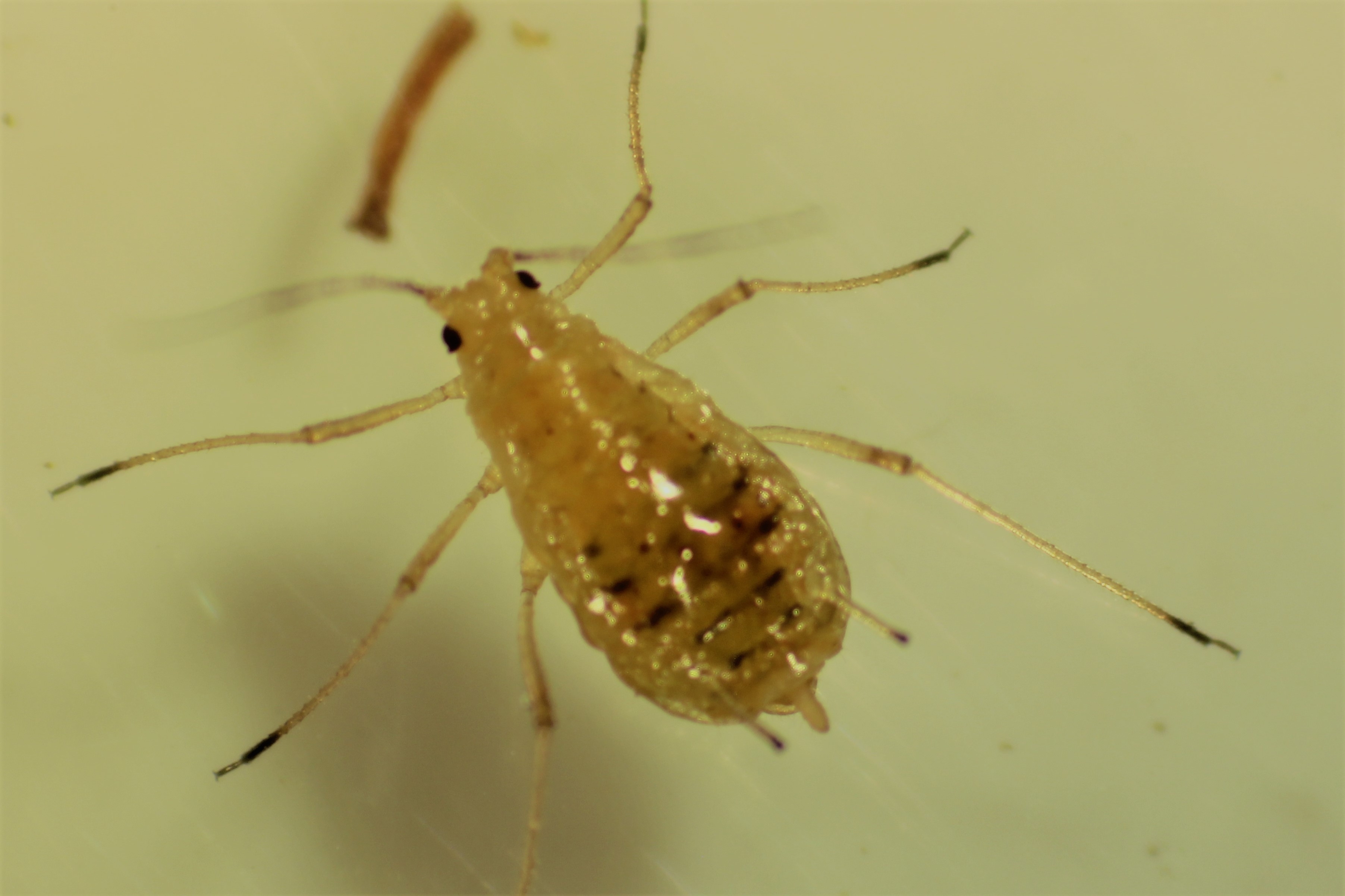
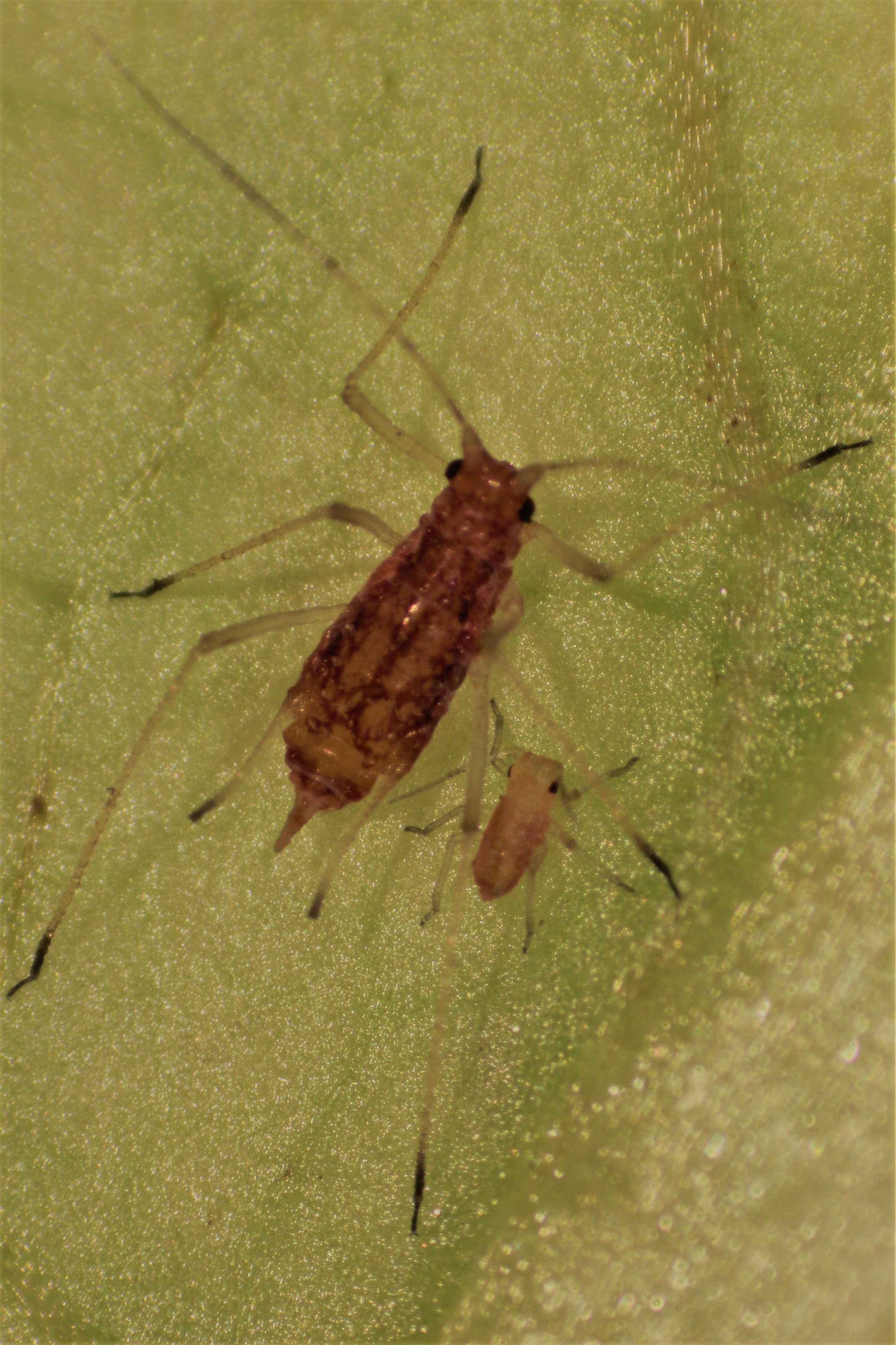
Since last week, I have been receiving samples with “red” aphids to get the identification. It turned out that this time, most of these ‘reddish’ aphids were identified as the lettuce aphid, Nasonovia ribis-nigri (Fig. 1). To me, they look more red-orange; however, their distinct black marks on the abdomen and short cauda (finger-like, short appendage at the end of the abdomen) are some key ID features. These features help to differentiate the lettuce aphid from the other “red” aphid, the potato aphid Macrosiphum euphorbiae (Fig. 2). Yes, we do have two different species of red aphids!
More samples for aphid ID are still coming into the UC Cooperative Extension office. The pattern is still similar to last week. There are mostly lettuce aphids on the submitted samples. I was also able to notice that some samples have mixed populations between the lettuce and the potato aphids, where all the specimens were red.
We have several trial locations where we are scouting for aphids. So far, fields in Soledad have the largest number of aphids documented, as both alates (with wings, collected from yellow sticky cards) and wingless (collected from lettuce samples). If you need further information about the other scouting locations, or would like to double check your aphid ID, please contact or send samples to Alejandro Del-Pozo (adelpozo@ucanr.edu, 831-759-7359).
-
Research Reveals a New Direction for Halting the Citrus Greening Epidemic
ITHACA, NEW YORK, March 26, 2018—New clues to how the bacteria associated with citrus greening infect the only insect that carries them could lead to a way to block the microbes’ spread from tree to tree, according to a study in Infection and Immunity by Agricultural Research Service (ARS) and Boyce Thompson Institute (BTI) scientists.
Citrus greening, also known as “huanglongbing,” is a serious disease dramatically affecting citrus production across the world. Trees with this disease all die after only a few years. Citrus greening has been detected in every citrus-producing county in Florida, throughout the southern citrus growing states and in isolated spots in southern California. There is no effective prevention or cure.
The disease is associated with the bacterium Candidatus Liberibacter asiaticus, CLas for short, which is spread from tree to tree only by a tiny insect vector—the Asian citrus psyllid. If CLas cannot infect the psyllid, its ability to spread citrus greening is halted.
With the long-term goal of disrupting this CLas-Asian citrus psyllid interaction, research molecular biologist and BTI professor Michelle Heck, with the ARS Emerging Pests and Pathogens Research Laboratory, and BTI researcher Marina Mann focused on an important point: not all psyllids spread CLas equally well.
To be spread by the Asian citrus psyllid (ACP) effectively, the bacteria must pass through the cells lining the insect’s gut and multiply. Scientists in Heck’s lab had previously shown that the gut cells of adult ACP show severe stress responses when infected by CLas. The cell nuclei become fragmented, and some cells react to the point of dying, allowing the bacteria to move out of the psyllid and into the tree.
Now, the researchers have found that, unlike adult psyllids, young psyllid nymphs appear to be resistant to the effects of exposure to CLas, and their nuclei rarely reach the same level of disruption. This means CLas cannot enter psyllid gut cells to multiply.
The next step will be to identify the mechanism for this resistance in the nymphs so that it might be manipulated to also halt the spread of CLas by the adults. An important clue lies in how psyllid nymphs interact with symbiotic bacteria in their gut, especially Wolbachiapipientis.
Many insects are hosts for Wolbachia and often depend on these bacteria for important benefits—much like how human health depends on gut bacteria. In their study, Mann and Heck showed that in psyllid nymphs, Wolbachia and CLas are commonly found within the same cells.
The authors hypothesize that, in accommodating the beneficial bacteria, the nymphs also let in more CLas. This is supported by their finding that CLas levels in psyllid nymphs are strongly correlated with Wolbachia levels. Though this link remains to be tested directly, understanding its mechanism could yield an important target for disrupting CLas-psyllid interaction.
“CLas exploits the way nymph and adult psyllids differ in their guts to gain entry into its insect vector,” Heck said. “We may be able to use this new foothold in our understanding to develop ways to block transmission by insects in the citrus grove.”
If this works, “citrus growers will be in a much better situation in terms of disease control and saving the U.S. citrus industry,” said Dan Dreyer, Chairman of the California Citrus Research Board, which funds this and other research aimed at developing a management strategy for citrus greening.
“There are still many unanswered questions about CLas, how it is acquired and transmitted via the Asian citrus psyllid, and how it causes the disease,” continued Dreyer. “The more we learn about CLas and its vector, the closer we will get to moving citrus production past the threat of citrus greening.”
The Agricultural Research Service is the U.S. Department of Agriculture’s chief scientific in-house research agency. Daily, ARS focuses on solutions to agricultural problems affecting America. Each dollar invested in agricultural research results in $20 of economic impact.
-
New Pesticide Laws & Regs Now Taking Effect in California
If you missed the Annual Tree & Vine Expo, Marline Azevedo with the Stanislaus County Ag Commissioner’s office provided an update on changes in laws and regulations for growers moving into 2018. Watch her brief interview as she describes two key changes in Chlorpyrifos permit conditions & pesticide use around school sites.
-
Downy Mildew Devastates Vegetable Crops in Southern California
At the CAPCA Spring Summit in Temecula, growers and crop consultants gathered to discuss issues with pest & disease management, and how to resolve them. This year was especially rough on southern desert vegetable growers for downy mildew, as many were not prepared for all the rain we received earlier this year. Watch this brief video with UC Plant Pathologist Alexander Putman as he explains the situation this year and how to go about managing downy mildew in the field moving forward. Read more about it in Vegetables West Magazine.
-
Managing Seedcorn Maggot in Tulelake Processing Onions
Seedcorn maggot has been a significant problem for processing onion growers in the Tulelake area. Watch this brief video interview with Rob Wilson, UC Farm Advisor & IREC Director, as he shares the latest chemical and cultural practices to minimize this pest in the field. Read more in Vegetables West Magazine.