As Mexico increases tomato exports across the world, including to the United States, prices plummet for American growers. That practice could cost American growers as much as $252 million per year — or 27% in revenue — if imports from Mexico increase by 50% in coming years, based on historical trends, new University of Florida research shows.
That’s a huge loss for American farmers, who produced 1.3 billion pounds of fresh tomatoes in 2020, less than one-third the harvest from the year 2000.
That decline is due to competition from Mexico and other challenges, said Zhengfei Guan, an associate professor of food and resource economics at the UF Institute of Food and Agricultural Sciences.

Guan just published a study on the consequences of intensifying Mexican competition for American growers. The market positions of Mexican and domestic tomato industries completely reversed over the past 20 years. Mexico now dominates the U.S. market, with three times more market share than the domestic industry. That change sparked Guan’s interest in pursuing the new study.
“The two countries had a series of trade disputes over fruit and vegetables recently,” he said. “One reason is that surging imports from Mexico boosted by subsidies have depressed prices, and American growers are quickly losing market shares.”
“The findings from our study will provide tomato producers and policy makers with important insights on the challenges and the sustainability of the U.S. tomato industry,” Guan said.
In his study, Guan measured the potential losses the U.S. industry will sustain as a result of the increasing imports from Mexico, given the steep growth over the years. As a frame of reference, the volume of imported tomatoes from Mexico increased by about 60% over the years 2009-2019.
Results of Guan’s research show that prices of domestic tomatoes are particularly sensitive to imports from Mexico in an increasingly saturated market. The imports are especially damaging to the Florida tomato industry which has about $400 million in sales and has the same harvest seasons as Mexico.
The trade deficit complicates matters for farmers in several commodities – not just tomatoes. Specifically, fruit and vegetables — such as tomatoes, strawberries, peppers, cucumbers and melons – accounted for 50% of the total U.S. agricultural imports from Mexico in 2020, according to the U.S. Department of Agriculture. “But all may not be lost, if the US fruit and vegetable industry could revolutionize the production technology,” said Guan. “Mechanization or automation will be a game changer and is the future for this labor-intensive industry.” — By Brad Buck, University of Florida Institute of Food & Agricultural Sciences




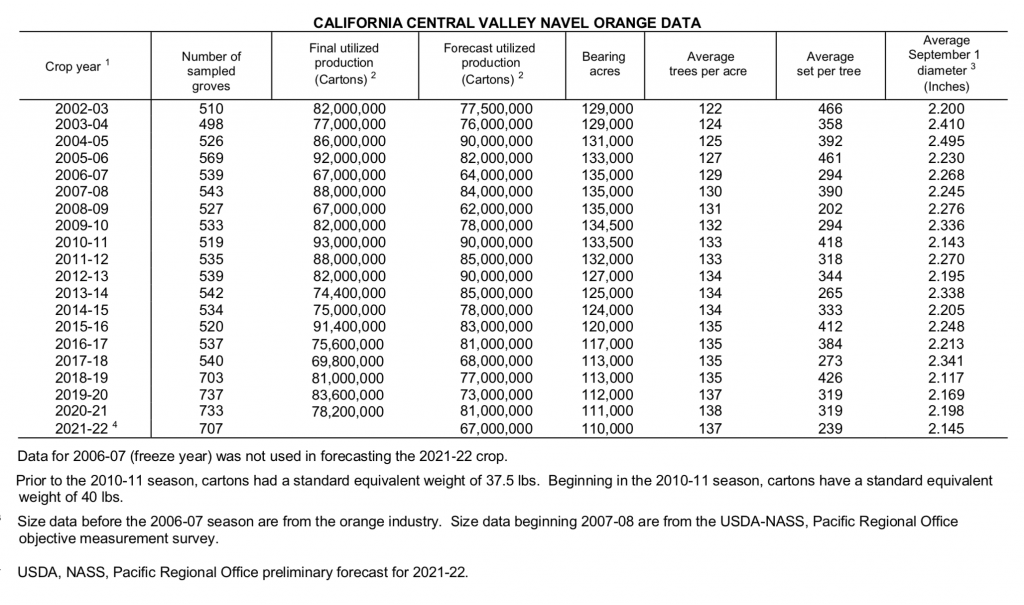

 The COVID pandemic continues to have rippling effects worldwide. For the California citrus industry, COVID and now a devastating drought, have resulted in staggering increases in farming and production costs for growers and minimal price correction in the market.

 Today, POM Wonderful® is excited to launch a social media cocktail contest dedicated to supporting local bars that were impacted by pandemic closures. The competition will put bartenders’ mixology skills to the test as they create cocktails using POM Wonderful 100% Pomegranate Juice. Five winners will each designate a deserving bar to receive a $10,000 cash prize and year’s supply of POM Juice.