Category: Non-Video

  • NMSU Farmington Research Center Participating in Potatoes USA Variety Study

    FARMINGTON – Approximately 5,000 semi-truck loads of potatoes leave the Four Corners region every year. The spuds are headed to dinner tables via retail stores and snack processors.

    The dinner potatoes are grown by Navajo Agriculture Products Industry, while those headed to potato chip processing are grown by 2 men with potatoes an independent contractor renting NAPI farm land.

    Located in the middle of the potato fields is New Mexico State University’s Agricultural Science Center at Farmington, which is conducting variety trials to help the two producers improve their crop quality and yield.

    Potatoes produce more revenue per acre than any other crop that can be produced in the Four Corners region.
    NMSU is one of 12 land-grant university research farms in the United States conducting potato variety trials in cooperation with Potatoes USA, a grower’s group.

    Potatoes USA is an industry-funded marketing organization that promotes five main potato products: fresh table-stock potatoes, fresh chipping potatoes, seed potatoes, frozen potato products and dehydrated potato products.

    “Producers pay 3 cents a hundred-weight to Potatoes USA to provide services that help customers around the world increase demand for potatoes,” said Charles Higgins, president of Higgins Farms Inc. and consultant through Potatoes USA. “The organization invests in marketing and product management research to help grow the potato business.”

    NMSU has benefited from the organization’s investment in research through grant funds for equipment specific for potato research.

    “This year variety trials of 33 table cultivars and 22 chip cultivars were conducted at the Farmington research center fields,” Higgins said. “We are looking for chip varieties that have better chemical stability from storage for potato chips, and varieties that have better appearance for supermarkets.”

    Since NMSU established the research farm 50 years ago on the mesa south of Farmington, variety trials of an array of crops have been done to help NAPI and Four Corners region agricultural producers be more profitable.

    “We are combining research and practical experience to obtain the best results,” said Aaron Benally, NAPI organic/conventional crop director. “The variety trials at NMSU help us to not waste time and money on crops that will not produce well in our environment and climate.”

    As consumer trends shift toward organic produce, NAPI has expanded its farming practice to include organic potatoes. Potatoes_man

    “Because of regulations regarding what chemicals can be used on organic fields, we are transitioning a portion of our farm in order to help NAPI determine which organic crops they might want to grow by looking at pest control methods that are best for their operation,” said Kevin Lombard, superintendent of NMSU’s Farmington facility.

    NMSU has conducted extensive research on evapotranspiration at the Farmington facility. That water research has determined consumptive use indexes and efficient water application strategies on crops grown in the area. This information has helped NAPI and other agriculture producers to be better stewards of water in the semi-arid region.

    Water application research includes determining water-use production function of the crop. This project includes developing and evaluating formulae to predict water application and consumptive use of the crop.

    NMSU assistant professor Koffi Djaman, whose professional field of expertise includes soil and water resources, irrigation engineering and crop response to irrigation, has extended the water research into the potato fields where he is measuring soil moisture with soil probes that transmit data to office computers and cell phones.

    Sensors in the probe at four-inch intervals measure the soil moisture content at different depths.

    “With this system we can tell when we need to water and how much irrigation water is needed,” Djaman said. “After a rain, we can determine how deep that moisture has gone and add the amount needed to meet crop evapotranspiration efficiently.”

    The partnership between NMSU, NAPI and Potatoes USA is helping the region contribute one percent of all potatoes produced in the United States

  • “Growing New Roots” Vegetable Grafting Webinar Series

    Members of the SCRI Grafting Project Team have organized a grafting webinar series. Each month a webinar will be offered, covering a different topic about the science and technology of vegetable grafting. Below is a schedule of future webinars, as well as links to past webinars.

    Upcoming Webinars:

    Date: February 21, 2019
    Time: 2PM (Eastern Time)
    Title: Grafting Experience with Open Field Production of Green-picked Fresh Market and of Processing Tomato in California
    Presenters:Dr. Brenna Aegerter and Gene Miyao, University of California, Cooperative Extension, San Joaquin County and Yolo/Solano/Sacramento counties, respectively
    Sign up: Coming soon.

    Date: March 8, 2019
    Time: 11AM-Noon (Eastern Time)
    Title: Vegetable Grafting Making It Affordable and Beneficial to US Growers
    Presenter:Dr. Richard Hassell, Clemson University
    Sign up: Coming soon.

    Date: April 11, 2019
    Time: 11AM-Noon (Eastern Time)
    Title: Management of Diseases on Cucurbit Rootstock and Scion Seedlings in Greenhouse Environments
    Presenter:Dr. Anthony (Tony) Keinath, Clemson University
    Sign up: Coming soon.

    Date: May 14, 2019
    Time: 11AM-Noon (Eastern Time)
    Title: Grafting to Increase Production for Small-acreage and High Tunnel Tomato Growers
    Presenter:Dr. Cary Rivard, Kansas State University
    Sign up: Coming soon.
    Past Webinars:

    Date: January 31, 2019
    Title: Use of Vegetable Grafting for Soil-Borne Disease Management
    Presenter: Dr. Frank Louws, North Carolina State University

    Date: November 29, 2018
    Title: Indoor Production of High Quality Grafted Plants: Benefits and Energy Optimization
    Presenter: Dr. Ricardo Hernández, North Carolina State University

    Date: October 18, 2018
    Title: Developing a New Tomato Grafting Machine
    Presenter: Yuji Masaki, Kusakabe Kikai Co. Ltd., Osaka Japan


    Vegetable Grafting Webinar Series are organized by SCRI CAP Project Team.
    Contact for questions: Chieri Kubota (kubota.10@osu.edu)

  • California Citrus Mutual Appoints Casey Creamer as President/CEO

    CCM appoints current Executive Vice President and veteran agriculture industry representative.  Current President, Joel Nelsen to step down after 37 years at the helm and assume new role within the organization.

    Joel Nelsen Steps Down After 37 Years of Dedicated Service as President of the California Citrus Mutual

    The California Citrus Mutual (CCM) Board of Directors has named current Executive Vice President Casey Creamer as its new President and CEO effective February 1st.  Creamer came to CCM last February after a national search process to eventually assume the role of President.  He succeeds Joel Nelsen, who has guided CCM for the last 37 years.

    “The citrus industry is very fortunate to have had an individual of Joel’s caliber the last 37 years.  That kind of loyalty is not only rare, it’s unheard of,” stated Board Chairman Curt Holmes.  “Joel has taken a relatively small industry and has given us a huge voice.  We’ve faced many challenges over the years and have addressed them head on with his energy and passion leading the way.  We are incredibly grateful to him for his service and we appreciate his willingness to stay engaged in the industry.

    “We are also very excited to have Casey on board as our new President and CEO,” continued Holmes.  “The Board conducted an extensive search process and interviewed viable candidates from across the country.  We ultimately found the right person in our own backyard.  His prior experience working for a sister commodity organization and his work representing growers on water issues made him an ideal selection.  Over the last year his knowledge of the citrus industry has greatly expanded and he has quickly become a valuable member of the CCM team on behalf of the industry.”

    “I’m humbled by the opportunity to serve,” stated Creamer.  “I’ve been extremely fortunate to work with some of the best leaders over my career and have nothing but respect and admiration for the job that Joel has done advancing issues important to the citrus industry.  I’m looking forward to carrying on the many successful traditions at CCM, while constantly seeking new ideas and pathways to address the significant challenges we face.  With the enthusiasm and commitment that exists in this industry, I am confident that together we tackle any obstacle thrown our way.”

    About CCM – CCM is the only advocacy organization representing CA citrus growers on the economic, regulatory, and political issues that impact them most. We are a voluntary, non-profit trade association dedicated to enhancing the sustainability of the CA citrus industry by advocating for sound, reasonable policy that allows for fair competition in the market place. Our 2,500 members represent 75% of California’s 320,000 acre, $3.8 billion citrus industry.
  • CA Detections of Citrus Disease HLB up 160 Percent

    HLB infected Tree

    Stakes at All-Time High for Backyard & Commercial Trees in 2019

    Detections of Huanglongbing (HLB), an incurable plant disease that kills citrus trees, increased by 160 percent in 2018 compared to the previous year, signaling the growing threat to the state’s iconic citrus trees, landscape and economy.

    HLB is spread by a small pest called the Asian citrus psyllid as it feeds on citrus tree leaves. The disease is not dangerous to humans or pets, but it is fatal for citrus trees and has no cure. Once a tree is confirmed with the disease, it must be removed from the property in order to protect neighboring citrus trees.

    The disease was first discovered in California in 2012 in Hacienda Heights. HLB was detected in 269 trees in 2017 and 699 trees in 2018, with a majority of these occurring in Los Angeles and Orange counties. The disease has not yet been detected in a California commercial grove.

    HLB has devastated commercial citrus production in Florida. Over the course of 10 years, Florida’s commercial citrus industry lost $7.8 billion in revenue, 162,200 citrus acres and more than 7,500 jobs due to HLB. Should the disease spread from backyard trees in Southern California to nearby commercial citrus groves, the livelihood of California’s citrus production could impact about 3,900 farmers and 292,000 acres of citrus production in the state. Commercially grown citrus contributes $7 billion in economic impact to the state and employs more than 22,000 individuals.

    “The livelihood of California’s commercial citrus industry and the generations of families it supports is at risk because of HLB,” said Jim Gorden, a citrus grower in the San Joaquin Valley and chair of the Citrus Pest & Disease Prevention Committee. “We are at a crossroads, and we must all work together to do what is necessary to protect our citrus.”

    Asian Citrus Psyllid Adults

    The California Department of Food and Agriculture (CDFA) has established quarantines throughout the state that limit the transport of citrus across state and international lines, and between areas where the psyllid and disease have been found. Additionally, CDFA has agriculture crews canvasing the state to inspect backyard citrus trees for the Asian citrus psyllid and HLB.

    “The Department is committed to our partnership with California’s commercial citrus industry and residential citrus growers to fight HLB,” said Victoria Hornbaker, interim director of the citrus program at CDFA. “With more than half of California residences estimated to have a citrus tree on their property, and California citrus production supporting billions of dollars in our state’s economy, we all play an instrumental role in protecting our citrus.”

    California residents play an important role in protecting the state’s citrus trees. Residents should: 

    • Proactively inspect their citrus trees for the Asian citrus psyllid and HLB monthly, and whenever watering, spraying, pruning or tending trees.
      • Adult Asian citrus psyllids are brown, about one-eighth of an inch long, and feed with their body at a 45-degree angle on citrus leaves.
      • Symptoms of HLB include blotchy and yellowing leaves, premature and excessive fruit drop, lopsided fruit, and bitter, inedible fruit.
    • Call the state’s pest hotline at 800-491-1899 if the pest or disease is spotted.
    • Cooperate with agriculture officials who may ask to inspect or treat their citrus tree.
    • As part of tree maintenance, visit a local nursery or garden center to get advice on products that can help protect citrus trees.
    • When pruning citrus trees, be sure to dry out citrus clippings or double bag them before removing the plant material from the property.
    • Refrain from moving citrus plants, foliage or fruit as doing this may unknowingly spread the pest.

    More information and photos of Asian citrus psyllids and HLB symptoms are available at CaliforniaCitrusThreat.org.

  • The Recent Romaine Recall and the LGMA

    Although the Center for Disease Control announced on January 9, 2019 that the recent e-coli outbreak is over, there is another part of the story that doesn’t seem to be getting allot of traction. During the investigation the FDA made the comment that based on the spread of the traceback it’s highly unlikely that it originated from a single farm. I don’t have any first-hand knowledge that hasn’t already been publicly disclosed, but I do understand how the produce supply chain works. A single source could be a possible scenario when you think through how one farm can go to multiple processors and terminal markets. There are two troubling allegations floating around about this outbreak that need put to rest.

    First, that the only grower/shipper implicated so far was not a member of the California Leafy Greens Marketing Agreement (LGMA). The LGMA recently sent out a statement confirming that is accurate so that’s not up for further debate. Since it was formed in 2006 the backbone of the LGMA has been that members voluntarily subject themselves to minimum food safety standards verified through unannounced inspections conducted by California Department of Public Health (CDPH) inspectors. The LGMA was never intended to stop all recalls but that through a HACCP type approach to continuously reduce risk starting at the field. Since the marketing agreement was voluntary the failsafe were the commitments made by some of the largest retailers and food service distributors at the time that their buy side would support LGMA members for West Coast sourced leafy greens.

    Being a member of the LGMA is not cheap. One recent study suggested that the incremental cost per acre since 2006 to abide by all of the minimum food safety standards and inspections that come with LGMA is close to $180 per acre. A non-LGMA farm can have the most stringent standards in the industry on paper. However, without incurring the incremental costs associated with maintaining “trust but verify” standards, supported by unannounced site audits they would have a substantial cost advantage over LGMA members.

    The second issue is how a non-LGMA member can get their leafy greens into the retail and food service channels. Just prior to the outbreak the romaine supply was extremely tight in many areas which was reflected in the USDA Mostly Market reports for romaine. Maybe it’s just coincidence, or maybe there is a hole in the process that the buy side needs to step up and address, especially when the industry is short. This is the second recall situation I am aware of in the past three years where the trace back implicated a California shipper/handler that was not an LGMA member.

    I’m not suggesting that somehow LGMA members have a safer product than anyone else. I am suggesting that we owe it to ourselves as an industry and to consumers to ensure that everyone is at least working from the same floor. How high someone wants to go above that floor is an individual business decision. The LGMA may not be the perfect solution to maintaining minimum standards on an industry wide basis, but right now it’s the only solution.

    If the buy side isn’t going to step up and support LGMA for leafy greens sourced from the West Coast, especially when supplies are tight, then maybe it’s time to rethink it. When everyone is allowed to revert back to their own standards, then we really have no standards which is where we were in 2006.

  • Dealing with Diamondback Moth

    It has been a couple of “rough” weeks managing the diamondback moth (DBM), Plutella xylostella (Lepidoptera: Plutellidae), in the Central Coast. Based on my conversations with some PCAs, we are managing large populations of this moth, resulting in high infestations in cole crops like broccoli and Brussel sprouts. Larvae of this insect will typically feed on the underside of the leaves, rasping the epidermis and generating this characteristic “window panning” that results on perforations later on (Fig. 1). Diamondback larvae will also feed on the plant’s growing points, floral stalks, and even on flower buds.

    Fig.1. Characteristic window panning injury from Diamondback larva feeding on a broccoli leaf.

    It seems like populations have been building up during early summer in our area, resulting in enough individuals, at this point, generating significant injury in cole crops. PCAs have been recommending spraying several different insecticides to reduce the infesting populations in affected fields, since damage has been beyond tolerable. For instance, after one of my field visits, I was able to spot affected larvae in treated fields (Fig. 2). Treatments are working, I believe we need to continue being ahead of future DMB infestations.

    Fig. 2. Dark colored insecticide-poisoned and dead Diamondback larva collected from an insecticide treated broccoli field.

    Some information to consider:


    • Scout early. If you have transplants or direct seeded seedlings, pay a visit more often. We are dealing with a large DBM population right now. There will be a high chance that those fields may ended having DMB earlier than expected during this time of the year.
    • Use of adjuvants. The waxy nature of cole crop leaves represents a challenge for insecticide deposition in the canopy. Make sure that you are using a spreader/sticker adjuvant to potentially reduce any pesticide “sliding off” from the waxy leaves.
    • Rotate pesticides. Consider using different classes of insecticides, before using different active ingredients within the same class. For instance, using an avermectin and then a diamide, instead of using chlorantraniliprole and cyantraniliprole (two different active ingredients within the diamide class) back to back. Using different modes of actions will help to delay potential issues of developing insecticide resistance in our DBM populations.
  • Microbial Soil Amendments to Improve Strawberry Health & Production

    In the recent years, interest in biological products – nutrient, biostimulant, soil amendment or pesticide products of plant and microbial origin – is increasing for use in agriculture.  While the growth of the organic industry is partly responsible for this interest, an increase in research exploring the potential of these products and a continued emphasis on sustainable agriculture could also be among other contributing factors.  In an undisturbed ecosystem, both beneficial and pestiferous arthropods and microorganisms coexist, limiting each other’s proliferation and maintaining a balance.  This coexistence is out of balance in an agricultural ecosystem, especially where fumigants and other agricultural inputs are routinely used.  Introducing beneficial microbes and organic or inorganic compounds can enhance the soil structure, promote root and plant growth, improve crop health, reduce salt and drought stress, prevent the loss of nutrients, increase the uptake of nutrients and water, and protect against pests and diseases.

    In a continuous effort to explore the potential of additive, soil amendment, biostimulant, and other products, a new study was conducted in a conventional strawberry field at the Manzanita Berry Farms in Santa Maria.  The following treatments were administered at different times, from planting till the end of production season, as requested by the manufacturer.

    1. Untreated control: Other than the soil incorporated fertilizers during the field preparation, no other nutrient inputs were added during the study.
    2. Grower standard: Transplants were dipped in Switch 62.5WG (cyprodinil+fludioxonil, at 5 oz/100 gal) before planting and a proprietary nutrient regimen that included administration of a humic acid-based product was followed.
    3. Innovak Global regimen: Nutrisorb-L (a blend of polyhydroxy carboxylic acids) at 28 fl oz/ac, starting 2 wk after planting and every 3 wk thereafter through drip.  Packhard (carboxylic acids with calcium and boron) at 28 fl oz/ac, starting at the first fruit set (early January) and every 2 wk thereafter as a foliar spray.
    4. TerraVesco regimen: A microbe-rich Vermi-extract (worm extract) at 10% vol/vol as a transplant dip for 3 hours, followed by application through drip at 7.5 gal/ac after planting, and again in December, 2017 and January, 2018.
    5. Fertum regimen: Transplant dip in 1% vol/vol of Germinal Plus (a product from marine algae), followed by drip applications of Booster (a biostimulant and a natural organic fertilizer made from seaweed) at 0.5 gal/ac in late November and late December, 201; Silicium PK (a biostimulant and a natural organic fertilizer based on silicon enriched with phosphorus, potassium and seaweed extracts) at 0.5 gal/ac late December, 2017 and once a month starting from mid February to early July, 2018; and Foliar (a biostimulant and a natural organic fertilizer from marine algae) at 0.5 gal/ac in mid and late January.
    6. Shemin Garden regimen: EcoSil (a silica fertilizer) at 800 ml/ac once a month starting from early December, 2017 to May, 2018 through drip, and at 200 ml/ac in early May and June, 2018 as a foliar spray; ComCat (based on a plant extract) at 20 gr/ac and EcoFlora (a consortium of Azotobacter spp., Bacillus spp., Paenibacillus spp., Pseudomonas sp., Trichoderma spp., and Streptomyces spp.) at 12 oz/ac one week after EcoSil through drip until May, 2018 and ComCat at 10 gr/ac and EcoFlora at 12 oz/ac as a foliar spray in May and June, 2018.
    7. GrowCentia regimen-low: Yeti containing 1% bacterial culture (of Pseudomonas putida, Citrobacter freundii, Comamonas testosterone, and Enterobacter cloacae) and 2% alfalfa extract applied at 0.6 ml/gal through drip for 90 min weekly from the first drip application.
    8. GrowCentia regimen-high: Yeti at 1 ml/gal through drip for 90 min weekly from the first drip application.
    9. NanoChem regimen: EX10, a biodegradable fertilizer additive containing thermal polyaspartate at 1 qrt/ac through first drip after planting with follow up applications in early January (first bloom), mid February, and mid May, 2018.  The active ingredient binds with cations such as ammonium, calcium, copper, iron, magnesium, manganese, potassium, and zinc and improves their availability for the plant.
    10. BiOWiSH regimen 1: Formula 1 at 1.33 oz/gal for transplant dip followed by 3.53 oz/ac through drip starting 2 wk after planting and every 4-5 wk thereafter.
    11. BiOWiSH regimen 2: Formula 1 at 1.33 oz/gal for transplant dip followed by 3.53 oz/ac as a foliar srpay starting 2 wk after planting and every 4-5 wk thereafter.
    12. BiOWiSH regimen 3: Formula 1 at 1.33 oz/gal for transplant dip followed by 3.53 oz/ac through drip starting 2 wk after planting alternated with a foliar spray every 4-5 wk.
    13. BiOWiSH regimen 4: Formula 1 at 1.33 oz/gal for transplant dip followed by BiOWiSH Crop 16-40-0, a microbial consortium (Bacillus amyloliquefaciens, B. lichenoformis, B. pumilus, and B. subtilis)at 3.53 oz/ac through drip starting 2 wk after planting and every 4-5 wk thereafter.

    Each treatment contained a 165′ long 5.7′ wide bed and replicated four times in a randomized complete block design.  A 15′ long plot in the center of the bed was marked and netted for collecting yield and some other parameters that were compared.  Strawberry cultivar BG 6-30214 was planted on 7 November, 2017.  Other than the untreated control, all other products were administered on top of the grower standard fertility program.  However, only the grower standard transplants were dipped in Switch 62.5WG before planting.

    Various parameters were measured during the vegetative growth and fruit production periods to evaluate the impact of the treatments on crop growth, health, and yield.  Data were analyzed using ANOVA and LSD test was used to separate significant means.
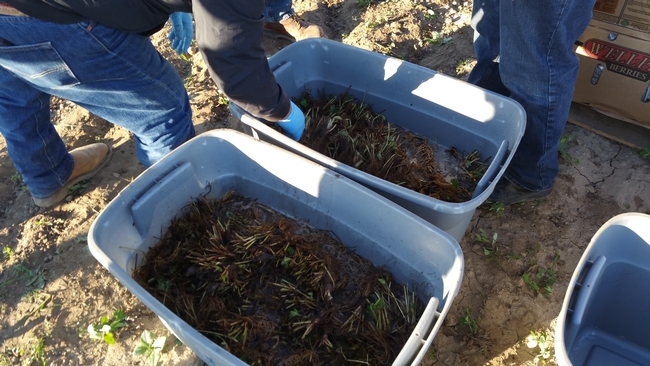
    20171107 Treatments (1)
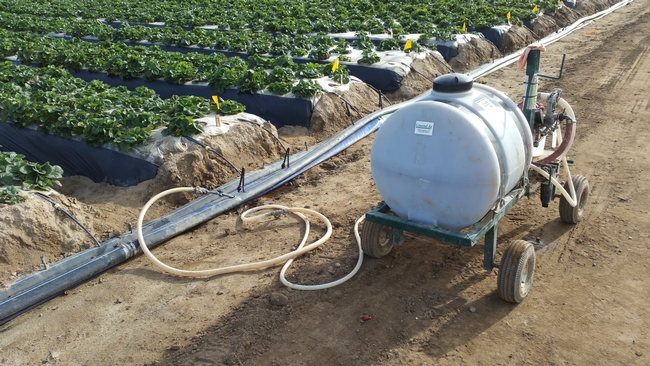
    Transplant treatment (above) and drip application (below).  Photos by Tamas Zold
    20180320 Treatment injection-Tamas Zold (2)
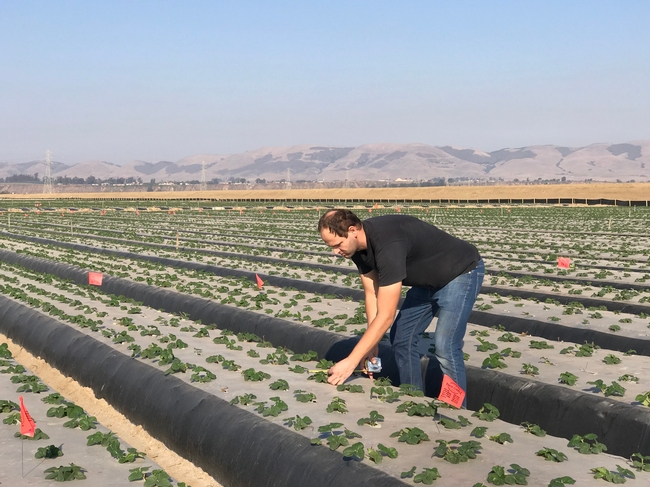
    Measuring the canopy growth

    Tamas Zold taking canopy measurements.  Photo by Surendra Dara

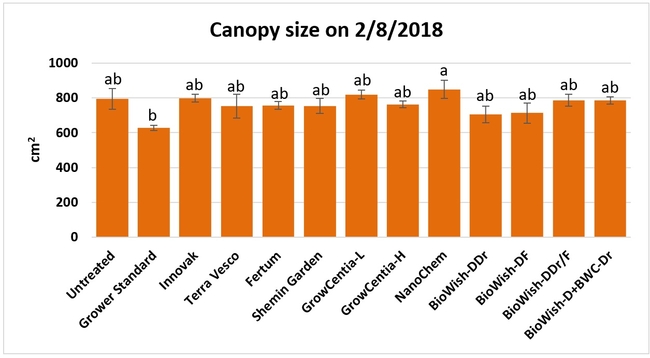
    Canopy growth: Canopy growth was observed on 11 December, 2017, 7 and 30 January, and 8 February, 2018 by measuring the size of the canopy along and across the length of the bed from 20 random plants per bed and calculating the area.  Canopy size significantly (P = 0.0261) different among the treatments only on the last observation date where plants treated with EX10 and the GrowCentia product at the low concentration were larger than those in the grower standard.

    Canopy size

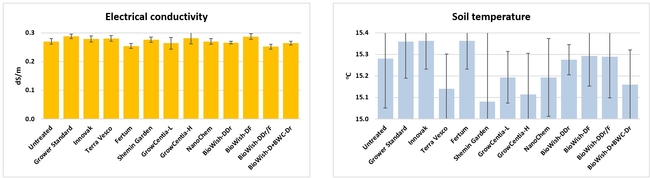
    Electrical conductivity and temperature of soil: From two random location on each bed, electrical conductivity (EC in dS/m) and temperature (oC) were measured about 3 inches deep from the surface on 12 and 25 January, 7 February, 19 March, 18 April, and 29 May, 2018.  Only soil temperature on 25 January significantly (P = 0.0007) varied among treatments where the difference between the highest (untreated control) and the lowest (Vermi-extract) values was 0.8oC.

    EC and Temperature

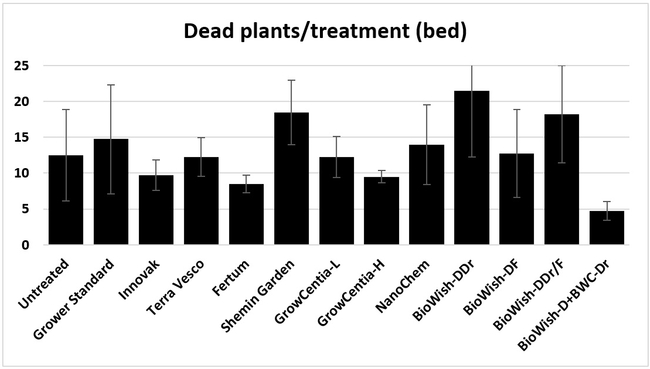
    Dead plants: The number of dead plants represents empty spots in the bed due to the death of transplants.  There were no obvious signs of disease or a particular stress factor associated with those plants except that they were randomly distributed within each bed and throughout the field.  When counted on 18 April, 2018, BiOWiSH regimen 4, Fertum regimen, GrowCentia product at the high rate, and Innovak Global regimen had

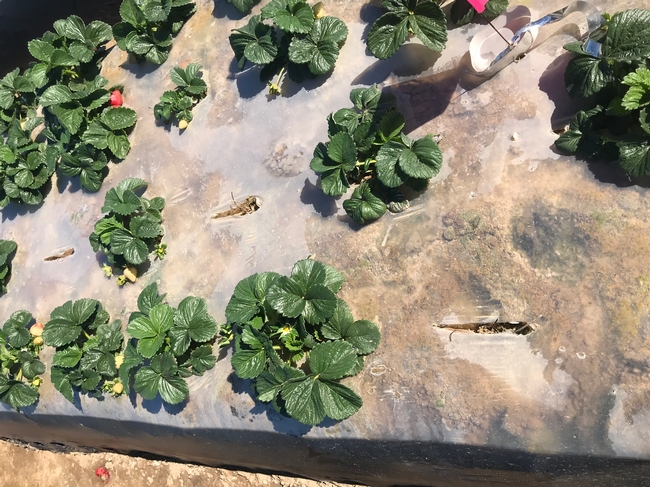
    Missing plants

    Areas where transplants did not establish.  Photo by Surendra Dara

    Dead plants

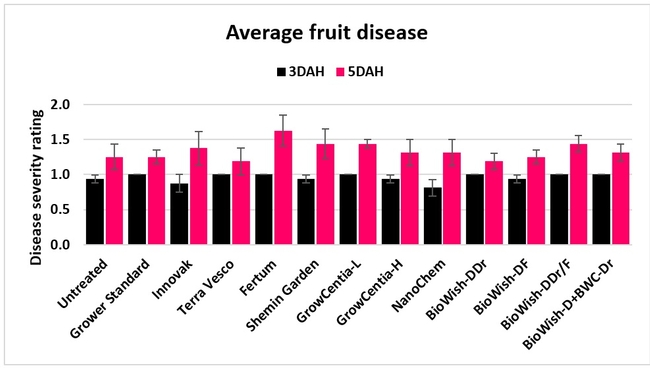
    Fruit diseases: Fruit harvested on 12 March, 3 and 13 April, and 17 May, 2018 from each marked plot was incubated at room temperature in dark in plastic containers and the fungal growth was rated 3 and 5 days after harvest (DAH) using a scale of 0 to 4 where 0=no fungal growth, 1=1-25%, 2=26-50%, 3=51-75%, and 4=76-100% fungal growth. Botrytis fruit rot or grey mold was predominant during the first two observation dates and the growth of other fungi (possibly Rhizopus spp.) was also seen during the last two dates.  In general, fruit disease occurred at low levels throughout the observation period with

    Fruit disease

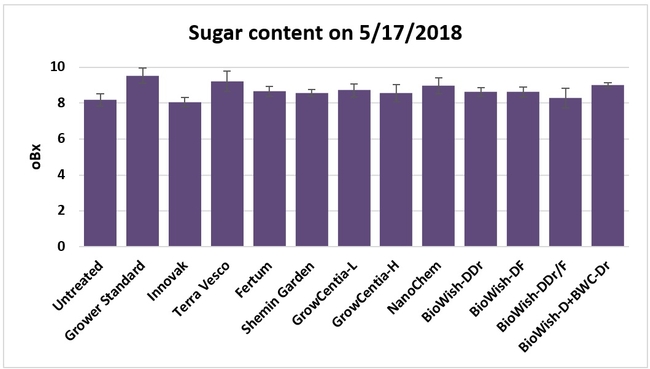
    Sugar content in fruit: Sugar content was measured from two harvest-ready berries per bed on 17 May, 2018 using a handheld refractometer.  Sugar content varied from 8.06 oBx (Innovak Global regimen) to 9.53 oBx (grower standard).

    Sugar content

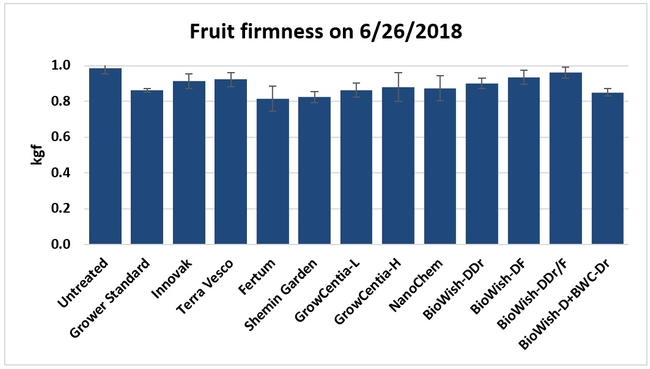
    Fruit firmness: Fruit firmness was measured from eight randomly collected harvest-ready berries from each bed on 28 June, 2018.  Firmness varied from 0.82 kgf (Fertum and Shemin Garden regimens) to 0.98 kgf (untreated control).

    Fruit firmness

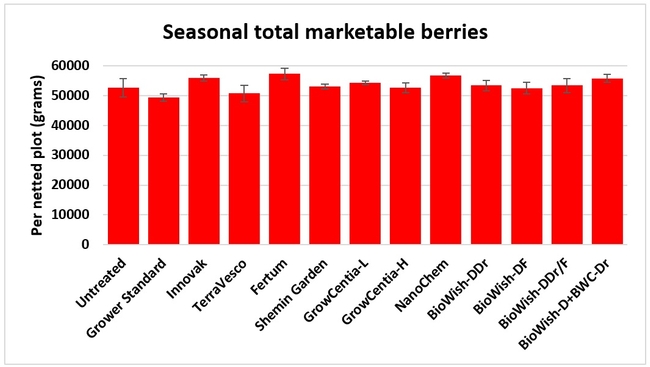
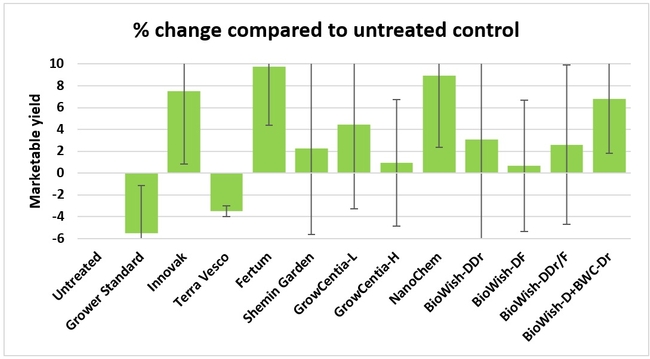
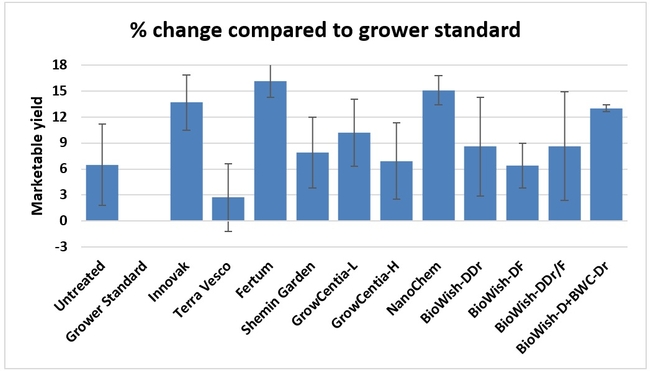
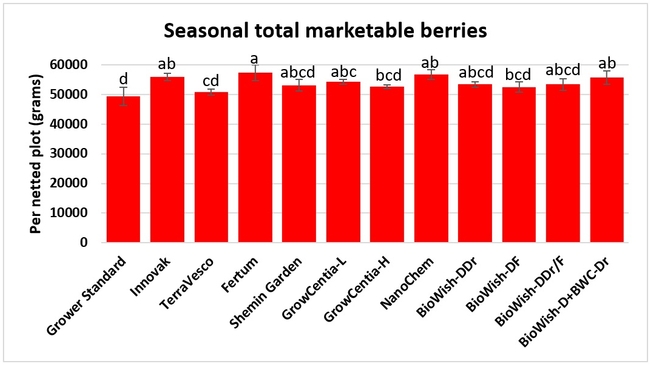
    Fruit yield:Strawberries were harvested from 6 February to 22 June, 2018 on 36 dates.  When compared to the grower standard, the marketable berry yield was 16.2, 15.1, 13.7, and 13% higher in Fertum regimen, EX10 treatment, Innovak Global regimen, and BiOWiSH regimen 4, respectively.  The marketable berry yield was 9.8, 9, 7.5, and 6.8% higher in those respective treatments over the yield from untreated control.

    Seasonal marketable berries 1
    Seasonal marketable yields among all treatments (above) and percentage difference compared to untreated control or grower standard (below).
    Percent difference from UTC
    Percent difference from GS
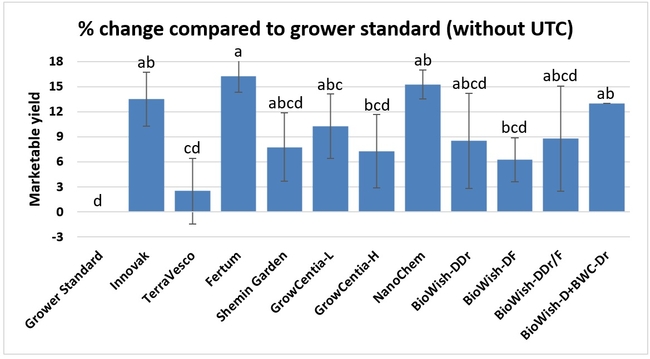
    When data were analyzed without the untreated control, there was a significant difference (P = 0.0279) among the treatments where treatment 5 had significantly higher marketable yield than the grower standard and treatments 3, 8, and 11.  Percentage difference from grower standard yield was also significantly different (= 0.0301) among treatments where the Fertum regimen had the highest increase of 16.25.
    Seasonal marketable berries 2
    Seasonal marketable yields (above) and percentage difference compared to grower standard (below) when untreated control data were excluded from the analyses.
    Percent difference from GS excluding UTC
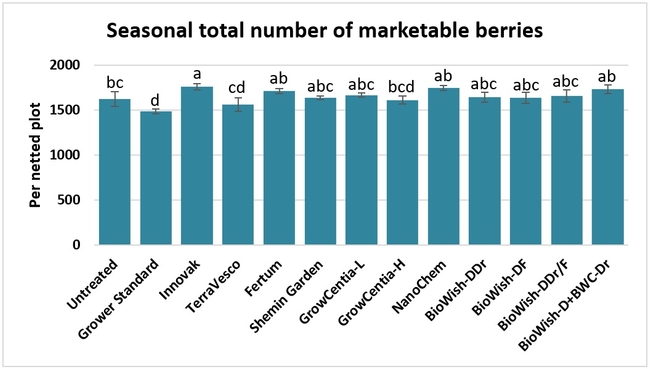
    There was a significant difference (P = 0.0141) among treatments only in the number of marketable berries.  There were more than 1700 in Innovak Global regimen, EX10 treatment, and BiOWiSH regimen 4 while grower standard had 1485, Vermi-extract had 1563, and the rest of the treatments had marketable berries in 1600s.
    Number of berries per plot
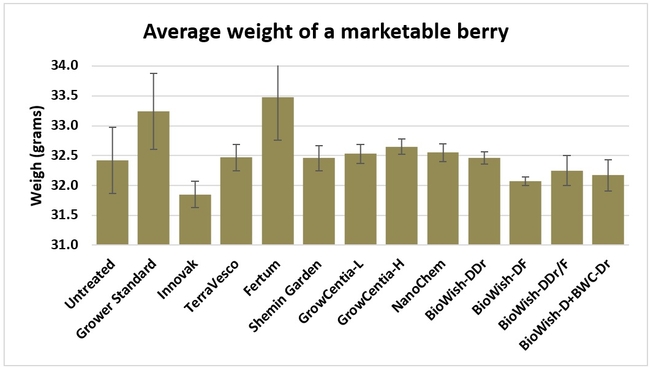
    The average fruit weight was a little over 33 grams in the grower standard and the Fertum regimen whereas the weight varied between 31.9 and 32.7 grams in the rest of the treatments.
    Weight of a marketable berry

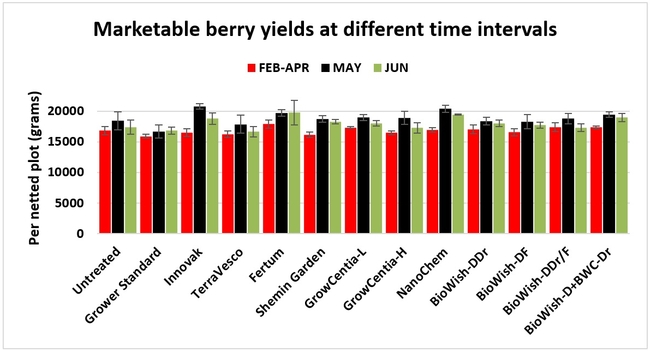
    It took 23 harvest dates in three months (from February to April, 2018) to obtain the first third of the total seasonal yield while the remaining two-thirds were obtained from seven harvest dates in May and six dates in June.  Marketable fruit yield was higher than the grower standard in all treatments and higher than the untreated control in most treatments.

    Yield at different seasonal intervals

    In general, fruit yields were higher and the pest and disease pressure was lower than usual during the study period.  Aleo, a garlic oil based fungicide, at lower label rates was periodically used for disease management and bug vacuums were operated a few times against the western tarnished plant bug as a standard across all treatments.

    This study evaluated some treatment regimens as recommended by the collaborating manufacturers and some of them appear to have a potential for use in strawberry production.  These results help the manufacturers fine tune their recommendations for achieving better yields through additional studies.

    Acknowledgments: We thank the planting and harvest crew at Manzanita Berry Farms for their help with the crop production aspects, Chris Martinez, Tamas Zold, and Maria Murrietta for their technical assistance, Sumanth Dara for statistical analysis, and the support of the industry collaborators who funded the study.


  • New Produce Safety Laws Not New to California Cantaloupe Farmers

    On January 26, 2018 fruit, nut and vegetable farmers throughout the country began being required to follow specific food safety practices under a new federal regulation known as the Produce Safety Rule.

    For now, the new regulation applies only to large farms, defined as those with annual produce sales of $500,000 or more. These are exactly the kinds of farms who supply most of the produce to your local grocery store. Smaller farms will be phased in over the next few years.

    The new rule is part of a sweeping new law called the Food Safety Modernization Act, which was enacted under the Obama Administration but is just now taking effect across the nation. The law represents the first time that food safety practices have been mandatory on farms to prevent foodborne illnesses.

    However, for California cantaloupe the requirements outlined in this law are nothing new. Under a unique mandatory food safety program established in 2012, California cantaloupe farmers have been required to follow set of science-based food safety practices on their farms and in their packing and cooling facilities. For the past six years, California cantaloupe farms have been inspected regularly by government auditors to ensure the practices are being followed. This program is enforced through the California Department of Food and Agriculture. You can read more about the California Cantaloupe Advisory Board’s mandatory food safety program here.

    The California Cantaloupe Board is working now to ensure its required food safety practices match what is required under the new Produce Safety Rule. In many cases, the required practices for California cantaloupe farmers exceed what is required under the new federal rules.

    The practices are similar to what is required of restaurants or to the precautions you might take in your own kitchen to keep food safe. They are activities designed to ensure produce is properly handed by workers who are trained to use good hygiene; to make sure farm equipment is sanitary; to ensure soils where produce is grown is safe and that measures are in place to prevent contamination of produce by wildlife or nearby domesticated animals. Additionally, farmers are required to keep written records to document their farming practices.

    The goal of all these rules and laws is, of course, to make sure that produce is safe. Farmers are committed to producing safe food, but it can be challenging since most produce is grown outside and is often eaten raw. For many years, cantaloupe farmers have funded research to help them farm in the safest manner possible and, though some outbreaks associated with cantaloupe have occurred in the past, none of these outbreaks have involved cantaloupe from California.

    Consumers have a role too in making sure their food is safe and proper handling in your own kitchen is important. The California Cantaloupe Advisory Board has produced a series of videos on safe handling. Please take some time to watch these so you and your family can enjoy delicious, sweet cantaloupe from California with confidence.