Category: Industry News

  • New Food Freezing Concept Improves Quality, Increases Safety and Cuts Energy Use

    Shifting to a new food freezing method could make for safer and better quality frozen foods while saving energy and reducing carbon emissions, according to a new study by U.S. Department of Agriculture’s Agricultural Research Service (ARS) and University of California-Berkeley scientists.

    “A complete change over to this new method of food freezing worldwide could cut energy use by as much as 6.5 billion kilowatt-hours each year while reducing the carbon emissions that go along with generating that power by 4.6 billion kg, the equivalent of removing roughly one million cars from roads,” said ARS research food technologist Cristina Bilbao-Sainz. She is with the Healthy Processed Foods Research Unit, part of ARS’s Western Regional Research Center (WRRC) in Albany.

    “T­hese savings could be achieved without requiring any significant changes in current frozen food manufacturing equipment and infrastructure, if food manufacturers adopt this concept,” Bilbao-Sainz added.

    ARS scientists Cristina Bilbao-Sainz (right) and Roberto Avena-Bustillos demonstrate the use of isochoric freezing chambers. Photo: U.S. Department of Agriculture.

    The new freezing method, called isochoric freezing, works by storing foods in a sealed, rigid container—typically made of hard plastic or metal—completely filled with a liquid such as water. Unlike conventional freezing in which the food is exposed to the air and freezes solid at temperatures below 32 degrees F, isochoric freezing preserves food without turning it to solid ice.

    As long as the food stays immersed in the liquid portion, it is protected from ice crystallization, which is the main threat to food quality.

    “Energy savings come from not having to freeze foods completely solid, which uses a huge amount of energy, plus there is no need to resort to energy-intensive cold storage protocols such as quick freezing to avoid ice crystal formation,” Bilbao-Sainz said.

    Isochoric freezing also allows for higher quality storage of fresh foods such as tomatoes, sweet cherries and potatoes that are otherwise difficult to preserve with conventional freezing.

    Another benefit of isochoric freezing is that it also kills microbial contaminants during processing.

    “The entire food production chain could use isochoric freezing—everyone from growers to food processors, product producers to wholesalers, to retailers. The process will even work in a person’s freezer at home after they purchase a product—all without requiring any major investments in new equipment,” said WRRC center director Tara McHugh, co-leader of this study. “With all of the many potential benefits, if this innovative concept catches on, it could be the next revolution in freezing foods.”

    UC-Berkeley biomedical engineer Boris Rubinsky, co-leader of this project, first developed the isochoric freezing method to cryopreserve tissues and organs for transplants.

    Since then, ARS and UC-Berkeley have applied for a joint patent for applying isochoric freezing to preserving food. The research team is now developing the best applications for this technology in the frozen foods industry, especially scaling up the technology to an industrial level. They also are seeking commercial partners to help transfer the technology to the commercial sector.

    UC-Berkeley mechanical engineer Matthew Powell-Palm, one of the lead authors of the study paper, noted that “isochoric freezing is a cross-cutting technology with promising applications in not only the food industry, but in medicine, biology, even space travel.”

    WRRC has also been designated a National Historic Chemical Landmark in 2002 by the American Chemical Society for developing the Time-Temperature Tolerance studies, which made possible the production of stable, safe and high quality frozen food, revolutionizing the industry in the 1950s.

    This research was published in Renewable & Sustainable Energy Reviews.

    The Agricultural Research Service is the U.S. Department of Agriculture’s chief scientific in-house research agency. Daily, ARS focuses on solutions to agricultural problems affecting America. Each dollar invested in agricultural research results in $17 of economic impact.
  • California Processing Tomato Crop Forecast Below May’s Expectation

    California Processing Tomato Crop Forecast Below May’s Expectation

    Contracted production for California processing tomatoes is forecast at 11.1 million tons, averaging 48.9 tons per acre. The current production forecast is 1.9% below last year’s contracted production, and 4.3% below the May forecast. The projected harvested acreage of tomatoes grown under contract is 227,000 acres, which 0.4% lower than in 2020.

    Drought concerns impacted planting decisions for the 2021 processing tomato crop and acreage has decreased significantly from early season intentions. Extreme high temperatures in May and throughout the summer lowered expected yields and slowed down operations at the canneries. Crop quality is reported to be average or slightly above average.

    Harvest began the first week of July and the flow of tomatoes has generally kept pace with the previous two years. The Processing Tomato Advisory Board published shipments through August 28, 2021, showing a 4.3% decrease compared to the end of August in 2020.

    This processing tomato estimate is funded by the California League of Food Producers.

  • Giving Strawberry Growers a Ray of (UV) Light at the End of Their Pest Tunnel

    For a few years, University of Florida (UF) plant pathologist Natalia Peres has used an ultraviolet light system to thwart strawberry pathogens. Peres even published a study this year that showed the system helps control powdery mildew. Two fellow researchers with the UF Institute of Food and Agricultural Sciences (UF/IFAS) have now used the same robotic UVC applicator to show that it works well to slow the spread of one strawberry pest, but not a second.

    The three scientists and others at UF/IFAS are trying to tamp down pests and diseases for the strawberry industry. Joseph Dean Montemayor — working under the supervision of entomology assistant professor Sriyanka Lahiri — focused on whether a system that uses UVC radiation can control mites and thrips.

    Field technician Marissa Cassaway and master’s student Joseph Montemayor examine strawberries treated with UVC radiation at the Gulf Coast Research and Education Center (photo by Sriyanka Lahiri, UF/IFAS).

    They also studied whether UVC would interfere with biological control efforts of mites or thrips, both of which cause significant fruit loss if left untreated. In this case, they examined whether radiation would kill the predatory mites that eat these pest mites and thrips infesting strawberries.

    Results indicate that the eggs of the predatory mites, just like those of spider mites, die after irradiation with UVC. This indicates that biological control through predatory mites can be most effective only after a strawberry crop is treated with UVC radiation, rather than irradiating strawberries while the predatory mites are present in the field simultaneously.

    The research, part of Montemayor’s recently completed master’s thesis, shows that the system works well to control spider mite eggs but not chilli thrips. Specifically, the dosage of UVC radiation applied to strawberry plants in the field mostly suppressed spider mite eggs from hatching but did not deter chilli thrips infestations, said Lahiri, a faculty member at the Gulf Coast Research and Education Center (GCREC).

    The study’s results will become part of an integrated pest management system to help strawberry growers.

    “This information is useful to the strawberry growers of Florida, who have to constantly battle with chilli thrips and spider mites,” Lahiri said. “Also this information is relevant to strawberry growers across the world, industry partners and the small-fruit crops research and Extension community.”

    Montemayor, who will graduate in August with a master’s degree in entomology and nematology from the UF/IFAS College of Agricultural and Life Sciences, planted new UF/IFAS strawberries including ‘Florida Brilliance,’ ‘Florida Radiance’ and ‘Sweet Sensation’ in fields at GCREC.

    For his thesis, Montemayor also studied the potential impact of UVC radiation on predatory mites. Strawberry growers currently use a mite known as Phytoseiulus persimilis to keep the twospotted spider mite from harming their fruit, Lahiri said. Montemayor exposed this adult predatory mite to the same dose of UVC that was effective in  suppressing spider mite eggs.

    He found that P. persimilis remained unaffected and was able to actively feed on spider mite eggs.

    “Thrips and spider mites are the most economically damaging species affecting strawberry production in Florida,” Lahiri said. “Even though there is overwhelming reliance on the use of synthetic insecticides and miticides to manage these pests, biological control agents such as predatory mites can be effective in integrated pest management in strawberry. Another way is to use UVC irradiation, applied after sunset, to manage these entomological pests along with strawberry pathogens. Both these pest management tools can be used complementary to each other.”

    Lahiri, Peres and vegetable entomologist Hugh Smith, all faculty members at GCREC, served as members of Montemayor’s master’s thesis committee. — By Brad Buck, University of Florida Institute of Food & Agricultural Sciences

  • Study Shows Pest Attack-Order Changes Plant Defenses

    The dining time of different insects impacts a plant’s defenses and nutritional quality—a complexity uncovered in new research with implications for pest management strategies.

    A piercing-sucking, virus-carrying aphid has long worried pea plant farmers, but a more innocuous-seeming weevil that only takes tiny bites from leaves was found to also play a significant role in plant health. Depending if the weevils eat before, or after, the aphids, they can increase or decrease the plant’s ability to fend off the virus.

    While many studies have focused on the impacts of a single pest, this study, published Aug. 4 online in Molecular Ecology, is one of the few to look at the interaction of several antagonists, in this case, two pests and a virus.

    “Plants in the field have a chance of being exposed to many different types of biotic stress elements, what we call antagonists,” said Saumik Basu, a WSU post-doctoral fellow and the study’s lead author. “Based on how these antagonists are coming to the plants, that can change the plant responses and ultimately leads to changes in their overall productivity.”

    Through a set of greenhouse experiments, Basu and colleagues from the Crowder Laboratory at WSU and Cornell University attempted to understand what happens to the pea plant fields of Eastern Washington’s Palouse area. In the field, plants face alternating infestations of pea leaf weevils, Sitona lineatus, and pea aphids, Acrythosiphon pisum, and a pathogen the pea aphids are also known to carry, Pea enation mosaic virus, or PEMV.

    The researchers created experiments where first the weevils feasted on the plants then the aphids, and others that reversed the order. They also included scenarios where the plants were infected with the virus and some where they did not as well as a control group.

    After removing the pests, the researchers let the plants grow for a week. Then, they ran plant samples through different sets of analyses to assess the plants’ defense hormone levels and associated defense genes as well as nutritional qualities.

    Saumik Basu (Photo by Bob Hubner, WSU)

    They found that when the weevil feasts first on the pea plants, it enhances some of the plants’ anti-pathogen defense responses, helping them become more resilient to a virus infection.

    If the weevil dines second, after the aphids, it usually reduces the anti-pathogen defense responses, so the virus spreads more easily.

    In turn, virus-infected plants had stronger anti-herbivore responses, putting out compounds that interfere with the plant-eating pests.

    Further complicating the issue, the study found that when the weevils helped induce the anti-pathogen responses it lowered the nutrition of the plant by reducing the plants’ available amino acids.

    These complex interactions hold important implications for pest management, Basu said.

    “If we know beforehand when these interactions are happening, that information gives farmers a best possible remedy to prevent their fields from the attack,” he said. “This kind of information is really important for designing sustainable pest and pathogen management strategies.”

    Pea aphids (Photo by Bob Hubner, WSU)

    This study is part of a series of investigations into the interactions among many organisms that plants encounter. An earlier study in Functional Ecology looked at the antagonism between a plant virus and nitrogen-fixing bacteria called rhizobia that live in the soil. An upcoming study looks at the interaction between the weevils and rhizobia.

    These complex relationships are critical to understanding plant responses, said Basu.

    “In a natural environment, a plant is exposed to different types of organisms, not just one or two, but many,” he said. “The order and the complexity—how many there are, what different types there are and their interactions—affect how the plant responds to all these attackers.” — By Sara Zaske, Washington State University

  • The Threat of Branched Broomrape for California Processing Tomato

    Branched broomrape (Phelipanche ramosa), a parasitic weed that was the focus of a $1.5 million eradication effort four decades ago in California, has recently re-emerged in tomato fields in several Central Valley counties. Processing tomatoes are important to the California agricultural economy; the state produced over 90% of the 12 million tons of tomatoes grown in the United States in 2018. Branched broomrape is listed as an “A” noxious weed by the California Department of Food and Agriculture (CDFA); discovery of broomrape in California tomato fields leads to quarantine and crop destruction without harvest, resulting in significant economic loss to growers.

    In countries where broomrape is common, yield reductions caused by this parasitic weed can range from moderate to 80%, depending upon the infestation level, host and environmental conditions. Developing a detailed understanding of the biology of this weed under local conditions is an important step towards developing effective management plans for California. In the latest issue of California Agriculture (a University of California, Agriculture & Natural Resources publication), extension researchers discuss branched broomrape in the context of California production systems, particularly of tomato. They also discuss the potential management practices that could help to prevent or reduce the impacts of branched broomrape in tomatoes and other host crops. Read the full article HERE.

  • Field Bindweed Yield Impacts on Processing Tomatoes May be Less than Expected

    Field Bindweed Yield Impacts on Processing Tomatoes May be Less than Expected

    Figure 1. Field bindweed (Convolvulsus arvensis)

    Field bindweed (Convolvulsus arvensis) is considered by many tomato growers to be the most problematic of all weeds in California production areas. Indeed, field bindweed and the closely related morning glory weeds were ranked the 8th most troublesome weeds in North America in a recent survey by the Weed Science Society of America. The rapid adoption of drip irrigation and the economic necessity of maintaining the beds and replanting with only minimal tillage for multiple seasons in processing tomatoes has created a system where field bindweed has become more prevalent. Field bindweed is extremely difficult to control because it propagates from seed and vegetatively from buds formed in the roots. Seedlings can be controlled with tillage when very young, but they become perennial very rapidly. Chemical control of seedlings is possible, but established plants are much more difficult to control. Established plants often have a large root system relative to the amount of top growth, and thus are extremely tolerant of post emergence herbicides such as carfentrazone (Shark), glufosinate (Rely), and glyphosate (Roundup).

    Bindweed is a headache not only for its persistent and pernicious growth habit and ability to reduce tomato yields, but also because it can physically stop a processing tomato harvester in the field. Vigorously growing vines can become entangled around the shaker and conveyor belts, requiring the equipment operator to shut down and manually clear out the foliage.

    Several years ago, myself and other UC researchers conducted herbicide trials evaluating field bindweed control — with marginal success. In a given year and location, most of the registered herbicides in tomatoes gave only temporary suppression – about 40 – 80% bindweed control at 8 weeks after transplanting. Best results were observed where herbicides were stacked: trifluralin (Treflan) pre-plant incorporated followed by rimsulfuron (Matrix) post. Glyphosate helped in situations where the bindweed emerged early and could be applied before transplanting (Figure 2).

    Figure 2. Bindweed control plots at UC Davis. Untreated control on the left, glyphosate, trifluralin, and rimsulfuron on the right.

    Earlier this year, I was asked to summarize the effects of weeds on processing tomato yield. This made me go back and look at this work, but with a slightly different emphasis: impact of weed control (or really, lack of weed control) on yield. To increase the size of my dataset, I also included data from trials done at UC Davis. Where I had data for both yield and weed control in good, replicated trials, I performed a regression analysis comparing % weed control and % relative yield (relative yields remove the year-to-year and location variability). In the end, I used 4 trials from 2012-13 (Table 1).

    Scott Stoddard, UC Cooperative Extension Merced-Madera Counties Vegetable Crops and Soils Farm Advisor

    Surprisingly, these data suggested that where bindweed dominated, it did not have a big impact on processing tomato yield. Even with just 50% control 8 weeks after transplanting, potential yield was 88-95%. This may have occurred because bindweed does not shade out the tomato canopy nearly as much as some of the common annual weeds. However, when tall broadleaf weeds dominated, such as pigweed, nightshades, and lambsquarters, yields dropped rapidly. I had some plots with a 99% yield drop if these weeds were allowed to grow all season. In this situation, the weeds towered over the tomato canopy.

    There have been no new registered herbicides in processing tomatoes in the last 10 years, while robotic weed control has progressed rapidly during this time. Unfortunately, neither our current slate of registered herbicides nor robots provide adequate control of field bindweed. This may not matter as much as previously thought, however. The annual grasses and broadleaf weeds have far greater yield impact, especially when they grow tall and shade out the crop. Thankfully, there are several registered herbicides that provide effective control of those weed types. — By Scott Stoddard, UC Cooperative Extension

  • Slowing the Onset of Alzheimer’s by Eating Berries

    Slowing the Onset of Alzheimer’s by Eating Berries

    Americans are growing old and, sadly, the aging process for many means more than simply turning gray or thinning hair.

    According to the United States Census, in about a dozen years the number of Americans over 65 will outnumber children. Further, the Centers for Disease Control and Prevention project the number of Americans living with Alzheimer’s disease (AD) to nearly triple by 2060.

    Fortunately, USDA-funded research may have found a tasty way to slow disease onset.

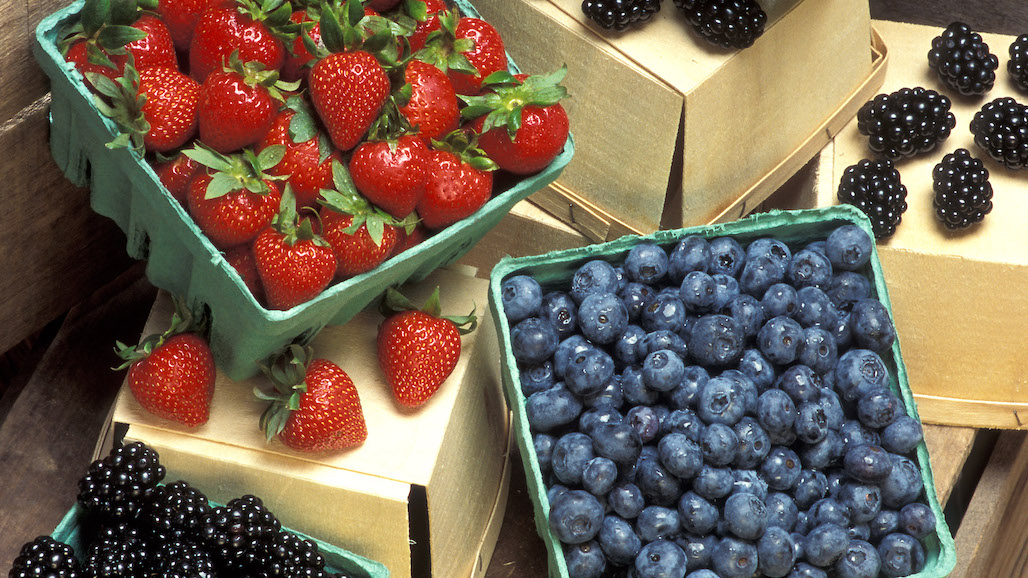
    study published in the American Journal of Clinical Nutrition suggests that diets high in flavonoids may protect cognitive health. Flavonoids are plant nutrients known for their antioxidant, antiviral, and anticancer properties and are found in berries, tea, dark chocolate, and other foods.

    “Alzheimer’s disease is a significant public health challenge,” said Paul Jacquesnutritional epidemiologist at the Jean Mayer USDA Human Nutrition Research Center on Aging at Tufts University in Boston. “Given the absence of drug treatments, preventing Alzheimer’s disease through a healthy diet is an important consideration.”

    According to Jacques, who co-authored the study, about one in nine adults over age 65 are living with AD. While memory loss is the hallmark of AD, Jacques said it has many other cognitive and behavioral changes, including difficulty carrying out simple multistep activities, such as dressing or cooking; loss of judgement and attention; and changes in behavior such as depression and agitation.

    Jacques’s study, one of the first truly large, long-term studies to examine the effects of flavonoids on AD, showed that diets high in certain types of flavonoids present significant promise toward preventing the onset of Alzheimer’s.

    “Our study examined the association between long-term flavonoid intakes and AD over an average follow-up of 19.6 years among 2,809 participants,” he said. Results show that those who consumed the most of three types of flavonoids were more than 50 percent less likely to develop AD risks compared with those who ate the least. Plant foods, such as vegetables, fruits, berries, nuts, and seeds are good sources of flavonoids, as is a cup of green tea each day.

    Age 50 is not too late to make positive dietary changes. “While the risk of dementia increases over age 70, it is now believed that its preclinical stage may predate clinical diagnosis by decades” he said. “A healthy diet during this preclinical period may provide the best opportunity for slowing the development of AD. When you approach 50, you should start thinking about a healthier diet if you haven’t already.”

    According to Jacques, flavonoid-rich diets help more than just Alzheimer’s disease and related dementia.

    “The bottom line is that there are many reasons to consume a healthy diet, including lower risks of cardiovascular disease and some cancers. We can now add protection of cognitive health and prevention of Alzheimer’s disease to that list.” – By Scott Elliott, USDA-ARS Office of Communications

  • Slowing the Onset of Alzheimer’s by Eating Berries

    Americans are growing old and, sadly, the aging process for many means more than simply turning gray or thinning hair.

    According to the United States Census, in about a dozen years the number of Americans over 65 will outnumber children. Further, the Centers for Disease Control and Prevention project the number of Americans living with Alzheimer’s disease (AD) to nearly triple by 2060.

    Fortunately, USDA-funded research may have found a tasty way to slow disease onset.

    study published in the American Journal of Clinical Nutrition suggests that diets high in flavonoids may protect cognitive health. Flavonoids are plant nutrients known for their antioxidant, antiviral, and anticancer properties and are found in berries, tea, dark chocolate, and other foods.

    “Alzheimer’s disease is a significant public health challenge,” said Paul Jacquesnutritional epidemiologist at the Jean Mayer USDA Human Nutrition Research Center on Aging at Tufts University in Boston. “Given the absence of drug treatments, preventing Alzheimer’s disease through a healthy diet is an important consideration.”

    According to Jacques, who co-authored the study, about one in nine adults over age 65 are living with AD. While memory loss is the hallmark of AD, Jacques said it has many other cognitive and behavioral changes, including difficulty carrying out simple multistep activities, such as dressing or cooking; loss of judgement and attention; and changes in behavior such as depression and agitation.

    Jacques’s study, one of the first truly large, long-term studies to examine the effects of flavonoids on AD, showed that diets high in certain types of flavonoids present significant promise toward preventing the onset of Alzheimer’s.

    “Our study examined the association between long-term flavonoid intakes and AD over an average follow-up of 19.6 years among 2,809 participants,” he said. Results show that those who consumed the most of three types of flavonoids were more than 50 percent less likely to develop AD risks compared with those who ate the least. Plant foods, such as vegetables, fruits, berries, nuts, and seeds are good sources of flavonoids, as is a cup of green tea each day.

    Age 50 is not too late to make positive dietary changes. “While the risk of dementia increases over age 70, it is now believed that its preclinical stage may predate clinical diagnosis by decades” he said. “A healthy diet during this preclinical period may provide the best opportunity for slowing the development of AD. When you approach 50, you should start thinking about a healthier diet if you haven’t already.”

    According to Jacques, flavonoid-rich diets help more than just Alzheimer’s disease and related dementia.

    “The bottom line is that there are many reasons to consume a healthy diet, including lower risks of cardiovascular disease and some cancers. We can now add protection of cognitive health and prevention of Alzheimer’s disease to that list.” – By Scott Elliott, USDA-ARS Office of Communications

  • Japan Grants Market Access To California Plums

    Japan Grants Market Access To California Plums

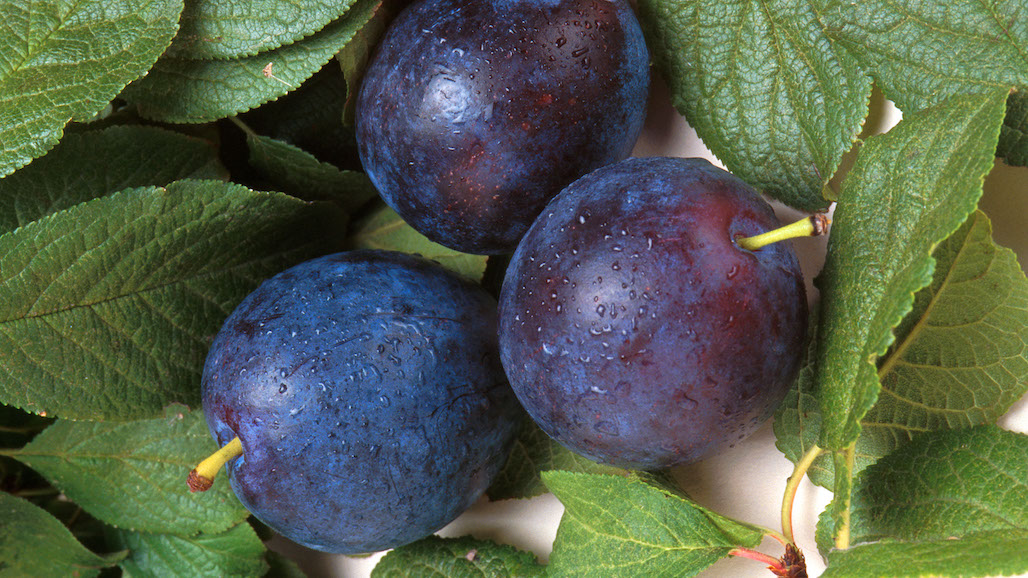
    The United States Department of Agriculture (USDA) announced that Japan has granted market access for California plums. Eliminating the phytosanitary barriers keeping California plums out of the Japanese market required multiple rounds of technical negotiations that were somewhat hampered by the COVID-19 pandemic.

    The California Fresh Fruit Association (CFFA) would like to extend its appreciation to the USDA Animal Plant Health Inspection Service and Agricultural Research Service’s negotiators and experts, as well as the Fresno County and Tulare County Agricultural Commissioner offices for their invaluable contributions to this process.

    There will be strict packing and fumigation protocols in place but given the success of the existing California nectarine program for Japan, California stone fruit exporters have already demonstrated a commitment to meeting Japan’s requirements.

    “Trade barriers threaten the health and viability of the industry. This represents a significant opportunity for California plums, as Japanese consumers value premium fruit and recognize California fruit’s superior quality. As the global economy rebounds from the COVID-19 pandemic, expanding market access will continue to be critical to the industry’s success,” said Ian LeMay, CFFA President.

    The California Fresh Fruit Association (CFFA) is a voluntary, nonprofit agricultural trade association that represents California’s fresh fruit industry. CFFA promotes California nectarines, peaches, and plums (stone fruit) around the world by reducing trade barriers and expanding markets. The California stone fruit industry, based predominantly in the San Joaquin Valley, is dependent on opening new markets and maintaining access to approximately 50 countries around the world. 

  • Growers Urged to Participate in Kern County Coordinated Treatment

    Growers Urged to Participate in Kern County Coordinated Treatment

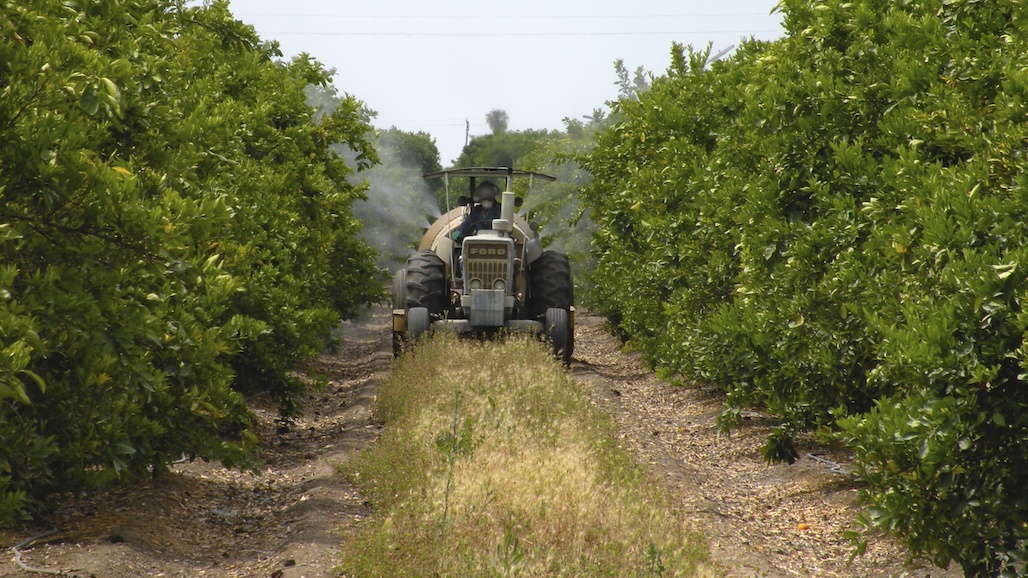
    Citrus Pest & Disease Prevention Program — A significant number of Asian citrus psyllid (ACP) detections in Kern County – more than 115 since this time last year – is a stark reminder to remain vigilant against the pest and the deadly disease it can spread, Huanglongbing (HLB). Last week, an adult ACP was confirmed from a commercial citrus trap in the east Edison area. This detection, along with two recent detections in Arvin residential properties, provides more urgency for growers with citrus east and south of Bakersfield to participate in the upcoming coordinated treatment.

    The preferred timing of the treatment is mid-August through mid-September to prevent ACP populations from building on the fall foliar flush. Coordinated treatments like this were done during the same time period in 2018 and 2019 with great success in significantly suppressing ACP populations in commercial citrus orchards.

    The San Joaquin Valley ACP/HLB Task Force recommends growers treat all commercial citrus orchards located south or east of Bakersfield – including young, non-bearing trees. For more information on ACP treatments and effective materials, see the University of California’s UCIPM Pest Management Guidelines for Asian Citrus Psyllid.

    Past coordinated treatments in the county have been successful in suppressing ACP populations. By participating in this late summer/early fall treatment, Kern County can greatly reduce the number of psyllids, and thus reduce the risk of HLB being transmitted to our commercial citrus.

    If you suspect ACP in your orchard, please notify the California Department of Food and Agriculture Pest Hotline at 1-800-491-1899. For questions, contact Kern County Grower Liaison Judy Zaninovich at jsleslie@msn.com or 559-730-8691 or the Kern County Agricultural Commissioner’s Office at 661-868-6300.