Category: Industry News

  • Transitioning to High-Density, Mechanically Harvested Table Olive Acreage

    Transitioning to High-Density, Mechanically Harvested Table Olive Acreage

    California’s table olive industry is over 100-year-old, and it is currently undergoing transformation to mechanically harvestable acreage similar to almond, walnut, prune, pistachio, and other tree crops.

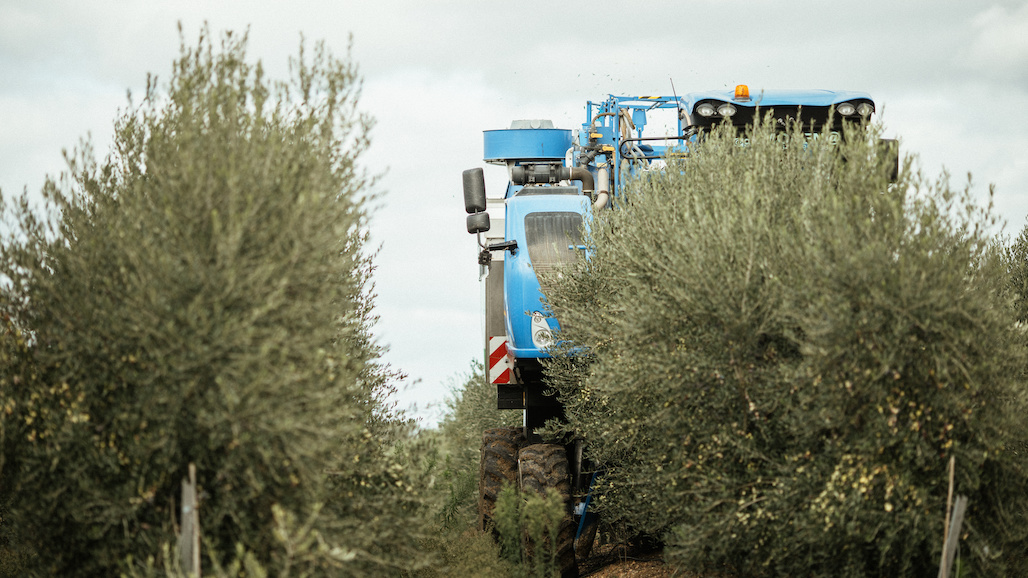
    The modern acreage configuration for table olives provides multiple benefits including increased tree count, efficient irrigation methods, mechanically adapted spacings, and a uniform tree structure. While traditional olive acreage is typically planted 60 to 80 trees per acre and hand-harvested, the modern acreage system is optimized with 200 to 250 trees per acre and mechanical harvesting using shaker technology. This approach doubles the yield per acre and reduces harvesting costs to roughly one-third of hand harvesting, which drives significantly improved grower economics.

    Olive trees are also drought-tolerant and annually use less water than almonds or walnuts – a critical attribute given California’s constant drought concerns, rising water costs, and tightening water supply.  The trees enjoy peak productivity for decades and perform well on marginal soil, which helps minimize capital investment. Another outstanding attribute of the California olive industry is virtually all products are marketed and sold within the United States with zero reliance on export markets.

    Dan Flynn

    These many attributes are why modern olive acreage has been coined “California’s crop of the future” by no less of an authority than the UC Davis Olive Center.  Join industry leaders to discuss how California’s table olive industry is transforming to a state-of-the-art, high-density, mechanically harvested tree crop and get more information on what it takes to make the transition.

    Dennis Burreson

    The webinar is scheduled for Wednesday, June 23, from 9 a.m. – 10:30 a.m.  Hear from Dan Flynn, the founding executive director, UC Davis Olive Center, and Dennis Burreson, Vice President of Field Operations and Industry Affairs, Musco Family Olive Co. Register for the webinar HERE.
  • Stone Fruit Season Kicks Off With Early Season Organic Cherries and Apricots

    Stone Fruit Season Kicks Off With Early Season Organic Cherries and Apricots

    Fruit World, a family-owned, flavor-focused grower-shipper of organic and conventional fruit, is now shipping their organic cherries and will begin packing and shipping organic apricots the first week of May. “What a difference one year makes,” said Bianca Kaprielian, Fruit World co-founder and CEO. “2020 was a bumpy stone fruit season in California, but this year we had enough chill hours and favorable weather, and the trees are full of great looking fruit.”

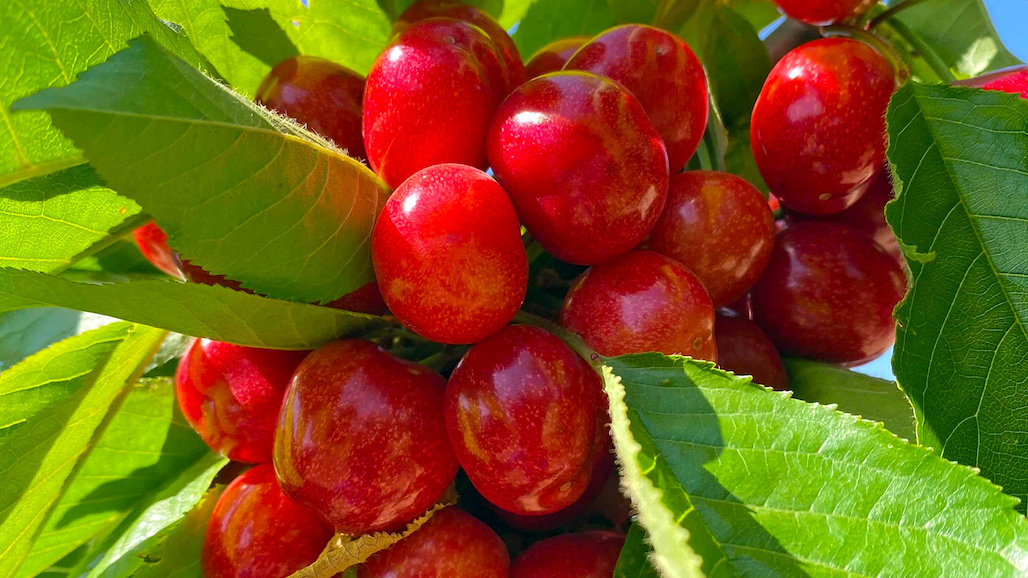
    Unaffected by the late April rains, Fruit World’s Coral, Lynn and Tioga cherries are at peak flavor. Packed at Podesta Packing in Linden, CA, a new, state-of-the-art optical sorter ensures that only the best of the best cherries make it into the retail pack. “The fruit looks spectacular. We are really happy with this year’s crop, and it looks great in our fun and bright packaging,” said Richter. Fruit World’s organic cherry season continues through the end of May.

    “I’ve never seen the trees so heavy with apricots,” said Fruit World sales director, Cindy Richter. “It was a great set. The color and sugars are still developing, a week or so behind schedule due to the weather cooling off a bit, but as soon as we start shipping we’ll have promotable volumes through June and maybe into July.” Fruit World grows organic apricots in Reedley, CA. Continuing a long and fruitful partnership, Fruit World is also marketing Blossom Hill apricots from their ranches in Patterson, CA. In addition to the standard pack styles, this year they are excited to offer a new sustainable cardboard clamshell.

    When it comes to peaches and nectarines, Fruit World is the exclusive marketer of the world-renowned organic Masumoto Family Farm fruit. “We appreciate growers who share our values and vision. That’s why we’re super excited about our partnership with Masumoto Family Farm, bringing their legendary peaches and nectarines to market,” Kaprielian effused. “And we’re also excited to begin shipping organic peaches this year from our own orchard.”
    If your customers long for the juicy, flavorful stone fruit their parents and grandparents reminisce about, delight them this year with organic cherries, apricots, peaches and nectarines from Fruit World.

    For more information or to place an order, call (559) 650-0334, or visit fruitworldco.com to learn more about the Fruit World story.

    About Fruit World

    Fruit World is a fresh and creative produce company with generations of history. Fruit World grows and ships the most flavorful fruit in California—including organic and conventional citrus, organic grapes, organic stone fruit, and more—and works with customers who share a passion for quality and taste. They’re all about honoring their growers, staying true to their farming heritage, and keeping family farming thriving into future generations. Visit fruitworldco.com.

  • Whitefly Management on Spring Melons 2021

    Now that the produce season is essentially finished in Yuma, it is time to move into melons.  Spring melon crops are rapidly growing, and so are insect pest populations. Cabbage loopers and leafminers are becoming evident in some areas, and PCAs should start ramping up their monitoring and sampling. More importantly, whitely populations are quietly becoming abundant on the spring melons of all sizes. Adults can easily be found on recently planted melons located at the Yuma Ag Center, and reports from local PCAs suggest that adult populations are beginning to show up on older plantings. As temperatures increase and crops/weeds mature, avoidance of excessive feeding from whitefly nymphs should be the primary concern on all melon types. Although CYSDV does occur in later spring melons, it is rarely yield limiting. But honeydew and sooty mold contamination on cantaloupes, mixed melons and watermelons can significantly reduce quality and marketability is whiteflies are not adequately controlled.  Our research has shown that to prevent fruit yield and quality losses on spring melons, a foliar insecticide treatment should be applied on threshold; that is, when leaves have greater than 2 adult whiteflies per leaf, when averaged across an entire melon field. At this level of adult abundance, immature populations are just starting to colonize, and timing sprays based on the adult threshold has been shown to significantly reduce the chance of yield / quality losses during spring harvests.  This threshold applies for the use of recommended IGRs (Courier, Knack, Cormoran, and Oberon), foliar applied neonicotinoids (Assail, Venom, Scorpion), neonicotinoid-like compounds (Sivanto prime and Transform), diamides, (Exirel and Minecto Pro) and the new feeding disruptors (PQZ and Sefina).  For more information on whitefly management and available insecticides, go to these documents on IPM and Whitefly Management  and  Whitefly Control Options-Spring 2021.     Also, be aware of honey bees and other pollinators in or around melon fields. If bees are present, be sure to carefully read labels and determine bee safety of a product before making an application in a melon field.  If applications are necessary during bloom, only apply a product that is considered bee safe (e.g., PQZ, Sefina, Sivanto, Assail). We also recommend that insecticides only be applied when honeybees are not actively working in the field (e.g. 10:00 pm – 3: 00 am). — John Palumbo, University of Arizona, Yuma College of Ag & Life Sciences

  • Water & Small Fruit Scientists Named to ARS Hall of Fame

    Water & Small Fruit Scientists Named to ARS Hall of Fame

    Two scientists have earned a place in the Agricultural Research Service (ARS) Science Hall of Fame for their pioneering and impactful research in small-fruits breeding and remote sensing for improved irrigation water scheduling.

    Chad E. Finn (posthumously) and William P. Kustas will be inducted in a virtual ceremony today rather than a physical event due to ongoing COVID-19 safety precautions. ARS established the Science Hall of Fame in 1986 to honor senior agency researchers for outstanding, lifelong achievements in agricultural science and technology.

    “Our two inductees exemplify the scientific excellence that has made ARS a premier research agency and world leader in addressing important issues facing agriculture today,” said Acting ARS Administrator Simon Liu.

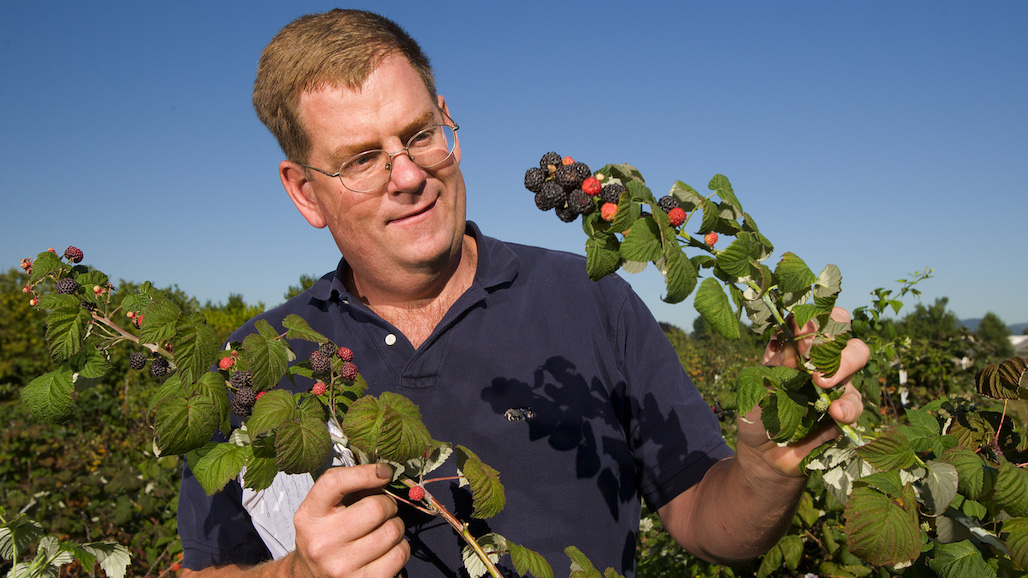
    A plant geneticist at the ARS Horticultural Crops Research Laboratory in Corvallis, Oregon, Finn, who died December 17, 2019, is being posthumously honored for his outstanding and sustained contributions to the advancement of small-fruits crop research. His accomplishments include the development and release or co-release of more than 57 blackberry, raspberry, blueberry and strawberry varieties, some of which have become industry standards generating more than $450 million in fruit and plant sales over the past 10 years.

    Finn’s research endeavors have led to a small-fruits germplasm program that’s considered among the world’s most diverse and extensive, spanning several genera of plants including Rubus, Fragaria, Vaccinium and Actinidia. His discoveries provide a greater understanding and characterization of wild species in these genera as well as their importance as novel sources of genetic variability and useful traits such as aphid resistance and fruit processing quality.

    Finn also led an international black raspberry research project that developed a draft black raspberry genome—the first in the genus Rubus. Similar genomic efforts are underway in other berry crops. Throughout, he was a mentor to graduate students, avid presenter and participant on numerous committees and associations.

    Kustas, a hydrologist at the ARS Hydrology and Remote Sensing Laboratory in Beltsville, Maryland, is being honored for scientific accomplishments that include using satellite data with computer models for mapping evapotranspiration (ET)—the process of plant water use through transpiration and water loss or evaporation from the soil.

    In addition to monitoring ET, plant stress and drought, other applications of the models arising from Kustas and colleagues’ pioneering research include precise targeting of irrigation water to crops, including the vineyards of E&J Gallo Winery in California’s Central Valley. There, as part of the Grape Remote-sensing Atmospheric Profile and Evapotranspiration eXperiment (GRAPEX), Kustas and collaborators from NASA, Utah State University, University of California-Davis and Gallo are helping the winery better track soil and vine moisture levels with a view to reducing irrigation water use by up to 25 percent. Potentially, this reduction could translate to significant economic savings as well as contributing to sustainable groundwater management—a benefit the GRAPEX team expects could apply to other Central Valley vineyards as well as California’s nut orchard industry, which spans 1.5 million acres. “ET Toolkits” resulting from the project are also being readied for use in other water-limited western states.

  • Water & Small Fruit Scientists Named to ARS Hall of Fame

    Two scientists have earned a place in the Agricultural Research Service (ARS) Science Hall of Fame for their pioneering and impactful research in small-fruits breeding and remote sensing for improved irrigation water scheduling.

    Chad E. Finn (posthumously) and William P. Kustas will be inducted in a virtual ceremony today rather than a physical event due to ongoing COVID-19 safety precautions. ARS established the Science Hall of Fame in 1986 to honor senior agency researchers for outstanding, lifelong achievements in agricultural science and technology.

    “Our two inductees exemplify the scientific excellence that has made ARS a premier research agency and world leader in addressing important issues facing agriculture today,” said Acting ARS Administrator Simon Liu.

    A plant geneticist at the ARS Horticultural Crops Research Laboratory in Corvallis, Oregon, Finn, who died December 17, 2019, is being posthumously honored for his outstanding and sustained contributions to the advancement of small-fruits crop research. His accomplishments include the development and release or co-release of more than 57 blackberry, raspberry, blueberry and strawberry varieties, some of which have become industry standards generating more than $450 million in fruit and plant sales over the past 10 years.

    Finn’s research endeavors have led to a small-fruits germplasm program that’s considered among the world’s most diverse and extensive, spanning several genera of plants including Rubus, Fragaria, Vaccinium and Actinidia. His discoveries provide a greater understanding and characterization of wild species in these genera as well as their importance as novel sources of genetic variability and useful traits such as aphid resistance and fruit processing quality.

    Finn also led an international black raspberry research project that developed a draft black raspberry genome—the first in the genus Rubus. Similar genomic efforts are underway in other berry crops. Throughout, he was a mentor to graduate students, avid presenter and participant on numerous committees and associations.

    Kustas, a hydrologist at the ARS Hydrology and Remote Sensing Laboratory in Beltsville, Maryland, is being honored for scientific accomplishments that include using satellite data with computer models for mapping evapotranspiration (ET)—the process of plant water use through transpiration and water loss or evaporation from the soil.

    In addition to monitoring ET, plant stress and drought, other applications of the models arising from Kustas and colleagues’ pioneering research include precise targeting of irrigation water to crops, including the vineyards of E&J Gallo Winery in California’s Central Valley. There, as part of the Grape Remote-sensing Atmospheric Profile and Evapotranspiration eXperiment (GRAPEX), Kustas and collaborators from NASA, Utah State University, University of California-Davis and Gallo are helping the winery better track soil and vine moisture levels with a view to reducing irrigation water use by up to 25 percent. Potentially, this reduction could translate to significant economic savings as well as contributing to sustainable groundwater management—a benefit the GRAPEX team expects could apply to other Central Valley vineyards as well as California’s nut orchard industry, which spans 1.5 million acres. “ET Toolkits” resulting from the project are also being readied for use in other water-limited western states.

  • Two New Races of Downy Mildew in Spinach

    Two new races of the downy mildew pathogen (Peronospora effusa) on spinach have been denominated by the International Working Group on Peronospora in spinach (IWGP) on the basis of a worldwide evaluation of isolates from growers fields and trap nurseries. Isolate SP1924 found in Europe, is denominated as race Pe: 18. Isolate UA202001E, found in the USA, is denominated as race Pe: 19. Both races pose a significant threat to the spinach industry in all parts of the world, and resistance to these new races is important.

    Members of the IWGP are using a fixed set of spinach differentials (with different resistances)  to define races of downy mildew on spinach by their pattern of virulence on the set. The virulence patterns of all races are published as reference data by the International Seed Federation (ISF); https://www.worldseed.org/our-work/plant-health/differential-hosts/

    Race Pe: 18 is able to infect the differentials NIL2, 3, 4, 5, Pigeon, Caladonia, and Meerkat. Pe: 18 has been found in the US in 2015 to 2018, not in 2019 and 2020. And in Europe it has been found more often in the last 3 years. Race Pe: 19 is able to infect the differentials NIL1, 2, 4, 5, 6, Pigeon, Meerkat and Hydrus. Pe: 19 has been reported only from the USA until now.

    The IWGP is continuously monitoring the appearance of strains of the pathogen that deviate in virulence from the known races. In this way the IWGP aims to promote a consistent and clear communication between public and private entities, such as the seed industry, growers, scientists, and other interested parties, about all resistance-breaking races that are persistent enough to survive over several years, occur in a wide area, and cause a significant economic impact.

    The IWGP is operating internationally and is administered by Plantum located in The Netherlands. The IWGP consists of representatives from spinach seed companies (BASF, Bayer, Bejo, DeSeed, Enza, Pop Vriend, Rijk Zwaan, Sakata, Syngenta, Takii, and Vilmorin) and Naktuinbouw, and is supported by public research at the University of Arkansas. Spinach researchers over the world are invited to join the IWGP initiative and use the common host differential set to identify new isolates. All denominated isolates and seeds of the differential set are available at Naktuinbouw (The Netherlands)

    For more information on this subject, please contact Jim Correll (jcorrell@uark.edu), Diederik Smilde (d.smilde@naktuinbouw.nl), or the IWGP chairperson Anne Königs (a.konigs@rijkzwaan.nl)

    Table with disease resistance reactions of spinach downy mildew races on IWGP differentials. Differentials and type isolates are available at Naktuinbouw in The Netherlands.

  • Map Shows 2021 California Farm Water Supply Cuts

    California farms are bearing the brunt of this year’s short water supply and have been forced to reduce the acreage of popular California crops, such as asparagus, melons, lettuce, rice, tomatoes, sweet corn, and others.

    Water supply reductions mean fewer fresh fruits and vegetables for consumers, massive farm-related job losses, and billions in lost economic activity, impacts that go beyond rural and disadvantaged communities.

    About 2 million acres of California’s irrigated farmland, or one out of every four acres, has already had its water supply cut by 95 percent. Another million acres has lost 80 percent of its water supply this year with much of the remaining farmland experiencing cuts of 25 percent or more.

    Conditions are similar to those that occurred in 2015. According to a 2015 drought report issued by UC Davis, ERA Economics, and the UC Agricultural issues Center, water supply cuts led to the fallowing of 540,000 acres of farmland, 21,000 lost jobs, and an economic loss of $2.7 billion.

    Critical reservoirs, including Shasta, Oroville, Folsom, Millerton, and San Luis combined have 1.1 million acre-feet less water in storage today than they had at the end of March in 2015, California’s last critically dry year. Levels in these reservoirs are currently at 56 percent of average, compared to 72 percent of average at this time in 2015. They are essential to supplying rural communities with drinking water, irrigating farms, supplying water to wildlife refuges, and recharging aquifers in the Sacramento and San Joaquin valleys where a majority of California-grown food products originate.

    It is a distressing time for farmers, farm workers, and businesses that depend on agriculture all across California and illustrates the need to invest in infrastructure that will increase our ability to capture more water during wet years when it is abundant to save for dry years like this. It also puts a strain on consumers who want local, California-grown fresh food choices for their families.

  • Western Growers Launches Global Harvest Automation Initiative

    Western Growers (WG) is spearheading a Global Harvest Automation Initiative (GHAI) to accelerate harvest automation across the fresh produce industry, with a goal of automating 50 percent of harvest within 10 years.

    “For well over a decade, our members have struggled with a dwindling number of available workers. If we don’t come together as an industry to quickly and efficiently deliver automation solutions for farmers in this country, it is likely that the shift of fresh produce operations to other countries will dramatically increase,” said Western Growers President and CEO Dave Puglia. “The Global Harvest Automation Initiative is aimed directly at this challenge, and the alignment of so many industry leaders and partners in this endeavor is a strong indicator of our shared commitment to success.”

    The global initiative is comprised of several key projects uniquely designed to solve the ag industry’s labor woes while simultaneously helping harvest automation start-up companies commercialize and scale at a more rapid pace:

    Technology Stack: A documented set of technical interfaces that will help startups leverage industry-standard components so their robots can get into fields and markets faster.

    • Harvest Automation Cohort: A cohort of automation startups will be selected based on industry input to receive exclusive access to systems integration to help integrate the tech stack into their product roadmap, strategy for go-to-market support, field trials and case studies.
    • Impact Report: A comprehensive analysis on the impact of harvest automation on the specialty crop industry will be provided annually based on grower metrics.
    • Harvest Automation Traction Roadmap: A list of current harvest automation startups by crop type and in-market progress/traction will be distributed regularly.The technology stack will be built by a team of subject matter experts(SMEs) in ag and robotics:
    • precision ag companies (Trimble, Bosch)
    • original equipment manufacturers and platform companies (Ramsay Highlander, Oxbow and SPUDNIK)
    • AgTech engineering companies (Milano Technical Group, All-Phase Agricultural Engineering, Red Rooster Engineering and NWFM LLC)
    • WG members that are among the world’s largest and best farming operators at adopting new technologies (Grimmway Farms, Turlock Fruit Company, Church Brothers Farms, Superfresh Growers and Illume Agriculture)The SME group will build a set of documented interfaces so startups can connect to tractor manufacturers like John Deere, sensor manufacturers like Bosch, navigation equipment providers like Trimble, and other manufacturing partners.The Washington Tree Fruit Research Commission (WTFRC) has been a key partner for WG in supporting the GHAI by providing recommendations for SMEs and harvest startups with traction based on WTFRC’s 52 years of experience with tree fruit innovation. In addition, WTFRC has committed $200,000 in funding over three years to support the overall GHAI initiative.

      “The specialty crop industry needs to all work together to solve harvest automation by strategically accelerating the speed of innovation and adoption,” said Dr. Ines Hanrahan, executive director for WTFRC. “The platform approach Western Growers is taking is supported by both startups and industry as the best path forward to finally achieve this goal.”

      WG held a hybrid in-person and virtual event on February 11, 2021, in Tulare, Calif., to announce the official launch of the Global Harvest Automation Initiative. Resources and detailed information about the GHAI can be found on the WG Center for Innovation & Technology webpage here.

      About Western Growers:

      Founded in 1926, Western Growers represents local and regional family farmers growing fresh produce in California, Arizona, Colorado and New Mexico. Our members and their workers provide over half of the nation’s fresh fruits, vegetables and tree nuts, including nearly half of America’s fresh organic produce. Some members also farm throughout the U.S. and in other countries so people have year-round access to nutritious food. For generations, we have provided variety and healthy choices to consumers. Connect and learn more about Western Growers on our Twitter and Facebook.

  • Western Growers Launches Global Harvest Automation Initiative

    Western Growers Launches Global Harvest Automation Initiative

    Western Growers (WG) is spearheading a Global Harvest Automation Initiative (GHAI) to accelerate harvest automation across the fresh produce industry, with a goal of automating 50 percent of harvest within 10 years.

    “For well over a decade, our members have struggled with a dwindling number of available workers. If we don’t come together as an industry to quickly and efficiently deliver automation solutions for farmers in this country, it is likely that the shift of fresh produce operations to other countries will dramatically increase,” said Western Growers President and CEO Dave Puglia. “The Global Harvest Automation Initiative is aimed directly at this challenge, and the alignment of so many industry leaders and partners in this endeavor is a strong indicator of our shared commitment to success.”

    The global initiative is comprised of several key projects uniquely designed to solve the ag industry’s labor woes while simultaneously helping harvest automation start-up companies commercialize and scale at a more rapid pace:

    Technology Stack: A documented set of technical interfaces that will help startups leverage industry-standard components so their robots can get into fields and markets faster.

    • Harvest Automation Cohort: A cohort of automation startups will be selected based on industry input to receive exclusive access to systems integration to help integrate the tech stack into their product roadmap, strategy for go-to-market support, field trials and case studies.
    • Impact Report: A comprehensive analysis on the impact of harvest automation on the specialty crop industry will be provided annually based on grower metrics.
    • Harvest Automation Traction Roadmap: A list of current harvest automation startups by crop type and in-market progress/traction will be distributed regularly.The technology stack will be built by a team of subject matter experts(SMEs) in ag and robotics:
    • precision ag companies (Trimble, Bosch)
    • original equipment manufacturers and platform companies (Ramsay Highlander, Oxbow and SPUDNIK)
    • AgTech engineering companies (Milano Technical Group, All-Phase Agricultural Engineering, Red Rooster Engineering and NWFM LLC)
    • WG members that are among the world’s largest and best farming operators at adopting new technologies (Grimmway Farms, Turlock Fruit Company, Church Brothers Farms, Superfresh Growers and Illume Agriculture)The SME group will build a set of documented interfaces so startups can connect to tractor manufacturers like John Deere, sensor manufacturers like Bosch, navigation equipment providers like Trimble, and other manufacturing partners.

      The Washington Tree Fruit Research Commission (WTFRC) has been a key partner for WG in supporting the GHAI by providing recommendations for SMEs and harvest startups with traction based on WTFRC’s 52 years of experience with tree fruit innovation. In addition, WTFRC has committed $200,000 in funding over three years to support the overall GHAI initiative.

      “The specialty crop industry needs to all work together to solve harvest automation by strategically accelerating the speed of innovation and adoption,” said Dr. Ines Hanrahan, executive director for WTFRC. “The platform approach Western Growers is taking is supported by both startups and industry as the best path forward to finally achieve this goal.”

      WG held a hybrid in-person and virtual event on February 11, 2021, in Tulare, Calif., to announce the official launch of the Global Harvest Automation Initiative. Resources and detailed information about the GHAI can be found on the WG Center for Innovation & Technology webpage here.

      About Western Growers:

      Founded in 1926, Western Growers represents local and regional family farmers growing fresh produce in California, Arizona, Colorado and New Mexico. Our members and their workers provide over half of the nation’s fresh fruits, vegetables and tree nuts, including nearly half of America’s fresh organic produce. Some members also farm throughout the U.S. and in other countries so people have year-round access to nutritious food. For generations, we have provided variety and healthy choices to consumers. Connect and learn more about Western Growers on our Twitter and Facebook.

  • UnitedAg Announces Glenn Miller as Chairman of the Board

    UnitedAg Announces Glenn Miller as Chairman of the Board

    After 16 years of service, Glenn Miller, president and chief executive officer of the Saticoy Lemon Association, is appointed Chairman of United Agricultural Benefit Trust, a leading agricultural health plan sponsored by UnitedAg.

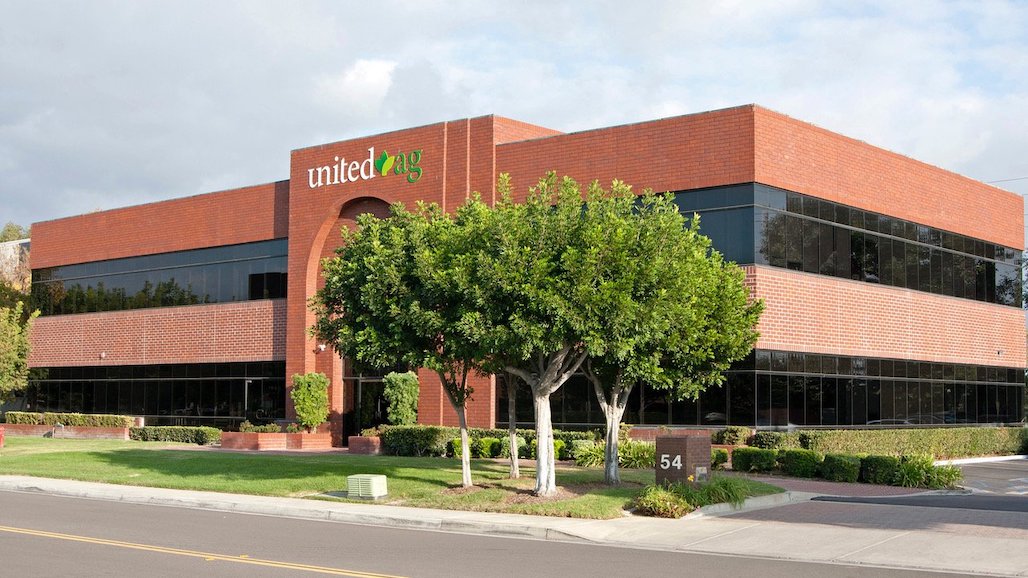
    UnitedAg, a healthcare leader for the agricultural industry, has officially announced Glenn Miller as the new in-coming Chairman for the Board of Trustees. Miller joined the Board of Trustees in 2005 and succeeds Mack Ramsay, Chairman Emeritus, who served from 2019 to 2021.

    “It is a great honor to be appointed Chairman of the United Agricultural Benefit Trust. I am incredibly proud of the leadership and our accomplishments over the past four decades. Since 1983, United Agricultural Benefit Trust has provided health benefits to approximately 3 million individuals in rural communities and has paid over $830,000,000 in health, dental, vision, and life claims to plan participants and saved employers millions of dollars in premium cost. I look forward to continuing our efforts in leading the charge in providing premium health plans to an under-served community.” said Miller.

    Miller has over 16 years of agricultural healthcare experience and is the current president and chief executive officer of the Saticoy Lemon Association. Representing over 170 Sunkist lemon grower members, the non-profit agricultural cooperative is responsible for marketing its grower members’ fruit through their affiliation with Sunkist Growers, Inc. The Association was established in 1933 and currently operates three processing facilities throughout Ventura County.

    “This is a significant milestone for our organization. I am deeply grateful to our Board of Trustees for supporting our vision. Empathy and passion are what led to the creation of the United Agricultural Benefit Trust,” said Kirti Mutatkar, President, UnitedAg. “I am excited for what the future holds under Glenn’s leadership as he brings a wealth of non-profit agricultural experience, which is vital for the growth and development of new health programs and services.”

    About UnitedAg

    United Agricultural Benefit Trust, an association health plan founded in 1983 and sponsored by UnitedAg, was created to provide innovative health benefits for a strong and healthy agricultural industry. UnitedAg represents more than 1,000 agriculture-affiliated member companies and helps its members meet their employee benefits needs, promotes their interests with lawmakers, helps them comply with legislation and regulation. Based in Irvine, Calif., UnitedAg has offices in Salinas and Santa Maria and wellness centers throughout Central and Northern California.  Today, United Agricultural Benefit Trust has grown to over 220 million in annual contributions and covers more than 55,000 agricultural workers in California and Arizona. To learn more, please visit www.unitedag.org.