Category: Industry News

  • What the Farm Workforce Modernization Act Means for Farmers

    What the Farm Workforce Modernization Act Means for Farmers

    While it has seemed impossible to get anything done at the national level regarding ag labor reform, Sara Neagu-Reed from the federal policy Division of the California Farm Bureau Federation shares in an interview with California Ag Network that hope is on the horizon with the progress of the Farm Workforce Modernization Act. Watch this brief video with Sara as she explains why, and what ag employers should know and do about it.
    Please thank this video’s sponsor Trece for their industry support.
  • CA Olive Oil Council Announces Recipients of 2021 Extra Virgin Olive Oil Competition

    CA Olive Oil Council Announces Recipients of 2021 Extra Virgin Olive Oil Competition

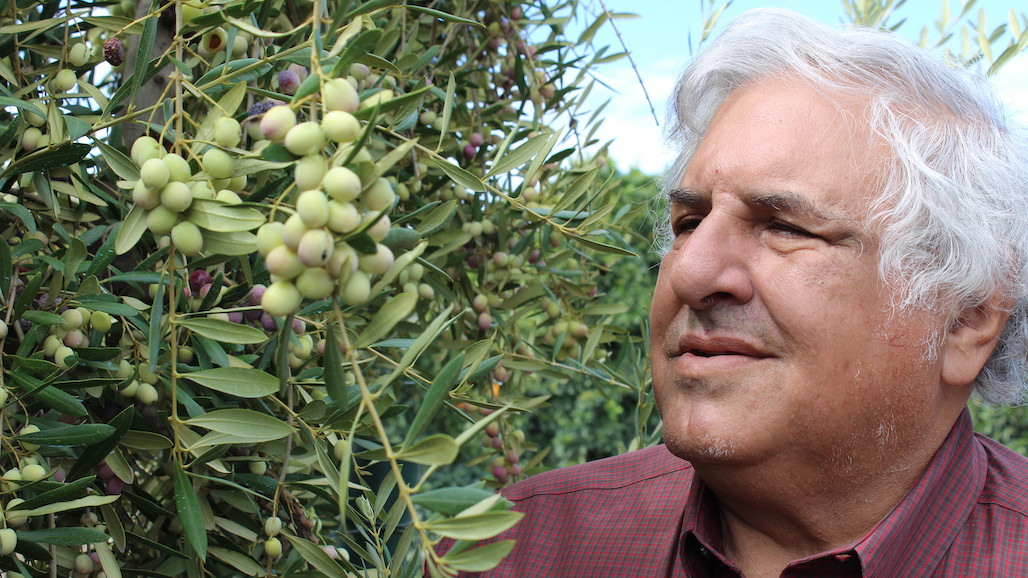
    Winners from the 13th Annual California Olive Oil Council Extra Virgin Olive Oil Competition have been announced, recognizing olive oil producers from throughout California for their excellence. This year’s competition, which attracted 80 submissions, was judged by the California Olive Oil Council’s certification tasting panel, granting a host of awards including Best of Show, Best of Class, Miller Recognition, and Gold and Silver. Winners include:


    Best of Show

    • Grumpy Goats Farm: Organic Picual


    Best of Class

    • Delicate: Ohanneson Enterprises: OH Olive Oil
    • Medium: High Top Ranch
    • Robust: Proskine Family Farms


    Miller Recognition Award Winner

    • John Mesrobian: The Mill at Kings River for Ohanneson Enterprises: OH Olive Oil


    Gold Medal Winners

    • Campodonico Olive Farm: Tuscan Blend
    • Colina Vista Ranch: Calabrese – Tuscan Blend
    • ENZO Olive Oil Company: Organic Medium
    • Gold Ridge Organic Farms: Minerva Blend
    • Grumpy Goats Farm: Organic Coratina
    • Grumpy Goats Farm: Organic Italian Blend
    • Grumpy Goats Farm: Organic Picual
    • Halter Ranch: Tuscan Blend
    • High Top Ranch
    • Kiler Ridge Olive Farm: Nocellara del Belice
    • Long Meadow Ranch: Napa Valley Select
    • Long Meadow Ranch: Prato Lungo
    • Mangini Ranch Olive Oil Company: Calaveras Reserve
    • Marciano Estate Winery: Organic Italian Blend
    • Ohanneson Enterprises: OH Olive Oil
    • Olivaia’s OLA: Block X Heirloom Batch 20-1
    • Proskine Family Farms
    • The Ranch at Birch Creek
    • Rosenthal Olive Ranch: Koroneiki
    • San Paulo Olive Farm: Frantoio–Leccino
    • Sogno di Oliva: Tuscan Blend
    • Spanish Oaks Ranch: Arbequina
    • Tofino Estate: Supremo
    • Tres Osos Olive Oil: Robust
    • Tres Osos Olive Oil: Taggiasca
    • Warm Springs Farm


    Silver Medal Winners

    • 11 Olives: Longevity
    • Bari Olive Oil Company: Arbequina
    • Boccabella Farms: Arbequina
    • Boccabella Farms: Field Blend
    • Boccabella Farms: Winemakers Blend
    • Boundary Bend Olives: Cobram Estate – California Classic
    • Burroughs Family Orchards: Organic Koroneiki
    • Corto Olive Co: Truly
    • Corto Olive Co: Truly-Arbequina
    • ENZO Olive Oil Company: Organic Delicate
    • Estee Hill Vineyard: Manzanillo
    • Fat Gold Productions: Gold Standard
    • Gold Ridge Organic Farms: Arbequino Blend
    • Gold Ridge Organic Farms: Picholine Blend
    • Grumpy Goats Farm: Organic Pendolino
    • Jackrabbit California Olive Oil: Relaxed Blend
    • Kiler Ridge Olive Farm: Tuscan
    • Mangini Ranch Olive Oil Company: Estate Mission
    • McDonough Family Olive Oil
    • The Mill at Kings River: Koroneiki
    • Olivaia’s OLA: Block X Heirloom Batch 20-2
    • Organic Roots Olive Oil: Arbequina
    • Pine Mountain Olive Farm
    • Rio Bravo Ranch: Miller’s Reserve Blend
    • Rio Bravo Ranch: Picual
    • Rosental Olive Ranch: Arbosano
    • Séka Hills: Estate Frantoio
    • Showa Farm: Arbequina
    • Spanish Oaks Ranch: Italian Blend
    • Spanish Oaks Ranch: Picual
    • Swayne Family Ranch: Tuscan Blend
    • Tierra Santa Orchards: Hojiblanca Reserve
    • Wild Groves: Ascolano
    • Wild Groves: Foxy
    • Wild Groves: Robust Blend

    “Congratulations to all of the 2021 COOC Extra Virgin Olive Oil Competition winners,” said COOC Executive Director Patricia King. “The COOC members are committed to crafting delicious extra virgin olive oils by adhering to best practices, and many award-winning extra virgin olive oils were produced, despite a challenging 2020 harvest. We thank consumers and retailers for their continued support of 100% California, certified extra virgin olive oil.”


    About the California Olive Oil Council and its Seal Certification

    Founded in 1992, the California Olive Oil Council (COOC) is a non-profit trade and marketing association whose purpose is to promote the growing of olives and the production of fresh, high-quality extra virgin olive oil in California. The COOC represents the majority of olive oil production in the state with a membership of 300 growers, producers, and supporting members from the retail and service industries. The organization supports certified olive oil standards and provides grower, producer and consumer education. Through its Seal Certification Program, the COOC helps everyone from home chefs to restaurants find guaranteed extra virgin grade olive oils for their kitchens. For more information, visit cooc.com.

  • Dan Flynn Receives the 2020 California Olive Oil Council Pioneer Award

    Dan Flynn Receives the 2020 California Olive Oil Council Pioneer Award

    The 2020 recipient of the California Olive Oil Council (COOC) Pioneer Award has made a lasting impact on the California olive oil industry. Dan Flynn started the UC Davis Olive Center 13 years ago where he serves as the executive director with just $50,000 from university and industry supporters, and grew it into a world-renowned center for olive research and education. The organization has worked in concert with the California Olive Oil Council from its beginning in 2008. In partnership with the industry, UC Davis has helped millions of consumers understand the quality of supermarket olive oil, provided the analytical foundation for California’s strict olive oil standards and educated thousands to become better olive growers, processors and tasters.

    If the success of a leader can be measured by the fingerprints they leave behind, Dan’s impact on the olive oil industry should not be understated, said David Garci Aguirre, Vice President of Operations for California-based premium olive oil producer Corto. “Several of the most influential events in the industry over the last decade are the direct result of the work completed by Dan and his team at the UC Davis Olive Center.”

    Flynn’s attributes much of the center’s success to creating partnerships between dozens of academic specialists, olive growers and processors. He has worked tirelessly to nurture the network which has resulted in priceless value. Flynn focused on serving the industry while meeting the needs of UC Davis. The partnership between UC Davis and California agriculture has delivered enormous benefits for the California olive crop.

    Flynn has also built relationships with international researchers to leverage their research for the benefit of California. The international conferences with the Culinary Institute of American and the International Olive Council have elevated the California industry on the global stage. He has positioned the UC Davis Olive Center as an independent and trusted facilitator where everyone is welcome.

    “Dan Flynn deserves our recognition, praise and applause. He pioneered making the Olive Center a reality where the millers, growers, and producers have ready access to the research and learning tools needed for the Crop of The Future,” said Karen Bond, Owner of Bondolio Olive Oil.

    Flynn is preparing to retire in June. His successor, Javier Fernandez-Salavador, will inherit a strong Olive Center, guided by a 10-year strategic plan to bolster research, funding and connectivity. “I will still be active in helping the center and I will always be grateful for the support of the COOC and its members,” said Flynn.

    The Pioneer Award was established in 1999 to recognize those who have made a major contribution to the California olive oil industry and the COOC. “The COOC thanks Dan for his commitment, partnership and support over the years, and wishes him all the best in the future,” said Patricia King, Executive Director of the California Olive Oil Council.

  • USDA’s Risk Management Agency Amends Potato Crop Insurance Options

    USDA’s Risk Management Agency Amends Potato Crop Insurance Options

    The U.S. Department of Agriculture (USDA) announced on May 4th that its Risk Management Agency (RMA) is modifying four Northern Potato Crop Insurance Policy optional endorsements. The options are available to producers who choose to purchase additional coverage on top of their multi-peril crop insurance policy. The changes specify that the premium only applies to planted acreage and is no longer charged on acreage prevented from planting. The changes will be effective for the 2022 and succeeding crop years.

    RMA Acting Administrator Richard Flournoy

    “Producers will benefit from this change since the premium will only be due for years when the crop is planted, which will make the additional coverage more affordable in years when the crop is prevented from planting,” said RMA Acting Administrator Richard Flournoy.

    The modifications are applicable to the Quality Endorsement, Processing Quality Endorsement, Certified Seed Endorsement and the Storage Coverage Endorsement. Currently, insured operations are charged a premium if they elect the optional endorsements by the sales closing date, regardless if the acreage was prevented from planting or not.

    For example, the Storage Coverage Endorsement extends crop insurance coverage for potatoes that have been harvested and are in storage. Acreage prevented from planting would not need coverage that is specifically designed for a final harvested crop. Previously the acreage was still charged a premium.

    The changes are a result of RMA’s outreach to potato commodity groups and the crop insurance industry. With these changes, producers will see their premium reduced during years when there are prevented planting losses and an offsetting increase in years without those losses, which enhances the overall financial stability provided by insurance.

    Crop insurance is sold and delivered solely through private crop insurance agents. A list of crop insurance agents is available online using the RMA Agent Locator. Learn more about crop insurance and the modern farm safety net at rma.usda.gov.

    USDA touches the lives of all Americans each day in so many positive ways. In the Biden-Harris Administration, USDA is transforming America’s food system with a greater focus on more resilient local and regional food production, fairer markets for all producers, ensuring access to healthy and nutritious food in all communities, building new markets and streams of income for farmers and producers using climate smart food and forestry practices, making historic investments in infrastructure and clean energy capabilities in rural America, and committing to equity across the Department by removing systemic barriers and building a workforce more representative of America. To learn more, visit www.usda.gov.

  • FDA Issues Report Highlighting Salmonella Outbreak in Red Onions

    The U.S. Food and Drug Administration (FDA) has released a report on its investigation of the Salmonella Newport outbreak that caused more than 1,600 reported illnesses in the U.S. and Canada between June and October 2020. The FDA worked with the U.S. Centers for Disease Control and Prevention (CDC), state partners, and Canadian officials (Public Health Agency of Canada and Canadian Food Inspection Agency) to investigate the outbreak, which was linked through epidemiology and traceback to whole red onions supplied by Thomson International Inc., headquartered in Bakersfield (Southern San Joaquin Valley) with additional operations in Holtville (Imperial Valley), California. The outbreak is the largest Salmonella foodborne illness outbreak in over a decade. The report released today includes an overview of the traceback investigation, subsequent on-site interviews, visual observations of the growing fields, and environmental sampling, and various factors that potentially contributed to the contamination of red onions with Salmonella.
    Although a conclusive root cause could not be identified, several potential contributing factors to the 2020 Salmonella outbreak linked to red onions were identified. These include:

    • potentially contaminated sources of irrigation water;
    • sheep grazing on adjacent land;
    • signs of animal intrusion, including scat (fecal droppings), and large flocks of birds that may spread contamination; and
    • food contact surfaces that had not been inspected, maintained, or cleaned as frequently as necessary to protect against the contamination of produce.

    In sampling conducted in Holtville, CA, the FDA found Salmonella Newport in 10 water (irrigation, seepage, and drainage) and one sediment subsamples. However, the whole genome sequencing of these samples did not match the outbreak strain.

    Although a conclusive root cause could not be identified, several potential contributing factors to the 2020 red onion outbreak were identified, including a leading hypothesis that contaminated irrigation water used in a growing field in Holtville, CA may have led to contamination of the onions.

    In light of this report, the FDA encourages all farms to:

    • assess growing operations to ensure implementation of appropriate science and risk-based preventive measures, including applicable provisions of the FDA Food Safety Modernization Act (FSMA) Produce Safety Rule and good agricultural practices;
    • implement industry-led root-cause analyses to determine how the contamination likely occurred when pathogens are identified through pre-harvest or post-harvest testing of produce, or microbiological surveys;
    • be aware of and consider the risks that may be posed by adjacent and nearby land uses, especially as it relates to the presence of livestock and the interface between farmland, rangeland, irrigation water, and other agricultural areas;
    • consider additional tools such as pre-harvest and/or post-harvest sampling and testing of products to help inform the risk assessment and clarify the need for specific prevention measures; and
    • improve traceability by increasing digitization, interoperability and standardization of traceability records; and
    • follow good agricultural practices to maintain and protect the quality of water sources.

    Thomson International Inc. cooperated with the FDA throughout the investigation and is continuing to engage with the FDA on the agency’s findings and recommendations.

    Food safety is a shared responsibility that involves food producers, distributors, manufacturers, retailers, and regulators. Recognizing the interconnection between people, animals, plants, and their shared environment when it comes to public health outcomes, we encourage collaboration among various groups in the broader agricultural community (i.e. livestock owners and produce growers, state government and academia) to address this issue. The FDA is committed to working with these stakeholders to advance critical work.

    For More Information:

  • Effective Non-chemical Soil Fumigants for Organic Production

    The Organic Center — Soil fumigants that fight soil-borne diseases and ensure crop production continue to be banned to protect the health and safety of rural communities. Organic farmers and conventional farmers who can no longer use these chemical tools need effective alternatives to protect their yields. A recent study published in the journal Agronomy(link is external) demonstrates that a non-chemical alternative can be effective and affordable if farmers receive a high enough price for their crops. Until 2016, Methyl Bromide had been used in California for decades as a soil fumigant to disinfest soils of devastating diseases before planting high-value crops such as strawberries. Methyl Bromide was never permitted for use in organic farming, and its recent ban due to public health safety concerns also left conventional farmers without an important disease control tool. The ban has prompted much research into alternatives to chemical soil fumigants such as steam, solarization, and anaerobic soil disinfestation (ASD) using rice bran or mustard seed meal. While many studies are optimizing the effectiveness of these strategies, a missing key component is the consideration of the economic cost of these alternatives. This study took a comprehensive approach, and measured the effectiveness and affordability of two alternative management strategies to chemical soil disinfestation for strawberries produced under conventional and organic management.

    The results show that organic-approved methods of soil disinfestation (steam and steam plus mustard seed meal) resulted in better yields compared to the control for both conventional and organic systems. And when the cost of treatment is considered, along with yield and crop value, organic far out-competes conventional management. In this study, organic yields were greater than conventional, which helped better cover the high cost of soil treatment. The higher price premium earned for organic strawberries even further enhanced the affordability of the soil treatment for organic management. This study shows that a non-chemical method of managing devastating soil diseases is effective and affordable, but only if the farmer receives a high enough price to cover the added expense. This study brings up an important consideration: when we ask farmers to use practices that benefit not just their own production, but also their surrounding environment which improves public and environmental health of rural communities, it’s clear that the farmers need financial assistance to make the safer choice.

  • FDA to Implement Sampling Effort for Lettuce Grown in Salinas

    FDA to Implement Sampling Effort for Lettuce Grown in Salinas

    The U.S. Food and Drug Administration will be collecting and testing samples of lettuce grown in California’s Salinas Valley from local commercial coolers from May through November 2021. The agency will test the samples for Shiga toxin-producing Escherichia coli (STEC), including E. coli O157:H7, and Salmonella spp. as part of ongoing surveillance efforts following reoccurring outbreaks linked to this region, including most recently in the fall of 2020.

    The FDA assignment will direct sampling to be conducted at commercial cooling and cold storage facilities where field heat is removed from harvested lettuce and where product is cold-stored before processing. Sampling may include pre-cooled product (preferred) or post-cooled product. Sample collection at commercial coolers helps the FDA efficiently obtain samples from multiple farms at centralized locations and facilitates prompt traceback and follow-up if contamination is detected.

    The agency plans to collect and test a total of approximately 500 post-harvest samples of iceberg, leaf and romaine lettuce. Each sample will consist of 10 subsamples, each made up of one head of lettuce (trimmed, cored and possibly wrapped), or in the case of romaine lettuce, loose leaves or one package of hearts.  FDA laboratories will conduct all testing.

    During this sampling assignment, the FDA will take extra precautions to help ensure the safety of agency investigators and firm employees during the COVID-19 pandemic. FDA investigators will preannounce their visits to firms per the Agency’s COVID-19 safety practices. They will be outfitted with personal protective equipment (PPE) and will carry out their work while adhering to local, state and applicable CDC guidance.

    Helping to ensure the safety of leafy greens remains a high priority of the FDA. This assignment adds to other work underway in collaboration with stakeholders in the California Central Coast growing region to identify where the recurring strain of pathogenic E. coli is persisting and the likely routes of leafy green contamination with STECs.  This includes continued implementation of actions identified in the recently updated Leafy Greens Action Plan, including a multi-year longitudinal  study to assess the environmental factors impacting the presence of foodborne pathogens in this region. Consistent with the action plan, if the FDA detects a pathogen such as E. coli O157:H7, the agency will conduct a follow-up investigation to identify potential sources and routes of contamination. Such investigations are designed to inform what additional preventive measures may be needed to help prevent outbreaks of foodborne illness.

  • Are Finger Limes Just Another Fad?

    Are Finger Limes Just Another Fad?

    There has been growing hype around finger limes from citrus growers, the retail sector, and their customers. Growers are particularly interested in this market as disease pressure such as citrus greening and international competition have made other citrus and fruit markets less appealing. However, many are concerned that finger limes are just a fad and the markets will eventually crash as consumers move on to the next cool food trend. Our research at the University of Florida is examining these markets to determine the potential for growers in Florida and throughout the U.S. to take advantage of the emerging finger lime market.

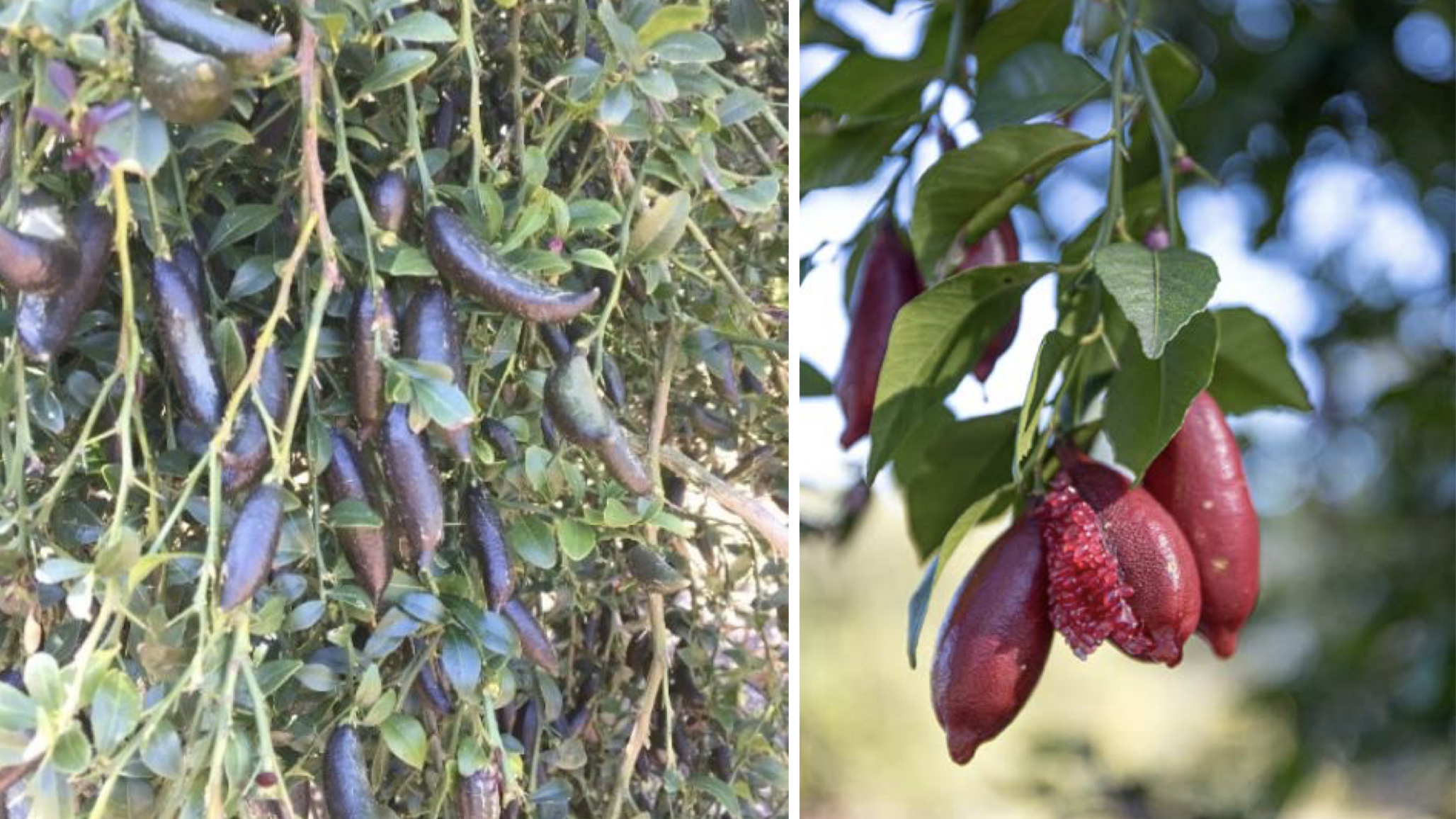
    Finger limes are known as the “citrus caviar,” because of their unique compressed, round juice vesicles that are distinct from other citrus crops’ delicate, tear shaped fruit sacs. This feature combined with its bright colors and tangy flavor make finger limes a great garnish used in high end restaurants and as a perfect accent to a cocktail. As more and more chefs, bartenders, and suppliers in the hospitality industry become familiar with the fruit, they are falling in love with them and demand for finger limes is rapidly growing.

     Many growers and suppliers of finger limes are hopeful that the demand for this fruit will expand beyond the hospitality sector to mass markets, as consumers across the U.S. and around the world become more familiar with the fruit. Finger limes are not only resistant to greening that plagues orange and other citrus production but also have traditionally been grown using few agrochemical inputs. So, there are expectations that organic markets could provide an additional premium for this fruit. Some research has also pointed out the high prevalence of antioxidants in the fruit, providing finger lime growers and suppliers with potential to enter health food markets.

    This fruit, which is native to Australia, has only in the last several years become commercially available to growers across the US, after first having been cultivated in California in late 1960s. In fact, nearly all of the current production in the U.S. is in central and southern California and the big island of Hawaii. There are only about 15,000 trees, which are owned by less than a dozen growers. So, there is room to expand production especially by Florida growers, who supply East Coast markets. Prices are quite elevated for the fruit; for instance, during the spring of 2020 finger limes were priced at $32 for 80 grams or 8 limes on Amazon or $18 for 9 to 10 finger limes from one of the only suppliers in South Florida. Questions remain whether these prices will remain elevated as more and more growers enter the market.

    Over the next two years, we at the University of Florida will be exploring the potential for finger limes in these markets and how to develop inclusive supply chains to improve the participation of all growers in them. We will hold taste testing panels and interviews with suppliers, chefs, and bartenders at trade fairs to introduce them to the product, gauge their interest in the fruit, and estimate their willingness to pay for finger limes. The analysis of this research will allow us to estimate the potential demand of the fruit and how many growers could participate in this market. Additionally, we will examine the supply chain to determine which factors need to be addressed to improve growers’ access to these growing markets. Please be on the lookout for further updates as we examine the potential growers to tap into growing finger lime markets and determine what can be done to sustain the demand for them. — By Trent Blare (tblare@ufl.edu), Assistant Professor in Food Resource Economics, University of Florida

  • CALIFORNIA GEM® Added To CALIFORNIAAVOCADO.COM

    CALIFORNIA GEM® Added To CALIFORNIAAVOCADO.COM

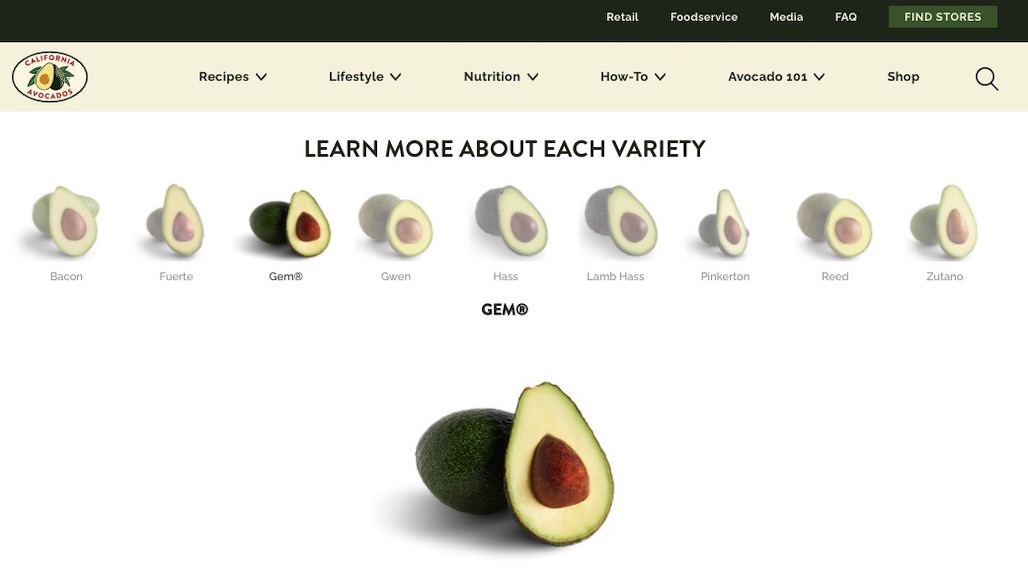
    With the GEM® avocado variety acreage increasing in California groves and gaining increased popularity as a point of discussion with retailers, the California Avocado Commission has added the GEM® variety to the CaliforniaAvocado.com website. In tandem with this initiative, the Commission also has made concerted efforts to better position California avocados on search engines by updating the avocado variety browser on the consumer website.

    The Commission has positioned itself as the go-to resource for media, its assorted partners and consumers by providing relevant and engaging content for consumers as well as quality, Commission-owned and branded assets for members of the media, retailers and influencers. To that end, the Commission produced high-quality GEM® photos and assets and made them available to site visitors in the Commission’s online press room where they can simply download the high-quality images for use on websites, social media and in press materials. These assets, when used by industry partners, help ensure ‘California’ is communicated in articles, social media posts, ads and POS.

    The Commission also uses high quality and high equity search terms to “California’ize” conversations around avocados. The Commission has optimized its online avocado variety browser — and added GEM® to the browser — to strengthen its position when people look for avocado varieties using online search engines. As a result, the Commission’s avocado variety browser has achieved the number one position on Google with more than 40 million results. In short, when people look for ‘avocado varieties’ online the search engine results lead them to the Commission’s variety browser — thus increasing California Avocados brand awareness and securing the Commission’s credibility as the source for all things avocado. CAC’s avocado variety browser currently garners about 69,000 visits each year — approximately 2.5% of all traffic to the site.

  • Successful HLB Management Strategy in CA Focuses on Everyone Doing Their Part

    Successful HLB Management Strategy in CA Focuses on Everyone Doing Their Part

    What Nobel Prize-winning Economics Research Tells Us About ACP and HLB Management in California

    As you have likely heard many times, coordinating management measures for the Asian citrus psyllid (ACP) and Huanglongbing (HLB) over a larger scale than individual properties is key to achieving effective control and limiting the spread of the disease. Coordination is important in terms of surveying for HLB-positive trees and removing them from the ground as soon as possible, applying insecticide treatments at the same time for multiple citrus groves within a Psyllid Management Area (PMA) or a Pest Control District (PCD), complying with quarantine measures for the movement of bulk citrus, using certified budwood and sharing information with neighbors.

    But this coordination comes at a cost, and some individuals may be tempted to skip the costs of treating within the recommended window for ACP, correctly tarping their trucks, or even investing some time to convince their neighbors about the importance of these measures. Yet, if everyone skipped these costs and relied on the efforts of others, the ability of the citrus industry to combat HLB would be greatly reduced, leading to a higher risk of HLB spread in California.

    This temptation to free-ride on the efforts of others exists in the management of many natural resources, such as groundwater, fisheries or forests. In 2009, social scientist Elinor Ostrom received the Nobel Prize for Economics for studying how societies organized themselves to manage these types of resources and avoid the problem of free-riding. Throughout her career, she studied many different cases of this problem in different parts of the world, and she identified eight principles that were associated with sustained collective action. Interestingly, most of these principles are present in the strategy for HLB management in California, as shown in the table below.

    Due to a lack of participation in coordinated mitigation tactics – the free-rider problem – a similar HLB-management program in Florida was not as effective in keeping HLB at bay. But California has so far been more successful in achieving collective action than other infected areas like Florida, and as is seeing more success in preventing the spread of ACP and HLB, including keeping HLB out of commercial groves.

    To continue to stay a step ahead of HLB, it is crucial that California’s citrus industry and residents remain vigilant and engage in coordinated management efforts and follow best practices and regulatory requirements.

    Although Ostrom’s principles do not offer a universal solution to all free-riding problems, they can be useful to guide our efforts as we continue to work together to face the threat of HLB.

    More information on her research, which was recently published in Food Security Journal, can be found on https://doi.org/10.1007/s12571-020-01133-9 — By Sara Garcia Figuera, Citrus Pest & Disease Prevention Program

    Design Principle (Ostrom, 1990) HLB Management in California
    1. Clearly defined boundaries: the boundaries define who is responsible for the collective effort and over what area, reducing the cost of monitoring behavior.
    • PMAs
    • PCDs
    2A. Congruence between rules and local conditions: the rules that are established for the management and maintenance of a resource are aligned with the predominant social norms, culture and agro-ecological conditions in a community.
    • Rules defined by the citrus industry through Citrus Pest and Disease Prevention Committee (CPDPC) in collaboration with County Agricultural Commissioners (CACs) and California Department of Food and Agriculture (CDFA)
    • Some pre-existing PCDs
    • Quarantine zones and rules defined by local conditions (citrus production, ACP populations and/or climatic suitability)
    2B. Congruence between appropriation and provision rules: correspondence between the rules governing contributions to the maintenance of the resource system, and the rules governing withdrawal of resources from the system.
    • Insecticide treatments for ACP funded by individual growers.
    • Other assessments based on production volume (CPDPP) or acreage (PCD)
    3. Collective-choice arrangements: if local users who directly interact with one another can define the rules that regulate the day-to-day decisions about the use of a shared resource, they will be in a better position to incorporate local knowledge.
    • AWM organized locally through PCDs or PMAs
    • CPDPC establishes rules in collaboration with CDFA
    4A. Monitoring users: a community needs to be able to identify users that do not comply with rules; otherwise there can be no credible commitment. Monitoring should be undertaken by the resource users, better than by external authorities.
    • Seasonal reports of areas treated for ACP
    • Packinghouse inspections of grate cleaning or spray & harvest
    4B. Monitoring the resource: assesses the extent to which the collective effort is being achieved.
    • ACP monitoring by CDFA, CACs, Citrus Research Board (CRB) and pest control advisors (PCAs) hired by growers
    5. Graduated sanctions: Although sanctioning prevents an excessive violation of community rules, sanctions should be graduated based on the severity and/or repetition of violations to ensure proportionality. And they should be imposed by the resource users or officials accountable to them, to maintain community cohesion.
    • If less than 90% of the acreage is treated in a PMA or PCD, it will not qualify for the residential buffer treatment
    • When there is a violation of the tarping requirement, a notice of violation is sent before further sanctions
    6. Conflict-resolution mechanisms: Low-cost conflict resolution prevents the cost of conflict from outweighing the benefits of successful collective action.
    • Task Force meetings and other public meetings have been used for addressing conflicts
    7. Minimal recognition of rights to organize:Local institutions are more effective when higher levels of government allow users to self-organize in ways that reflect local social and ecological contexts.
    • CPDPC
    • PCDs
    • Grower leader in PMAs
    8. Nested enterprises: refers to the importance of connecting smaller social systems that manage different parts of a larger resource system to facilitate cross-scale coordination.
    • Statewide program coordinated at the regional, county and local level
    • Grower liaisons