Category: Industry News

  • In Story of Blueberries & Bees, Scientists Play Matchmaker

    In Story of Blueberries & Bees, Scientists Play Matchmaker

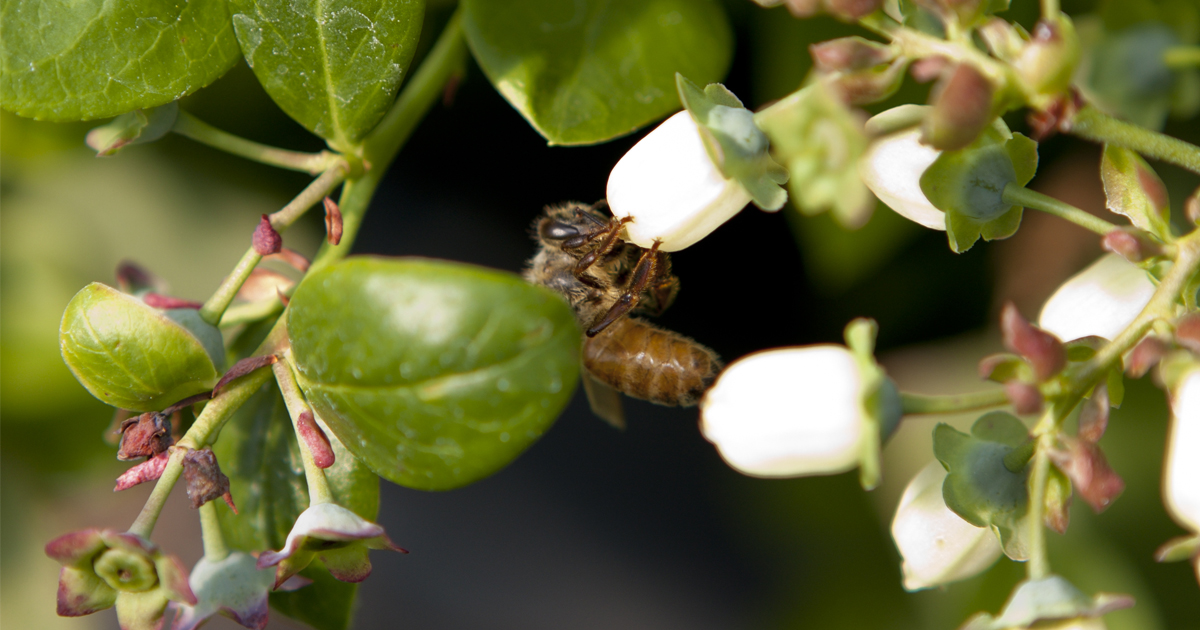
    Chew on this the next time you eat a blueberry: Every single blueberry is the result of a flower that was pollinated by a bee. 

    In other words: No buzz, no berry. With that in mind, it’s no wonder blueberry growers bring in hives of honey bees or bumble bees when their blueberry bushes are in flower.

    “We are big believers in pollination on blueberries. We believe pollination helps increase berry size and weight and increases the overall crop yield,” said Ryan Atwood, co-owner of H&A farms, which owns, leases and manages more than 350 acres of blueberries in north and central Florida.

    But pollinating blueberries with bees isn’t an exact science — yet. Successful pollination depends on a variety of factors, such as when beehives are introduced or how much buzz a blueberry flower needs to release its pollen.

    Moreover, blueberry growers across the United States report that ineffective pollination is a top concern for their business, as it directly affects the amount and quality of product they can bring to market, said Rachel Mallinger, an assistant professor in the UF/IFAS entomology and nematology department who specializes in pollinators.

    This is why Mallinger and several other researchers from blueberry growing states have teamed up to develop recommendations and tools to help growers optimize pollination.

    In addition to Mallinger, the research team includes scientists from Michigan State University, Oregon State University and Washington State University. Rufus Issacs, a professor in the department of entomology at Michigan State University, will lead the project, which is funded by a $2 million grant from the National Institute of Food and Agriculture, part of the U.S. Department of Agriculture.

    “Some years blueberry pollination goes well, other years not so much, so we are looking to help growers take some of the guesswork out of it,” Mallinger said. “Our ultimate goal is to provide a tool we’re calling the pollination planner. The pollination planner will help growers decide how many bees to use and when to bring them in based on their location, climate, size of their farm, and varieties of blueberry they grow.”

    Ebony Taylor, front, then an undergraduate student in the UF/IFAS College of Agricultural and Life Sciences, and Jon Elmquist, former lab manager in Mallinger’s lab, looking at flowers on blueberry bushes. Images were taken prior to national guidelines of face coverings and social distancing. Photo by Rachel Mallinger

    Mallinger and her research team will partner with Florida blueberry growers, including Atwood, to run their field experiments. The Florida blueberry industry is a $60 million-a-year business, and this research on pollination will help support this growing commodity.

    “This research will help us understand the economic benefits of honey bees for pollination and what number of hives are needed to properly pollinate,” Atwood said.

    The multi-state project has several components, Mallinger said.

    “Our contribution in Florida will be to look at our modern southern highbush blueberry varieties and determine their pollination needs and what makes them attractive to bees. Some varieties need to be pollinated with pollen from a different blueberry variety to achieve optimal yields, while others are more self-compatible. Some varieties may hold on to their pollen tightly, others less so. Even the color or size of the flower, or how much nectar it produces, might impact how attractive that flower is to a bee,” she said.

    Identifying those traits is just the first step, Mallinger added.

    “Blueberry breeders are usually trying to develop varieties that have good taste, resistance to pests, things like that. But we don’t think about how likely a blueberry variety is to be pollinated. If we can identify those traits that led to more pollination, we can inform breeding efforts,” she said.

    Other researchers on the project will develop recommendations for the number of bees — called stocking density — needed to pollinate modern varieties of blueberry. Another component of the project will investigate how weather conditions, such as extreme heat, influence pollination success. — By Samantha Murray, University of Florida Communications
  • Stay Vigilant with Asian Citrus Psyllid Finds on the Rise

    Stay Vigilant with Asian Citrus Psyllid Finds on the Rise

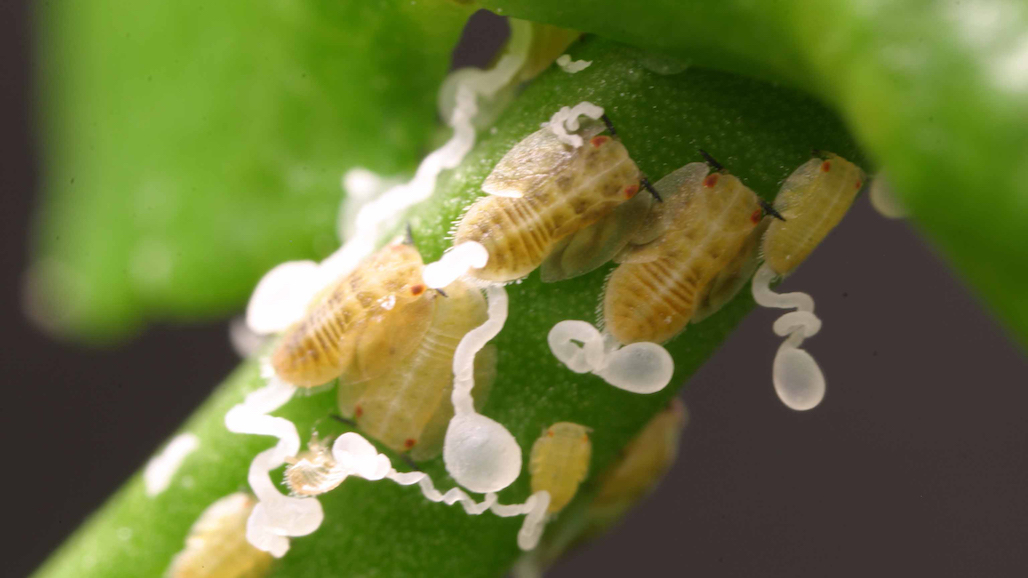
    In the past few months, we have seen sporadic Asian citrus psyllid (ACP) detections popping up across California. While the citrus industry’s efforts have thus far kept Huanglongbing (HLB) out of commercial groves, these recent ACP detections are a reminder that we cannot let our guard down. The most effective way to prevent the spread of HLB is to keep psyllids out of our orchards.

    After ACP detections in multiple counties (Kern, Madera, San Luis Obispo, Santa Barbara, Santa Clara, Tulare, Contra Costa and others) were confirmed earlier this fall — including areas with historically low ACP activity — the Citrus Pest & Disease Prevention Committee is encouraging all growers to stay informed, scout for ACP and treat when advised.


    The recommendations outlined in the Voluntary Grower Response Plan, developed collaboratively by growers and scientists, represent the most effective tools known to the citrus industry at this time and are meant to supplement the California Department of Food and Agriculture’s required regulatory response. You can help prevent the spread of ACP by following these best practices, participating in recommended winter treatments and ensuring haulers and transporters are tarping loads.

    While we should expect to see this type of “flare up” occasionally, we need to remain vigilant – even when things are quiet – to ensure we continue to stay on top of this elusive pest and the dangerous disease it spreads. The upfront cost to manage ACP is much less than the potential hit to our industry if HLB spreads throughout the state. To date, HLB has only been identified in backyard citrus trees in Los Angeles, Orange, Riverside and San Bernardino counties, and hasn’t made its way into a commercial citrus grove yet. To keep HLB out of commercial citrus, psyllid control is especially critical this season with warmer weather encouraging more pests.

    Here is what you can do:

    • Follow the best practices outlined in the Voluntary Grower Response Plan for Huanglongbing
    • Participate in treatment strategies recommended by the University of California (UC)
    • Adhere to tarping regulations that help keep pests from hitching a ride to new areas of the state

    Visit citrusinsider.org for more information and resources on the voluntary grower best practices, tarping regulations and UC treatment recommendations.

    Questions?
    Contact your regional grower liaison for the latest information on detections near you and coordinated or area-wide treatment schedules. Find your grower liaison here.

    Let’s work together to protect California citrus for your businesses, neighbors and generations to come.

    Sincerely,
    Jim Gorden
    Chair, Citrus Pest & Disease Prevention Committee

  • Agriculture and Business Coalition Challenge Cal/OSHA Emergency Standards to Protect Nation’s Food Supply

    A coalition of agricultural and business employers has filed a lawsuit in Los Angeles Superior Court challenging the COVID-19 related emergency temporary standards (ETS) recently approved by the California Occupational Safety and Health Standards Board (Board). The complaint alleges, among other things, that the Board lacks statutory authority to impose many of the sweeping measures of the ETS on California employers.

    For California’s multi-generational farmers, the health and safety of their employees and the consumers they serve is their top priority.

    “In the weeks and months following Governor Newsom’s emergency declaration in March, California farmers and processors moved quickly to implement dramatic new safety practices aimed at mitigating the spread of COVID-19 in the workplace,” said Dave Puglia, President & CEO of Western Growers. “While these measures helped reduce transmission in workplaces, this virus has swept through communities large and small in spite of lockdown orders and mask mandates, and through every sector of the economy as well despite extraordinary efforts by employers and employees alike. The Board imposed unrealistic, unfounded and economically harmful standards in total disregard of these realities. We have no choice but to seek judicial relief.”

    The standards promulgated by the Board are unprecedented and sweeping. They were adopted with little public notice or opportunity for comment based on a purported “finding of emergency” and a declared need for immediate action, even though it took the Board nine months to enact these rules. Furthermore, Cal/OSHA staff insisted the ETS were not necessary for the agency to enforce the continually evolving general and industry-specific guidelines for the prevention of COVID-19. As stated in the complaint, “the ETS does not solve a crisis as much as it creates one.”

    “We take this unfortunate yet serious action because we believe there are unconsidered mitigation steps that have and would continue to better protect farm workers while allowing our farmers to continue to produce a consistent supply of fruits and vegetables,” said Christopher Valadez, President of the Grower-Shipper Association of Central California. “As this pandemic has shown us over the last several months, it is imperative that science and data drive policy. That is at the core of what we seek in this lawsuit.”

    The ETS create significant new obligations and liabilities for employers, and subject well-meaning California farmers and other businesses to additional enforcement actions and substantial penalties. The practical effect of these emergency standards is to shift the public health and economic costs of COVID-19 monitoring, investigation, compliance and remediation onto employers, all without any consideration of the financial damage inflicted on businesses already struggling to recover from the pandemic.

    “These regulations will disrupt food supply operations all along the line, but it will be especially hard on our 20,000 small family farming members,” said Jamie Johansson, President of the California Farm Bureau Federation. “They and their employees are the unsung heroes of the pandemic but once again, they must react to a rule handed down by fiat instead of going through a deliberate regulatory process where the voices of farmers would be heard. We hope the court forces government to follow the law.”

    It is important to note that the ETS will have a disproportionate impact on California farmers and their employees since one aspect of the regulations is to substantially reduce and eliminate vitally needed agricultural housing during a statewide housing crisis. A reduction in already-scarce housing will directly impact farmworker communities and harm rural economies across the state that depend on agriculture.

    The lawsuit filed by lead attorney David A. Schwarz, Kent R. Raygor and Barbara Taylor, with Sheppard Mullin, argues that in enacting the emergency regulations without due process, the Board failed to explain the causal link between the ETS and the emergency situation to be addressed, or to adequately justify the necessity of the new rules. Additionally, the complaint contends that many of the regulations have nothing to do with workplace health or occupational safety but are designed to address non-work-related COVID-19 exposure risks.

    Click here for a fact sheet that details the basis for the legal challenge.

    Click here for the full text of the complaint with exhibits.

    The six plaintiff organizations are listed below:

    • California Association of Winegrape Growers: Michael Miiller
    • California Business Roundtable: Brooke Armour Spiegel
    • California Farm Bureau Federation: Dave Kranz
    • Grower-Shipper Association of Central California: Christopher Valadez
    • Ventura County Agricultural Association: Rob Roy
    • Western Growers: Cory Lunde
  • When the Lights Go on Again

    A message of light and hope for the New Year from the Publisher Dan Malcolm.  Watch this brief video and read his annual column HERE.

  • When the Lights Go on Again

    When the Lights Go on Again

    A message of light and hope for the New Year from the Publisher Dan Malcolm.  Watch this brief video and read his annual column HERE.

  • Merry Christmas from the Malcolm Family

    Merry Christmas from the Malcolm Family

    To our friends in agricultural, we wish you a very Merry Christmas and share our appreciation for you and the reason for the season with this song, from our family to yours! For more fun & inspiring music, visit our new YouTube Channel Malcolm Family Music.
  • White Strawberry One of Two New Varieties Ready for Harvest Season

    Enjoy the following article featuring two new strawberry varieties out of the University of Florida that may prove to be of value to West Coast growers in the near future.

    A white strawberry? Not red? Yes, you “read” that right. And it smells a little like a pineapple. It’s also novel in that it’s the first white strawberry to go to market in the United States. Just in time for the west-central Florida strawberry harvesting season, which runs from now until the end of March, University of Florida Institute of Food & Agricultural Sciences (UF/IFAS) is releasing not one, but two new varieties – and the white strawberry is one of them. The other: another cultivar that UF/IFAS’ primary breeder says tastes oh-so-good.

    Neither variety has a name yet. They’re known by numbers, which is typical early in the cultivar-release process. So far, they’re known as ‘FL 16.78-109’ (the white strawberry) and ‘FL 16.30-128’ (the red strawberry), said Vance Whitaker, a UF/IFAS associate professor of horticultural sciences and a strawberry breeder.

    “Because the white strawberry is being test-marketed this year, there has been a lot of interest in it,” said Whitaker, a faculty member at the Gulf Coast Research and Education Center. In fact, a grower told Whitaker that some chefs like the new fruit.

    When it’s ripe and ready to eat, it is white inside and out, with a slight pink blush on the skin and red seeds, he said. “The flavor is very different from a typical strawberry, sweet but with a pineapple-like aroma,” Whitaker said. “White strawberries have been popular for some time in Japan, but this is expected to be the first white strawberry on the market in the United States.”

    You can find white strawberries in nature, he said. Breeders have harnessed this naturally occurring trait, crossing white strawberries from the wild with modern strawberries to create something different in both appearance and taste.

    Here’s how the white strawberry came about.

    In 2012 strawberry seeds from Japan were sown at the University of Florida, and a few small plants recovered. The seeds were sown, and a few small plants were recovered. The pollen from these plants were crossed with a Florida variety. The seedlings from this cross-produced fruit that ranged from white to pink to red, Whitaker said.

    “Commercial trials have been promising so far,” he said. “Pickers can tell when the fruit is ripe when a slight pink blush develops on the side of the fruit that is most exposed to the sun, and when most of the seeds turn red. By 2022, these new white strawberries should be available in U.S. grocery stores. They will probably be marketed as “pineberries” because of the pineapple aroma.”

    Whitaker also touts the consistently even red color and conical shape of the new red variety, making the fruit more attractive.

    Here’s how the colors differ in the two strawberries: The red from a typical strawberry comes from pigments called anthocyanins. White strawberries produce much lower amounts of these compounds in their flesh than red strawberries, Whitaker said.

    As harvest arrives, farmers will welcome the new red and white strawberries from UF/IFAS, Whitaker said. UF/IFAS researchers and the Florida Strawberry Growers Association estimate strawberries generate about $300 million annually for those who farm them.

    Out of the 10,000 acres of strawberries in west-central Florida, the new red strawberry may occupy as much as 300 acres in Florida during the 2021-2022 season, and if it continues to perform well, that number could grow.

    The white strawberry, or “pineberry,” will be grown on fewer acres since it is a new specialty product. It will take time for farmers to become comfortable growing it, and it will also take time to educate consumers about this new fruit.

    “The new red strawberry is notable for its outstanding flavor,” Whitaker said. “Because of its high sugar level, it tastes somewhat similar to (another UF/IFAS variety called) Sensation®, which is currently one of the leading varieties in Florida, yet with a more intense flavor due to the fruit’s higher acid content.” — Brad Buck, University of Florida Institute of Food & Agricultural Sciences

    Cristina Carriz, UF/IFAS
  • The Health Benefits of Fermented Vegetables

    The Health Benefits of Fermented Vegetables

    Dr. Ilenys Perez-Diaz (IP) is a Microbiologist with the Food Science and Market Quality and Handling Research Unit in Raleigh, NC. Her work involves research into microbes present during the fermentation and acidification of vegetables, and had some interesting things to share with the USDA-ARS in their Under the Microscope (UM) Q&A blog.

    Dr. Ilenys Perez-Diaz

    UM – As a microbiologist, how does your work connect to processed vegetables? What types of processes do these vegetables go through?

    IP – There is a variety of microbes naturally present in fresh vegetables. The uncontrolled growth of such microbes in vegetables results in their decomposition and lack of appeal to consumers. We can control the growth of microbes in vegetables through the fermentation process, popularly known as pickles in the U.S.

    I study the indigenous microorganisms in fresh vegetables and develop processes that produce fermented or acidified vegetables with prolonged shelf lives, enhanced flavor, and substantial nutritional content.

    UM – What is the difference between fermentation and pickling?

    IP – While these terms are used interchangeably in the USA, they are actually different. Technically, fermentation refers to the preservation of vegetables by converting the indigenous sugars to organic acids and increasing acidity. Pickling refers to vegetables that are acidified, primarily with vinegar, to extend their shelf-life.

    Preservation of surplus tomatoes by sodium chloride free acidification (top) and fermentation (bottom). (Photo by Fernando Montero)

    UM – Americans are usually not too familiar with fermented foods, but they are popular in other parts of the world. How safe are fermented foods? 

    IP – Fermented vegetables enjoy a strong record of safety; there are almost no outbreaks associated with them. Fermented vegetables are safe for human consumption as long as the microbial growth is controlled, and an appropriate pH level is maintained during storage.

    UM – What are the benefits of fermenting or pickling your food? 

    IP – The main benefit of fermenting or acidifying vegetables is the extension of shelf-life. In certain vegetable fermentations, depending on the microbes, there can be enhanced levels of antioxidant or vitamin content.

    However, we must not forget that the main metabolic products in a fermentation are lactic acid and acetic acid, which are building blocks of butyric acid and propionic acid. Such organic acids serve as energy sources for the gut lining, so it’s theoretically possible that fermented foods enhance human gut health. Lactic acid has also been associated with enhanced endurance in athletes who consume fermented vegetables and the juices.

    Preservation of cucumbers via acidification in a reduced acid and salt solution. (Photo by Ilenys Perez-Diaz)

    UM – Does the degree of fermentation impact the health benefits of a vegetable?

    IP – This is a very interesting question. It is unknown to what extent fermented vegetables may enhance human health. However, we do know that butyric acid, the main energy source for the gut tissue lining, can be produced in some vegetable fermentations. Thus, it is of interest to further study the impact of fermented vegetables in the human gut health.

    UM – We tend to think of pickled or fermented foods as extremely salty and briny. I understand that you and your team have worked to reduce sodium chloride in processed vegetables – please explain the process and how this can help consumers?

    IP – Traditionally, the production of fermented vegetables has depended on the use of 6 to 10% sodium chloride salt in brines to control microbial growth. Salt makes it difficult for most microbes to grow on the vegetable and spoil it. Additionally, salt promotes the growth of bacteria that produce lactic acid, which leads to the desired conversion of sugars to acids.

    Although this is a natural process, it can also result in environmental pollution if done on an industrial scale. The brining solution used to turn cucumbers into pickles is high in acidity and salt, which can harm the environment if disposed of improperly. My team and I have managed to replace most of the sodium chloride (table salt) in the brine with calcium chloride. Calcium chloride may improve soil quality and stimulate plant growth.

    This new brining solution does not alter the taste or texture of the pickle, but it contains significantly less sodium – something many consumers may appreciate for health reasons.

    UM – Recently, people have been interested in consuming probiotic or prebiotic foods like fermented vegetables. Please explain how these types of foods may promote gut health.

    IP – Fermented vegetables not only serve as an environment for potentially beneficial microbes to grow, but they also naturally harbor indigestible dietary fibers that feed the gut microbiome. In theory, there is an advantage in using beneficial microbes in fermented foods that are customized to the gut’s natural pH acidity and environment. However, it is difficult to do so due to the level of microbial diversity within each individual’s gut, and also the complexity of microbial interactions within the human body.

  • GSA Expands Farm Worker COVID-Prevention Training Program to Yuma

    Replicating another of its Salinas Valley programs, the Grower Shipper Association of Central California (GSA) has established a COVID-19 training prevention program for food facility and farm employees in the Yuma in cooperation with the Regional Center for Border Health clinic. The program brings health professionals directly to work sites to provide multi-lingual information on virus prevention practices while on the job and at home as well as answer any questions employees may have, including about the availability and safety of the new vaccines.
    “This program was very popular among both employers and employees throughout last spring and summer and we are fortunate to bring this to the Yuma growing region where many of our members have farms and operations during the winter months,” says Christopher Valadez, GSA President.

    In addition to the onsite prevention training, GSA also replicated its programs to establish a quarantined housing program as well as virus testing for farm workers in this region. GSA’s quarantined housing program became a model for California Governor Gavin Newsom’s “Housing for the Harvest” program. GSA’s housing provides daily deliveries of meals and necessities as well as health checks by nurses for those workers who have been exposed to the virus, tested positive or are symptomatic.

    “As we have learned over the last several months and while we await the availability of the vaccine, prevention training, adequate testing and effective contact tracing combined with isolation alternatives through quarantined housing are needed to target the spread of this virus” Valadez says. “Bringing these programs to the desert growing region was a priority for GSA members to protect the farm workers who are essential to our industry and provide a consistent supply of healthy foods to consumers.”

    Farmers who want more information on the prevention training, expedited testing for employees or housing should contact Christopher Valadez.

  • Root Bacteria Could Help Defeat Fatal Citrus Disease

    Root Bacteria Could Help Defeat Fatal Citrus Disease

    A UC Riverside-led team is looking at tiny underground microorganisms for a way to prevent a huge problem — Huanglongbing, a disease with no cure that has decimated citrus orchards worldwide.

    The disease, also known as HLB or citrus greening, has multiple names but the same ultimate result: bitter and worthless citrus fruits. By some estimates, the end of citrus orchards in California and Florida could amount to $14 billion in lost commercial revenue.

    Fruit affected by Huanglongbing. (UCR)

    “Often times, it is thought of as an above-ground disease of the fruits, leaves, and stems,” said Caroline Roper, plant pathology professor and director of the new research effort. “However, we have seen the roots of trees decline with infection, and we want to understand why.”

    The National Institute of Food and Agriculture has awarded the UCR-led team $10 million over the next five years to investigate the role of soil and root microbes in the disease.

    Roper said data from previous studies shows the microbiome of the infected tree — which includes bacteria and fungi as well as protozoa and viruses — plays a role in the disease.

    “We have seen a shift in the root microbiome as trees get sicker,” she said.

    The microbiomes shift to contain more potentially parasitic organisms that may act as secondary invaders to a tree that is suffering from HLB, according to Roper. The invasion of these root pathogens may be causing trees to die faster when they have HLB.

    Part of this new research effort will test whether soil amendments like manure and compost might suppress parasitic microorganisms in the roots as well as the soil, and give the trees more strength to combat diseases including HLB.

    In addition, the research team will try to determine the molecular basis of HLB resistance shown by citrus root stocks developed in Florida. They’ll then see how those rootstocks perform in California, which has different soil and climate conditions.

    The research team will examine both younger trees, because a lot of citrus growers have had to re-plant their orchards after infection, as well as older trees to see if mature groves can recover.

    It will also be important to note how well root stocks from Florida, where there has been a heavy infestation of HLB, perform in California, where much less of the disease has been detected.

    “One of the great things about this grant is that we’re able to leverage existing field trials being done by our collaborators in Florida and at the UC’s Lindcove Research and Extension Center in central California,” Roper said. “This may lead to faster results than we’d otherwise have had.”

    Collaborators on the project include UC Davis; California State University, Sacramento; the University of Florida; and the U.S. Department of Agriculture’s Agricultural Research Service in Ft. Pierce, Florida. — By Jules Bernstein, UC Riverside