Western Growers (WG) is pleased to announce the addition of Robert Medler as Arizona Government Affairs Manager. Medler brings nearly 15 years of government relations experience and will represent the most influential specialty crop producers in the fresh produce industry in the Arizona State Capitol.
“We are very excited to have Robert joining Western Growers’ State Government Affairs team,” said Matthew Allen, Vice President of State Government Affairs at Western Growers. “He brings a wealth of experience advocating on behalf of employers and is looking forward to utilizing his skills to represent WG member interests in the state of Arizona.”
Lobbying on behalf of the association, Medler will represent WG in all Arizona legislative and regulatory matters as well as monitor, analyze and report on policy recommendations for WG positions. Additionally, as part of his role, he will develop, draft and tactically implement policy strategies or legislation affecting agriculture, specifically relating to the fresh fruit, vegetable and nut sectors in Arizona.
Previously, Medler led the government relations, advocacy and public policy efforts at various associations including the Tucson Metro Chamber and Southern Arizona Chamber of Commerce Association. In 2019, Medler was selected as a “40 Under 40” award recipient from the Tucson Hispanic Chamber of Commerce and the Arizona Daily Star.
“Western Growers is the preeminent advocacy organization for the agriculture community,” said Medler. “I am humbled and honored to join the Western Growers’ team to ensure our members have a strong voice in Arizona. Today’s policy decisions will have generational impacts; let’s make sure they are the right decisions.”
Medler earned a bachelor’s in Political Science & Communications from the University of Arizona and his master’s in Organizational Leadership from Gonzaga University in Spokane, Washington. He currently resides in Marana, Arizona.
The California Department of Food and Agriculture (CDFA) is seeking a grower representative with operations in the Fresno County area to sit as a member on the Citrus Pest and Disease Prevention Committee. The Committee advises the CDFA Secretary on activities associated with the statewide citrus specific pest and disease work plan that includes – but is not limited to – outreach and education programs and programs for surveying, detecting, analyzing, and treating pests and diseases specific to citrus.
Committee members receive no compensation but are entitled to payment of necessary travel expenses in accordance with the rules of the Department of Personnel Administration. The term for one grower representative from Fresno County expires on Sept. 30, 2023. Applicants should have an interest in agriculture and citrus pest and disease prevention. Individuals interested in being considered for a committee appointment should send a resume by Feb. 15, 2021 to the California Department of Food and Agriculture, Citrus Pest and Disease Prevention Division, 1220 N Street, Sacramento, California 95814, Attention: David Gutierrez.
For additional information on the committee vacancy, contact: David Gutierrez, Branch Chief, Citrus Pest and Disease Prevention Division at (916) 274-6300, or e-mail David.Gutierrez@cdfa.ca.gov.
To identify and prepare the next generation of Western Growers (WG) members for positions of leadership within the Western fresh produce industry, WG has inaugurated the sixth class of the Future Volunteer Leaders Program (FVLP). This year, for the first time in program history, the FVLP welcomes a future leader from Colorado, which became the third membership state in the WG family in 2015.
The following nine individuals have been selected to represent the next generation of industry leaders: • Phillip Adam, Innovative Produce • Mason Brady, Homegrown Organics Farms • Kristen Smith Eshaya, JVSmith Companies • Rocky Hampton, LIDCO • Tracy Jones, Booth Ranches • Colby Pereira, Braga Fresh Family • Garret Powell, Peter Rabbit Farms • Amber Strohauer, Strohauer Farms • Grant Talley, Talley Farms
“The increasing number of FVLP alumni serving on our board of directors is testament to the value of this leadership program,” stated Western Growers President and CEO Dave Puglia. ”This incoming class is a vibrant group and I look forward to their participation and future industry leadership.”
Over the course of the next two years, the Future Volunteer Leaders will shadow current members of the WG Board of Directors during board meetings, learning about federal, state and local issues affecting the Western fresh produce industry. Additionally, during the second year of the program, Class 6 will travel to Florida to tour a host of agricultural operations as part of an exchange program with the Florida Fruit and Vegetable Association’s Emerging Leader Development Program. Future Volunteer Leaders will also participate in agtech initiatives through the Western Growers Center for Innovation & Technology, as well as engage in media relations and social media efforts.
Since the program’s inception in 2011, seven FVLP alumni have graduated into a seat on the WG Board of Directors, including six who are on the current 2021-2022 board: • Alexander Muller, Pasquinelli Produce • Brandon Grimm, Grimmway Farms • Eric Reiter, Reiter Affiliated Companies • J.P. LaBrucherie, LaBrucherie Produce • Neill Callis, Turlock Fruit Company • Stephen Martori, Martori Farms
Click here to visit the FVLP website and learn more about the Class 6 participants.
About Western Growers:
Founded in 1926, Western Growers represents local and regional family farmers growing fresh produce in California, Arizona, Colorado and New Mexico. Western Growers’ members and their workers provide over half the nation’s fresh fruits, vegetables and tree nuts, including half of America’s fresh organic produce. Connect and learn more about Western Growers on Twitter and Facebook.
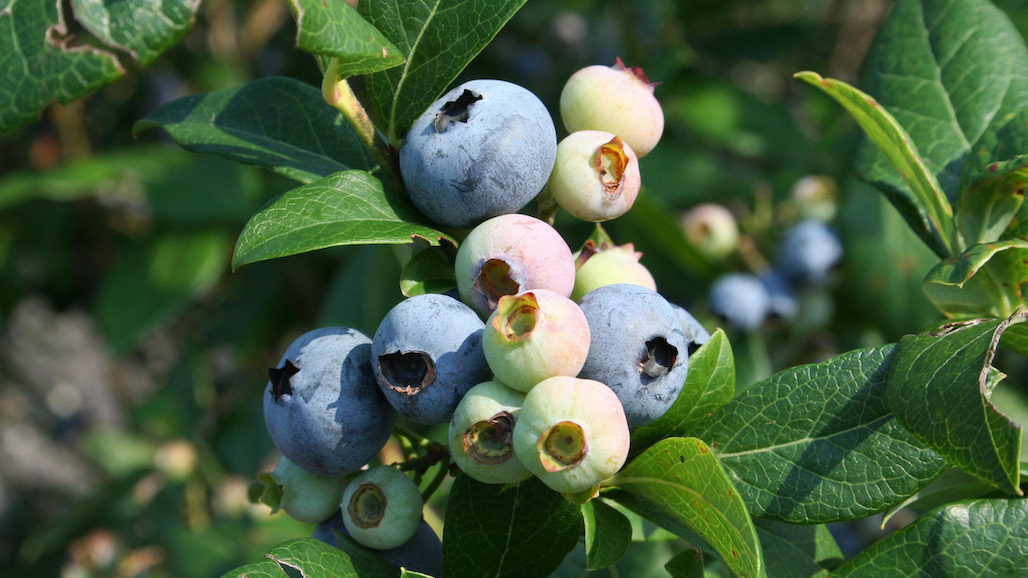
Members of the American Blueberry Growers Alliance (ABGA), a group representing U.S. domestic blueberry farmers, today provided information to the U.S. International Trade Commission (ITC) during a hearing on the impact of rising imports during the U.S. growing and harvest seasons. American blueberry growers across the country – mostly small, family-run farms – have been devastated by an influx in blueberry imports by 75 percent in the past five years, according to U.S. import data.
“Because of booming domestic demand, we should be enjoying a market in which there is room for both domestic and foreign growers to profit,” said Jerome Crosby, Chairman of the ABGA Board of Directors and owner of Pineneedle Farms in Willacoochee, Georgia. “However, foreign government policies targeting the United States market and large corporate import interests have combined to bring massive volumes of blueberries into our market, increasingly during periods that in the past provided growers with the bulk of their revenues and often all of their profits for the year.”
“The massive increase in Mexican imports during our harvesting season has crippled the Florida blueberry industry and threatens its very existence,” said Brittany Lee, Executive Director of the Florida Blueberry Growers Association and owner of Florida Blue Farms. “Over the period 2009 to 2019, we saw imports from Mexico increase by 2,111 percent. We have experienced a significant decline in price per pound for fresh blueberries in Florida, and a huge loss of market share.”
Farmers said the U.S. blueberry industry has made extensive marketing efforts over many years to educate purchasers and consumers about blueberries, which has increased demand. “Foreign producers are taking the benefit of those efforts, in some instances by creating industries out of nothing and exploiting cheap labor and poor environmental regulation overseas,” said Rex Schultz of Heritage Blueberries in Bangor, Michigan and President of the Michigan Blueberry Advisory Committee. “Producers in foreign countries are totally dependent on our market, and they have every incentive to keep shipping more and more product here. This is not a sustainable situation for the American blueberry farmer.”
Imports have also had a devastating effect on blueberry farmers in Western states. “Ten years ago, imports filled an important role by ensuring supply of fresh berries in the few months is no longer the case,” said Jayson Scarborough, a blueberry farmer in Central California. “Imports from Mexico and Peru, in particular, now enter our market throughout our harvesting period in California. Prices for these imported berries are extremely low, which means that when we begin to sell our harvests, the price point has already deteriorated significantly due to the presence of large volumes of imported fruit in the market.”
Farmers said that massive amounts of fresh blueberries coming in from Mexico and South America often arrive without a buyer. “Peruvian product can arrive in massive shipments, with hundreds of thousands and even millions of pounds of perishable fresh blueberries on one ocean-going vessel that has been in transit at least two weeks before being unloaded at U.S. ports,” said Shelly Hartmann, owner of True Blue Farms in Grand Junction, Michigan. “When these blueberries are released all at once onto the fresh market, they cause prices to crater. This pushes domestic production of blueberries grown for the fresh market into the frozen market.”
In addition, several members of Congress also testified before the ITC in support of American blueberry growers, including Reps. Austin Scott (R-Ga.), Bill Huizenga (R-Mich.), Earl L. “Buddy” Carter (R-Ga.), Gregory Steube (R-Fla.) and John Rutherford (R-Fla.).
The U.S. International Trade Commission (ITC) is conducting a global safeguard investigation into imported fresh, chilled or frozen blueberries under Section 201 of the Trade Act of 1974. The ITC will determine if the dramatic increase of foreign berries is “a substantial cause of serious injury, or the threat thereof” to American blueberry growers.
About American Blueberry Growers Alliance
American Blueberry Growers Alliance (ABGA) is a national association representing blueberry growers and farmers in the United States. ABGA provides a unified voice for blueberry growers in states across the country, including California, Florida, Georgia and Michigan, advocating on behalf of their interests and for the long-term viability of the domestic blueberry industry. For more information, visit: americanblueberrygrowers.com.
Growers considering producing avocados in San Diego County with high-density plantings now have help to determine the economic feasibility. A new study on the costs and returns of establishing and producing avocados in San Diego County has been released by UC Agriculture and Natural Resources’ Cooperative Extension, UC Agricultural Issues Center and the UC Davis Department of Agricultural and Resource Economics.
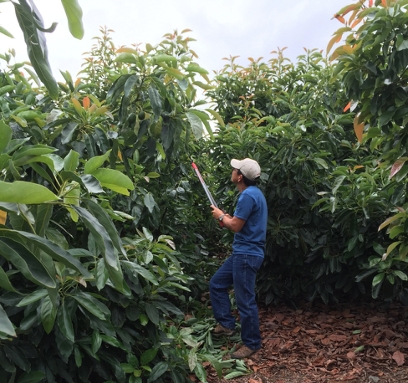
A worker prunes weak tree branches to improve sunlight penetration in a high-density avocado orchard.
Avocado has been one of the prominent crops produced in Southern California since the early 1950s. California avocado production peaked in 1987-88 with about 76,300 acres. San Diego had been the leading producer accounting for about 60% of the acreage.
“Beginning in the early 1980s, there has been a continuous decline of acreage and production of avocados in San Diego County, said Etaferahu Takele, UC Cooperative Extension farm management advisor for Southern California and co-author of the study. “This is mainly because of the expansion of urban development that has increased the cost of producing the crop and especially the cost of water, reaching to up to $2,000 per acre feet in 2020.”
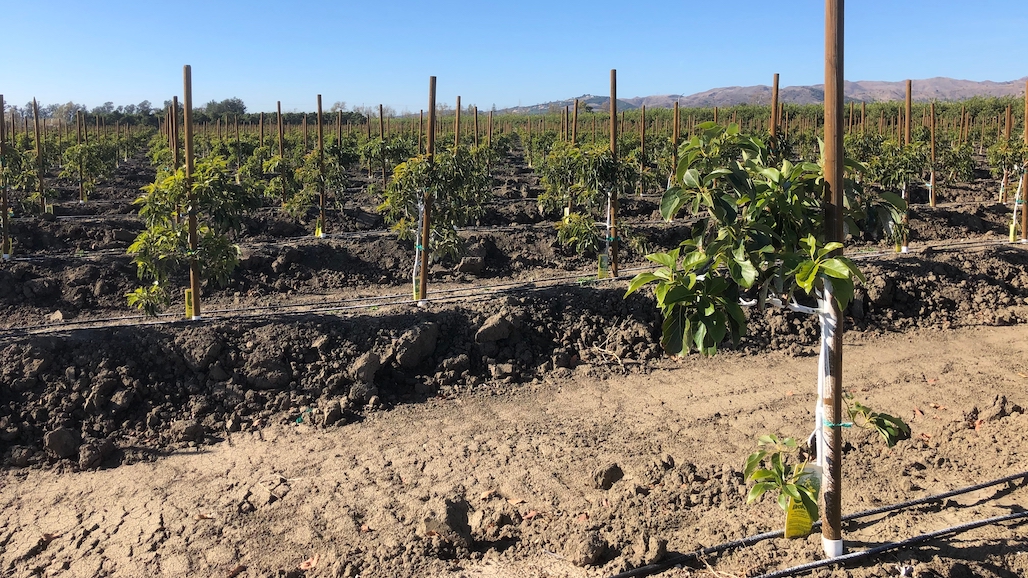
The same amount of water was sufficient for the high-density avocados as it was for the traditional planting (Photo by Gary Bender).
High-density planting increases profitability of avocado production given there is suitable land for high-density orchard development.
Although the cost of water accounts for 44% of the total production cost in the high-density planting, the water cost is proportionally less than in the conventional planting of 145 trees per acre when distributed over a higher yield per acre, the authors write.
Their cost analysis describes production operations for avocados planted at 430 trees per acre, with an expected life span of 40 years. The study includes a detailed summary of costs and returns and a profitability analysis of gross margin, economic profit and a break-even ranging analysis table, which shows profits over a range of prices and yields. Growers can identify their gross margin and returns to management based on their yield and prices received.
UC Cooperative Extension advisor Gary Bender checks sunlight penetration in a high-density avocado orchard.
Input and reviews were provided by a UC Cooperative Extension farm advisor and grower cooperators in San Diego County. The authors describe the assumptions used to identify current costs for avocado establishment and production, material inputs, cash and non-cash overhead.
The new study, “Avocado Establishment and Production Costs and Profitability Analysis in High Density Planting, San Diego County-2020,” can be downloaded for free from the UC Davis Department of Agricultural and Resource Economics website at http://coststudies.ucdavis.edu and UCCE Riverside County Farm Management website at https://ucanr.edu/sites/Farm_Management/Costs_and_Returns. Sample cost of production studies for many other commodities are also available on the websites.
For additional information or an explanation of the calculations used in the studies, refer to the “Assumptions” section of the report or contact Takele at (951) 683-6491 Ext. 243 or ettakele@ucanr.edu or Donald Stewart at the UC Agricultural Issues Center at destewart@ucdavis.edu. — By Pamela Kan-Rice, UCANR
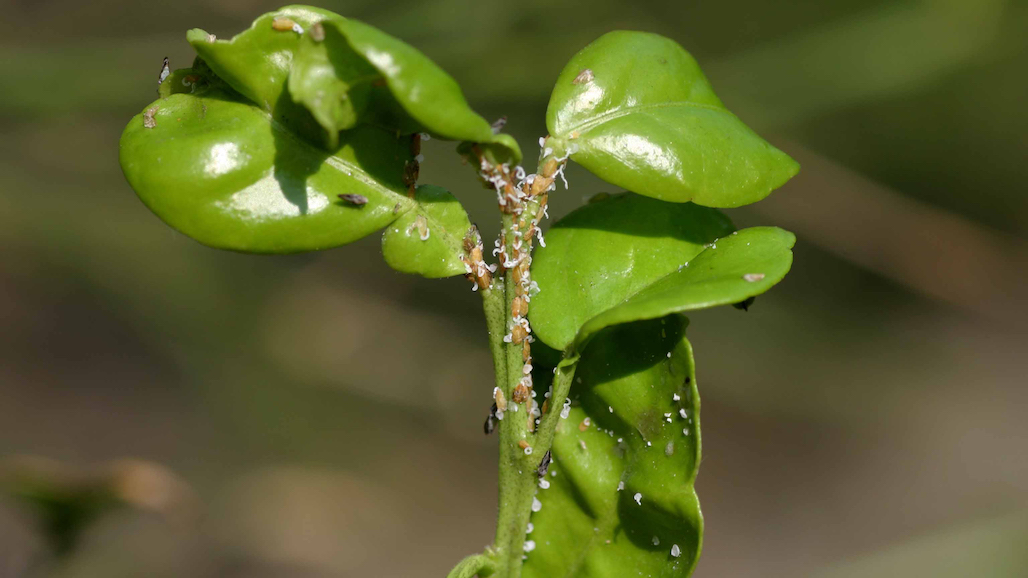
An Asian citrus psyllid (ACP) sample – confirmed positive for Candidatus Liberibacter asiaticus (CLas), the bacteria that causes Huanglongbing (HLB) – was collected from a residential property in the Fallbrook area of San Diego County. Confirmed by Citrus Research Board’s Jerry Dimitman Laboratory, this adult psyllid sample is the first CLas-positive ACP found in San Diego County.
While the first confirmation of a CLas-positive ACP in San Diego County is concerning, as of today, HLB has not been detected in any San Diego County trees but surveying and sampling of area trees is ongoing. This find signals a critical time for homeowners and growers alike to continue to control ACP populations to stop the potential spread of this deadly disease, as oftentimes a CLas-positive ACP precedes the detection of an HLB-positive tree.
The HLB quarantine zone will not be expanded as a result of this CLas-positive ACP detection and CDFA staff is swiftly conducting surveys and collecting samples from HLB host plants that are located within a 250-meter radius around the find, per the ACP/HLB Action Plan.
While treatment is not mandatory for area commercial growers as a result of the detection, San Diego County commercial growers who have additional questions can contact Sandra Zwaal, San Diego County Grower Liaison, at szwaal2@gmail.com.
CLICK HERE for additional information from Citrus Pest and Disease Prevention Program (CPDPP) Citrus Insider.
Source: Citrus Pest and Disease Prevention Program (CPDPP) Citrus Insider
AMERICAN PHYTOPATHOLOGICAL SOCIETY – Potato is the most consumed vegetable crop worldwide. However, despite its importance, potato production is severely affected by high susceptibility to a wide range of microbial pathogens, such as bacteria from the genus Pectobacterium, which cause various devastating diseases in potato and produce important economic losses.
Even though resistance to Pectobacteriumspecies is limited within cultivated potato varieties, it is known that a potato wild relative (S. chacoense) is resistant to them; however, until recently, the underlying mechanisms of this phenomenon remained unknown.
In a recent study published in the Molecular Plant-Microbe Interactions (MPMI) journal, scientists from Colorado State University (CSU) revealed that metabolites from S. chacoense contribute to disease resistance by altering the pathogenic behavior of Pectobacterium brasiliense, rather than inhibiting its growth or killing it.
“We tested if chemicals extracted from the wild potato affect the behavior of the bacterium and found that these inhibited their ability to produce the enzymes that degrade plant cell walls. The chemicals also intercepted their ability to communicate with each other. To use a battle analogy, the wild potato plant chemicals intercepted the bacteria’s missiles, they cut off their radio communications, and together this encouraged the bacteria to remain friendly neighbors,” explained Adam Heuberger, a CSU Associate Professor involved in the research.
“This wild potato is also resistant to insects, viruses, and fungi. The question is always why, and then how, we can translate this information to improve society. There is much to learn by studying wild relatives of food and ornamental plants,” Heuberger added.
University of Göttingen – The yield and quality of many crops benefit from pollination, but it isn’t just honey bees that do this work: bumble bees also have a role. However, placing honey bee or bumble bee colonies next to the field does not guarantee that they will visit the desired plants since there may be other plant species flowering at the same time that prove more attractive. A team from the University of Göttingen, together with researchers from the University of Applied Sciences Mittweida and the Julius Kühn Institute, used innovative molecular biological methods and traditional microscopy to investigate the pollen collecting behaviour of honey bees and bumble bees in agricultural landscapes. They show that bumble bees take much more pollen from dif-ferent plant species than honey bees to satisfy their need for protein. Furthermore, less pollen from the target – in this case strawberry plants – is collected when there are fields of flowering oilseed rape in the surrounding landscape. The results have been published in the journal Molecular Ecology.
The research team put honey bee and bumble bee colonies next to an experimental field (photo by Svenja Bänsch, University of Göttingen).
The researchers placed honey bee and bumble bee colonies next to strawberry fields in the Göttingen and Kassel region and collected pollen from returning honey bees and bumble bees. The bees collect the protein-rich pollen mainly for feeding their offspring. The pollen DNA was investigated working closely with the Division of Molecular Biology of Livestock and molecular Diagnostics at the University of Göttingen, and the Department of Biochemistry/Molecular Biology of the Mittweida University of Applied Sciences. “DNA analysis tells us which plant species the bees have visited and how diverse their foraging behavior is. To do this, we sequenced the DNA of the pollen and compared the sequences using a database of regional plant species,” says Dr Svenja Bänsch, post-doctoral researcher in Functional Agrobiodiversity at the University of Göttingen.
“Our study shows that honey bees and bumble bees use very different plants to source their pollen in the landscape. In particular, the wide range of bumble bee nutrition, which they find mainly in flower-rich habitats, should be taken into account when taking steps to improve nature conservation. Both honey bees and bumble bees, whose colonies can be purchased or rented, are suitable pollinators in strawberry cultivation. However, naturally occurring wild bees should be encouraged as a priority,” concludes Professor Catrin Westphal, Head of Functional Agrobiodiversity at the University of Göttingen.
Original publication: Bänsch S., Tscharntke T., Wünschiers R., Netter L., Brenig B., Gabriel, D. & Westphal, C. (2020) Using ITS2 metabarcoding and microscopy to analyse shifts in pollen diets of honey bees and bumble bees along a mass-flowering crop gradient. Molecular Ecology. Doi:10.1111/mec.15675 or: https://onlinelibrary.wiley.com/doi/full/10.1111/mec.15675
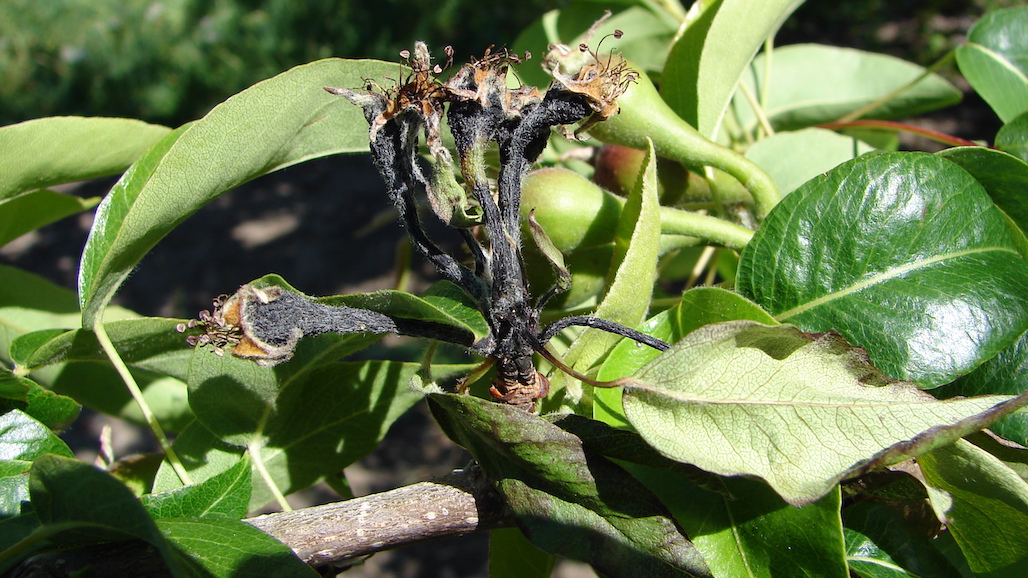
Historically credited as being the first bacterium ever characterized as a plant pathogen, fire blight is a bacterial disease that leads to significant losses of pear and apple. The role of insects in the spread of this disease has been long studied. In a new study, plant pathologists based at Cornell University and Cornell AgriTech take a hypothesis that has been more or less ignored for 100 years and provided support for its validity.
Fly feeding on the ooze droplet in the experimental chamber (Photo by Matthew Boucher).
According to first author Matthew Boucher, the study describes a long hypothesized but never experimentally supported transmission mechanism for fire blight. Boucher and colleagues show that flies in an apple orchard can acquire the bacterial agent (Erwinia amylovora) of fire blight from sugary droplets exuding from diseased apple trees and subsequently transmit the bacterium to uninfected shoots so long as those shoots are damaged in some way.
“This transmission mechanism is mechanical, the bacterium does not appear to have a close evolutionary relationship with any given insect and may seem inefficient to an unsuspecting observer,” explained Boucher. “However, we show that the massive populations of E. amylovora in the sugary droplets exuding from trees allow flies to acquire enough bacteria for the population to persist in and on flies for as long as seven days in some cases.”
Flies can continually shed bacteria over the course of those seven days, resulting in multiple opportunities for a single insect to initiate an infection.
“Demonstrating that bacterial populations can survive within the insect is important because previous research largely discounted E. amylovora survivability within an insect.” More research is needed, especially under field conditions, but this is an exciting step toward understanding the diversity of interactions between plants, insects, and phytopathogens.
“We also show that insects do not need to have intimated, co-evolved relationships with plant pathogens to be important agents in the disease cycle. There are only one or two similar pathogens in documented research, but there are likely more out there that need to be studied to advance our knowledge of this end of the disease-vector spectrum,” Boucher said when asked what makes his work groundbreaking. “As a collective work, we show the importance of integrating historical literature into modern research and revisiting topics and hypothesis that may not have been technologically feasible to investigate when they were first proposed.”
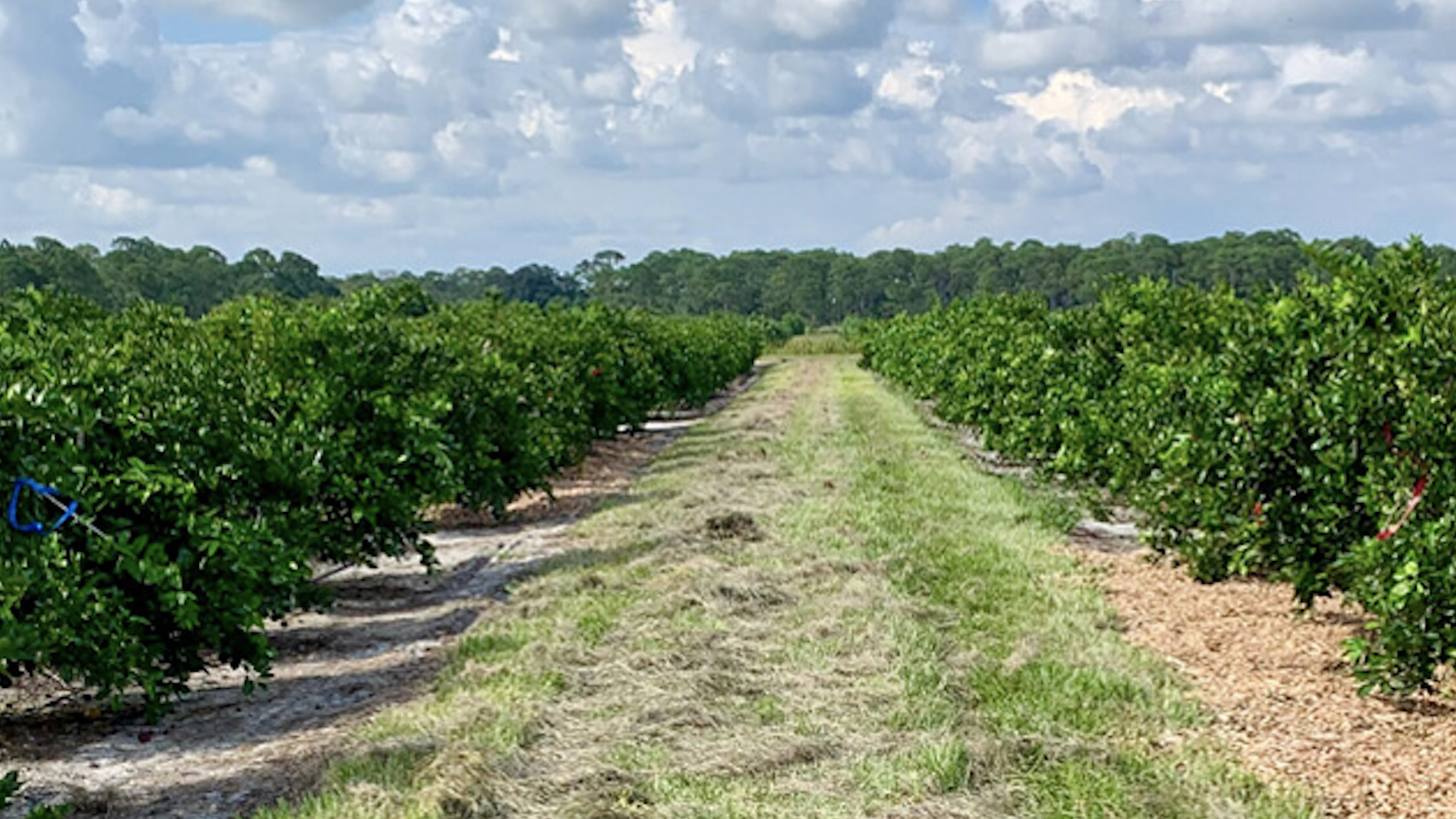
University of Florida Institute of Food & Agricultural Sciences – Florida citrus growers who face the most severe citrus disease in history notice how citrus trees under oak tree hammocks appear to tolerate the disease. Lukas Hallman believes oak trees may hold a compound that boosts the citrus trees’ ability to tolerate the disease.
Hallman is a graduate student at the University of Florida Institute of Food and Agricultural Sciences Indian River Research and Education Center (UF/IFAS IRREC) in Fort Pierce, in the heart of the world’s premier grapefruit production region. The disease, Huanglongbing, or HLB, is caused by a bacterium and vectored by the invasive insect, the Asian citrus psyllid. Once infected, trees have a reduced fine root mass, yellowing of leaves, and smaller and bitter tasting fruit. In the U.S., the disease’s common name is citrus greening, said Hallman.
“Anecdotal reports from Florida growers claim that citrus trees growing within the drip line of large oak trees have minimal HLB symptoms, while trees nearby, but not under the oak drip line, show severe symptoms,” said Hallman.
Oak Extract was Medicinal During American Civil War
In his literature review of scientific journal articles, Hallman found that compounds from white oak tree bark were used as antimicrobials during the American Civil War. Marco Pitino, a former UF postdoctoral researcher, published the first research study for oak tree extract used in the greenhouse against the bacterium. The work took place at IRREC. Pitino found oak extract would improve citrus trees’ ability to tolerate HLB in the greenhouse.
“The literature review and Pitino’s greenhouse study were enough to form a viable hypothesis for a field study with oak mulch beds under citrus trees,” Hallman said. “Pitino’s work took place in a greenhouse. His findings need field tests, and we need an answer to help the local industry, which has seen their crops drop by 90% in the last 15 years,” said Hallman.
Lorenzo Rossi, assistant professor of plant root biology at IRREC, is Hallman’s graduate research advisor. Rossi persuaded Hallman to apply for a Southern Sustainable Agriculture Research and Education (SSARE) graduate student grant to fund research of his hypothesis.
Southern Sustainable Agriculture Research & Education Grant
When Hallman began to write the SSARE grant, a large oak tree fell on the IRREC property in a 2019 hurricane. With funds from a UF/IFAS Horticultural Sciences Department A.H. Krezdorn Memorial Fund, and collaboration with Robert Shatters, a research molecular biologist with the U.S. Department of Agriculture, Rossi and Hallman prepared the tree for mulch. The researchers used it for a bed under citrus trees in a research grove. With the research infrastructure in place, Hallman began to take monthly data from the root rhizosphere under the oak-mulched citrus tree beds.
Rossi said Hallman’s grant application was successful, and in the fall of 2020, he began work to fulfill the project’s objectives. The SSARE grant provides more than $12,000 for the 2-year study to determine if oak mulch will suppress citrus greening in the open field.
“The oak mulch is easier to apply to trees than the oak extract,” said Rossi. “Through the research, we may find oak mulch soil amendments improve the soil and that the compounds in the mulch help citrus trees tolerate HLB.”
The project, “Deploying oak mulch to contain and suppress HLB disease in citrus,” has three objectives: to determine the capability of oak mulch to contain and suppress citrus greening, to measure the effect of oak mulch on HLB-affected citrus physiology, root growth and development, and to study the effect of oak mulch on microbial life biodiversity within the rhizosphere. Hallman carries out daily data collection for the project. Those tasks include soil samples, soil respiration, photosynthesis measurement, and nutrition studies.
Graduate student Lukas Hallman distributes oak mulch on citrus tree beds.
“With the SSARE project, we are able to expand the research,” said Rossi. “In the future, we will need to identify which compounds are beneficial, where those compounds are in the trees, which oak species hold the specific compounds, and how much of the right compounds will control the disease.”
One year into the project, Hallman said he found more nutrients in the root rhizosphere. Also, preliminary findings show that as the mulch breaks down, soil biodiversity increases.
“More nutrients are available to the trees as a result of the mulch breaking down into the soil,” said Hallman. “The nutrients are potassium and phosphorus. We have also found that mulch improves soil texture. Improved soil holds more moisture and requires less irrigation.” Soil that holds more moisture enhances plant root health and the trees’ nutrient uptake, resulting in more fruit and a longer life for the trees, Rossi said.
“The research is a collaboration with the USDA,” said Rossi. “It confirms that UF/IFAS and the USDA are committed to the development of ‘an out-of-the-box’ cure for HLB.”
Longterm outcomes for the research are to improve economic profitability for growers, to improve environmental health by reducing chemical inputs, and to support the surrounding community. In the years from 2006 until 2011, HLB took more than 6,500 jobs from Floridians. Oak mulch could help restore some of those positions, said Hallman.