Category: Non-Video

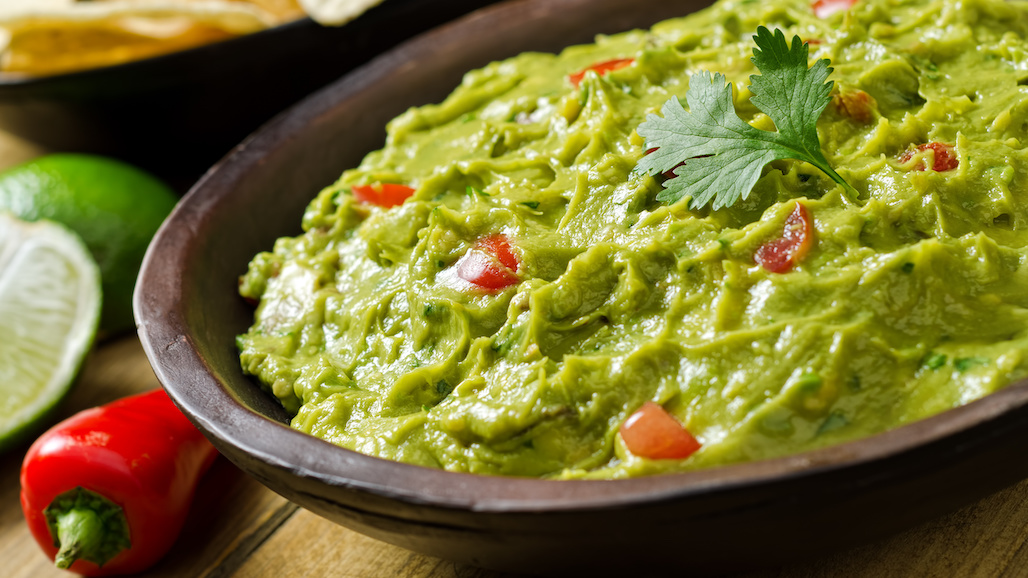
  • Guacamole from Mexico Fuels Surge of Avocado Imports

    Guacamole from Mexico Fuels Surge of Avocado Imports

    Hoy F. Carman, UC Davis, Giannini Foundation of Agricultural Economics – Strong increases in U.S. consumption of processed avocado products have been largely overlooked, while popular attention has focused on the demand for fresh avocados. The major reason for this gap in knowledge is a lack of reliable statistics on avocado processing and U.S. sales of processed avocado products. Despite the significant data issues associated with measurement of processed avocado sales and consumption, there is an important story to be told. Avocados are a healthy, nutrient-loaded food product and U.S. consumption has grown rapidly. Processed avocado imports from Mexico have recently accelerated and their continued growth has important implications for U.S. producers, consumers, and the Mexican avocado industry. Sound economic reasons support Mexico’s dominance in supplying processed avocado products to the U.S. market, and the underlying factors fueling recent growth of processed avocado imports are expected to continue.

    Processed Avocado Imports

    Avocados have evolved from a seasonal specialty to a year-round staple in both the supermarket produce aisle and consumer diets. U.S. fresh avocado consumption increased from 1.47 pounds per capita in 1989 to 8.07 pounds in 2019, with Mexico accounting for most of the increased supplies. At the same time, U.S.-processed avocado imports increased from a minuscule 0.01 pounds per capita in 1989 to almost 0.75 pounds in 2019, with Mexican product dominating imports. The processed import share of total U.S. avocado consumption increased from less than 0.5% (product weight) in 1989 to 8.5% in 2019.

    Figure 1 shows the growth in processed avocado imports from 1989 through 2019. Growth was slow and steady through 2016, and then accelerated from 2017 through 2019. Processed avocado imports first exceeded 50 million pounds in 2000. It took another 11 years of growth to exceed 100 million pounds in 2011. With explosive growth beginning in 2017, it took only three years to add almost 100 million more pounds of processed imports.

    The stair step pattern of growth in processed imports appears to be partially due to the addition of new processing capacity and establishment of new plants in Mexico over time, as well as increased market penetration for processed products. New avocado processing capacity is lumpy, even though the product mix can be flexible. The description of an avocado processing plant recently brought online in Mexico is illustrative. The plant has 190 employees operating two product lines with two high-pressure processing (HPP) machines, four packaging machines, and a capacity of 55,000 pounds of processed product per day. This plant, operating five days per week for 50 weeks can add 13.75 million pounds annually to processed avocado supply and exports.
    U.S.-processed avocado imports are comparatively large when measured against total California avocado production. California produced an annual average crop of about 290 million
    pounds of fresh avocados for the five years from 2015 through 2019. Processed avocado imports totaled 246.6 million pounds (product weight) in 2019, but were certainly much higher in terms of the fresh-product equivalent. Research sponsored by the California Avocado Commission (CAC) indicates that the average yield of edible product for Hass avocado sizes 36 through 84 is 70%. One pound of processed avocado is thus equivalent to about 1.43 pounds of fresh avocados. A further complication is that some processed products such as guacamole contain other ingredients. Overall, it is likely that 2019 processed avocado imports required some 350 million pounds of fresh avocados. This amount exceeds the recent 5-year average California production by almost 20% and not all of the imported product was included in the processed import data. Some of the shortcomings in processed avocado data are discussed below.

    Processed Avocado Data Issues

    There are two reasons for shortcomings in U.S-processed avocado consumption data. First, the USDA and California did not report processed utilization of the California avocado crop because of confidentiality requirements. Thus, even though Calavo processed as much as 20 million pounds of guacamole and other avocado-based items annually in its Santa Paula, California plant from 1974 until it was closed in 2003, all of California’s production was reported as fresh sales and consumption. Second, after the California plant closure in 2003, the U.S. became dependent on imports for almost all of its processed avocado needs. While the U.S. reports quantity and value of processed avocado imports, the data are incomplete because several processed avocado products are not reported separately. For example, frozen avocados (without additives) are reported in a category that includes all frozen fruits.

    Mexican Avocado Processing

    It is no accident that Mexico accounts for nearly all of the supply of processed avocado products in the U.S. market. It is the world’s largest avocado producer, with year-round production and with labor readily available at lower wage rates than in the United States. In addition, U.S. markets are readily accessible to Mexican producing areas, major U.S. avocado marketing firms have significant investments in the Mexican avocado sector, its planted acreage continues to expand significantly, and it is the world’s low-cost producer. Mexico has all of the necessary inputs for continued expansion. California’s largest avocado processor’s move to Mexico in 2003 was dictated by Mexico’s clear advantage in comparative costs of production for avocados.

    The UN’s Food and Agriculture Organization (FAO) reported that 14 firms processed Mexican avocados in 2013. Included were a combination of Mexican, U.S.-based, and international firms. Mexico’s dominance in supplying processed avocados to the U.S market has increased steadily over time. During the four years from 2011 through 2014, Mexico accounted for 93.4%, with Peru a distant second at 4.9%. During 2019, the Mexican-sourced share of U.S.-processed avocado products increased to 97.9%, while Peru’s share declined to 1.1%.

    U.S.-Processed Avocado Demand

    The channels of distribution differ for fresh and processed avocados. The California Avocado Commission (CAC) estimates that for fresh avocados, 70% of annual sales are directly to consumers and 30% are through food service channels. The ratios are reversed for processed avocados. Convenience, together with dependability of supply, uniform quality, and consistent taste are important product attributes for food service firms.

    Examination and comparison of real price and consumption data for processed avocado imports provide some clues to the nature of demand for processed avocado products. While imports of processed avocados increased from less than 0.1 pounds per capita in 1994 to 0.75 pounds per capita in 2019, processed consumption remains far below U.S. fresh avocado consumption of 8.07 pounds per capita in 2019. Annual U.S. per capita processed avocado imports are shown in Figure 2, together with port of entry processed prices and weighted annual fresh avocado prices. Average annual fresh avocado prices consist of a quantity weighted average of California and Florida f.o.b. prices and all fresh avocado imports at port of entry. As noted earlier, the incomplete per capita processed import data are product weight rather than fresh equivalent. Despite these shortcomings in measurement, the increasing pattern of processed imports is similar to per capita fresh avocado consumption.

    While the overall pattern of fresh and processed avocado prices are similar over the period from 1994 through 2019, with real prices reaching lows in 2006 and 2007, the relationship between the two series does not meet expectations for close substitutes until after 2008. That is, if fresh and processed avocados are close substitutes, we would expect fresh and processed prices to show similar adjustments over time—but with processed prices above fresh prices to reflect processing costs and equivalence.

    The pattern of comparative prices prior to 2008 could be due to a combination of factors including, (1) fresh and processed avocados were not regarded as close substitutes in many applications due to processing methods used, (2) demand factors differ in at-home and institutional outlets, (3) annual averages may not capture differing seasonal patterns of supply and demand, and (4) avocados utilized for processing may not be suitable for fresh market sales.

    Factors Associated with Increased Demand

    Existing data, while incomplete, show a significant increase in processed avocado imports and consumption over time. Several factors contributed to increased U.S. imports of fresh and processed avocados. These included:

    -Nutrition and health research funded by the CAC;

    -The phased opening of the U.S. market to fresh Mexican avocados;

    -Approval of the Hass Avocado Promotion, Research, and Information Order that supports research and promotion programs for all fresh Hass avocados marketed in the U.S.;

    -Growth of Mexican and Hispanic restaurants and menu items;

    -Increasing availability of avocado imports from Mexico, Chile, and Peru;

    -Active involvement of U.S.-based firms with extensive experience in avocado packing and processing.

    Economic analysis of the growth of consumer demand attributes an important role to Hass Avocado Board research and promotion programs. A crucial factor for increasing processed avocado demand was the development and adoption of HPP for avocado products beginning in 1996.

    High-Pressure Processing of Avocados Fueled Growth

    Avocado processing has traditionally posed a number of food safety issues since unprocessed or minimally processed ready-to-eat (RTE) avocados have a relatively high risk of microbial contamination from pathogens such as Salmonella, E. Coli, and Listeria. Traditional approaches for assuring safe-to-eat avocado products used through the 1990s were accompanied by food quality and taste issues. Heat pasteurization tended to reduce avocado quality, while additives and preservatives produced flavor issues in the final product. Due to these limitations, processed avocados were regarded as clearly inferior to the fresh product in most menu applications.

    The development and application of HPP for avocado products beginning in 1996 provided a solution for serious quality and taste problems. HPP is a cold pasteurization technique in which a product, already sealed in its final package, is introduced into a vessel and subjected to a high level of isostatic pressure transmitted by water to inactivate the bacteria, virus, yeasts, molds, and parasites that might be present, extending the product’s shelf life and enhancing food safety. HPP also maintains the sensorial and nutritional properties of fresh avocados throughout their shelf life. Frozen HPP products can have a shelf life of up to two years.

    The availability and growth of HPP processing capacity has been an important factor in the expansion of processed avocado sales, as is the convenience of having a dependable supply of high-quality inputs for food service menu items. Texas-based Fresherized Foods, which pioneered the use of HPP of avocados for production of guacamole to supply its restaurants, began commercialization of HPP slowly in 1996 and then ramped up as HPP technology and equipment improved. By 2008 Fresherized Foods was operating two processing facilities in Mexico, one in Peru, and one in Chile. The largest Fresherized Foods plant, located in Mexico, had a capacity of nearly 1 million pounds of guacamole and fresh avocado pulp per week, using seven HPP machines and 1,400 employees.

    Concluding Comments

    Hoy Carman

    The increased U.S. demand for processed avocados from 2016 through 2019 is impressive. This recent rate of growth is likely to pause, however, because of processed avocados’ dependence on food service channels and institutional outlets that have been curtailed due to the coronavirus. First quarter 2020 processed avocado imports increased 10.6%, from 61.78 million pounds in 2019 to 68.53 million pounds, achieving an all-time high. Then, with coronavirus shutdowns, second quarter volumes decreased 13.9%, from 54.54 million pounds in 2019 to 46.97 million pounds in 2020. Processed avocado imports and consumption are unlikely to fully recover until the epidemic is controlled, when it is reasonable to expect growth to resume. By Hoy F. Carman, Professor Emeritus, UC Davis, Giannini Foundation of Agricultural Economics, University of California

  • Marketing Assistance Loan Rates for Wheat, Feed Grains, Oilseeds, Rice and Pulse Crops

    The U.S. Department of Agriculture’s Commodity Credit Corporation (CCC) today announced the 2021 Marketing Assistance Loan rates.

    Marketing Assistance Loans provide interim financing to producers so that commodities can be stored after harvest when market prices are typically low and sold later when market conditions may be more favorable. The 2018 Farm Bill extended the Marketing Assistance Loan program, making production for the 2019 through 2023 crops eligible for loan benefits.

    The 2021 Marketing Assistance Loan rates are available on the Farm Service Agency (FSA) website and below:

    Pandemic Assistance for Producers

    As part of a broader effort to help farmers, ranchers and producers who felt the impact of COVID-19 market disruptions, FSA has increased flexibilities for producers with Marketing Assistance Loans. Loans now mature at 12 months rather than nine for loans on most commodities. This applies to all loans disbursed beginning October 1, 2020, as well as any new loans requested by September 30, 2021. These flexibilities are part of USDA’s broader Pandemic Assistance for Producers initiative, which includes direct payments. More information can be found on farmers.gov/pandemic-assistance.

    More Information

    The CCC’s domestic agricultural price and income support programs are carried out primarily through the personnel and facilities of FSA.

    For more information about the CCC, visit usda.gov/ccc. Producers interested in Marketing Assistance Loans should contact the FSA county office at their local USDA Service Center.

    While USDA offices are currently closed to visitors because of the pandemic, Service Center staff continue to work with agricultural producers via phone, email, and other digital tools. To conduct business, please contact your local USDA Service Center. Additionally, more information related to USDA’s response and relief for producers can be found at farmers.gov/coronavirus.

    USDA is an equal opportunity provider, employer and lender.

  • USDA Announces New & Expanded Pandemic Assistance for Farmers

    USDA Announces New & Expanded Pandemic Assistance for Farmers

    Agriculture Secretary Tom Vilsack announced today that USDA is establishing new programs and efforts to bring financial assistance to farmers, ranchers and producers who felt the impact of COVID-19 market disruptions. The new initiative—USDA Pandemic Assistance for Producers—will reach a broader set of producers than in previous COVID-19 aid programs. USDA is dedicating at least $6 billion toward the new programs. The Department will also develop rules for new programs that will put a greater emphasis on outreach to small and socially disadvantaged producers, specialty crop and organic producers, timber harvesters, as well as provide support for the food supply chain and producers of renewable fuel, among others. Existing programs like the Coronavirus Food Assistance Program (CFAP) will fall within the new initiative and, where statutory authority allows, will be refined to better address the needs of producers.

    USDA Pandemic Assistance for Producers was needed, said Vilsack, after a review of previous COVID-19 assistance programs targeting farmers identified a number of gaps and disparities in how assistance was distributed as well as inadequate outreach to underserved producers and smaller and medium operations.

    “The pandemic affected all of agriculture, but many farmers did not benefit from previous rounds of pandemic-related assistance. The Biden-Harris Administration is committed to helping as many producers as possible, as equitably as possible,” said Vilsack. “Our new USDA Pandemic Assistance for Producers initiative will help get financial assistance to a broader set of producers, including to socially disadvantaged communities, small and medium sized producers, and farmers and producers of less traditional crops.”

    USDA will reopen sign-up for CFAP 2 for at least 60 days beginning on April 5, 2021. The USDA Farm Service Agency (FSA) has committed at least $2.5 million to improve outreach for CFAP 2 and will establish partnerships with organizations with strong connections to socially disadvantaged communities to ensure they are informed and aware of the application process.

    The payments announced today (under Part 3, below) will go out under the existing CFAP rules; however, future opportunities for USDA Pandemic Assistance will be reviewed for verified need and during the rulemaking process, USDA will look to make eligibility more consistent with the Farm Bill. Moving forward, USDA Pandemic Assistance for Producers will utilize existing programs, such as the Local Agricultural Marketing Program, Farming Opportunities Training and Outreach, and Specialty Crop Block Grant Program, and others to enhance educational and market opportunities for agricultural producers.

    USDA Pandemic Assistance for Producers – 4 Parts Announced Today

    Part 1: Investing $6 Billion to Expand Help & Assistance to More Producers

    USDA will dedicate at least $6 billion to develop a number of new programs or modify existing proposals using discretionary funding from the Consolidated Appropriations Act and other coronavirus funding that went unspent by the previous administration. Where rulemaking is required, it will commence this spring. These efforts will include assistance for:

    • Dairy farmers through the Dairy Donation Program or other means:
    • Euthanized livestock and poultry;
    • Biofuels;
    • Specialty crops, beginning farmers, local, urban and organic farms;
    • Costs for organic certification or to continue or add conservation activities
    • Other possible expansion and corrections to CFAP that were not part of today’s announcement such as to support dairy or other livestock producers;
    • Timber harvesting and hauling;
    • Personal Protective Equipment (PPE) and other protective measures for food and farm workers and specialty crop and seafood producers, processors and distributors;
    • Improving the resilience of the food supply chain, including assistance to meat and poultry operations to facilitate interstate shipment;
    • Developing infrastructure to support donation and distribution of perishable commodities, including food donation and distribution through farm-to-school, restaurants or other community organizations; and
    • Reducing food waste.

    Part 2: Adding $500 Million of New Funding to Existing Programs

    USDA expects to begin investing approximately $500 million in expedited assistance through several existing programs this spring, with most by April 30. This new assistance includes:

    • $100 million in additional funding for the Specialty Crop Block Grant Program, administered by the Agricultural Marketing Service (AMS), which enhances the competitiveness of fruits, vegetables, tree nuts, dried fruits, horticulture, and nursery crops.
    • $75 million in additional funding for the Farmers Opportunities Training and Outreach program, administered by the National Institute of Food and Agriculture (NIFA) and the Office of Partnerships and Public Engagement, which encourages and assists socially disadvantaged, veteran, and beginning farmers and ranchers in the ownership and operation of farms and ranches.
    • $100 million in additional funding for the Local Agricultural Marketing Program, administered by the AMS and Rural Development, which supports the development, coordination and expansion of direct producer-to-consumer marketing, local and regional food markets and enterprises and value-added agricultural products.
    • $75 million in additional funding for the Gus Schumacher Nutrition Incentive Program, administered by the NIFA, which provides funding opportunities to conduct and evaluate projects providing incentives to increase the purchase of fruits and vegetables by low-income consumers
    • $20 million for the Animal and Plant Health Inspection Service to improve and maintain animal disease prevention and response capacity, including the National Animal Health Laboratory Network.
    • $20 million for the Agricultural Research Service to work collaboratively with Texas A&M on the critical intersection between responsive agriculture, food production, and human nutrition and health.
    • $28 million for NIFA to provide grants to state departments of agriculture to expand or sustain existing farm stress assistance programs.
    • Approximately $80 million in additional payments to domestic users of upland and extra-long staple cotton based on a formula set in the Consolidated Appropriations Act, 2021 that USDA plans to deliver through the Economic Adjustment Assistance for Textile Mills program.

    Part 3: Carrying Out Formula Payments under CFAP 1, CFAP 2, CFAP AA

    The Consolidated Appropriations Act, 2021, enacted December 2020 requires FSA to make certain payments to producers according to a mandated formula. USDA is now expediting these provisions because there is no discretion involved in interpreting such directives, they are self-enacting.

    • An increase in CFAP 1 payment rates for cattle. Cattle producers with approved CFAP 1 applications will automatically receive these payments beginning in April. Information on the additional payment rates for cattle can be found on farmers.gov/cfap. Eligible producers do not need to submit new applications, since payments are based on previously approved CFAP 1 applications. USDA estimates additional payments of more than $1.1 billion to more than 410,000 producers, according to the mandated formula.
    • Additional CFAP assistance of $20 per acre for producers of eligible crops identified as CFAP 2 flat-rate or price-trigger crops beginning in April. This includes alfalfa, corn, cotton, hemp, peanuts, rice, sorghum, soybeans, sugar beets and wheat, among other crops. FSA will automatically issue payments to eligible price trigger and flat-rate crop producers based on the eligible acres included on their CFAP 2 applications. Eligible producers do not need to submit a new CFAP 2 application. For a list of all eligible row-crops, visit farmers.gov/cfap. USDA estimates additional payments of more than $4.5 billion to more than 560,000 producers, according to the mandated formula.
    • USDA will finalize routine decisions and minor formula adjustments on applications and begin processing payments for certain applications filed as part of the CFAP Additional Assistance program in the following categories:
      • Applications filed for pullets and turfgrass sod;
      • A formula correction for row-crop producer applications to allow producers with a non-Actual Production History (APH) insurance policy to use 100% of the 2019 Agriculture Risk Coverage-County Option (ARC-CO) benchmark yield in the calculation;
      • Sales commodity applications revised to include insurance indemnities, Noninsured Crop Disaster Assistance Program payments, and Wildfire and Hurricane Indemnity Program Plus payments, as required by statute; and
      • Additional payments for swine producers and contract growers under CFAP Additional Assistance remain on hold and are likely to require modifications to the regulation as part of the broader evaluation and future assistance; however, FSA will continue to accept applications from interested producers.

    Part 4: Reopening CFAP 2 Sign-Up to Improve Access & Outreach to Underserved Producers

    As noted above, USDA will re-open sign-up for of CFAP 2 for at least 60 days beginning on April 5, 2021.

    • FSA has committed at least $2.5 million to establish partnerships and direct outreach efforts intended to improve outreach for CFAP 2 and will cooperate with grassroots organizations with strong connections to socially disadvantaged communities to ensure they are informed and aware of the application process.

    Please stay tuned for additional information and announcements under the USDA Pandemic Assistance to Producersinitiative, which will help to expand and more equitably distribute financial assistance to producers and farming operations during the COVID-19 national emergency. Please visit www.farmers.gov for more information on the details of today’s announcement.

    USDA touches the lives of all Americans each day in so many positive ways. In the Biden administration, USDA is transforming America’s food system with a greater focus on more resilient local and regional food production, ensuring access to healthy and nutritious food in all communities, building new markets and streams of income for farmers and producers using climate-smart food and forestry practices, making historic investments in infrastructure and clean-energy capabilities in rural America, and committing to equity across the Department by removing systemic barriers and building a workforce more representative of America. To learn more, visit www.usda.gov.

  • USDA Announces New & Expanded Pandemic Assistance for Farmers

    USDA Announces New & Expanded Pandemic Assistance for Farmers

    Agriculture Secretary Tom Vilsack announced today that USDA is establishing new programs and efforts to bring financial assistance to farmers, ranchers and producers who felt the impact of COVID-19 market disruptions. The new initiative—USDA Pandemic Assistance for Producers—will reach a broader set of producers than in previous COVID-19 aid programs. USDA is dedicating at least $6 billion toward the new programs. The Department will also develop rules for new programs that will put a greater emphasis on outreach to small and socially disadvantaged producers, specialty crop and organic producers, timber harvesters, as well as provide support for the food supply chain and producers of renewable fuel, among others. Existing programs like the Coronavirus Food Assistance Program (CFAP) will fall within the new initiative and, where statutory authority allows, will be refined to better address the needs of producers.

    USDA Pandemic Assistance for Producers was needed, said Vilsack, after a review of previous COVID-19 assistance programs targeting farmers identified a number of gaps and disparities in how assistance was distributed as well as inadequate outreach to underserved producers and smaller and medium operations.

    “The pandemic affected all of agriculture, but many farmers did not benefit from previous rounds of pandemic-related assistance. The Biden-Harris Administration is committed to helping as many producers as possible, as equitably as possible,” said Vilsack. “Our new USDA Pandemic Assistance for Producers initiative will help get financial assistance to a broader set of producers, including to socially disadvantaged communities, small and medium sized producers, and farmers and producers of less traditional crops.”

    USDA will reopen sign-up for CFAP 2 for at least 60 days beginning on April 5, 2021. The USDA Farm Service Agency (FSA) has committed at least $2.5 million to improve outreach for CFAP 2 and will establish partnerships with organizations with strong connections to socially disadvantaged communities to ensure they are informed and aware of the application process.

    The payments announced today (under Part 3, below) will go out under the existing CFAP rules; however, future opportunities for USDA Pandemic Assistance will be reviewed for verified need and during the rulemaking process, USDA will look to make eligibility more consistent with the Farm Bill. Moving forward, USDA Pandemic Assistance for Producers will utilize existing programs, such as the Local Agricultural Marketing Program, Farming Opportunities Training and Outreach, and Specialty Crop Block Grant Program, and others to enhance educational and market opportunities for agricultural producers.

    USDA Pandemic Assistance for Producers – 4 Parts Announced Today

    Part 1: Investing $6 Billion to Expand Help & Assistance to More Producers

    USDA will dedicate at least $6 billion to develop a number of new programs or modify existing proposals using discretionary funding from the Consolidated Appropriations Act and other coronavirus funding that went unspent by the previous administration. Where rulemaking is required, it will commence this spring. These efforts will include assistance for:

    • Dairy farmers through the Dairy Donation Program or other means:
    • Euthanized livestock and poultry;
    • Biofuels;
    • Specialty crops, beginning farmers, local, urban and organic farms;
    • Costs for organic certification or to continue or add conservation activities
    • Other possible expansion and corrections to CFAP that were not part of today’s announcement such as to support dairy or other livestock producers;
    • Timber harvesting and hauling;
    • Personal Protective Equipment (PPE) and other protective measures for food and farm workers and specialty crop and seafood producers, processors and distributors;
    • Improving the resilience of the food supply chain, including assistance to meat and poultry operations to facilitate interstate shipment;
    • Developing infrastructure to support donation and distribution of perishable commodities, including food donation and distribution through farm-to-school, restaurants or other community organizations; and
    • Reducing food waste.

    Part 2: Adding $500 Million of New Funding to Existing Programs

    USDA expects to begin investing approximately $500 million in expedited assistance through several existing programs this spring, with most by April 30. This new assistance includes:

    • $100 million in additional funding for the Specialty Crop Block Grant Program, administered by the Agricultural Marketing Service (AMS), which enhances the competitiveness of fruits, vegetables, tree nuts, dried fruits, horticulture, and nursery crops.
    • $75 million in additional funding for the Farmers Opportunities Training and Outreach program, administered by the National Institute of Food and Agriculture (NIFA) and the Office of Partnerships and Public Engagement, which encourages and assists socially disadvantaged, veteran, and beginning farmers and ranchers in the ownership and operation of farms and ranches.
    • $100 million in additional funding for the Local Agricultural Marketing Program, administered by the AMS and Rural Development, which supports the development, coordination and expansion of direct producer-to-consumer marketing, local and regional food markets and enterprises and value-added agricultural products.
    • $75 million in additional funding for the Gus Schumacher Nutrition Incentive Program, administered by the NIFA, which provides funding opportunities to conduct and evaluate projects providing incentives to increase the purchase of fruits and vegetables by low-income consumers
    • $20 million for the Animal and Plant Health Inspection Service to improve and maintain animal disease prevention and response capacity, including the National Animal Health Laboratory Network.
    • $20 million for the Agricultural Research Service to work collaboratively with Texas A&M on the critical intersection between responsive agriculture, food production, and human nutrition and health.
    • $28 million for NIFA to provide grants to state departments of agriculture to expand or sustain existing farm stress assistance programs.
    • Approximately $80 million in additional payments to domestic users of upland and extra-long staple cotton based on a formula set in the Consolidated Appropriations Act, 2021 that USDA plans to deliver through the Economic Adjustment Assistance for Textile Mills program.

    Part 3: Carrying Out Formula Payments under CFAP 1, CFAP 2, CFAP AA

    The Consolidated Appropriations Act, 2021, enacted December 2020 requires FSA to make certain payments to producers according to a mandated formula. USDA is now expediting these provisions because there is no discretion involved in interpreting such directives, they are self-enacting.

    • An increase in CFAP 1 payment rates for cattle. Cattle producers with approved CFAP 1 applications will automatically receive these payments beginning in April. Information on the additional payment rates for cattle can be found on farmers.gov/cfap. Eligible producers do not need to submit new applications, since payments are based on previously approved CFAP 1 applications. USDA estimates additional payments of more than $1.1 billion to more than 410,000 producers, according to the mandated formula.
    • Additional CFAP assistance of $20 per acre for producers of eligible crops identified as CFAP 2 flat-rate or price-trigger crops beginning in April. This includes alfalfa, corn, cotton, hemp, peanuts, rice, sorghum, soybeans, sugar beets and wheat, among other crops. FSA will automatically issue payments to eligible price trigger and flat-rate crop producers based on the eligible acres included on their CFAP 2 applications. Eligible producers do not need to submit a new CFAP 2 application. For a list of all eligible row-crops, visit farmers.gov/cfap. USDA estimates additional payments of more than $4.5 billion to more than 560,000 producers, according to the mandated formula.
    • USDA will finalize routine decisions and minor formula adjustments on applications and begin processing payments for certain applications filed as part of the CFAP Additional Assistance program in the following categories:
      • Applications filed for pullets and turfgrass sod;
      • A formula correction for row-crop producer applications to allow producers with a non-Actual Production History (APH) insurance policy to use 100% of the 2019 Agriculture Risk Coverage-County Option (ARC-CO) benchmark yield in the calculation;
      • Sales commodity applications revised to include insurance indemnities, Noninsured Crop Disaster Assistance Program payments, and Wildfire and Hurricane Indemnity Program Plus payments, as required by statute; and
      • Additional payments for swine producers and contract growers under CFAP Additional Assistance remain on hold and are likely to require modifications to the regulation as part of the broader evaluation and future assistance; however, FSA will continue to accept applications from interested producers.

    Part 4: Reopening CFAP 2 Sign-Up to Improve Access & Outreach to Underserved Producers

    As noted above, USDA will re-open sign-up for of CFAP 2 for at least 60 days beginning on April 5, 2021.

    • FSA has committed at least $2.5 million to establish partnerships and direct outreach efforts intended to improve outreach for CFAP 2 and will cooperate with grassroots organizations with strong connections to socially disadvantaged communities to ensure they are informed and aware of the application process.

    Please stay tuned for additional information and announcements under the USDA Pandemic Assistance to Producersinitiative, which will help to expand and more equitably distribute financial assistance to producers and farming operations during the COVID-19 national emergency. Please visit www.farmers.gov for more information on the details of today’s announcement.

    USDA touches the lives of all Americans each day in so many positive ways. In the Biden administration, USDA is transforming America’s food system with a greater focus on more resilient local and regional food production, ensuring access to healthy and nutritious food in all communities, building new markets and streams of income for farmers and producers using climate-smart food and forestry practices, making historic investments in infrastructure and clean-energy capabilities in rural America, and committing to equity across the Department by removing systemic barriers and building a workforce more representative of America. To learn more, visit www.usda.gov.

  • Fresno County Dominates CA Processing Tomato Production

    The USDA-NASS Pacific Regional Office surveyed California’s tomato processors for their final acreage and tonnage for the 2020 season. The reported data is summarized by county and listed with final 2019 acres, yield and production for comparison.

    In 2020, there were 234,000 acres of processing tomatoes planted in California, a decrease of 1,000 acres compared to 2019. An estimated 228,000 acres were harvested in 2020, unchanged from the previous year. Total 2020 production was 11.31 million tons, 1.1% higher than the 2019 final production of 11.19 million tons.

    Fresno County continued to be the top California county with 3.62 million tons produced. The remaining top five counties include Yolo, Kings, Merced and San Joaquin, accounting for 74% of the total 2020 processing tomato tonnage for California. 

  • Viral Lettuce Disease Threatens Western Growers

    A recent report of viral disease on lettuce from our neighbor (Yuma, Arizona) caught our attention since this is highly relevant to our production system (please find information on the first link below). The name of the virus is “Impatient Necrotic Sport Virus” (INSV), which is a tospovirus, similar to the virus that attacks tomato to cause tomato spotted wilt virus symptoms. This virus (INSV) was first reported affecting lettuce crops in Salinas Valley of California in 2006. Subsequently, it was reported to cause crop loss in 2012 and 2015 in the same area. This virus is transmitted by western flower thrips (Frankliniella occidentalis), which is very common and abundant in the low desert region. Early symptoms of infection by INSV are brown to dark spots and dead (necrotic) areas on leaves, which is often mistaken as chemical burn as shown in the picture below on the left-hand side (Photo Credit: Steven T. Koike, UCANR). As the disease progress, multiple leaves could be affected and result in distorted, twisted and dwarf plants (picture on the right). Most of the lettuce types are susceptible to this virus. Several weed species also believed to be the hosts of this virus. Thrips, that also feed on the alternate host weeds can facilitate INSV transmission to lettuce and other crops.

    The good news is that this virus has not been reported from Imperial Valley to our best knowledge. However, we must keep an eye on anything unusual, especially the symptoms shown in the pictures below.

    If you observe similar symptoms on your lettuce or related crops, please bring to our attention, contact us at (442) 265-7700 or bring the sample to our office, 1050 E Holton Road, Holtville, CA 92250.

    For more information:

    https://acis.cals.arizona.edu/agricultural-ipm/vegetables/vipm-archive/vipm-plant-view/impatiens-necrotic-spot-virus

    https://ucanr.edu/blogs/blogcore/postdetail.cfm?postnum=7309

    https://ucanr.edu/blogs/blogcore/postdetail.cfm?postnum=17351

    -By Apurba Barman & Oli Bachie, UC Cooperative Extension

  • New UCCE IPM advisor in Imperial County

    Apurba Barman joined UC Cooperative Extension as low desert integrated pest management advisor on Jan. 11, 2021. He will be headquartered at the UCCE Imperial County office, which adjoins the UC Desert Research and Extension Center in Holtville.

    “I am very excited for my new role as an IPM advisor based in Southern California and for the opportunity to serve one of the most important vegetable production regions in the state,” Barman said. “The diversity and intensity of crop production in this region demand targeted research to solve pest management issues and effective extension programs to reach diverse clientele. I feel prepared for this job with my experience and passion to serve the community.”

    Barman earned a bachelor’s degree at Assam Agricultural University in India, and master’s degrees in Indiana and at Texas Tech University, Lubbock. In 2011, he completed a doctorate degree at Texas A&M University in College Station, where he developed a research program to understand the extent of damage and management of thrips in the Texas High Plains region.

    Barman comes to UC Cooperative Extension from the University of Georgia, where he led a whitefly monitoring and management progress across cropping systems in the southern region the state.

    Barman can be reached at (209) 285-9810 and akbarman@ucanr.edu. His Twitter handle is @Ento_Barman.

  • Late-season Thrips Management in Lettuce

    Effective control of western flower thrips (WFT) to prevent cosmetic scarring and contamination is important in spring lettuce crops, and now that INSV has been found infecting plants in Yuma lettuce, management becomes even more important.  For most of the growing season, WFT numbers have been below average based on sticky trap counts, field reports and population densities here at YAC. However, in the past few weeks WFT populations have increased in most growing areas. This is not surprising as we typically observe “bioconcentration” of WFT during March and April on late lettuce as surrounding produce acreage declines. Each time a lettuce field is harvested, and disked, adult thrips disperse from these areas into the next available lettuce field.  As the number of lettuce acres becomes reduced near the end of the season, this creates a bottleneck effect that concentrates high numbers of thrips adults on the remaining fields under production. This can often make chemical control of WFT very difficult, particularly in March, as adults can continually re-infest fields following spray applications.   So, what management approaches can you take to manage thrips and hopefully reduce the potential incidence of INSV.  The first line of defense should be sanitation. Growers should disc under produce crops immediately following harvest. The longer a harvested crop remains above ground, the more insects that can build up and move to adjacent lettuce fields, especially with the dry, windy, and warm weather we typically have in March.   If only light INSV incidence is present in pre-harvest fields, PCAs should consider rogueing and removing suspect plants from the field.  Ultimately, this may curb secondary infection within the field. 

    Controlling WFT with insecticides is the best approach to minimizing cosmetic feeding damage and may reduce spread of INSV within fields. For adults, which can easily be found on the leaf surface, your best choices of insecticide are methomyl (Lannate) or acephate at a high label rate.  They are the most efficacious products against adult WFT. Radiant is not as consistently efficacious against adults, but a 7 oz or higher rate will provide the best knockdown and residual control of WFT larvae.  Remember, the key to preventing cosmetic damage by WFT is to maintain larval populations at low levels.  The cryptic or thigmotactic behavior of thrips often makes them difficult to find on lettuce plants. Research has shown that if you can see a few adults and larvae on the plant, it means that there are likely 10-fold more thrips actually on the plant (hiding near the base of the plant between midribs).  This behavior also means that spray coverage is important, particularly with contact insecticides like Lannate. There are other insecticides such as Torac, Minecto Pro, Exirel, Movento and Assail that can provide suppression (50% control or less) against WFT larvae, but don’t expect much activity against adults. For more information on the identification, biology, ecology, and management of thrips on desert produce please visit Western Flower Thrips Management on Desert Produce. — By John Palumbo, University of Arizona Extension
  • Controlling Important Pests in Organic Strawberry Production

    A new study published in the journal Pest Management Science showed that semiochemicals can effectively manage one of the most economically damaging pests in organic strawberry production, the lygus bug (Lygus spp.). Semiochemicals are organic compounds that send signals to insects that alter their behavior, used either to attract them or repel them and can act as an alternative to insecticidal sprays.  In this study, the researchers simultaneously used a female sex pheromone in combination with phenylacetaldehyde to attract the lygus bugs away from the strawberry crops, and another semiochemical, hexyl butyrate that repels the lygus bug away from strawberry crops. They measured the abundance of lygus and the amount of lygus damage in treated and untreated strawberry field under either organic or conventional management. While the semiochemicals were effective under both management regimes, they were especially helpful in the organic strawberry fields. Organic strawberry fields treated with the semiochemicals had 80% fewer lygus bugs and a 50% reduction of lygus damage. These results suggest that semiochemicals used in combination as repellents and attraction agents to draw lygus away from crops can be an effective measure of pest control without the use of insecticides. — The Organic Center

  • Growers Refine Date Palm Irrigation with UCANR Research

    Growers Refine Date Palm Irrigation with UCANR Research

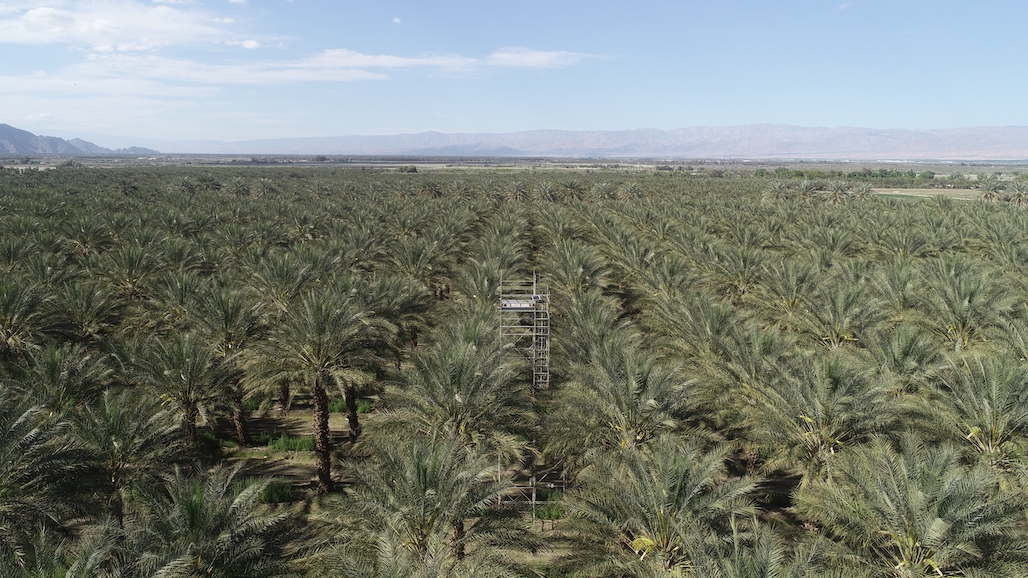
    California’s $86 million date industry produces more than half of the nation’s dates. Most of the fruit is grown in the arid Coachella Valley. Despite efforts by growers to conserve water, data was lacking on date palms’ actual water use to refine the best irrigation management for the crop until a recent research project led by Ali Montazar, UC Cooperative Extension irrigation and water management advisor for Imperial and Riverside counties.

    New research provides data California date growers need to apply a more precise amount of irrigation water to meet the trees’ needs to produce a healthy crop (photo by Ali Montazar).

    “California dates are grown in the hottest and most arid climate in North America and require substantial amounts of water in order to bring a successful crop to fruition,” Albert Keck, Coachella Valley date grower and chairman of the California Date Commission, wrote in a letter of support for this project. “In addition, there is scant modern research specifically and technically focused on growing dates in North America.”

    Montazar said there is a lack of irrigation management information on date palms worldwide.

    “The information developed in this study is expected to have a worldwide impact,” he said.

    To determine the evapotranspiration rate and crop coefficients for California date palms, Montazar teamed up with scientists at UC Davis, California Department of Water Resources, USDA Agricultural Research Service, and USDA Salinity Laboratory.

    The experiment was carried out in six date orchards in the Coachella and Imperial valleys. The sites represent various soil types and conditions, irrigation management practices, canopy characteristics, and the most common date cultivars in the region.

    “The findings of the project indicate that there is considerable variability in date palm consumptive water use, both spatially and temporally,” Montazar said. In other words, the amount of water the trees use varies considerably depending on each site’s growing conditions.

    He estimated the water needs for date palms planted in different soil types in the low desert region.

    “Growers will be able to use the science-based information and tools developed by this project to determine their date palm water needs and optimize the efficiency of water and fertilizer use in their groves,” Montazar said.

    Fruit bags protect date from insect damage and dust and prevent the fruit from falling to the ground (photo by Ali Montazar).

    The peer-reviewed article “Determination of Actual Evapotranspiration and Crop Coefficients of California Date Palms Using the Residual of Energy Balance Approach” is published in the journal MDPI Waterat https://www.mdpi.com/2073-4441/12/8/2253.

    “With a large quantity of new date plantings in the region, coupled with increasingly limited water resources in the Colorado River Basin Watershed, the knowledge anticipated to be developed by this research project has the potential to yield large dividends through not only improved water use efficiency, but also best management practices and crop quality,” said Keck of the California Date Commission.

    Although the research focused on Coachella Valley dates, Montazar said the results are likely to be useful to growers who have orchards with similar varieties, irrigation practices, and canopy and soil features in other locations.

    Montazar’s co-authors are Robert Krueger of the USDA-ARS National Clonal Germplasm Repository for Citrus and Dates; Dennis Corwin of USDA-ARS U.S. Salinity Laboratory; Alireza Pourreza UC Cooperative Extension specialist based at UC Davis Department of Biological and Agricultural Engineering; Cayle Little of California Department of Water Resources; Sonia Rios, UC Cooperative Extension advisor in Riverside County; and Richard L. Snyder UC Cooperative Extension specialist emeritus in the UC Davis Department of Land, Air and Water Resources.

    The date palm irrigation project was funded by the CDFA Specialty Crop Block Grant Program. — By Pamela Kan-Rice, UCANR