The International Fresh Produce Association has announced the names of the winners of the 2024 Produce Excellence in Foodservice Awards. Sponsored by FreshEdge, this prestigious awards program honors chefs and foodservice operators across the country for their produce innovation, creativity, and all-around excellence in the use of fresh produce in the culinary arts. Along with global exposure, the winners also receive a trip to IFPA’s Foodservice Conference in Monterey, California on July 25-26 where they will be honored on stage.
These nine leading chefs and foodservice professionals were nominated by their peers and then evaluated by an expert panel of produce industry judges based on a certain set of criteria. By shining a spotlight on fresh produce through menu creativity and concept development and their ability to incorporate produce into culinary trends, each of these honorees has been instrumental in the increase of produce consumption in their communities.
“We are proud of our continued commitment to this exceptional program that honors the best of the best in foodservice who are elevating fresh produce to the forefront of their menus,” said Steve Grinstead, CEO of FreshEdge.
“Fresh produce remains a key driver of success for the foodservice, retail, and culinary industries with chefs and foodservice professionals playing an essential role in encouraging consumers to explore new produce items,” said Greg Corsaro, President of FreshEdge. “We are proud to recognize another great group of pioneers.”
The 9 winners of the 2024 Produce Excellence in Foodservice Awards are:
Business and Industry: EJ Jimenez, Executive Chef/Chef Instructor, Rancho Cielo Youth Campus
Casual and Family Dining Restaurants: Grace Goudie, Executive Chef, Scratch Board Kitchen
Colleges and Universities: Jonathan Guitierrez Santiago, Executive Sous Chef, University of California Merced/Yablokoff Wallace Dining Center
Fine Dining Restaurants: David Ruiz, Executive Chef, Scalo Restaurant
Hospitals and Healthcare: Roel Mesta, Executive Chef, The Village at Germantown
Hotel and Resort: Manfred Lassahn, Executive Chef, Hyatt Regency Hotels — Hyatt Regency Huntington Beach Resort and Spa
Supermarket and Retail Operators: Dorene Mills, Hannaford chef, Hannaford Supermarkets
Quick-Serve Restaurants: Chris Mayo, Development Manager, Wildflower
More information on the Produce Excellence in Foodservice Awards program can be found here on IFPA’s website.
About FreshEdge
FreshEdge is headquartered in Indianapolis, IN, and was established in 2019 with the combination of Indianapolis Fruit and Piazza Produce in Indianapolis and Get Fresh Produce in Bartlett, IL. Since then, numerous other best-in-class distribution companies and their respective value-added operations have joined the FreshEdge family, growing it into a super-regional leader in the fresh food industry with a focus on fresh produce and specialty food items. FreshEdge’s footprint spans twenty-five states throughout the Midwest and southeastern United States. Together, Wind Point and FreshEdge intend to continue growing FreshEdge by welcoming more fresh food distribution companies into the group—all focused on high-quality produce and specialty food products, along with exceptional service—to create a unique group of complementary entities.
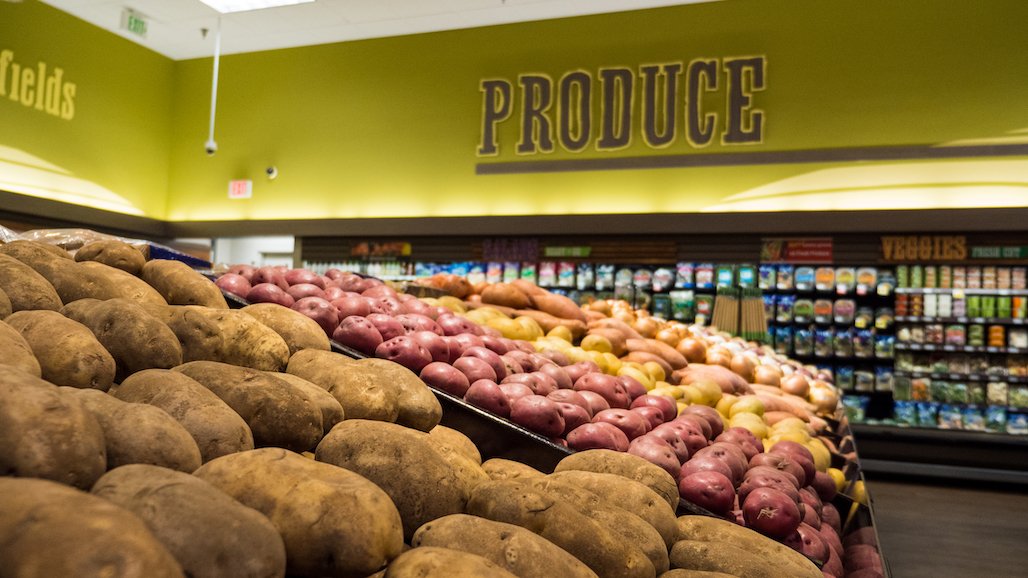
While fresh potatoes are the number three seller in produce department dollar sales, retail analysts suggest there is still substantial opportunity for growth. To help grocers seize potatoes’ full potential, Potatoes USA has released a new educational series filled with fresh data and actionable recommendations.
“Fresh potatoes are the number one selling vegetable accounting for more than 10% of all vegetable sales, but this is not their ceiling of opportunity,” said Anne-Marie Roerink, founder of 210 Analytics, LLC. “There are pockets of opportunity throughout the fresh potato category retailers can leverage to drive renewed pound growth.”
To help retailers capitalize on fresh potato sales opportunities, Potatoes USA has created the “Powered by Potatoes” education series. Individuals can register here to access:
The 30-minute “Unearthing Opportunities in Fresh Potato Sales at Retail” webinar, featuring Roerink and Potatoes USA’s Director of Marketing Marissa Stein featuring exclusive retail data to help unlock opportunities in the produce department.
An ongoing email education program with tips to bring the webinar’s suggestions to life.
Among the series’ recommendations:
Win with the Big Sellers and Capitalize on Growth
Russet potatoes generate more than 50% of fresh potato sales — a must-win performer to cement solid potato sales. But it is important to capitalize on growth drivers as well. In 2023, yellow potatoes surpassed reds as the second largest seller with a 6.7%-pound increase in 2023. This variety shows strong volume and dollar gains.
“When it comes to capitalizing on the power of the potato, best-in-class retailers have a wide assortment that centers on Russet, yellow and reds and rounds out with smaller and mixed varieties.,” Roerink said. “Pound growth in the current marketplace is remarkable, so consider giving extra emphasis to marketing yellow, as they are trending strong now. Our data finds success in yellow across the board in bag/pack sizes and in bulk.”
Growth in Smaller Quantities
The 5-pound bags are the potato mainstay and represent 51% of fresh potato pound sales. However, smaller pack sizes are seeing steady growth. Roerink noted the smaller 1-<2-lb. And 2-4 lb. packs grew the most last year and now represent 12% of pound sales. Meanwhile, the larger 8-lb., 10-lb. and 10+ lb. packs have lost ground.
There are several reasons for smaller pack sizes to have outperformed last year, including potatoes’ above-average inflation in the first half of the year, core households becoming smaller and consumers paying attention to preventing food waste at home as a chief way to save money,” she explained. “Consider a wide array of pack sizes when it comes to growing sales, including smaller.”
Look to Opportunity Households
Potatoes are loved by all with an 85% household penetration and few demographic differences in household purchasing statistics.
“Potato households spend $40 per year on fresh potatoes, but some spend far more and others spend far less,” Roerink said. “The difference lies in trips per year. Boomers – especially male boomers – and large households with teens purchase potatoes far more often. They are locked in.”
“We encourage retailers to also look to ‘opportunity households’ who do buy potatoes, but far less often,” she added. “These include one-person, Asian and Gen Z households.”
For more data, insights and inspiration, retailers can sign up today for the education series.
About Potatoes USA
Potatoes USA is the national marketing and promotion board representing U.S. growers and importers. Potatoes USA, the largest vegetable commodity board, was established in 1971 by potato farmers to promote the benefits of eating potatoes. For more information on Potatoes USA’s mission to “Strengthen Demand for Potatoes,” visit PotatoGoodness.com.
Root inhibitor herbicides such as Trifluralin (Treflan HFP) and Pendimethalin (ProwlH2O) are soil applied and preplant- incorporated and used for control of many annual grasses and broadleaves in processing tomatoes in the Central Valley.
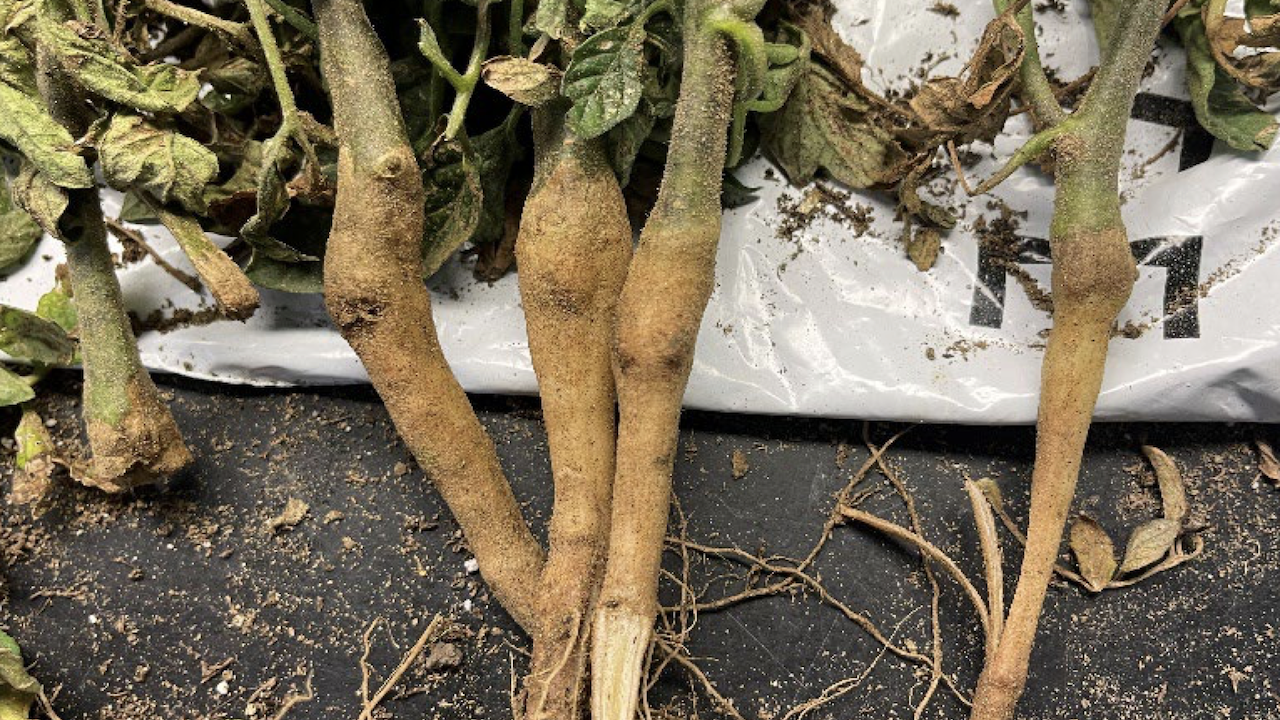
This year, I have seen symptoms from these root inhibiting herbicide injury in a processing tomato field and the damage was quite uniform and widespread in the field. The affected plants had a very atypical swelling at the soil line, were wilting and collapsing (Pic 1, 2 and 3). The stems were very brittle and easily snapped at the soil line near the swollen stems (Pic 4), which is a characteristic of Pendimethalin injury. There was some lodging in the field probably due to winds or a rainy event (Pic 3).
Pic 2 Wilted plants in the field.
It is hard to predict why this happened as the herbicides are supposed to be incorporated into the top 2-3 inches of soil where the weeds germinate, and the transplants are plugged deeper. One of the hypotheses could be that there were some heavy rains that could have moved the herbicides deeper into the soil profile. Another possibility is that residual trifluranlin or pendimethalin from the previous crop along with current application may have caused soil herbicide levels to be beyond crop tolerance.
Pic 3 A collapsed and dead plant in the field.
Similar damage was observed in the Sacramento valley in 2021 where a young tomato field was affected significantly with root inhibiting herbicide injury. These are typical injury symptoms for these herbicides and can be seen on other veg crops such as melons, peppers etc.
Please contact your local Vegetable crops Advisor if you see similar symptoms in the field. — By Jaspreet Sidhu, UCCE Vegetable Crops Farm Advisor
Soil-less substrates in pots or bags can be replaced year to year, eliminating the need for crop rotation and fumigation. This system is often used in conjunction with greenhouse or tunnel systems for environmental protection, and the crop can be placed at any height for more ergonomic and effective labor usage. Additionally, most of the structural and irrigation components of these systems can be reused for multiple years (10-15+), reducing the long-term cost and environmental impacts.
Two of the most used soil-less substrate components worldwide for strawberry production are coco fiber and peat-based mixes. Substrates such as bark, wood fibers, Canadian peat moss, and perlite are readily available and presently in common use in other industries, such as the ornamental nursery industry. Little information is available to assist strawberry growers in making appropriate substrate selections for their operation. We evaluated the performance of greenhouse grown strawberries (Fragaria x ananassa cv. Albion) in six substrate blends sourced from different soil-less material with the goal of assessing strawberry production in local source substrate material in comparison to the grower standards (coco coir and European block peat).
Soil-less substrate mixes that were investigated in this study
Performance of the strawberry ‘Albion’ was investigated in six custom mixed soil-less substrates for two growing scenarios: A Spring planting (‘Experiment 1’) and a Fall planting (‘Experiment 2’). Following soil-less substrates were used:
(PB) 50% Canadian Peat / 50% Bark (locally source pine);
(EP) European Peat mix (BVB)
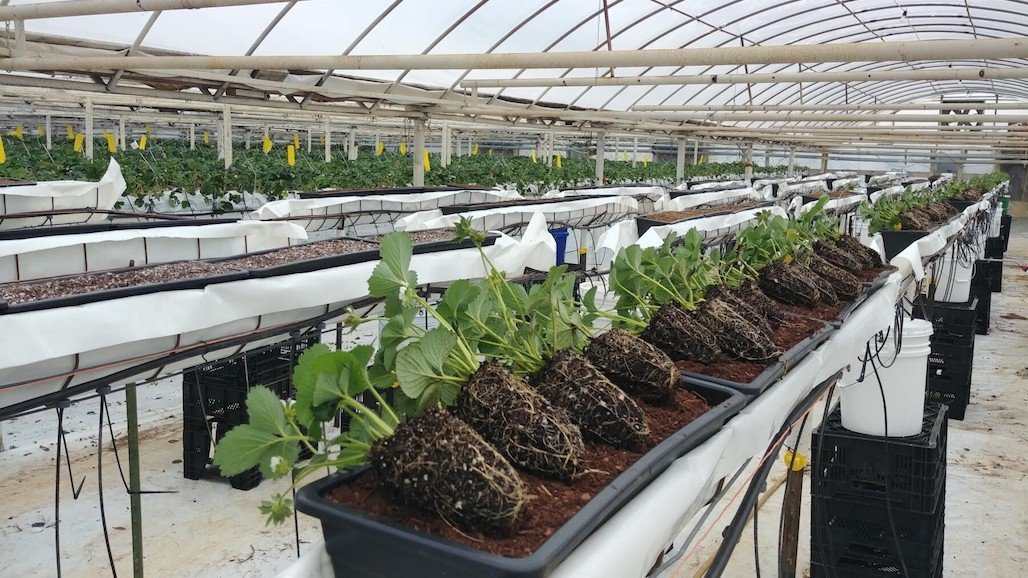
Premier professional grate Canadian peat moss was used for the 50/50 mixes. Coco Coir was washed and buffered. Perlite was horticultural grade perlite. Substrate raw materials were measured out by cubic feet volume and mixed together manually to create the 50/50 blends. Pulverized dolomitic limestone was added to PB, PW, PC and PP when mixing to bring substrate pH up to ~5.6 before starting the trial. Lime was incorporated into the substrates, uniformly mixed, left to sit overnight, and mixed again before being used. Sixteen 1.64 feet (=0.5 meters) long pots were filled with each substrate and checked by weight to make sure all were equivalent. Containers were filled level to the top of the container without compressing the substrate (Figure 1).
Planting material and planting dates
Strawberry (Fragaria x ananassa cv. Albion) mother plants or tips were received from Norton Creek Farms, Waynesville, NC. Mother plants were rooted in an indoor nursery at the farm. Daughter plants were then harvested when needed and rooted directly in 21 cell trays (~240 cc cell volume = tray plant) under a separate misting greenhouse at the farm. For Experiment 1, rooted tray plants were planted on 3/14/21. Plants were removed on 6/23/21 with a growing duration of 102 days. For Experiment 2, tray plants were planted on 9/27/21 and plants were removed on 6/12/22 for a growing duration of 259 days (Figure 2).
Greenhouse and Experimental Design
Each experiment contained the same substrate treatments (see list above). Each treatment was replicated four times in space in a randomized complete block design. Each experiment had a total of 24 experimental units, with 16 plants per unit. Each unit consisted of four half-meter containers (Bato Plastics), filled with the designated soil-less substrate (Figure 2) and four plants per container.
The trial was conducted inside of a commercial mid-tech multibay plastic covered greenhouse facility in Zebulon, NC. Each greenhouse bay measured 100 feet (30.5 meters) long by 21 feet (6.4 meters) wide. The gutter height of the structure was 8 feet (2.45 meters) (Figure 3).
Gutters
Gutters were developed and custom built by the lead author. This system included an elevated growing platform for more ergonomic crop care and harvest activities. Sixteen-inch-wide sections were cut from expanded metal fencing panels and bent into U shape Gutters. Rebar brackets held the gutters on top of two ~4’ tall posts which had been driven into the ground. To allow for the capture of drainage water from each individual unit, rows were split into 8-foot sections and installed on a ~2% slope. Twenty-inch-wide strips of white plastic were cut out of white greenhouse film (6 mm thickness, AT Films) and fastened over top of the gutter with the edges overlapping slightly. A modified stapler was then used to staple the plastic around the gutter frame to secure it into place (Figure 3).
Irrigation and fertility
Drainage leachate and fertigate output solution was collected using a funnel and enclosed bucket directly under the low end of the gutter. Buckets were sealed to prevent evaporation of the drainage water and they were cleaned frequently throughout the experiment to reduce the potentials for algae growth.
Plants were irrigated using an automated irrigation controller (Orbit Bhyve). Overall irrigation times ranged from 2 minutes 2 times per day in the coldest period to 4 minutes 12 times per day towards the end of the experiment on hot days. Water soluble fertilizers were mixed into an A/B stock solution and injected at each irrigation event using fertilizer injectors (Dosatron). The program was adjusted slightly as needed based on plant appearance and tissue testing results.
Data Collection
Several environmental traits were recorded over the course of the experiments. Initial PAR (Photosynthetic Active Radiation) readings were collected to assess possible shading variation between blocks as well as between units. Temperature and relative humidity were recorded throughout the trials. Drainage water and irrigation feed solution analysis was conducted weekly for electroconductivity (EC), pH and volume of solution. Data were collected on the irrigation water supplied to the crop as well as the drainage from the irrigation solution that leached out of the bottom of the growing containers. The percentage of irrigation solution that exited the container as drainage was also collected (DP).
Following plant yield characteristics were recorded weekly: marketable yield in grams, non-marketable fruit yield in grams, marketable fruit number, non-marketable fruit number, and average marketable fruit weight in grams. Total soluble solids of ripe fruit (°Brix) and number of runners were collected every other week. Marketable fruit quality was determined based on what would be acceptable for direct consumer sales of fresh fruit. Marketable fruits were 5g or above in weight, not severely deformed or with any disease or pest damage. A white ring around the top of the fruit, often called “white capping” was acceptable as it is a common characteristic of fruits grown in NC greenhouse production.
Results
Experiment 1 (Spring Planting, 102 days, 2021)
No significant differences in marketable fruit number, marketable fruit weight, TTS, Number of runners or average berry size could be found between treatments (data not shown). Significant differences were seen in average drainage volume per week or drainage percentage between the different substrates. Differences between treatments were observed in EC and pH readings. PW had a significantly lower average drain EC reading (0.815 dS/m) compared to the other treatments. EP had a significantly higher average drainage pH (7.46) and PC had a significantly lower pH reading (5.48.).
Experiment 2 (Fall planting, 259 days, 2021-2022)
Cumulative marketable yields for EP averaged 974 grams per plant (2.15 lbs. per plant.) PP had the lowest yields at 810 grams per plant (1.79 lbs.) For marketable number per plant, PW & EP had the highest at 40 berries per plant each and PP had the lowest at 34 berries. EP and PW also had the highest cull weights (122.2 & 120.25) as well as the highest cull numbers (10.5 & 10.15). PB had the lowest cull weight (94.3) and cull number (6.98.) (Table 2).
No significant differences were found between TTS, average marketable berry size, runner number, drain volume, and drain percentage. PC had the highest EC in drain, and CF had the lowest with 1.19 units. PW had the highest drainage pH at 7.28 and PC had the lowest at 6.5 (Table 2).
Average marketable berry size was similar for all tested substrates with size averaging 20.9 to 23.9 grams (.046 lbs. to 0.053 lbs.).
Conclusion
The results of this study suggest that any of the trialed substrate blends can be used to produce a single season berry crop inside a med-tech greenhouse in eastern North Carolina. For short season cropping, soil-less substrate choice does not have an impact on yield performance of ‘Albion’. In the more common fall planting season, strawberries are grown for 200+ days. Our data suggest that ‘Albion’ grown in European Peat significantly outperformed ‘Albion’ grown in a Canadian Peat / Bark mix and a Canadian Peat / Perlite mix. However, ‘Albion’ grown in Canadian Peat / Wood Fiber mixes performed as well as those grown in European Peat, Canadian Peat / Coco Coir or in Coco Coir itself. Our results suggest that Canadian Peat when mixed 50:50 with Wood Fiber might be a valuable and more local alternative to Coco Coir and European Peat. — By Austin Wrenn (North Carolina State University, Wrenn Farms Grower/Owner), Brian Jackson (North Carolina State University) & Mark Hoffmann (North Carolina State University)
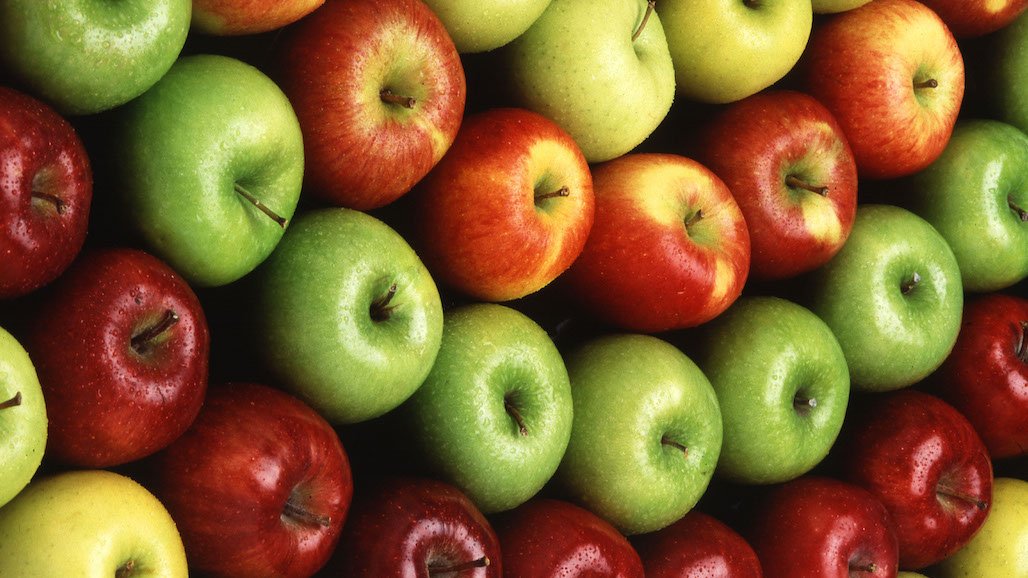
Apples may be famous for keeping doctors away, but sometimes they suffer from ailments of their own. Sunscald is one such disorder, in which heat and light from the sun damage the outer layer of a fruit. The condition isn’t apparent at harvest, but appears weeks or months later, as the fruit moves through the cold storage chain and the peel begins to turn black. While affected apples are still edible, consumers don’t buy them because of their appearance, resulting in sizable annual losses to apple producers as well as food loss, a significant problem in the food system.
Working with colleagues at Washington State University, David Rudell, a research plant physiologist at the ARS Physiology and Pathology of Tree Fruits Research unit in Wenatchee, WA, has developed a novel technique to avoid the problem. The group has begun to use hyperspectral imaging to determine at the time of harvest which apples are at risk of developing sunscald. The imaging consists of scanning the fruit with sensors that can detect electromagnetic signatures associated with levels of natural chemicals that indicate portions of the peel more likely to develop the condition. To date, the technique has proven 95% accurate in identifying the scalded apples at harvest, well before any damage is visible to the human eye.
Granny Smith apples at-harvest (left), at harvest hyperspectral image pseudocolored with lighter blue to white regions indicating sunscald risk (center), and sunscald outcome after 6 months cold storage with symptoms developing beginning at 4 months (right). Red arrows point to at risk regions and the actual outcome.
By identifying and removing the sunscalded apples from the rest of the harvest, producers can market them before the discoloration sets in, avoiding food loss and missed revenues. The researchers expect that their technology could be smoothly integrated into existing sorting lines in fields or at commercial facilities, reducing any cost associated with adopting it. In adding it to producers’ tools, they would be taking a significant step forward in the use of imaging in their industry.
“Hyperspectral imaging is not new in sorting, but what we’re doing differently here is we’re actually predicting something that hasn’t happened yet,” said Rudell. “We’re looking for chemical changes that indicate risk for disorders. It’s translational biology really,” he added, referring to the transformation of research findings into practical tools that U.S. apple and pear producers can use in daily operations. “That’s the big thing here: we’re sorting by something that you can’t see, so there’s that magic aspect there. You can’t see it and we’re mitigating that risk ahead of time.”
The value of that advanced knowledge is only likely to grow, as the increasing heat and drought of climate change raise the risk of sunscald. Over time, the researchers anticipate their technology could be used to predict other types of defects in fruit, too, saving farmers and consumers alike from additional food loss, and bringing a bit more stability to the supply of a cherished popular fruit. – By Kathryn Markham, USDA-ARS Office of Communications
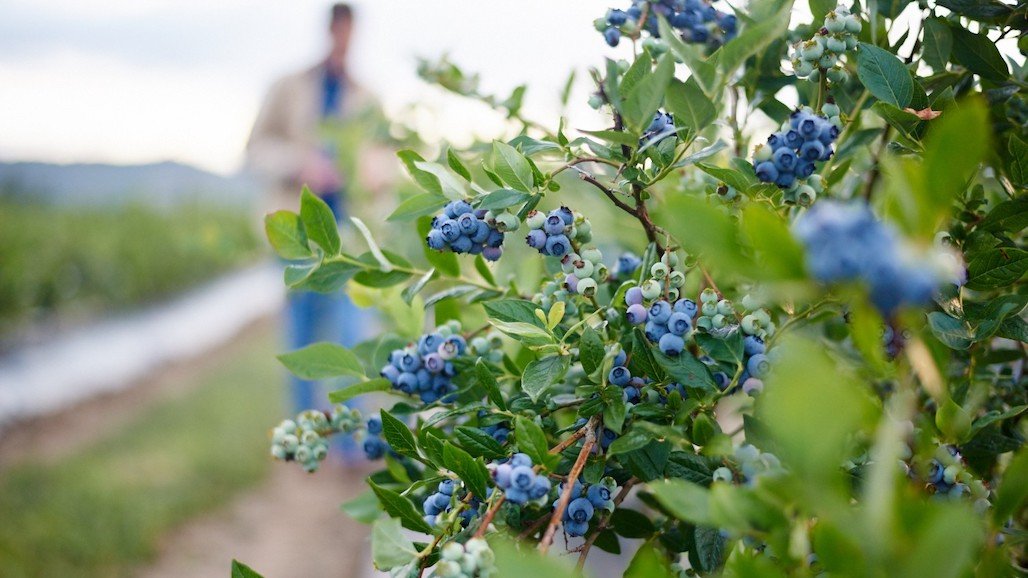
The U.S. Highbush Blueberry Council (USHBC) today announced its partnership with Major League Pickleball (MLP by Margaritaville) for their 2024 season, promoting blueberries as “the official fruit of MLP” among a rapidly growing base of pickleball fans. One in five adult Americans, or 48 million people, play or have tried pickleball – and its popularity is growing each year at a rate of 64%. By being the first-ever produce commodity to partner with the premier organization for professional coed team pickleball, USHBC aims to increase awareness of blueberries’ benefits among pickleball enthusiasts, encouraging them to eat more blueberries for a healthy and active lifestyle.
“Pickleball is a hugely popular sport that inspires excitement and passion – in the same way we know many people are superfans of blueberries for their deliciousness and health benefits,” said Kasey Cronquist, president of U.S. Highbush Blueberry Council. “There is tremendous opportunity to capture and grow this enthusiasm through our partnership with Major League Pickleball, which will come to life throughout the season and motivate consumers to grab a boost of blue, whether they’re a fan of playing pickleball, watching it, or both.”
Blueberries’ partnership with MLP encompasses a comprehensive national marketing promotions program that spans 11 events in as many markets across the country, kicking off with the season’s first event, MLP Atlanta (May 9-12). USHBC advertising and messages encouraging consumers to Grab a Boost of Blue will appear in linear broadcast, streaming, courtside signage, and on MLP’s social media channels, website and newsletter. Additionally, MLP’s VIP and player tents will feature blueberries for hundreds of onsite attendees to enjoy at events throughout the season.
To complement the sponsorship, USHBC will also work directly with pickleball influencers and players to create content that demonstrates how blueberries are a perfect partner to support nutrition for athletes and active lifestyles alike. Turnkey assets for retailers, including in-store merchandising and digital materials, will also be made available to amplify July promotions at point-of-sale, via social media, online and more.
USHBC will also launch a National Blueberry Month campaign to further boost consumption and excitement around pickleball, including plans to host special activities during MLP’s mid-season tournament taking place July 10-14 in Grand Rapids, MI. More details will be announced in the coming weeks.
About the U.S. Highbush Blueberry Council
The U.S. Highbush Blueberry Council is an agriculture research and promotion group, representing blueberry growers and packers in North and South America who market their blueberries in the United States and overseas, and works to promote the growth and well-being of the entire blueberry industry. The blueberry industry is committed to providing blueberries that are grown, harvested, packed and shipped in clean, safe environments. Learn more at ushbc.blueberry.org.
About Major League Pickleball (MLP by Margaritaville)
MLP by Margaritaville (Major League Pickleball) is the preeminent team-based professional pickleball league, featuring nearly 100 of the best athletes across 22 teams, a unique coed format, easy to understand scoring, iconic team owners, and the most electric live events and fan experience in the sport. Founded in 2021, MLP named its first-ever title sponsor, Margaritaville, branding the league MLP by Margaritaville in December 2022. For more information on Major League Pickleball, visit the official website and follow MLP on Facebook, Twitter, Instagram, TikTok and YouTube.
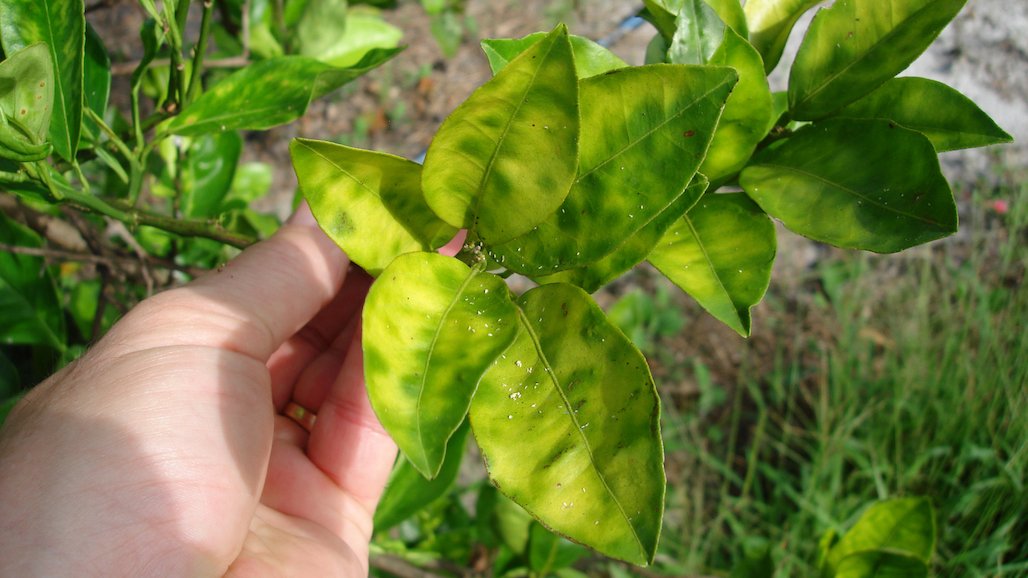
California Citrus Mutual (CCM) commends Chairwoman Stabenow of the Senate Agriculture Committee and Chairman Glenn Thompson from the House Agriculture Committee for prioritizing the citrus industry’s fight against Huanglongbing (HLB) in each of their frameworks for the 2024 Farm Bill. Each Chair’s framework continues support of the Emergency Citrus Disease Research and Extension Program at $25 million per year for the life of the Farm Bill.
“This is a significant step towards reaching a bipartisan Farm Bill compromise that will continue critical research to find a cure to Huanglongbing,” said CCM President/CEO Casey Creamer. “While this isn’t the finish line, it clearly signals that Congress supports maintaining citrus funding. We thank the Chairs of the Committee and our California Congressional delegation for championing our needs.”
The $25 million in funding will go to the U.S. Department of Agriculture (USDA) National Institute of Food and Agriculture (NIFA) to fund research to find a cure for HLB. The funding is overseen by grower representatives from California, Texas, and Florida.
This is a big win for the citrus industry as there were significant headwinds with the current fiscal battles in Washington, D.C., including escalating Farm Bill baseline expenditures and competing priorities within agriculture. It proves the strength of the advocacy partnership with Florida and Texas Citrus Mutuals in addition to the strong support received from allied industry organizations.
About California Citrus Mutual (CCM)
CCM is a voluntary, non-profit trade association representing California citrus growers on the economic, regulatory, and political issues that most impact them.
The U.S. Department of Agriculture’s Animal and Plant Health Inspection Service (APHIS) has released “Fruit Fly Exclusion and Detection Program Fiscal Years 2024-2028 Strategy.” APHIS worked with members of the National Plant Board to develop a unified roadmap for USDA and its partners to protect American agriculture from the threat of invasive fruit flies and measure our progress along the way.
“The United States is experiencing an unusually high number of invasive fruit fly detections – the worst of its kind in 70 years,” said Mark Davidson, USDA APHIS Deputy Administrator for the Plant Protection and Quarantine program. “Invasive fruit flies are a nuisance that drive up costs of producing fresh fruits and vegetables, which can hurt both producers and consumers. Our five-year plan lays out how Federal and State partners can continue to limit the flies’ spread as we further scientific research that will help us develop better pest management tools and options.”
The five-year strategy prioritizes strengthening the following goals for fruit flies of regulatory significance:
Domestic surveillance to support early detection.
Management and emergency response to ensure timely mitigation.
Targeted and effective sterile insect technique for preventive release and eradication programs (assuring rearing facilities are maintained for efficiency and safety).
International and import efforts to mitigate against the introduction and spread of invasive fruit flies in the United States.
To address the unprecedented outbreaks of exotic fruit flies, Agriculture Secretary Tom Vilsack recently released $103.5 million from the Commodity Credit Corporation to fund APHIS’ supplementary emergency response activities. These funds allow APHIS to reach beyond what the agency’s appropriated funding would be able to accomplish over the next few years.
Currently, there are exotic fruit fly quarantines in eight counties in California and five counties in New York. The California Department of Food and Agriculture and APHIS have established parallel quarantines and are working with the State’s agricultural commissioners to eradicate and prevent the statewide spread of the Queensland fruit fly, Tau fruit fly, Mediterranean fruit fly, and Oriental fruit fly in California. APHIS is also working with the New York State Department of Agriculture and Markets to manage the European cherry fruit fly in upstate New York.
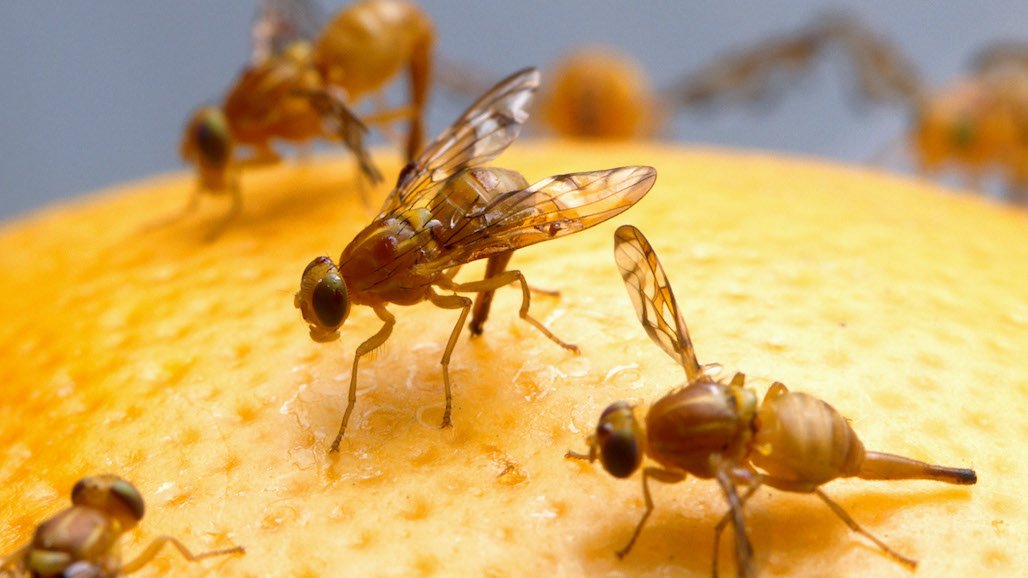
Invasive fruit flies feed on over 400 crops, including citrus and other fruits, nuts, vegetables, and berries. Fruit flies can damage fruits and vegetables when they lay their eggs under the skin of the produce. There, developing larvae make the fruits and vegetables unfit for human consumption. Infested produce may not look damaged from the outside but may take on a brown, mottled appearance as the larvae feed from the inside. Resources to combat invasive fruit fly threats are limited, so developing an efficient strategy to manage or eradicate invasive fruit flies is critical.
To reduce the spread, APHIS and affected states will work together to reduce, and to the extent possible, prevent human-assisted movement. Together, we will also promote public reporting to encourage early detection, and we will leverage the latest research and management tools available. The 5-Year Strategy drives Federal and State responders to explore new population suppression technologies, such as male annihilation technique, mass trapping, and the development of new and/or improved sterile fruit fly strains. Integrating these new technologies into the inter-agency response to invasive fruit flies will help improve the program’s efficiency.
The new strategy also builds the capacity to combat invasive fruit flies in areas at high risk of introduction and will leverage the public’s assistance to prevent further spread of these damaging agricultural pests.
Federal and State partners will also unite their research resources and share knowledge about fruit flies to limit their movement and distribution. While leveraging best practices in the field, State and Federal partners will prioritize more research on climate and host-plant suitability, as well as other effective management tools.
Federal and state fruit fly quarantines do not extend into Tribal lands, but the invasive fruit flies could impact Tribal communities near the quarantine areas. APHIS consulted with Tribes on the five-year strategy in August 2023 and will continue to engage Tribes and solicit feedback on the fruit fly management and outreach strategy.
UC Cooperative Extension is hosting a Pear and Grape Day on May 28, 2024. This is the first event of its kind and we hope to provide programming like this each year for growers in California’s north coast region. The event will focus on the intersection between pear and wine grape production in the north coast. Presentations will be given by experts from University of California and other trusted organizations. Topics will include: Site Monitoring, Cover Crops, Fungal Pathogens, Common Pathogens, Soil Health, Water Use Efficiency in Perennial Crops, Insect Pests & Vectors and more. Registration is $35 and includes lunch. Space is limited, so please register soon if you wish to attend.
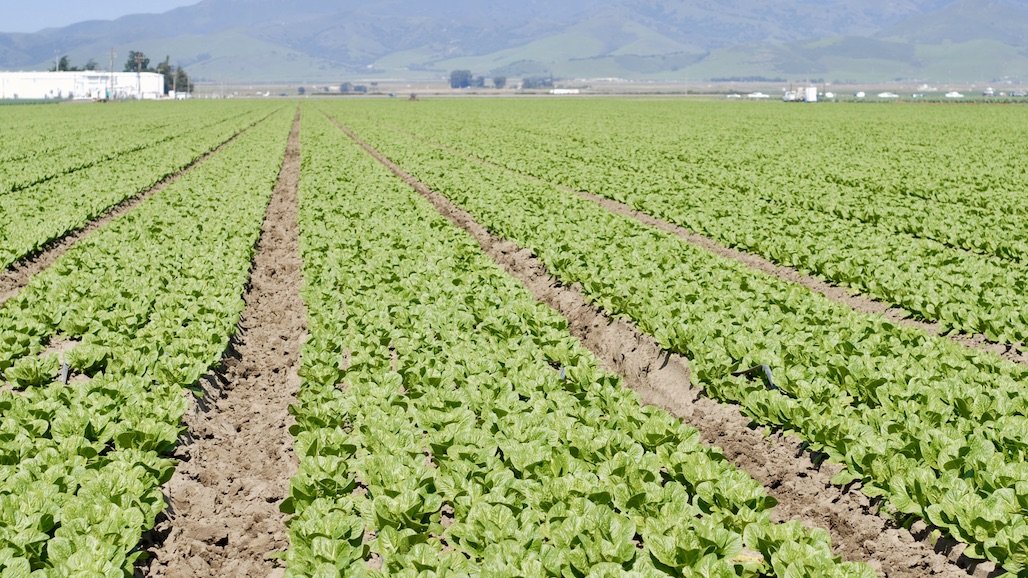
Two of the worst pests plaguing lettuce growers in the Salinas Valley area are aphids, specifically lettuce-currant aphids (Nasovonia ribisnigri), and western flower thrips (Frankliniella occidentalis). Lettuce-currant aphid is an invasive pest that sets up shop in the heart of the lettuce plant and will render the crop unsellable when it reaches high enough numbers. Thrips can both cause cosmetic damage to lettuce crops and are also responsible for the spread of Salinas impatiens necrotic spot virus (INSV), the fatal lettuce disease that has driven large losses since the 2020 growing season.
While effective tools exist to control both aphids and thrips, they are almost exclusively chemical. Chemical sprays are increasingly under pressure due to changes in the regulatory framework in California as well as the development of pest resistance and discoveries of key chemistries in area watersheds1,2. The UC Davis FiVE lab biological control research program addresses a growing interest in developing alternative tools for managing both pests that do not rely on chemical applications. Biological control provides an opportunity for the management of thrips and aphids that do not rely on chemical tools.
Biological control is defined as the use of natural enemies to control a target pest. Three general categories of biological control could possibly be used as management practices for lettuce pests in the Salinas Valley area:
• Conservation biological control refers to the establishment and maintenance of resources and conditions favorable to a native or endemic beneficial species. Instead of releasing predators into crop fields, specific types of flowers and other habitats are planted to attract beneficial species that are already a part of the local ecosystem. To date, most efforts on biological control in lettuce have used the conservation biological control approach.
• Inundative biological control involves the release of a beneficial insect species in large numbers with the expectation that the beneficials that are released will only provide control for a short amount of time before eventually dying out. Such releases would need to be repeated at regular intervals for the duration of the growing cycle for a crop.
• Augmentative biological control refers to the use of releases of smaller numbers of beneficials to areas where a smaller population of the species already exists, but not in numbers great enough to provide adequate control of the targeted pest species. The goal of augmentative releases is to bolster already-existent populations of beneficial species so they achieve great enough numbers to provide control of the pest or pests of interest.
Conservation biological control in the Salinas Valley
Syrphid flies
Aphid pests of lettuce have been effectively managed in some lettuce production systems through the planting of sweet alyssum adjacent to and interspersed within crop fields3. Sweet alyssum is a favorite of the Syrphid fly (Diptera: Syrphidae), the primary biological control agent used to control aphid pests in lettuce. Syrphids, also called hoverflies or flower flies, are a family of black and yellow pigmented flies which resemble bees and stinging wasps. The coloration is a protective camouflage; Syrphid flies are harmless to humans. Syrphid adults are frequently seen visiting flowers for their nectar and pollen, which the insect consumes both as an energy source and to support their reproduction.
In exchange the female Syrphid flies will lay eggs in lettuce plants with lettuce aphid infestations, the primary food source for their young. Once the eggs hatch, the syrphid maggots, which are predatory on slow, soft-bodied insects, will feed on the aphids and suppress their population. Syrphid larvae are known to be voracious; some California species have been shown to consume upwards of 100 aphids per day4!
Syrphids are the intended beneficiaries of most conservation biological control in central coast lettuce fields, but other beneficial species take advantage of these resources as well.
Other predatory species love sweet alyssum
Many other biological control agents are supported by insectary plantings5. Ladybird beetles often inhabit lettuce fields and may provide some control of lettuce aphid infestations. Common lacewings (family Chrysopidae) are also found in lettuce fields and insectary plantings. Lacewings, which are only predatory in their immature or larval life stage, can provide biological control services against lettuce aphids and western flower thrips. Minute pirate bug (Orius sp.) and aphid midges (Aphidoletes aphidimyza) have also been observed in and collected from insectary plantings in lettuce fields, but it is not known the extent to which they can suppress populations of lettuce aphid or Western flower thrips.
UC Davis Fi-VE Bug IPM Lab biological control research programs
Including insectary plantings to attract naturally occurring predators has historically been the only efficient way to get beneficial species into crop fields. Newly developed technology using drones as a dispersal tool may provide another option for growers interested in using biological control as part of their pest management programs for aphids and thrips. This technology drastically reduces the time and labor required to conduct large releases of laboratory-reared beneficial insects, making the approach more feasible for growers.
As part of a research program funded by the California Department of Pesticide Regulation (CA DPR) and in collaboration with Daniel Hasegawa at USDA-ARS and with Parabug, we are studying the release of biological control agents using drones for the management of aphid and thrips pests of lettuce crops. Our three experimental programs are as follows:
In-field inundative releases of green lacewing larvae and predatory cucumeris mites to control aphids and thrips in lettuce
In-field drone release of green lacewing eggs and predatory mites
Experiments run by former Monterey County IPM Advisor Alejandro Del Pozo-Valdivia found that a single inundative release of green lacewing eggs (Chrysoperla rufilabris) in lettuce fields reduced aphid pressure six weeks after release6. Our experiment builds on Alejandro’s work, examining whether repeated releases of green lacewing eggs throughout the lettuce growing cycle reduce aphid numbers. Additionally, the experiment includes two treatments aimed at suppressing western flower thrips: inundative releases of a species of predatory mite (Amblyseius cucumeris), and a combined release of both predatory mites and green lacewing eggs.
Augmentative releases to bolster non-syrphid predatory species in insectary strips and intercropped alyssum
An insectary strip treated with an augmentative release of Orius insidious
Other native predators of aphids and thrips are present in the insectary plantings growers use to attract syrphids, but their numbers are too low to provide suppression of thrips and aphids in adjacent crops. These species are reared by commercial insectaries, but using them in an inundative release could prove too costly for growers. Experiments in this program examine the use of smaller releases of these predatory species early in the growing cycle over insectary plantings. The goal is to determine whether the presence of floral resources allows the predators to stick around and build up enough in population to control aphids and thrips in the crop field. Experiments will be conducted with aphid midge (Aphidoletes aphidimyza), an aphid predator, and minute pirate bug (Orius insidiosus), a predator of western flower thrips.
Augmentative releases to manage thrips in non-crop areas
Drone release of thrips predators over ice plant
Western flower thrips plague not just vegetable crop fields but also the vegetation surrounding crop areas. In this experiment, we will examine whether releases of cucumeris mites and minute pirate bugs over field edges planted with ice plant will establish these predators in the vegetation and provide long-term suppression of western flower thrips. — By Ian Grettenberger and Addie Abrams, UC Cooperative Extension
Citations
Deng, X. Study 321: Surface water monitoring for pesticides in agricultural areas in the Central Coast and southern California (2022)
Gao, Y., Lei, Z. & Reitz, S. R. Western flower thrips resistance to insecticides: detection, mechanisms and management strategies. Pest Manag. Sci.68, 1111–1121 (2012).
Brennan, E. B. Agronomic aspects of strip intercropping lettuce with alyssum for biological control of aphids. Biol. Control65, 302–311 (2013).
Hopper, J. V., Nelson, E. H., Daane, K. M. & Mills, N. J. Growth, development and consumption by four syrphid species associated with the lettuce aphid, Nasonovia ribisnigri, in California. Biol. Control58, 271–276 (2011).
Bugg, R. L., Colfer, R. G., Chaney, W. E., Smith, H. A. & Cannon, J. Flower Flies (Syrphidae) and Other Biological Control Agents for Aphids in Vegetable Crops. (University of California, Agriculture and Natural Resources, 2008). doi:10.3733/ucanr.8285.
Del Pozo-Valdivia, A. I., Morgan, E. & Bennett, C. In-Field Evaluation of Drone-Released Lacewings for Aphid Control in California Organic Lettuce. J. Econ. Entomol.114, 1882–1888 (2021).