Category: Industry News

  • New Nanoparticle-Based Sensors to Measure Residual Herbicides in Food

    Two newly developed, low-cost tests that use nanoparticles to detect chemicals can accurately measure tiny amounts of two potentially harmful herbicides in fruits, vegetables and their products.

    Reporting in the journal Food Chemistry, a Washington State University research team used two testing methods to measure the levels of two herbicides, namely atrazine and acetochlor, in samples of apples, strawberries, cabbage, corn and fruit juices. The work shows the real-world viability of their easy-to-use and inexpensive methods of testing.

    “We applied this technology for real sample detection – which is an important step in moving towards commercialization,” said Annie Du, research professor in WSU’s School of Mechanical and Materials Engineering and the principle investigator of the project.

    Annie Du

    The Food and Drug Administration (FDA) regularly tests a broad range of commodities for approximately 800 pesticide residues, and producers are required to keep the chemical residues on food below a certain level that is considered safe. The two herbicides the researchers measured are widely used in crop production in the U.S. At high exposures, they are potentially toxic for people and have been linked to a range of maladies from allergies to hormone disruption to cancer.

    Doing the testing, however, currently requires sophisticated and expensive instruments as well as a trained technician.

    “We want to come up with a low-cost method that can be used in the field or in the laboratory,” said Bernie Van Wie, corresponding author on the paper and a professor in WSU’s Gene and Linda Voiland School of Chemical Engineering and Bioengineering.

    Bernie Van Wie

    In the past few years, the researchers have developed and patented their idea that uses nanoparticles of palladium and platinum to amplify the signal of molecules. The nanoparticles attach to an antibody, which recognizes the chemical, and then stimulate the production of a signal.  The amplification allows the researchers to know that tiny amounts of the chemicals are present and at what level.

    In this latest work, the researchers used the nanoparticles in two types of tests to measure two chemicals simultaneously. The chemicals were spiked into fruit and vegetable samples that were pureed in a blender.

    One of the tests uses the palladium-platinum nanoparticles to catalyze a reaction that causes a color change in a sample when the herbicide is present. The test can be done using a small unit that can be carried into the field.  The other test the researchers developed uses the nanoparticle in a low-cost paper strip that looks like a COVID-19 or pregnancy test and can be read with a smartphone reader.

    The tests were sensitive enough to measure the chemicals down to the maximum acceptable levels and were validated using traditional testing methods.

    “We’re actually able to detect below the maximum concentration limits. If there’s any pesticide or herbicide in the sample,” said Van Wie. “That’s good because while this can be done by other methods, this method is low-cost and portable in the field.”

    Du has recently started a company that is negotiating with WSU’s Office of Commercialization to license the technology for additional applications. The work was supported by the USDA/National Institute of Food and Agriculture (NIFA) Agriculture and Food Research Initiative (AFRI) program (grant number 2018-67021-27970). — 
  • Organic Fruit Grower Workshop, DEC. 8

    Organic Fruit Grower Workshop, DEC. 8

    The UC Cooperative Extension is hosting an in-person Organic Agriculture Workshop on December 8 from 8:00 a.m. – 4:30 p.m. The workshop is designed for growers, CCAs, PCAs and other agricultural professionals interested in organic agriculture. The session will cover regulations, assistance programs, fertilization, irrigation, and managing pests, diseases and weeds.

    The workshop will discuss the specifics of organic production as related to avocados, citrus and berries. The sessions will include group instruction followed by discussion and questions. Presentation topics of interest to California avocado growers include the following:

    • Overviews of organic production in San Diego County and California
    • Lessons from the field (organic growers panel discussion)
    • Nitrogen management
    • Weed control alternatives
    • Updates on organic regulatory issues
    • Insect pest management options
    • Water and irrigation efficiency
    • Mulching and compost effects on good soil quality and health

    Registration is required for this event and registration is limited to 60 persons. Early registration (November 17 – November 27) is $60 per person. Late registration (November 28 – December 5) is $75 per person.  The workshop will take place at the Farm Hub-Farm Bureau Conference Room, 420 South Broadway, Escondido, CA.

    The complete agenda is available online. For additional information, contact Jan Gonzales at jggonzales@ucdavis.edu.

  • US Blueberry Impact Report Highlights Industry Growth, Innovation

    US Blueberry Impact Report Highlights Industry Growth, Innovation

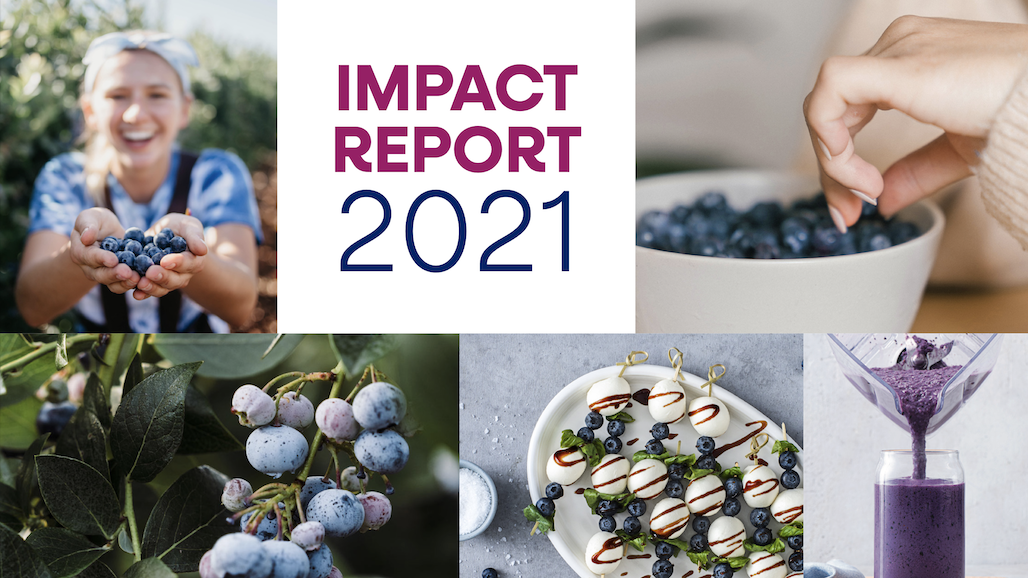
    The U.S. Blueberry Council (USHBC) has released its 2021 Impact Report that details last year’s efforts across all program areas in working toward the USHBC’s vision to make blueberries the world’s favorite fruit.

    Guided by the 2021-2025 strategic plan, USHBC recaps 2021 progress and achievements in consumer promotions, health research, foodservice, industry relations, export and food manufacturing, and annual meetings taking place in the spring and fall. An overview of the organization, its committees, staff and financials is also included.

    “Last year marked a pivotal point in time for our organization in our journey to drive the next ‘blue wave’ of growth and innovation in the blueberry industry,” said USHBC President Kasey Cronquist. “We launched Grab a Boost of Blue, our inspirational consumer call to action that’s resonating with shoppers and retailers, and being championed by industry marketers and stakeholders. Data and insights took center stage thanks to a host of new resources in our data center. And most importantly, the blueberry industry overwhelmingly recommitted to the USHBC with the passage of a referendum supporting the council’s work. With stakeholder support and involvement, we’ll continue to inspire possibilities and drive demand for our blueberry industry.”

    USHBC’s strategic plan, also developed in 2021, addresses the organization’s pillars of focus and the long-term tactics being implemented to drive domestic household penetration and demand for blueberries worldwide. View the full report HERE.

    About the U.S. Highbush Blueberry Council

    Established in 2000, The U.S. Highbush Blueberry Council (USHBC) is a federal agriculture research and promotion program with independent oversight from the United States Department of Agriculture (USDA). USHBC represents blueberry growers and packers in North and South America who market their blueberries in the United States and overseas, and works to promote the growth and well-being of the entire blueberry industry. USHBC was established by blueberry growers and currently has 2,500 growers, packers and importers. USHBC is committed to providing blueberries that are grown, harvested, packed and shipped in clean, safe environments. Learn more at ushbc.org.

  • Upcoming SJV Avocado Meeting And GEM Grove Tours

    Upcoming SJV Avocado Meeting And GEM Grove Tours

    The San Joaquin Valley Avocado Meeting, which will occur on December 5, will feature a variety of guest speakers and visits to two local GEM avocado groves. The meeting will take place from 8:30 a.m. – 12:30 p.m. at the UC Lindcove Research and Extension Center located at 22963 Carson Avenue, Exeter, California.

    The meeting will include the following:

    • A presentation by Sam Santander, CDFA-Avocado Inspection Program
    • A presentation by Ken Melban, California Avocado Commission vice president of industry affairs and operations
    • A question and answer session concerning avocado growing in the San Joaquin Valley
    • Visits to two local GEM avocado groves (directions to the grove will be provided at the meeting)

    If you are interested in attending the workshop, please RSVP with Mary Lu Arpaia at mlarpaia@ucanr.edu with the subject line: 12/5/22 Avocado Meeting.

  • Slight Increase in Assessment Rate for California Citrus Research Program

    Slight Increase in Assessment Rate for California Citrus Research Program

    Upon the recommendation of the Citrus Research Board (Board), the California Department of Food and Agriculture (Department) has established an assessment rate to be levied on California citrus producers during the 2022-2023 marketing season, which is the period of October 1, 2022 through September 30, 2023. The assessment rate for the 2022-2023 marketing season has been set at three and two-tenths cents ($0.032) per 40-pound standard field box, or the equivalent thereof, of all types and varieties of citrus, as defined by the California Citrus Research Program, marketed by producers and received by handlers or processors during the season. The assessment rate for the 2022-2023 marketing season is two-tenths of one cent ($0.002) per standard field box higher than last season’s rate.

    In order to facilitate the collection of assessments, each handler or processor of California citrus is required to remit assessment payments to the Board office on behalf of producers from whom they receive citrus, including their own production. In turn, handlers and processors are authorized to deduct such assessment payments from any money owed to such producers. Assessment forms and additional instructions for reporting and remitting assessments on behalf of producers will be provided to all citrus handlers and processors by the Board office.

    Funds generated by this assessment are used to conduct general production research, a variety improvement research program, a quality assurance program on agricultural chemical residues, pest and disease control functions, and other activities pertinent to the California citrus industry.

    If you have any questions regarding this assessment rate or the activities of the California Citrus Research Program, please contact Marcy Martin, President of the Citrus Research Board, at (559) 738-0246, or Steven Donaldson with the Department’s Marketing Branch at (916) 900-5018.  Joe Monson, Branch Chief CDFA Marketing Branch 

  • California Avocado Society Annual Meeting

    California Avocado Society Annual Meeting

    The California Avocado Society’s Annual Meeting will take place in person on Thursday, November 3 from 9:00 a.m. – 1:30 p.m. and feature a keynote speaker and three presentations.

    The event will include the following:

    • Bob Lucy, Keynote Speaker — The Past, Present and Future of California Avocados
    • Brad Adams, Irrometer Co. — Why Not Ask the Tree How Much Water is Needed with Root Zone Water Measurement?
    • Dan Grant and Consuelo Fernandez, Brokaw Nursery — New Rootstocks’ Performance and High Density or Conventional Plantings
    • Eddie Grangetto, Grangettos — Common Sense Approach to Growing Avocados

    The meeting will beheld at the Pauma Band of Mission Indians Ellis Ranch located at 18162 CA-76, Pauma Valley, California. Registrations prior to October 27 are $35 for members and $45 for non-members. Registrations at the event are $55. Fee includes lunch and a CAS hat. Interested participants may register online or via mail. If registering by mail, registration fees should be sent to CAS, P.O. Box 4205, Ventura, CA, 93007. Please include a list of attendees’ names if you register by mail.

  • Fumigation Considerations Before Replanting an Orchard

    Fumigation Considerations Before Replanting an Orchard

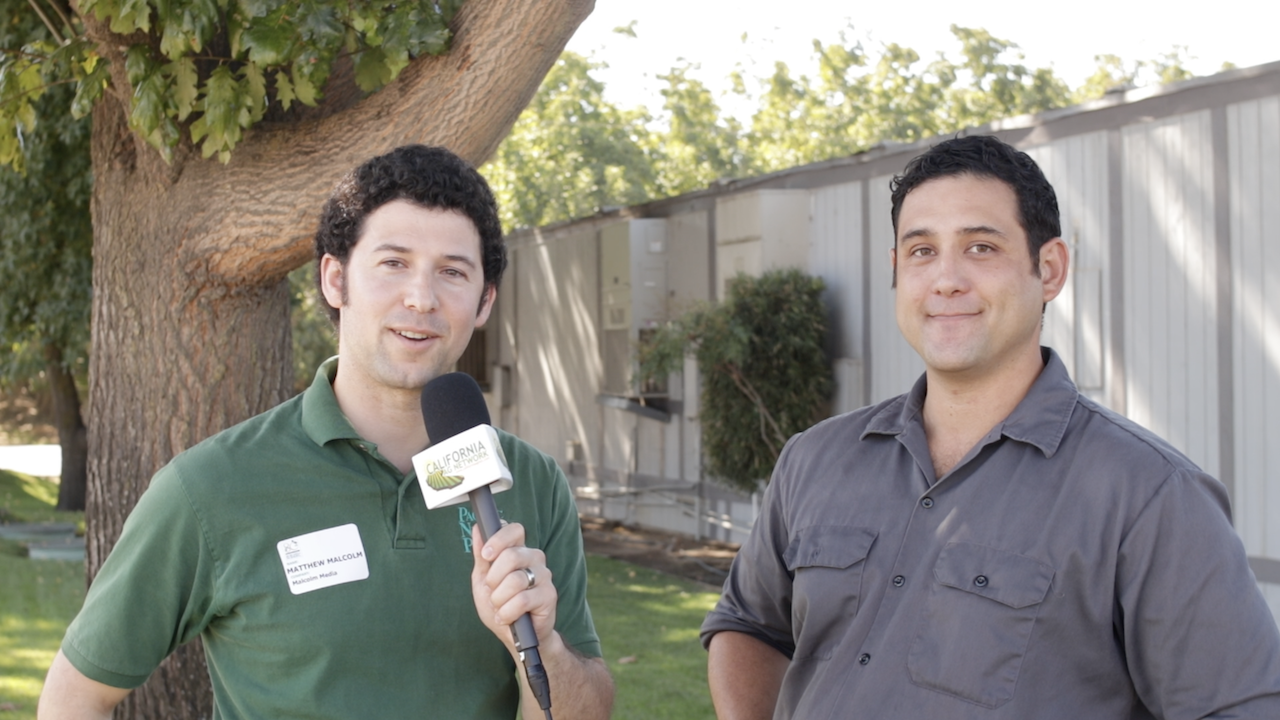
    It’s that time of the year when orchards are being pulled and growers begin preparing their soil for future plans.  For growers looking to replant their orchards, watch this brief interview with UC Riverside Nematologist Andreas Westphal as he shares some considerations to take for fumigation when it comes to nematode pressure.

    Please thank this video’s sponsor Suterra for their industry support.

  • New UCCE Advisor to Serve Tree Fruit & Nut Growers in Merced and Madera

    New UCCE Advisor to Serve Tree Fruit & Nut Growers in Merced and Madera

    The UC Cooperative Extension is pleased to introduce one of their newest Orchard Crops Advisors, Cameron Zuber, who will be serving tree fruit and nut growers in Merced and Madera Counties. Watch this video interview to get to know Cameron, his history with California agriculture, and what his research and extension focuses are.  Cameron can be reached at (209) 385-7403 or cazuber@ucanr.edu.

    Please thank this video’s sponsor Suterra for their industry support.

  • USDA’s Cost of Pollination Survey Going Out to California Growers

    On Nov. 1, USDA’s National Agricultural Statistics Service (NASS) will mail the 2022 Cost of Pollination Survey to over 2,700 CA crop producers. The survey will be sent to nearly 16,000 producers nationwide.

    “Honey bees are important pollinators of crops ranging from almonds to zucchinis,” said Gary R. Keough, director of the NASS Pacific Regional Office. “To help accurately depict the health of the pollination industry in the United States, NASS will ask crop producers about their use of honey bees, the fees they paid for honey bee pollination, and any other expenses related to pollinating their crops.”

    Survey recipients are asked to respond securely online at agcounts.usda.gov through the Respondent Portal, by mail, or fax. Those who do not respond by Nov. 14 may be contacted by a NASS representative to arrange an interview to complete the survey.

    All information reported by producers will be kept confidential, as required by federal law. NASS will publish the survey data Jan. 11, 2023, on the NASS website at nass.usda.gov and in the NASS Quick Stats searchable database at www.quickstats.nass.usda.gov.

    For more information about the Cost of Pollination Survey and NASS’s bee and honey program, visit www.nass.usda.gov/Surveys/Guide_to_NASS_Surveys/Bee_and_Honey/. NASS’s other honey bee reports include the Honey report published every March and the Honey Bee Colonies report published every August.

    These and all NASS reports are available at www.nass.usda.gov/Publications/. For more information, call the NASS Pacific Regional Field Office at 1-800-851-1127.

  • Western Growers Selects Future Volunteer Leaders Class VII

    Western Growers is welcoming the seventh class of Future Volunteer Leaders, a group who will be embedded in specialized networking and agricultural leadership development events with the organization for the next two years.

    Class VII includes:

    • Celeste Alonzo, Junior Enterprises
    • Jose Covarrubias, Wholesum Farms
    • Krystal Del Bosque, Del Bosque Farms
    • Briana Giampaoli, Live Oak Farms
    • Shay Myers, Owyhee Produce
    • Garrett Nishimori, San Miguel Produce
    • Nisha Noroian, Nish Noroian Farms, Hye Farms
    • Sal Parra, Coyula Farms
    • Spencer Quinn, Quinn Company
    • Anthony Reade, Betteravia Farms
    • Byron Talley, Talley Farms
    • Mitchell Yerxa, River Vista Farms

    Complete bios for Class VII can be found below.

    Members of the class will be invited to participate in all regular Western Growers board meeting functions for the next two years, in addition to standalone farm tours with WG board members and trainings with the organization’s subject matter experts.

    In 2011, Western Growers welcomed its inaugural class of Future Volunteer Leaders. The competitively-selected Future Volunteer Leaders Program is designed for the next generation of leaders within Western Growers member companies interested in becoming more informed and effective advocates for the fresh produce industry. These individuals are policy-minded and have expressed a desire to serve the industry – both now and in the future – in volunteer leadership capacities.

    About Western Growers:

    Founded in 1926, Western Growers represents local and regional family farmers growing fresh produce in California, Arizona, Colorado and New Mexico. Western Growers’ members and their workers provide over half the nation’s fresh fruits, vegetables and tree nuts, including half of America’s fresh organic produce. Connect and learn more about Western Growers on Twitter and Facebook.