Category: Industry News

  • Fresno-Area Women in Ag to Receive Support, Learning Circle & Resource Fair Nov. 2

    Fresno-area farmers face water management and business viability challenges like never before, but financial and technical resources are available to help growers and landowners navigate these challenges. American Farmland Trust is partnering with the Sierra Resource Conservation District and USDA’s Natural Resources Conservation Service to gather women in agriculture around these issues and feature services they can lean on at a Women for the Land Learning Circle and Resource Fair on Nov. 2 from 9 a.m. to 2 p.m in Fresno.

    At this women-centered gathering, growers, landowners and others involved in agriculture will be able to share experiences, while agricultural resource providers will describe local services that support the viability of agriculture and agricultural communities. The event has been co-designed with input from a broad range of partners in the region to reach a diversity of communities engaged in Fresno agriculture, according to Caitlin Joseph, AFT’s Women for the Land Program and Policy Manager. As such, multilingual resources will be provided in English, Spanish, Hmong and Punjabi, as needed.

    “AFT is excited to bolster the work of local RCDs, NRCS staff and others, by partnering on this free event for women producers and landowners, applying a peer-to-peer learning model we have utilized nationally to great effect, says Joseph. “In addition to a farm tour led by Lilian Yang, one of the region’s innovative Hmong women farmers, there will be discussions on how the drought is impacting water and land use in the San Joaquin Valley, and what is still needed to support farm viability throughout these changes. Through our Women for the Land Initiative, we have found that learning in this type of environment can really drive women farmers to take action to support their operations.”

    “Sierra RCD is thrilled to offer this space for women farmers to build relationships with service providers who can help them access financial and technical resources,” says Karin Roux, District Development Manager at Sierra Resource Conservation DistrictWe are particularly interested in the powerful ways that AFT’s peer-to-peer learning will help women hear directly from each other on the unique challenges and successes they are experiencing farming here in the Central Valley, and receive firsthand accounts of technical and financial assistance opportunities available to improve their farms’ water efficiency and resilience.”

    Where:

    Start at Sierra RCD Office (10637 N. Lanes Road, Fresno, CA 93730), take bus to farm visit and return to office where lunch will be provided
     
    When:  Nov. 2, 2022; 9 a.m. to 2 p.m.
     
    Organizers
    Caitlin Joseph, Women for the Land Program and Policy Manager, AFT
    Anel Trujillo, California Outreach Specialist, AFT
    Vicky Espinoza, AFT and The Nature Conservancy (discussion leader)
    Alyssa Flores, Water Use, Soil Health, and Conservation Planning Support Assistant, SRCD
    Karin Roux, District Development, SRCD
    Veronica Martinez, Community Engagement Youth and Education Program Manager, SRCD
     
    For multilingual assistance, contact:
    Karin Roux (English) – (845) 527-6590
    Anel Trujillo (Español) (559) 385-1517
    Deep Singh (Pajābī) (559) 909-9962
    Vila Xiong (Hmong) (559) 402-0067 ext 108

    American Farmland Trust is the only national organization that takes a holistic approach to agriculture, focusing on the land itself, the agricultural practices used on that land, and the farmers and ranchers who do the work. AFT launched the conservation agriculture movement and continues to raise public awareness through our No Farms, No Food message. Since our founding in 1980, AFT has helped permanently protect over 6.5 million acres of agricultural lands, advancing environmentally-sound farming practices on millions of additional acres and supported thousands of farm families.

    USDA’s Natural Resources Conservation Service (NRCS) mission is “Helping People Help the Land.” NRCS helps America’s farmers, ranchers and forest landowners conserve the nation’s soil, water, air and other natural resources. All programs are voluntary and offer science-based solutions that benefit both the landowner and the environment.

    The Sierra Resource Conservation District (Sierra RCD) is a non-regulatory, non-taxing, nonprofit, Special District of the State of California; the mission and function of the Sierra RCD is to take available technical, financial, and educational resources, whatever their source, and focus or coordinate them at the local level, to meet the present and future natural resource needs of the local land user. Offices are in Auberry and Fresno, CA. More information can be found at www.sierrarcd.com

    Sierra RCD service area covers the eastern half of Fresno County and has two main programs in operation that interact with local land users and landowners: the Forestry and Watershed Program which predominantly focuses within the Sierra Nevada Mountains, and the Agriculture and Rangeland Program which focuses within the foothills of the Sierra Nevada Mountains and Central Valley floor.
  • GroPro Announces Facilities Expansion in California and Florida

    GroPro Announces Facilities Expansion in California and Florida

    – SPONSORED CONTENT –

    Due to the growing demand, GroPro is pleased to announce the expansion of its storage, manufacturing, and packaging facilities in the USA. GroPro, an international Bio-Pesticide, Bio-Stimulant, and Bio-Fertilizer manufacturer with headquarters in Minneapolis (the USA), is planning an expansion of its operational facilities in California and Florida.

    The planned expansion will replace California’s existing 5,000 sq ft storage facility with a new development facility of about 12,000 square feet. The new facilities, located in Fresno, Ca, also will include liquid bio-fertilizer manufacturing and storage integrated with crop protection blending and bottling facility and warehouse. In addition, the new liquid facility will be equipped with a new research and development laboratory. Also, with additional 5,000 sq ft warehouse in Florida GroPro to allow its south East dealer quicker access to materials. According to the GroPro team, these expansion projects aim to improve customer service and operational efficiency; the projects are expected to be launched this October.

    “GroPro is committed to investing in continuous process improvements and deepening the implementation of GroPro US commercial, manufacturing, and R&D strategy that will benefit and support our existing and new customers. With these new facilities in California, we will be able to continue providing uninterrupted deliveries and faster supply of our products to our partners and customers,” – commented Benito Varela, GroPro’s COO.

    GroPro’s approach includes a combination of unique natural ingredients and modern technologies to increase the bio-efficacy of products. Sustainability is firmly rooted in the entire company’s decision process, from early research to product development. This empowers our development team here and abroad to research and formulate effective materials that benefit our distributors, dealers, and growers.

    When Plant Health Matters and Yields Count!

    More info: groproag.com

  • California Citrus Growers Optimistic for the Upcoming Navel Orange and Mandarin Season

    California Citrus Growers Optimistic for the Upcoming Navel Orange and Mandarin Season

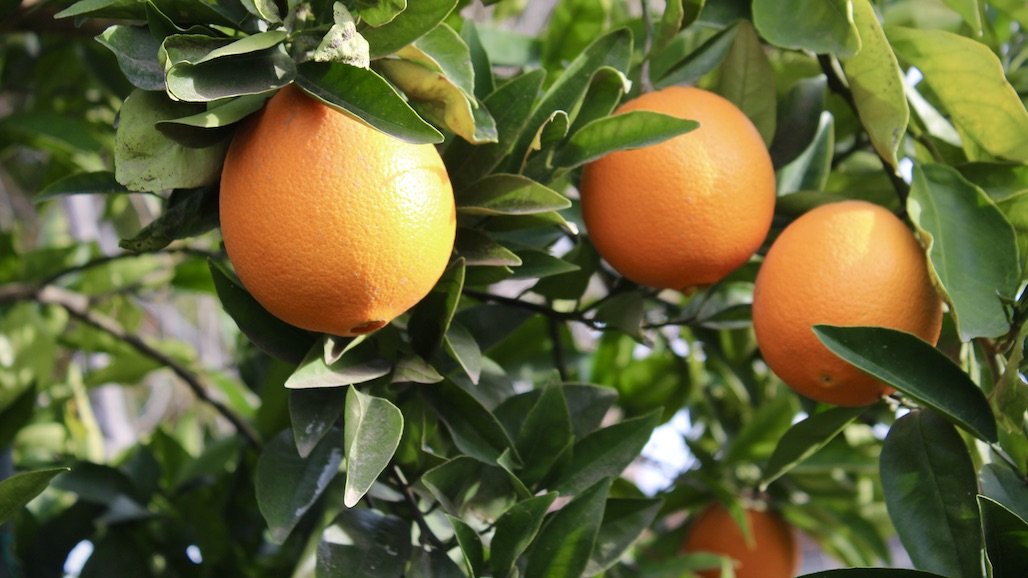
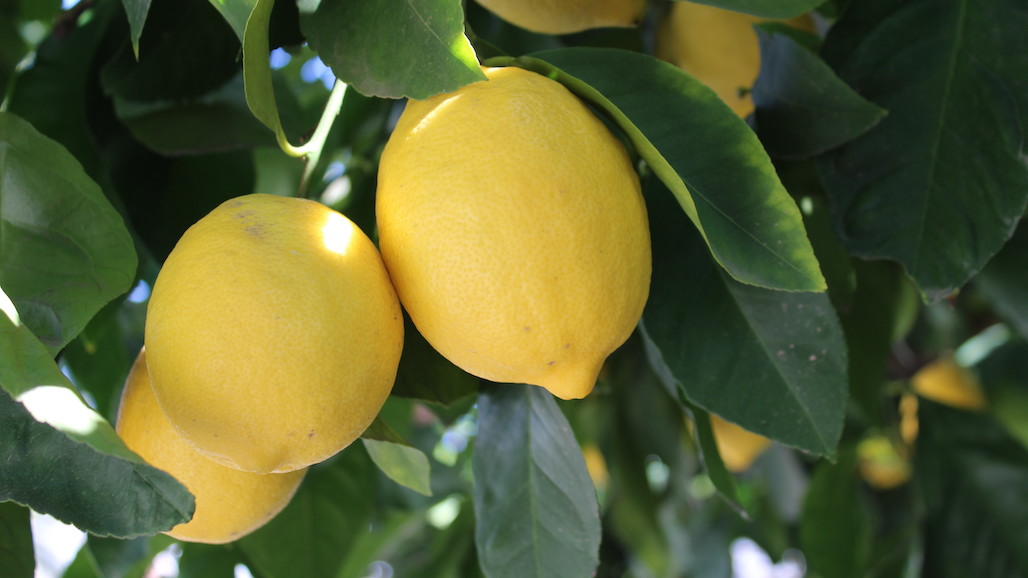
    The California Citrus Mutual Marketing Committee (Committee) – comprised of growers, shippers, and marketers – anticipates the 2022-23 Navel Orange crop will be approximately 10% over the previous season’s utilized production.  At below average, the upcoming season crop is expected to be very similar to the previous season with excellent fruit quality and sizing. Preliminary maturity tests show that the crop is progressing very well with high sugar content that well exceeds the “California Standard” for sweetness.
    The Mandarin crop – including Clementines, Tangos, Murcotts, and other seedless varieties – is also progressing well in terms of quality and fruit size. The Committee estimates that the Mandarin crop will be up by as much as 30% over the previous season, but still well below average production levels and nearly 30% below the 2020-21 record-breaking large crop.

    “The high quality of this crop is the silver lining of a very costly growing season,” says CCM President Casey Creamer.

    “Like many Americans, growers are faced with rising inflation and increasing costs. The cost to grow and ship California citrus has more than doubled in the past ten years.  Since 2020, growers’ costs have increased over $1,000 per acre and in the last year alone, costs have gone up 25% with fertilizer, fuel, and water being the main drivers. We also expect higher costs on the packing and shipping side this season largely due to increased transportation and labor costs.

    “Despite these challenges, the industry is optimistic for the season ahead.  The 2022-23 crop will deliver what consumers have come to love and expect from California citrus – a delicious, sweet Navel orange and Mandarin that is unrivaled by the rest of the world,” says Creamer.

    The California Navel orange crop will start by the end of October followed by Mandarins in early November.

  • Judges Selected for AgSharks Pitch Competition

    Judges Selected for AgSharks Pitch Competition

    Western Growers and S2G Ventures have announced the judges for the 2022 AgSharks Competition, a unique event where startup companies pitch their innovations in front of a live audience of the world’s largest specialty crop producers to win a $250,000 minimum investment.

    Three startups will be selected to pitch their inventions to these judges in front of an audience of more than 300 fresh produce farmers and industry leaders during the WG Annual Meeting in Las Vegas on Nov. 2-5, 2022. The competition will be hosted by Stuart Woolf, President and CEO of Woolf Farming & Processing.

    In addition to potential investment capital, the winner(s) will receive international recognition, mentoring from S2G and WG, potential access to farm acreage to pilot their technologies and access to WG’s expansive network of leading fresh produce companies.

    The judges are:

    Neill Callis

    Neill Callis is the General manager of Turlock Fruit Company, a family-owned and operated fresh produce grower / shipper / packer founded in 1918 by James “Cantaloupe” Smith. Neill joined the company in 2013 following a 17-year career as a project manager and systems engineer in the aerospace industry. As a member of the family management team, he now works alongside the 2nd (Don), 3rd (Steve), and 4th (Alec) generations of the Smith family operating the business of farming honeydews, cantaloupes, mixed melons, asparagus, cherries, tomatoes, and almonds in Merced and Fresno counties.

    Neill has served on the California Cantaloupe Advisory Board since 2015, participated in the Western Growers Future Volunteer Leaders program (Class III), and served as an industry mentor to Cohorts II/III of the Thrive AgTech Accelerator. In the Turlock community, he serves as a Trustee of the Legacy Health Endowment, serves on the boards of the Turlock Community Theatre, Prodigal Sons & Daughters, and Little Lights Preschool, and is also a member of the James Irvine Foundation New Leadership Network’s 3rd cohort. Neill graduated with a. B.A. in Political Science from Elon College, and holds a Graduate Certificate in Complex Space Systems from the Stevens Institute of Technology.

    Neill joined the Western Growers Board of Directors in 2019, following in the footsteps of Turlock Fruit Company owners Steve Smith and Don Smith. He is currently serving as Treasurer of the Board. He is married to Steve’s daughter Hilary, and they have two young children, Daniel and Elin.

    Audre Kapacinskas

    Audre Kapacinskas is a Principal at S2G Ventures where she leads Corporate Development efforts across our focus sectors: food & agriculture, oceans & seafood, energy, and real assets. Audre actively engages corporate, investor, nonprofit and government stakeholders to identify opportunities to accelerate growth and impact of S2G companies. By building relationships with a diverse ecosystem of stakeholders, Audre seeks to apply advanced and emerging technologies at scale to address today’s most pressing challenges in order to realize a more humane and healthy planet.

    Over the last 10+ years, Audre has worked at the intersection of technology, strategy, finance and operations to incubate new ideas and drive growth. Prior to S2G, Audre was a Director of Sales and Corporate Strategy at Uptake, a predictive analytics start-up delivering artificial intelligence and IoT solutions to multiple Industrial sectors. Previously, Audre worked for Stax, a boutique strategy consulting firm that works closely with private equity firms and corporate clients on growth acceleration, value assessments and investment due diligence.

    Audre lives with her family in Chicago where you can find her hunting for the city’s best sourdough, planning an outdoor adventure or bouncing crazy ideas around with entrepreneurs and creatives. Audre is Co-Founder of Fifth Star Funds, a venture philanthropy focused on investing in underrepresented tech founders in Chicago. Audre holds an Honours BA from the University of Toronto (Economics, International Relations), an MA from Vilnius University and was a Fulbright Scholar.

    Aaron Rudberg

    Aaron Rudberg is the COO and Managing Director at S2G Ventures. He has worked in the investment business his entire professional career, and brings experience as an entrepreneur and institutional investor. Prior to joining S2G, Aaron spent 10 years at Baird Capital where he was a Partner and Managing Director overseeing the global strategy, investor relations, marketing and business development for the $3.5 billion private equity and venture capital business. Aaron previously spent time at a private equity fund-of-funds and a venture capital firm. Early in Aaron’s career, he was an entrepreneur building a venture-backed software company that was acquired. Aaron received a BA from the University of Illinois at Urbana-Champaign and an MBA from the Kellogg School of Management at Northwestern University. Aaron is a member of the board of The Civic Federation, Adler Planetarium, and was named an Emerging Leader by the Chicago Council of Global Affairs in 2014.

    Kristen Smith Eschaya

    Kristen Smith Eshaya is the President of Yuma, Ariz.-based JV Smith Cos. JV Smith Cos. began with the formation of Skyview Cooling Company in 1970 by John Smith, Smith Eshaya’s grandfather and Vic Smith’s father.

    Smith Eshaya graduated as the valedictorian of her class at Yuma High School in 2003, and then went on to graduate from Colorado College with a Bachelor of Arts in economics and, later, from Northern Arizona University with a Master of Education in human relations. She lived in Texas and California, working in finance and development for the arts, before moving back home to join the family business.

    She also has been involved with industry trade associations, having formerly served on the Center for Growing Talent by Produce Marketing Association board of directors, as well as the PMA diversity and inclusion task force.

    Smith Eshaya is currently in the Western Growers Future Volunteer Leaders Program, in addition to serving on the Children’s Museum of Yuma County board of directors. Along with her husband, Emil, Smith Eshaya resides in Yuma with their two children.

    AgSharks was first held in 2017, and through the competition, past winners Hazel Technologies and Burro have since brought their products from development to market. Hazel Technologies has raised over $87.8 million in funding over six rounds and is advancing the industry with sachets that extend the shelf life of fresh produce by as much as three times. Burro raised a $10.9 million Series A round in September 2021 led by S2G Ventures and Toyota Ventures and continues to help solve farmers’ labor woes with the expansion of its fleet of autonomous robots to farms across the west.

    About Western Growers:

    Founded in 1926, Western Growers represents local and regional family farmers growing fresh produce in California, Arizona, Colorado and New Mexico. Western Growers’ members and their workers provide over half the nation’s fresh fruits, vegetables and tree nuts, including half of America’s fresh organic produce. Connect and learn more about Western Growers on Twitter and Facebook.

    About S2G Ventures:

    S2G Ventures, the direct investment team of Builders Vision, partners with entrepreneurs who are working on solutions to some of the world’s greatest challenges across the food, agriculture, oceans, and clean energy markets. We provide capital, mentorship and value-added resources to companies pursuing innovative market-based solutions that generate positive social, environmental and financial returns. We provide our partners with flexible capital solutions that can range from seed and venture funding through growth equity to debt and infrastructure financing. For more information about S2G, visit s2gventures.com, tune-in to our podcast, or connect with us on LinkedIn.

  • Fruit World Anticipates Abundant Organic California Lemon Crop

    Fruit World Anticipates Abundant Organic California Lemon Crop

    In a season that has been difficult for many citrus growers, the family-owned grower-shipper Fruit World has announced several bright spots in their 2022-23 citrus season. In particular, Fruit World is expecting a large volume of high-quality organic lemons throughout their year-round program, with promotable volumes peaking from mid-October through February. This year’s crop is even stronger than it was in 2021, which was also above average.

    “We’re seeing exceptional volumes and beautiful fruit this season,” shared CJ Buxman, co-founder of the company and director of supply. “To ensure a steady year-round supply, we grow in California’s District 3 desert region through March before transitioning to the Central Valley’s District 1. This year’s volumes are also supported by several young blocks that kicked into production this season.”
    Fruit World’s flagship mandarin program is on track to start slightly earlier than last season, with conventional fruit shipping from late October into early May and organic mandarins available from mid-November through early May. Conventional and organic mandarin volumes are both up from the 2021 season, but are still down from typical yields. Climate change conditions including extreme heat and irregular precipitation are the greatest challenges facing the industry this year, and growers have been pivoting as quickly as possible to adapt. Overall quality is strong, and a sizable portion of Fruit World’s conventional crop will be transitioning to organic in the 2023-2024 season.

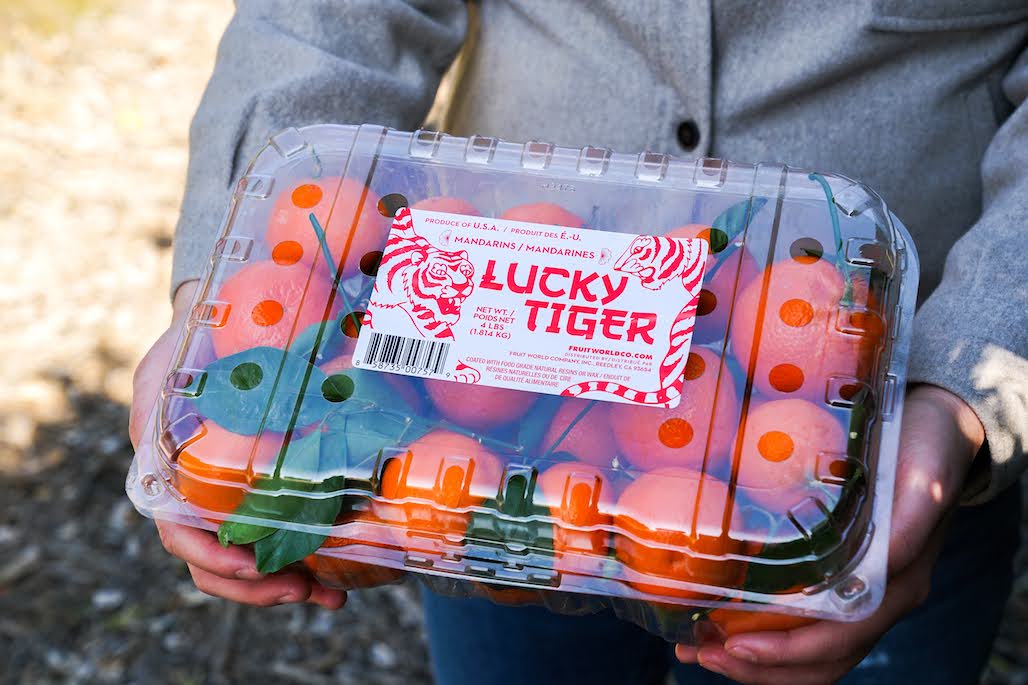
    Stem and leaf mandarins are seeing increasing demand year-over-year, and Fruit World has been building their program to meet the rush of popularity particularly during the holiday season. “We will have plenty of supply for our main promotional periods, including Thanksgiving, Christmas, and Lunar New Year,” said co-founder and CEO, Bianca Kaprielian. “We’re continuing our special packs from last season under the Lucky Tiger label, and will start shipping prior to Thanksgiving through early May.” Fruit World stem and leaf mandarins will be available in 4-lb clamshells, 10-lb boxes, and standard half-bushel boxes.

    The company has also begun shipping the popular organic Rio Red grapefruits, known for their gorgeous interior color, fantastic flavor, and superb quality. Volumes and fruit size are down slightly compared to last season, but supply is still anticipated to be on par with a standard season and able to meet consumer demand into January.

    Rounding out the organic specialty citrus program, Fruit World’s Sweet Limes are seeing increased interest, as consumers and retailers become more familiar with the fantastic flavor profile. The classic lime freshness paired with sensational sweetness make this variety perfect for refreshing juices, bright salad dressing, and sweet treats. Promotable volumes are anticipated through mid-December; the fruit is currently available in 1-lb bags, though special packs are available to fit any retailer needs.

    As part of a continued growth strategy for the Fruit World brand, the company has brought several new grower relationships online in the past year, which are expected to make a positive impact on this year’s citrus season. Navel oranges, which are experiencing 15% to 20% lighter volumes industry-wide will actually end up with an increased supply for Fruit World over last year, thanks to more growers. Likewise, Fruit World welcomed the next generation of growers for Cara Caras from an up-and-coming grower family who are eager to convert the crop to organic.

    The brand is also continuing to forge ahead with new product lines—exciting additions like mandarinquats, kumquats, and their newly-planted lemonade lemons—ensuring lively, well-rounded citrus seasons for years to come.

    For more information or to place an order, call (559) 650-0334 or visit fruitworldco.com.

    About Fruit World

    Fruit World is a fresh and creative produce company with generations of history. Fruit World grows and ships the most flavorful fruit in California—including organic and conventional citrus, organic grapes, organic stone fruit, and more—and works with customers who share a passion for quality and taste. They’re all about honoring their growers, staying true to their farming heritage, and keeping family farming thriving into future generations. Visit fruitworldco.com.

  • How to Improve Soil Health in Potato Cropping Systems

    Minimizing soil disturbance is one of the key tenets promoted to build soil health in agricultural systems. Many farmers across the county have adopted reduced and no-till systems to build soil carbon, a central component to healthy soils. But what if you grow a crop where the part you sell is underground – like potatoes? What are some options to build soil health in those systems?

    In the US, overall, the potato industry was a $4 billion industry in 2020. Americans will eat their potatoes fresh, frozen, fried, chipped, canned, dehydrated. Potato products are also used as food ingredients, like potato starch.

    Potatoes are a valuable crop in Washington state. We are the second leading producer of potatoes in the United States (after neighboring Idaho.) Central Washington grows Russet potatoes primarily for French fries and other processed potato products. Northwestern Washington is known for colorful, fresh-market potatoes.

    The potato industry in Washington recognizes the importance of healthy soils for long-term, sustainable production of the crop. One issue with growing potatoes: they are a tuber crop, growing belowground. Thus, planting and harvesting them disturbs the soil more than a crop like wheat or barley, which are harvested aboveground. Growers and researchers are working on strategies to promote soil health in this typically high disturbance system.

    Through Washington’s new Soil Health Initiative, my team and collaborators recently set up a long-term rotational experiment to explore some of these strategies in potato-based systems. The strategies represent the typical rotations and soils of the area. The trial is designed with methods that use changing levels of:

    • soil disturbance (i.e., tillage),
    • organic matter inputs,
    • internal (cover crops and residues) and,
    • external (compost).

    This allows us to study multiple soil health principles and how they interact with one another.

    Potatoes in northwestern Washington are typically grown in a particular field every 3-5 years. Soil improvement strategies are really focused on what happens before and after the potato crop.

    One practice many growers are experimenting with is cover cropping. Cover crops are grown between cash crops to provide agroecosystem benefits related to 3 of the 4 main soil health principles: cover the soil, increase diversity, and maximize continuous living roots, which help feed microorganisms in the soil.

    Farmers in the area are using two methods. One is winter cover crops, planted in fall and terminated in spring. The other is multi-year cover crops that are mowed and continuously provide organic carbon inputs to the soil.

    Our cold, wet fall and spring seasons can be a challenge to establishing winter cover crops. This is due to harvesting potatoes through October. But having cover crops between all other rotational crops may still benefit the soil.

    The multi-year cover crop likely provides more soil benefits, but farmers are then missing out on several years of growing a cash crop. Our experiment looks at both cover crop strategies and their effects on soil properties, crop yields, ecosystem benefits, and farm economics.

    We are also studying potato-growing systems that reduce soil disturbance. We’re looking at whether it’s both feasible and beneficial to rotate in wheat or barley planted with no-till seeders. Minimizing soil disturbance between potato crops could improve soil health and future potato yields.

    Ultimately, we need to take a systems approach to improving soil health with potatoes and with any crop. It is not just about one crop. It’s about how the whole cropping system is managed over time. By finding those intervention points to introduce a soil-building practice, we can steadily improve soil health even with underground crops. — By Deirdre Griffin-LaHue, Washington State University

  • California Prunes Partners with Renowned Chefs for CA Farmer and Farmworker Month

    California Prunes Partners with Renowned Chefs for CA Farmer and Farmworker Month

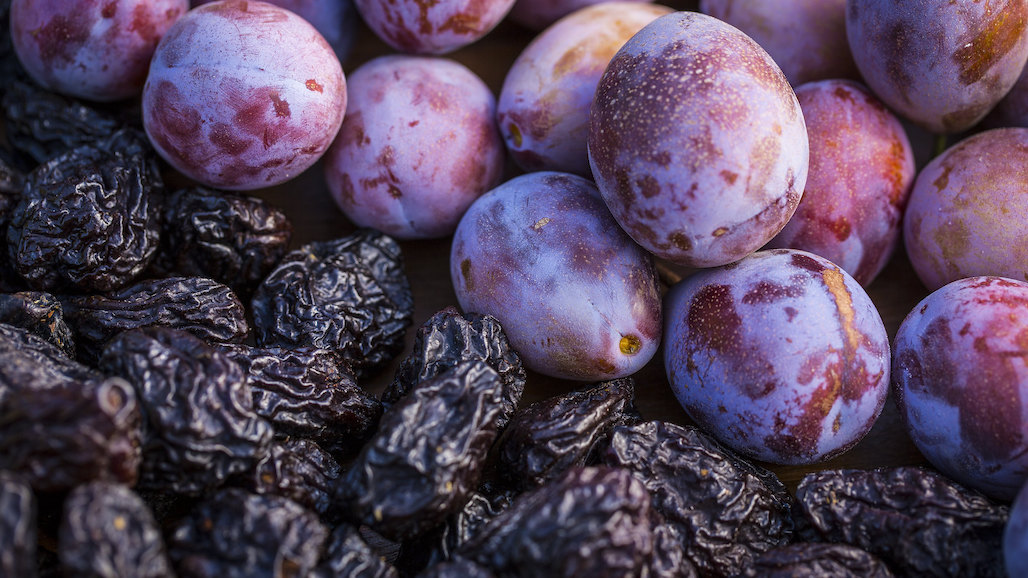
    October is California Farmer and Farmworker Month – a specially designated time to recognize the remarkable contributions of the people who power California’s food and farming community. Consider this: California supports 1.2 million agriculture-related jobs and produces 400 different crops, roughly 50 percent of the overall U.S. produce supply, and nearly all domestically grown prunes.

    To help celebrate the hardworking farmers and farmworkers of the Golden State, California Prunes is partnering with a line-up of accomplished chefs around the United States to showcase the delicious, dried fruit that is grown by about 600 California Prune growers in the Sacramento and San Joaquin valleys. The chef partners are featuring a range of California Prunes dishes that consumers across the country can enjoy, including:

    • Aliza Sokolow of This is What I Eat is an accomplished food stylist and author based in
      Los Angeles, Calif. Sokolow regularly bakes for charitable organizations and for the first part of October she will offer Chocolate Chunk Cookies with Prunes that can be enjoyed when ordered directly through the This is What I Baked Order Form (proceeds donated to California Farmworker Foundation).
    • Bronwen Wyatt of Bayou Saint Cake in New Orleans, La., offers a Chocolate Walnut Chiffon Cake with Prunes and Chicory Cream available for New Orleans residents throughout October. Local ingredients are a mainstay of her Instagram-famed cakes. California Prunes are not only local for those in New Orleans since California supplies the country’s prunes, but the premium fruit also adds depth of flavor to the other California-grown ingredients, like California Walnuts. Additional California Prunes recipes from Wyatt include a Prune Upside Down Cake and Almond Cake with Prune-Raspberry Butter.
    • Kat Turner of Highly Likely Cafe in Los Angeles, Calif. has come to love California Prunes in several recipes and currently features A Good Turkey Sando with Prune Mostarda on the menu at the
      Los Angeles eatery. The Prune Mostarda recipe is an incredibly versatile condiment that anyone can make at home and use for sandwiches, grazing boards, or to elevate a variety of proteins.
    • Mica Talmor of Pomella restaurant in Oakland, Calif. will feature California Prunes that have come from orchards in the surrounding area in her Chicken + Prune Tagine menu item all month long.

    “As a chef, coming from Wisconsin to California – with its surreal year-round growing season – it’s like winning Willy Wonka’s Golden Ticket,” said Chef Kat Turner, Highly Likely Cafe. “And, thanks to the tireless efforts of farmers and farmworkers, we have wave after wave of delicious, healthy, gorgeous food grown right here in the state, including those sensual, premium quality prunes whose flavor can truly transform a dish with their uniquely craveable taste, texture, and versatility.”

    In addition to featuring California Prunes on their menus, the chefs will also serve up tasty California-grown ideas and inspiration on their respective social media platforms throughout the month.

    California is the ideal place to grow prunes due to its alluvial soils, abundant sunshine, and the fresh water that runs off the nearby mountains. The multi-generational farming families who grow California Prunes have honed their craft for more than 100 years and are dedicated to cultivating their orchards with sustainability in mind for the next generation.

    “We honor the contributions of growers who work so hard to ensure we have delicious, healthy food every day,” said Kiaran Locy, California Prune Board, Director of Brand & Industry Communications and Buy California Marketing Agreement board member. “It’s inspiring to partner with chefs who use locally and responsibly sourced ingredients and appreciate the versatility of California Prunes because they runes are good every day in so many ways – from delivering exceptional nutrition that supports a healthy gut and bones – to adding big flavor and natural sweetness.”

    Always in season, California Prunes ideas and inspiration can be found anytime @CAPrunes onInstagram, Facebook, Pinterest, YouTube, Twitter and at www.californiaprunes.org.

    ABOUT THE CALIFORNIA PRUNE BOARD

    Created in 1952, The California Prune Board aims to amplify the premium positioning and top-of-mind awareness of California Prunes through advertising, public relations, promotion, nutrition research, crop management and sustainability research, and issues management. The California Prune Board represents approximately 800 prune growers and 28 prune, juice, and ingredient handlers under the authority of the California Secretary of Food and Agriculture.

  • Produce Veteran Jeff Oberman To Lead California Avocado Commission

    Produce Veteran Jeff Oberman To Lead California Avocado Commission

    The California Avocado Commission Board of Directors has selected produce veteran Jeff Oberman to become the organization’s new president, effective October 10, 2022. Mr. Oberman’s produce industry career has spanned 25 years so far. From 2020 to the present he served as vice president of sales – business development for PRO*ACT and was their vice president strategic programs for the prior two years. From 1997 to 2018 Mr. Oberman worked for the produce trade association United Fresh in successively more responsible roles. For more than half his tenure at United Fresh he served as vice president, trade relations.

    “We are very pleased that Jeff Oberman has accepted the position of California Avocado Commission president,” said Rob Grether, chair of the Commission Board of Directors. “Jeff’s broad network, non-profit association leadership and fresh produce business experience, including an end-to-end understanding of the needs of growers, handlers, distributors, foodservice operators and retail customers makes him exceptionally well-suited to lead the California Avocado Commission.”

    Mr. Oberman has extensive experience in trade association leadership, strategic planning, and management of customer and government agency relations. He has received numerous accolades and awards including being named to Produce Business Magazines “40 under Forty” list in 2005 and to The Packer’s “25 Profiles in Leadership” in 2017.

    “Having the opportunity to take the helm and build on the California Avocado Commission’s well-deserved reputation for innovative marketing and grower advocacy is exciting, said Oberman. “Like most agricultural producers, California avocado growers face a host of ever-changing challenges, and I look forward to steering the Commission in support of long-term grower success.”

  • Avocado Growers Encouraged To Complete Crop Damage Form

    Avocado Growers Encouraged To Complete Crop Damage Form

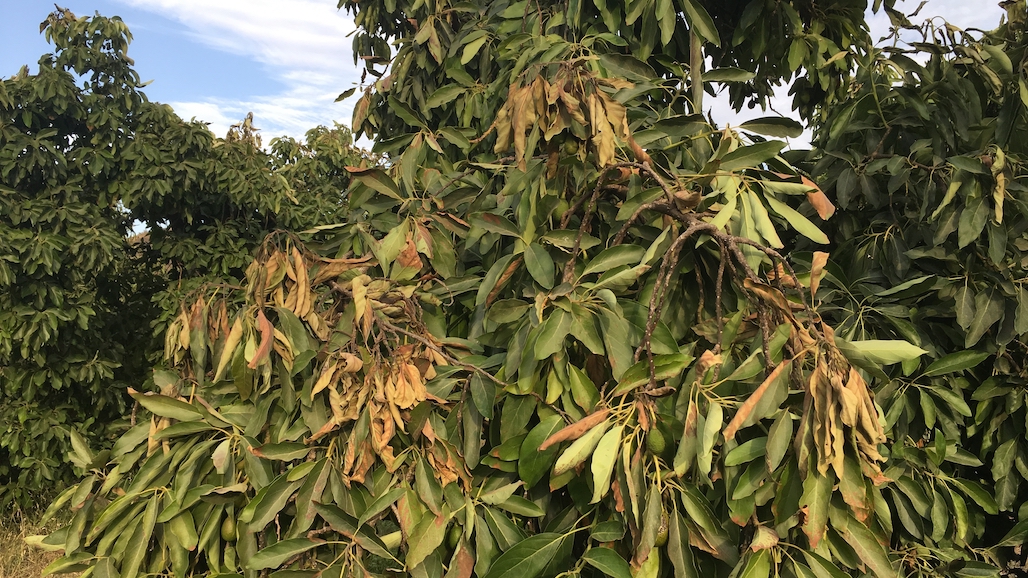
    California avocado growers in San Diego County are encouraged to complete the Frost/Heat Damage Assessment Form to report crop damage experienced by the recent extreme temperature events. The Department of Agriculture, Weights and Measures is gathering data via this form that will help the county determine estimated damage assessment costs for emergency assistance. The form can be emailed to sdcawm@sdcounty.ca.gov. For assistance, contact 858.694.2739.

    Growers who have experienced crop damage also can reach out to the U.S. Department of Agriculture’s Farm Services Agency for potential resources and support. FSA can be reached at 760.347.3675. The FSA loan department contact, Sherrie Hodges, can be reached at 661.281.2755. For additional resources, visit the Crop Disaster Assistance and Tree Assistance Program webpages.

  • New Prune Varieties Show Promise in Reducing Fruit Drying Costs

    New Prune Varieties Show Promise in Reducing Fruit Drying Costs

    2022 is a year of ugly jerks in input costs. Fuel and fertilizer prices are way up. Higher natural gas and labor costs are pushing up drying costs, further reducing net grower returns in what looked to be a good market year. Mechanical pruning and careful production practices (to name a few steps) may help cut costs in the short term in established orchards. In the long run, cutting drying costs and increasing harvest timing flexibility may help prune growers net returns and stay in business. This long-term picture will require developing and field-testing new prune varieties that market like ‘French’ prune but have much lower dry away ratios (2-2.5) and hang longer on the tree without harming dried fruit quality.

    The UC Davis Prune Variety Development program, funded by the CA Prune Board, has developed several French-type prune varieties with low dry away numbers (2-2.5). These varieties “dry on the tree” while retaining good fruit quality. Projected savings for grower could be hundreds of dollars per acre in drying costs (see projected costs in the table below). These new varieties can be harvested over a longer time period giving growers more flexibility in managing harvest. More information on new varieties and contact information for UCD Prune Devo program are available on-line.

     Four new, numbered varieties performed well in small trials over several years. These varieties must be field-tested in small plantings (1-2 acres) before a large orchard should be planted. Test trees are available to interested growers. For more information on availability of test trees, contact Sarah Castro (scastro@ucdavis.edu) with UC Davis Prune Variety Devolopment program. 

    Projected differences in hauling and drying costs for ‘French’ prune (thinned or unthinned) and a new, unreleased ‘French’-type prune variety (J2N-128). These figures are intended as an example of possible production values.

    **This variety selected only as an example. There are four ‘French’ type varieties that show promise.  By Franz Niederholzer, UCCE Farm Advisor, Colusa and Sutter/Yuba Counites