Category: Industry News

  • California Navel Orange Production Forecast Up 19%

    California Navel Orange Production Forecast Up 19%

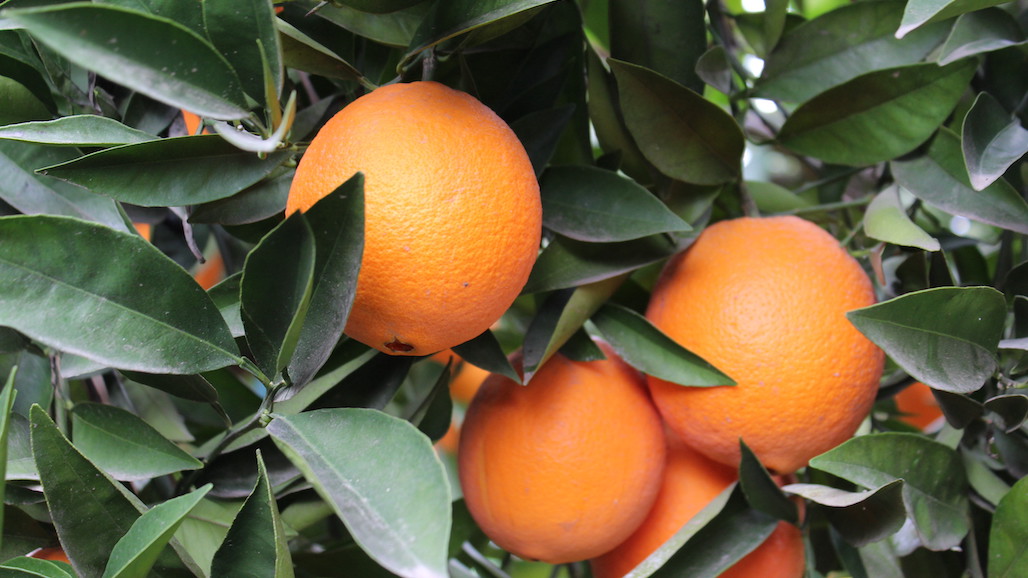
    The initial 2022-23 California Navel orange forecast is 76.0 million cartons, up 19% from the previous year, according to the USDA National Agricultural Statistics Service’s Objective Measurement Report.  Of the total Navel orange forecast, 73.0 million cartons are estimated to be in the Central Valley. Cara Cara variety Navel orange production in the Central Valley is forecast at 8.0 million cartons. These forecasts are based on the results of the 2022- 23 Navel Orange Objective Measurement (O.M.) Survey, which was conducted from June 17 to September 1, 2022. Estimated fruit set per tree, fruit diameter, trees per acre, bearing acreage, and oranges per box were used in the statistical models estimating production.

    This forecast includes production of conventional, organic, and specialty Navel oranges (including Cara Cara and Blood orange varieties).

    Survey data indicated a fruit set per tree of 351, up 47% from the previous year and w e l l a b o v e the five-year average of 315. The average September 1 diameter was 2.106 inches, below the five-year average of 2.194 inches. The Cara Cara orange set was 307 with a diameter of 2.147 inches.

    SURVEY SAMPLE

    A sample of 785 Navel orange groves was randomly selected proportional to county and variety bearing acreage, and 717 of the groves were utilized in this survey. Once a grove was randomly chosen and grower permission was granted, two trees were randomly selected. The Navel orange sample included conventional, organic, Cara Cara, and Blood orange groves.

    For each randomly selected tree, the trunk was measured along with all connected branches. A random number table was then used to select a branch, and then all connected branches from the randomly-selected branch were measured.

    This process was repeated until a branch was reached with no significant limbs beyond this point. This randomly-selected branch, called the terminal branch, was then closely inspected to count all fruit connected to this branch, as well as all of the fruit along the path from the trunk to the terminal branch. Since each selected path has a probability of selection associated with t h e p a t h , a probability-based method was then applied to estimate a fruit count for the entire tree.

    In the last week of the survey period, fruit diameter measurements were made on the right quadrant of four trees surrounding the two trees of every third grove. These measurements were used to estimate an average fruit diameter per tree. Of the 717 utilized groves, 8 were in Madera County, 109 were in Fresno County, 425 were in Tulare County, and 174 were in Kern County.

    SURVEY HISTORY

    A Navel Orange Objective Measurement Survey has been conducted in the Central Valley every year since the 1984-85 crop year, except for the 1991-92 season due to a lack of funding. The data from the first two years were used for research purposes in developing crop-estimating models. The Cara Cara forecast was undertaken at the request of the California Citrus Advisory Committee.
  • Results from New Citrus Rootstock, Scion Combination Experimental Grove on HLB Tolerance

    Results from New Citrus Rootstock, Scion Combination Experimental Grove on HLB Tolerance

    As citrus growers in the west dreadfully anticipate the arrival of the citrus killing disease Huanglongbing, researchers in the already severely impacted state of Florida are making significant strides in learning how to combat this disease.

    Early results from a groundbreaking, large-scale citrus trial looking for solutions to the devastating citrus greening disease have given early hope for growers in the Indian River District. The new UF/IFAS research shows tree size does not seem to affect citrus susceptibility to greening.

    In the trial, researchers are testing which citrus rootstock and scion combinations will tolerate citrus greening, a deadly global citrus disease that nearly decimated the Florida citrus industry.

    Martin Zapien on one of the Millennium Block citrus cultivar trial planting days in 2019.

    Martin Zapien, a graduate student at the University of Florida Institute of Food and Agricultural Sciences Indian River Research and Education Center (UF/IFAS-IRREC), presented data from the Millennium Block citrus cultivar trial in Fort Pierce, Florida. At his thesis defense, the information Zapien represented was research from a 20-acre grove with grapefruit, navel orange and mandarin cultivars on a wide range of newly released and commercial rootstocks. Planted in 2019, the trees grow in a region where citrus greening is now endemic.

    Lorenzo Rossi, UF/IFAS plant root biologist and Tom James, a local citrus industry veteran, supervised Zapien’s research. Advisors on the project were UF/IFAS plant improvement team faculty Fred Gmitter, Jude Grosser and William Castle.

    Nearly 80% of Florida’s grapefruit crop is produced by Indian River District growers, who export their crop to Europe and Asia. That’s why scientists study the fruit so closely, said Rossi.

    “One of our objectives is to evaluate and compare the early performance of several new grapefruit hybrids grown on three commercial rootstocks under citrus greening conditions,” said Zapien.

    In the first two years of growth, the researchers compared UF rootstocks and scions by measuring tree growth and the trees’ ability to tolerate citrus greening. They expect to collect yield and fruit data after the third year, Zapien said.

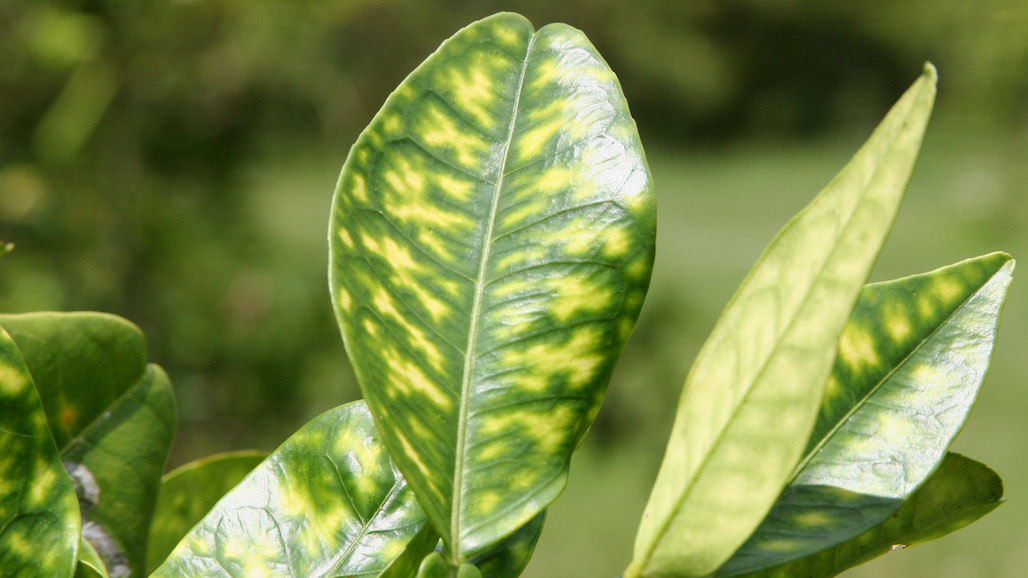
    Rossi said data sets were specific to tree size, bacteria amount, the severity of citrus greening symptoms such as irregular yellow patches in the leaves, and leaf and soil nutrient concentrations.

    “We have seen many rootstocks that promote large and small tree size, but we have not seen any correlation between tree size and susceptibility to citrus greening,” Zapien said.

    But so far, the research does not support a theory that tree size affects citrus greening susceptibility, but there is a trend in small trees showing less citrus greening symptoms, Zapien said.

    Zapien said published research findings prove that high-density plantings produce higher fruit yields by increasing yield efficiency — fruit number per green foliage. The researchers will evaluate if the trees correlate with the published work or if the larger trees in the test grove produce more fruit.

    ‘Ray Ruby’ grapefruit on UFR-15 rootstock promotes vigorous trees — the trees show the largest canopies and are already flowering. But for UF/IFAS researchers to recommend a particular rootstock and scion combination, more data are required. The experimental grove must be examined for up to four more years before UF/IFAS scientists can make reliable recommendations.

    “All trees in the Millennium Block are infected with citrus greening. However, some trees are thriving,” Zapien said. “Trees on sour orange have shown significantly fewer disease symptoms than trees on x-639 and US-942 rootstocks, but we have to consider that sour orange’s drawback is the susceptibility to citrus tristeza virus.”

    As to citrus greening severity, ‘Star Ruby’ grapefruit showed only 4% symptoms in the green foliage. In contrast, ‘US Seedless Surprise’ symptoms were 24%. The other varieties fall between the two.

    “The data we compiled is nascent as the trees were only two years old at the analysis,” said Zapien. “University researchers will continue to monitor the top performer combinations to determine if the early findings are consistent.”

    With research in the UF/IFAS-IRREC experimental grove, Zapien completed a master’s degree in horticultural sciences. Zapien recommends that researchers improve sampling methods to assess the bacteria as the trees mature to advance the research. Zapien and his colleagues will evaluate flowering patterns to determine when the fruit is ready to harvest and reveals market windows. A long-term goal is to measure the yield or the amount of marketable fruit each tree produces. — By Robin Koestoyo, University of Florida, Institute of Food & Agricultural Sciences

  • A New Way to Battle Powdery Mildew in Strawberry

    Strawberry farmers worldwide may get help from new University of Florida research that shows a way to battle one of the fruit’s fiercest foes.

    The key: combine genomic data with phenomics. The genome amounts to all the DNA in an organism. Phenomics is the study of plant growth, performance and composition. Through phenomics, scientists use DNA to measure plant traits. In a newly published study, UF/IFAS scientists found a new way to help strawberry growers battle powdery mildew.

    Ronald Tapia, a doctoral student at the Gulf Coast Research and Education Center (GCREC), led the research. Tapia worked under the supervision of Seonghee Lee, an assistant professor and Vance Whitaker, an associate professor, both in horticultural sciences.

    Ronald Tapia, a doctoral student in horticultural sciences, points a sensor at a strawberry plant at the UF/IFAS Gulf Coast Research and Education Center. Credit: Courtesy, Ronald Tapia, UF/IFAS.

    Prior research already showed this method detects diseases in other crops, Whitaker said.

    “We already have a lot of technology that helps us understand the genes in strawberries, but those genes still need to be connected to their actual effect on the plant – in this case how the plant resists powdery mildew disease,” said Whitaker. “That’s why we combined genomics and phenomics. Any technology that reduces the cost or increases the speed of evaluating any trait — like disease resistance — in our breeding trials can help us out.”

    Whitaker cautions this method is not guaranteed to work in all situations, but he’s hopeful.

    To reach their findings, Whitaker and his colleagues conducted a field trial of strawberry plants at GCREC. They took DNA from each strawberry and looked at its genes.

    Vance Whitaker, associate professor of horticultural sciences at the UF/IFAS Gulf Coast Research and Education Center. Credit: Tyler Jones, UF/IFAS photography.

    Then they rated the disease using two methods:

    • Their own eyes, which gives them a visual scale. The plants were evaluated the traditional way by eye, recording the severity of the disease, rated on a scale of 0 to 6 for each plant.
    • A handheld sensor. Whitaker and his colleagues used the device to detect wavelengths of light that you can’t see with your eyes. The wavelengths gave researchers data about the health and disease status of strawberry plants.

    “We showed that by combining the DNA information (genomics) and the spectroscopy information (phenomics), we can predict the visual rating of disease resistance surprisingly well,” Whitaker said. “In the future, we can eliminate the work of the visual rating.”

    The finding should help scientists assist strawberry growers globally as they look for powdery mildew in their crop. While Florida produces most of the nation’s domestic winter crop on about 11,000 acres, California produces strawberries nearly year-round. Nationwide, strawberries are valued at about $2.2 billion— By Brad Buck, University of Florida, Institute of Food & Agricultural Sciences

  • Wild Tomato Genome will Benefit Domesticated Cousins

    A team of researchers has assembled a reference genome for Solanum lycopersicoides, a wild relative of the cultivated tomato, and developed web-based tools to help plant researchers and breeders improve the crop.

    Solanum lycopersicoides (S. lycopersicoides) harbors a gene making the plant resistant to a particular strain of bacterial speck disease. The gene could be introduced into cultivated tomatoes to protect them from the pathogen.

    That discovery led Boyce Thompson Institute researchers to sequence the plant’s genome and create online resources to facilitate the discovery of more genes that could improve tomatoes.

    “There wasn’t even really a discussion about whether to sequence Solanum lycopersicoides, it was just obvious to do it,” said Susan Strickler, director of the BTI Computational Biology Center (BCBC). Strickler is co-corresponding author of the paper describing the S. lycopersicoides genome, which was published in The Plant Journal on May 18.

    Wild relatives of crops are becoming increasingly valuable to plant researchers and breeders. During the process of domestication, crops tend to lose many genes, but wild relatives often retain genes that could be useful – such as genes that confer resistance to drought and disease.

    In their study, the researchers demonstrated the value of the new genome by finding several candidate genes associated with compounds – phenolics and carotenoids – that contribute to the species’ color, flavor and nutrition, as well as other genes associated with disease resistance.

    Perhaps more importantly, a larger goal of the project was to make the S. lycopersicoides reference genome as widely accessible and useful to the scientific community as possible.

    “These kinds of data are added to the National Center for Biotechnology Information repository as a general requirement, and that’s important, but not everyone is a bioinformaticist or has access to bioinformatics resources to analyze the data,” said Adrian Powell, assistant director of BCBC and a first author on the paper.

    “To increase access and ease of exploring the genome, we developed web-based tools and components that researchers beyond our project team could use and add to,” he said.

    One tool is a S. lycopersicoides genome browser available on the Sol Genomics Network website, which serves as community resource and repository for tomatoes and other species in the Solanaceae family. Powell said the browser can aid early exploratory studies of the wild tomato species as well as more advanced studies.

    Another tool is an S. lycopersicoides expression atlas, which allows users to analyze RNA sequencing data and visualize which genes are expressed in different plant tissues and under different conditions. “The atlas is based on code first developed for the cultivated tomato, but now we have a version for the wild species,” Powell said.

    These tools, combined with the new reference genome, will help researchers analyze hybrids of the wild tomato and cultivated tomato more readily than they could before, and they will also help researchers who are studying the wild species for its own sake, he said.

    For example, the reference genome could facilitate genome-wide association studies (GWAS) on multiple S. lycopersicoides accessions, to assess genetic diversity of the species and identify candidate genes for the traits breeders might want to introduce into cultivated tomatoes, such as drought tolerance, Powell said.

    Co-authors of the paper include BTI professors Lukas MuellerGreg MartinZhangjun Fei and Jim Giovannoni. Martin is also a professor in the College of Agriculture and Life Sciences (CALS), and Mueller, Fei and Giovannoni are adjunct professors in CALS. Giovannoni is also a research molecular biologist with the U.S. Department of Agriculture Agricultural Research Service (USDA-ARS).

    The study was supported in part by grants from the joint ERA CAPS Regulatome project, the National Science Foundation, the Triad Foundation, the Max-Planck-Society and the European Union project PlantaSyst, and Germany’s Federal Ministry of Education and Research. — By Michael J. Haas, Boyce Thompson Institute, Cornell University

  • AI Helps Detect Watermelon Disease Quickly, Accurately

    If you savor a juicy watermelon in the scorching summer heat, farmers toil to meet your tastes. But, like all farmers, those who produce watermelons seek ways to control diseases, so they don’t lose all or part of their crops. The needs of growers drive Yiannis Ampatzidis to use artificial intelligence to detect pathogens early and accurately.

    One such disease, downy mildew, spreads like wildfire, said Ampatzidis, an Associate Professor of Ag & Biological Engineering at the University of Florida.

    For a new study, Ampatzidis used AI to help find downy mildew.

    In newly published research, Ampatzidis used spectral reflectance —  the energy a surface reflects at specific wavelengths — of plant canopies and machine learning to quickly and efficiently detect downy mildew in several stages of the disease.

    Hopefully, farmers can take advantage of this technology.

    “If left unchecked, downy mildew can destroy a farmer’s entire crop within days. That’s why it gets the nickname ‘wildfire.’ It spreads rapidly and scorches leaves,” said Ampatzidis, a faculty member at the Southwest Florida Research and Education Center.

    Ampatzidis and his research team successfully detected downy mildew in several stages of severity.

    “Our most important result was finding downy mildew in its earliest stage, which is critical to growers’ ability to manage this disease,” he said.

    Ampatzidis and his research team developed two methods, utilizing hyperspectral imaging and AI — one in the laboratory and the other using UAVs (drones) for field detection.

    Downy mildew does not affect stems or fruit directly. But it can defoliate the plants, leaving fruit exposed to sun damage, making it unmarketable.

    As long as consumers continue to buy watermelon — and those who grow the fruit want to reap a good harvest — Ampatzidis will continue to find ways to find pathogens that could damage the fruit.

    As next steps in his research, Ampatzidis wants to develop a simple and inexpensive drone-based sensor to improve detection of downy mildew in watermelon plants. — By Brad Buck, University of Florida, Institute of Food & Agricultural Sciences

  • Promising Advancements in Biocontrol Treatment that Slows Citrus Greening

    Promising Advancements in Biocontrol Treatment that Slows Citrus Greening

    Citrus growers may have a new tool to help them slow the presence of citrus greening in already diseased trees. While there is no cure for Huanglongbing (HLB), researchers at the University of Florida Institute of Food and Agricultural Sciences found that injecting a benign Xylella fastidiosa EB92-1 bacteria biocontrol into infected citrus trees over a period of six years reduced the incidence of trees with severe HLB symptoms. The potential result is providing growers with a strategy to keep trees alive and productive longer even when infected with the citrus greening bacterium.

    Donald Hopkins, an emeritus professor of plant pathology at the UF/IFAS Mid-Florida Research and Education Center, conducted three trials in central and eastern Florida with commercial groves of Valencia orange and Rios grapefruit trees at different maturity stages. All of the trees tested positive for citrus greening disease at the beginning of the trial but had varying ranges of symptoms from asymptomatic, mild to severe. Trees in the trials included young 2-year-old and mature (greater than 20-year-old) trees.

    “Using EB92-1 provided a level of control of HLB in two mature citrus tree trials and in a trial initiated in young 2-year-old trees,” said Hopkins. “This biocontrol strain has the potential to prevent or delay severe symptoms of HLB and prevent the loss of production both in mature and young citrus trees.”

    All trees in the trials remained positive for HLB throughout the six-year trial. The injections of EB92-1 did not prevent or reverse infection of HLB. But key findings indicated that trees that were treated had less increase in symptoms than untreated trees. Injected trees also had increased yield than untreated trees. In mature trees, results from the trials indicated that the most effective control of HLB may require once-a-year treatment for at least the first 2-3 years. Retreatment may be required yearly for best biocontrol.

    Using EB92-1 especially combined with nutrition, fertilizer and pesticide best management practices could prolong the life and productivity of citrus trees.

    Hopkins believes that the biological control of HLB by EB92-1 is not from direct competition with the HLB pathogen since the EB92-1 bacterium operates in a tree’s xylem and the HLB bacterium colonizes the tree’s phloem. Rather the impact in more likely an instance of induced resistance. Induced resistance occurs when a plant’s resistance mechanism is activated by infecting a plant with a pathogen, such as the benign strain EB92-1. In this case, injecting EB92-1 provided some control of HLB in a tree’s tissues not infected with EB92-1 resulting in a slowing of HLB symptoms.

    This research was published online in Plant Disease, the journal of the American Phytopathological Society (APS). The project was partially funded by the United States Department of Agriculture HLB Multi-Agency Coordination (MAC) group and UF/IFAS. This treatment is patented and licensed to an external company but is not currently available to growers. The trials continue in central and eastern Florida. — By Ruth Borger, University of Florida, Institute of Food & Agricultural Sciences

  • California Citrus Growers Invited to Apply for CA-CRaFT ACP Mitigation

    California Citrus Growers Invited to Apply for CA-CRaFT ACP Mitigation

    Through support from the USDA Huanglongbing Multi-Agency Coordination Group (HLB-MAC) the Citrus Research Board (CRB) is initiating a California focused Citrus Research and Field Trials (CA-CRaFT) project. The overarching goal of CA-CRaFT is to demonstrate the effects of additional mitigations on Asian citrus psyllid control within commercial citrus groves across the various citrus growing regions in California. This project will measure psyllid levels within treated groves as a year-by-year measurement and relative to the regional psyllid levels. The additional mitigations are expected to help reduce psyllid populations and inform growers of best practices. The project results will be shared on a regional, statewide, and national basis.

    To be considered for the program, growers should be actively following current UC IPM guidelines and interested in working with the CRB to test the effect of additional psyllid control methods

    Producers may choose one or more of the following mitigations:

    Preventative Mitigations

    • Barrier mesh fencing
    • Living windbreaks
    • Trap crops

    Threshold-based Mitigations

    • Biological control agent releases
    • Pesticide treatments (border sprays, psyllid repellents, ant control)

    Priority will be given to CA citrus groves with ongoing psyllid pressures and/or in proximity to major psyllid risk factors (i.e., transportation corridors, residential areas).

    Compensation will be provided based on mitigations adopted.

    Informational webinars will be held on September 8 and September 14, 2022. To learn more and register, please click on the respective links below.

    Submit the application BELOW no later than October 1, 2022.

  • Anaerobically Digested Dairy Manure to Serve as Liquid Fertilizer for Tomatoes

    Anaerobically Digested Dairy Manure to Serve as Liquid Fertilizer for Tomatoes

    Researchers at UC Davis have found a new, safe way to treat dairy manure for use as a high quality, organic liquid fertilizer on fresh produce crops.  Watch this interview with Ruihong Zhang from UC Davis as she shares the results of their studies and read more in California Dairy Magazine.

    Please thank this video’s sponsor Clean Energy for their industry support.

  • Exploring Different Options for On-Farm Groundwater Recharge

    Exploring Different Options for On-Farm Groundwater Recharge

    While they can’t make it rain, California water districts and farmers are finding creative ways to be a part of the solution to severe drought conditions and subsiding groundwater levels by sinking water back into the earth during the “wet season”.  Watch this brief interview with Chase Hurley from Triangle T Water District as he shares some success stories and different ways growers and water districts can approach groundwater recharge.

    Please thank this video’s sponsor Suterra for their industry support.

  • Getting to the Root of How to Grow Cowpea in Difficult, Dry Conditions

    Cowpea is an important crop in many parts of the world, especially sub-Saharan Africa. It is resilient and can grow in areas with little rainfall and low-quality soils. But as hardy as it is, cowpea yields can decrease by drought and low levels of soil phosphorus.

    A high-resolution root hair image taken from a cowpea seedling root sample. The image was taken after 14 days of growth on germination papers. Root hairs play important roles in cowpea tolerance to drought and poor soils. Credit: Saba Mohammed

    In a recent study, researchers determined cowpea root characteristics that could help the plants grow better in drier, low-phosphorus soils.

    “Developing cowpea varieties that can produce optimally under stressful conditions is vital,” says Saba Mohammed, lead author of the study at Ahmadu Bello University in Zaria, Nigeria. “These resilient cowpea varieties can help make more people food and nutrition secure.”

    The study was published in Crop Science, a publication of the Crop Science Society of America.

    Cowpeas are a key source of calories for millions of people across the world. They are rich in protein and other nutrients. Cowpea plants also have a variety of other uses. They can serve as animal fodder and green manure.

    Microbes in cowpea root nodules can increase soil fertility. These microbes make atmospheric nitrogen available to plants in the soil – a process called nitrogen fixation. Nitrogen fixation can be beneficial for farmers who cannot afford nitrogen-based fertilizers.

    Most cowpeas production is in semi-arid regions. Harsh environmental conditions and poor soils often hamper yields. “Our work established that certain root characteristics increased the yield of cowpea plants under drought or low soil phosphorus conditions,” says Mohammed.

    These root features include longer primary roots and higher numbers of lateral roots emerging from primary roots. Root hairs also play important roles in cowpea tolerance to drought and poor soils.

    For example, cowpea plants with longer, denser root hairs had higher yields when grown in low-phosphorus conditions. “That suggests these root hair features play crucial roles in acquiring phosphorus from sub-optimal soils,” says Mohammed.

    Scientists have long known that roots are a key part of how plants adapt to difficult environmental conditions. “The root system is half of the whole plant system,” says Mohammed. “Yet, it has been relatively under-explored in finding solutions to farming constraints.”

    Root systems have diverse strategies for extracting resources from soil. “For instance, plants with deeper roots produce better than those with shallow roots under limited water conditions,” he says. “On the other hand, those with shallow roots may be more suited to soils with suboptimal nutrients.”

    A field experiment on cowpea at the Institute for Agricultural Research in Minjibir Agricultural Research Station, Kano State, Nigeria. Cowpea crops are resilient and can grow in areas with little rainfall and low-quality soils. Credit: Saba Mohammed

    That’s because nutrients – like phosphorus – are often concentrated in the top layer of soil.

    For cowpea plants growing in dry and nutrient-limited soils, roots need to go deeper and spread wide and shallow.

    “Our study shows that we can focus on cowpea varieties with longer taproots for drought tolerance and higher numbers of shallower basal roots to extract soil nutrients,” says Mohammed.

    While root architecture can provide valuable information, examining root features of mature plants can be a time-consuming and exhausting process. Mohammed says it is easier and more economical to phenotype roots at the seedling stage.

    The study showed that examining roots of cowpea seedlings could help identify root features in mature plants that are beneficial for growth in challenging environments.

    “Our goal is to use the study results to breed new cowpea varieties,” says Mohammed. “These new varieties would perform optimally under limited water and low soil phosphorus conditions.”

    Many small-scale and subsistence farmers may be unable to afford phosphate fertilizers. The new cowpea varieties Mohammed describes would benefit these farmers tremendously. However, he explains that developing new varieties with desired root features can also be a valuable resource in systems where intensive irrigation and fertilizers are used. These cowpea varieties can help reduce production costs and minimize environmental pollution from excessive fertilizer use.

    American Society of Agronomy, Soil Science Society of America, Crop Science Society of America: Collectively, these Societies represent more than 12,000 individual members around the world. Members are researchers and professionals in the areas of growing our world’s food supply while protecting our environment. Together we work toward solutions to advance scientific knowledge in the areas of agronomy, crop science, and soil science.