Apurba Barman joined UC Cooperative Extension as low desert integrated pest management advisor on Jan. 11, 2021. He will be headquartered at the UCCE Imperial County office, which adjoins the UC Desert Research and Extension Center in Holtville.
“I am very excited for my new role as an IPM advisor based in Southern California and for the opportunity to serve one of the most important vegetable production regions in the state,” Barman said. “The diversity and intensity of crop production in this region demand targeted research to solve pest management issues and effective extension programs to reach diverse clientele. I feel prepared for this job with my experience and passion to serve the community.”
Barman earned a bachelor’s degree at Assam Agricultural University in India, and master’s degrees in Indiana and at Texas Tech University, Lubbock. In 2011, he completed a doctorate degree at Texas A&M University in College Station, where he developed a research program to understand the extent of damage and management of thrips in the Texas High Plains region.
Barman comes to UC Cooperative Extension from the University of Georgia, where he led a whitefly monitoring and management progress across cropping systems in the southern region the state.
Barman can be reached at (209) 285-9810 and akbarman@ucanr.edu. His Twitter handle is @Ento_Barman.
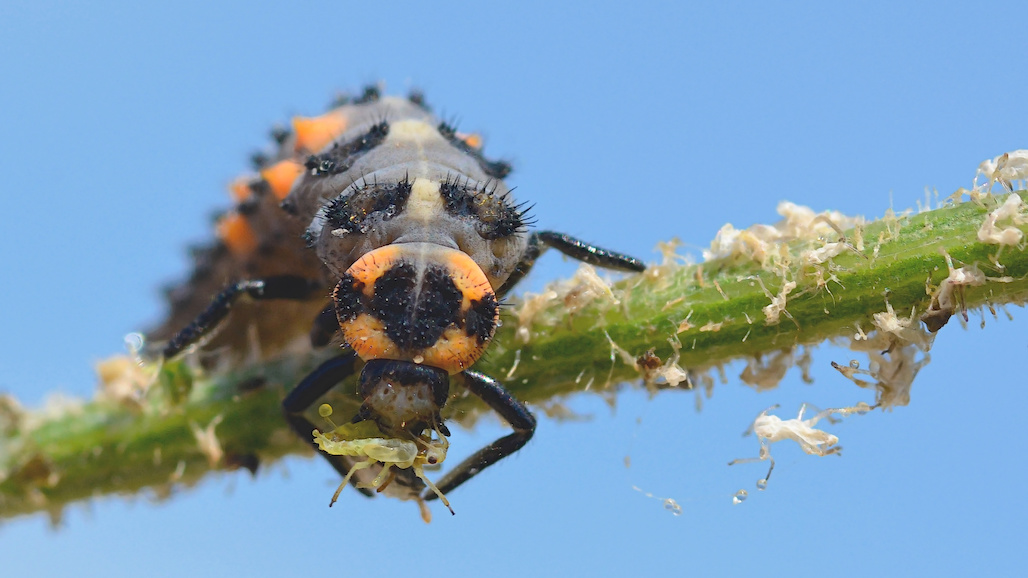
Effective control of western flower thrips (WFT) to prevent cosmetic scarring and contamination is important in spring lettuce crops, and now that INSV has been found infecting plants in Yuma lettuce, management becomes even more important. For most of the growing season, WFT numbers have been below average based on sticky trap counts, field reports and population densities here at YAC. However, in the past few weeks WFT populations have increased in most growing areas. This is not surprising as we typically observe “bioconcentration” of WFT during March and April on late lettuce as surrounding produce acreage declines. Each time a lettuce field is harvested, and disked, adult thrips disperse from these areas into the next available lettuce field. As the number of lettuce acres becomes reduced near the end of the season, this creates a bottleneck effect that concentrates high numbers of thrips adults on the remaining fields under production. This can often make chemical control of WFT very difficult, particularly in March, as adults can continually re-infest fields following spray applications. So, what management approaches can you take to manage thrips and hopefully reduce the potential incidence of INSV. The first line of defense should be sanitation. Growers should disc under produce crops immediately following harvest. The longer a harvested crop remains above ground, the more insects that can build up and move to adjacent lettuce fields, especially with the dry, windy, and warm weather we typically have in March. If only light INSV incidence is present in pre-harvest fields, PCAs should consider rogueing and removing suspect plants from the field. Ultimately, this may curb secondary infection within the field.
Controlling WFT with insecticides is the best approach to minimizing cosmetic feeding damage and may reduce spread of INSV within fields. For adults, which can easily be found on the leaf surface, your best choices of insecticide are methomyl (Lannate) or acephate at a high label rate. They are the most efficacious products against adult WFT. Radiant is not as consistently efficacious against adults, but a 7 oz or higher rate will provide the best knockdown and residual control of WFT larvae. Remember, the key to preventing cosmetic damage by WFT is to maintain larval populations at low levels. The cryptic or thigmotactic behavior of thrips often makes them difficult to find on lettuce plants. Research has shown that if you can see a few adults and larvae on the plant, it means that there are likely 10-fold more thrips actually on the plant (hiding near the base of the plant between midribs). This behavior also means that spray coverage is important, particularly with contact insecticides like Lannate. There are other insecticides such as Torac, Minecto Pro, Exirel, Movento and Assail that can provide suppression (50% control or less) against WFT larvae, but don’t expect much activity against adults. For more information on the identification, biology, ecology, and management of thrips on desert produce please visit Western Flower Thrips Management on Desert Produce. — By John Palumbo, University of Arizona Extension
A new study published in the journal Pest Management Science showed that semiochemicals can effectively manage one of the most economically damaging pests in organic strawberry production, the lygus bug (Lygus spp.). Semiochemicals are organic compounds that send signals to insects that alter their behavior, used either to attract them or repel them and can act as an alternative to insecticidal sprays. In this study, the researchers simultaneously used a female sex pheromone in combination with phenylacetaldehyde to attract the lygus bugs away from the strawberry crops, and another semiochemical, hexyl butyrate that repels the lygus bug away from strawberry crops. They measured the abundance of lygus and the amount of lygus damage in treated and untreated strawberry field under either organic or conventional management. While the semiochemicals were effective under both management regimes, they were especially helpful in the organic strawberry fields. Organic strawberry fields treated with the semiochemicals had 80% fewer lygus bugs and a 50% reduction of lygus damage. These results suggest that semiochemicals used in combination as repellents and attraction agents to draw lygus away from crops can be an effective measure of pest control without the use of insecticides. — The Organic Center
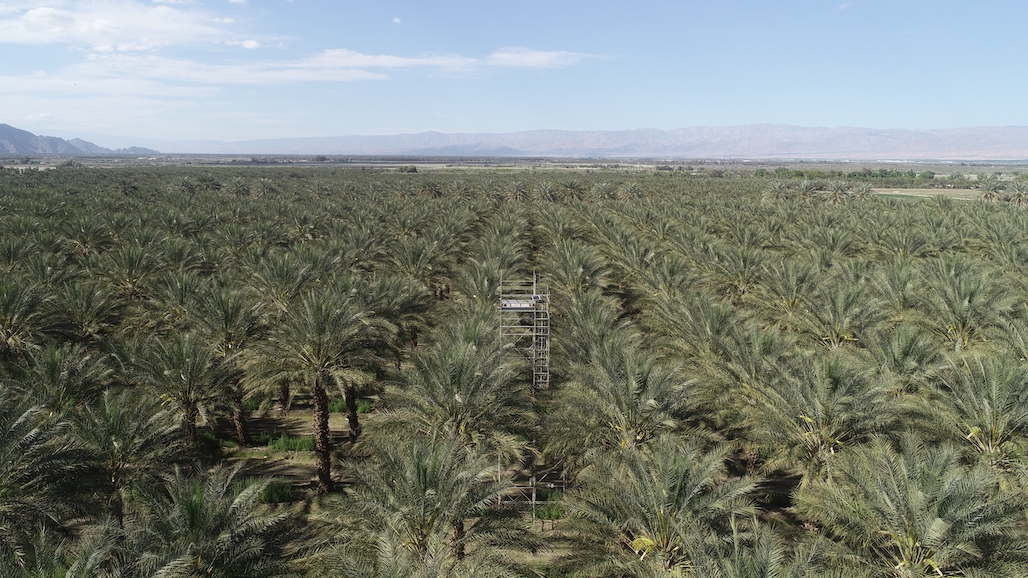
California’s $86 million date industry produces more than half of the nation’s dates. Most of the fruit is grown in the arid Coachella Valley. Despite efforts by growers to conserve water, data was lacking on date palms’ actual water use to refine the best irrigation management for the crop until a recent research project led by Ali Montazar, UC Cooperative Extension irrigation and water management advisor for Imperial and Riverside counties.
New research provides data California date growers need to apply a more precise amount of irrigation water to meet the trees’ needs to produce a healthy crop (photo by Ali Montazar).
“California dates are grown in the hottest and most arid climate in North America and require substantial amounts of water in order to bring a successful crop to fruition,” Albert Keck, Coachella Valley date grower and chairman of the California Date Commission, wrote in a letter of support for this project. “In addition, there is scant modern research specifically and technically focused on growing dates in North America.”
Montazar said there is a lack of irrigation management information on date palms worldwide.
“The information developed in this study is expected to have a worldwide impact,” he said.
To determine the evapotranspiration rate and crop coefficients for California date palms, Montazar teamed up with scientists at UC Davis, California Department of Water Resources, USDA Agricultural Research Service, and USDA Salinity Laboratory.
The experiment was carried out in six date orchards in the Coachella and Imperial valleys. The sites represent various soil types and conditions, irrigation management practices, canopy characteristics, and the most common date cultivars in the region.
“The findings of the project indicate that there is considerable variability in date palm consumptive water use, both spatially and temporally,” Montazar said. In other words, the amount of water the trees use varies considerably depending on each site’s growing conditions.
He estimated the water needs for date palms planted in different soil types in the low desert region.
“Growers will be able to use the science-based information and tools developed by this project to determine their date palm water needs and optimize the efficiency of water and fertilizer use in their groves,” Montazar said.
Fruit bags protect date from insect damage and dust and prevent the fruit from falling to the ground (photo by Ali Montazar).
The peer-reviewed article “Determination of Actual Evapotranspiration and Crop Coefficients of California Date Palms Using the Residual of Energy Balance Approach” is published in the journal MDPI Waterat https://www.mdpi.com/2073-4441/12/8/2253.
“With a large quantity of new date plantings in the region, coupled with increasingly limited water resources in the Colorado River Basin Watershed, the knowledge anticipated to be developed by this research project has the potential to yield large dividends through not only improved water use efficiency, but also best management practices and crop quality,” said Keck of the California Date Commission.
Although the research focused on Coachella Valley dates, Montazar said the results are likely to be useful to growers who have orchards with similar varieties, irrigation practices, and canopy and soil features in other locations.
Montazar’s co-authors are Robert Krueger of the USDA-ARS National Clonal Germplasm Repository for Citrus and Dates; Dennis Corwin of USDA-ARS U.S. Salinity Laboratory; Alireza Pourreza UC Cooperative Extension specialist based at UC Davis Department of Biological and Agricultural Engineering; Cayle Little of California Department of Water Resources; Sonia Rios, UC Cooperative Extension advisor in Riverside County; and Richard L. Snyder UC Cooperative Extension specialist emeritus in the UC Davis Department of Land, Air and Water Resources.
The date palm irrigation project was funded by the CDFA Specialty Crop Block Grant Program. — By Pamela Kan-Rice, UCANR
Mann Packing Co., Inc.(“Mann”), a subsidiary of Del Monte Fresh Produce N.A., Inc., and one of the largest suppliers of packaged vegetables in North America is excited to announce the addition of a fresh-cut fruit area to its new facility in Gonzales, California. This new section of the facility will allow Mann Packing to grow its fresh-cut fruit and organic fresh-cut fruit business and provide a new space to help the brand continue to meet consumer needs.
Separate from the Value Added Vegetable part of the Gonzalez Plant, the Fresh-Cut Fruit area will allow for added retail convenience, as fruit will be cut to order. This will allow for the elimination of inventorying and for deliveries to be made directly from the Gonzalez plant. This new area of the plant is especially unique as it uses many vertically integrated products such as pineapples, melons and grapes.
“As a trusted Fresh Del Monte brand, we are excited to now be processing our fresh-cut fruit in a brand new, state of the art plant,” said Parker Javid, Vice President of Sales at Mann Packing. “Our team is always working to find new and innovative solutions to meet the needs of our consumers and we are excited to offer our customers greater freshness and efficiencies by combining both fresh-cut fruit and vegetables on one truck and in a direct shipment from our plant.”
In addition, the Gonzales facility has a state-of-the-art sanitation and cleaning protocols, allowing for a high focus on food safety for cut fruit. Beyond face masks, hair nets and constant hand sanitation, the new facility has separate processing and raw material areas. Additionally, the facility also boasts a 260-foot-tall wind turbine to help Mann Packing continue its mission of sustainable processing. Wash water from the facility will also be reclaimed into industrial waste systems for use on local golf courses and city landscaping.
The MANN brand has been a symbol of produce innovation during the last 80 years. Now, as a part of Del Monte Fresh Produce N.A., Inc., Mann Packing Co., Inc. will continue to delight shoppers with wholesome, innovative and delicious products.
For more information on Mann Packing, including where to find its products, visitveggiesmadeeasy.com. For recipes and more, visit the company’s social media channels including, Facebook, Instagram, and Twitter.
ABOUT MANN PACKING CO., INC.
Founded in 1939 and headquartered in Gonzalez, CA, Mann Packing Co., Inc. is one of the largest suppliers of western vegetables, BROCCOLINI® baby broccoli and sugar snap peas in North America. In 2018, Mann Packing was acquired by Del Monte Fresh Produce N.A., Inc. Today, operating as the Fresh Del Monte vegetable division, Mann Packing continues to lead the way in product innovation. Mann Packing is consistently vigilant in food safety, employee wellness and quality assurance, making for one of the most trusted brands in the industry.
ABOUT DEL MONTE FRESH PRODUCE N.A., INC.
Del Monte Fresh Produce N.A., Inc. is one of North America’s leading marketers and distributors of high-quality fresh and fresh-cut fruit and vegetables. Del Monte Fresh Produce N.A., Inc. markets its products in North America under the Del Monte® brand (as well as other brands) used under license from Del Monte Foods, Inc., a symbol of product innovation, quality, freshness and reliability for over 125 years. Del Monte Fresh N.A., Inc. is not affiliated with certain other Del Monte companies around the world, including Del Monte Foods, Inc., the U.S. subsidiary of Del Monte Pacific Limited, Del Monte Canada, or Del Monte Asia Pte. Ltd.
A new book shows how California has led the nation in farm sales since 1948 and explores future challenges
“California Agriculture: Dimensions and Issues” by the Giannini Foundation of Agricultural Economics details the past, present and future of many of California’s major agricultural commodities, including grapes, tree fruits and nuts, vegetable crops, dairy, livestock, nursery and floral production, and cannabis. The new 18-chapter book, written by agricultural economists at UC Davis, UC Berkeley and UC Riverside, addresses issues such as labor, water, climate and trade that affect all of California agriculture.
“California agriculture overcame many obstacles to become the nation’s number one farm state. Leading agricultural economists are generally optimistic that California agriculture will continue to thrive in the 21st century, despite continuing large challenges,” said Philip Martin, UC Davis emeritus professor of agricultural and resource economics, who is co-editor of the new publication.
For over 70 years, California has led the nation in farm sales due to its specialization in high-value commodities such as fruits, nuts, vegetables and other horticultural crops. The book uses the most recent Census of Agriculture data to show that, of the $64 billion of these crops produced in the U.S. in 2017, California produced nearly half by value ($31 billion).
In 1879, wheat and barley occupied over 75% of the state’s cropland. The types of crops grown in California have changed considerably over the years.
More than 44 percent of California’s $50 billion in farm sales in 2017 were fruits and nuts, with 17 percent of sales from vegetables and melons, and 14 percent from nursery and other horticultural specialties crops. Many of these high-value specialty crops are also very labor-intensive and face challenges from increased cost and decreased availability of agricultural labor. The book discusses how California growers effectively responded to these labor challenges by adopting labor-saving mechanization. California remains competitive with producers elsewhere by relying on superior plant varieties, integrated pest management, and improved irrigation methods that increase both the quantity and quality of California agricultural commodities.
Water, climate and trade pose challenges and opportunities for California agriculture. In the last decade, water scarcity and decreased water quality, along with regulations to address these issues like the Sustainable Groundwater Management Act, have prompted farmers to use scarce water to irrigate more valuable crops, as with the switch from cotton to almonds. Increased regulations and the increasing scarcity of water affect high-value specialty crops as well as the dairy and livestock industries that accounted for 24% of California farm sales in 2017.
Climate variability, including drought and heat stress, affects farmworker welfare, crop yields and dairy productivity. Retaliatory tariffs resulting from the 2018 trade war reduced U.S. agricultural exports to China by close to $14.4 billion per year, as exports of dairy, livestock and specialty crops fell.
California agriculture has a rich history of overcoming challenges by pursuing innovative research, adopting new technologies, and adapting to changing conditions. Learning how California agriculture has succeeded in the past suggests that the state can maintain its dominant role as an agricultural producer in the future.
Learn more about several of the major California agricultural commodities and the issues and opportunities they face in this new, second edition of California Agriculture: Dimensions and Issues. Read the book for free online as part of the Giannini Foundation’s Information Series (20-01) at https://giannini.ucop.edu/publications/cal-ag-book/. A paperback copy of the 414-page book can be ordered for $55 at http://bit.ly/CalAgBook2ndEd. – By Ria DeBiase, Communications Director, Giannini Foundation of Agricultural Economics
The Giannini Foundation was founded in 1930 from a grant made by the Bancitaly Corporation (later renamed Bank of America) to the University of California. Its mission is to promote and support research and outreach activities in agricultural economics and rural development to benefit the agricultural industry, policymakers, and society at large. Giannini members include University of California faculty and Cooperative Extension Specialists in agricultural and resource economics. Learn more about the Giannini Foundation of Agricultural Economics at https://giannini.ucop.edu.
Gotham Greens, a pioneer in indoor agriculture operating high-tech greenhouses across the United States, is placing its latest state-of-the-art greenhouse near UC Davis.
“We are building a Controlled Environment Agriculture Consortium to support and advance the indoor farming industry, grow more fresh produce on less land and create new jobs for Californians,” said Gabriel Youtsey, UC ANR chief innovation officer. “Gotham Greens is an anchoring partner of this research and industry collaboration that we hope will spur innovation, create a new indoor farming workforce and support industry growth.”
University of California Agriculture and Natural Resources and the UC Davis College of Agricultural and Environmental Sciences have entered into a partnership with Gotham Greens to advance research and innovation in the areas of indoor agriculture, advanced greenhouse technology and urban agriculture. The new greenhouse facility enables opportunities for Gotham Greens and the University of California system to collaborate on research and innovation focused on advancing the science, workforce, technology and profitability of indoor agriculture globally.
“We are proud to bring Gotham Greens to the West Coast and partner with one of the highest ranked agricultural research centers in the world to advance the entire agriculture system,” said Viraj Puri, Gotham Greens co-founder and CEO. “California is responsible for growing one-third of the country’s vegetables and two-thirds of the nation’s fruits, yet in recent years, issues surrounding drought, food safety and worker welfare have demonstrated the need for continued innovation. Gotham Greens offers consumers clean, safe and sustainably grown leafy greens, herbs and versatile, time-saving plant-based dressings, dips and cooking sauces.”
Located in Solano County, the first phase of Gotham Greens’ 10-acre greenhouse facility is expected to open in 2021 and will enable the company to deliver fresh, greenhouse-grown leafy greens to more retailers, foodservice operators and consumers on the West Coast. The company operates one of the largest and most advanced networks of hydroponic greenhouses in North America, where the demand for indoor-grown produce continues to surge. Nearly a decade after launching the nation’s first commercial-scale rooftop greenhouse, Gotham Greens continues to reimagine how and where fresh produce is grown across America.
“We’re excited about collaborating with Gotham Greens, which is a coveted employer for tomorrow’s leaders in agriculture and engineering,” said Helene Dillard, UCD CAES dean. “This partnership will offer our students the chance to learn best practices from leading experts in indoor farming.”
The greenhouse will generate 60 full-time jobs and provide students in the University of California system with an opportunity to learn firsthand from the industry leader. Gotham Greens recently raised $87 million in new equity and debt capital, bringing the fast-growing company’s total financing to $130 million and fueling its next phase of growth.
“We are delighted for Gotham Greens to join Solano County’s thriving agricultural economy and help to usher in a new era in farming innovation, job creation and economic growth for the region,” said Solano County Supervisor John Vasquez.
Gotham Greens owns and operates greenhouses in New York, Illinois, Rhode Island, Maryland and Colorado. Its products are currently available in more than 40 U.S. states and 2,000 retail stores. — By Pamela Kan-Rice, UCANR, and Jodi Genshaft, Gotham Greens
New research reveals an essential step in scientists’ quest to create targeted, more eco-friendly fungicides that protect food crops.
Scientists have known for decades that biological cells manufacture tiny, round structures called extracellular vesicles. However, their pivotal roles in communication between invading microorganisms and their hosts were recognized only recently.
UC Riverside geneticist Hailing Jin and her team foundplants use these vesicles to launch RNA molecules at fungal invaders, suppressing the genes that make the fungi dangerous.
Infection of an Arabidopsis plant by the fungus that causes white mold disease. (Anna Schroll/Max Planck Institute for Chemical Ecology)
“These vesicles shuttle small RNAs between cells, like tiny Trojan horses with weapons hidden inside,” said Jin, a professor of genetics and the Cy Mouradick Chair in the Department of Plant Pathology and Microbiology. “They can silence pathogenic fungal gene expression.”
Using extracellular vesicles and small RNAs has several advantages over conventional fungicides. They’re more eco-friendly because they are similar to naturally occurring products. Eventually, they degrade and do not leave toxic residues in the soil. Also, Jin explained, this method of fighting fungi is less likely to breed drug-resistant pathogens.
A sticking point for scientists in creating these fungicides has been figuring out how to load their desired small RNAs into the vesicles.
“We’ve wondered how these weaponized small RNAs get into the bubbles,” Jin said. “Now, we think we have an answer.”
Her laboratory has identified several proteins that serve as binding agents, helping to select and load small RNAs into the vesicles. The lab’s research is detailed in a new Nature Plants journal article.
The Jin laboratory has been working for several years on the development of gene-silencing RNA fungicides. Work toward this goal led to the team’s landmark discoveryin 2013 that gene-silencing RNA messages can be sent from the fungal pathogen to the plant host to suppress host immunity. Later, the team learnedsmall RNAs can move both ways — from plants into pathogenic invader cells as well. In 2018, the team worked outthat extracellular vesicles were the major delivery system for these small RNAs. They observed that Arabidopsis plants secrete extracellular vesicles into Botrytis cinerea, a fungus that causes grey mold disease and destroys millions of cropsevery year.
“This was the first example of a host using these vesicles to deliver small RNAs to another organism,” Jin said. “Previously we saw movement of RNA, but didn’t know how the small RNA are selected and transported.”
Now, she and her colleagues have identified several RNA-binding proteins in Arabidopsis that bind to specific small RNA molecules and load them into extracellular vesicles. This suggests the proteins play an important role in loading and stabilizing small RNAs in the vesicles. The finding can help increase the payload of gene-silencing RNAs that make it into vesicles and enhance the efficiency of disease control.
Some scientists have taken inspiration from the RNA communication in plant vesicles to design human therapies. For example, some are attempting to load anti-cancer RNAs and drugs into extracellular vesicles in fruits or vegetables, so people can eat or drink them. Jin is hopeful that her lab’s discovery can aid these efforts. — By Jules Bernstein, UC Riverside
Yesterday, the California Department of Pesticide Regulation and California Department of Food and Agriculture launched a broad new work group to accelerate the systemwide adoption of safer, sustainable pest control practices.
The 25-member Sustainable Pest Management Work Group includes farmers, community members, university researchers and representatives from commodity groups and the pesticide industry. They are charged with identifying pathways to minimize the use of toxic pesticides and expand the use of integrated pest management practices; better protect public and environmental health; and engage, educate and promote collaboration to achieve these goals.
“Transitioning away from toxic pesticides requires us to speed up the development of effective alternatives,” said CalEPA Secretary Jared Blumenfeld. “By giving our farmers a suite of integrated pest management tools, we can better protect farmworkers and some of California’s most vulnerable communities. This dynamic task force will give us the roadmap to achieve this bold vision.”
“California agriculture is recognized not only for its quality and quantity, but also for the sustainable, innovative, forward-thinking way it is grown,” said CDFA Secretary Karen Ross. “Our farmers have been leaders in adopting integrated pest management and partnering with universities and technical assistance providers to meet our high standards for food, environmental and worker safety. This work group represents a broad array of perspectives to inform the next decade of research and development investment and new partnerships to continue the production of nutritious, delicious food and high quality agricultural products with the least impact to our surrounding communities.”
Funded in last year’s budget, the group’s work will build upon the recommendations of the Alternatives to Chlorpyrifos Work Group whose 2020 report identified alternatives to the hazardous insecticide and outlined actions to further support agriculture and the health of local communities, farmworkers and the environment. A new status update details additional actions DPR has taken based on the 2020 report, and how DPR and CDFA are working together to provide additional funding to the University of California and California State University to expand integrated pest management research and education. California prohibited virtually all uses of chlorpyrifos as of Dec. 31, 2020.
The Sustainable Pest Management Work Group is part of the State’s larger commitment to accelerating the transition away from hazardous pesticides. To support the move, Governor Newsom is proposing to fund additional support for the transition by replacing the current flat-fee mill assessment on pesticide sales with a new risk-based tiered mill assessment, where higher toxicity pesticides are assessed a higher fee.
The members of the Sustainable Pest Management Work Group include:
Jenny Broome, Driscoll’s
Don Cameron, Terranova Ranch
Casey Creamer, California Citrus Mutual
Jim Farrar, UC Integrated Pest Management (IPM)
Chris Geiger, City of San Francisco
Kim Harley, UC Berkeley
Lisa Herbert, Sutter County Agricultural Commissioner
Nina Ichikawa, Berkeley Food Institute
Dan Kaiser, Environmental Defense Fund
Susan Kegley, Pesticide Research Institute
Margaret Lloyd, UC Extension – small farm advisor
Suguet Lopez, Líderes Campesinas
Gabriele Ludwig, Almond Board of California
Pam Marrone, Chestnut Bio Advisors, Formerly Marrone Bio Innovations
Nayamin Martinez, Central California Environmental Justice Network
John McKeon, Taylor Farms
Cliff Ohmart, Pest Control Advisor (PCA)
Scott Park, Park Farms
Margaret Reeves, Pesticide Action Network
Taylor Roschen, California Farm Bureau
Sarah Ryan, Environmental Director Big Valley Band of Pomo Indians
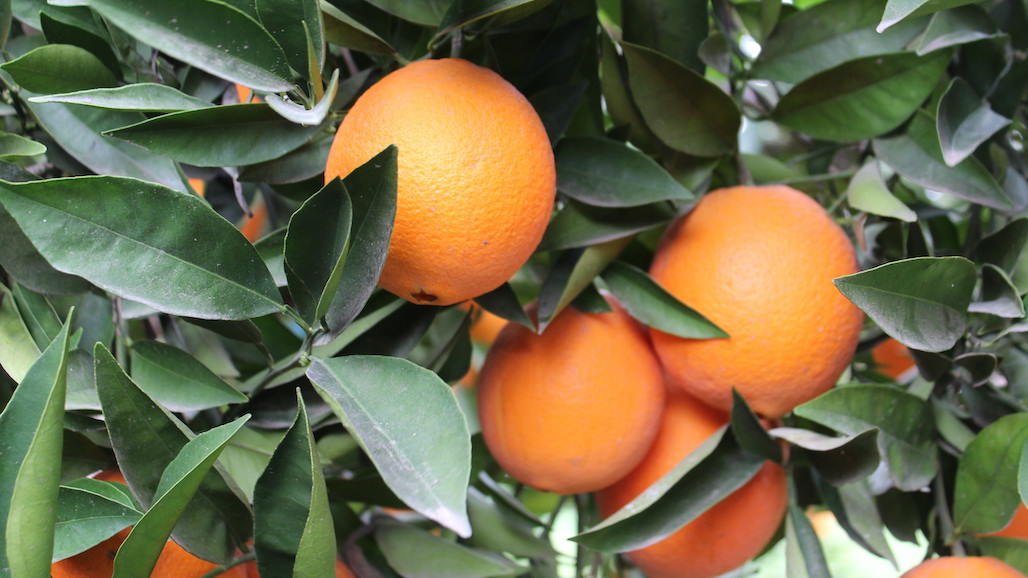
The March 2020-21 Valencia orange forecast is 20.0 million cartons. This forecast was based on the results of the 2020-21 Valencia Orange Objective Measurement (O.M.) Survey, which was conducted from January 11 to February 28, 2021. Estimated fruit set per tree, fruit diameter, trees per acre, bearing acreage, and oranges per carton were used in the statistical models estimating production.
The season had experienced scattered precipitation in some areas but mainly warm and dry conditions in January and February. Survey data indicated an average fruit set per tree of 545, a 2.7% decrease from the previous year and slightly below the five-year average. The average March 1 diameter was 2.552 inches, up 3.3% from the previous year and slightly above the five-year average of 2.529.
SURVEY HISTORY
A Valencia Orange Objective Measurement Survey was conducted from the 1985-86 to 1993-94 seasons before suspension due to a lack of funding. The survey has been conducted since it was reinstated for the 1999-00 season, with the exception of the 2006-07 season due to a substantial freeze. The data from the first three years after the survey was reinstated were used for research purposes in developing crop- estimating models.
SURVEY SAMPLE
A sample of 379 Valencia orange groves were randomly selected proportional to acreage, county, and variety representation in the state, with 334 of these groves being utilized in this survey. Once a grove was randomly chosen and grower permission was granted, two trees were randomly selected for each grove. For each randomly selected tree, its trunk was measured along with all connected branches. A random number table was then used to select a branch, and then all connected branches from the randomly-selected branch were measured.
This process was repeated until a branch was reached with no significant limbs beyond it. This randomly-selected branch, called the terminal branch, was then closely inspected to count all fruit connected to it, as well as all of the fruit along the path from the trunk to the terminal branch. Since each selected path has a probability of selection associated with it, a probability- based method was then applied to estimate a fruit count for the entire tree.
In the last week of the survey period, fruit diameter measurements were collected on the right quadrant of four trees surrounding the two trees of every third sampled grove. These measurements were used to estimate an average fruit diameter per tree. The sampled groves were primarily in the top Valencia orange producing counties of Tulare, Kern, Fresno, Ventura, and San Diego.