Category: Industry News

  • CA Prune Board Addresses Non-Tariff Barriers for Nuts & Dried Fruit

    CA Prune Board Addresses Non-Tariff Barriers for Nuts & Dried Fruit

    As the world leader in prune exports, the California Prune Board is preemptively addressing issues that affect the trade of dried fruits and nuts with a three-year project focused on preserving the use of sulfuryl fluoride. With the support of the Foreign Agriculture Services arm of USDA, the California Prune Board (CPB) has secured funding to lead a Technical Assistance for Specialty Crops (TASC) program titled “Preserving sulfuryl fluoride for dried fruit exports to the European Union.”

    “This project hits on all the major non-tariff barriers,” says Gary Obenauf, CPB Production Research Coordinator and lead on the TASC project. “Exports of nuts and dried fruits require reliable measures that ensure consumers around the world are receiving a safe product and this project is paramount in gathering the information needed, enabling California Prunes and other commodities to retain and expand export markets.”

    While the project specifically investigates the voids in residue data associated with the use of sulfuryl fluoride for treating U.S. dried fruit and tree nuts, the research ultimately addresses the stringent criteria to limit emissions for continued and optimal sulfuryl fluoride use in all export markets for a variety of commodities. The study is being conducted by top experts in their fields from Stanford, Yale, USDA’s Agricultural Research Service (ARS), University of California, and DFA of California.

    “Global trade interest in eliminating greenhouse gas emissions is growing, and we’re getting asked about sulfuryl fluoride use in several markets,” stated Spencer Walse, a research chemist for ARS. “This project provides an opportunity to continue sulfuryl fluoride use globally and preserves the quality of products while maintaining food safety and security. If we don’t protect the use of sulfuryl fluoride, the ability to export to various countries, including the EU, diminishes.”

    With new use patterns that need to be reflected globally, efficacy data is generated for market access into new export opportunities. Many countries, including India and Australia, require residue data to accompany the efficacy data to ensure consumer safety.

    “We studied methyl bromide decades ago and found the use patterns didn’t apply, so we had to adapt for sulfuryl fluoride,” added Obenauf. “This project allows us to update regulatory use patterns which have evolved since we started this work.”

    Phytosanitary techniques are vital to the export industry. The benefits of updating regulatory information through this research and gaining data on sulfuryl fluoride scrubbing extend far past the dried fruit and nut industries and will allow continued use of the gas globally.

    California is the world’s largest producer of prunes providing approximately 40 percent of the world’s supply and over 90 percent of the U.S. supply. Today, there are more than 40,000 bearing acres of California Prune orchards concentrated in the Sacramento and San Joaquin Valleys.

  • New Study Indicates High Prune Diet Prevents Bone Loss After Traumatic Injury

    New Study Indicates High Prune Diet Prevents Bone Loss After Traumatic Injury

    As part of the California Prune industry’s long-time commitment to world-class nutrition research, a new, peer-reviewed animal study shows a diet high in California Prunes completely prevents bone loss associated with spinal cord injury (SCI), while also restoring a fraction of the bone lost after SCI.

    Individuals who suffer spinal cord injury (SCI) are prone to extremely rapid bone loss. This leads to a significant increase in the risk of fractures, osteoporosis, and overall mortality. Results of this New animal study conducted by San Francisco Veterans Affairs Medical Center, Department of Veterans Affairs and the Department of Orthopedic Surgery show California Prunes may be able to help.

    “Healthy bones come from the right exercise and diet,” says Leslie Bonci, registered dietitian and consultant for the California Prune Board. “California Prunes are particularly rich in bone-building minerals. Not only does the fruit provide boron and manganese, but also Vitamin K — another nutrient that is fundamental for bone mineralization.”

    The study finds Prunes, in their Dried Plum version, mitigates Spinal Cord Injury-induced Bone Loss in Mice, was published in the Journal of the Orthopedic Research Society. The research was led by Halloran and Xuhui Liu, M.D., San Francisco Veterans Affairs Medical Center, Department of Veterans Affairs and the Department of Orthopedic Surgery, UCSF. In a serving of California Prunes, you can find potassium, Vitamin K, manganese, boron, and fiber.

    The researchers conducted two separate experiments. In a prevention experiment, they looked at dietary supplementation with dried plum for mitigating the loss of bone induced by SCI. Then, in a recovery experiment, they examined if a dried plum diet could restore bone lost after SCI.

    “We are seeing an exciting ‘prune effect’ on bones,” said Bernard Halloran, Ph.D., Professor Emeritus, University of California – San Francisco (UCSF). “In a variety of unique research scenarios, prunes are consistently associated with a favorable bone response.”

    The new study findings build on a growing body of research that shows a link between positive bone health response and California Prunes in post-menopausal women, along with research that shows a similar favorable bone response among those exposed to radiation – such as astronauts in space.

    Additional nutrition research studies are now underway adding to the investment in scientifically-sound evidence about the health benefits of prunes. The research pipeline includes the largest clinical trial ever undertaken by the California Prune industry that is looking at how California Prunes influence the microbiota and inflammation reduction, as well as a first-of-its-kind study that is evaluating the impact of California Prunes on the bone health of men. More studies are examining how California Prunes effect the fracture-healing process and the fruit’s impact on the bone health of younger women who are taking oral contraceptives.

    ABOUT THE CALIFORNIA PRUNE BOARD

    Created in 1952, The California Prune Board aims to amplify the premium positioning and top-of-mind awareness of California Prunes through advertising, public relations, promotion, nutrition research, crop management and sustainability research, and issues management. The California Prune Board represents approximately 800 prune growers and 28 prune, juice, and ingredient handlers under the authority of the California Secretary of Food and Agriculture.

  • How do Radishes Work as a Cover Crop?

    How do Radishes Work as a Cover Crop?

    Farmers love tools. The prospect of a fully stocked tool shed ranges from badge of honor to true obsession.  Plants, too, can be used as tools. Integrating cover crops into a farmer’s toolbox can offer many benefits – and it’s a tool given to us by nature!

    Getting farmers to adopt cover crops as various tools can be hard. To do that, we need to better understand these different tools and their uses. Cover crops like clover add nitrogen to the soil, while reducing erosion and runoff. And, radishes, a tasty ingredient in salad, can be used to break up soil and other hard jobs.

    Breaking up soil with radishes

    Millennia ago, Greek philosophers presented the Doctrine of Signatures, stating that a plant’s appearance may resemble its practical use. For example, walnuts were linked to brain health and beans to kidneys. In thinking about the radish as a tool, the plant root could be similarly equated to the drill, a type of natural tilling.

    Thick radish roots are an ideal choice for natural drilling into the soil to reduce compaction. When the radish crops are terminated, the radish and roots leave large, open pores in the soil. This increases soil aeration and water infiltration. Along with this comes more earthworm and microbial activity. It’s clear that a tillage radish cover crop certainly lives up to that name. As it turns out, the simple radish can be quite the complex tool when properly utilized.

    Scavenging and cleanup

    There are many varieties of radish. From ‘Daikon’ to ‘Icicle’, knowing the specific cultivar is an important part of deciding if a radish belongs in your field or on your plate! When an agronomist recommends a radish variety for use as a cover crop, they have a job in mind to make use of these unique plant features.

    Farmers turn to “scavenging” to optimize chemical inputs and yield outputs by using cover crops. The cylindrical roots of the radish grow deep and capture soil nutrients that were intended for the preceding cash crop.

    Many varieties are uniquely suited for this task, having been bred specifically for deep taproots that extend several inches or even feet deeper than their thick quintessential core. By scavenging nutrients from soil layers that are the hardest for most crop roots to access, radishes can be used to target critical areas to keep nutrients from the groundwater table. Though picky eaters may leave behind a harvested radish on their plate, the radish itself helps ensure that as little as possible goes to waste in terms of subsoil nutrients.

    A Daikon radish cover crop emerges after being seeded into standing corn. Radishes help break up soil compaction and use up extra nutrients to reduce runoff. Credit: Ivan Dozier

    Biofumigation – natural chemical combatants

    In March 1990, Former President George HW Bush personified picky eaters everywhere when he issued the proclamation: “I’m not going to eat any more broccoli!” The president succeeded in banning the brassica from Air Force One and the White House.

    The same pungent flavor that the former President didn’t like is loved by many. And its special compounds called gluconsinolates that give them their flavor. These compounds contain sulfur (like some medicines) and can also act as natural pesticides in the soil, a method known as “biofumigation.” These compounds can be a powerful deterrent to insects and even some species of fungi.

    The choice depends on the job

    When choosing a radish and/or any other cover crop, the most important consideration is to select the right tool for the job! For example, planting a radish in a poorly drained clay soil can drastically restrict the root growth necessary for several of the benefits. Selecting the wrong cover crop is like trying to tighten a bolt with a hammer instead of a wrench, which may explain why some don’t see convincing results.

    When choosing a radish for cover cropping, agronomists recommend that farmers select the right tool (specie) for the right job. Shown, a selection of cover crop radishes with roots. Credit: T&T Seeds

    Successful cover croppers often strengthen their polyculture by adding the radish into a multi-species mix. For those looking for a natural multi-tool to alleviate compaction, scavenge subsoil nutrients, and ward away pests, I can assure you that radishes will not leave you with a bitter taste! — By Ivan A. Dozier, CCA, Product Manager for Agronomy & Analytics at IntelinAir (American Society of Agronomy and Crop Science Society of America)

  • New Cherry Ember Tomato Reveals Stripey Charm, Bright Flavor

    Cherry tomatoes are a staple in home gardens, farm fields and local food markets, but growing them can be a challenging undertaking. Now, a new variety from Cornell AgriTech provides improved yield and shelf-life while enhancing both visual and culinary appeal.

    A cross between heirloom tomato varieties, Cherry Ember was developed by Phillip Griffiths, associate professor of horticulture in the School of Integrative Plant Science, part of the College of Agriculture and Life Sciences. The new tomato is now on sale through Fruition Seeds, an organic seed company based in Naples, New York.

    Phillip Griffiths, associate professor of horticulture in the School of Integrative Plant Science

    “One of the problems with cherry tomatoes is that they tend to have thin skins, and so half of them crack on the plant, and the half that you pick crack after a few days,” Griffiths said. “Cherry Ember is a little firmer, with more of the post-harvest characteristics of a grape tomato.”

    Its thicker skin and meatier flesh helps keep the fruit from cracking both in the field and after being harvested — even during high rainfall seasons, which pose problems for thinner skins.

    “The increased shelf-stability is a very important attribute of this variety,” Griffiths said, “especially when combined with high yield, desirable aesthetics and a smaller, single-bite size.”

    When Petra Page-Mann saw Cherry Ember at one of Griffiths’ field trials in 2019, it stood out like a “luminescent gem.” As the co-owner of Fruition Seeds, she has seen increased grower interest in unique color and flavor combinations. With its metallic gold stripes, rich taste and ease to grow, Page-Mann was eager to add the new variety to their sales portfolio, but it still needed a name.

    Last fall, she launched a naming contest on Fruition Seeds’ Instagram account with Griffiths’ support. They sorted through more than a thousand suggestions before holding the final runoff vote, where Cherry Ember emerged as a clear winner.

    Cherry Ember tomatoes dazzle growers with their metallic gold stripes and thick, crack-resistant skin. Photo by Fruition Seeds/Provided.

    “It’s a great introduction to life beyond the red tomato,” Page-Mann said. “It’s like a classic red tomato in terms of flavor, but there are brighter notes, especially if you let it sit on the vine. Then you get bright fruit flavors.”

    Cherry Ember also gives growers something to look forward to as early as mid-July since it ripens just 65 days after being planted and continues to grow until the first frost.

    “We love Griff’s creativity with visuals and flavors, as well as his focus on regional adaptation,” Page-Mann said. “We’ve trialed dozens of his tomatoes over the past few years, and they are a dream to grow and sell in New York.” — By Erin Rodger, Senior Manager of Marketing & Communications, Cornell AgriTech

  • CA Utilized Vegetable Production Value Shows Slight Decline

    CA Utilized Vegetable Production Value Shows Slight Decline

    California leads the nation in vegetable production, accounting for 39% of the U.S. vegetable acreage. The value of California’s 2020 utilized vegetable production dropped 0.9% to $7.68 billion compared to 2019’s value of $7.74 billion according to the USDA National Agricultural Statistics Service, Pacific Regional Field Office.

    Despite the decrease in state’s overall total value of utilized production, crops showing an increase included broccoli, cantaloupe, lettuce of all types, sweet potatoes, and tomatoes. California fresh market and processing vegetable growers planted 939,700 acres of principal vegetable crops in 2020, down 3% from 2019. Utilized production totaled 433.8 million hundred weight up slightly from 2019’s 431.7 million hundred weight.

    USDA NASS recently posted the Vegetables 2020 Summary for vegetables grown during the 2020 crop year in California and across the U.S. The report includes survey data collected for acreage, production, marketing year price and value collected on an annual basis for 26 vegetable and melon crops in the U.S. Questionnaire content, survey timetables, and survey administration are state specific. Data are gathered by telephone interviews, mail-out/mail-back, faxed questionnaires, and personal interviews.

    Family favorites grown in California include artichokes, broccoli, carrots, garlic, tomatoes, and more. For a copy of the full report, visit Vegetables 2020 Summary. Just interested in California? Here are comments on 2020 crops where The Golden State is the largest producer. The data reflects U.S. numbers:

    Artichokes: Total production in 2020 totaled 812,000 cwt, down 15% from 2019. Planted area was estimated at 5,900 acres, down 11% from the previous year. Area harvested, at 5,800 acres, was down 12% from 2019. The value of the crop totaled $62.6 million, 16% below the previous season. Utilized production totaled 792,500 cwt, all of which was for the fresh market. In California, artichokes enjoyed a routine spring with strong supplies and steady demand. The March increase could be attributed to consumers pushing the demand for healthy vegetables. The pandemic temporarily impacted labor availability and elevated production costs, but generally favorable weather resulted in good quality and production.

    Broccoli: Total production in 2020 totaled 15.8 million cwt, down 5% from 2019. Planted area was estimated at 100,900 acres, down 4% from the previous year. Area harvested, at 100,300 acres, was also down 4% from 2019. The value of the crop totaled $875 million, 3% more than the previous year. Utilized production totaled 15.8 million cwt, of which 15.3 million cwt was for the fresh market and 25,060 tons for processing. In California, the pandemic caused a variety of changes in the marketplace. Most notably was the decreased demand from the food service industry for broccoli. Growers plowed under broccoli due to limited demand by the hospitality industry.

    Cabbage: Total production in 2020 totaled 23.7 million cwt, up 6% from 2019. Planted area was estimated at 60,600 acres, down 3% from the previous year. Area harvested, at 58,600 acres, was down 3% from 2019. The value of the crop totaled $428 million, 16% less than the previous season. Utilized production totaled 23.6 million cwt, of which 19.1 million cwt was for the fresh market and 224,241 tons for processing. In California, weather during the planting in the fall of 2019 and through head development in 2020 was favorable. No reports of pathogen impact were reported for the crop.

    Cantaloupes: Total production in 2020 totaled 11.3 million cwt, a slight increase from 2019. Planted areas was estimated at 41,000 acres, down 15% from the previous year. Area harvested, at 40,600 acres, down 15% from 2019. The value of the crop total was $296 million, an increase of 24% from previous year. The utilized production was 11.3 million cwt, all of which was for the fresh market. In California, lack of rainfall during the spring months and high temperatures during the summer months provided ideal growing conditions for cantaloupes compared to last year.

    Carrots: Total production in 2020 totaled 31.1 million cwt, down 6% from 2019. Planted area was estimated at 69,900 acres, down 4% from the previous year. Area harvested, at 69,700 acres, was down 3% from 2019. The value of the crop totaled $716 million, 7% less than the previous year. Utilized production totaled 31.1 million cwt, of which 22.3 million cwt was for the fresh market and 441,787 tons for processing. In California, the largest producing State, the carrot market was steady through the spring of the year. In the heavily farmed central portion of the Cuyama Valley, where a lot of California’s carrots are grown, the water table continued to drop in 2020.

    Cauliflower: Total production in 2020 totaled 9.0 million cwt, down 11% from 2019. Planted area was estimated at 42,500 acres, down 6% from the previous year. Area harvested, at 42,200 acres, was down 7% from 2019. The value of the crop totaled $346 million, 25% less than the previous season. Utilized production totaled 8.9 million cwt, of which 8.8 million cwt was for the fresh market and 2,724 tons for processing. In California, growers have seen dramatic movement of cauliflower during the pandemic. This year has seen generally shrinking volume from the beginning of February, and lower volume than the previous two year since the beginning of March. Pricing is below the prior two years and continues decreasing, although price has not stabilized, the rate of decrease has slowed.

    Celery: Total production in 2020 totaled 16.1 million cwt, up 2% from 2019. Planted area was estimated at 29,200 acres, up 4% from the previous year. Area harvested, at 28,800 acres, increased 2% from the previous year. The value of the crop totaled $359 million, down 24% from previous year. Utilized production for 2020 totaled 16.1 million cwt, up 2% from 2019.
    In California, growers reported higher production but price dropped considerably.

    Garlic: Total production in 2020 totaled 3.46 million cwt, down 10% from 2019. Planted area was estimated at 24,700 acres, unchanged from the previous year. Area harvested, at 24,700 acres, was unchanged from 2019. The value of the crop totaled $264 million, 12% less than the previous season. Utilized production totaled 3.46 million cwt, of which 1.21 million cwt was for the fresh market and 112,385 tons for processing. In California, producers were tempered by soil borne pathogens that reduced yield in some areas, though overall the growing season experienced favorable weather.

    Honeydew: Total production in 2020 totaled 2.36 million cwt, down 9% from 2019. Planted area was estimated at 7,600 acres, down 25% from the previous year. Area harvested, at 7,600 acres, was also down 25% from 2019. The value of the crop totaled $49.2 million, down 11% from the previous season. Utilized production totaled 2.36 million cwt, all of which was for the fresh market. In California, lack of rainfall during the spring months and high temperatures during the summer months provided ample growing conditions for honeydew compared to last year.

    Head lettuce: Total production in 2020 totaled 40.7 million cwt, down 3% from 2019. Planted area was estimated at 114,000 acres, down 2% from the previous year. Area harvested, at 112,900 acres, was down 3% from 2019. The value of the crop totaled $1.25 billion, 12% less than the previous season. Utilized production totaled 40.7 million cwt, all of which was for the fresh market. In California, the largest producing State, higher than normal temperatures in the central valley resulted in substantial losses. In the coastal region, warm weather and wildfires affected supplies later in the year. Significant occurrences of crop disease also contributed to a tight market, prompting concerns of shortages in other parts of the country. Some producers in Arizona and California have allowed some head lettuce to die in the field or to be disced under, due to decreased sales to food service companies.

    Leaf lettuce: Total production in 2020 totaled 15.6 million cwt, up 25% from 2019. Planted area was estimated at 62,900 acres, up 9% from the previous year. Area harvested, at 61,700 acres, was also up 8% from 2019. The value of the crop totaled $800 million, 23% more than the previous season. Utilized production totaled 15.6 million cwt, all of which was for the fresh market. In California, some growers did not harvest their fields during the spring in response to market conditions, but demand improved as the year progressed. There was a small amount of heat damage to the crop, but yields were up significantly from the previous year. Quality was reported to be fair and demand was strong enough to keep prices up. However, some producers in Arizona and California have allowed some leaf lettuce to die in the field or to be disced under, due to decreased sales to food service companies.

    Romaine lettuce: Total production in 2020 totaled 30.3 million cwt, up 11% from the 2019 total. Planted area was estimated at 93,100 acres, up 4% from the previous year. Area harvested, at 91,500 acres, was up 4% from 2019. The value of the crop totaled $948 million, 8% more than the previous season. Utilized production totaled 30.3 million cwt, all of which was for the fresh market. In California, there were quality issues in the late summer crop as instances of Sclerotinia and Impatiens Necrotic Spot Virus were found in the Central Coast region. In November, there was a voluntary recall of Romaine lettuce due to a potential outbreak of E.coli. Overall, yields were up from a year ago. Some producers in Arizona and California have allowed Romaine lettuce to die in the field or to be disced under, due to decreased sales to food service companies.

    Onions: Total production in 2020 totaled 75.2 million cwt, up 8% from 2019. Planted area was estimated at 134,700 acres, up 2% from the previous year. Area harvested, at 132,800 acres, was up 3% from 2019. The value of the crop totaled $878 million, 12% less than the previous year. Utilized production totaled 73.5 million cwt, of which 49.5 million cwt was for the fresh market and 1.20 million tons were for processing. In California, the largest producing State, growers reported the summer being too hot too early. Later in the summer there wasn’t enough sun when wildfires blanketed the state in smoke for months.

    Bell peppers: Total production in 2020 totaled 11.7 million cwt, up 1% from 2019. Planted area was estimated at 38,100 acres, up 1% from the previous year. Area harvested, at 37,100 acres, was up 1% from 2019. The value of the crop totaled $479 million, 11% less than the previous year. Utilized production totaled 11.7 million cwt, of which 8.22 million cwt was for the fresh market and 171,808 tons for processing. In California, the summer turned very hot early, which quickly turned bad as fires ravaged through large portions of the state burning cropland and producing a thick layer of smoke blocking the sun for months. Some producers had to divert peppers intended for fresh market to processors as state lockdowns caused stoppages in the supply chain.

    Spinach: Total production in 2020 totaled 7.23 million cwt, down 24% from 2019. Planted area was estimated at 56,800 acres, down 14% from the previous year. Area harvested, at 56,200 acres, was also down 14% from 2019. The value of the crop totaled $439 million, 28% less than the previous season. Utilized production totaled 7.23 million cwt, of which 6.45 million cwt was for the fresh market and 39,204 tons for processing. In California, the largest producing State, the coastal regions experienced damaging cold temperatures in early spring, bringing yields down below last year. Acreage decreased after some growers responded to a drop in demand by plowing under their fields.

    Sweet potatoes: Total production in 2020 totaled 30.7 million cwt, down 4% from 2019. Planted area was estimated at 158,000 acres, up 7% from the previous year. Area harvested, at 156,800 acres, was up 7% from 2019. The value of the crop totaled $726 million, 10% more than the previous season. Utilized production totaled 30.6 million cwt, of which 23.9 million cwt was for the fresh market and 331,638 tons for processing.

    Tomatoes: Total production in 2020 totaled 241 million cwt, up 1% from 2019. Planted area was estimated at 280,000 acres, down 1% from the previous year. Area harvested, estimated at 272,900 acres, was down slightly from 2019. The value of the crop totaled $1.66 billion, 4% more than the previous season. Utilized production totaled 239 million cwt, of which 12.6 million cwt was for the fresh market and 11.3 million tons for processing. In California, there were no major issues during planting, but higher than average temperatures in late spring affected early crop yields. Inconsistent weather patterns throughout the growing season prompted short interruptions in the flow of ripe tomatoes. Wildfires that raged through the state in late summer and early fall slowed the processing tomato harvest. Crop quality varied by region and disease pressure was low. Due to a lack of rain, water availability continued to be a concern.

    For more agricultural statistics, visit www.nass.usda.gov.
  • How to Prevent Crown Gall in the Orchard

    How to Prevent Crown Gall in the Orchard


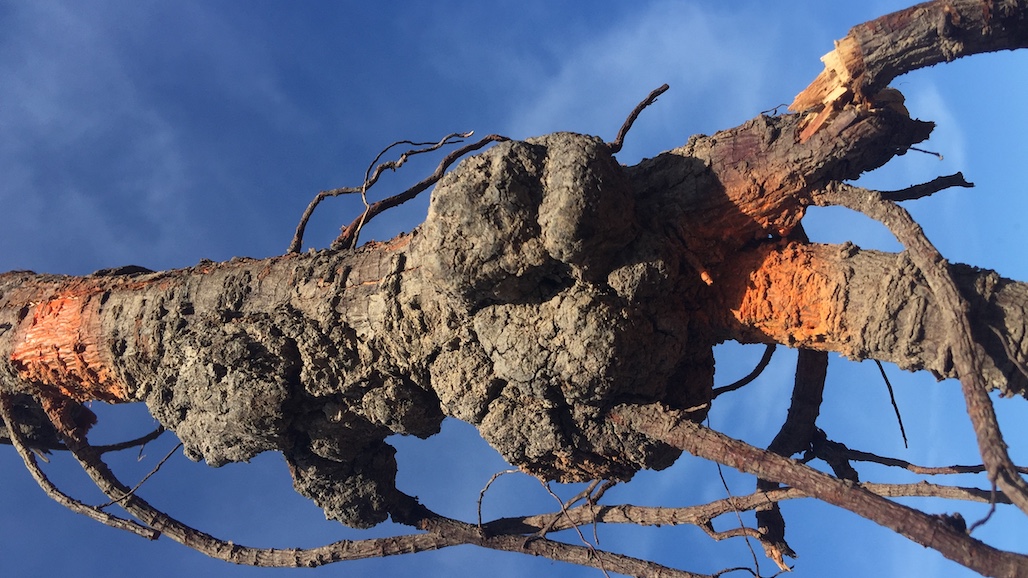
    Keep getting crown gall in the orchard? Watch this brief interview with Kern County Area Orchard Systems Advisor Mohammad Yaghmour as shares a few simple steps on how to effectively prevent this detrimental infection.  Read more in Pacific Nut Producer and California Fresh Fruit Magazines.
    Please thank this video’s sponsor Trece for their industry support.
  • ITC Deems Foreign Imported Blueberries Not a Threat to Domestic Production

    ITC Deems Foreign Imported Blueberries Not a Threat to Domestic Production

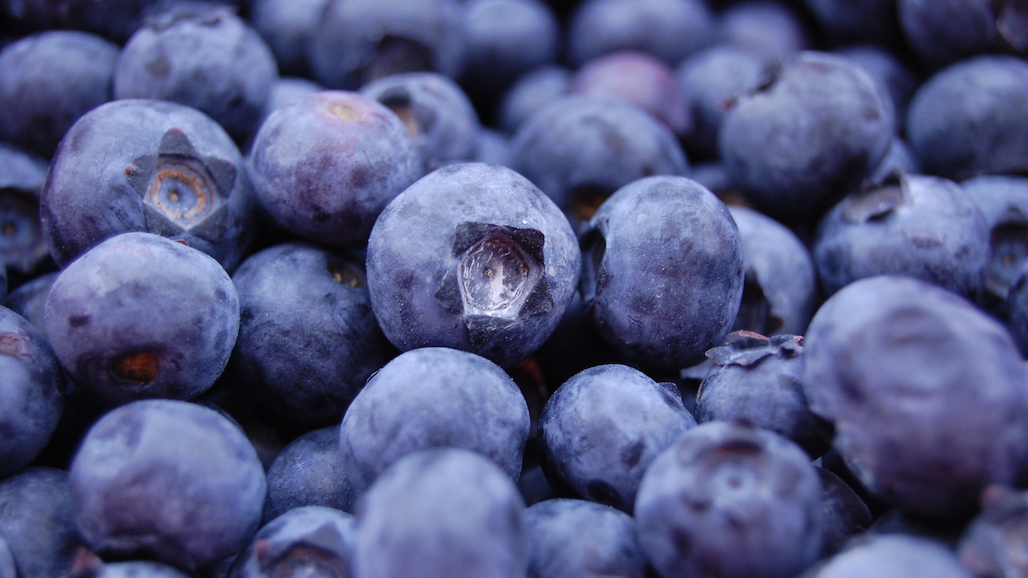
    The U.S. International Trade Commission (USITC) today determined that fresh, chilled or frozen blueberries are not being imported into the United States in such increased quantities as to be a substantial cause of serious injury, or the threat of serious injury, to the domestic industry producing an article like or directly competitive with the imported article. The determination was made in the context of an investigation initiated on September 29, 2020, under section 202 of the Trade Act of 1974 (19 U.S.C. § 2252) at the request of the U.S. Trade Representative. Information about this investigation and global safeguard investigations in general can be found here.

    The Commission’s determination resulted from a 5-0 vote. Chair Jason E. Kearns, Vice Chair Randolph J. Stayin, and Commissioners David S. Johanson, Rhonda K. Schmidtlein, and Amy A. Karpel voted in the negative. As a result of today’s vote, the investigation will end, and the Commission will not recommend a remedy to President Joe Biden. The Commission will submit its report containing its injury determination and the basis for it to the president by March 29, 2021.

    The American Blueberry Growers Alliance (ABGA) released the following statement regarding the outcome of the ITC’s global safeguard investigation into imports of fresh, chilled or frozen blueberries:

    “The American Blueberry Growers Alliance (ABGA) is disappointed with the decision today by the U.S. International Trade Commission (ITC) to find that rising imports of foreign-grown blueberries are not a substantial cause of serious injury, or threat of serious injury, to domestic farmers. We disagree with the outcome of the Commissioner’s investigation.

    Throughout this case, blueberry growers across the United States provided the ITC with extensive data and personal experiences about the significant harm caused by surging imports on the supply and pricing of blueberries in the U.S. market, especially during our critical growing and harvest seasons. We believed this data and testimony made a compelling case that safeguard measures were critical to the survival of our domestic farmers, and we are disappointed by the Commission’s decision.

    We actively participated in this investigation because we believe U.S. trade laws must support a level playing field for American farmers – one in which lower labor costs and more lax environmental standards in other countries does not drive our domestic growers out of business. The outcome of this investigation reveals deficiencies in U.S. trade laws, which unfortunately will put the long-term viability of the domestic blueberry industry in jeopardy.

    We have received strong support from members of Congress, state elected officials, agricultural associations and other farm interests throughout this investigation, and we plan to work with these groups on other remedies to ensure that American consumers continue to have access to fresh, high-quality, safe, domestically grown blueberries.

    Meanwhile, our domestic growers will face another year of economic uncertainty as they grow and harvest their 2021 blueberry crop. No doubt, imports will now accelerate to overwhelm our domestic market this year. This will cause even greater hardship on family-owned farm operations, as well as on providers of packing and freezing services, and damage to local communities and tax bases.”

  • Monitoring Stem Water Potential in Citrus (Case Studies)

    Monitoring Stem Water Potential in Citrus (Case Studies)

    Reliable and valid information about plant water status is a critical input variable for optimizing citrus orchard growth. Precisely managing citrus water stress during all phenological stages enables maximized production by: avoiding drought stress during flowering and fruit sets; achieving appropriate sugar levels; and maintaining fruit quality by, for example, avoiding peel creasing for example.

    Controlled water status can best be precisely achieved by monitoring the Stem-Water Potential (SWP) values regularly. After five  successful years of experimentation and development, Saturas’ StemsenseTM sensors were installed in mature commercial citrus orchards around the world, and at the leading research phytotron in Israel.

    This paper provides a brief overview of three commercial case studies in China, Spain and Israel and results from the experimental phtotron in Israel.

    China layout

    Three  Saturas StemsenseTM sensors were installed in an OR (Clementine) citrus orchard in the Hongjing farm, China. The StemsenseTM sensors were installed randomly in the orchard to represent the whole orchard status. The StemsensTM sensors measured daily mid-day SWP values.

    Results and conclusions

    Figure 1 illustrates seasonal values of Saturas StemsenseTM mid-day  SWP values, daily ET0 and irrigation volume. Of note, is the positive and significant response to irrigation and changes in evapotranspiration. Note, for example,  the rain stoppage from Aug 23th  to Aug 30th, as reflected by the gradually increasing SWP values.

    Figure 1 – Seasonal values of Saturas’ StemsenseTM Mid-Day SWP values, daily ET0 and irrigation volume.

    Spain layout

    Five Saturas StemsenseTM sensors were installed in a lemon orchard in the Velcarda farm, Spain.

    The StemsenseTM sensors were installed randomly in the orchard to represent the whole orchard status. The StemsenseTM sensors measured daily mid-day SWP values.

    Results and conclusions

    Figure 2 illustrates seasonal values of Saturas StemsenseTM mid-day  SWP values, daily ET0 and irrigation volume. The Saturas StemsenseTM sensors showed a highly correlative response to irrigation and changes in evapotranspiration Note, for example, the increase in SWP values during late July- early Aug, the influence of the small irrigation on Aug 2nd, and the response of the trees to the regular irrigation started on Aug 13th.

    Figure 2 – Seasonal values of Saturas’ StemsenseTM Mid-Day SWP values, daily ET0 and irrigation volume.

    Israel –  layout

    Six Saturas StemsensTM sensors were installed in a Michal (Clementine) citrus orchard in the Gvaot HaHoresh farm, Israel. The StemsenseTM sensors were installed randomly in the orchard to represent the whole orchard status. The StemsensTM sensors measured daily mid-day SWP values.

    Results and conclusions

    Figure 3 illustrates the seasonal values of Saturas StemsenseTM mid-day SWP values, manual pressure chamber measurements, daily ET0 and irrigation volumes. The sensors showed highly correlative response to irrigation and changes in evapotranspiration, and a positive correlation to manual pressure chamber measurements.

    Figure 3 – Seasonal values of Saturas StemsenseTM Mid-Day SWP values, manual pressure chamber measurements, daily ET0, and irrigation volume.
    Phytotron –  layout

    Six Saturas StemsenseTM sensors were installed in lemon trees grown in a controlled growing room in Saturas’ experimental facility in Israel.
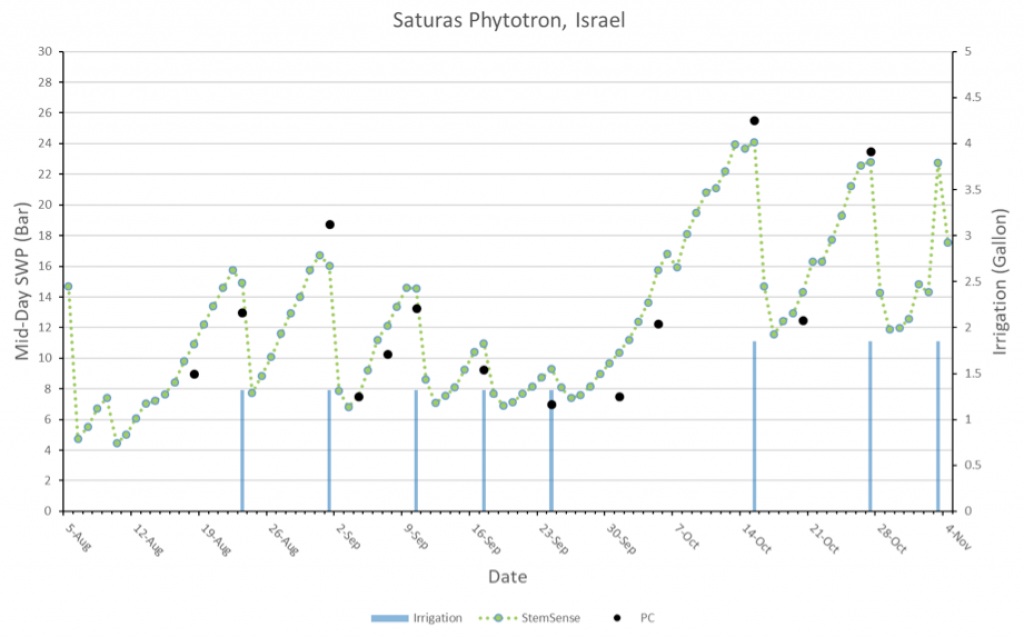
    This facility enables us to broaden our knowledge on sensor performance In a controlled environment. Saturas always tests new designs in the phytotron to validate the performance of the sensors. After finding for reliability, internal validity and replicability, Saturas installs a representative number of units in the experimental outdoor plot to  monitor, analyze and evaluate the performance of the sensors in outdoor conditions. This stage contains both drought trials and frequent manual pressure chamber measurements.

    Figure 4 illustrates the seasonal values of StemsenseTM mid-day SWP values, manual pressure chamber measurements and irrigation volume. The trees were irrigated weekly to examine the changes in SWP  values, and the response time and correlation to manual pressure chamber measurements.

    Results and conclusions

    Saturas StemsenseTM sensors showed a very rapid response to irrigation and a positive and significant correlation to manual pressure chamber measurements.

    Figure 4 – Seasonal values of Saturas StemsenseTM Mid-Day SWP values, manual pressure chamber measurements,and irrigation amounts.

    Conclusions

    The StemSenseTM sensors, in these four case studies, demonstrated high measures of correlation to environmental stimuli such as ET, precipitation and irrigation while delivering reliable and valid SWP values over time. The commercial utility of StemSense sensors is mutli-layered. The specific result of these studies demonstrates that the Saturas StemSenseTM sensors contributes reliable and valid information to the grower, critical for making good decisions for scheduling irrigation.
    In addition, the experimental and commerical aplications demonstrated a high correlation to manual pressure chamber measurements. Replicability of experimental outcomes has allowed Saturas to expand into the apple, avocado, cherry, almond, kiwi, vine markets.  For more information visit Saturas Ag.

  • Novel Treatment Causes Killer Citrus Disease to Leak & Die

    Novel Treatment Causes Killer Citrus Disease to Leak & Die

    New research affirms a unique peptide found in an Australian plant can destroy the No. 1 killer of citrus trees worldwide and help prevent infection. Huanglongbing, HLB, or citrus greening has multiple names, but one ultimate result: bitter and worthless citrus fruits. It has wiped out citrus orchards across the globe, causing billions in annual production losses.

    Untreated citrus plants on the left, as compared to treated ones on the right. (Hailing Jin/UCR)

    All commercially important citrus varieties are susceptible to it, and there is no effective tool to treat HLB-positive trees, or to prevent new infections. However, new UC Riverside research shows that a naturally occurring peptide found in HLB-tolerant citrus relatives, such as Australian finger lime, can not only kill the bacteria that causes the disease, it can also activate the plant’s own immune system to inhibit new HLB infection. Few treatments can do both.

    Research demonstrating the effectiveness of the peptide in greenhouse experiments has just been published in the Proceedings of the National Academy of Sciences.

    The disease is caused by a bacterium called CLas that is transmitted to trees by a flying insect. One of the most effective ways to treat it may be through the use of this antimicrobial peptide found in Australian finger lime, a fruit that is a close relative of citrus plants.

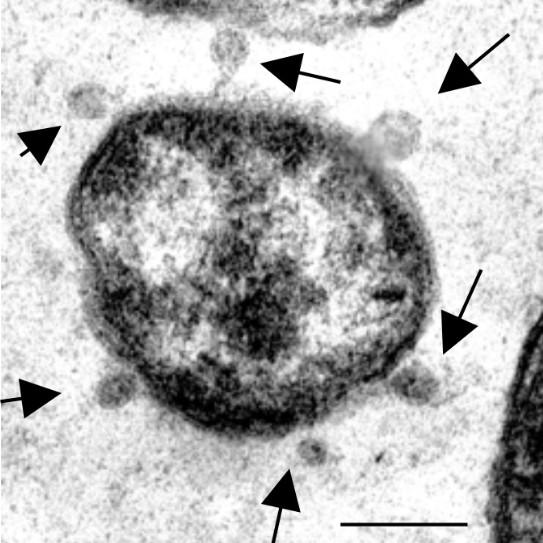
    “The peptide’s corkscrew-like helix structure can quickly puncture the bacterium, causing it to leak fluid and die within half an hour, much faster than antibiotics,” explained Hailing Jin, the UCR geneticist who led the research.

    When the research team injected the peptide into plants already sick with HLB, the plants survived and grew healthy new shoots. Infected plants that went untreated became sicker and some eventually died.

    Arrows point to areas of fluid leakage from the bacterial cell after treatment with the antimicrobial peptide. (Hailing Jin/UCR)

    “The treated trees had very low bacteria counts, and one had no detectable bacteria anymore,” Jin said. “This shows the peptide can rescue infected plants, which is important as so many trees are already positive.”

    The team also tested applying the peptide by spraying it. For this experiment, researchers took healthy sweet orange trees and infected them with HLB-positive citrus psyllids — the insect that transmits CLas.

    After spraying at regular intervals, only three of 10 treated trees tested positive for the disease, and none of them died. By comparison, nine of 10 untreated trees became positive, and four of them died.

    In addition to its efficacy against the bacterium, the stable anti-microbial peptide, or SAMP, offers a number of benefits over current control methods. For one, as the name implies, it remains stable and active even when used in 130-degree heat, unlike most antibiotic sprays that are heat sensitive — an important attribute for citrus orchards in hot climates like Florida and parts of California.

    In addition, the peptide is much safer for the environment than other synthetic treatments. “Because it’s in the finger lime fruit, people have eaten this peptide for hundreds of years,” Jin said.

    Hailing Jin, research leading UC Riverside geneticist

    Researchers also identified that one half of the peptide’s helix structure is responsible for most of its antimicrobial activity. Since it is only necessary to synthesize half the peptide, this is likely to reduce the cost of large-scale manufacturing.

    The SAMP technology has already been licensed by Invaio Sciences, whose proprietary injection technology will further enhance the treatment.

    Following the successful greenhouse experiments, the researchers have started field tests of the peptides in Florida. They are also studying whether the peptide can inhibit diseases caused by the same family of bacteria that affect other crops, such as potato and tomato.

    “The potential for this discovery to solve such devastating problems with our food supply is extremely exciting,” Jin said. — By Jules Bernstein, UC Riverside

  • Yellow Leaves In Spring Indicative Of Need To Adjust Nutrient Management

    Yellow Leaves In Spring Indicative Of Need To Adjust Nutrient Management

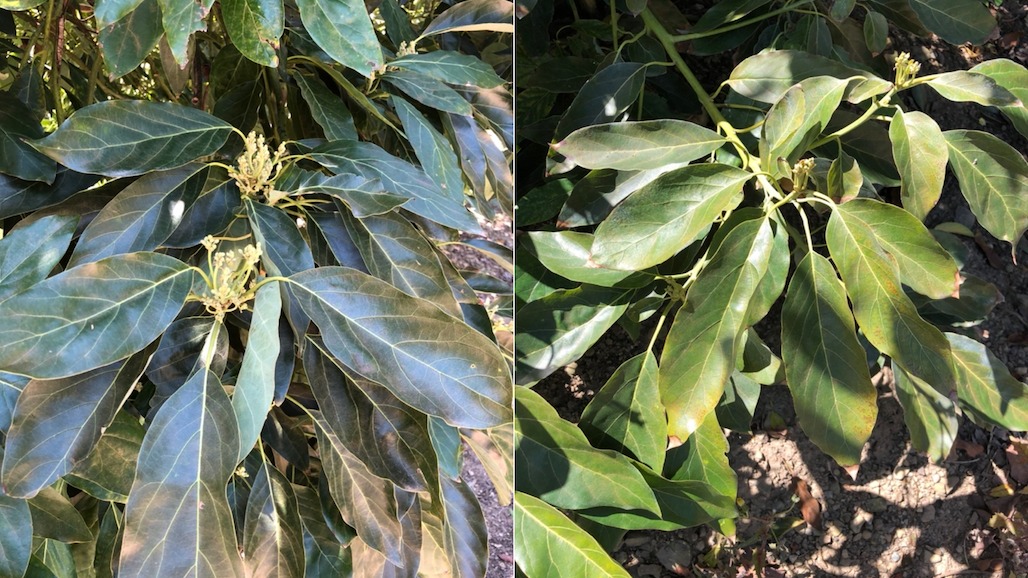
    California Avocado Commission — In spring, as California avocado trees begin to bloom, growers often report seeing yellow leaves at the ends of branches of otherwise healthy trees. Dr. Danny Klittich, of Redox, recently posted an online article about the yellowing of leaves in spring, what this indicates, and what growers can do to remedy the situation.

    When avocado trees begin producing flowers, the blooms become major sinks for nutrients — gathering the nutrients they need to set and retain fruit. The timing of fruit development also coincides with the cooler months of the California avocado growing season, when growers tend to fertilize less and the soils, adapting to cooler temperatures, tend to provide less nutrition to the trees. Thus, trees begin to reallocate nutrients from the roots and leaves to the more important task of developing blooms for fruit set. With nutrients reallocated, leaves on the ends of branches may begin to yellow.

    According to research, nitrogen, zinc and iron leaf concentrations were lower in chlorotic (yellow) leaves. This makes sense when you consider the importance of each of these to bloom and fruit development. In general, Dr. Klittich recommends that trees should yield a fall tissue sample of 2.5 – 2.7% nitrogen for higher yields. This level provides the tree with an adequate reservoir for bloom development.

    Dr. Klittich recommends growers complete the following to improve yield potential.

    • Early bud development — During cauliflower bloom and floral elongation, apply nitrogen, zinc, iron, boron and calcium.
    • Bloom spray — Nutrient applications should provide calcium, zinc, iron and amino acids and can be made from cauliflower stage through full bloom
    • Fruit set — Weekly applications should be designed to support fruit set and development

    To view Dr. Klittich’s specific product and dosage recommendations, as well as an informative video concerning avocado bloom strategies, visit his latest online article.