Category: Economics

  • Fruit World Reports High Quality, But Lower Volume, For Early Season Central Valley Stone Fruit

    Fruit World Reports High Quality, But Lower Volume, For Early Season Central Valley Stone Fruit

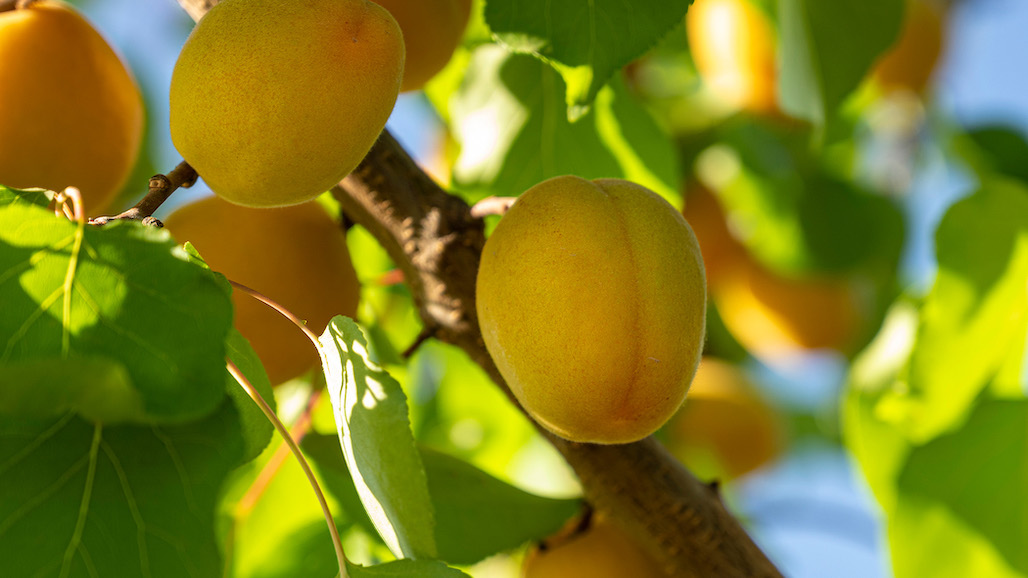
    Fruit World, a family-owned, values-driven grower-shipper of organic and conventional fruit, has been harvesting and shipping delicious organic apricots and cherries since mid-April from their Central Valley orchards. “The March freeze tempered early stone fruit production volumes throughout California, especially compared to the banner year we had in 2021,” explained CJ Buxman, Fruit World co-founder. “Fortunately, the fruit that set is looking good, and all our ranches are yielding great product.”

    Severe weather events this spring impacted California’s cherry crops substantially. “We have been extremely fortunate that our organic cherries from the Patterson area were eleven days earlier than last year and had exceptional quality and a larger peak size. We will finish shipping our cherries by the end of next week with Corals, Brooks and Tulares,” said Fruit World Director of Sales, Cindy Richter.

    As a family operation that is focused on quality and sustainability, Fruit World continues to expand their use of cardboard punnet clamshells. “We have found many of the consumers who are seeking premium fruit, especially organic varieties, are also seeking out more sustainable packaging options,” reveals Bianca Kaprielian, Fruit World co-founder and CEO.

    Grower partnerships have been key to Fruit World’s growth and success. “We are fortunate to have formed long-term relationships with several growers who share our values, dedication to farming, and approach to business,” Kaprielian said. “Blossom Hill’s apricots and Masumoto Family Farm’s peaches and nectarines allow us to provide more varieties, higher volumes and longer seasons of top-notch fruit. They are seamless brand extensions, and fully integrated into the Fruit World family.”

    “No farmer works alone. We depend on partners like organisms in the living soil, good neighbors, talented farm workers, to name a few,” said Nikiko Masumoto, fourth-generation farmer and artist. “Fruit World is one of our loyal partners. We get to focus on what we do best in the fields and Fruit World helps us find a home for our fruit. We couldn’t do it without them!”

    Today’s consumers are thoughtful about the environment and sustainability, and appreciate high-quality fruit packed with flavor. Delight them with extraordinary organic cherries, apricots, peaches and nectarines, all grown by family farms, and available from Fruit World.

    For more information or to place an order, call (559) 650-0334, or visit fruitworldco.com to learn more about the Fruit World story.
  • Hundreds of Thousands of Prime CA Farmland Acreage Fallowed this Year Due to Drought

    Hundreds of Thousands of Prime CA Farmland Acreage Fallowed this Year Due to Drought

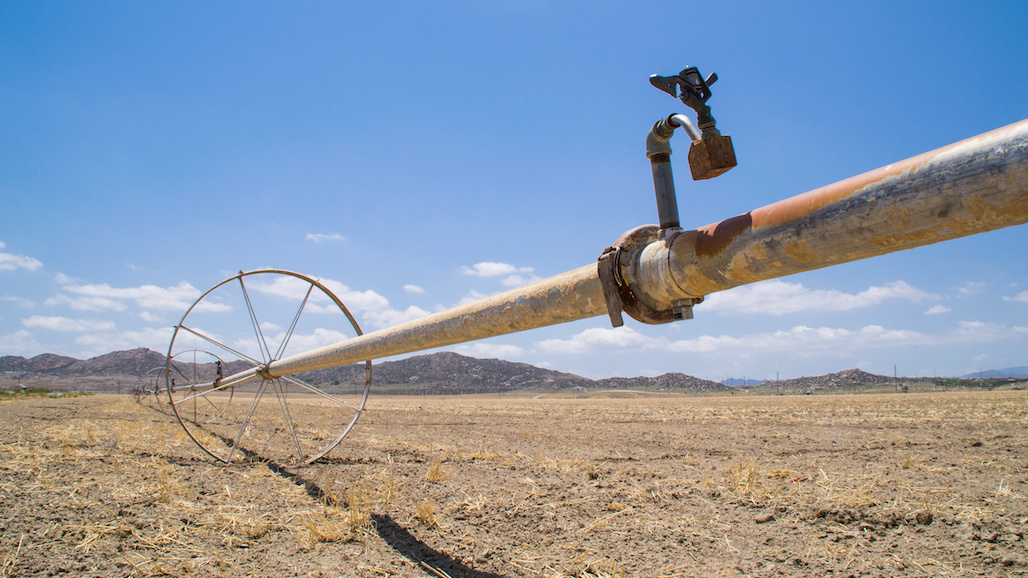
    Farmers and other California residents have been pushing legislature for many years to increase our state’s water storage capacity with no success, and with the “years of plenty” long past, hundreds of thousands of acres of prime farmland will go fallow this year. This will have devastating impacts on our nation’s food supply, local communities and the many families that traditionally worked these fields that will be left uncultivated. Watch this brief interview with Adam Borchard from the California Fresh Fruit Association as he addresses the current situation.

    Please thank this video’s sponsor Suterra for their industry support.

  • Hundreds of Thousands of Prime CA Farmland Acreage Fallowed this Year Due to Drought

    Farmers and other California residents have been pushing legislature for many years to increase our state’s water storage capacity with no success, and with the “years of plenty” long past, hundreds of thousands of acres of prime farmland will go fallow this year. This will have devastating impacts on our nation’s food supply, local communities and the many families that traditionally worked these fields that will be left uncultivated. Watch this brief interview with Adam Borchard from the California Fresh Fruit Association as he addresses the current situation.

    Please thank this video’s sponsor Suterra for their industry support.

  • California Avocado Commission Anticipates 286 Million Pound Crop

    California Avocado Commission Anticipates 286 Million Pound Crop

    The California Avocado Commission (CAC) recently reported the results of their mid-season crop update surveys with their growers and handlers, forecasting a smaller crop than was initially expected. Through use of grower and handler surveys, CAC is able to collect the most up-to-date volume information and anticipated harvest timing. The results are used to inform the industry of the total crop that is expected to come to market and as a guide that helps shape the timing of CAC’s marketing efforts.

    The results forecast a 2022 California crop estimate a 286 million pounds – which consists of 272 million pounds Hass, 8 million pounds Lamb-Hass, 5 million pounds GEM and 1 million pounds of other varieties. This updated volume is a 20-million-pound reduction from the December 2021 handler pre-season estimate of 306 million pounds. The decrease in volume mostly comes from Hass (19 million pounds), however a slight reduction to the Lamb-Hass volume also has been made (1 million pounds).

    Detailed results from the grower and handler survey can be found on CAC’s grower website, as well as revised monthly and weekly harvest projections based on the 286-million-pound crop volume. Please note that projected volume for the beginning of the season, which has already been harvested, does not match weekly actuals, but instead how the four-year average and handler forecasting models projecting a 286-million-pound crop would have come to market (based on the actual monthly volume that was harvested). As we move through the season, Commission staff will continue to track crop harvest and remaining volume closely, ensuring that CAC’s marketing efforts are aligned with when California fruit is in season.

  • May is National Salad Month, Celebrate with More US Grown Salad on the Table

    What is arguably the foundational ingredient in salad? Lettuce! USDA’s National Institute of Food & Agriculture (NIFA) supports research that is leading to stronger, healthier, more disease-resistant lettuce cultivars. See what NIFA is doing to keep healthy, safe salads on the menu for consumers everywhere.

    Current funded projects in California and Illinois include the following:

    The USDA Agricultural Research Service, Pacific West Area, in Albany, California, is working to improve the safety and survival of lettuce during fresh-cut processing and cold storage. Mechanical damage of processed leaf tissue offers new opportunities for the proliferation of E. coli, the main bacterial agent that causes lettuce-linked foodborne outbreaks. Researchers are working to identify lettuce cultivars that effectively reduce population sizes of E. coli upon shredding and cold storage and characterize defense responses on cut tissue.

    The USDA Agricultural Research Service in Berkeley, California, is studying the prevention of pathogen contamination in agriculture water in lettuce production. Researchers are developing and implementing a screening tool to test the effectiveness of sanitizer, antimicrobial resistance and tolerance to oxidizing compounds, and provide recommendations on keeping resistant strains from developing.

    The University of California – Davis is enhancing the use of resources to increase sustainable lettuce production in changing climates. This research project seeks to improve water, nitrogen and phosphate use in lettuce, and determine heat/cold/saline tolerance, to improve lettuce’s resilience. The research findings will be shared with breeders and students.

    The University of Chicago is modifying lettuce by altering its genetic makeup without introducing genetically modified genes. Researchers are using tiny fibers to inject substances that will enable changing the gene content of lettuce.

  • US Department of Labor Penalizes CA Ag Employers $225K for Failure to Meet H-2A Obligations

    US Department of Labor Penalizes CA Ag Employers $225K for Failure to Meet H-2A Obligations

    Migrant workers in the H-2A temporary agricultural worker program provide critical seasonal labor on farms across California, spending weeks away from home doing the grueling work needed to support the state’s $49 billion agricultural industry.

    The H-2A program allows employers who anticipate a shortage of U.S.-based workers to bring workers here from other countries to perform agricultural labor or services of a temporary or seasonal nature. An ongoing U.S. Department of Labor effort has revealed some California vegetable farms have not been providing H-2A workers with the pay and benefits, and personal protections the law requires.

    In a series of investigations from April 2020 to February 2022 by the department’s Wage and Hour Division, several farms were found to be failing to meet their responsibilities under the H-2A program. The investigations found five farmers failed to provide meals or kitchen facilities, did not pay required inbound and outbound transportation and meal costs, and allowed workers to be transported unsafely. The division also determined some farms shortchanged workers’ wages and failed to provide a contract to workers as required or did not abide by the terms of workers’ contracts.

    The five investigations led to the recovery of $225,114 in back wages for 588 workers, and assessments of $54,617 in penalties. They also yielded findings and administrative settlements with the following employers:

    • Adam Bros Farming in Santa Maria: Failed to provide meals or kitchen facilities, transportation and meal costs. Did not provide contract at time of hire, failed to pay all required wages and unlawfully deducting meal costs, including when meals were not provided. Failed to comply with other state and federal law. The employer paid $94,146 in back wages to 30 employees, and $7,862 in penalties.
    • Boavista Farms in Santa Maria: Failed to pay required inbound and outbound transportation and meal costs. Did not provide contract at time of hire and failed to pay all required wages and comply with other state and federal law. Boavista Farms was ordered to pay $43,297 in back wages to 28 employees, and $5,361 in penalties.
    • Profresco Inc. in Santa Maria: Failed to pay all required inbound and outbound transportation and meal costs, and transportation failed to meet safety requirements. Failed to satisfy requirements of the job order by not stating actual terms and conditions and failed to comply with other state and federal law as applicable. Profresco Farms paid $50,789 in back wages to 471 employees, and $7,505 in penalties.
    • SARC in Nipomo: Failed to pay inbound transportation and meal costs and made improper deductions for meals and unpaid hours worked. Did not ensure health and safety standards, and prepared meals failed to meet local health standards causing some workers to become ill after consuming spoiled lunch. SARC also failed to provide personal protective equipment and supplies to workers. The employer paid $34,996 in back wages to 42 employees, and $13,160 in penalties.
    • Togliatti Farms LLC in San Martin: Failed to pay for required inbound transportation and did not pay the required rate of pay. Failed to maintain required records and did not comply with pay statement requirements. Failed to contact former U.S. employees to solicit their return to the job as required and did not post H-2A information visibly for workers to see. Provided housing that failed to meet safety and health requirements. Togliatti Farms was ordered to pay $1,885 in back wages to 17 workers, and $20,729 in penalties. The employer also agreed to future compliance and paid all monetary liabilities.

    “Employers that benefit from the H-2A guest worker program must be aware of all their responsibilities,” said Wage and Hour Regional Administrator Ruben Rosalez in San Francisco. “Agricultural workers employed under the H-2A program must be paid as their contracts require and be provided with what they need to live and work safely while contributing critical labor to California’s agriculture industry.”

    Nationally, the Wage and Hour Division investigated 735 cases with H-2A violations in the last two fiscal years.These investigations recovered $9,092,624 in back wages for 13,408 workers and assessed $9,520,624 in civil penalties from employers for violations of federal labor laws.

    For more information about farmworkers’ rights and laws enforced by the division, contact its toll-free helpline at 866-4US-WAGE (487-9243). The division enforces the law regardless of a worker’s immigration status and can speak confidentially with callers in more than 200 languages. Learn more about the Wage and Hour Division, including a search tool to use if you think you may be owed back wages collected by the division.

  • U.S. Fresh Potatoes Begin Export To Mexico

    The U.S. Department of Agriculture’s (USDA) Animal and Plant Health Inspection Service (APHIS) and Mexico’s national plant protection organization (SENASICA) announce that the United States has begun exporting potatoes beyond the 26-kilometer border zone that previously marked the limit of their export.  The two countries reached an agreement late last year to expand that market access for U.S. potatoes, something that the United States has sought for more than 25 years.

    “Through this accomplishment, we are delivering better markets for U.S. farmers, supporting economic growth, and providing access to our southern neighbors to the high-quality and safe products our farmers work hard every day to grow and sustain.  USDA will continue to fight for new and expanded markets for American products as we help the nation build back better,” said U.S. Department of Agriculture Secretary Tom Vilsack.

    The U.S. potato industry estimates that this access for U.S. fresh potatoes to all of Mexico will provide a market potential of $250 million per year, in five years. This is an increase of $190 million from the current export value of $60 million.

  • How to Protect Your Farmland for Future Generations in California

    How to Protect Your Farmland for Future Generations in California

    Many California farms are run by families who have cultivated the land for several generations.  It’s not just land, it’s not just an investment — it is part of what defines them and their mission to feed the world. Watch this brief interview with Charlotte Mitchell from the California Farmland Trust as she shares how to protect their legacy of farming for generations to come.
    Please thank this video’s sponsor Suterra for their industry support.
  • How to Protect Your Farmland for Future Generations in California

    Many California farms are run by families who have cultivated the land for several generations.  It’s not just land, it’s not just an investment — it is part of what defines them and their mission to feed the world. Watch this brief interview with Charlotte Mitchell from the California Farmland Trust as she shares how to protect their legacy of farming for generations to come.
    Please thank this video’s sponsor Suterra for their industry support.
  • The Mission and Objectives of the California Farmworker Foundation

    The pandemic proved challenging to all in various ways, and farmworkers had unique needs that had to be met in order to keep agriculture going and food from California on dinner tables all over the world. The California Farmworker Foundation was among the great organizations that rose to the occasion to meet their needs. Pandemic aside, farmworkers are essential, they have families and needs, they have a voice, and the California Farmworker Foundation has been established and continues to grow for these reasons. Watch this brief interview to learn more.
    Please thank this video’s sponsor Suterra for their industry support.