Category: Economics
-

The Mission and Objectives of the California Farmworker Foundation
The pandemic proved challenging to all in various ways, and farmworkers had unique needs that had to be met in order to keep agriculture going and food from California on dinner tables all over the world. The California Farmworker Foundation was among the great organizations that rose to the occasion to meet their needs. Pandemic aside, farmworkers are essential, they have families and needs, they have a voice, and the California Farmworker Foundation has been established and continues to grow for these reasons. Watch this brief interview to learn more.Please thank this video’s sponsor Suterra for their industry support. -

Farmers Cannot Bear the Burden of Record Inflating Costs Alone
Among some of the top issues impacting the California fresh fruit industry, and all of the state’s agricultural industries for that matter, are record inflating production costs. This was addressed at the recent annual conference of the California Fresh Fruit Association (CFFA). Watch this brief interview with CFFA President Ian LeMay as he addresses this.Please thank this video’s sponsor Suterra for their industry support. -

UCCE Experts Share the Latest in Olive Disease Management
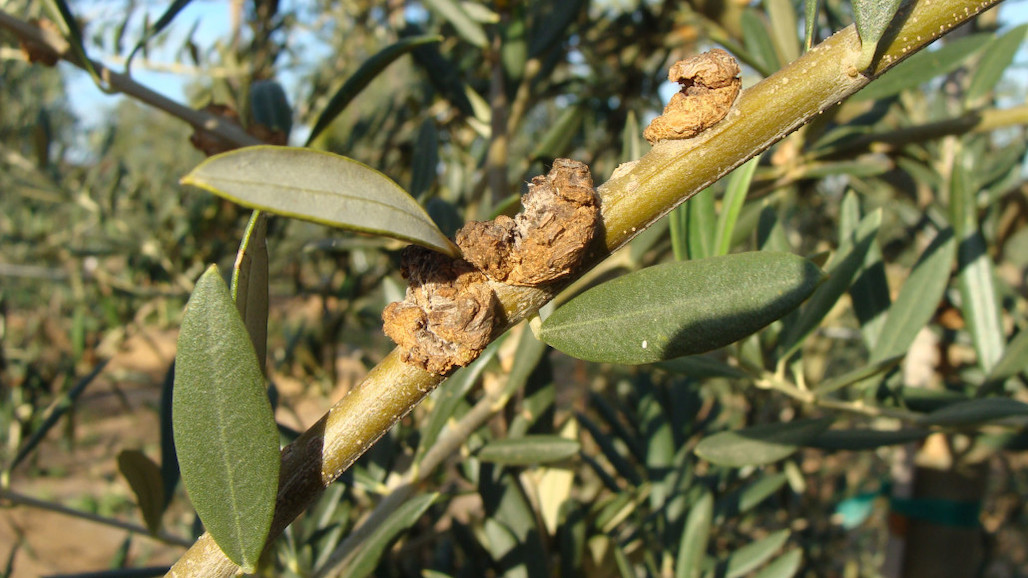
UC Cooperative Experts shared their latest research findings in olive disease management at the recent Olive Oil Day held by the Olive Oil Commission of California (OOCC) in Stockton.Jim Adaskaveg, Professor in the Department of Plant Pathology at UC Riverside joined the meeting by video to present his work on epidemiology and management of olive knot and the evaluation of new fungicides for control of olive leaf spot and Peacock Spot. Dr. Adaskaveg has been working with the OOCC for years and has during this time identified a number of promising products for the control of olive knot. The objective is to have a number of products with different active ingredients/ modes of action so that pathogens are unlikely to develop resistance.
Since these products are not registered on olives, an important part of his work now is on the regulatory side, seeing these products through the EPA process called IR-4. Unfortunately, one of the promising fungicides for Peacock Spot, Ziram (active ingredient ziram), was suddenly cancelled on all crops in February 2022.
There are additional products in process, including Syllit (a.i. dodine); a decision is expected in October of this year. There is also a product that was previously rejected, Topsin-M (a.i. thiophanate-methyl), that is now back in consideration. In all there are five new fungicide registrations expected.
For control of olive knot, a number of products have proven effective in the research. Some of these are GRAS (generally recognized as safe) food additives and some are antibiotics (kasugamycin and oxytetrcycline). In order to increase efficacy and reduce the danger of resistence, the most promising approach apprears to be a mixture of chemicals with different modes of action. The food additives do not require complex approvals but the antibiotics are in IR-4. There have been multiple setbacks, but a decision is now expected in December this year for kasugamycin and in March of 2023 for oxytetracycline.
Mohammed Nouri, UCCE Orchard Systems Advisor presented an investigation of decline symptoms of super-high-density oil olives in the San Joaquin Valley. There are multiple causes of tree decline in CA, including Verticillium wilt, Botryosphaeria, Pleurostoma, Eutypa lata and freezing temperatures; accurately diagnosing these in the field can be very difficult. Consult your local UCCE office or mnouri@ucanr.edu for guidance regarding sampling.
Dr. Nouri also spoke about the ongoing challenge of Neofabraea. This disease particularly affects the Arbosana cultivar, causing leaf and twig lesions. The infection primarily occurs in wounds caused by mechanical harvest damage but can also appear as spotting on fruit. Research has shown some control with a few fungicides that are in IR-4 for Peacock spot as well. A final optimistic result from a survey of anthracnose in CA found that this disease is not found in commercial CA orchards. It is unlikely to become a significant problem because of low humidity, dry summers, resistant cultivars and a tendency to harvest early.
Find the full research presentation on the epidemiology and management of olive knot and the evaluation of new fungicides for control of olive leaf spot and Peacock Spot here. — By the Olive Oil Commission of California
-

Water Management Strategies for Hedgerow Olive Orchards in California
After a year’s hiatus, the Olive Oil Commission of California (OOCC) held its annual Olive Oil Day on March 3, 2022, at the Robert Cabral Agricultural Center in Stockton. The purpose of the Olive Oil Day is to update OOCC members and others in the industry about Commission-funded various research projects and other activities. In keeping with the OOCC’s objective of focusing research projects on areas that will improve returns to olive farmers, the majority of the presentations dealt with olive growing and pest management.
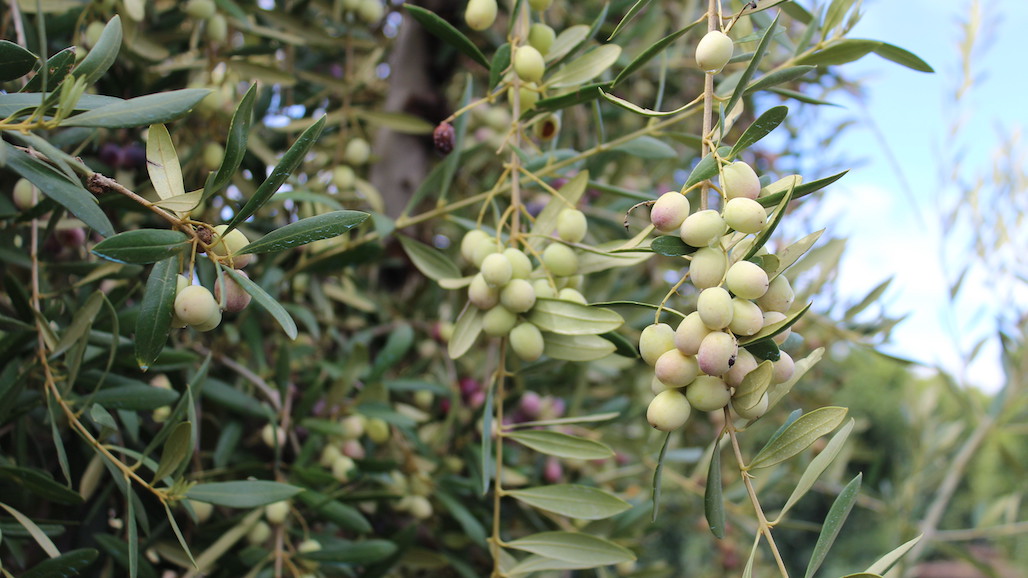
Among the many informative presentations shared at the meeting, Giulia Marino, UC Cooperative Extension specialist in orchard systems, gave a report on the “Water management strategies for hedgerow olive orchards in California“. This is a 4-year project that will look at how better irrigation can maximize yields, achieve quality objectives and increase resilience to water restrictions.
One aspect of this work has focused on better understanding the water needs of CA oil olives. All the basic water research on olives in CA was done on table olives so establishing these basic water needs for CA oil olives is essential.
The project is using two orchards, one in Corning and one in Stockton. The treatments are a control (the grower’s usual irrigation) and three deficit irrigation regimes beginning at pit hardening (80% ET, 25% ET (x2; one will be modified this year). The trees are being extensively monitored: stem water potential, vegetative growth, fruit size and oil yield and quality, and return bloom.
Work for the future includes measuring ET and crop coefficient, characterizing phenological stages of the olive, adding a 4th plant-based irrigation treatment and starting to develop an outreach program for better water management.
A field day to learn more about this research project has been scheduled for June 1 in Stockton—save the date!
Find the full research report here.
-
Pumpkin Production can Benefit from Conservation Practices
Pumpkins (Cucurbita pepo) are a common vegetable crop sold at local pumpkin patches and farmers markets, in addition to commercial production. In 2019, the value of harvested pumpkin was worth $180 million.In addition to the value of harvested pumpkins for commercial use (canned pumpkin, produce departments, etc.) pumpkins are also a staple crop in agritourism operations. In Kansas alone, there were 409 farms registered in the state in 2020. Agritourism enterprises have shown to benefit communities by connecting consumers with agriculture and help preserve farmland in rural and peri-urban areas.
Vegetable crop production typically involves smaller acreages than agronomic production. However, farmers often rely on intensive cultivation of soil to prepare the seedbed for planting. Tilling also helps manage weeds.

Agritourism enterprises have shown to benefit communities by connecting consumers with agriculture and help preserve farmland in rural and peri-urban communities. Shown here, a pumpkin patch where people can pick their own pumpkin as part of fall activities. Credit: Canva Pro Over time, extensive tillage can have negative effects on soil structure and microbial properties. Researchers in Kansas recently published a paper studying conservation practices for pumpkin production. The research was published in Soil Science Society of America Journal, a publication of the Soil Science Society of America.
According to researcher Peter Tomlinson, “no-till production methods have been widely adopted by agronomic (field corn, soybean, wheat, etc.) growers throughout the United States. However, no-till practices for vegetable production in the Central United States are relatively rare. Mid-Atlantic States such as Pennsylvania, Virginia, and Maryland have adopted no-till practices for pumpkin and other large-seeded vegetable crops.”
The study compared growing pumpkins in a biannual tilled control system with annual tilled systems that used cover crops. “This project is designed to compare systems, rather than individual effects of cover crops or tillage,” says Tomlinson. The authors reported the effects of a three-year project on dynamic soil properties.
The annual systems used cover crops planted into the soil. They were terminated before planting the pumpkins. The team researched cereal rye and oat alone, as well as cereal rye with other cover crops mixed in. They performed the study over three growing seasons at two sites – Eastern and South-Central Kansas. Both sites have humid climates with warm summers, and loam-type soils.

A field planted with pumpkins grown in a cover crop system with cereal rye. Cover crops have proven environmental benefits, though many vegetable growers in the Midwest have been slower to adopt this conservation practice. A recent study showed soil health benefits with no reduction in yield. Credit: DeAnn R. Presley At each of the study sites, soil health was assessed at two key times; plots were sampled 2-3 weeks after pumpkin planting, and immediately after pumpkin harvest.
The main soil physical property that was affected by management systems used in this study was an improvement with the use of conservation systems in total soil aggregation and the presence of very large aggregates. Soil aggregates are small particles of soil held together with a glue-like substance. This is usually due to microbial activity. Soil aggregates help in the stability of the soil making it less prone to wind and water erosion.
“Adding cover crops and reducing tillage in a pumpkin production system can cause a measurable change in soil aggregation in a short period of time, two years in this study,” says Tomlinson.
“There were few instances where the species or mixture of species influenced the results,” he continues. “Rather, the presence of cover crops in the conservation systems appears to have a more dominant role. The significance of this work is that it demonstrated there can be measurable changes in some dynamic soil properties in the short term (two years). This is within a system that involves a reduction in tillage operations and the addition of cover crops.”
“We conclude that the use of less tillage and a cover crop in a conservation system is generally beneficial as compared to a conventional system. This study illustrates the potential for improving some soil health parameters in as little as two years,” says Tomlinson. Future research will focus on how the implementation of conservation system across a range of agricultural systems and time scales effect dynamic soil properties.”
Funding for this research was provided by NRCS Conservation Innovation Grant.

Cathryn Davis measuring infiltration rates in an oat cover crop during her MS research published in this paper (photo by DeAnn R. Presley) -

Blueberry Industry’s Kasey Cronquist Named NAMA Ag Association Leader of the Year
Kasey Cronquist, president of the U.S. Highbush Blueberry Council (USHBC), has been named the National Agri-Marketing Association’s (NAMA) Ag Association Leader of the Year for 2022. Cronquist was recognized at an awards ceremony April 7 at the 2022 Agri-Marketing Conference in Kansas City.
The award, one of NAMA’s highest honors, recognizes outstanding leadership, achievement and excellence among senior executives who have made significant contributions to the agriculture industry in their roles with associations or commodity organizations.
“With more than 15 years’ experience with government, association, and non-profits, Kasey was named president of the North American Blueberry Council and the U.S. Highbush Blueberry Council in 2019. It was the perfect place and time,” said Jenny Pickett, NAMA CEO. “Long-term, strategic vision is Kasey’s strength. And while the industry was riding high, new challenges demanded a bold, new vision to ensure continued growth.”
Soon after taking the helm in 2019, Cronquist led the organization through a strategic refresh, followed by development of a new strategic plan, with a refined vision, mission and plan to make blueberries the world’s favorite fruit. Cronquist recognized the importance of fostering greater collaboration among all industry stakeholders and the need to unite to address challenges and opportunities that will take USHBC programs to the next level. The industry’s support of the changes and vision for the future were reflected in the results of the 2021 referendum. Of those who voted, 84% of producers and importers, who also represent 93% of the volume of highbush blueberries grown, were in favor of continuing the program. This represents a 10% increase in producers and importers (and 13% more volume), of those who voted in favor of USHBC in 2016.
In 2020, USHBC launched a new overarching brand theme of Inspiring Possibilities for the industry, as well as Grab a Boost of Blue as a motivating call-to-action for consumers. Additionally, the USA Blueberriesexport brand was created to raise awareness of the quality and food safety assurance of U.S. grown blueberries. In June 2020, Cronquist initiated “The Business of Blueberries,” an industry podcast currently surpassing 35,000 downloads.
In his short time with the organization, Cronquist has built a staff of longtime ag experts to execute the organization’s strategic plan; expanded the NABC and USHBC’s programs through voluntary funding; and led the USHBC through pandemic challenges, including labor and supply chain issues.
“Kasey has made a tremendous impact helping the blueberry industry thrive and leading the USHBC into an exciting and successful future,” said USHBC Chair Shelly Hartmann. “His efforts have impressed blueberry growers, marketers, exporters and industry allies alike, and have become the guiding force in making blueberries the world’s favorite fruit.”
Cronquist is also the president of the North American Blueberry Council; a member of the United Fresh Governmental Affairs Council and the International Blueberry Organization (IBO); He was previously the CEO and ambassador of the California Cut Flower Commission.
About the U.S. Highbush Blueberry Council
Established in 2000, The U.S. Highbush Blueberry Council (USHBC) is a federal agriculture research and promotion program with independent oversight from the United States Department of Agriculture (USDA). USHBC represents blueberry growers and packers in North and South America who market their blueberries in the United States and overseas, and works to promote the growth and well-being of the entire blueberry industry. USHBC was established by blueberry growers and currently has 2,500 growers, packers and importers. USHBC is committed to providing blueberries that are grown, harvested, packed and shipped in clean, safe environments. Learn more at ushbc.blueberry.org.

-

Grower-Shipper Interests Are Intertwined During These Volatile Times

Pre-Season ground prep work was completed in late-2021, first-turn plantings have been well under way since November, and harvesting of early Cole crops have begun in earnest.For Tri-County vegetable growers their cycle of implementing their standard cultural practices for the 2022 growing season has been under way since late-2021. The standard fundamentals of “blocking and tackling” to successful growing will evolve seasonally, ranging from pest management practices and field labor time management to updated food safety requirements, to highlight a few.
For the upcoming 2022 growing season, however, costing standards will be taking a dramatic upturn. Unlike prior pre-pandemic seasons, the 2022 season backdrop is a continued convergence of worsening supply chain hurdles and inflationary input cost increases.
Unlike this time last season, the uncertainty of whether the cost increases would be transitory or persist and continue to increase is now self-evident. As reported by the U.S. Bureau of Labor statistics, the benchmark for measuring national cost increases, the CPI-U, has increased to 7.9 percent over the prior 12 months.
The current events unfolding in Ukraine only exacerbate the already-challenging supply-chain situation. For growers, predicting what some of their direct input growing costs, such as seasonal fertilizer requirements or any petroleum-based by-products, is proving to be “best-guess work,” even for as short a period as three to four months in advance.
The old local adage of “What’s good for the shipper is good for the grower” is generally still true. Because the grower-shipper interests are intertwined, namely partnering to supplying the highest quality, healthiest and safest vegetables at a competitive value proposition.
Many of the aforementioned grower-shipper relationships are deep-rooted and have covered the course of generations in some instances. The foundations of these relationships have been based on trust, mutual respect, and business execution in good years, in which both realize profitability in order sustain their respective operations. To this end, with the intent to ensure growers’ direct inflationary growing costs as well as packing and manufacturing shipper and processing costs are “passed through” to the buying community via finished fair price increases.
The growing community applauds the unusual yet vital measure the shipper and processing community has taken with this action. The grower community could no longer absorb the steep inflationary cost increases on top of the annual margin compression driven by input costs outpacing general contract price increases of the past decade. These actions will make the old adage shift to “What’s good for the grower is good for the shipper AND processor.”
-

Growers Experience Minor Frost Damage on SO CAL Avocados
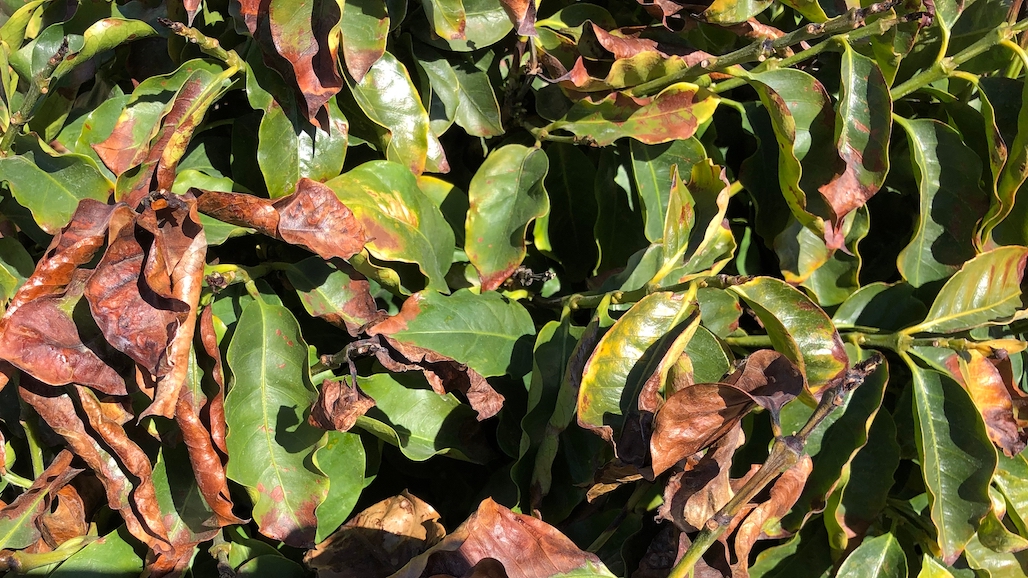
Calls have come in – “What is the browning on the avocado leaves? Thrips damage? Salt damage? Dothiorella?” Nope, Frost Damage. From the end of February to the first week of March, Santa Paula had one night of 30 deg F, and 3 nights of 33 and a few nights around 35.. It wasn’t cold cold, but cold enough that there was damage to the avocados there and more so the further east and up toward Ojai.It wasn’t enough to defoliate the trees, although many were under stress from the flowering that is going on and a lot of the leaves were dropping from the flowering stress. The damage to the leaves is a darkening of the leaf both of the bottom surfaces. In many cases, the flower panicles got scorched. This is just the start of a big flower push and it looks like there’s a lot of flowers that have not pushed that will be fine. It could still be a good avocado year. The coffee really got roasted. — By Ben Faber, UC Cooperative Extension
-

Researchers Harness the Sun’s Rays to Fight Strawberry Disease
While not exactly the stuff of sci-fi movies, scientists have developed a “ray gun” that emits a light hazardous to a pestilence that devastates many types of crops. Fumiomi Takeda, a research horticulturalist, and Wojciech Janisiewicz, retired research plant pathologist, from the Agricultural Research Service (ARS) Innovative Fruit Production, Improvement, and Protection unit in Kearneysville, WV, led a team that used shortwave ultraviolent light (UV-C) to kill powdery mildew fungus.
UV-C is a very specific part of the ultraviolet light spectrum. UV-C is produced by the sun but does not reach Earth’s surface because it is absorbed by the ozone layer in the upper atmosphere. That’s a good thing, because UV-C is harmful to humans and plants when exposed to excessive amounts or for a long time.
“We conducted research to administer UV-C on powdery mildew-infected strawberry plants without causing harmful effects on the plant, such as leaf burn, fruit softening, or color darkening to determine whether it would be a good alternative to controlling powdery mildew with pesticides,” Takeda said.
On strawberry plants, powdery mildew appears as white powdery spots or fuzzy growth on both sides of leaves and on stems. Moderate to severe infection reduces the ability of leaves to employ photosynthesis – the process that plants use to synthesize foods from carbon dioxide and water. Powdery mildew can kill flowers, harden immature fruit, and reduce fruit quality and marketable yields.
If not controlled, the disease can cause a significant economic loss, especially to plants grown in greenhouses or high tunnels. In Japan and western Europe, where over 90% of strawberry production is in the greenhouse and under high tunnels, powdery mildew is the primary cause of fruit quality loss.
UV-C light kills microorganisms (fungi, bacteria, and viruses) and even arthropod pests by damaging their DNA.
According to Takeda and Janisiewicz, UV-C application is most effective at night because microbes and mites have a natural, light-activated special mechanism for repairing their damaged DNA. When UV-C is used during the day, high doses are needed to kill microbes, but those high doses are damaging to plants. To avoid this problem, they irradiated microbes with UV-C at night.
“Night-time application of 30-60 seconds allowed for control of powdery mildew, botrytis gray mold, and anthracnose fruit rot causing fungal pathogens at much lower doses for an effective kill and, more importantly, below the threshold that causes damage to the strawberry plants,” Takeda said.

A severe case of powdery mildew on a zinnia (Photo by Stephen Ausmus). In addition to strawberries, USDA scientists have used UV-C light on tomato plants and ornamental crops to control fungal pathogens and arthropod pests, such as greenhouse whitefly, flower thrips, and two-spotted spider mite.
ARS collaborated with TRIC Robotics in Newark, DE, to design and test the UV-C application robots at multiple locations, including California, where they have been field tested for over 10 months. The UV-C, non-chemical approach for fungal and pest control has shown so much success that it is on the brink of widespread commercial application.
“With the development of our autonomous UV-C application in the field, it is not so much a question of whether UV-C light treatments can be applied effectively, but how soon commercial platforms for UV-C application will be available to large and small strawberry growers across the country,” Takeda said. – By Scott Elliott, USDA ARS
-
A Different Way of Celebrating National Nutrition Month
March is National Nutrition Month. And while we understand that the purpose is to promote enhanced nutrition and improve diets, for the Grower Shipper Association (GSA) this month is about celebrating our food supply and the farmers and farm workers who grow, nurture and harvest the nation’s fruits and vegetables.Farming is hard. There are many challenges. But farmers will tell you it is a rewarding profession and they love what they do. Farmers will also acknowledge that it takes many hands. It requires collaboration among farm workers, foreman, irrigators, pest control advisors, food safety experts, among others.
At GSA, we see our role as providing crucial support and finding solutions on a broader basis to benefit our farmers and farming companies to make their jobs a little easier. Our work with ag employers throughout the pandemic to access masks, rapid tests, quarantined housing for their employees as well as help vaccinate 90% of the farm workers in our region is one example.
GSA efforts to battle the pest/disease complex commonly referred to as INSV, which causes stunting, wilting and eventual death for leafy greens, is another solution-driving initiative. We created a task force to examine treatment strategies and develop treatment efficacy trials. Lettuce fields are infected by INSV via thrips migrating in from infected host plants in the early spring, which is why GSA is also working with local agencies and communities on weed suppression strategies. Our association remains committed to securing additional funding and resources as well to aid our search for solutions.
As we navigate uncertainties in our current world, the hard work of farmers and farm workers has provided a sustained and consistent supply of fruits and vegetables to consumers. We have watched with significant pride how our region’s farming community has risen to unforeseen challenges because they understand the importance of what they do.
So while many will mark National Nutrition Month in more traditional ways, GSA takes a different approach which is to reflect on how lucky we are to have such dedicated farmers and farm workers growing our food. We celebrate you and thank you for every meal.