Category: Non-Video

  • Farming Tips for Enduring Historic Drought in Northern CA

    It has been heart breaking to seeing wheat and alfalfa fields dry up the last few weeks.  The recent hot temperatures caused many fields to wither, while placing greater irrigation needs on the few crops being irrigated with well water.   It’s the driest year I have experienced in my 10 years in the Klamath Basin!

    Several people asked me about strategies moving forward this summer and what yields they can expect from crops with limited irrigation.  I do not know all the answers, but I tried to highlight some of my past experiences from research and farming below.  Please keep in mind every field situation is unique and one strategy rarely works in all situations.  I want to commend the farming community for being resilient in a terrible situation.  I also want to thank all those that have spent countless hours trying to improve the water situation today and in the future.

    Irrigation tips

    Almost all fields started this year with very little residual soil moisture.  At IREC, not a drop of water flowed through our tile drains this winter and spring.  Darrin and I noticed the first irrigation on many fields did not even refill the soil profile especially when irrigating during strong winds.  This made 2021 even more difficult as winter precipitation did not refill the soil profile naturally.  As a result, many alfalfa and grain fields are starting to show unusual patterns from drought such as wind strips and tall growth under sprinkler drains.  If you can water fields with well water, it is very important to check the sprinkler heads to make sure they are the proper size, check water pressure on the ends of irrigation lines, and make sure your irrigation is providing good coverage.  Offset your wheel-lines one roll the next irrigation in fields with wind strips.    As many of us are irrigating out of drains, it is important to make sure you have adequate sprinkler pressure.  If you do not have adequate pressure, you need to reduce the size of your sprinkler heads and extend the duration of the irrigation set (16 hrs vs 12 hrs) or run less lines.

    Many alfalfa producers are in the position to harvest 1st cutting and cannot water for the next couple weeks until the hay is picked up.  In this situation, producers should consolidate limited water on their most productive fields.  Once an alfalfa field wilts from drought it will typically go dormant.  This is good as the alfalfa will likely survive until next year, but it also means the alfalfa is resistant to green-up and grow again in mid-summer.  As such, I’d recommend using limited water to irrigate healthy fields instead of trying to stretch it across all fields especially those fields that are already wilted with poor growth going into first cutting.

    Potato producers will need to apply long sets to refill the soil profile when the potatoes emerge.  Most field have very little residual soil moisture, and it is important to avoid drought stress during vegetation growth and tuber initiation to maximize tuber set and tuber quality.  I advise potato growers to check soil moisture frequently throughout the potato rooting zone to make sure water reached the bottom of the hill and is uniform throughout the field.

    Most farmers should be done irrigating winter grain, and I see a few producers irrigating spring grain.   If you decide to irrigate spring grain, I recommend irrigating the crop fully until you run out of your water allocation instead of trying to space irrigation throughout the summer.  Irrigating spring grain fully to meet the crop water demand during tillering and elongation will maximize forage yields, and once wheat and barley fields show signs of drought stress, they will start to head producing low forage and grain yields.

    Fertilization tips

    Producers that decide to irrigate grain and grass fields should make sure to apply adequate nitrogen.  The cost of the fertilizer will easily pay for itself with high forage prices and nitrogen can double grass forage yields compared to leaving fields unfertilized.  Granular nitrogen fertilizer applied as a topdress (over the top of the crop) should be watered into the soil with at least an inch of water within a few days of application to prevent volatility losses.  Don’t fertilize fields if you do not have adequate water to irrigate crop!

    Pest Management tips

    2021 is shaping up to be a very bad pest year.  We have already witnessed problems with blue aphid and weevils in alfalfa, and I am starting to see armyworms in grain and alfalfa.  We had a very high population of seedcorn maggot in onions as all the maggot flies seemed to congregate in the few irrigated fields throughout the basin.  Thrip populations are also very high.  Onion producers should start scouting for thrips earlier than normal and be ready to start insecticide applications if thrip numbers build on young plants.  Potato producers should expect higher than normal pest populations.  Aphid populations are high, and many insects will be moving into potato fields after alfalfa and grain harvest.  Mites may be more problematic than normal as fields are receiving less overhead irrigation and we have a lot of dust in the air.  I hope the dry weather will help reduce foliar crop diseases, but the hot temperatures and stagnant water sources may make my prediction incorrect.   Potato and onion farmers need to apply frequent irrigation to keep up with crop water use, so make sure to scout for foliar diseases and try to avoid keeping leaf surfaces wet for extended periods. — By Rob Wilson, UCCE Farm Advisor, ANR Intermountain Research & Extension Center

  • Mexican Tomato Industry Also Impacted by Drought

    Tomato production in Mexico is forecasted to recover slightly from last year, on more stable weather and sufficient rainfall levels in Sinaloa, the top producing state. However, ongoing drought conditions throughout the country will provide some uncertainty to final production levels. The reopening of the restaurant and hotel industry in the United States and Mexico, the certainty provided to producers by the newly renegotiated U.S.- Mexico Tomato Suspension Agreement, and good export prices has encouraged more tomato planting. Production under protected agriculture systems continues to grow as it provides for higher yields and quality.

    Production

    Tomatoes are produced in Mexico year-round, with a fall/winter cycle and a spring/summer cycle stretching over 18 months and measured by an agricultural year (AY) from October to March (plus one year). The tomato marketing year is covered from October to September. For purposes of this report, FAS Mexico will refer to the AY in production forecasts in order to capture total tomato production in the country.

    Agricultural Year 2022: October 2021- March 2023

    Agricultural Year 2021: October 2020- March 2022

    Agricultural Year 2020: October 2019- March 2021

    There is no official forecast for tomato production in crop year (CY) 2022, however, Post forecasts 3.32 million metric tons (MMT), assuming favorable weather conditions throughout the country. Post’s production estimate for CY 2021 is 3.30 million metric tons, up two percent from the previous crop year, but dependent on higher rainfall compared to the previous AY (fall/winter cycle) and ongoing technological investments in irrigation systems.

    Much of the country has experienced some level of drought conditions since September 2020. While dams in Sinaloa are currently at 10 percent capacity, levels are expected to recover upon the onset of rainy season in July. According to the Agrifood and Fisheries Information System (SIAP), production for AY 2020 reached 3.24 MMT, although data is not yet final.

    Tomato production in Mexico is highly concentrated, with six states producing 53 percent of the national total in 2020. Querétaro, Coahuila, Nuevo León, and Puebla have the highest tomato yields due to investments in protected agriculture technologies like green and shade houses, and irrigation systems. Continue reading the full report from the USDA Foreign Agricultural Service HERE.

  • NASA Funds Tiny Tomatoes for Vertical Farming on Earth and Space

    Urban agriculture offers many benefits for food production but often has higher costs relative to traditional farming and is limited to only a few crops. By 2050, there will be nine billion people on the planet, but arable land is decreasing. Global food production will need to double to meet food needs, though climate change complicates the problem more.

    Robert Jinkerson, an assistant professor of chemical and environmental engineering at UC Riverside, is working to change this by engineering the size and nutritional value of tomato plants to increase both the diversity and value of crops that can be grown in urban controlled environment agriculture, or CEA.

    Jinkerson has received a $450,000 New Innovator grant from the Foundation for Food & Agriculture Research, or FFAR, to advance this research. FFAR’s New Innovator in Food & Agriculture Research Award provides early career scientists with funding to conduct audacious food and agriculture research.

    “Urban controlled environment agriculture can offer many benefits for the production of crops and is likely to supply more food in the future as worldwide food demand increases,” Jinkerson said.

    Often these urban CEA systems are designed to have plant growth areas stacked vertically to save space. However, this also decreases the height available for plant growth, limiting the size of crops that can be cultivated in vertical farms to small leafy greens.

    “In order to overcome these size limitations and to increase the variety of crops that can be grown in vertical farms, we are engineering tomato plants to have a small stature and are optimized for this unique growing environment,” said Jinkerson, who uses CRISPR/Cas9 gene editing to modulate key genes involved in plant development and architecture.

    In addition to reducing the size of plants, this project will also increase the nutritional value of these crops by increasing their vitamin content, making urban agriculture more profitable.

    The potential applications for these tiny tomatoes don’t end on Earth.

    Jinkerson, along with Martha Orozco-Cárdenas, director of the UCR Plant Transformation Research Center, have been awarded a NASA Space Biology grant to evaluate tomatoes from their prior work on the International Space Station. These plants, also engineered with gene editing technology and dubbed Small Plants for Agriculture in Controlled Environments, or SPACE tomatoes, will be grown in the Advanced Plant Habitat onboard the ISS to determine how these plants grow in microgravity. The SPACE tomatoes will be grown ‘seed-to-seed,’ meaning seeds will be harvested and the next generation grown in space, completing an entire lifecycle. These experiments, which will happen after several years of trials on Earth, will help establish methodologies to grow food on long duration space missions.

    “We are extremely excited to receive support for these projects and hope that the results will help transform the way we produce food here on Earth and beyond,” said Jinkerson.

    About UC Riverside

    The University of California, Riverside (www.ucr.edu) is a doctoral research university, a living laboratory for groundbreaking exploration of issues critical to Inland Southern California, the state and communities around the world. Reflecting California’s diverse culture, UCR’s enrollment is more than 24,000 students. The campus opened a medical school in 2013 and has reached the heart of the Coachella Valley by way of the UCR Palm Desert Center. The campus has an annual statewide economic impact of almost $2 billion. To learn more, email news@ucr.edu.

  • Conventional Melon Weed Management in the Sacramento Valley

    Sutter County grows between 300 and 800 acres of fresh-market honeydew, mixed melon and cantaloupe each year. The fields vary between furrow and drip irrigation, with many fields in the Sutter Basin only receiving a pre-irrigation.

    Because of the rapid growth of melons, they are competitive with weeds and one cultivation may be sufficient to control weed issues. The growing habits of melons reduce the need for herbicides, which is fortunate since the availability of registered and effective herbicides is limited.

    Generally, in Sutter County, the field is tilled, pre-irrigated, worked again, and melons are planted into moisture. When weed pressure is high, a hand-hoeing crew comes in and cultivates. Since many of the conventional fields in the northern region receive little water, herbicides may not be as effective since they do not work well without water. If water is available, herbicides like Prefar and Curbit may be used.

    Bensulide (Prefar) can be applied before planting and incorporated shallowly or as a preemergent herbicide under sprinkler irrigation. It is used to control small-seeded annual grasses, pigweed and purslane. Remember to always check the label and consider plantback restrictions, especially if following with corn or sorghum. A layby application of ethalfuralin (Curbit) may also be used after thinning when melon plants are young (4-5 leaf stage) to control late germinating weeds.

    In 2017, I received a farm call about a grassy weed in a honeydew field that the pest control adviser had never seen in a melon field during his long career. He applied sethoxydim (Poast) twice and the grass (johnsongrass) kept coming back. When grasses are moisture stressed, sethoxydim can be less effective, which makes sense in a melon field receiving little irrigation. — By Amber Vinchesi-Vahl, Area Vegetable Crops Advisor, UCCE Colusa County

    References

    UC IPM, Pest Management Guidelines-Cucurbits, Integrated Weed Management.  http://ipm.ucanr.edu/PMG/r116700111.html

  • An Organic Alternative to Combatting Spotted Wing Drosophila

    Scientists from the Agricultural Research Service (ARS) are working to understand how something can be equally effective as both a government-approved food additive and as a pesticide.

    Methyl benzoate is a naturally occurring compound produced by plants. The U.S. Food and Drug Administration long ago approved methyl benzoate for human use; its fruity and floral aroma makes it a staple in perfumes and cosmetics and as a food additive. Nature employs it to attract pollinators.

    While many insects find methyl benzoate appealing, Aijun Zhang, research chemist at the ARS Invasive Insect Biocontrol and Behavior Laboratory in Beltsville, MD, is investigating why some insects and non-insect pests find it revolting.

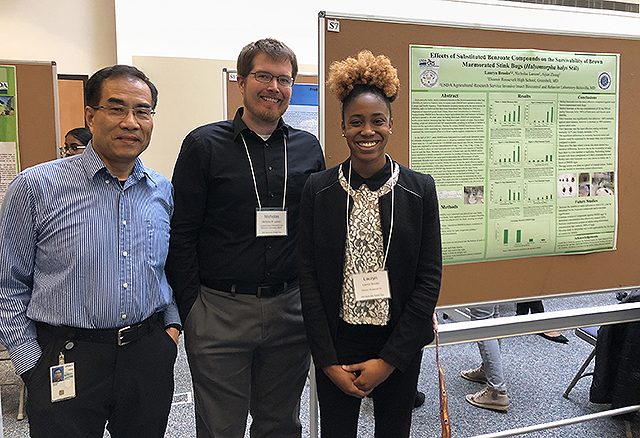
    From left, research chemist Aijun Zhang, postdoctoral Nick Larson, and intern Lauryn Brooks demonstrated research into methyl benzoate uses as a pesticide in an ARS poster day demonstration.

    Zhang’s research has focused on methyl benzoate’s utility as a pesticide for human protection and crop protection. So far, Zhang has documented that the compound will kill or repel many insects in various stages of development, including mosquitoes, bed bugs, fire ants, ticks, flies, moths, and the brown marmorated stink bug. Perhaps most important, however, is its ability to repel and kill the spotted wing drosophila fly (SWD). “SWD is the most significant invasive insect pest of soft-skinned fruit crops in the USA,” Zhang said.

    Since SWD was first detected in California a little over a decade ago, the fly has become a key pest in blueberries, blackberries, raspberries, strawberries, and cherries. These crops have a combined annual value of over $5.8 billion, and farmers lose about $718 million annually to SWD damage.

    Farmers fight SWD with synthetic insecticides, but at prices up to $1,200 per acre, that method is expensive. It is costly in other ways, too, Zhang said; the synthetic insecticide is harmful to the environment, contributes to pesticide resistance, and may be harmful to humans.

    Because methyl benzoate is an environmentally friendly, bio-based compound, Zhang thinks it has great potential to be used by people for human protection as an alternative to synthetic pesticides. It also costs much less than synthetic pesticide treatments.

    According to Zhang, methyl benzoate shares the same “chemical skeleton” as DEET, the gold standard in arthropod repellency, a detail that is leading future research efforts.

    “Understanding the structure-activity relationship will allow researchers to modify the chemical structure of the methyl benzoate molecule to develop pesticides that are more efficient at controlling arthropod pests,” he said. — By Scott Elliott, USDA-ARS Office of Communications.

  • An Organic Alternative to Combatting Spotted Wing Drosophila

    An Organic Alternative to Combatting Spotted Wing Drosophila

    Scientists from the Agricultural Research Service (ARS) are working to understand how something can be equally effective as both a government-approved food additive and as a pesticide.

    Methyl benzoate is a naturally occurring compound produced by plants. The U.S. Food and Drug Administration long ago approved methyl benzoate for human use; its fruity and floral aroma makes it a staple in perfumes and cosmetics and as a food additive. Nature employs it to attract pollinators.

    While many insects find methyl benzoate appealing, Aijun Zhang, research chemist at the ARS Invasive Insect Biocontrol and Behavior Laboratory in Beltsville, MD, is investigating why some insects and non-insect pests find it revolting.

    From left, research chemist Aijun Zhang, postdoctoral Nick Larson, and intern Lauryn Brooks demonstrated research into methyl benzoate uses as a pesticide in an ARS poster day demonstration.

    Zhang’s research has focused on methyl benzoate’s utility as a pesticide for human protection and crop protection. So far, Zhang has documented that the compound will kill or repel many insects in various stages of development, including mosquitoes, bed bugs, fire ants, ticks, flies, moths, and the brown marmorated stink bug. Perhaps most important, however, is its ability to repel and kill the spotted wing drosophila fly (SWD). “SWD is the most significant invasive insect pest of soft-skinned fruit crops in the USA,” Zhang said.

    Since SWD was first detected in California a little over a decade ago, the fly has become a key pest in blueberries, blackberries, raspberries, strawberries, and cherries. These crops have a combined annual value of over $5.8 billion, and farmers lose about $718 million annually to SWD damage.

    Farmers fight SWD with synthetic insecticides, but at prices up to $1,200 per acre, that method is expensive. It is costly in other ways, too, Zhang said; the synthetic insecticide is harmful to the environment, contributes to pesticide resistance, and may be harmful to humans.

    Because methyl benzoate is an environmentally friendly, bio-based compound, Zhang thinks it has great potential to be used by people for human protection as an alternative to synthetic pesticides. It also costs much less than synthetic pesticide treatments.

    According to Zhang, methyl benzoate shares the same “chemical skeleton” as DEET, the gold standard in arthropod repellency, a detail that is leading future research efforts.

    “Understanding the structure-activity relationship will allow researchers to modify the chemical structure of the methyl benzoate molecule to develop pesticides that are more efficient at controlling arthropod pests,” he said. — By Scott Elliott, USDA-ARS Office of Communications.

  • Numerous Health Benefits Found in Summer-Favorite Watermelon

    Numerous Health Benefits Found in Summer-Favorite Watermelon

    No summer barbecue is complete without fresh watermelon. As the nation moves towards the summer grilling season, you may want to consider how watermelon’s fruit chemistry can affect your overall health. Researchers in the USDA’s Agricultural Research Service (ARS) recently identified over 1,500 small molecules of diverse chemical characters in the fruit, known as phytochemicals. They concluded that eating watermelon is an excellent way to increase your intake of antioxidants, non-protein amino acids and lycopene. This means that every time you eat watermelon, you’ll be improving the health of your cells, organs and nervous system.

    The research specifically finds that the antioxidants in watermelon can help your body fight free radicals and slow down cell damage. The fruit’s non-protein amino acids will also help to repair your body tissue, break down food from other meals, and even regulate your blood pressure.

    “Watermelon could be part of the refreshing and healthy fruit options on your summer picnic table,” said USDA-ARS scientist Larry Parnell. “The fruit has gone through many years of evolution, domestication, and selection for desirable qualities—mainly those associated with flesh color, texture and nutrient and sugar content. But our research continues to find that the fruit contains a wide range of nutrients that improve your overall health.”

    Most Americans purchase the sweet dessert watermelon species, Citrullus lanatus, at their local grocery store or farmer’s market.  This species is among the most important vegetable crops grown and consumed throughout the world, with over 100 million tons in annual global production.  The fruit also has more lycopene than a raw tomato, which is linked to healthy eyes, overall heart health and protection against certain cancers. Other nutrients, like carotenoids, flavonoids, carbohydrates and alkaloids, are also found in the flesh, seed, and rind.

    “I worked with Dr. Parnell and the team to develop a pioneering concept of using big data and computational biology to identify and catalog all of the phytochemicals that exist in edible fruit,” said ARS researcher Amnon Levi. “The research to identify the metabolic pathways and genome sequence of genes involved in the production of beneficial phytochemicals could be highly useful for plant scientists and breeders aiming to improve nutrient content in fruits and vegetables.”

    The watermelon’s phytochemicals are human-cell-protecting compounds found in fruit, vegetables, grains and beans. All of these nutrients can contribute to your overall health in numerous ways.

    Watermelon was introduced to Europe via Moorish Spain in the 10th century. Since then, watermelon has been cultivated successfully in warmer Mediterranean regions before being brought to the Americas by European colonists during the 16th century. Today, watermelon is grown in 44 U.S. states, while major production is centered in California, Florida, Georgia and Texas.

    Fruits and vegetables are a part of a healthy, balanced diet, with the recommendation being 1.5 to 2 cups of fruit and 2 to 3 cups of vegetables per day.

    The Agricultural Research Service is the U.S. Department of Agriculture’s chief scientific in-house research agency. Daily, ARS focuses on solutions to agricultural problems affecting America. Each dollar invested in agricultural research results in $17 of economic impact.

  • National Watermelon Promotion Board Partners with Disney and Pixar’s Luca

    National Watermelon Promotion Board Partners with Disney and Pixar’s Luca

    It will be a summer of adventure for National Watermelon Promotion Board (NWPB), thanks to a month-long collaboration with Disney and Pixar’s original feature film Luca, which streams exclusively on Disney+ starting June 18.

    “Luca” is a fun and heartwarming story about friendship, stepping out of your comfort zone and an extraordinary pair of sea monsters who experience a life-changing summer. Watermelon makes a special cameo in the film as sea monsters Luca and Alberto, who look human when they’re dry, venture beyond the surface to the Italian seaside town of Portorosso to see—and taste—all this new world has to offer.

    The Joy of Watermelon Meets the Thrill of Pixar

    As part of its collaboration, NWPB has developed the “Unforgettable Summer” campaign, connecting watermelon and Luca’s inherent themes of summertime joy and happiness.

    Throughout the month of June, NWPB will encourage people nationwide to visit a special landing page (Watermelon.org/PixarLuca) to either share an unforgettable summer adventure they’ve had or would like to have in 2021.

    Individuals who share their stories and dreams are entered for the chance to win weekly prizes, such as Lucamerchandise or one grand prize of an “Unforgettable Movie Night” prize pack which includes an Outdoor Movie Projector, Projector Screen, Popcorn Maker, Watermelon Slicer and a BlendJet.


    “Watermelon and summertime adventures go hand-in-hand, which makes our collaboration with Disney and Pixar’s Luca a perfect pairing,” said Stephanie Barlow, Senior Director of Communications, NWPB. “While watermelon is incredibly versatile, there’s no denying most everyone associates enjoying watermelon with our best summer memories – whether it’s family picnics, weekend getaways or unforgettable vacations. That connects directly with the themes of Luca, which arrives just as we find ourselves in peak watermelon season.

    “Our members are incredibly excited about the “Unforgettable Summer” campaign, as well, and look forward to sharing with their stakeholders in the months ahead,” Barlow added.

    On the Watermelon.org landing page, visitors also will find:

    • The world of Luca brought to life.
    • The film’s trailer.
    • Watermelon recipes inspired by Italian cuisine – such as “Watermelon Pizza alla Italia” and “Watermelon Caprese alla Feta.”
    • A chance to enter the “Unforgettable Summer” Sweepstakes*.

    Promotions Online and In Social

    To draw people to the landing page, NWPB will promote the collaboration on its social channels as well as via pre-roll digital ads – all targeting watermelon lovers while drawing new fans and followers of Pixar and Luca.

    About National Watermelon Promotion Board

    The National Watermelon Promotion Board (NWPB), based in Winter Springs, Florida, was established in 1989 as an agricultural promotion group to promote watermelon in the United States and in various markets abroad. Funded through a self-mandated industry assessment paid by more than 800 watermelon producers, handlers and importers, NWPB mission is to increase consumer demand for watermelon through promotion, research and education programs.

    Watermelon packs a nutritious punch, with each serving providing an excellent source of Vitamin C (25% DV), a source of Vitamin B6 (8% DV), and a delicious way to stay hydrated (92% water), with only 80 calories per 2-cup serving. Watermelon consumption per capita in the United States was an estimated 16 pounds in 2020. Watermelon consumption in the United States was approximately 5.3 billion pounds in 2020. The United States exported an additional 359 million pounds of watermelon.

    About Disney and Pixar’s LUCA

    Set in a beautiful seaside town on the Italian Riviera, Disney and Pixar’s original feature film “Luca” is a coming-of-age story about one young boy experiencing an unforgettable summer filled with gelato, pasta and endless scooter rides. Luca (voice of Jacob Tremblay) shares these adventures with his newfound best friend, Alberto (voice of Jack Dylan Grazer), but all the fun is threatened by a deeply-held secret: they are sea monsters from another world just below the water’s surface. Directed by Academy Award® nominee Enrico Casarosa (“La Luna”) and produced by Andrea Warren (“Lava,” “Cars 3”), “Luca” debuts exclusively on Disney+ on June 18, 2021.

    *Open to legal residents of the 50 United States and D.C., age 18 or older. Void where prohibited. Sweepstakes starts June 1, 2021 and ends at 11:59 p.m. EST on July 2, 2021. For full official rules and to enter, visit www.Watermelon.org/PixarLuca. Sponsored by National Watermelon Promotion Board, 1321 Sundial Point, Winter Springs, FL 32708.

  • CA Olive Oil Council Announces Recipients of 2021 Extra Virgin Olive Oil Competition

    CA Olive Oil Council Announces Recipients of 2021 Extra Virgin Olive Oil Competition

    Winners from the 13th Annual California Olive Oil Council Extra Virgin Olive Oil Competition have been announced, recognizing olive oil producers from throughout California for their excellence. This year’s competition, which attracted 80 submissions, was judged by the California Olive Oil Council’s certification tasting panel, granting a host of awards including Best of Show, Best of Class, Miller Recognition, and Gold and Silver. Winners include:


    Best of Show

    • Grumpy Goats Farm: Organic Picual


    Best of Class

    • Delicate: Ohanneson Enterprises: OH Olive Oil
    • Medium: High Top Ranch
    • Robust: Proskine Family Farms


    Miller Recognition Award Winner

    • John Mesrobian: The Mill at Kings River for Ohanneson Enterprises: OH Olive Oil


    Gold Medal Winners

    • Campodonico Olive Farm: Tuscan Blend
    • Colina Vista Ranch: Calabrese – Tuscan Blend
    • ENZO Olive Oil Company: Organic Medium
    • Gold Ridge Organic Farms: Minerva Blend
    • Grumpy Goats Farm: Organic Coratina
    • Grumpy Goats Farm: Organic Italian Blend
    • Grumpy Goats Farm: Organic Picual
    • Halter Ranch: Tuscan Blend
    • High Top Ranch
    • Kiler Ridge Olive Farm: Nocellara del Belice
    • Long Meadow Ranch: Napa Valley Select
    • Long Meadow Ranch: Prato Lungo
    • Mangini Ranch Olive Oil Company: Calaveras Reserve
    • Marciano Estate Winery: Organic Italian Blend
    • Ohanneson Enterprises: OH Olive Oil
    • Olivaia’s OLA: Block X Heirloom Batch 20-1
    • Proskine Family Farms
    • The Ranch at Birch Creek
    • Rosenthal Olive Ranch: Koroneiki
    • San Paulo Olive Farm: Frantoio–Leccino
    • Sogno di Oliva: Tuscan Blend
    • Spanish Oaks Ranch: Arbequina
    • Tofino Estate: Supremo
    • Tres Osos Olive Oil: Robust
    • Tres Osos Olive Oil: Taggiasca
    • Warm Springs Farm


    Silver Medal Winners

    • 11 Olives: Longevity
    • Bari Olive Oil Company: Arbequina
    • Boccabella Farms: Arbequina
    • Boccabella Farms: Field Blend
    • Boccabella Farms: Winemakers Blend
    • Boundary Bend Olives: Cobram Estate – California Classic
    • Burroughs Family Orchards: Organic Koroneiki
    • Corto Olive Co: Truly
    • Corto Olive Co: Truly-Arbequina
    • ENZO Olive Oil Company: Organic Delicate
    • Estee Hill Vineyard: Manzanillo
    • Fat Gold Productions: Gold Standard
    • Gold Ridge Organic Farms: Arbequino Blend
    • Gold Ridge Organic Farms: Picholine Blend
    • Grumpy Goats Farm: Organic Pendolino
    • Jackrabbit California Olive Oil: Relaxed Blend
    • Kiler Ridge Olive Farm: Tuscan
    • Mangini Ranch Olive Oil Company: Estate Mission
    • McDonough Family Olive Oil
    • The Mill at Kings River: Koroneiki
    • Olivaia’s OLA: Block X Heirloom Batch 20-2
    • Organic Roots Olive Oil: Arbequina
    • Pine Mountain Olive Farm
    • Rio Bravo Ranch: Miller’s Reserve Blend
    • Rio Bravo Ranch: Picual
    • Rosental Olive Ranch: Arbosano
    • Séka Hills: Estate Frantoio
    • Showa Farm: Arbequina
    • Spanish Oaks Ranch: Italian Blend
    • Spanish Oaks Ranch: Picual
    • Swayne Family Ranch: Tuscan Blend
    • Tierra Santa Orchards: Hojiblanca Reserve
    • Wild Groves: Ascolano
    • Wild Groves: Foxy
    • Wild Groves: Robust Blend

    “Congratulations to all of the 2021 COOC Extra Virgin Olive Oil Competition winners,” said COOC Executive Director Patricia King. “The COOC members are committed to crafting delicious extra virgin olive oils by adhering to best practices, and many award-winning extra virgin olive oils were produced, despite a challenging 2020 harvest. We thank consumers and retailers for their continued support of 100% California, certified extra virgin olive oil.”


    About the California Olive Oil Council and its Seal Certification

    Founded in 1992, the California Olive Oil Council (COOC) is a non-profit trade and marketing association whose purpose is to promote the growing of olives and the production of fresh, high-quality extra virgin olive oil in California. The COOC represents the majority of olive oil production in the state with a membership of 300 growers, producers, and supporting members from the retail and service industries. The organization supports certified olive oil standards and provides grower, producer and consumer education. Through its Seal Certification Program, the COOC helps everyone from home chefs to restaurants find guaranteed extra virgin grade olive oils for their kitchens. For more information, visit cooc.com.

  • Dan Flynn Receives the 2020 California Olive Oil Council Pioneer Award

    Dan Flynn Receives the 2020 California Olive Oil Council Pioneer Award

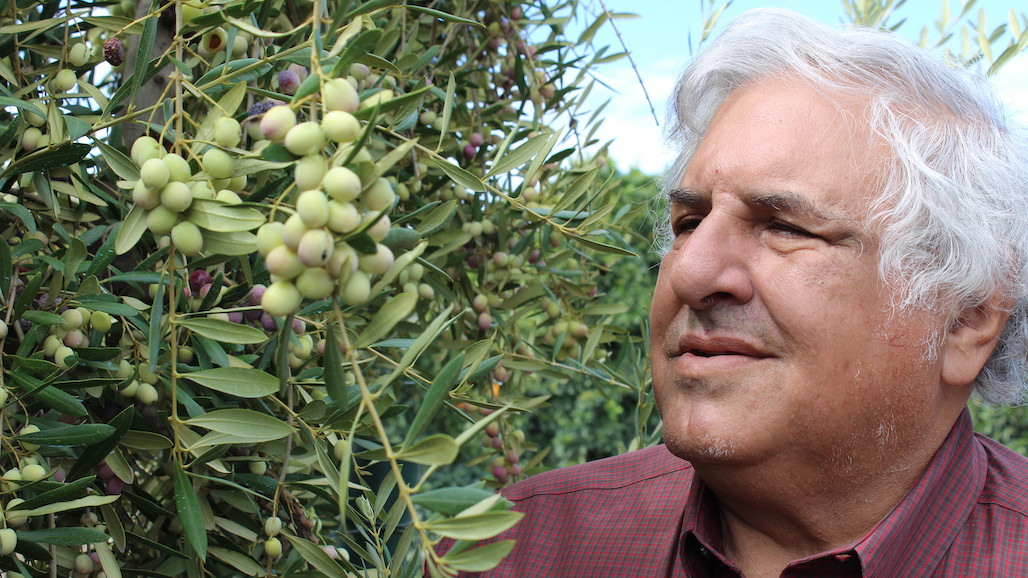
    The 2020 recipient of the California Olive Oil Council (COOC) Pioneer Award has made a lasting impact on the California olive oil industry. Dan Flynn started the UC Davis Olive Center 13 years ago where he serves as the executive director with just $50,000 from university and industry supporters, and grew it into a world-renowned center for olive research and education. The organization has worked in concert with the California Olive Oil Council from its beginning in 2008. In partnership with the industry, UC Davis has helped millions of consumers understand the quality of supermarket olive oil, provided the analytical foundation for California’s strict olive oil standards and educated thousands to become better olive growers, processors and tasters.

    If the success of a leader can be measured by the fingerprints they leave behind, Dan’s impact on the olive oil industry should not be understated, said David Garci Aguirre, Vice President of Operations for California-based premium olive oil producer Corto. “Several of the most influential events in the industry over the last decade are the direct result of the work completed by Dan and his team at the UC Davis Olive Center.”

    Flynn’s attributes much of the center’s success to creating partnerships between dozens of academic specialists, olive growers and processors. He has worked tirelessly to nurture the network which has resulted in priceless value. Flynn focused on serving the industry while meeting the needs of UC Davis. The partnership between UC Davis and California agriculture has delivered enormous benefits for the California olive crop.

    Flynn has also built relationships with international researchers to leverage their research for the benefit of California. The international conferences with the Culinary Institute of American and the International Olive Council have elevated the California industry on the global stage. He has positioned the UC Davis Olive Center as an independent and trusted facilitator where everyone is welcome.

    “Dan Flynn deserves our recognition, praise and applause. He pioneered making the Olive Center a reality where the millers, growers, and producers have ready access to the research and learning tools needed for the Crop of The Future,” said Karen Bond, Owner of Bondolio Olive Oil.

    Flynn is preparing to retire in June. His successor, Javier Fernandez-Salavador, will inherit a strong Olive Center, guided by a 10-year strategic plan to bolster research, funding and connectivity. “I will still be active in helping the center and I will always be grateful for the support of the COOC and its members,” said Flynn.

    The Pioneer Award was established in 1999 to recognize those who have made a major contribution to the California olive oil industry and the COOC. “The COOC thanks Dan for his commitment, partnership and support over the years, and wishes him all the best in the future,” said Patricia King, Executive Director of the California Olive Oil Council.