Category: Industry News

  • Covid-19, Climate, Challenge and Change

    Covid-19, Climate, Challenge and Change

    The global pandemic has revealed in new ways how essential farmers and farmworkers are to the food supply chain. With this revelation has also come more widespread understanding of the challenges farmers and ranchers face while scrambling to adopt new workplace safety protocols in the fields and on packing lines, respond to dramatically altered markets, and seek relief funding so they can stay in business.

    The realities and vulnerabilities of farmworkers, too, have been laid bare. Their exposure in the workplace and at home to Covid-19 and the barriers to health care and economic relief make us all vulnerable, dependent as we are on their labor and wellbeing.

    “Our main challenge right now is getting enough masks and suits to protect our workers. That’s what keeps me up at night. I’m also worried about harvest in August when we need 200 workers to pick grapes in 10 days—social distancing will be impossible. 

    As a new farmer taking over the business from my dad, I’m in this for the long game. It’s always been hard to make long-term decisions in farming, especially with the uncertainty of climate change. And now it’s challenging to make even short-term decisions about what to plant this year.”

    — Steven Cardoza, Cardoza Ranches (organic raisin grower, Fresno County)

    California agriculture is ramping up for its busiest time of year as hundreds of varieties of vegetable, fruit and nut crops are planted and harvested over the coming summer months. Even as shelter-in-place orders are easing, farmers have other looming challenges ahead in the form of seasonal climate change impacts. Wildfire season is predicted to start early this year in parts of the state because of a dry winter. Parts of the state will face another year of water scarcity given that the snow pack is only about half of normal.

    Despite these many challenges during the peak of the COVID-19 crisis, California farmers found time to apply for Climate Smart Agriculture grants for improving soil health and reducing methane emissions on dairies.

    In April, the California Department of Food and Agriculture (CDFA) announced that $50.8 million in grant requests had been submitted by 79 dairy producers for projects that reduce methane emissions by improving manure management—about five times more than the money available in the AMMP program.

    By mid-May, CDFA had received nearly 600 applications from farmers and ranchers for the Healthy Soils Program, a three-fold increase from the last round of applications to the program. CDFA recently announced program awards totaling $22 million to 316 farmers and ranchers carrying out healthy soils practices on more than 30,000 acres across the state.

    Clearly these programs are valued by California’s farmers, eager to do their part to curb greenhouse gas emissions, improve the resilience of their farms, and improve their bottom line with these important investments.


    “The milk industry was already being hit hard by an oversupply that drove down prices. It’s even harder now to find buyers even for powdered milk, and both dairy and meat processors are cutting contracts because they don’t have capacity right now.

    The pandemic has made it all the more real about our reliance on local farmers and it makes the case for curbing climate change to protect their livelihoods. We are getting in touch with what is really important, and food and farmers are core to our survival. It’s also clearer how important it is to maintain and shore up local economies and food systems.”

    — Rose Marie Burroughs, Burroughs Family Farms (organic dairy and almond grower, Merced County)

    Ed Seaman, Santa Barbara Blueberry Grower

    However, widespread support for the state’s Climate Smart Agriculture programs go beyond the state’s farms and ranches. This spring, more than 65 non-profits, food businesses and public health organizations sent in letters urging state legislators and Governor Newsom to invest in the climate solutions of our farms and ranches.

    We expect a huge hit to our tourism business this year and really don’t know how many ‘u-pickers’ will visit our farm because of people just being afraid to go out. I worry about the small farm sector generally and how many will go out of business if the economy doesn’t open back up in time and they don’t get help.

    The pandemic has shown how fragile our food security is. Maybe the fear people are feeling can be leveraged to make widespread change and protect family farms and local food systems. If you want to fight climate change, you need an army of small farmers who focus on keeping carbon in the soil by increasing biodiversity in the soil and above ground.”

    — Ed Seaman, Santa Barbara Blueberries (blueberries, Santa Barbara County)

    California has been a global leader in setting ambitious, science-based climate goals and allocating funds to programs that achieve it, including the Climate Smart Agriculture programs. Continued progress and financial investments in these programs will not only help keep California on track with its climate goals but will also reduce air and water pollution, protect our food supply, and provide an engine for economic development to rebuild rural economies hit hard by the pandemic. – By Renata Brillinger, California Climate & Agriculture Network

  • Dr. Beth Grafton-Cardwell to Retire – Her View on 30 Years of Citrus IPM

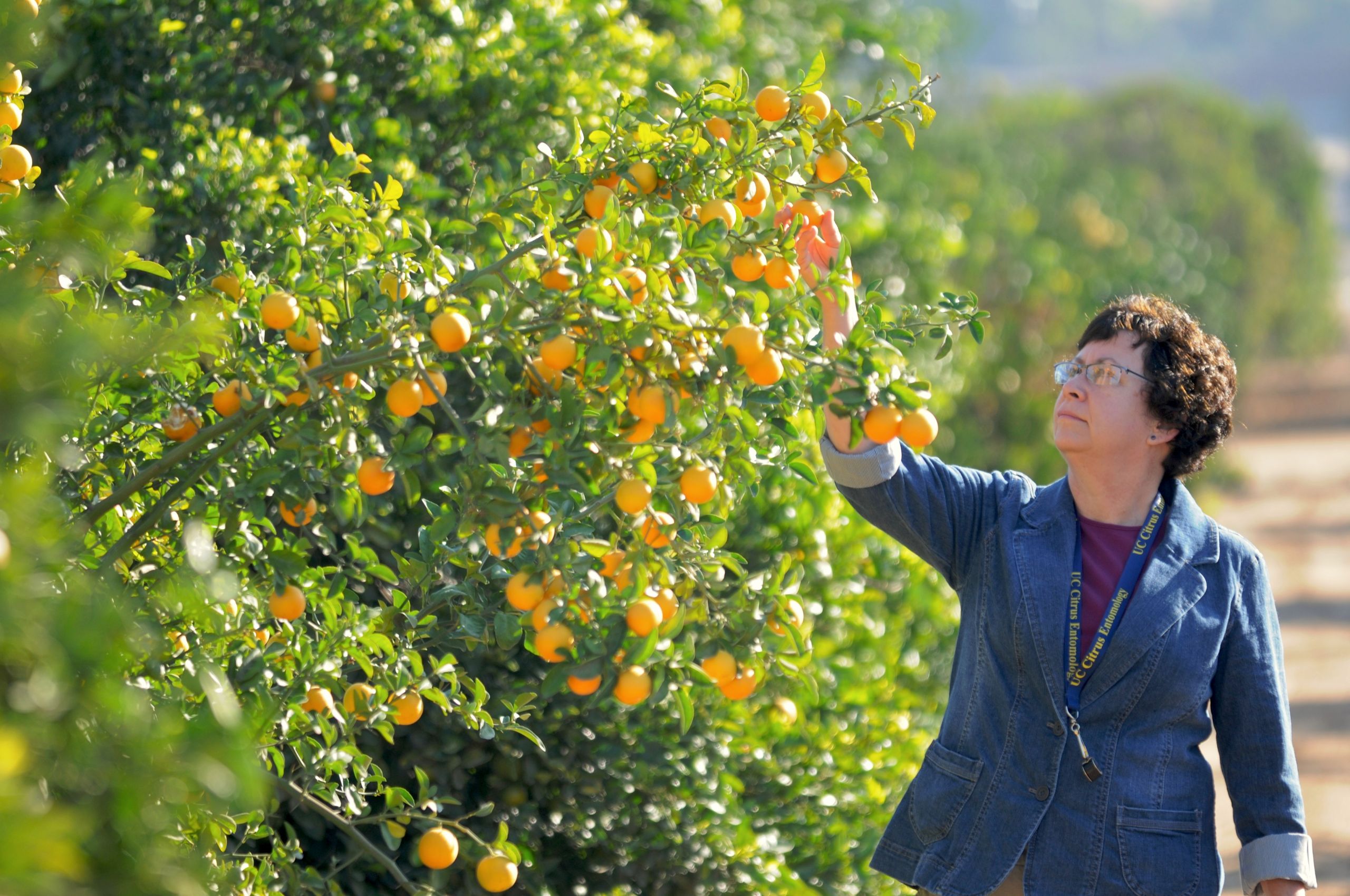
    Dr. Beth Grafton-Cardwell to Retire – Her View on 30 Years of Citrus IPM

    Through the years I have had many collaborators and numerous technical staff studying a wide variety of pests including California red scale, citricola scale, cottony cushion scale citrus cutworm, katydids, earwigs, Fuller rose beetle, citrus peelminer, citrus leafminer, citrus thrips, citrus red mite, snails, ants, aphids and Asian citrus psyllid as well as their natural enemies. In the early years, the main controls for these pests were organophosphate (OP) and carbamate insecticides. The initial research goal was to get these replaced with more selective insecticides that would allow natural enemies to participate in pest management. We successfully documented OP resistance in California red scale and citrus thrips and developed replacement insecticides that created a more balanced situation resulting in a reduction in pesticide use (as few as 4 treatments/year in the San Joaquin Valley). But alas, citrus IPM programs must change because new situations arise. For the citrus industry, the three drivers of change in the second half of my career have been drought exacerbating some pests, export countries demanding in- field treatments for insects as a replacement for Methyl Bromide (MeBr) fumigation, and the arrival of various invasive pests. These situations have provided me ample opportunities to work with regulators and the citrus industry and challenged my creative problem-solving abilities never a dull moment.

    It is hard to say if the past 8-9 years of higher temperatures and on and off drought conditions are a permanent ‘climate’ change or are part of a cycle. However, they have certainly made California red scale more difficult to control. Growers have shifted from treating for California red scale once every other year to treating 3-4 times per year. Extra heat units have added an extra generation of scale per year and occasionally allowed scale development in winter. My research response has been to study and provide outreach on the use of California red scale pheromone disruption as an assist to reduce insecticide treatments. I am encouraged to hear reports of some acreage going back treatments every few years for California red scale.

    Export issues with S. Korea (Fuller rose beetle and California red scale) and with Australia and New Zealand (bean thrips and mites) began to crop up in the 2010s. In the past, shipments from California would be inspected at destination and, if there were any insects or mites of phytosanitary concern, the fruit would be fumigated with MeBr. With the worldwide reduction in MeBr use, there is now the expectation that California growers apply in-field treatments to eliminate these pests so fumigation at destination is not necessary. Complete disinfestation of an orchard is impossible to achieve so we launched studies on alternative fumigants and cold treatments that could be applied in California or during transport.

    Invasive pests such as glassy-winged sharpshooter, Diaprepes root weevil, citrus leafminer, and Asian citrus psyllid have been arriving regularly into California since about 2000. In each case, I evaluated chemical and biological controls, evaluated the level of damage they could inflict and conducted outreach to prepare the citrus industry. Of course, Asian citrus psyllid has been the most significant invasive pests because of its ability to transmit the bacterium that causes the deadly disease huanglongbing. My role has been to develop control strategies for growers around the state and assist them with their psyllid management programs.

    If I had to list the top three favorite projects of my career, they would be the following:

    1. Working with colleagues to survey 13 crops around the state to see what species of predatory mites are found and developing a ‘Key to the Phytoseiid Predatory Mites of California Crops’ (submitted for publication with UC ANR).

    2. Working with cottony cushion scale and predatory vedalia beetle and figuring out how to protect the vedalia from insect growth regulators by careful timing of the application of those pesticides. This is a great example of making an incompatible insecticide compatible with a sensitive natural enemy.

      3. Directing five technicians to scout 224 commercial citrus orchards around the state and see how grower applied pesticide treatments affect the psyllid populations. The results of this project led to strong recommendations for eradication and areawide psyllid treatment programs.

      For the past 14 years, all of this was accomplished while also acting as Director of the Lindcove Research and Extension Center. That position also had challenges with hiring and directing personnel, building facilities such as a laboratory, a greenhouse and a screenhouse structure, and attracting research and extension programs to the Center. It has been very rewarding to see the Center expand its capacity and reputation.

      Finally, I couldn’t have done any of this without the amazing technical staff and collaborators that have supported my projects for many years. I will miss the challenges of this job, but I expect to dip back in when needed at Lindcove and I look forward to new life challenges as I spend more time with my family and my community. 

  • Attracting Natural Enemies of Pests to Your Field

    Attracting Natural Enemies of Pests to Your Field

    Dr. Eric Brennan is a Research Horticulturist at ARS’s Crop Improvement and Protection Research Unit in Salinas, CA. Dr. Brennan specializes in crop production and climate-smart farming.

    Welcome Dr. Brennan (EB) to Under the Microscope (UM):

    UM – You have a rather novel alternative approach to control insect pests like aphids in lettuce without using pesticides, called conservation biological control. Please explain: 

    EB – Sure, biological control is where we use natural enemies of pests to control them. The approach we used in lettuce is called conservation biological control because we are conserving and enhancing the ability of existing natural enemies to control the aphids by providing habitat and food sources for the natural enemies.  In other words, the natural enemies are already there on the farm and we’re just helping them to be more effective.  Essentially, we’re letting them know that they’re welcome.

    UM – How does this method benefit farmers and gardeners in both short term and long term? 

    EB – Great question. In both the short and long term this can help us reduce our use of pesticides, which is a good thing.  In the long term this can also reduce the ability of the insects to develop resistance to pesticides. When we overuse pesticides, insects can become resistant to them, which makes those pesticides useless in the long run. The cool thing about biological control is that pests don’t usually become resistant to attacks by their natural enemies.  For example, I don’t know of any situations where aphids have been able to evolve a way to consistently avoid being gobbled up by the larvae hungry hoverflies.

    Lettuce aphid, Nasonovia ribisnigri. This pest (about 1-3 millimeters long) of lettuce appeared in California’s Salinas Valley in 1998 and is now found in all lettuce-production areas of that state and Arizona. (Stephen Ausmus, D689-7)

    We worked closely with the industry in developing and validating technologies for a better process control, and for improved pathogen reduction. The industry made huge strides in food safety over the past decade, ever since the 2006 E.coli O157:H7 outbreak involving baby spinach. In recent years, a lot of effort has been placed on prevention of pathogen contamination, and it has resulted in stricter farming practices, better farm worker training, industry-wide food safety standards, supply chain joint efforts to improve food safety, and industry-sponsored research initiatives.

    UM – I understand you’ve done extensive work on using the plant sweet alyssum as part of this strategy. What are the advantages of planting alyssum in your field/garden, and what crop does it protect best?

    EB – The great thing about this plant is that it flowers continuously. And those flowers are providing pollen and nectar that are a food source for adult hoverflies, which are a natural enemy of aphids. When the hoverflies have this food in our lettuce fields, they’re able to go about doing what they do best in searching out all those aphids and help to control them without us having to use pesticides.  This is a system that works really well in lots of vegetables as well as some other crops. Lettuce is probably the best example in the region where I work, Salinas, which is often called the salad bowl of the world.

    UM – It sounds like farmers in this region were already planting alyssum in lettuce, but you found that they were using more field space than was needed, thus limiting their potential crop acreage?  

    EB – That’s right.  My research figured out a new method of planting alyssum in the lettuce fields so farmers didn’t have to give up any field area just for the alyssum.  Essentially, my method involved adding about 500 alyssum plants per acre in between regularly spaced lettuce plants, which was really a win-win for farmers because they still got to plant a full field of lettuce and were still effective in controlling the aphids.

    UM – Alyssum is good for planting lettuce, but you’ve had mixed results planting with broccoli and other vegetables, why? 

    EB – The aphids that infest broccoli and lettuce are different species. The aphid that goes on broccoli is commonly called the cabbage aphid and it’s generally a lot more challenging to control biologically than the several aphid species that get on lettuce.  I haven’t seen a lot of scientific literature explaining exactly why the cabbage aphid is more difficult to control biologically, but there are likely lots of factors.  For example, broccoli has to grow for more time in the field before we’re able to harvest it and so the aphids have more of a chance to cause problems on broccoli than on lettuce. Also, there are differences in the harvested part of the lettuce plant versus the harvested part of broccoli that make the aphids on broccoli challenging. With broccoli you’re producing a flower, and with lettuce you’re just producing a head full of leaves. The broccoli flower has lots of little crevices where aphids can hide and eventually deform the broccoli flower that we eat.

    UM – How do farmers know which insects are beneficial and which are enemies of pests in their fields? 

    EB – This has to do with being trained to recognize pest insects versus beneficial insects. There are lots of good photographs on the web nowadays that can help farmers and gardeners identify beneficial insects versus pests. And of course there’s also the friendly Cooperative Extension farm advisors who are more than happy to help identify these.

    UM – I understand you’re also researching the use of cover crops and compost for improved soil health, carbon sequestration, weed control, and other benefits. What are your findings?

    EB – I love cover crops and have been working with them for much longer than I’ve worked on beneficial insects. So, as you can imagine I could go on for a long time about the different things that we’ve discovered with cover crops. One of the most important recent findings is that frequent cover cropping is extremely important for maintaining soil health in vegetable systems.  In fact, our research suggests that it’s far more important than using compost.  Interestingly, these cover crops can also help us conserve some of those beneficial insects that I was just talking about with aphid control.

    Various patterns of intercropping alyssum with organic romaine lettuce for aphid control were assessed at ARS fields in Salinas, California

    Various patterns of intercropping alyssum with organic romaine lettuce for aphid control were assessed at ARS fields in Salinas, California (Stephen Ausmus, D3050-3)

    UM – We’re right in the middle of gardening season. What advice do you have for home gardeners who are trying to keep pests out of their gardens?

    EB – Probably the most important advice is to pay attention to what’s going on in your garden. When you see something, be it an insect or some other organism, try to figure out what it’s doing and why it’s there. Perhaps it’s a harmless thing, but it also might be a beneficial organism or a pest. Here’s an example from my home garden. I recently learned that paper wasps were helping to control caterpillar pests on my kale that I had growing in my front yard. I figured that out when I was harvesting kale one day and a wasp landed on some kale that I was holding and grabbed a caterpillar larvae and flew off with it. Wow, that was cool.

    UM – What about weeds? How can gardeners control weeds in their gardens?

    EB – Great question. Probably the most important thing is to pull weeds as soon as you seen them to prevent them from setting seeds in your garden. Eventually you’ll deplete what we call the weed seed bank in the soil. If you don’t have weed seed in your soil, you won’t have weeds. In my home garden and in my research fields we work to control weeds when they are young and vulnerable and prevent them from producing seed.

    UM – Okay, let’s let the cat out of the bag. You are a successful YouTuber, with your own YouTubeYouTube channel and dozens of videos, mainly focusing on topics we discussed today. Your video on making an inexpensive hoe for gardening has over 150k views. My favorite is the video comparing cover cropping to juggling. Please elaborate. 

    EB – Ha. I figured you’d ask about this. My first video was created in 2013 and describes my alyssum research that we talked about earlier.  It now has around 19k views and gets about 100 views per week.  That’s impact.  I became a scientist to help farmers produce food sustainably and efficiently, and YouTube allows me to communicate this in an efficient and fun way (i.e., juggling).  Farmers and others love YouTube because it allows them to learn things when it’s convenient for them.  And I love it because it allows me to share my results to a broad audience with visuals that help to tell the story behind the research.  One of my favorite recent videos is “Bamboo, Oil and Ice Cream.  Why scientists need to be on YouTube.”  I’m hooked on video and will use it for the remainder of my career to share the research that I’m privileged do on behalf of the American public.

  • NMSU Extension Offers Online Produce Safety Training June 29-30

    NMSU Extension Offers Online Produce Safety Training June 29-30

    Harvesting of vegetables and fruits is beginning. Soon fresh produce will be available at growers’ markets.
     
    In preparation for providing for this season’s harvest and sales, a food safety practices course is available to growers to meet the regulatory requirements included in the U.S. Food and Drug Administration’s Food Safety Modernization Act Produce Safety Rule.

    New Mexico State University’s Cooperative Extension Service, the Southwest Border Food Protection and Emergency Preparedness Center, and the New Mexico Department of Agriculture are offering the training online from 8 a.m. to 12:30 p.m. Monday, June 29, and Tuesday, June 30. 

    “We are excited to offer New Mexico’s third remote delivery of the Produce Safety Alliance’s growers training,” said Bob Silver with the Southwest Border Food Protection and Emergency Preparedness Center. “This training is intended for New Mexico fruit and vegetable producers and importers who grow, harvest, pack or hold produce and fruit that is usually consumed raw, and who sell more than $25,000 per year.” 

    The Produce Safety Rule requires at least one supervisor or person responsible for the farm to have successfully completed food safety training in accordance with the annual monetary value of produce the farm sold during the previous three years.

    Participants who complete the course receive a certificate from the Association of Food and Drug Officials that verifies they have completed the training. The certificate is also useful for meeting buyer requirements for food safety.

    “Attendance at the training the whole eight hours is mandatory and if someone does not attend all the sessions, they will not be given a certificate or refund,” Silver said.

    NMDA is covering the cost of the manual that will be mailed directly to the participant prior to the video training. The manual is a useful reference for farm safety practices and to develop a farm safety plan.

    Registration closes at noon on June 22 to allow for postal delivery of the manuals. The link and password for the webinar will be provided upon registration. Registration fee for New Mexico residents is $45 and $90 for out of state growers. To register, visit https://aces.nmsu.edu/preparedness/psa-training.html.

    “Participants will need internet access, webcam and microphone for the session,” Silver said. 

    For details on the Zoom requirements and instructions, visit https://producesafetyalliance.cornell.edu/training/zoom/.
  • NMSU, Xerces Society Present Supporting Pollinators, Beneficial Insect Webinars

    Bees are busy pollinators. New Mexico State University and the Xerces Society for Invertebrate Conservation are presenting a six-part weekly webinar series, “Supporting Pollinators and Beneficial Insects in Backyards and on Farms,” beginning June 23. (NMSU photo by Jane Moorman)

    New Mexico State University has partnered with the Xerces Society for Invertebrate Conservation to host a free virtual course series to inform farmers, educators and the general public about pollinator and beneficial insect conservation in gardens and farms in northern New Mexico.

    “The six-part weekly series, “Supporting Pollinators and Beneficial Insects in Backyards and on Farms,” will consist of one to one-and-a-half hour live virtual presentations via Zoom,” said Amanda Skidmore, NMSU College of Agricultural, Consumer and Environmental Sciences integrated pest management small farm specialist. 

    The webinars will be at 3 p.m. Tuesdays, June 23 through July 28. Participants are welcome to attend any and all of the six sessions.

    Registration is required for attendance of each live presentation. Live captioning will be provided.

    All sessions will be uploaded to the NMSU ACES YouTube channel at a later date with no viewing restrictions.

    “The series will cover a range of topics on pollinators and beneficial insects in northern New Mexico,” Skidmore said. “From getting to know the bees and other helpful bugs in backyards and farms, to designing and planting healthy habitat to support those insects and protecting pollinators from pesticides.” 

    The topics and dates of each session, with links to individual registration pages, are as follows: 

    • June 23: “Pollinators of Northern New Mexico: How to Identify and Conserve the Bees in Your Backyard”

    • June 30: “Helpful Bugs of Northern New Mexico: How to Identify and Conserve Beneficial Insects for Pest Control” 

    • July 7: “Conserving Bees in Your Backyard: How to Create Habitat for New Mexico Pollinators in Small Spaces” 

    • July 14: “Attracting and Supporting Crop Pollinators on New Mexico Farms” 

    • July 21: “Integrating Pollinators and Pest Management in New Mexico Gardens and Farms”

    • July 28: “Ask Me Anything: New Mexico Pollinator and Beneficial Insect Expert Roundtable” 

    For more details and to register, visit the series website at http://nmsu.life/8m.  

    Contact Rachel Dunham at rachel.dunham@xerces.org with any registration questions. To submit questions about pollinators and beneficial insects for the “Ask Me Anything,” email nmsuipm@nmsu.edu. — By Jane Moorman, New Mexico State University (505-249-0527)

  • New Recommendations for Laurel Wilt Disease

    New Recommendations for Laurel Wilt Disease

    By Ben Faber, UC Cooperative Extension — Laurel Wilt Disease of Avocado and the relatives of avocado in the Laurel Family has devastated the the forests along the east coast from North Carolina down to Florida and along the Caribbean into Texas.  It has caused significant losses to wildlands and to the Florida avocado industry.

    Ambrosia Beetle

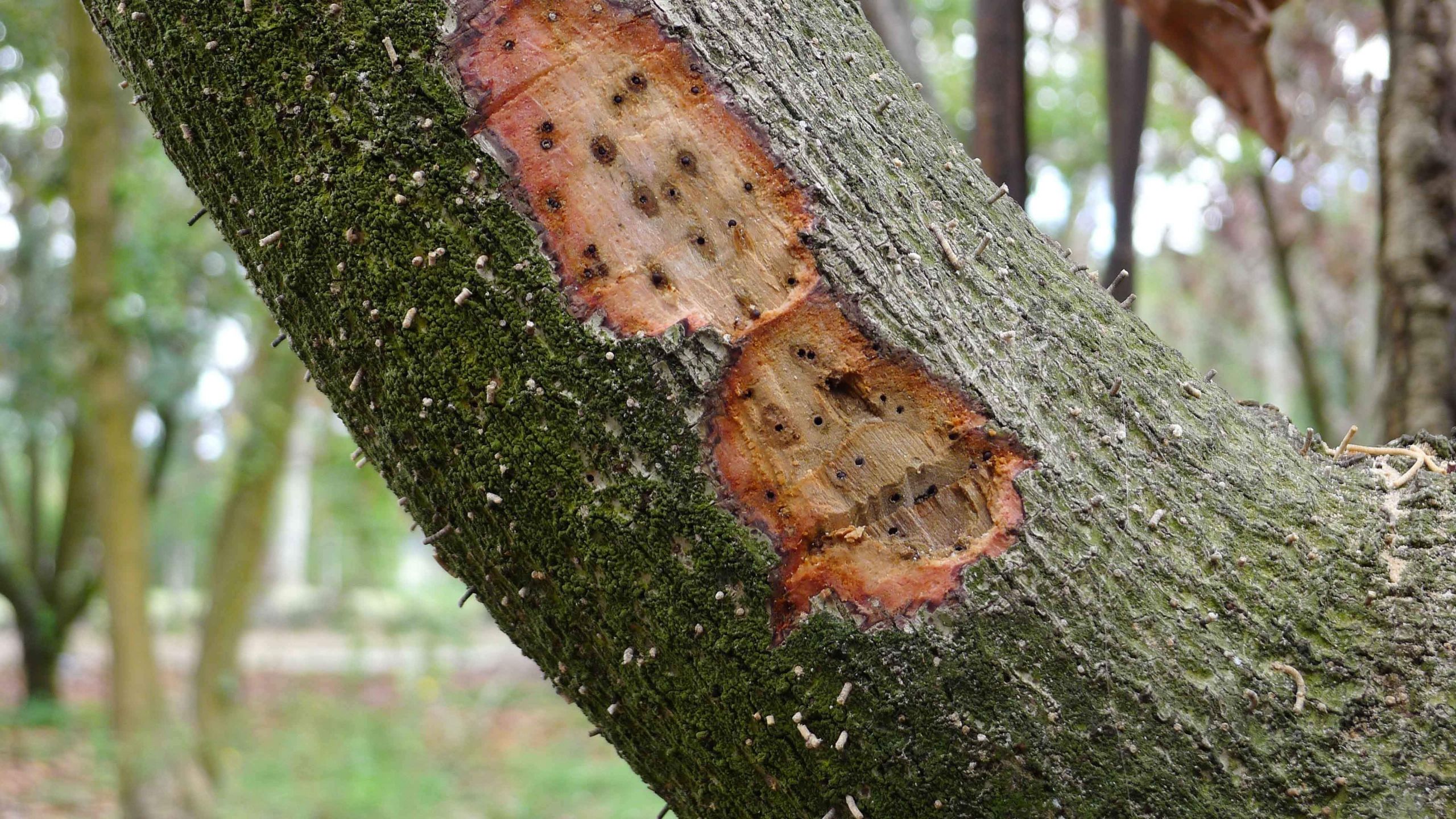
    The extent of the native tree loss is shocking and there is very little that can be done to correct the problem, other than to curb the spread of contaminated wood that is spread by humans,  There has been some success in the avocado orchards. While there is no “silver bullet”, there is some progress, e.g. pruning to increase light levels to suppress Ambrosia Beetle activity.  In addition, research has continued for:

    • Vaccinations to protect avocado trees from the LW pathogen
    • Developing a faster LW diagnostic tool
    • Screening scions and rootstocks for tolerance/resistance
    • AB control tactics and suppression
    • Molecular understanding of the pathogen
    • Economics and the LW epidemic

    Read the latest results in these two recent publications:

    Recommendations for the Detection and Mitigation of Laurel Wilt Disease in Avocado and Related Tree Species in the Home Landscape

    Recommendations for Control and Mitigation of Laurel Wilt and Ambrosia Beetle Vectors in Commercial Avocado Groves in Florida1

    Dead avocado trees from Laurel Wilt in Florida
  • Organic Trade Association Honors Jeff Huckaby of Grimmway Farms

    Organic Trade Association Honors Jeff Huckaby of Grimmway Farms

    Jeff Huckaby, currently President of Grimmway Farms and Cal-Organic Farms, is being honored by the Organic Trade Association as Organic Farmer of the Year.

    Huckaby started farming organically in 1999 as a farm manager for Grimmway in Bakersfield, California, growing several hundred acres of organic carrots. In 2000, he took over all of Grimmway’s organic farming operations throughout California. A year later, he became general manager of Cal-Organic Farms after Grimmway purchased Cal-Organic to expand their organic operation. Today he still leads the organic operations as President.

    During Jeff’s tenure, he has grown the business from several hundred acres to over 45,000 acres of certified organic vegetables. His commitment to owning the land and building up the soil has allowed Grimmway to convert over 95 percent of its owned land to organic and grow over 65 different organic vegetables each year without the use of any outside growers. Today, Grimmway’s organic footprint has grown to cover multiple growing regions in California as well as Washington, Colorado, Georgia and Florida.
     
    Jeff has been the visionary for Grimmway’s organic program, helping develop year-round programs with most major retailers. His leadership allowed Grimmway to work with Costco to convert all of their carrots to organic. As a result, Grimmway is the sole supplier of carrots for Costco in the U.S. and several other countries. He has educated hundreds of buyers and has been asked to speak at multiple retailer produce training programs. He has given farm tours to hundreds of produce buyers, educating them on what it takes to grow organically and be sustainable. He has spoken at organic conferences and USDA meetings, and has testified before a House Agricultural Committee to emphasize the importance of the National Organic Standards Board. He serves on various agricultural boards and advisory committees.

    His expertise in organic farming has been tapped by regulators, trade associations, elected officials, California Department of Food and Agriculture, and USDA for input into all areas of organic production. Jeff actively represents Grimmway and Cal-Organic Farms in their support of the Organic Trade Association and The Organic Center.
     
    “It is a tremendous honor to be recognized by my peers and fellow members of the trade association. I look at this as one of the greatest awards anyone involved with organic can receive, and I am grateful to accept on behalf of the many dedicated farmers who work alongside me at Grimmway and Cal-Organic Farms,” Huckaby said. “My passion for farming spans four generations of my family and almost every decade of my life. I’ve been growing organic at Grimmway for more than 20 years, and I am proud to have helped build our organic program and expand the Cal-Organic Farms brand. Over these years, I’ve witnessed the commitment, hard work and downright grit among all members of this community who are fighting to ensure a bright future for organic in the U.S. I am deeply proud to help lead in this charge and pave the way for the next generation of farmers. Thank you for your support.”

    The Organic Trade Association’s Annual Organic Leadership Award was established in 1997. Awardees are nominated by their peers and chosen unanimously by the association’s Board of Directors. A complete list of past honorees is featured on our website.
     
    “Each year we look forward to recognizing those within the organic sector who have led with valuable contributions to help grow and expand organic agriculture and products. It is exciting this year to have three organic farmers who together represent the real diversity of what organic farming looks like today in the United States, yet each is a steward of the land, helps feed their communities, and inspires others to do the same.” said Laura Batcha, CEO and Executive Director of the Organic Trade Association.

    The Organic Trade Association (OTA) is the membership-based business association for organic agriculture and products in North America. OTA is the leading voice for the organic trade in the United States, representing over 9,500 organic businesses across 50 states. Its members include growers, shippers, processors, certifiers, farmers’ associations, distributors, importers, exporters, consultants, retailers and others. OTA’s Board of Directors is democratically elected by its members. OTA’s mission is to promote and protect ORGANIC with a unifying voice that serves and engages its diverse members from farm to marketplace. The Organic Trade Association does not discriminate on the basis of age, disability, national origin or ancestry, race, gender, religion, sexual orientation, marital status, political affiliation or military status. Persons with disabilities who require alternate means for communication of program information can contact us at info@ota.com

  • Field Fresh Farms Expands Retail Distribution in Response to Market Changes

    Field Fresh Farms (fieldfreshproduce.com), a leading grower/shipper of conventional and organic produce, has responded to market changes and consumer demand created in part by the COVID-19 pandemic, by building upon existing relationships and expanding its retail presence by establishing new collaborations. In conjunction with this move, the company has refreshed its branding and website, and developed new conventional and organic retail packaging.

    “Field Fresh Farms and Beach Road Organics are a trusted supplier of high-quality leafy greens to the foodservice industry. We built our business with strong food service partnerships, and they have been our sole supporters for decades,” said Fernando Ramirez, sales manager.  “We have a long history of responding to market needs quickly and decisively. When it became clear retailers were looking for additional sources of conventional and organic produce, we quickly adapted. Now we have the capacity to continue to meet the needs of our foodservice customers, while also filling a gap for the growing retail segment.”

    Field Fresh Farms and Beach Road Organics will continue to grow, pack and ship to their existing and new foodservice partners. The retail initiative, which has already gained significant momentum, will broaden our offerings.

    “As our business moves into a new phase, we thought it was the perfect time to refresh our website and our branding,” said Jacob Dobler, marketing manager and fourth generation farmer whose family founded the company in the 1950s. “People familiar with Field Fresh Farms will notice that the iconic seaside cypress tree that has been a key element of our farm and visual identity for many years is still featured. However, it’s been updated to make an even bolder, modern statement. We feel the change is a great metaphor for what’s taking place at our company, as we leverage our legacy to build new relationships with respected retailers around North America.”

    Field Fresh Farms’ business model emphasizes innovation, sustainability and product quality through careful stewardship of the land and practices such as operating packing facilities that are minutes away from the company’s fields so that teams can harvest, pack and ship products at the peak of freshness. The company is also known for providing attentive and proactive customer service.

    The updated logo and website were designed by Salinas, CA-based Moxxy Marketing, an award-winning agency focused on serving agriculture and food/beverage companies. Moxxy also designed the new retail packaging including clamshell labels, bags and cartons to help showcase the high-quality, fresh-packed products, and grow brand awareness for both Field Fresh Farms conventional, and Beach Road Organics, products.  

    About Field Fresh Farms:
    Field Fresh Farms is a fourth-generation grower/shipper of sustainably grown conventional and organic produce. Founded in 1953 and headquartered in Watsonville on California’s Central Coast, the company provides top-quality head lettuce, arugula, romaine hearts, spinach, spring and Mega mixes, and other products to foodservice and retail customers across North America under the Field Fresh Farms and Beach Road Organics labels. They operate year-round in California and Arizona. Visit fieldfreshproduce.com or call 831-722-1422 to learn more.

  • Bringing the Next Generation of Avocados to Market

    Bringing the Next Generation of Avocados to Market

    UC Riverside has entered into a $2.25 million partnership with Spain-based Eurosemillas S.A., a global leader in the commercialization of agriculture innovations, to help the university bring to market the most promising and advanced avocado scions and rootstocks in its collection.

    If successful, these varieties would meet diverse regional growing requirements, exhibit better post-harvest characteristics, increase yields, provide resistance against disease, and expand consumer market diversity.

    “Eurosemillas has successfully commercialized citrus varieties developed at UC Riverside in the past. They have the global network and expertise to do the same with the next generation of avocados,” said Brian Suh, director of technology commercialization in the Office of Technology Partnerships at UC Riverside, who worked with a team on this initiative for the past four years.

    Eurosemillas will obtain access to a small subset of the overall university avocado variety and rootstock collection for evaluation and testing on various continents to see if they perform as well as they do in California. At the same time, they will forge partnerships for commercialization that could lead to global market penetration of some of these selections.

    Niwala Abeysekara uses a leaf sensor on avocado plants in the Manosalva lab at UC Riverside. (UCR/Stan Lim)

    “After 31 years of working with UC on many other crops, we are delighted to partner with UCR again in a new product like avocado,” said Javier Cano Pecci, Chief Executive and Development Officer of Eurosemillas. “The avocado market is growing and is currently dominated by the Hass variety. This is a great opportunity for growers, marketers, retailers, and consumers to have options and diversify to include better avocado varieties and rootstocks adapted to their regions.”

    UC Riverside’s 70-year old avocado breeding programs house one of the most elite germplasm collections of scion and rootstock breeding material in the world. The University of California has partnered with California avocado growers since the inception of the industry a century ago and has had several plant breeders developing new varieties and rootstocks for the industry.

    Bob Bergh headed the variety improvement program for nearly 40 years, which released among other varieties, the ‘Lamb Hass’ and ‘GEM.’  This program is under the leadership of Mary Lu Arpaia, an extension horticulturist. The goal of the variety breeding program is to develop trees with high eating and market quality while increasing yield efficiency.

    Arpaia said for the California industry to remain viable, growers must have new varieties that yield more than Hass, are more tolerant to environmental stress, and can be produced reliably under high-density planting systems.

    “I am delighted by this partnership with Eurosemillas since it will help UC take this vision for the future toward reality,” Arpaia said.

    Mary Lu Arpaia, UC Riverside Extension Horticulturist

    The variety improvement program has four selections being readied for release that can augment the ‘Hass’ variety in terms of seasonality and have potential for expanded environmental adaptation within California.

    The rootstock breeding program was started in the 1940s by George Zentmyer and is currently directed by Patricia Manosalva, an assistant professor of plant pathology at UCR. The UCR Rootstock Breeding Program is one of the few well-recognized rootstock breeding programs worldwide and has been historically funded by the California industry through the California Avocado Commission. The main goal of the rootstock program is to develop and release the next generation of rootstocks that meet the most pressing needs of growers using traditional breeding complemented with genomic-assisted breeding approaches.

    The program is selecting rootstocks that can resist Phytophthora root rot, the most common avocado disease worldwide, as well as salinity, drought, and heat, all of which are expected to become worse as the climate warms. In collaboration with the California Avocado Commission, five UC Riverside advanced rootstocks exhibiting resistance to these major challenges are being evaluated by growers throughout California.

    “This partnership with Eurosemillas will allow us to test our five advanced rootstocks in combination with ‘Hass’ and local scions in other countries to determine their potential outside California,” Manosalva said.

    Peggy Mauk, director of agricultural operations and cooperative extension horticulture specialist, has been active in avocado research and extension for more than two decades. Over the past 25 years, avocado production in California and worldwide has been challenged by declining water quality. Avocado is the most salinity sensitive tree crop and ‘Hass’ is very susceptible to damage caused by salts. She initiated a program to find rootstocks tolerant to saline water.

    “Our UCR team in partnership with Eurosemillas is focused on finding rootstock/scion combinations that increase salinity tolerance,” Mauk said.

    Over the last 30 years, the avocado market has increased 2.5-fold and per capita consumption has quadrupled, generating interest in avocado production in many other countries, Manosalva said. But diseases, climate change, and the worldwide market’s dependence on the Hass variety threaten this burgeoning market.

    “The funding from Eurosemillas will allow UC Riverside to maintain the plant material and support and complement the current California Avocado Commission funding of the avocado scion and rootstock breeding programs, respectively, which have significant value given their uniqueness,” said Kathryn Uhrich, dean of UC Riverside’s College of Natural and Agricultural Sciences. — By Holly Ober, UC Riverside

    For more information on this avocado program contact Joyce Patrona: joyce.patrona@ucr.edu

  • USDA Issues First Coronavirus Food Assistance Program Payments

    USDA Issues First Coronavirus Food Assistance Program Payments

    U.S. Secretary of Agriculture Sonny Perdue today announced the USDA Farm Service Agency (FSA) has already approved more than $545 million in payments to producers who have applied for the Coronavirus Food Assistance Program. FSA began taking applications May 26, and the agency has received over 86,000 applications for this important relief program.

    “The coronavirus has hurt America’s farmers, ranchers, and producers, and these payments directed by President Trump will help this critical industry weather the current pandemic so they can continue to plant and harvest a safe, nutritious, and affordable crop for the American people,” said Secretary Perdue. “We have tools and resources available to help producers understand the program and enable them to work with Farm Service Agency staff to complete applications as smoothly and efficiently as possible and get payments into the pockets of our patriotic farmers.”

    In the first six days of the application period, FSA has already made payments to more than 35,000 producers. Out of the gate, the top five states for CFAP payments are Illinois, Kansas, Wisconsin, Nebraska, and South Dakota. USDA has released data on application progress and program payments and will release further updates each Monday at 2:00pm ET. The report can be viewed at farmers.gov/cfap.

    FSA will accept applications through August 28, 2020. Through CFAP, USDA is making available $16 billion in financial assistance to producers of agricultural commodities who have suffered a five-percent-or-greater price decline due to COVID-19 and face additional significant marketing costs as a result of lower demand, surplus production, and disruptions to shipping patterns and the orderly marketing of commodities.

    In order to do this, producers will receive 80 percent of their maximum total payment upon approval of the application. The remaining portion of the payment, not to exceed the payment limit, will be paid at a later date nationwide, as funds remain available.

    Getting Help from FSA

    New customers seeking one-on-one support with the CFAP application process can call 877-508-8364 to speak directly with a USDA employee ready to offer general assistance. This is a recommended first step before a producer engages the team at the FSA county office at their local USDA Service Center.

    Producers can download the CFAP application and other eligibility forms from farmers.gov/cfap. Also, on that webpage, producers can find a payment calculator to help producers identify sales and inventory records needed to apply and calculate potential payments. Producers self-certify their records when applying for CFAP and that documentation is not submitted with the application. However, producers may be asked for their documentation to support the certification of eligible commodities, so producers should retain the information used to complete their application.

    Those who use the online calculator tool will be able to print a pre-filled CFAP application, sign it, and submit it to your local FSA office either electronically or via hand delivery through an office drop box. Please contact your local office to determine the preferred delivery method for your local office. Team members at FSA county offices will be able to answer detailed questions and help producers apply quickly and efficiently through phone and online tools. Find contact information for your local office at farmers.gov/cfap.

    Policy Clarifications

    FSA has been working with stakeholder groups to provide further clarification to producers on the CFAP program. For example, the agency has published a matrix of common marketing contracts that impact eligibility for non-specialty crops and has provided a table that crosswalks common livestock terms to CFAP cattle categories. Updated information can be found in the frequently asked questions section of the CFAP website.

    More Information

    To find the latest information on CFAP, visit farmers.gov/CFAP or call 877-508-8364.

    USDA Service Centers are open for business by phone appointment only, and field work will continue with appropriate social distancing. While program delivery staff will continue to come into the office, they will be working with producers by phone and using online tools whenever possible. All Service Center visitors wishing to conduct business with the FSA, Natural Resources Conservation Service, or any other Service Center agency are required to call their Service Center to schedule a phone appointment. More information can be found at farmers.gov/coronavirus.