Category: Industry News

  • Blackberries Added to Coronavirus Food Assistance Program

    Blackberries Added to Coronavirus Food Assistance Program

    Today, U.S. Secretary of Agriculture Sonny Perdue announced an initial list of additional commodities that have been added to the Coronavirus Food Assistance Program (CFAP), and that the U.S. Department of Agriculture (USDA) made other adjustments to the program based on comments received from agricultural producers and organizations and review of market data. Producers will be able to submit applications that include these commodities on Monday, July 13, 2020.  USDA’s Farm Service Agency (FSA) is accepting through Aug. 28, 2020, applications for CFAP, which helps offset price declines and additional marketing costs because of the coronavirus pandemic. USDA expects additional eligible commodities to be announced in the coming weeks.

    “During this time of national crisis, President Trump and USDA have stood with our farmers, ranchers, and all citizens to make sure they are taken care of,” said Secretary Perdue. “When we announced this program earlier this year, we asked for public input and received a good response. After reviewing the comments received and analyzing our USDA Market News data, we are adding new commodities, as well as making updates to the program for existing eligible commodities. This is an example of government working for the people – we asked for input and we updated the program based on the comments we received.”

    USDA collected comments and supporting data for consideration of additional commodities through June 22, 2020.

    Changes to CFAP include:

    • Adding the following commodities: alfalfa sprouts, anise, arugula, basil, bean sprouts, beets, blackberries, Brussels sprouts, celeriac (celery root), chives, cilantro, coconuts, collard greens, dandelion greens, greens (others not listed separately), guava, kale greens, lettuce – including Boston, green leaf, Lolla Rossa, oak leaf green, oak leaf red and red leaf – marjoram, mint, mustard, okra, oregano, parsnips, passion fruit, peas (green), pineapple, pistachios, radicchio, rosemary, sage, savory, sorrel, fresh sugarcane, Swiss chard, thyme and turnip top greens.
    • Expanding for seven currently eligible commodities – apples, blueberries, garlic, potatoes, raspberries, tangerines and taro – CARES Act funding for sales losses because USDA found these commodities had a 5 percent or greater price decline between mid-January and mid-April as a result of the COVID-19 pandemic. Originally, these commodities were only eligible for marketing adjustments.
    • Determining that peaches and rhubarb no longer qualify for payment under the CARES Act sales loss category.
    • Correcting payment rates for apples, artichokes, asparagus, blueberries, cantaloupes, cucumbers, garlic, kiwifruit, mushrooms, papaya, peaches, potatoes, raspberries, rhubarb, tangerines and taro.

    Additional details can be found in the Federal Register in the Notice of Funding Availability (NOFA) and Final Rule Correction and at www.farmers.gov/cfap.

    Producers have several options for applying to the CFAP program:

    • Using an online portal, accessible at farmers.gov/cfap, allows producers with secure USDA login credentials—known as eAuthentication—to certify eligible commodities online, digitally sign applications and submit directly to the local USDA Service Center.  New commodities will be available in the system on July 13, 2020.
    • Completing the application form using our CFAP Application Generator and Payment Calculator found at farmers.gov/cfap. This Excel workbook allows customers to input information specific to their operation to determine estimated payments and populate the application form, which can be printed, then signed and submitted to their local USDA Service Center.  An updated version with the new commodities will be available on the website on July 13, 2020.
    • Downloading the AD-3114 application form from farmers.gov/cfap and manually completing the form to submit to the local USDA Service Center by mail, electronically or by hand delivery to an office drop box. In some limited cases, the office may be open for in-person business by appointment. Visit farmers.gov/coronavirus/service-center-status to check the status of your local office.

    USDA Service Centers can also work with producers to complete and securely transmit digitally signed applications through two commercially available tools: Box and OneSpan. Producers who are interested in digitally signing their applications should notify their local service centers when calling to discuss the CFAP application process. You can learn more about these solutions at farmers.gov/mydocs.

    Getting Help from FSA

    New customers seeking one-on-one support with the CFAP application process can call 877-508-8364 to speak directly with a USDA employee ready to offer general assistance. This is a recommended first step before a producer engages the team at the FSA county office at their local USDA Service Center.

    All other eligibility forms, such as those related to adjusted gross income and payment information, can be downloaded from farmers.gov/cfap. For existing FSA customers, these documents are likely already on file.

    All USDA Service Centers are open for business, including some that are open to visitors to conduct business in person by appointment only. All Service Center visitors wishing to conduct business with FSA, Natural Resources Conservation Service or any other Service Center agency should call ahead and schedule an appointment. Service Centers that are open for appointments will pre-screen visitors based on health concerns or recent travel, and visitors must adhere to social distancing guidelines. Visitors may also be required to wear a face covering during their appointment. Field work will continue with appropriate social distancing. Our program delivery staff will be in the office, and they will be working with our producers in office, by phone and using online tools. More information can be found at farmers.gov/coronavirus.  

  • Additional Commodities Eligible for Coronavirus Food Assistance Program

    Today, U.S. Secretary of Agriculture Sonny Perdue announced an initial list of additional commodities that have been added to the Coronavirus Food Assistance Program (CFAP), and that the U.S. Department of Agriculture (USDA) made other adjustments to the program based on comments received from agricultural producers and organizations and review of market data. Producers will be able to submit applications that include these commodities on Monday, July 13, 2020.  USDA’s Farm Service Agency (FSA) is accepting through Aug. 28, 2020, applications for CFAP, which helps offset price declines and additional marketing costs because of the coronavirus pandemic. USDA expects additional eligible commodities to be announced in the coming weeks.

    “During this time of national crisis, President Trump and USDA have stood with our farmers, ranchers, and all citizens to make sure they are taken care of,” said Secretary Perdue. “When we announced this program earlier this year, we asked for public input and received a good response. After reviewing the comments received and analyzing our USDA Market News data, we are adding new commodities, as well as making updates to the program for existing eligible commodities. This is an example of government working for the people – we asked for input and we updated the program based on the comments we received.”

    USDA collected comments and supporting data for consideration of additional commodities through June 22, 2020.

    Changes to CFAP include:

    • Adding the following commodities: alfalfa sprouts, anise, arugula, basil, bean sprouts, beets, blackberries, Brussels sprouts, celeriac (celery root), chives, cilantro, coconuts, collard greens, dandelion greens, greens (others not listed separately), guava, kale greens, lettuce – including Boston, green leaf, Lolla Rossa, oak leaf green, oak leaf red and red leaf – marjoram, mint, mustard, okra, oregano, parsnips, passion fruit, peas (green), pineapple, pistachios, radicchio, rosemary, sage, savory, sorrel, fresh sugarcane, Swiss chard, thyme and turnip top greens.
    • Expanding for seven currently eligible commodities – apples, blueberries, garlic, potatoes, raspberries, tangerines and taro – CARES Act funding for sales losses because USDA found these commodities had a 5 percent or greater price decline between mid-January and mid-April as a result of the COVID-19 pandemic. Originally, these commodities were only eligible for marketing adjustments.
    • Determining that peaches and rhubarb no longer qualify for payment under the CARES Act sales loss category.
    • Correcting payment rates for apples, artichokes, asparagus, blueberries, cantaloupes, cucumbers, garlic, kiwifruit, mushrooms, papaya, peaches, potatoes, raspberries, rhubarb, tangerines and taro.

    Additional details can be found in the Federal Register in the Notice of Funding Availability (NOFA) and Final Rule Correction and at www.farmers.gov/cfap.

    Producers have several options for applying to the CFAP program:

    • Using an online portal, accessible at farmers.gov/cfap, allows producers with secure USDA login credentials—known as eAuthentication—to certify eligible commodities online, digitally sign applications and submit directly to the local USDA Service Center.  New commodities will be available in the system on July 13, 2020.
    • Completing the application form using our CFAP Application Generator and Payment Calculator found at farmers.gov/cfap. This Excel workbook allows customers to input information specific to their operation to determine estimated payments and populate the application form, which can be printed, then signed and submitted to their local USDA Service Center.  An updated version with the new commodities will be available on the website on July 13, 2020.
    • Downloading the AD-3114 application form from farmers.gov/cfap and manually completing the form to submit to the local USDA Service Center by mail, electronically or by hand delivery to an office drop box. In some limited cases, the office may be open for in-person business by appointment. Visit farmers.gov/coronavirus/service-center-status to check the status of your local office.

    USDA Service Centers can also work with producers to complete and securely transmit digitally signed applications through two commercially available tools: Box and OneSpan. Producers who are interested in digitally signing their applications should notify their local service centers when calling to discuss the CFAP application process. You can learn more about these solutions at farmers.gov/mydocs.

    Getting Help from FSA

    New customers seeking one-on-one support with the CFAP application process can call 877-508-8364 to speak directly with a USDA employee ready to offer general assistance. This is a recommended first step before a producer engages the team at the FSA county office at their local USDA Service Center.

    All other eligibility forms, such as those related to adjusted gross income and payment information, can be downloaded from farmers.gov/cfap. For existing FSA customers, these documents are likely already on file.

    All USDA Service Centers are open for business, including some that are open to visitors to conduct business in person by appointment only. All Service Center visitors wishing to conduct business with FSA, Natural Resources Conservation Service or any other Service Center agency should call ahead and schedule an appointment. Service Centers that are open for appointments will pre-screen visitors based on health concerns or recent travel, and visitors must adhere to social distancing guidelines. Visitors may also be required to wear a face covering during their appointment. Field work will continue with appropriate social distancing. Our program delivery staff will be in the office, and they will be working with our producers in office, by phone and using online tools. More information can be found at farmers.gov/coronavirus.  

  • NMSU Researchers Examine Robotic Harvesting, Data Gathering in Chile Pepper Fields

    Increasingly scarce irrigation resources and labor availability are key components impacting the sustainability of the New Mexico chile pepper industry.
     
    New Mexico State University’s Center of Excellence in Sustainable Food and Agricultural Systems is providing a grant for the first year of research in the use of mobile robotics to address both of these issues.

    “The purpose of the seed grant is to foster multi-departmental and inter-college collaborations and to enhance interdisciplinary research efforts in areas relevant to sustainable food and agricultural systems,” said Natalie Goldberg, director of the center. “This proposed research is a good example.”

    The College of Agricultural, Consumer and Environmental Sciences and the College of Engineering are joining forces to determine if green chile peppers can be harvested using a mobile robotic manipulator to replicate hand harvesting. The researchers will also use robotics to evaluate drought stress on the chile plant.

    Mechanized Harvest
    “This is exciting research,” said Stephanie Walker, NMSU vegetable specialist. “Robotic harvest could address both harvesting and pedicel removal, commonly known as destemming, at the same time.”

    Over the last 12 years, a breeding line has been developed by Walker for mechanization efficiency. The new breeding lines incorporate traits including reduced force needed to remove the pods from plants, and more complete pedicel removal from the fruit.

    “Despite these genetic advances, when these lines are harvested with a double-helix picking machine, the vast majority of marketable fruit harvested keep their stem intact,” Walker said. “Over the years we have not been able to resolve the destemming issue.”

    Hand harvest is still the best for removing the entire pedicel including the full stem and calyx from the chile pod while picking it from the plant.

    “The use of a robotic system, with controlled motion and force to replicate hand harvesting, could be a potential solution to propel mechanization of New Mexico-type green chile,” said Mahdi Haghshenas-Jaryani, assistant professor in mechanical and aerospace engineering, who has worked in robotics for many years but never in the agricultural setting.

    Haghshenas-Jaryani will be dealing with several issues while programing the mobile robot and the attached robotic arm, including mobility in a field environment, identification of the ripe chile pod and the amount of force required to pick the fruit without damaging it.

    “Robotics is being used to pick other types of produce, but usually in a greenhouse setting, not in a field,” he said. “Secondly, in other applications the fruit is of a different color than the plant, not so with green chile peppers. Third, we do not have quantitated data regarding the force required to pick the chile pepper.”

    Drought Stress on Plants
    Many chile farmers rely on past field history to determine when to water their fields. Instrumentation to gauge plant stress is seldom utilized. 

    “Advanced technologies that have benefited other crops have not yet been explored for chile pepper production,” said Manoj Shukla, professor in plant and environmental science. “This project seeks to embrace one of these technologies – sensor-equipped mobile robots – to provide real time data on actual plant and soil status in the fields.”

    The study will investigate water use efficiency of the chile plants being watered with a gravity micro irrigation system The information will allow for informed decisions regarding timing and quantity of irrigation watering.

    “Data-driven field management decisions will allow for increased water use efficiency and irrigated water saving; more efficient, higher yielding plants; and allow producers in the state to better respond to erratic climatic conditions experienced more frequently due to climate change pressures,” Shukla said.

    To investigate the impact of drought stress on chile plants, the mobile robot can be equipped with sensors to determine the soil moisture, the air temperature under the plant’s canopy and between the rows, and wind velocity. There will also be a camera to visually record the condition of the plant.

    “This labor-intensive task of vast data collection on farm can be efficiently carried out using ground robots,” Shukla said. “Robotic systems have been steadily integrated in the agriculture and farming systems to address challenges and problems, such as water scarcity, soil salinization and increasing need to monitor crop health for yield production. This is the first time this technology is being investigated for New Mexico-type green chile production.” – By Jane Moorman, New Mexico State University
    New Mexico State University’s College of Agricultural, Consumer and Environmental Sciences and College of Engineering are teaming up to research using robotics in green chile pepper fields to gather data regarding drought stress on plants and to harvest chile peppers. Pictured are, from left, Mahdi Haghshenas-Jaryani, assistant professor of mechanical engineering; Stephanie Walker, associate professor and Extension vegetable specialist; and Manoj Shukla, professor of plant and environmental sciences. (NMSU photo by Josh Bachman)
  • Does Adjusting Soil pH Control Clubroot of Brassicas?

    Typical clubbing of broccoli roots

    Clubroot disease  can be a serious production issue for broccoli, cauliflower, and other brassicas in the Salinas Valley. The disease  is caused by a unique organism (Plasmodiophora brassicae) that is closely related to ciliate protozoans but is classified in its own taxonomic group. It survives over 20 years as resting spores in the soil that are released as the clubbed root tissue decays. At temperatures above 65 °F, the resting spores release zoospores that swim to host plant roots and infect through root hairs. Once inside the plant, the organism grows into a large multinucleate plasmodium (a multinucleate mass of protoplasm) which stimulates changes in the plant hormones, resulting in enlarged root cells and the characteristic clubbing of the roots (See photo Below). Root infections by the clubroot pathogen can occur in both acid and alkaline soils; however, acidic soil conditions favor the development of the root symptoms. In addition to the main brassica crops, Plasmodiophora can infect arugula, radish, mustard cover crops, and weeds such as shepherd’s purse and even some grasses. Plants that develop severe root swellings will exhibit above ground symptoms (See Photo Above) indicative of non-functioning root systems, which includes yellowing, wilting, poor growth and stunting, drying and death of lower leaves, and eventual plant death.

    Clubroot in the Salinas Valley is mostly controlled by maintaining soil pH above 7.2 to 7.3 by liming. The high pH does not kill the pathogen but inhibits the formation of the root clubs. Soils where control of clubroot by liming is achieved are called “responsive” soils. However, soils where liming is less effective are called “unresponsive” soils.

    In 2020 we had calls regarding the incidence of clubroot on brassicas. In each situation the grower/PCA had soil lab results that indicated that the soil pH was greater than 7.2. To investigate this situation, a small study was conducted. At three fields soil was collected from symptomatic and asymptomatic areas of the crop and soil pH was determined using a pH meter at the UCCE or UC Davis Analytical Lab. The results shown in Table 1 indicate that clubroot was more severe in soils with lower soil pH levels. These findings are consistent with what we know about clubroot, that higher pH soils should have less concern with this disease.

    Table 1. Three evaluations of soil pH in clubroot affected fields

    So why did clubroot occur in soils that had  test pH values greater than 7.2? It is important to keep in mind that soils have a great deal of inherent variability. The goal is to determine if the soil pH for a 5 or 10 acre field is ≥7.2. This is typically done by collecting 15 – 20 soil cores from various parts of the field and mixing them together as a composite sample. However, if sample collection by chance missed areas of lower soil pH, the lab results may be skewed to represent areas of the field that had relatively higher pH values. If this is the case, such a sample could have an artificially high pH (greater than 7.2) while some parts of the field may have a lower pH value. One way to have greater confidence in the soil pH is to collect more soil cores in fields where clubroot disease has been noted in the past.

    At present, we have not seen evidence in Monterey County that soils are unresponsive to liming or that the liming treatment is failing to control clubroot, given variability in soil pH and pH testing. In our intensive vegetable production system, soil pH tends to decrease over time through the use of ammonium fertilizers. The loss of calcium, magnesium and potassium from crop removal and leaching can also contribute to lower soil pH on lighter soils. Given the longevity of clubroot resting spores in the soil, it is important to maintain a liming program to assure that soil pHs are above 7.2 to 7.3 to thoroughly suppress clubroot throughout the field. – By Richard Smith, UCCE Vegetable Crops & Weed Science Farm Advisor, and Steve Koike, TriCal Diagnostics

  • PMA Launches the Essentials of Produce Safety — Online Professional Training Program

    PMA Launches the Essentials of Produce Safety — Online Professional Training Program

    The Produce Marketing Association (PMA) has announced the launch of its eLearning certificate course Essentials of Produce Safety, an entirely online, affordable and in-depth program covering the key challenges and best practices in produce safety. The course is the first certificate program in PMA’s new educational platform offering, FreshEd Academy. The course was developed in partnership with Intertek Alchemy, the industry leader in produce safety eLearning solutions.

    “FreshEd Academy is our commitment to delivering thought leadership to the produce and floral industries, while providing member partners with innovative, yet affordable, educational solutions” said Gina Jones, VP of Insights and Analytics at PMA. “Essentials of Produce Safety is the first of a number of courses and broader initiatives we are launching that pick up where today’s traditional training programs end.”

    Taught by produce safety experts with real life understanding of the challenges and risks, Essentials of Produce Safety is available to individual learners and employee groups alike, with all enrollees benefitting from:

    • Enhanced produce safety proficiency
    • Improved communication across the organization and supply chain
    • Immediate application of learnings to the work environment

    “It is critically important for produce safety supervisors and managers to have an opportunity to receive education on why they are doing what they do, and to gain insights into how to do it even better,” says course author, instructor and former PMA Chief Science & Technology Officer, Dr. Robert Whitaker. “Essentials of Produce Safety is designed to provide that educational experience; converting staid food safety training into an educational opportunity that cultivates industry leading food safety professionals.”

    Essentials of Produce Safety is delivered entirely online via a device responsive learning management system that enables learners to complete the course anywhere, on any device — desktop, tablet or mobile. The course consists of seven learning modules, a review module, and a certificate exam.

    Essentials of Produce Safety instructor Afreen Malik, Director of Technical Services at International Food Safety adds “understanding the science based fundamental principles of produce safety can help lead to a safer produce supply chain globally. Essentials of Produce Safety helps us to do just that.”

    For more information, visit: https://freshed.academy.

  • CA Prune Board Authorized to Continue for Another Five Years

    CA Prune Board Authorized to Continue for Another Five Years

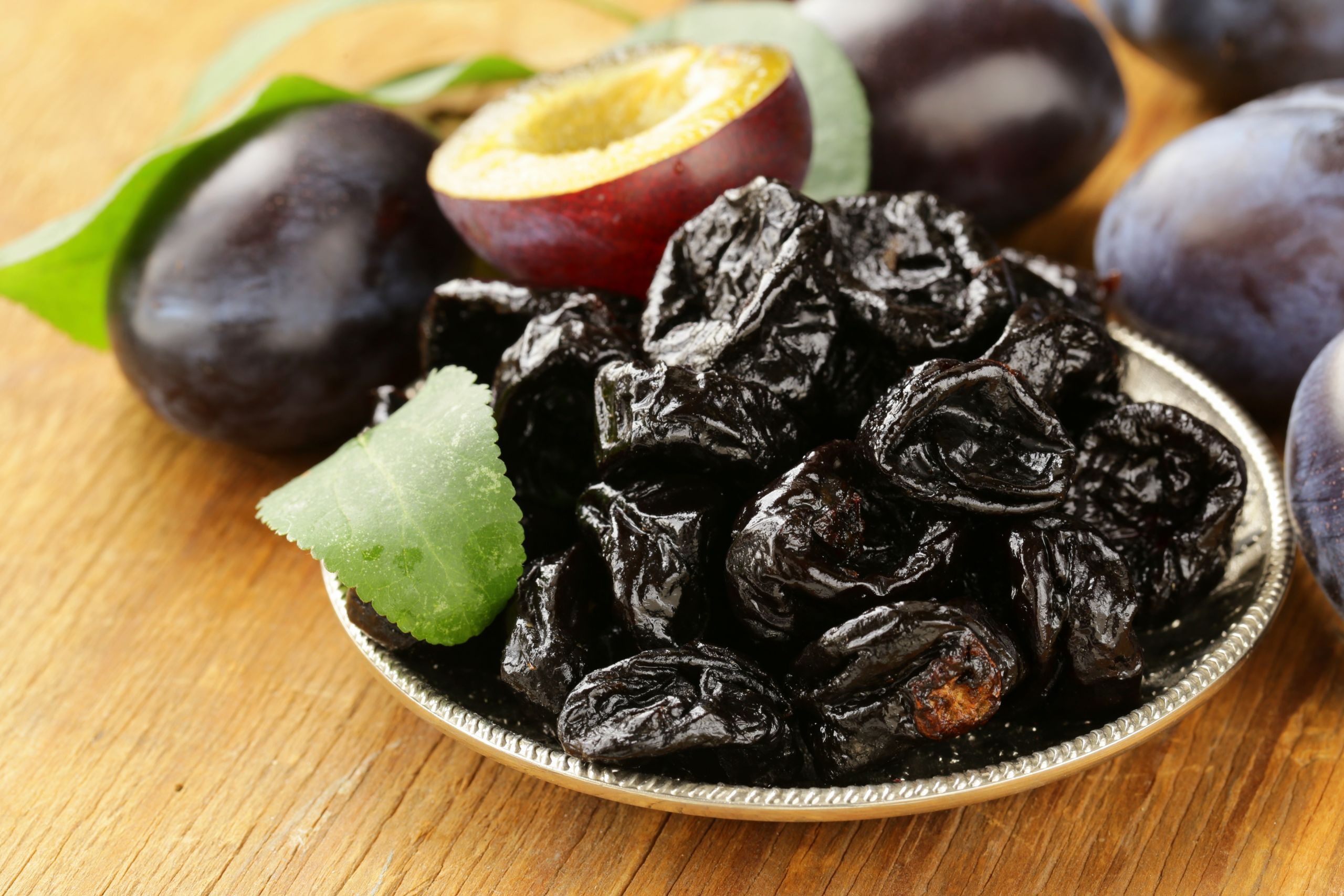
    Following a successful public hearing, the California Prune Board (CPB) has been authorized by the California Department of Food and Agriculture (CDFA) to continue for another five years through July 31, 2025 – without the need for an industry referendum. At the hearing, prune growers and processors voiced unanimous support for the CPB, along with sharing numerous examples of the board’s favorable results on behalf of the California Prune industry.
    “The CPB continuation is a major win for California Prune growers, processors and handlers,” said Joe Turkovich, California Prune grower and Chairman of the California Prune Board. “The board’s work is vitally important to the success of the prune industry. It has carefully considered strategic priorities that will continue building industry momentum for the next five years and beyond.”

    California Prune Board: Delivering Leadership and Value
    The hearing comes amid industry headwinds facing California agriculture in general, such as rising labor costs and increasing regulations. Additionally, the California Prune industry has specific challenges including a global market driven by low prices and smaller, inferior quality imported fruit.

    “We have navigated through many challenges and are currently addressing others – such as tariffs that create major impediments to growing markets – all while knowing there are many challenges around the corner. Yet, we believe in the values the industry has together set forth,” said Donn Zea, Executive Director of the California Prune Board. “Our board and committee members are dedicated to the industry’s success and bring integrity and unique perspective to each discussion. The CPB team around the world is both humbled and proud to join them for the hard work that lies ahead.”

    Together, we have achieved much as a board and as an industry, added Zea, citing examples such as:

    • Securing more than $50 million in United States Department of Agriculture (USDA)/Agricultural Marketing Service (AMS) purchases of California Prunes during a three-year timeframe (2017 – 2019) for school nutrition programs and food banks
    • Dedicating more than $1.25 million during the past three years to nutrition research to scientifically validate the remarkable health benefits of California Prunes for gut and bone health, as well as
      overall wellness
    • Investing more than $1.3 million during the past three years to crop production research, including important findings and advancements related to mechanical pruning, rootstock anchorage, new varietal development, and pest and disease control
    • Securing $11.4 million in federal grant funding for export programs, while partnering with the Foreign Agricultural Service (FAS) each year to defend, grow and develop international markets
    • Being recognized by FAS as “highly effective” in CPB proposal quality, strategic execution, and financial and regulatory compliance
    • Developing an extensively researched, thoroughly vetted new California Prunes brand to unite the global industry under a cohesive banner to communicate the one-of-a-kind premium nature of California Prunes

    California Prune Board: Building on the Momentum, Advancing Priorities
    With input from numerous industry members and under the leadership of the CPB executive committee, the board has outlined key priority areas to rally the industry’s efforts. Focus areas include:

    • Nutrition research
    • Trade policy and market support
    • Industry unification
    • Production research
    • Global visibility expansion for California Prunes

    “We have listened intently to California Prune growers and handlers to identify these priority areas that will inform our focus, guide our decisions, and ultimately, make a positive and sustained difference for the global California Prune industry,” said Zea.

    California is the world’s largest producer of prunes providing about 40 percent of the world’s supply and more than 90% of the U.S. supply. Today, there are more than 40,000 bearing acres of California Prune orchards concentrated in the Sacramento and San Joaquin Valleys.

    ABOUT THE CALIFORNIA PRUNE BOARD
    Created in 1952, The California Prune Board aims to amplify the premium positioning and top-of-mind awareness of California Prunes through advertising, public relations, promotion, nutrition research, crop management and sustainability research, and issues management. The California Prune Board represents approximately 800 prune growers and 28 prune, juice, and ingredient handlers under the authority of the California Secretary of Food and Agriculture.

  • US Sweet Cherry Production Down 6 Percent (California Increases)

    US Sweet Cherry Production Down 6 Percent (California Increases)

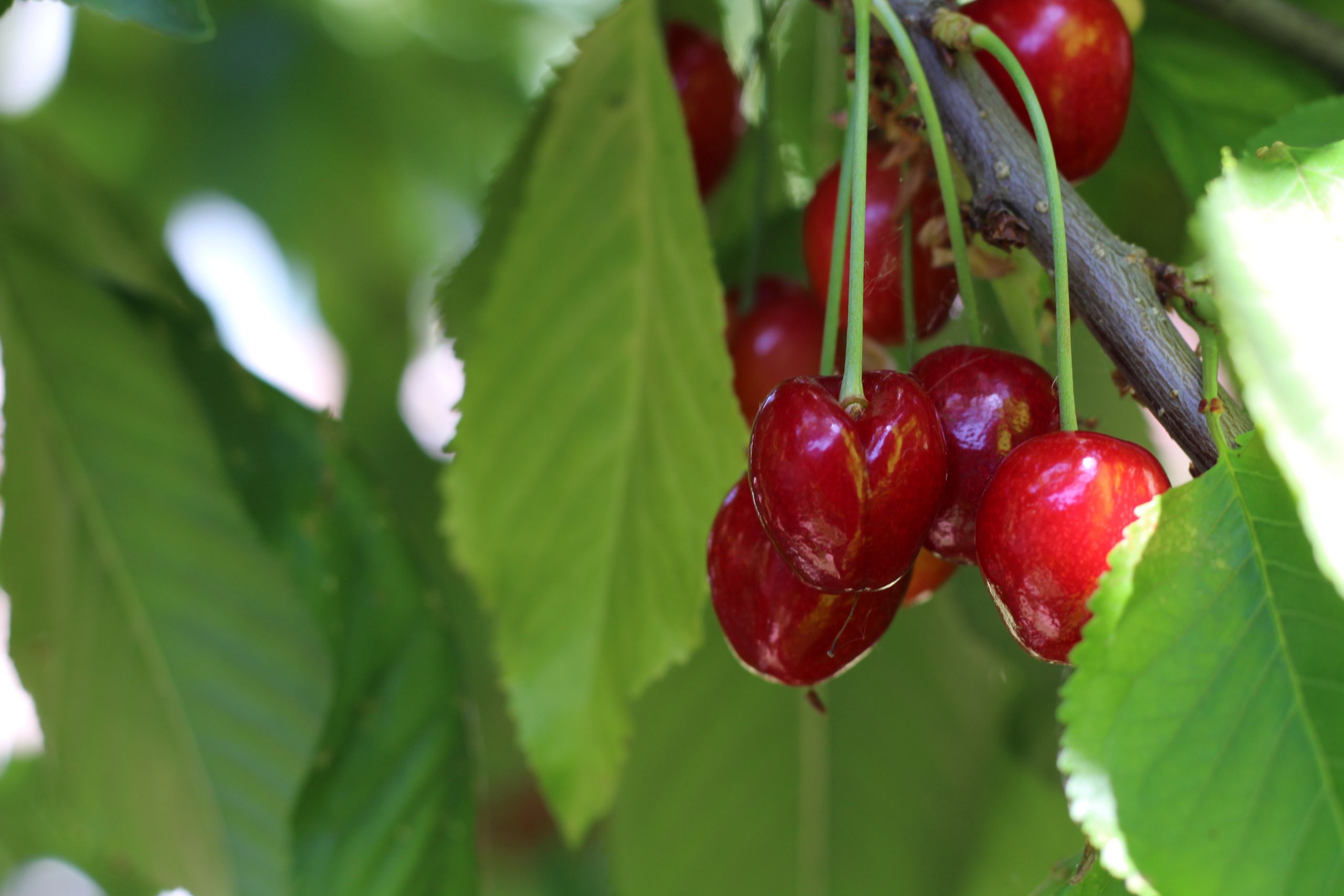
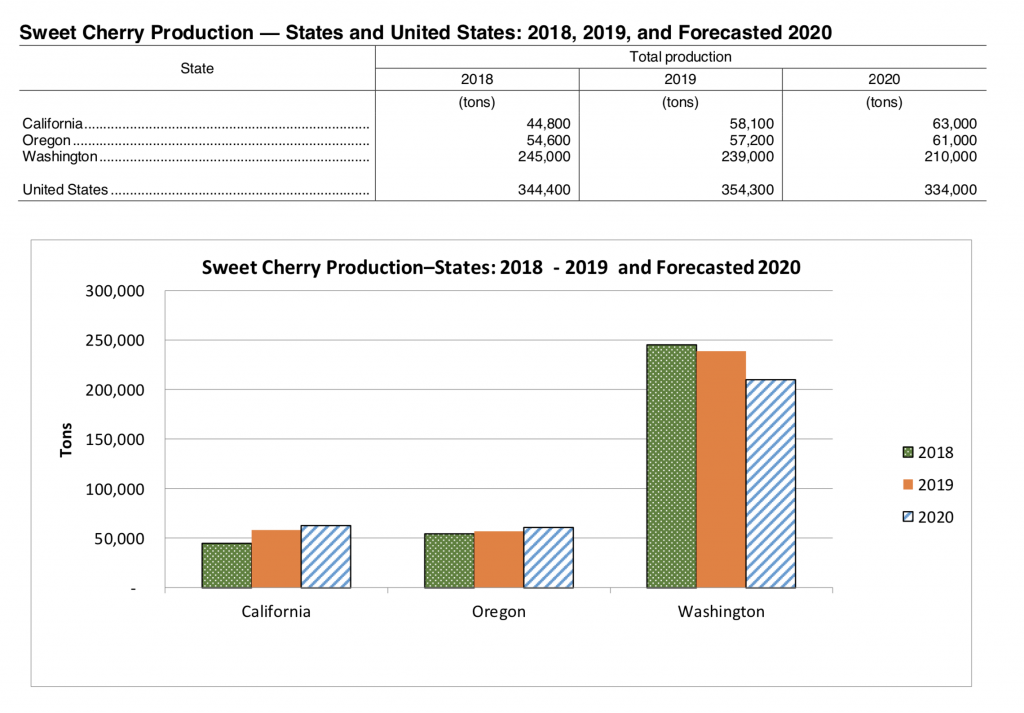
    United States sweet cherry total production for 2020 is forecast at 334,000 tons, down 6 percent from 2019. In California, growers reported sufficient chill, despite an unusually warm winter. Cool weather in March extended the fruit growing season, which led to increased expected yields compared with the previous season. In Oregon and Washington, severe cold snaps in February and mid-March had varying impacts across the region. The later blooming varieties were well behind the rest of the crop, leading to lower expected yields, especially in Washington. 

    Tart Cherry Production Down 25 Percent

    United States tart cherry total production for 2020 is forecast at 197 million pounds, down 25 percent from the 2019 production. In Michigan, the largest tart cherry producing State, an early-May frost damaged the crop throughout the State and most significantly in southwestern Michigan. In Wisconsin, growers reported some crop damage due to heavy winds and frost during blossom. In Washington, growers expressed some concern due to freezing temperatures. 

  • Study Finds 82 Percent of Avocado Oil Rancid or Mixed With Other Oils

    Study Finds 82 Percent of Avocado Oil Rancid or Mixed With Other Oils

    Consumer demand is rising for all things avocado, including oil made from the fruit. Avocado oil is a great source of vitamins, minerals and the type of fats associated with reducing the risk of heart disease, stroke and diabetes. But according to new research from food science experts at the University of California, Davis, the vast majority of avocado oil sold in the U.S. is of poor quality, mislabeled or adulterated with other oils.


    In the country’s first extensive study of commercial avocado oil quality and purity, UC Davis researchers report that at least 82 percent of test samples were either stale before expiration date or mixed with other oils. In three cases, bottles labeled as “pure” or “extra virgin” avocado oil contained near 100 percent soybean oil, an oil commonly used in processed foods that’s much less expensive to produce.

    “I was surprised some of the samples didn’t contain any avocado oil,” said Selina Wang, Cooperative Extension specialist in the Department of Food Science and Technology, who led the study recently published in the journal Food Control. “Most people who buy avocado oil are interested in the health benefits, as well as the mild, fresh flavor, and are willing to pay more for the product. But because there are no standards to determine if an avocado oil is of the quality and purity advertised, no one is regulating false or misleading labels. These findings highlight the urgent need for standards to protect consumers and establish a level playing field to support the continuing growth of the avocado oil industry.”

    Testing domestic and imported brands  

    Wang and Hilary Green, a Ph.D. candidate in Wang’s lab, analyzed various chemical parameters of 22 domestic and imported avocado oil samples, which included all the brands they could find in local stores and online. Wang and Green received a $25,000 grant from Dipasa USA, part of the Dipasa Group, a sesame-seed and avocado-oil processor and supplier based in Mexico.

    “In addition to testing commercial brands, we also bought avocados and extracted our own oil in the lab, so we would know, chemically, what pure avocado oil looks like,” Wang said.

    Test samples included oils of various prices, some labeled extra virgin or refined. Virgin oil is supposed to be extracted from fresh fruit using only mechanical means, and refined oil is processed with heat or chemicals to remove any flaws.

    Fifteen of the samples were oxidized before the expiration date. Oil loses its flavor and health benefits when it oxidizes, which happens over time and when exposed to too much light, heat or air. Six samples were mixed with large amounts of other oils, including sunflower, safflower and soybean oil.

    Only two brands produced samples that were pure and nonoxidized. Those were Chosen Foods and Marianne’s Avocado Oil, both refined avocado oils made in Mexico. Among the virgin grades, CalPure produced in California was pure and fresher than the other samples in the same grade.

    A push for standards

    Ensuring quality is important for consumers, retailers, producers and people throughout the avocado oil industry. Retailers want to sell quality products, shoppers want to get their money’s worth and honest producers want to keep fraudulent and low-quality oil out of the marketplace.

    But since avocado oil is relatively new on the scene, the Food and Drug Administration has not yet adopted “standards of identity,” which are basic food standards designed to protect consumers from being cheated by inferior products or confused by misleading labels. Over the last 80 years, the FDA has issued standards of identity for hundreds of products, like whiskey, chocolate, juices and mayonnaise. Without standards, the FDA has no means to regulate avocado oil quality and authenticity. 

    Avocado oil isn’t the only product without enforceable standards. Honey, spices and ground coffee are other common examples. Foods that fetch a higher price are especially ripe for manipulating, especially when adulterations can be too subtle to detect outside a lab.

    Wang is working to develop faster, better and cheaper chemical methods to detect adulteration so bulk buyers can test avocado oil before selling it. She is also evaluating more samples, performing shelf-life studies to see how time and storage affect quality, and encouraging FDA officials to establish reasonable standards for avocado oil.

    Wang has experience collaborating with industry and the FDA. Ten years ago, she analyzed the quality and purity of extra virgin olive oil and discovered that most of what was being sold in the U.S. was actually a much lower grade. Her research sparked a cascade of responses that led California to establish one of the world’s most stringent standards for different grades of olive oil. The FDA is working with importers and domestic producers to develop standards of identity for olive oil.

    “Consumers seeking the health benefits of avocado oil deserve to get what they think they are buying,” Wang said. “Working together with the industry, we can establish standards and make sure customers are getting high-quality, authentic avocado oil and the companies are competing on a level playing field.”

    Tips for consumers

    • The flavor of virgin avocado oil can differ by varieties and region. In general, authentic, fresh, virgin avocado oil tastes grassy, buttery and a little bit like mushrooms.
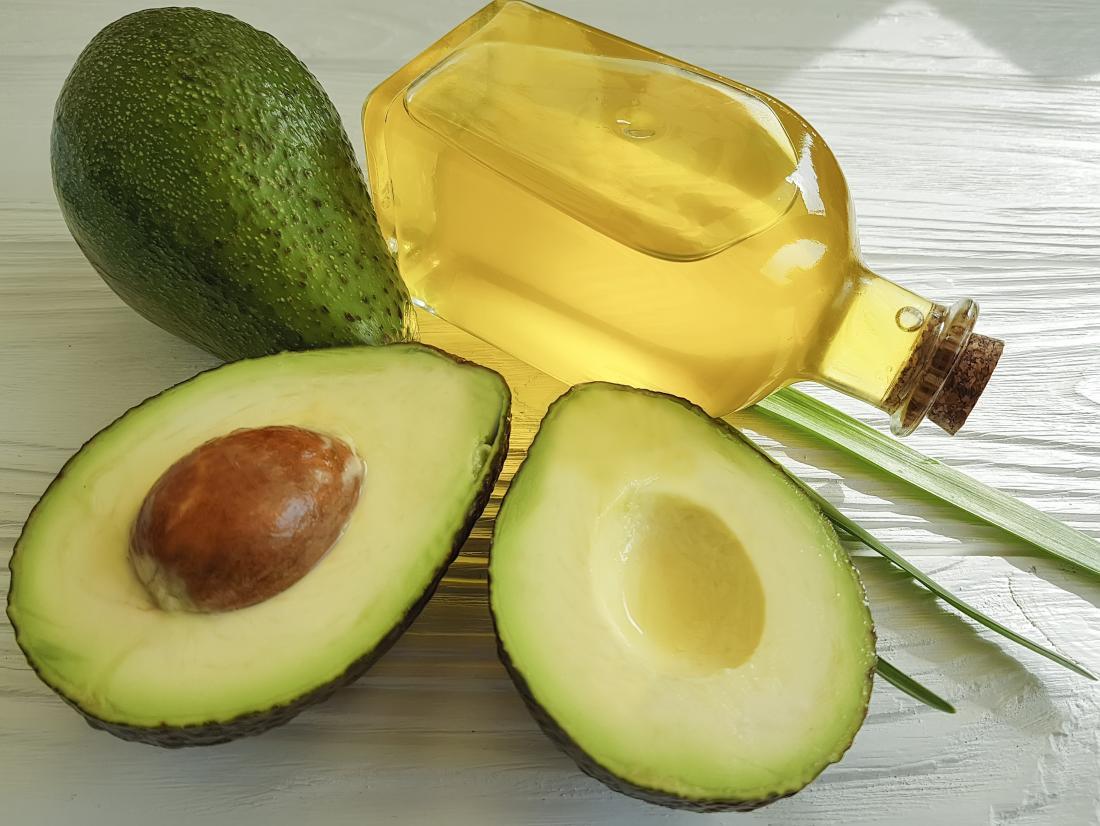
    • Virgin avocado oil should be green in color, whereas refined avocado oil is light yellow and almost clear due to pigments removed during refining.
    • Even good oil becomes rancid with time. It’s important to purchase a reasonable size that can be finished before the oil oxidizes. Store the oil away from light and heat. A cool, dark cabinet is a good choice, rather than next to the stove.  
    • How do you know if the oil is rancid? It starts to smell stale, sort of like play dough.
    • When possible, choose an oil that’s closest to the harvest/production time to ensure maximum freshness. The “best before date” is not always a reliable indicator of quality.

    – By Diane Nelson, UC Davis

  • COMMISSION PROMOTES JUNE CALIFORNIA AVOCADO MONTH

    COMMISSION PROMOTES JUNE CALIFORNIA AVOCADO MONTH

    Summer 2020 marks the ninth year the California Avocado Commission (CAC) has celebrated California Avocado Month, showcasing the availability and versatility of the premium fruit during peak harvest in June. This year, with extended safer-at-home orders in states with the majority of California avocado distribution, the Commission placed renewed emphasis on recipes consumers can prepare at home. “Consumers are continuing to do more cooking at home and they are seeking recipes both for simple comfort foods and for ideas that break the boredom,” noted Jan DeLyser, CAC’s vice president marketing. “During California Avocado Month CAC is promoting recipes on both ends of the spectrum.”

    The Commission partnered with Chef Jordan Kahn of Vespertine in Culver City (who was named “best new chef” in 2017 by Food & Wine Magazine) to create a variety of California avocado-centric recipe concepts. When the in-person California Avocado Month media preview event was cancelled in May, the Commission quickly pivoted and delivered Chef Kahn’s culinary creations and branded California avocado items to the homes of key Los Angeles media and influencers. These personalized deliveries were designed to generate excitement for peak California avocado season and inspire the influencers to share their love for their home-state fruit on their social channels.

    To meet consumers’ penchant for healthy and creative California avocado recipes they can easily prepare at home, the Commission partnered with four award-winning chefs who developed recipes they felt would become the next hottest trend in avocados — in other words, the “next avocado toast.”

    The Commission also partnered with 11 influential California Avocado Blogger Advocates. Throughout the month of June these advocates are publishing unique recipes, blogs posts and photography on their social channels while highlighting techniques that will help consumers prepare fresh California avocado snacks and meals at home.

    CAC’s “Living Well” Brand Advocates will showcase the nutritious benefits of the fruit with recipes consumers can enjoy throughout the day. Registered dietitian nutritionist (RDN) Elizabeth Shaw is sharing California avocado recipes suited for any summer occasion — from backyard picnics to holiday celebrations — on her blog, social channels and ABC’s San Diego Connect. Culinary influencer Patty Mastracco will be a guest on Sacramento’s KTXL FOX40. During the two-part live television segment she will feature grilled California avocados as a great addition to classic summer recipes for the American summer holidays and beyond. RDN Manuel Villacorta crafted a recipe focused on a top health issue facing men today: hearth health. His California Avocado Steak Sandwich Recipe provides consumers with a grilled summer alternative that can be served as a sandwich or salad.

    Rounding out the California Avocado Month promotions are “The best avocados have California in them” advertising campaign, consumer emails, California Avocado Month posts on the Commission’s social media platforms and promotional videos. These assets will appear on streaming video, digital and social channels to reach consumers who continue to shelter at home and encourage them to seek out their favorite fruit during the peak of California avocado season.

  • PMA Launches the Essentials of Produce Safety — Online Professional Training Program

    PMA Launches the Essentials of Produce Safety — Online Professional Training Program

    The Produce Marketing Association (PMA) has announced the launch of its eLearning certificate course Essentials of Produce Safety, an entirely online, affordable and in-depth program covering the key challenges and best practices in produce safety. The course is the first certificate program in PMA’s new educational platform offering, FreshEd Academy. The course was developed in partnership with Intertek Alchemy, the industry leader in produce safety eLearning solutions.

    “FreshEd Academy is our commitment to delivering thought leadership to the produce and floral industries, while providing member partners with innovative, yet affordable, educational solutions” said Gina Jones, VP of Insights and Analytics at PMA. “Essentials of Produce Safety is the first of a number of courses and broader initiatives we are launching that pick up where today’s traditional training programs end.”

    Taught by produce safety experts with real life understanding of the challenges and risks, Essentials of Produce Safety is available to individual learners and employee groups alike, with all enrollees benefitting from:

    • Enhanced produce safety proficiency
    • Improved communication across the organization and supply chain
    • Immediate application of learnings to the work environment

    “It is critically important for produce safety supervisors and managers to have an opportunity to receive education on why they are doing what they do, and to gain insights into how to do it even better,” says course author, instructor and former PMA Chief Science & Technology Officer, Dr. Robert Whitaker. “Essentials of Produce Safety is designed to provide that educational experience; converting staid food safety training into an educational opportunity that cultivates industry leading food safety professionals.”

    Essentials of Produce Safety is delivered entirely online via a device responsive learning management system that enables learners to complete the course anywhere, on any device — desktop, tablet or mobile. The course consists of seven learning modules, a review module, and a certificate exam.

    Essentials of Produce Safety instructor Afreen Malik, Director of Technical Services at International Food Safety adds “understanding the science based fundamental principles of produce safety can help lead to a safer produce supply chain globally. Essentials of Produce Safety helps us to do just that.”

    For more information, visit: https://freshed.academy.