Category: Industry News

  • Over Half of Mexican Tomato Production is Destined for the U.S.

    Over Half of Mexican Tomato Production is Destined for the U.S.

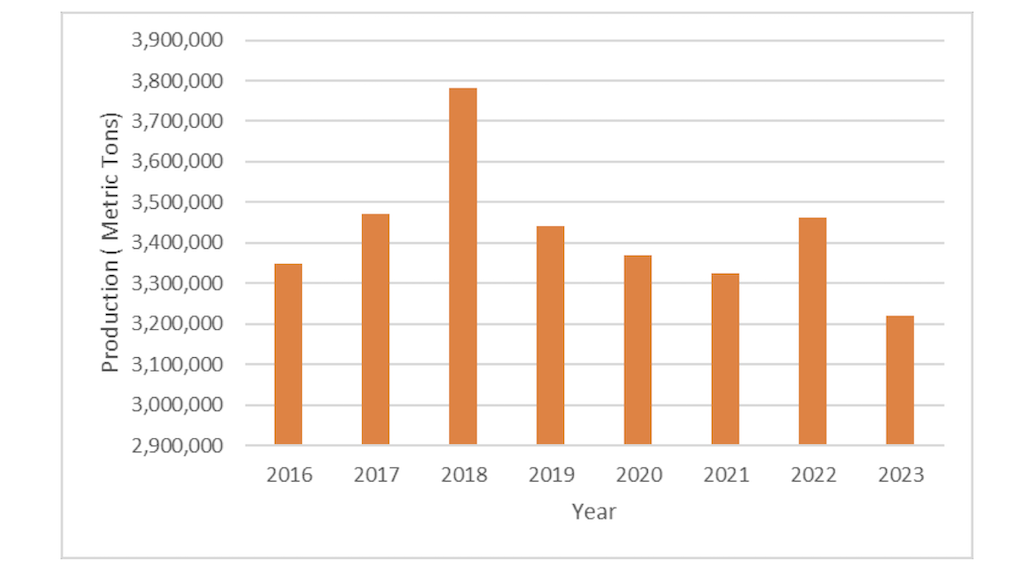
    Mexico’s 2024 tomato production is forecast at 3.30 million metric tons (MMT), a two percent increase over 2023, driven by export demand and investment in protected agriculture systems. Production in 2023 is estimated at 3.22 MMT, down eight percent compared to the previous year due to water constraints from drought conditions in some production areas. Drought and adverse weather impacts remain the main challenges for Mexico’s tomato production. While some producers in Mexico have invested in protected production, other regions continue to produce in open fields, with lower yields and more exposure to climatic factors. Sinaloa remains the leading state in tomato production, contributing 22 percent of national production.

    The United States is Mexico’s top tomato export market, with 1.82 MMT in exports valued at USD 2.7 billion in 2023, up by one percent in terms of volume and ten percent in value compared to 2022. Investments in greenhouse technology in recent years has enabled producers to deliver better quality products.

    Production

    Mexico’s tomato production is forecast to increase two percent year-on-year in 2024 to 3.30 MMT, due to strong export demand, mainly from the United States. Production in 2023 showed an 8 percent decline compared with 2022, falling to 3.22 MMT. The top five tomato production states deliver over 51 percent of national production. Sinaloa remains the leading tomato producer with 22 percent of national production, followed by San Luis Potosí (13 percent) and Michoacán (7 percent). Baja California Sur, Jalisco, and Sonora each contribute 5 percent to total production.

    Adverse climate conditions have contributed to a shift towards protected production during the last decade, mainly production in greenhouses, shade houses, and high tunnels instead of open field cultivation. This shift decreased production in the short-term, while resulting in increased production over time as yields and produce quality rose. In the areas where open field cultivation predominates, adverse weather conditions such as drought, excessive rain, or abrupt temperature changes usually cause significant production losses. The shift towards protected tomato production in Mexico began in the early 2000s but accelerated during the beginning of the 2010s. The trend has been steadily increasing since then, as producers look to increase their yields.

    Mexico’s tomato production occurs throughout the year across several geographic regions. From December to April, the state of Sinaloa, Mexico`s largest open-field and shade house tomato producer, dominates the domestic market and exports over 80 percent of its crop to the United States. From May to November, the major producing states include San Luis Potosi, Michoacan, Baja California Sur, Jalisco, and Sonora.

    Mexico produces a wide variety of tomatoes, with the most common being the cherry, bola, and saladette varieties, which are popular for their sweet flavor and versatility. Other high end or gourmet tomatoes varieties, including grape and cocktail, are grown almost exclusively for export to the United States. A wide variety of tomatoes are used in the processing industry due to their intense flavor and high yield.

    Production varies seasonally, with peak production in October and the lowest production period in March. Local producers report efforts to extend their growing and harvesting season from 28 to 40 weeks, partly through the use of substrates growing material. For example, production of saladette tomatoes in Jalisco state begins in July and stretches into January, at which point the plants are transplanted to a new substrate to promote continued production.

    On average, growers can harvest around 30 kilograms per square meter over the course of the season, which equates to about 1 kilogram per square meter per week. Large producers enjoy year-round production due to improvements in water management, greenhouse production and other technology improvements.

    Profits have been constrained in recent years by Mexico’s strong “super peso” and the rising cost of substrates, labor, pesticides, and other inputs. Most producers obtain substrate from suppliers in Europe and Asia, while some partner with research institutions to develop their own substrate. In Mexico, greenhouse structures are made of steel, which has seen high prices in recent years but typically lasts around three years.

    Tomato prices tend to be highest from October to December, when production is lower outside of the top producing state of Sinaloa.

    Growing Conditions

    Mexico’s tomato production is year-round, with the October to December period accounting for 42 percent of production. In recent years Mexican tomato growers have been implementing and adapting protected growing methods to improve tomato yields. According to Government of Mexico data, approximately 66 percent of tomato production takes place in greenhouses while the remaining 34 percent is carried out in open fields. Protected production allows for better pest and disease management, resulting in better yields.

    Tomatoes require well-drained loamy or sandy loam soils, with moisture holding capacity. In Mexico, the best temperatures for tomato production are between 60°F and 85°F, with temperatures above or below this range tending to slow growth and fruit maturation. Ideal conditions also include constant sunlight, humidity of 65-85%, and between one and two inches of water per week.

    Consumption

    Graph 4: Monthly Share of Tomato Production

    According to the Government of Mexico, the annual per capita consumption of tomatoes is 12.7 kgs per person, making the tomato the number one vegetable consumed by Mexicans. Tomatoes are the foundation of Mexican cuisine, an integral part of the basic food basket, and essential to every Mexican household. Tomatoes are predominately used for sauces (both spicy and sweet), tacos, and stews. Tomatoes offer flavors that balance out the spicy elements of chili peppers, providing versatility to recipes used in both traditional and modern Mexican cooking.

    Trade

    Aside from distilled spirits and beer, tomatoes are the number two agricultural product exported to the United States at USD 2.71 billion, just behind avocados at USD 2.724 billion and ahead of berries at USD 1.971 billion. Mexico fulfills 25 percent of the worldwide demand, making it the eight largest producer worldwide.

    According to Trade Data Monitor, 2023 Mexican tomato exports totaled USD 3.02 billion and 2 million metric tons (MMT). The main export market is the United States with 99.8 percent of exports, followed by Canada and Japan. 2023 represented a record-breaking year for Mexican tomatoes being exported to the northern neighbor.

    Approximately 90% of saladette production is exported to the United States, with cherry, grape and other high end niche varieties exported almost entirely. According to producers, transport time from Mexican fields to U.S. supermarket shelves is about two days, via border ports in Texas and Arizona. Mexico’s 2023 tomato imports totaled less than USD 1 million, primarily from the United States.

    Policy

    The Tomato Suspension Agreement (TSA) between the U.S. Department of Commerce and signatory producers/exporters of fresh tomatoes grown in Mexico ensures that signatory producers and exporters sell Mexican tomatoes at or above the TSA reference price to eliminate the injurious effects of exports of fresh tomatoes to the United States. The Agreement, which was updated effective September 19, 2019, applies to all fresh and chilled tomatoes except tomatoes for processing. — By Manuel Mandujano, USDA Foreign Ag Service
  • Avocados Get Hot — 4 Things to Consider Next

    Avocados Get Hot — 4 Things to Consider Next

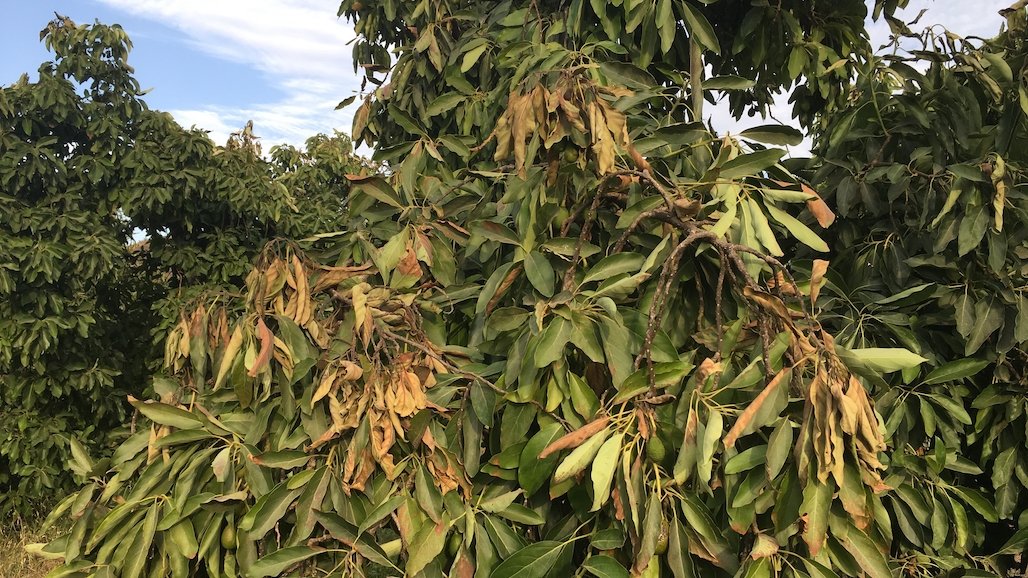
    It’s been hot and there is leaf damage. Those damaged leaves can protect the tree now and the fruit. Don’t prune the trees until you see the full extent of the damage and can still use those dead leaves to protect the rest of the tree.
    Fruit drop happens soon after, or slowly, depressingly over several weeks after a heat wave. The stem turns brown, cutting off moisture to the fruit, and they drop.

    If you see significant leaf drop in your groves due to excessive heat, the following actions are recommended:

    • As soon as possible, whitewash branches exposed to the sun with special attention paid to branches on the west and south sides of the tree.
    • Trees that lose a significant portion of leaves cannot efficiently move water, therefore restrict irrigation amounts to ensure you avoid creating wet, soggy conditions that can lead to root rot. It’s best to irrigate less frequently and with smaller amounts of water.
    • Do not prune your trees — leave hanging leaves in place to protect the tree from sunburn. Once new tree growth has occurred (in the next 3 – 6 months), pruning can take place on living wood.
    • Adjust fertilization as you would with a frost-damaged tree: reducing the amount of fertilizer until the tree is re-established. If you see signs of a particular nutrient deficiency, adjust fertilization accordingly.— By Ben Faber, UC Cooperative Extension

  • Congressman John Duarte Shares Legislative Priorities for California Ag in Crisis

    Congressman John Duarte Shares Legislative Priorities for California Ag in Crisis

    In November 2022, the newly realigned 13th Congressional District of California elected to send a farmer to represent them in congress. Representative John Duarte has been at the job for about a year in a half and has been working on a number of bills to support California’s specialty crop industries, which are in desperate need of recovery from many challenges brought on by the pandemic and drought, among other global trade, inflation, and invasive pest pressures. Watch his brief interview with Matthew Malcolm from California Ag Network to learn more.

    Please thank this video’s sponsor Southern California Gas Company for their industry support.

  • Vietnam Grants Market Access For California Peaches And Nectarines

    Vietnam Grants Market Access For California Peaches And Nectarines

    The United States Department of Agriculture (USDA) announced that Vietnam has granted market access for California peaches and nectarine effective immediately. Eliminating the phytosanitary barriers keeping California peaches and nectarines out of the Vietnamese market required multiple rounds of technical negotiations over the course of several years.

    “This market access is a big win for California’s nectarine and peach producers,” said USDA’s Jenny Lester Moffitt, Under Secretary for Marketing and Regulatory Programs. “Our APHIS trade team members have worked diligently to make this opened market a reality for Vietnam’s citizens. We are thrilled they will now have access to the fine peach and nectarine fruit that California produces.”

    The California Fresh Fruit Association (CFFA) would like to extend its appreciation to the USDA’s Animal and Plant Health Inspection Service, Foreign Agricultural Service, and Agricultural Research Service’s negotiators and experts, the California Department of Food and Agriculture, and the Fresno County and Tulare County Agricultural Commissioner offices for their invaluable contributions to this process.

    “This is a fantastic example of USDA scientists providing the quality and objective research that was essential for Vietnam’s approval and for future U.S. industry exports,” said Dr. Chavonda Jacobs-Young, USDA Chief Scientist and Under Secretary for Research, Education and Economics. “This new international market access underscores the critical value of federal scientific research and data to the overall food supply system.”

    There will be strict production and packing protocols in place but given the enduring success of existing export programs, California stone fruit shippers have already demonstrated a commitment to meeting Vietnam’s requirements.

    “The California stone fruit industry identified Vietnam as a strategic export market because Vietnamese consumers value high quality and sweet fruit. Naturally, the varieties California growers have invested in over the years will be popular there. Access to this market is something our industry has been working towards for a significant amount of time, so we are looking forward to introducing the best stone fruit in the world to a new group of consumers” said Caroline Stringer, CFFA Director of Trade.

    The California Fresh Fruit Association is a voluntary, public policy organization that represents growers, packers, and shippers of the California table grape, blueberry, kiwi, pomegranate, and deciduous tree fruit communities. CFFA serves as a representative for these growers, shippers, and packers, on issues at both the state and federal levels. More information on the Association can be found at www.cafreshfruit.com.

  • International Trade Commission Determine Antidumping And Countervailing Duties Remain Essential To Prevent Injury To The US Olive Industry

    International Trade Commission Determine Antidumping And Countervailing Duties Remain Essential To Prevent Injury To The US Olive Industry

    The California table olive industry commends today’s 4-0 vote by the International Trade Commission (ITC) affirming that the antidumping (AD) and countervailing duty (CVD) orders first imposed on Spanish ripe olives in 2018 must remain in place. The ITC’s determination was based on its findings that a revocation of the olive AD/CVD orders is reasonably likely to lead to a continuation or recurrence of material injury to the California ripe olive industry.

    The ITC’s unanimous vote in favor of the California industry follows companion determinations issued by the Department of Commerce (Commerce) in late 2023 finding that a revocation of the AD and CVD olive orders would lead to a recurrence of dumping margins as high as 25.5% and CVD margins as high as 13.9%. These ITC and Commerce decisions were made in the context of the five-year “Sunset Review” procedures required under US trade law and, because of the affirmative rulings, now extend the olive AD/CVD orders for another five years. The Musco Family Olive Company successfully litigated these proceedings on behalf of the California-based ripe olive industry.

    “The US Government and court systems have repeatedly confirmed over the last five years that the Spanish industry is still benefiting from unfair European Union (EU) subsidies and is still dumping its ripe olives in the US market,” said Michael Silveira, Chairman of the Olive Growers Council of California. “If it weren’t for the US Government’s ongoing AD/CVD orders on Spanish olives, American table olive production, and hundreds of family farmers and allied jobs would be in serious jeopardy,” he said.

    For years, the EU has tried to shield its unfair, disproportionate farm subsidy payments from external legal challenges. After the US issued its olive AD/CVD orders in 2018, the EU has worked to overturn the olive orders by challenging them in the WTO and politically pressuring the US Government to terminate the olive tariffs.

    The EU hopes to undermine a fundamental US trade enforcement law, Sec. 771B of the Tariff Act of 1930, used by Commerce to calculate the olive orders, and by undermining that law, terminate the olive tariffs. As the US courts have made clear, however, Sec. 771B is an important US trade law intended by Congress to ensure effective trade relief for American agriculture.

    Silveira said, “The EU and Spanish interests want the US Government to overturn US trade law to allow the Spanish industry to go back to selling its dumped and subsidized olive prices with no consequences.” He added, “that would only reinforce the EU’s protectionist agricultural policies and, by eroding trade enforcement, would undermine American-grown production and US food security.”

    The US Government’s AD/CVD orders on Spanish olives have given California olive farmers the time they need to reinvest in modern farming techniques, including through Musco’s “One Million Trees” initiative to help transition the industry to mechanized, drought-friendly acreage. Dennis Burreson, a California olive grower and Vice President of Field Operations and Industry Affairs for Musco Family Olive Company, highlighted the importance of the ITC and Commerce rulings Musco achieved for the California industry, adding “The olive orders, together with our industry-led investments, are a great example of how to break the cycle of unfair foreign trade practices and rebuild high quality, environmentally-friendly American production and American jobs.”

    The Olive Growers Council was organized as a bargaining cooperative with the mission to try to improve prices paid to farmers for their table olives delivered to the commercial processors.

  • Study Reveals Consumer Path to Purchasing Potatoes

    Study Reveals Consumer Path to Purchasing Potatoes

    Navigating the consumer path to purchase can be complex, influenced by a countless factors. A new Potato Path to Purchase study from Potatoes USA uncovers key insights into consumer behavior and purchase patterns, offering a deeper understanding of the pre-shopping and in-store experiences that drive potato purchases. In addition to revealing the most recent data, the study provides actionable steps retailers can take to help drive potato sales.

    “Potatoes are a staple in consumers’ kitchens. They earn a place on the table whether it’s a casual Wednesday night or a Thanksgiving feast, and consumer favorability for potatoes translates to valuable opportunities for retailers,1” said Kayla Vogel, senior global marketing manager at Potatoes USA.

    Consumers note quality, price and quantity are the top three potato purchase factors.

    The Consumer Path to Purchasing Potatoes study, fielded by Nielsen IQ, found that shoppers’ path to purchase potatoes is mostly influenced by three key factors with over 90% of potato purchases being pre-planned.

    “Ranking purchase factors, freshness/quality receives the top rating, ahead of price1,” Vogel said. “For retailers, it is important to highlight freshness, including tips on how to best store potatoes at home to optimize shelf life and prevent unnecessary food waste.”

    According to the study, 84% of consumers want transparent bags1 so they can gauge freshness and quality for themselves. Vogel emphasizes merchandisers should create eye-catching displays with quality products and inspiration to try new potato recipes and varieties.

    “In-store, visual displays and inspirational signage drive influence more than discounts and promotions. As budgets tighten, people have remained loyal to potatoes. That means there are opportunities to significantly achieve scaled results through improved visibility, merchandising and cross-merchandising.”

    Potato purchasing decisions are driven by planned meals.

    Pre-store, there are numerous high-impact influences on consumer purchasing decisions, including:

    • Price and promotions in circular flyers. 
    • Recommendations from family and friends. 
    • YouTube recipes. 
    • Products in cookbooks. 
    • Shopping list apps. 
    • Ads in magazines or newspapers. 

    “Meal planning significantly influences pre-trip purchases with 90% of purchases being pre-planned,1” noted Vogel. “It’s important to integrate potatoes into recipe suggestions to optimize their inclusion on consumers’ grocery lists and prioritize pre-store touchpoints to influence consumer decisions.”

    80% of respondents plan which potato type they will buy with more than 44% going directly to the planned type in-store.

    “In-store buying decisions are predominantly swayed by point-of-purchase displays,” added Vogel. “Retailers and merchandisers can enhance the in-store experience through larger displays, secondary locations, inspirational signage and ensuring potatoes are readily accessible within the store.”

    89% of consumers believe potatoes are versatile and easily adapted to many different types of dishes.1

    “To inspire mealtime with potatoes, provide on-pack and shelf inspiration to show how potatoes can be used in the meal lineup multiple times a week without eating the same thing twice,” noted Vogel. “It’s also important to highlight new ways of using common varieties in special ways as well as expand on special occasions to increase sales.”

    1Nielsen Consumer LLC, Consumer Path to Purchase Potatoes Study 2023

    About Potatoes USA

    Potatoes USA is the national marketing and promotion board representing U.S. growers and importers. Potatoes USA, the largest vegetable commodity board, was established in 1971 by potato farmers to promote the benefits of eating potatoes. For more information on Potatoes USA’s mission to “Strengthen Demand for Potatoes,” visit PotatoGoodness.com.

  • California Table Olive Forecast & Protection from Foreign Imports

    California Table Olive Forecast & Protection from Foreign Imports

    California is the nation’s primary producer of many specialty crops, and table olives is among those choice commodities. Todd Sanders from the Olive Growers Council of California visited with Matthew Malcolm on California Ag Network to provide an update on the developing 2024 olive crop as well as emphasizing the need for the U.S. to continue protecting the industry from foreign imports with an anti-dumping tariff. Watch this brief interview and read more in California Fruit & Vegetable Magazine.

    Please thank this video’s sponsor Southern California Gas Company for their industry support.

  • 2024 California Apple Forecast & New Campaign to Boost Sales

    2024 California Apple Forecast & New Campaign to Boost Sales

    As apple harvest begins this month in California, Matthew Malcolm from California Fruit & Vegetable Magazine met with the California Apple Commission’s new Director of Programs, Jacqueline Nakashian, to discuss the outlook of the crop this year and an exciting partnership and marketing campaign that will be launching during harvest to boost sales for California grown apples. Watch this brief interview and read more in California Fruit & Vegetable Magazine.

    Please thank this video’s sponsor Southern California Gas Company for their industry support.

  • Holiday Promotions Add Millions to Avocado Volume Sales During Q1

    Holiday Promotions Add Millions to Avocado Volume Sales During Q1

    The Hass Avocado Board (HAB) recently unveiled its newly improved quarterly holiday reports, now featuring holiday promotional sales information. This integration of new holiday promotional sales information empowers retailers, category managers, marketers, and industry leaders with invaluable data to optimize promotions and drive avocado sales growth.

    The latest updates provide detailed analyses of promoted and non-promoted volume and dollar sales, pricing dynamics, lift metrics, and promotional efficiency across various bulk avocado sizes and bagged avocados. The latest report offers in-depth insights on the impact of holiday promotions on avocado volume sales during the first quarter. Big Game, Valentine’s Day, St. Patrick’s Day, and Easter collectively contributed total category promotional gains, boosting first quarter volume sales by more than +23.4M pounds. During Big Game week, large avocado (4225) promotions outperformed small avocados (4046) and bagged avocados, driving +105.1% lift in volume, +47 points higher than the percent volume lift achieved by small avocados (4046).

    Photo Caption: The Hass Avocado Board’s recently published first-quarter retail recap reveals that combined holiday-week avocado promotions boosted first-quarter sales by more than +23M pounds. Large avocado (4225) promotions showed strong performance, with a +105% lift in volume (lbs).

    Key highlights from the report include:

    • Volume and dollar sales soared during the Big Game this year, with 62.2M units sold reaching $59.4M, an increase of +3.8M units and +$3.3M in sales versus the year prior. Promotions drove more than +10.3M pounds in additional sales.
    • During Valentine’s Day, sales reached 49.7M units and $50.7M in sales, with a notable +52.2% increase in promoted organic avocado volume (lbs).
    • On St. Patrick’s Day, 52.0M avocado units were sold, generating $54.7M in sales, a +13.0% increase in dollar sales from the previous year.
    • Easter holiday dollar sales grew +10.6% over the prior year and reached $55.1M despite a slight decrease in unit sales and an overall decline in promoted volume across the category.

    “This update marks a significant stride in understanding consumer trends and avocado promotions surrounding holiday sales,” said Alejandro Gavito, senior business insights and data services manager for the Hass Avocado Board. “By incorporating detailed promotional insights, our reports enable the industry to effectively monitor sales drivers and identify growth opportunities during key holiday periods.”

    These holiday sales insights underscore HAB’s commitment to providing actionable data supporting informed decision-making and fostering industry-wide growth. Findings from this report will be crucial in shaping strategic initiatives and optimizing avocado sales strategies nationwide as consumer preferences evolve.

    For a comprehensive overview of avocado sales performance during each holiday, including performance by region, please visit hassavocadoboard.com and download the full report.

    About The Hass Avocado Board

    The Hass Avocado Board (HAB) exists to help make avocados America’s most popular fruit. HAB is the only avocado organization that equips the entire global industry for success by collecting, focusing, and distributing investments to maintain and expand demand for avocados in the United States. HAB provides the industry with consolidated supply and market data, conducts nutrition research, educates health professionals, and brings people together from all corners of the industry to collectively work towards growth that benefits everyone. The organization also collects and reallocates funds to California and importer associations to benefit specific countries of origin in promoting their avocado brands to customers and consumers across the United States.

  • USDA Expands Insurance Options for California Fruit & Vegetable Growers

    USDA Expands Insurance Options for California Fruit & Vegetable Growers

    The U.S. Department of Agriculture (USDA) is expanding crop insurance options for specialty and organic growers beginning with the 2025 crop year. USDA’s Risk Management Agency (RMA) is expanding coverage options by allowing enterprise units by organic farming practice, adding enterprise unit eligibility for several crops, and making additional policy updates. This is the first of several announcements this summer, which will include the expansion of the shellfish policy in the Northeast and new coverage for grape growers in the West and beyond. These expansions and other improvements build on other recent RMA efforts to better serve specialty crop producers and reach a broader group of producers.

    “The Risk Management Agency is excited to expand coverage options for specialty and organic growers including the availability of enterprise and optional units for many producers,” said RMA Administrator Marcia Bunger. “Expanding our coverage options gives producers more opportunities to manage their risks. We will continue to build on our work through future announcements later this summer.”

    The following changes will be made beginning with the 2025 crop year 

    • Enterprise and Optional Units:
      • Expand Enterprise Units (EU) to almonds, apples, avocado (California), citrus (Arizona, California, and Texas), figs, macadamia nuts, pears, prunes, and walnuts.
      • Allow non-contiguous parcels of land that qualify for Optional Units (OU) to also qualify for EU.
      • Allow EUs by organic farming practice for alfalfa seed, almonds, apples, avocado (California), cabbage, canola, citrus (Arizona, California and Texas), coarse grains, cotton, ELS cotton, dry beans, dry peas, figs, fresh market tomatoes, forage production, grass seed, macadamia nuts, millet, mint, mustard, pears, potatoes (northern, central, and southern), processing tomatoes, prunes, safflower, small grains, sunflower seed, and walnuts. 
      • Expand OUs by organic practice to all remaining crops where OUs are available, and the organic practice is insurable.
    • Walnut Quality Adjustment: Allow sunburned damaged walnuts to be eligible for indemnity payments through quality adjustment.
    • Almond Leaf Year: Expand insurance coverage to younger trees by including trees in their fifth leaf year after being set out.

    These revisions come through the Expanding Options for Specialty and Organic Growers Final Rule published today by the Federal Crop Insurance Corporation (FCIC). This Final Rule will update the Common Crop Insurance Policy Basic Provisions, Area Risk Protection Insurance Basic Provisions, and includes changes to individual Crop Provisions. The enterprise unit availability will continue to be rolled out throughout the year with each crop’s contract change date and RMA will continue to evaluate expanding EUs to additional crops.

    Additional changes in the June 30 Final Rule include:

    • New Breaking Acreage:
    • Reduce administrative burdens on growers and the delivery system by removing written agreement requirements on new breaking acreage.
    • Reduce coverage penalties on perennial specialty crop producers and producers of intensively managed crops, such as alfalfa, when they move to row crop production. This allows for a seamless transition without losing crop insurance coverage.
    • Assignment of Indemnity: Provide flexibility for an indemnity payment to be issued via automated clearing house (ACH) or other electronic means when these methods do not allow for multiple payees.
    • Good Farming Practices (GFP): Streamline and shorten the FCIC GFP reconsideration process by closing the administrative file following FCIC’s initial GFP determination.
    • Double Cropping and Annual Forage: Clarify a producer must prove insurance history for the annual forage crop and meet the current double cropping requirements to receive a full prevented planting payment.

    RMA continues to explore ways to improve risk management tools for specialty crop producers and will be announcing additional program enhancements later this summer. Some of those improvements include:  

      Piloting the Fire Insurance Protection – Smoke Index (FIP-SI) crop insurance program for grapes in California for the 2025 crop year. The pilot program is an index-based endorsement to the Actual Production History (APH) Grape policy that provides additional protection against smoke damage and covers the liability between the APH policy’s coverage level and 95%.

      Expanding the Enhanced Coverage Option (ECO) to walnuts and citrus crops and increasing premium support to be consistent with the Supplemental Coverage Option.

      Expanding the Grapevine insurance program to an additional 29 counties in California. Grapevine insurance offers protection against vine losses in the event of several named perils.

      Releasing new Organic Practice Guidelines to producers for the 2025 crop year. These guidelines are to help producers report planted or perennial acreage insured under a certified organic or transitional practice.

    More Information

    This announcement further advances USDA’s recently announced Specialty Crops Competitiveness Initiative, a Department-wide effort to increase the competitiveness of specialty crops products in foreign markets, enhance domestic marketing, and improve production and processing practices.

    Crop insurance is sold and delivered solely through private crop insurance agents. A list of crop insurance agents is available at all USDA Service Centers and online at the RMA Agent Locator. Learn more about crop insurance and the modern farm safety net at rma.usda.gov or by contacting your RMA Regional Office.