Category: Industry News

  • Fungicide Evaluation for Alternaria Head Rot (Pin Rot) of Broccoli

    Fungicide Evaluation for Alternaria Head Rot (Pin Rot) of Broccoli

    Broccoli head rot, also known as pin rot, can cause significant problems, especially in fall broccoli production in Salinas Valley. Two types of head rot are affecting broccoli, including bacterial head rot and Alternaria head rot (Koike 2010). Differences between those two types can be seen at: https://ucanr.edu/blogs/blogcore/postdetail.cfm?postnum=3861. Here we focus on the Alternaria head rot, caused by the fungi Alternaria spp.

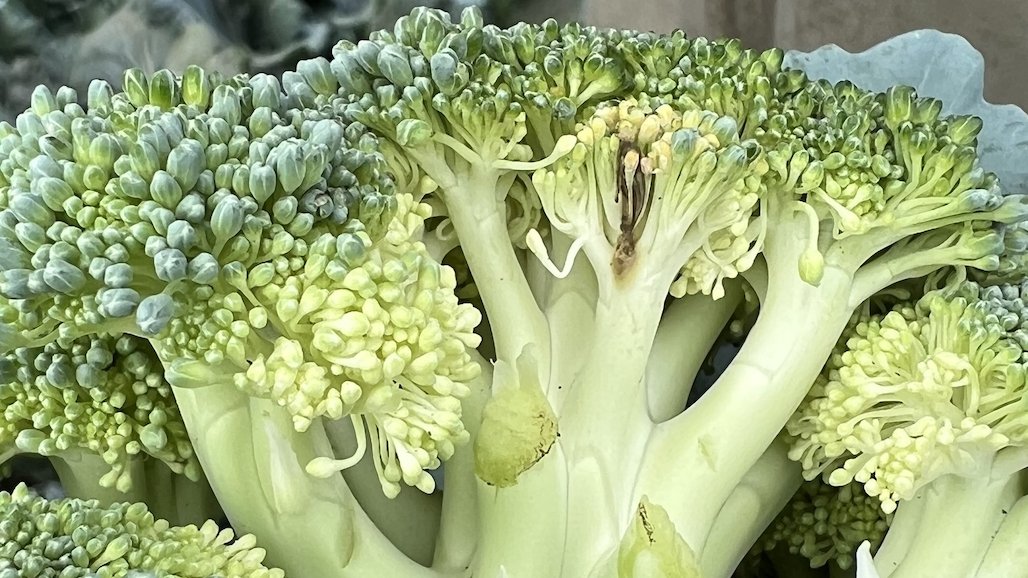
    Symptoms. All aboveground parts of broccoli are subject to infection including heads and leaves. Head rot symptoms start as yellow spots and then turn brown and black (photo 1). The infection can spread from buds to stems (photo 2). With secondary bacteria or fungi infection, further decay occurs.The initial yellow spots resemble brown bead (photo 3), a broccoli disorder that can potentially be caused by excessive temperature, poor growth, or nutrient and water deficiency. However, the brown bead doesn’t rot the stem, and no sign of fungi is presented on the buds. For uncertain cases, scraping the buds to see if the stem rot or fungi are presented is a useful technique. Leaf spot symptoms start as small yellow spots on the old leaves and then form dark, concentrical rings like a target (photo 4). The old spots may become brittle and split open or fall out as shot holes. The high number of leaf spots per plant indicates a higher disease pressure and could be a signal for fungicide application.

    Photo 1. Broccoli Alternaria head rot
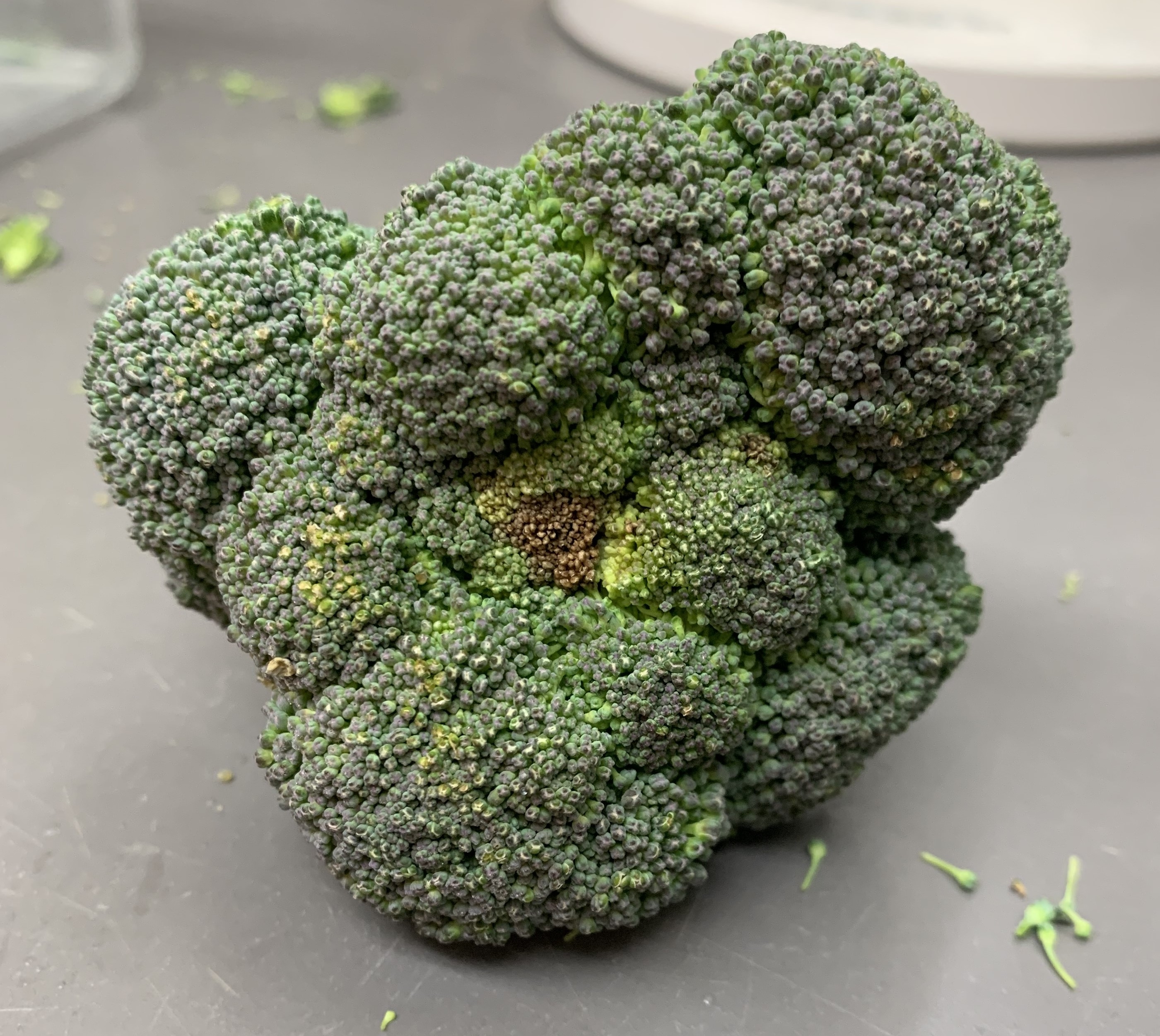
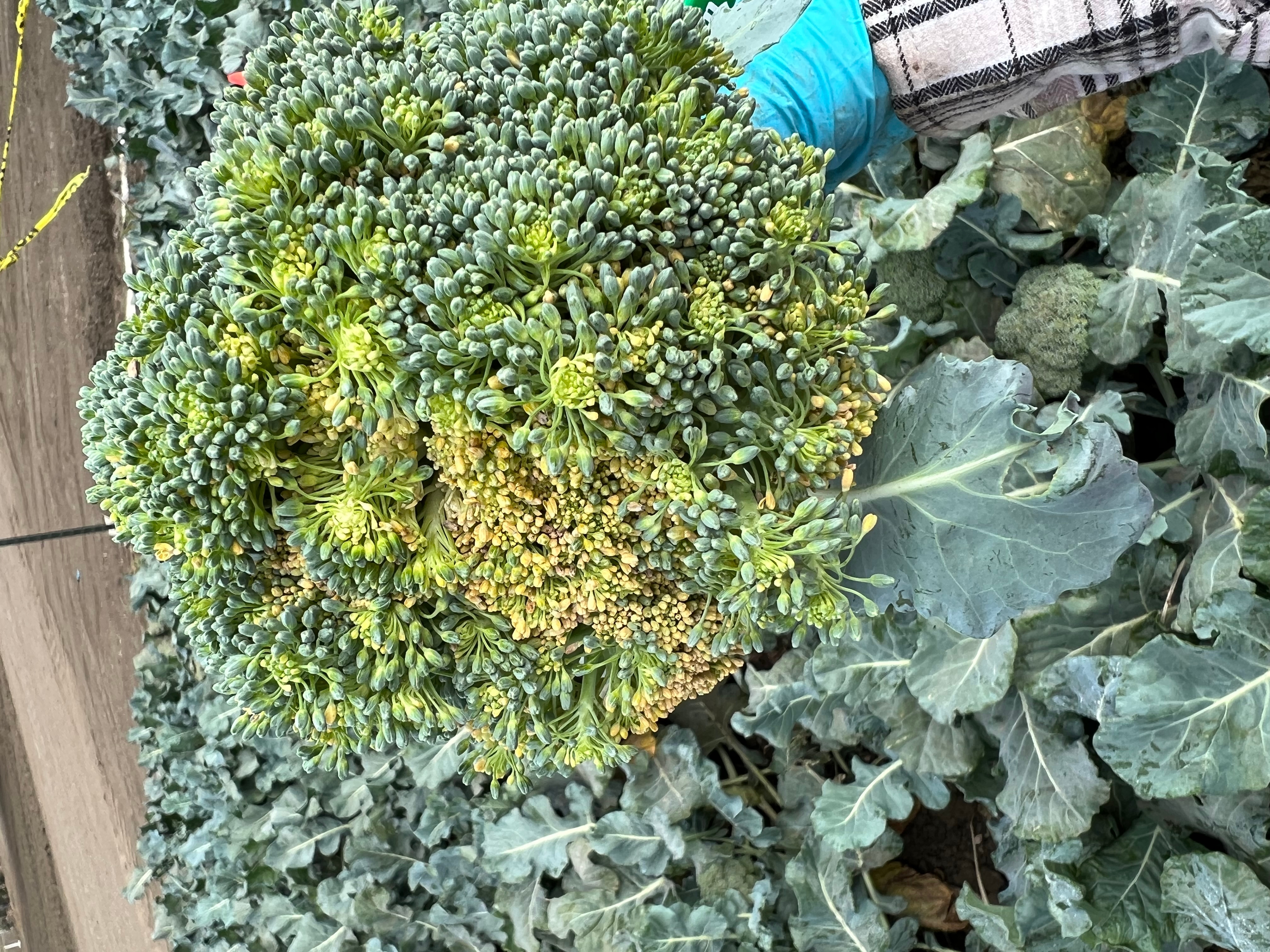
    Photo 3. Broccoli brown bead

    Photo 4. Alternaria leaf spot on broccoli

    Management. The disease is favored by prolonged wetness from rain, dew, and fog. Fungal spores are spread by winds and splashing water. Cultural practices to promote leaf drying or prevent leaf wetness may reduce disease severity. Some growers have seen the benefits of using drip irrigation instead of overhead irrigation. An early harvest before rainfall could also reduce disease risk. Variety effects on disease tolerance might play a role. Lumpy broccoli heads tend to accumulate water which may further weaken the plant tissues and become a suitable target for the pathogens. Finally, there are a number of fungicides that have activity against the disease. More frequent fungicide applications should occur during wet weather which is favored by the disease.

    Research update: fungicide evaluation.

    Methods. One fungicide trial was conducted in a commercial broccoli field to test the efficacy of select fungicides for controlling broccoli head rot in 2023 fall. Broccoli ‘Centennial’ were direct seeded on 27 July, 2023. Seven fungicide treatments and a nontreated control were arranged in a randomized complete block design with four replications. Each plot consisted of two seedlines of broccoli that was 30-ft long on the 40-inch wide bed. On each side of the plot was a nontreated guard bed. Treatments were applied with a CO2-pressurized backpack sprayer calibrated to deliver 35 gpa at 30 psi using a double TeeJet 8004E flat fan nozzles. Fungicide applications were made on 4 October and 16 October. All treatments were applied with non-ionic surfactant Dyne-Amic 0.08% v/v. Alternaria head rot incidence was evaluated at harvest on 23 October, 2023. Disease incidence was expressed as the percentage of the number of plants with Alternaria head rot in the total number of plants within the middle 15 ft of the plot. Data were analyzed using analysis of variance (ANOVA) and the Tukey test to separate means at P<0.05. The total rainfall received one month before harvest was 0.57 inches. The average, minimum, and maximum temperatures were 62°F, 53°F, and 75°F, respectively.

    Results (Table 1). The disease pressure in this trial area was low with nontreated control having 14.0% head rot. However, significant differences occurred among treatments for the % Alternaria head rot. All treatments reduced % Alternaria head rot numerically, while Pydiflumetofen+Fludioxonil, Azoxystrobin, Fluxapyroxad+Pyraclostrobin, Fluopyram+Trifloxystrobin, and Pyraclostrobin had significantly lower % Alternaria head rot than nontreated control. And they had statistically similar % Alternaria head rot. These results also showed that single FRAC 11, premixes with FRAC 7 and 11, and premixes with FRAC 7 and 12 provided good control of Alternaria head rot; single FRAC 7 provided fair control of Alternaria head rot.

    Table 1. Disease incidence of Alternaria head rot at harvest

    zProduct and Rate/A in this trial: Boscalid (Endura 9 oz), Penthiopyrad (Fontelis 30 fl oz), Pydiflumetofen+ Fludioxonil (Miravis Prime 11.4 oz), Azoxystrobin (Quadris 15.5 fl oz), Fluxapyroxad+ Pyraclostrobin (Priaxor 8.2 fl oz), Fluopyram+ Trifloxystrobin (Luna Sensation 7.6 fl oz), Pyraclostrobin (Cabrio 16 oz). xNumbers in a column followed by the same letter are not significantly different based on Tukey’s significant difference test (P<0.05). yFRAC: Fungicide Resistance Action Committee. — By Yu-Chen Wang, Plant Pathology Farm Advisor, UC Cooperative Extension

    Thanks to the cooperating growers and PCAs for assisting the trial. Thanks for the technical assistance from Carlos Rodriguez.
  • Australia a Key Market for US Fresh Fruit

    Australia a Key Market for US Fresh Fruit

    Australia is a crucial market for U.S. fresh fruits because of the year-round demand for high-quality products. The U.S. has benefitted from a well-established reputation for producing quality and safe fruits. While demand for fresh fruit was low in Australia from 2018-2020, the fresh fruit industry has recovered, and demand will likely increase for the next five years.

    Strong Market for U.S. Fresh Fruit

    Australia is a well-developed market for fresh produce, including imports. The United States has a good reputation for supplying safe, high-quality produce. A major advantage for Northern Hemisphere growers looking to import into Australia is counter-seasonal growing (see Figure 1).

    Behind New Zealand, whose top exports are avocados and kiwi, the United States is the second largest supplier of fresh fruits to Australia – with 41% of the market in 2022 (see Figure 2).

    The leading fresh fruit imports into Australia from the United States include California table grapes, California stone fruit, citrus, California pomegranates, and California and Pacific Northwest cherries. In 2022, imports of California kiwifruit significantly increased due to Italian kiwifruit being shut out of the market.

    Fruit Consumption Expects to Grow

    Between 2018 and 2020, Australia saw a decrease in fruit consumption. This decrease was due to a drought in 2018 and 2019, limiting the supply. Prices for fresh fruit also increased while the supply was low, which deterred consumers from purchasing. When drought conditions ended in 2021, Australia saw an increase in consumption by 2%. Along with the supply returning, this increase was due to population growth, healthier eating, habits, and demand for convenience. Fresh fruit consumption increased from 2020 through 2022; however, in 2024 it will decrease while gradually increasing in 2025-26. (see Figure 5).

    The Australian Government has funded initiatives to promote healthy eating increasing profits for the fruit industry. Food experts predict that the fresh fruit industry will benefit from changing dietary trends emphasizing fresh fruit consumption. Major supermarkets throughout Australia have also driven the growth in fresh fruit consumption and imports by offering customers a range of fresh produce products throughout the year. Woolworths, one of Australia’s biggest supermarkets, started a “Free Fruit for Kids” campaign. This campaign offers kids free apples, bananas, pears, and mandarins at the grocery store to help build healthy eating habits from an early age. Since the start of the campaign in 2015, over 14,000 tons of free fruit have been consumed by children.

    Australian consumers have seen several trends change in the fresh fruit industry in the last few years. COVID-19 had a significant impact on consumer food purchasing behavior. One of the biggest trends to arise is the growth of online shopping, which wasn’t as prominent in Australia before the pandemic. Consumers are also choosing healthier options due to social influences and spending more time at home. Read the full report from the USDA Foreign Ag Service HERE.

  • Mission Produce™ Appoints New President & Chief Operating Officer

    Mission Produce™ Appoints New President & Chief Operating Officer

    Mission Produce, Inc. (“Mission” or “the Company”), a world leader in sourcing, producing, and distributing fresh Hass avocados, today announced the appointment of John Pawlowski to President and Chief Operating Officer (COO), effective April 1, 2024. Steve Barnard will continue to serve as Mission Produce’s Chief Executive Officer and a member of the Board of Directors.

    Pawlowski is a highly accomplished executive leader joining Mission with more than 25 years in the global food and foodservice industry, specializing in business development, system optimization and executive team management. Pawlowski has a proven track record of leading international market growth strategies in large global organizations such as J.M. Smucker, where he progressed over more than 16 years in a variety of leadership positions, culminating with a post as Vice President of International, driving logistical efficiencies, market access and strategic partnerships. Most recently, he served as the President and COO of Lipari Foods, a leading independent distributor, where he was responsible for leading M&A and organic growth, expanding the company’s national distribution and designing operational strategy. Pawlowski leverages his international expertise in process improvement, logistics and organizational design to build results-driven teams that demonstrate growth.

    “John is an exceptional leader who brings a passion for innovation that strongly aligns with the long-term goals of Mission Produce as a market leader,” said Steve Barnard, Chief Executive Officer. “With his comprehensive background in the international food industry and impressive track record of driving businesses to new heights, I believe his skillset will greatly contribute to our continued growth as we work to enhance our operating strategies to maximize shareholder value.”

    “I am thrilled to join Mission Produce as a global leader with a strategic vision to drive avocado consumption across the globe,” said Pawlowski. “With Mission’s unparalleled positioning, advanced global infrastructure and world-class team, there are endless opportunities to leverage the Company’s assets for accelerated growth. I look forward to applying my expertise in market access and operational design to help optimize Mission’s operations and deliver value for its customers, shareholders and other stakeholders.”

    Pawlowski holds a Master of Business Administration (MBA) from Kent State University and a Bachelor of Science in Marketing from Miami University.

    About Mission Produce, Inc.:
    Mission Produce is a global leader in the worldwide avocado business with additional offerings in mangos and blueberries. Since 1983, Mission Produce has been sourcing, producing and distributing fresh Hass avocados, and currently services retail, wholesale and foodservice customers in over 25 countries. The vertically integrated Company owns and operates four state-of-the-art packing facilities in key growing locations globally, including California, Mexico and Peru and has additional sourcing capabilities in Chile, Colombia, the Dominican Republic, Guatemala, Brazil, Ecuador, South Africa and more, which allow the company to provide a year-round supply of premium fruit. Mission’s global distribution network includes strategically positioned forward distribution centers across key markets throughout North America, China, Europe, and the UK, offering value-added services such as ripening, bagging, custom packing and logistical management. For more information, please visit www.missionproduce.com.

  • UCCE Tulare County Assists Pathologists in Survey for Decay Fungus in Prunes

    UCCE Tulare County Assists Pathologists in Survey for Decay Fungus in Prunes

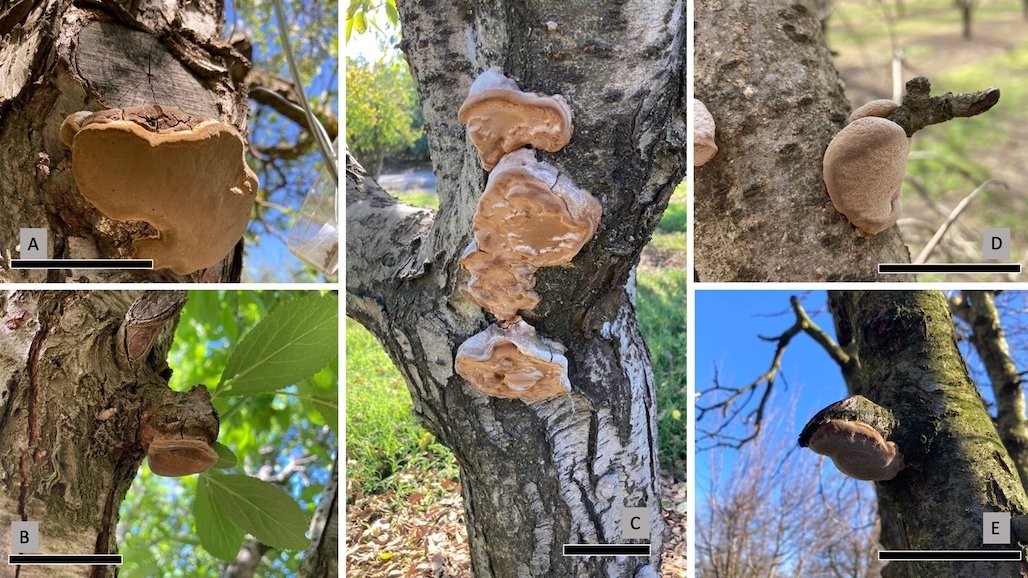
    Recently, extensive wood decay-related limb breakages have been reported in commercial prune orchards in the Sacramento Valley, adversely affecting fruit production and limiting the value of salable firewood upon orchard removal. Several fungal genera such as PhellinusRhodoformesSchizophyllumSterumTrametesCeriporia, and Perenoporia have been recognized for wood-decaying activity on California prunes.  Phellinus pomaceus has been the primary organism associated with prune decay symptoms in the Sacramento Valley; however, it is yet unknown whether P. pomaceus is present in southern San Joaquin Valley prune orchards.

    Figure 1: Symptoms of advanced Phellinus pomaceus infection, showing white rot internal decay of heartwood. Scale bars 10 cm.

    Phellinus pomaceus, specific to prunes and other plums, is one of the commonly reported wood-decaying fungi that attack the heartwood (non-functional xylem) of mature trees (Figure 1). It tends to attack the trunk and large-diameter branches, often resulting in broken limbs and the loss of fruit-bearing scaffolds. In fact, older trees are more likely to contain infection by the fungus, and frequent pruning of large branches may increase the probability of infection due to exposure of the internal heartwood. The fungus can be identified based on its fruiting bodies that emerge as conks or shelf-like brackets that are usually hard, woody, and hoof-shaped (Figure 2). Under the right conditions, these fruiting bodies are often perennial and may exhibit a darkened upper surface after several years of development.

    UCCE Tulare County assisted UC Davis researchers from the Department of Plant Pathology in surveying Tulare County prune orchards for presence of P. pomaceus. Laurel Hoffman, a PhD student working under Dave Rizzo, Professor of Plant Pathology, visited our local UCCE Tulare County office, coordinating with Elizabeth Fichtner, UCCE farm advisor, to visit and survey prune orchards for the pathogen. With the assistance of Walter Martinez, Tulare County Ag Technician, and Santosh Bhandari, Assistant Specialist, six local ‘French’ prune orchards were surveyed with data collected on tree canopy status and presence or absence of fruiting bodies associated with decay fungi. Surveyed orchards were all over 15 years old and were in varying states of overall productivity. Samples from putative decay fungi were collected and brought back to UC Davis for genetic sequencing to identify the specimens. A preliminary observation based on the initial survey suggests that the prevalence of putative decay fungi in prune orchards is lower in the southern San Joaquin Valley than in the Sacramento Valley. The presence of P. pomaceus in the southern San Joaquin Valley has not yet been confirmed.

    To date, there are no control measures for management of P. pomaceus. Chemical control strategies are not available for management of this disease. Removal of fruiting bodies may limit sporulation, thus having the potential to slow disease transmission. However, the value of this technique is limited by the ability to remove conks prior to sporulation and conks may be difficult to see, particularly after leaf out. Additionally, if the pathogen is present at a high level in (or near) affected orchards, the removal of conks may not significantly influence the total load of spores at a site. Fruiting body removal would not affect the health of infected trees because they are already colonized by the fungus.

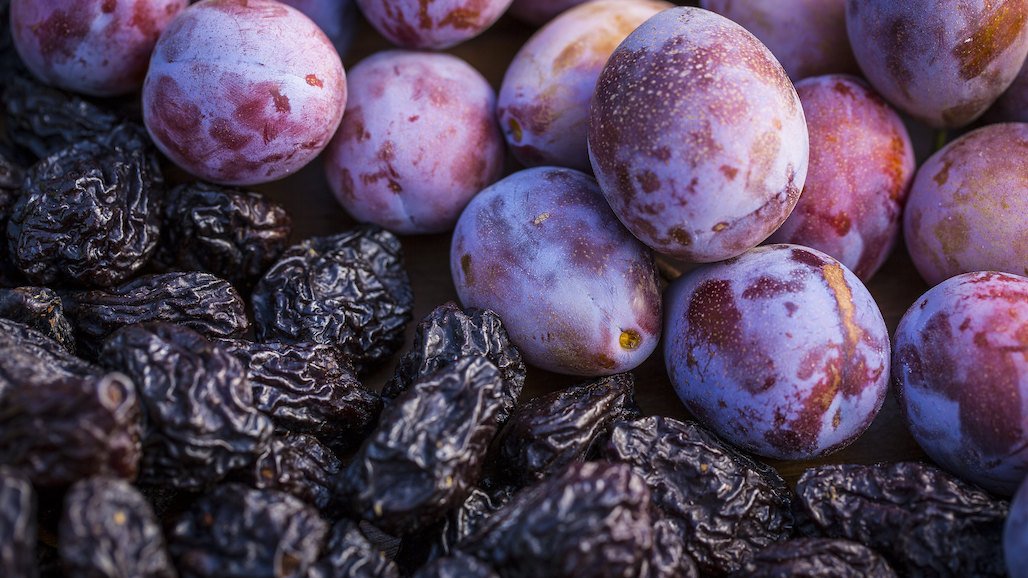
    Most of California’s prunes are sold in the dried fruit market; however, a few orchards are reserved for fresh prune production. After the economic lifespan of prune orchards, trees are removed, generating wood that can either be sold as firewood, or reintroduced to the soil through whole orchard recycling.  Infection with decay fungi such as P. pomaceous may adversely affect fruit production, limit the lifespan of infected trees, and reduce the economic longevity of orchards. — By Santosh Bhandari, Laurel Hoffman & Elizabeth Fichtner, UC Cooperative Extension

  • New Technologies Featured at World Ag Expo That California Farmers Should Know About

    New Technologies Featured at World Ag Expo That California Farmers Should Know About

    Boasting over 100,000 attendees from 49 States and 81 countries, the World Ag Expo was another big hit this year.  With  a sea of vendors to navigate across the International Agri-Center grounds in Tulare, it’s hardly feasible for attendees to see it all.  Check out this brief video featuring several companies that Malcolm Media visited with during the event that shared some novel technologies and equipment to support and sustain California farmers needs well into the future.

    Please thank this video’s sponsor afimilk for their industry support.

  • 2023 UCCE Blackeye Bean Variety Evaluation

    2023 UCCE Blackeye Bean Variety Evaluation

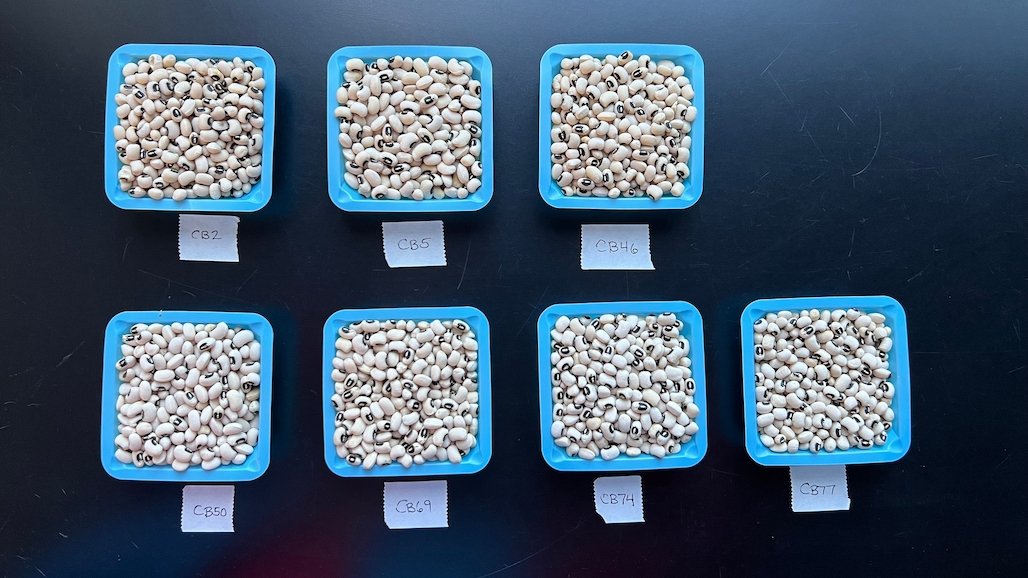
    UC Cooperative extension experts led by Michelle Leinfelder-Miles evaluated blackeye bean varieties in a commercial field in Stanislaus County in 2023. The season began with cool and wet spring conditions, which lasted through the month of June and delayed planting. Seven varieties from the University of California blackeye breeding program were planted on July 7th. The varieties were grown on a Hanford sandy loam, and the soil temperature was approximately 75°F at the time of planting. Each variety was planted across six rows on 30-inch spacing, on a row length of approximately 275 feet. The seeding rate was 40 pounds per acre. This was a non-replicated evaluation due to a limitation in seed; therefore, no statistical analysis is presented.

    The trial was planted in a field of CB46, and fertility and pests were managed by the grower in the same manner as the field. Data are presented in Table 1. Stand counts were made approximately two weeks after planting on July 20th. The stand was assessed as the number of plants per two-foot length. Twelve replicate counts were averaged. We evaluated aphid and lygus damage on September 8th, which were low due to the grower’s management. For lygus, we took 10 sweeps from four locations in each plot and counted the lygus. Data were averaged and are presented as a 10-sweep count. For aphids, we used a rating scale from 0 to 10 that accounted for visible crown damage and aphid incidence. In addition to the in-field assessment of lygus, we also evaluated harvest samples for stings and found that, on average, about 1.2 percent of the beans had lygus damage. No diseases were observed.

    We harvested on November 6th. All six rows of each variety were cut and raked into one windrow. At the time of cutting, the grower observed that CB77 plants were laying flat, but they were laying in such a way that the knives still picked up the plants. The grower also observed that CB74 had an upright growth habit that could potentially make it a variety viable for swather cutting. We evaluated 100-seed weight as a measure of seed size, evaluating five 100-seed samples per variety.

    We would like to thank the cooperating grower, the CA Crop Improvement Association for funding regional trials, and the CA Dry Bean Advisory Board for assistance with statewide research prioritization and assistance with outreach. — Images & Article By Michelle Leinfelder-Miles, UCCE

    Table 1. 2023 Blackeye Bean Variety Evaluation Results

  • UCCE South Sacramento Valley Prune Meeting, Feb. 27

    UCCE South Sacramento Valley Prune Meeting, Feb. 27

    The UC Cooperative extension is pleased to invite growers and other folks from the California prune industry to come and attend the annual South Sacramento Valley Prune Meeting on February 27, 2024 from 8 a.m. to noon at the Sutter County Ag Dept. Meeting Room (142 Garden Hwy, Yuba City, CA). Topics will include: an IPM review, new approaches to prune thinning, prune grower regulatory update, managing fleabane and other problem weeds in prune orchards, how to utilize the weekly ET report for better irrigation, potassium and prune nutrition/fertility, and a California Prune Board Update.  The meeting will conclude with lunch generously sponsored by the California Prune Board.  The event is free to attend, but please RSVP for lunch HERE, and see the full agenda HERE. Continuing Education Credits have been requested.  Contact Franz Niederholzer at fjniederholzer@ucdavis.edu for more information.

  • ACTIVATE24: Valued Agriculture Workforce  Development Conference Returns to Monterey

    ACTIVATE24: Valued Agriculture Workforce Development Conference Returns to Monterey

    Over 500 agricultural safety and HR professionals, farm managers and supervisors, labor contractors and farm owners will be converging on the Hyatt Regency in Monterey, CA, February 20-22, 2024, for ACTIVATE24, hosted by AgSafe.

    “ACTIVATE24 is a one-of-a-kind, annual conference, focused on the industry’s most vital resource, its people. With more than 50 sessions being offered in English and Spanish, this two-day conference will cover a wide range of critical topics from the fundamentals of health and safety — such as mental workplace health and compliance planning — to regulatory compliance, workforce development and pesticide handling,” Theresa Kiehn, AgSafe President and CEO. “Special emphasis is given to providing practical information, solutions, resources and professional development for agricultural supervisors, safety and human resources professionals and executives alike. The value for attendees is significant.”

    AgSafe, a non-profit membership organization, is the leader in educational training for the agricultural community. AgSafe’s focus is to provide practical education, with a “boots on the ground” approach, teaching both the “why” and “how” to protect workers in the field, as well as packing, processing and food manufacturing facilities.

    ACTIVATE24 kicks off on the morning of February 20 with the popular Pre-Conference Golf Scramble at the historic Old Del Monte Golf Course. In addition to the main conference program, which was developed with input from industry professionals, supplemental seminars are offered to Train-the-Trainers in Tractor Safety and Pesticide Handling. Premium tracks are also available for California Human Resources Certificate Program, California Agricultural Safety Certificate Program and Supervisor Advancement Seminar.  FLC Continuing Education is also available.

    Marshal Sewell, who grew up on a fifth-generation fruit and vegetable farm and is founder of Mind Your Melon (https://mindyourmelon.org/), will be providing keynote remarks on the stressors in agricultural communities and on Inspiring Healthier Minds Through Proactive Lifestyles.

    Tina Huff, PhD, SHRM-SCP will be presenting the Plenary Session to help every employee be successful at work – helping companies reach and exceed their goals. She is a former Chief People Officer / Vice President of Human Resources with over 30 years of experience across multiple industries including agriculture, contact centers, food processing, hospitality, manufacturing, and retail/grocery.

    Winners of the annual AllWays Safe Agricultural Safety Awards will also be unveiled at ACTIVATE24. A collaboration between AgSafe and the Almond Board of California, this award is designed to honor businesses and individuals that have committed themselves towards ensuring the safety and health of their workers. Awards will be presented in the categories of lifetime achievement, outstanding company,  safety professional and operations/production supervisor.

    As in past years, ACTIVATE24 is expected to sell out, yet AgSafe has just announced an extension of the discounted registration deadline, which is now available until February 13. For details and registration information, visit https://agsafe.org/activate24/.

    About AgSafe

    AgSafe, a 501(C)3 non-profit organization, is the educational leader Since 1991 AgSafe has trained over 100,000 employers, supervisors and farm workers in the most critical issues impacting worker safety, human resources and pesticide safety. AgSafe employs a “boots on the ground” approach to these topics, teaching both the “why” and “how” to protect workers in the field, as well as packing, processing and food manufacturing facilities. For more information, visit https://agsafe.org/.

  • California Growers Celebrate Legislative Win Supporting Groundwater Recharge

    California Growers Celebrate Legislative Win Supporting Groundwater Recharge

    Last Fall, Governor Newsom signed SB 659, The California Water Supply Solutions Act of 2023, sponsored by the California Association of Winegrape Growers and the Regional Water Authority in Sacramento.  But what does this mean for California farmers implementing groundwater recharge practices in the coming months?  Watch this video with Michael Miiller from the California Association of Winegrape Growers to find out.

  • Meet Taco Tuesday’s New Neighbor: “Mushroom Monday”

    Meet Taco Tuesday’s New Neighbor: “Mushroom Monday”

    Mushrooms are having a moment. Whole Foods and Fresh Thyme Markets placed them in their 2024 trend forecasts. Home cooks are embracing mushrooms’ versatility. Chefs are increasingly adding them to their menus. Sales are up 20% over 10 years. They are part of fashion, functional foods and pop culture.

    According to the nation’s mushroom producers, it’s time to give this moment a name. In fact, it deserves its own day of the week: Mushroom Monday. Created by the Mushroom Council® and launching in March across multiple channels, Mushroom Monday will ultimately feature:

    • Chefs and restaurants nationwide spotlighting their mushroom-centric dishes for Mushroom Monday.
    • Dietitians and health influencers encouraging using fresh mushrooms each Monday for a healthy start to the work week.
    • Grocery stores offering specials and inspiration to help shoppers make more mindful meal choices.
    • Home cooks centering their Monday night meal planning on mushrooms.

    Mushroom Monday on Menus

    To promote Mushroom Monday, the Mushroom Council will focus heavily on foodservice. Starting in March, restaurants will be encouraged to participate by sharing their featured mushroom menu item(s) on the Mushroom Council’s website.

    Once added, restaurants will be able to access the Mushroom Council’s foodservice operator program kit that will include free downloadable assets, including:

    • Mushroom Monday logo artwork for use on operator menus, ads/promotions, social posts, etc.
    • Point of sale signage
    • Press release templates for self promotion

    Throughout the year, the Mushroom Council will be raising public awareness about Mushroom Monday and participating restaurants via:

    • An online directory of participating restaurants
    • Social media promotions
    • Influencer collaborations
    • Online advertising
    • Media events and outreach

    Mushroom Monday at Retail and in Home Kitchens

    Concurrent with the foodservice activities, the Mushroom Council will also be promoting Mushroom Monday for retailers and their shoppers, including:

    • Overall branding
    • A new hub at MushroomCouncil.com for consumers to find recipe inspiration for celebrating Mushroom Mondays in their home kitchens
    • Education guides and tool kits for supermarket dietitians
    • Influencer collaborations
    • Social media and digital ads.
    • Ongoing media outreach.
    • Mushroom producers and brands collaborating on retail campaigns.

    “Meals continue to be home-centric and consumers are tired of figuring out what’s for dinner,” said Anne-Marie Roerink, president of 210 Analytics, LLC. “Mushrooms have been trending for years and are now a key part not just of the culinary but the cultural zeitgeist. What a great initiative to help restaurants and grocers give shape to and seize this phenomenon with a year-round campaign that helps consumers solve the meal puzzle.”

    “The best part?” Roerink added. “Chefs don’t have to create a new dish, and retailers don’t have to dramatically change their offerings to be a part of Mushroom Monday. They just need to amplify what they already are offering under the all-new Mushroom Monday banner. Spanning across the produce, meat, deli, frozen and grocery aisles, the opportunities to merchandise against Mushroom Monday are as versatile as the product itself.”

    Foodservice operators, retailers and dietitians wanting an early jump on Mushroom Monday can also contact the Mushroom Council for more information at MushroomMonday@MushroomCouncil.org.

    About the Mushroom Council:

    The Mushroom Council is composed of fresh market producers and importers who average more than 500,000 pounds of mushrooms produced or imported annually. The mushroom program is authorized by the Mushroom Promotion, Research and Consumer Information Act of 1990 and is administered by the Mushroom Council under the supervision of the Agricultural Marketing Service. Research and promotion programs help to expand, maintain and develop markets for individual agricultural commodities in the United States and abroad. These industry self-help programs are requested and funded by the industry groups that they serve. For more information, visit mushroomcouncil.com.