Category: Industry News

  • Mexican Blueberry Acreage & Production on the Rise

    Mexican Blueberry Acreage & Production on the Rise

    Mexico’s 2024 blueberry production is forecast at 81,000 MT, an eight percent increase over 2023 on sufficient water access and growing export demand. The rate of production growth is projected to be slower in 2024 compared to 2023 due to competition from Peru. Production in 2023 reached an estimated 74,800 MT, a twelve percent increase over the previous year due to production innovations and strong export demand. Blueberry exports totaled 71,509 MT in 2022, down about two percent compared to 2021. Imports reached 13,715 MT in 2022, a ten percent decrease from the previous year. The United States is Mexico’s top blueberry export market, with a nearly 97 percent share.

    Executive Summary

    Mexico’s blueberry sector has seen rapid growth in the past decade, with increasing prices encouraging growers to expand production or switch from other crops to blueberries. Production grew over 80 percent between 2017 and 2022, reaching 66,847 metric tons (MT), making Mexico the world’s fifth largest blueberry producer.

    Mexico’s per capita blueberry consumption is barely 70 grams per year, constrained by price as well as consumer preference, with blueberries not occupying a place in traditional Mexican cuisine.

    In 2022, Mexico’s total blueberry exports totaled 71,509 MT, down about two percent compared to 2021. By value, blueberry exports totaled USD 629 million in 2022. Imports reached 13,715 MT in 2022, a ten percent decrease from the previous year. While both import and export volumes decreased in 2022 compared to 2021, rising blueberry prices pushed up trade value, with both imports and exports increasing about seven percent by value from 2021 to 2022.

    The United States is Mexico’s top blueberry export market, with a nearly 97 percent share, valued at USD 607 million. Other export destinations include the Netherlands, Canada, Germany, the United Kingdom, Japan, Hong Kong, and Singapore. The U.S. is also Mexico’s number one blueberry supplier.

    Production

    Mexico’s calendar year (CY) 2024 blueberry production is forecast at 81,000 MT, an eight percent increase from forecast 2023 production based on expected adequate access to water and growing demand from international markets, predominantly the United States. Despite drought conditions throughout Mexico, local producers report that the berry sector will avoid the impact of water shortages in the near term (1-3 years). The sector is well-equipped with highly efficient irrigation systems, including private reservoirs, and ample operating funds.

    Production growth is projected to remain strong in 2024, although not as as robust as in 2023 due to a shortened growing and harvest season. Historically, Mexico’s harvest began in early October, peaking between late April and early May. In contrast, industry sources report that for the 2024 harvest, producers have taken steps to delay the start of the harvest to early February in response to competition from Peru, which offers a similar product at lower prices during the October-January period. Faced with this competition, Mexican growers have shifted the growing season by delaying new plantings, which is projected to dampen overall prodution given the relatively significant place of new plantings in total planted area, with the sector currently undergoing a transition from Biloxi to proprietary varieties. Producers are actively switching away from the Biloxi variety to take advantage of the ongoing development of improved varieties that provide higher yields and better taste. According to farmer contacts, 23 percent of blueberry area is currently planted with the Biloxi variety and 74 percent is planted with proprietary varieties, and they expect the share of Biloxi to decrease significantly in the near term. In addition to delaying new plantings, Mexican producers report that they are delaying fertilizer applications as another technique to push the harvest beyone the Peruvian harvest period.

    Blueberry production in 2023 reached an estimated 74,800 MT, a twelve percent increase over the previous year due to the use of improved varieties and other innovative production technology as well as strong export demand.

    According to data from Mexico’s Agri-food and Fisheries Information Service (SIAP), blueberry production totaled 66,847 MT in 2022. Beginning in 2023, SIAP stopped reporting official blueberry data, for reasons that are not publicly available.

    Mexico’s blueberry sector has been growing steadily in recent years, realizing a production growth of over 80 percent between 2017 and 2022. During this period blueberry planted area grew from 3,642 hectares (ha) to 4,444 ha, a 22 percent increase. Mexican blueberry exporters benefit from geographical proximity to the United States, with shipments reaching the U.S.-Mexico border in 18 hours or less. Berries are shipped to the U.S. market by truck daily. In addition, Mexico is able to provide blueberries during the off-season periods for other major producing countries, particularly the United States. Further, producers benefit from sustained investment to take advantage of growing export opportunities. Access to improved infrastructure and production methods enables growers to achieve greater yields and protect their crops against risks from pests, extreme weather, and other climate impacts. Read the full report from USDA Foreign Ag Service HERE.
  • Filling in the Blanks About Rose Stem Girdler in Caneberries

    Filling in the Blanks About Rose Stem Girdler in Caneberries

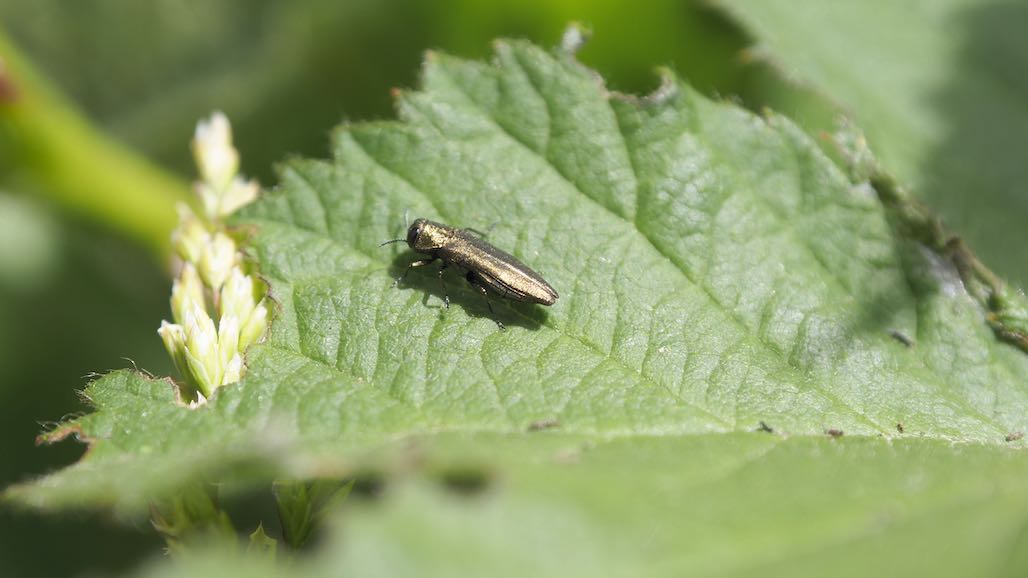
    Berry farmers are all too familiar with the rose stem girdler (RSG), an invasive insect from Eurasia that came to North America over a hundred years ago. They know that the copper-colored beetle has migrated to the Pacific Northwest. They know it attacks caneberries — blackberries and raspberries — sometimes ravaging up to 90% of a crop and forcing farmers to replant fields.

    What they may not know is when or where it will strike or how to contain it.

    Now, however, researchers at Washington State University (WSU) may be on the verge of providing a breakthrough by developing a coordinated approach to control RSG; an approach known as integrated pest management. The project was funded by the Northwest Center for Small Fruit Research, , an  Agricultural Research Service-led consortium, to gather information about RSG and then develop tools that growers could employ against it.

    According to Justin O’Dea, a WSU regional agriculture specialist, one such tool is a pest emergence model that will help farmers precisely time their insecticide sprays to be most effective. The model helps predict when RSG, which overwinter as larvae inside the stems of berry plants, emerge into the outside world as adult beetles.

    A major concern with controlling RSG is the insect’s innate unpredictability, O’Dea said.

    “Damage from this pest is commonly intermittent and variable, which blindsides berry growers when infestations flare,” he said. “This can lead to growers making ineffective, pre-emptive sprays to try and make sure they are not blindsided again.”

    The recent discovery of a natural predator of RSG — a parasitoid wasp known as Baryscapus rugglesi – is also now in the integrated pest management toolkit, although its efficacy is not yet fully known. Parasitic wasps lay their eggs inside other insect species, killing the host insect in the process. As a result, these wasps are used extensively, worldwide, to control pest insect populations in agriculture.

    An adult rose stem girdler beetle feeds on a blackberry leaf. (Photo by Justin O’Dea, Washington State University)

    “We know now that we have a parasitoid of RSG [in the Pacific Northwest] and have observed periods where RSG appears to decline inexplicably,” O’Dea said. “This phenomena of RSG pest pressure decline may be at least partly due to parasitism. If so, perhaps parasitoids will eventually lead to RSG becoming less of an important threat to caneberries in the Pacific Northwest, but only time and further research will be able to confirm that.”

    In the meantime, or at least until late spring when the emergence model predicts RSG adulthood, O’Dea said there is something that farmers can do to help prevent infestation: prune. This step is important because, after hatching, RSG larvae burrow into the canes where they feed on water, nutrients, and sugars moving through the plant’s vascular system. The larvae will eventually bore into the middle (the pith) of the cane.

    Thoroughly pruning out all canes that show symptoms of RSG damage (cane swelling, wilting, or breakage) can be done at any point before the pest emerges. The damaged canes should be removed from the field and burned.

    “This strategy [is] part of an effective integrated pest management program,” O’Dea said. “Research in Utah found this method to be about 80% effective. When combined with insecticides, RSG control could be as high as 98%.”

    Successful development of an integrated pest management program for RSG means that growers will have a better chance at minimizing the need for insecticide applications, O’Dea said. That equates to reduced time, energy, and money spent on ineffective and unnecessary insecticide applications, as well as reduced risk to pollinators and other inadvertent impacts to the environment.

    “Based on historical records of how RSG has played out in other regions of the country and our own observations, I’m cautiously hopeful that it will become a limited threat in the long run,” O’Dea said. — By Scott Elliott and Jan Suszkiw, USDA-ARS Office of Communications

  • UC Strawberry Production Research Meeting, Feb. 14

    UC Strawberry Production Research Meeting, Feb. 14

    Join UC Farm Advisor Mark Bolda and other University and field experts in this virtual meeting to learn about the latest research and advances in strawberry production. Anyone directly involved with the production of strawberries is invited to attend. Live Spanish translation will be available. We will discuss issues pertaining to production of strawberry and provide updates on current research addressing those issues. Continuing Education Credits from CA DPR are pending approval. Register to attend HERE.

    Contacts for More Information
    Logistics: UC ANR Program Support, 530-750-1361 (messages only)

    Program: Mark Bolda, UCCE Farm Advisor

  • 2023 Cost of Production for Fresh Market Raspberries Report

    2023 Cost of Production for Fresh Market Raspberries Report

    The UC Cooperative Extension has released its 2023 Cost of Production for Fresh Market Raspberries report.  The sample costs to establish, produce, and harvest raspberries in Santa Cruz, Monterey, and San Benito Counties are presented in the following study. The study is intended as a guide only, and can be used to make production decisions, determine potential returns, prepare budgets, and evaluate production loans. The practices described are based on production and harvest procedures considered typical for this crop and area and may not apply to every farm. Sample costs for labor, materials, equipment, and custom services are based on current figures.

    The hypothetical farm operation, production practices, overhead, and calculations are described under assumptions. For additional information or explanation of calculations used in the study, contact Mark Bolda, mpbolda@ucanr.edu, or Jeremy Murdock, Department of Agricultural and Resource Economics, University of California, Davis, (530) 752-4651. Sample Cost of Production studies for many commodities are available and can be downloaded from the website https://coststudies.ucdavis.edu. Archived studies are also available on the website.

    See the cost study report HERE.

  • CA Dry Bean Advisory Board Accepting Research Proposals for 2024

    CA Dry Bean Advisory Board Accepting Research Proposals for 2024

    The California Dry Bean Advisory Board (CDBAB) is requesting applied research proposals for 2024. This commodity-based research request is sponsored by the California Dry Bean Marketing Order, under the guidance of CDFA (CA Dept Food & Ag). The Board has supported applied research by university programs for many years.

    Please find the grant application as well as a list of the 2024 applied research priorities developed by the CDBAB. The Board is particularly interested in pest management projects to address weeds and insects. Funding is for one year. Proposals for projects extending beyond one year must be re-submitted each year.

    Due to limited research funding, proposals that demonstrate cost sharing are encouraged. Although, there is some flexibility in the budget below, the total amount of funding available for 2024 is as follows:

    Board: $55,000

    Baby lima council: $7,500

    Blackeye council: $10,480

    Garbanzo council: $7,500

    Large lima council: $0

    Common bean council: $0

    Total: $80,480

    For current information on dry bean production in California as well as past reports funded by the board, see the Dry Bean webpage on the Agronomy Research and Information Center. You can search and view previously funded research reports from the online database.

    Please share this call for proposals with colleagues and others who might be interested in dry bean research. Proposals are due by Friday, February 10, 2023. Progress reports for projects funded by the CDBAB in 2022 will also be due Friday, February 10, 2023. See an example progress report.

    Those who submit proposals should be prepared to give a brief presentation to the Board at their first meeting of the year, which usually occurs in early March. Funding decisions are communicated shortly thereafter by Board Manager, Nathan Sano.

    To submit 2024 proposals and 2023 final reports electronically, please email Nick Clark (neclark@ucanr.edu). With questions about this funding opportunity, email either Nick Clark or Michelle Leinfelder-Miles (mmleinfeldermiles@ucanr.edu). Nick and Michelle are UC ANR co-liaisons to the CDBAB.

  • ‘Delightful’ Yellow Tomato to be Released in 2024

    ‘Delightful’ Yellow Tomato to be Released in 2024

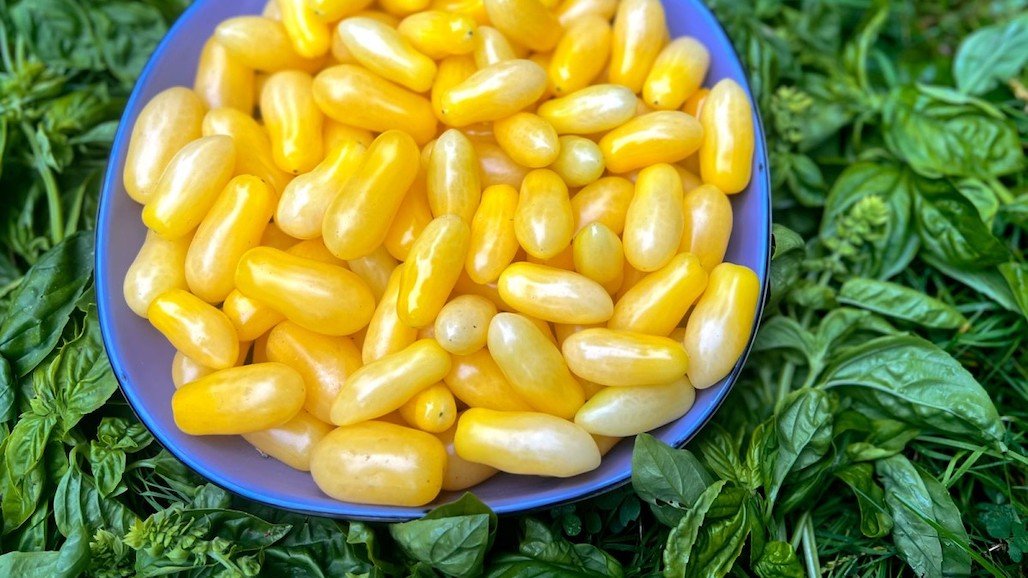
    A Cornell plant breeder has developed an unusual tomato – with yellow flesh and an oblong shape that prompted its fans to name it “Yellow Submarine.”

    Developed by Phillip Griffiths, associate professor in the School of Integrative Plant Science, Horticulture Section, in the College of Agriculture and Life Sciences (CALS), the tomato – known as WRSTCP2 during development – has clear skin with an ethereal, semitranslucent look and is resistant to cracking on the vine.

    Fruition Seeds, based in Naples, New York, is bringing the variety to market in 2024.

    “People were just unanimously delighted by the flavor and by the shape,” said Petra Page-Mann, Fruition’s co-founder. The company spent the last two years growing and taste-testing it with its customers, after Cornell approached them with the variety.

    Griffiths, who specializes primarily in brassica vegetables, characterized his tomato breeding efforts as starting as a “freedom project” – something fun to do on Friday afternoons – that got much bigger. Previous years’ tomato breeding yielded the colorful Galaxy Suite of grape tomatoes, available from High Mowing Organic Seeds.

    He crossbreeds many different types of small-fruited tomatoes, which can add to a whole new level of biodiversity. “This enables us to generate all types of colors and shapes,” he said. “And then we evaluate them, we demonstrate them to people, we try and identify the types that people like the look of, like the taste of, that perform well for production in the Northeast.”

    Breeding, development and cultivation of this tomato variety happened both at Cornell AgriTech in Geneva, New York, and at Cornell Agricultural Experiment Station’s Homer C. Thompson Vegetable Research Farm in Freeville, New York.

    After identifying the tomato as different and interesting, Griffiths and his team approached Fruition Seeds about commercializing the variety.

    Page-Mann said they “jumped up and down” at the chance to try it out. “It’s unbelievable to have Cornell as a partner and co-visionary in what we are eating and why,” she said.

    Fruition took the tomato to their customers and social media followers to find a more creative name. People suggested more than 80 ideas and then voted on the winner: Yellow Submarine. “We are a very community-oriented seed company,” Page-Mann said, “and so this name very much reflects the humor and delight of our community.”

    While the seeds will be available to home gardeners, Yellow Submarine is unlikely to be sold at grocery stores. Rather, the intent of the partnership between Fruition and Cornell is to bring different, fun and engaging products to the market, Griffiths said.

    “A lot of exciting products get killed because they don’t have those mainstream, maximum profit angles,” Griffiths said. “It’s very easy for the economic world in which we live to cut out a lot of the exciting products that exist in the natural world. People never see them just because they’re not perceived as having as high an economic return.”

    But many of Cornell’s open-pollinated varieties, including the Yellow Submarine, have the potential to become future heirloom varieties, bringing delight to future generations, Page-Mann said.

    “It’s not a hybrid,” she said. “And that means we save the seed so we can share it with you, and it will grow true to type, exactly like its parent. And so can our great-great-great-great grandchildren.” — By Holly Hartigan, Cornell University

  • Citrus Research and Field Trials (CA-CRaFT) Program Now Accepting Cycle 2 Grower Applications

    Citrus Research and Field Trials (CA-CRaFT) Program Now Accepting Cycle 2 Grower Applications

    California’s Citrus Research and Field Trials (CA-CRaFT) program is now accepting Cycle 2 applications from commercial growers. This initiative aims to showcase the efficacy of additional control measures against the Asian citrus psyllid (ACP), the carrier of the Candidatus Liberibacter asiaticus (CLas) bacterium causing Huanglongbing (HLB) disease in citrus.

    Commercial citrus producers in California are invited to apply for the program, and eligibility is open to all.

    For Cycle 2, applications will be accepted until program capacity is reached with priority given to those applications received by March 15, 2024. Applications can be found at  https://citrusresearch.org/growers-application

    CRB’s CA-CRaFT initiative seeks participation from commercially managed citrus groves in California, subject to the implementation of specified mitigations and adherence to the overall experimental design. We encourage both organic and conventional citrus growers to submit applications.

    Grove selection criteria will consider existing management practices, with a preference for those actively utilizing ACP management in accordance with the University of California’s Integrated Pest Management (UC IPM) guidelines. Priority consideration will be accorded to California citrus groves facing sustained psyllid pressures or located in close proximity to significant psyllid risk factors, such as transportation corridors and residential areas. Citrus producers can apply without any limitations on the total acreage, and we welcome applications for multiple blocks or groves.

    Project support is currently being offered for the following mitigations:

    Preventative Mitigations

    • Implementing barrier mesh fencing along grove borders to hinder ACP entry.
    • Creating natural windbreaks using living vegetation along grove borders to mitigate psyllid movement.
    • Cultivating trap crops like the curry leaf tree, to attract and control psyllidpopulations.

    Threshold-based Mitigations 

    • Introducing specific biological control agents as a whole grove treatment to suppress ACP populations, regularly assessing their impact and effectiveness, and encouraging conservation and the release of generalist predators like syrphid flies, lacewings, and lady beetles.
    • Implementing targeted insecticide treatments, such as border sprays for ACP control or whole grove treatments with insecticide-based ant baits for ant control, or utilizing border treatments with psyllid repellents like kaolin clay or diatomaceous earth to make the crop unappealing to psyllids.

    Compensation is exclusively provided to growers implementing endorsed additional preventative or threshold-based mitigations, such as barrier mesh fencing, living windbreaks, trap crops, biological control releases, border sprays, psyllid repellents, or ant control, as outlined above.

    Control plots must refrain from receiving any additional mitigations, be they preventative or threshold-based, recommended by the program, as outlined above.

    Participants will receive annual assistance on a per-acre basis to cover expenses related to data collection and field access for scouts. This applies to both control plots and all plots receiving additional CRaFT-endorsed mitigations as part of the program.

    Growers are allowed to conduct regular scheduled plot maintenance and apply various treatments for pests, including ACP, in all plots, including control plots. However, they will not receive compensation for these routine treatments that fall outside of program priorities endorsed by CA-CRaFT.

    The CRB will be hosting webinars on the CA-CRaFT program and its application process on:

    • February 13 at 2:00 PM – Click HERE to register
    • March 7 at 2:00 PM – Click HERE to register

    For details about the California-focused CRaFT Project, program requirements, and webinar schedule, visit the CRB website at www.citrusresearch.org or contact Ariana Gehrig at craft@citrusresearch.org.

    The CRB administers the California Citrus Research Program, the grower-funded and grower directed program established in 1968 under the California Marketing Act as the mechanism enabling the State’s citrus producers to sponsor and support needed research. More information about the Citrus Research Board may be found at www.citrusresearch.org.

  • Grower-Shipper Association Appoints 2024 Board Members

    Grower-Shipper Association Appoints 2024 Board Members

    As recently ratified by its regular (i.e., grower, shipper, processor, landowner, harvester) membership, the Grower-Shipper Association of Central California (GSA) elected four new members to its Board of Directors: Kiana Amaral, Chief Operating Officer, BlazerWilkinsonGee, Chris Drew, President & CEO, Ocean Mist Farms, Carmen Ponce, Vice President and General Counsel of Labor, Tanimura and Antle, and Matt Rogers, Co-Founder and General Manager of AgSocio.

    “We welcome Kiana, Chris, Carmen and Matt and look forward to their input and contributions to the dynamic Board discussions that help GSA define our strategic directions, programs and policies that support our members and our region,” says Christopher Valadez, GSA President.

    “We also thank our outgoing Board members for their years of service and leadership throughout the challenges we have faced, including the pandemic, wildfires, and floods, as well as labor and water issues and the INSV disease complex impacting our region,” Valadez says. Those outgoing members include Colby Pereira, Chief Operating Officer, Braga Fresh, Jason Smith, President, Smith Family Wines and John Wilkinson, Founder, BlazerWilkinsonGee.

    About the new GSA Board members:

    Amaral began her produce career at Misionero Vegetables before switching industries when she moved to the HSBC Credit Card division where she worked in the Marketing Department for nearly ten years. While working at HSBC, Amaral got her Master’s in Business Administration from the University of Phoenix. Amaral joined the family-owned berry business, BlazerWilkinsonGee, LLC, in 2000 where she worked in every office position imaginable on her way to becoming the company’s Chief Operating Officer. Amaral is a graduate of the University of California, Davis with a Bachelor’s of Science degree.

    Drew has been with Ocean Mist for over two decades. Prior to becoming President & CEO, Drew was the company’s Chief Operating Officer and collaborated with teams to streamline strategies and processes in addition to overseeing the operational departments and facilities across the organization. Drew earned his Bachelor’s of Science in Crop Science from Cal-Poly University, San Luis Obispo, followed by his Master’s degree in Business Administration from the University of Phoenix.

    Ponce serves in a crucial role for Tanimura & Antle (T&A), a family and employee-owned company, which employs over 7,000 people annually. She is in her 25th year with T&A. Ponce graduated from Georgetown University Law Center with a dual degree – A Master’s of Science in Foreign Service and Juris Doctor.

    Prior to starting AgSocio, Rogers spent many years working on strategic purchasing initiatives and social, environmental, and food safety issues in the produce supply chain for Whole Foods Market. Rogers serves on the standards committee of the Equitable Food Initiative and on the board of directors of CIERTO. He is a member of the National Agricultural Worker Advisory Council of the National Center for Farmworker Health.

    The new Board members were elected to serve a three-year term. For more information, visit www.growershipper.com.

    2024 Board of Directors (effective January 2024)

    Victor Ramirez, Chair, NorCal Harvesting
    Tony Alameda, Past-Chair, Top Flavor Farms
    Greg Beach, Vice-Chair, Huntington Farms
    Steve Ish, Secretary, Taylor Farms
    Chad Amaral, D’Arrigo Bros. of California
    Kristina Nunes, The Nunes Company
    Carmen Ponce, Tanimura & Antle
    Melissa Duflock, Landowner
    Chris Drew, Ocean Mist Farms
    Jay Iverson, GreenGate Fresh
    Matt Rogers, AgSocio

    Kiana Amaral, Blazer Wilkinson Gee

  • Unlocking a Long-Hidden Mystery of a Virus That Attacks Ag Crops

    Unlocking a Long-Hidden Mystery of a Virus That Attacks Ag Crops

    When UC Davis distinguished professor Diane Ullman of the Department of Entomology and Nematology headed to France on a 2018-19 Fulbright grant to conduct research on tomato spotted wilt virus (TSWV) with her colleagues, she hoped it would lead to important discoveries to help combat plant viruses that attack agricultural crops.

    It did: their research revealed how TSWV (family Tospoviridae, order Bunyavirales) packages its RNA genome, a crucial step in virus infection.

    Their newly published research, “The Genome of a Bunyavirus Cannot be Defined at the Level of the Viral Particle But Only at the Scale of the Viral Population,” appears in the current edition of the Proceedings of the National Academy of Sciences (PNAS).

    The 18-member research team included scientists primarily from the French National Research Institute for Agriculture, Food and Environment (INRAE) at the Campus International de Baillarguet, Montpellier; Department of Entomology, University of Wisconsin; and the Department of Entomology and Nematology, University of California, Davis.

    “Our work showed the genome of TSWV can only be defined at the population level, pointing at emerging properties when viral particles infect plants in groups,” said a key author Stéphane Blanc, research director of INRAE’s Biology and Genetics of Plant-Pathogen Interactions. “As most virions contain an incomplete genome, TSWV is a multi-component viral system, where co-infection and complementation are key in the life cycle. These findings open a myriad of possibly distinct properties depending on the genetic composition of the group of virions co-infecting a cell.”

    “The most challenging part of this work was to create a protocol reliably quantifying the two polarities of each segment,” said lead author Michel Yvon of INRAE. “The next important advance will be to demonstrate that co-infection of cells by a group of particles is key to the spread of infection.”

    Ullman, an international authority on orthotospoviruses and one of the four main authors, took a sabbatical to work on the project. “My interest was in understanding how TSWV packaged its RNA genome,” she said. “While this sounds like a simple goal, it is quite complex because TSWV has negative sense and ambisense viral strands and many research tools common to studying other viruses, such as infectious clones were not available.”

    TSWV is transmitted by thrips, tiny insects with fringed wings. “Orthotospoviruses cause serious damage to many important crops, including tomatoes, lettuce, peppers, peanuts, and many others,” Ullman said. “The orthotospoviruses are enveloped negative or ambisense single stranded RNA viruses with a genome divided into several segments. For many years, graphical views of viral particles have shown a virion packaging one copy of each genomic segment in a polarity named the viral strand. Various observations suggested this scenario may not represent reality, but these studies were often focused on other questions or did not use accurate quantitative methods.”

    “It was a delight to work with the fantastic team of scientists that Stéphane assembled, all very talented with skills in virology, cryoelectron microscopy and nanopore PCR,” Ullman commented. “I cannot imagine a more talented and diverse group of people to conduct this difficult work. I learned a great deal about virus purification from Michel Yvon, whose leadership, skills in virology, and patient teaching really moved our project forward.”

    “The intellectual and research contributions of our colleague, the late Thomas German of the University of Wisconsin (second author) were too numerous to recount,” Ullman said. “His cloning of the six possible RNA segments made reliable quantification of the two polarities of each segment, key to this research, possible. In addition, his enthusiasm for science motivated the entire research team and propelled us all forward. The outcomes of our collaboration challenge dogma around how these viruses infect plants and insects, how their populations evolve, and even the terminology describing their biology.”

    German, professor emeritus and former chair of both the Departments of Plant Pathology and  Entomology at the University of Wisconsin, died Aug. 27, 2023 at age 82.

    See more at https://tinyurl.com/yeyuxy5b

    See PNAS paper at https://tinyurl.com/5hj5a2tv

  • New Trade Advisory Committee Members Needed to Represent Fruits and Vegetables

    New Trade Advisory Committee Members Needed to Represent Fruits and Vegetables

    The U.S. Department of Agriculture and the Office of the U.S. Trade Representative are accepting applications for new members to serve on agricultural trade advisory committees.

    Members of the Agricultural Policy Advisory Committee provide advice to the administration on the implementation and enforcement of existing U.S. trade agreements, negotiation of new agreements, and other trade policy matters.

    Members of the six Agricultural Technical Advisory Committees, or ATACs, provide technical advice and recommendations on international trade issues that affect specific agricultural commodity sectors. The ATACs focus on trade in:

    • Animals and animal products
    • Fruits and vegetables
    • Grains, feed, oilseeds, and planting seeds
    • Processed foods
    • Sweeteners and sweetener products
    • Tobacco, cotton, peanuts and hemp

    Applicants must have expertise in U.S. agriculture and experience in international trade to be considered for committee membership. Committee members serve four-year terms and represent a cross-section of U.S. food and agricultural stakeholders. Committee members must be U.S. citizens, qualify for a security clearance, and be willing to serve without compensation for time, travel, or expenses. The committees hold frequent video or teleconference calls and generally meet in Washington, D.C., twice a year.

    Application instructions are available at https://www.fas.usda.gov/trade-advisory-committees-applying-membership. Applications must be received by 5 p.m. ET on January 31, 2024. Any applications received after the deadline will be considered for future appointments, as appropriate.

    In support of the Administration’s priority to improve equity and representation across the Federal Government, USDA and USTR intend for the advisory committees to be broadly representative of agricultural sectors and groups with expertise and experience in agricultural trade and policy issues. Applications are open to all individuals without regard to race, color, national origin, religion, sex, sexual orientation, disability, age, marital status, familial status, parental status, income derived from a public assistance program, political beliefs, or gender identity. For more information, visit https://www.fas.usda.gov/topics/trade-advisory-committees or e-mail ATACs@usda.gov.