Category: Industry News

  • Irrigation Strategies to Avoid Heat Damage to Cool Season Vegetables

    Currently, we are experiencing a prolonged heatwave on the central coast.  Heatwaves have become a recurring phenomenon in recent years, especially in late summer. With thousands of acres of cool season vegetables in the ground, irrigation will be critical for keeping crops cool and for supplying enough moisture to meet their water needs.

    Crops can be kept cool by maximizing evapotranspiration (ET).  As liquid water vaporizes heat is lost from the surfaces of leaves and soil and from the surrounding air, which cools the temperature of the crop.  Under water stress leaf stomates close during the hottest period of the day (11 am to 4 pm) and the temperature of the plant tissue can rise above the temperature of the surrounding air.  If the temperature becomes too great leaves and other plant parts may become scorched.

    Since most ranches have a limited number of wells and personnel to irrigate, it is challenging to assure that each field has adequate soil moisture to prevent plants from overheating.   A good strategy is to irrigate just enough to refill the soil profile to the rooting depth of the crop.

    To prioritize which fields to irrigate one should consider the water holding capacity and existing level of moisture of the soil, as well as rooting depth and developmental stage of the crop.  For example, a lettuce crop near maturity with a high ET demand, growing on a sandy textured soil that feels dry, should probably be irrigated soon.  A young lettuce crop with a low ET demand, growing on silt loam soil that still feels moist, likely can be irrigated later without suffering heat damage.

    Another consideration for prioritizing which fields to irrigate are recent field operations.  A recently transplanted vegetable field may need to be irrigated first but may not need a long irrigation to re-saturate the soil around the roots.  A crop that was recently cultivated may have pruned roots, and therefore may need water soon to prevent wilting under these hot conditions.

    Table 1 estimates how much moisture is available to a vegetable crop between saturation and moderately dry or dry conditions for different soil textures.  This table can be a guide for how much water should be applied to re-saturate the soil.  For example, applying 0.42 inches per foot of rooting depth will bring a moderately dry silty clay soil back to saturation.  Applying more than this amount of water will likely over-saturate the root zone.

    Table 1. Estimated plant-available moisture for different textured soils.

    Also, estimating the cumulative crop ET since the last irrigation can guide how long to irrigate. Reference ET values between south Salinas and Soledad during this hot spell have been as high as 0.27 inches per day.  If the crop has a full canopy, 0.25 to 0.3 inches for each day since the last irrigation would be a good rule of thumb for how much water to apply as long as the total does not exceed the water holding capacity of the soil.

    Lastly, one needs to convert the amount of water to apply to an irrigation run-time.  To make this calculation one needs to know the application rate of the irrigation system. For impact sprinklers, the application rate can be estimated using Tables 2-4.  Note that pressure and nozzle size have a significant effect on application rate.  For drip, the irrigation time will depend on the tape discharge rate and pressure, as well as the spacing of drip lines.  Assuming that the drip system is operated at the pressure recommended by the manufacturer (usually 8 to 10 psi) one can use Table 5 to approximate the application rate.  For example, for one drip line of medium flow tape (0.45 gpm/100 ft) on 40- inch wide beds the application rate of the drip system is 0.13 inches per hour. If there are several drip lines per bed then multiply the application rate in the table by the number of drip lines.

    The appropriate run-time can be estimated by dividing the amount of water to apply by the application rate of the irrigation system.  For example, to apply 0.6 inches of water to a field with drip using medium flow tape the water would need to run for 4.6 hours:

    Hours to operate the irrigation system = 0.6 inches of water/0.13 inches per hour = 4.6 hours

    Summary

    Irrigating the right amount of time to bring the soil back to saturation will maximize crop ET during these hot days, and hopefully prevent any heat damage to crops.  Also, consider visiting the CropManage website (cropmanage.ucanr.edu) for further guidance on scheduling irrigations. This online tool can assist growers in quickly estimating how much water to apply to meet crop water needs.

    Table 2.  Sprinkler application rate for varying pressures and nozzle diameters for a solid set spacing of 30 × 30 feet (Rainbird 20JH).
    Table 3.  Sprinkler application rate for varying pressures and nozzle diameters for a solid set spacing of 30 × 33.3 feet (Rainbird 20JH).
    Table 4.  Sprinkler application rate for varying pressures and nozzle diameters for a solid set spacing of 30 × 40 feet (Rainbird 20JH).
    Table 5.  Drip application rates for varying bed widths and tape flow rates estimated for 1 drip line per bed.  Multiply the rate in the table by the number of drip lines per bed to determine the actual application rate.  (For 3 drip lines on an 80-inch bed multiply by 3)
    “— By Michael Cahn, UCCE Farm Advisor, Monterey County”
  • California Farmland Trust Elects & Appoints New Leadership

    California Farmland Trust Elects & Appoints New Leadership

    With a passion for preserving California’s farmland, California Farmland Trust (CFT) is proud to share the results of those elected to serve our Board of Directors as well as new board member appointments.

    “We’re honored to have such well-known and well-respected individuals serve on the CFT board” shared Charlotte Mitchell, CFT Executive Director. “Our board members each bring professional skills and a passion for agriculture that serve in furthering our mission and protecting farmland.”

    Newly Elected Officers

    Jon Harvey, President

    Jon Harvey retired from Cisco as a Hardware Engineer Manager and is now a ski patroller at Sugar Bowl. A former board member of Brentwood Ag Land Trust (BALT), Harvey joined the CFT board in 2018, following the BALT and Central Valley Farmland Trust merger that formed California Farmland Trust. Harvey became immersed in land conservation at a young age, when he recognized the connections between his appreciation for wildlife, a family history of farming, and his love for fresh food.

    Patrick Johnston, Vice President

    Patrick Johnston lives in Brentwood where his family has farmed since 1923. He is currently a partner in Dwelley Family Farms, growing both conventional and organic fruits and vegetables. He was a board member of the Brentwood Agricultural Land Trust, until its merger with Central Valley Farmland Trust to form CFT.

    Maxwell Norton, Secretary

    Maxwell Norton is a retired Farm Advisor with the UC Cooperative Extension, and a founding member of the Merced County Farmland and Open Space Trust, which later formed the Central Valley Farmland Trust.  He is the Past President of the Merced County Chamber of Commerce, Past President of the California Association of Farm Advisors and Specialists, and Past Chairman of Merced County Economic Development Task Force.

    Ken Oneto, Treasurer

    Ken Oneto resides in Elk Grove where he grows cherries, walnuts, dry beans, tomatoes and wine grapes on the family farm.  He is a graduate of the California Ag Resources Training Program and the Ag Leadership Program.  He was a founding member of the Sacramento Valley Ag Land Conservancy which helped to form the Central Valley Farmland Trust, and currently serves as the President of the Sacramento County Farm Bureau.

    Newly Appointed Board Members

    Ryan Jacobsen

    Ryan Jacobsen resides in Fresno, where he currently serves as the CEO of the Fresno County Farm Bureau. He is the first board member to serve the organization from Fresno County.  Jacobsen currently serves as president of the Fresno Irrigation District Board of Directors, secretary/treasurer of the Kings River Water Association and president-elect of the Rotary Club of Fresno. He is also the host of the television show, Valley’s Gold.

    Theresa Kiehn

    Theresa Kiehn is the Acting President and Chief Executive Officer of AgSafe. Her career also included a tenure with the Great Valley Center, where she supported the formation of the Central Valley Farmland Trust. In addition to her current role, she serves on the Turlock Farmers Market Board of Directors, the Salas Family Foundation, is a member of Modesto Downtown Rotary and is engaged in a variety of capacities with her faith-based community.

    The California Farmland Trust is a California Non-Profit 501(c)(3). Our mission is to help farmers protect the best farmland in the world. To date, we have protected 16,708 acres of farmland on 77 family farms. To learn more visit us: www.cafarmtrust.org

  • California Farmland Trust Elects & Appoints New Leadership

    California Farmland Trust Elects & Appoints New Leadership

    With a passion for preserving California’s farmland, California Farmland Trust (CFT) is proud to share the results of those elected to serve our Board of Directors as well as new board member appointments.

    “We’re honored to have such well-known and well-respected individuals serve on the CFT board” shared Charlotte Mitchell, CFT Executive Director. “Our board members each bring professional skills and a passion for agriculture that serve in furthering our mission and protecting farmland.”

    Newly Elected Officers

    Jon Harvey, President

    Jon Harvey retired from Cisco as a Hardware Engineer Manager and is now a ski patroller at Sugar Bowl. A former board member of Brentwood Ag Land Trust (BALT), Harvey joined the CFT board in 2018, following the BALT and Central Valley Farmland Trust merger that formed California Farmland Trust. Harvey became immersed in land conservation at a young age, when he recognized the connections between his appreciation for wildlife, a family history of farming, and his love for fresh food.

    Patrick Johnston, Vice President

    Patrick Johnston lives in Brentwood where his family has farmed since 1923. He is currently a partner in Dwelley Family Farms, growing both conventional and organic fruits and vegetables. He was a board member of the Brentwood Agricultural Land Trust, until its merger with Central Valley Farmland Trust to form CFT.

    Maxwell Norton, Secretary

    Maxwell Norton is a retired Farm Advisor with the UC Cooperative Extension, and a founding member of the Merced County Farmland and Open Space Trust, which later formed the Central Valley Farmland Trust.  He is the Past President of the Merced County Chamber of Commerce, Past President of the California Association of Farm Advisors and Specialists, and Past Chairman of Merced County Economic Development Task Force.

    Ken Oneto, Treasurer

    Ken Oneto resides in Elk Grove where he grows cherries, walnuts, dry beans, tomatoes and wine grapes on the family farm.  He is a graduate of the California Ag Resources Training Program and the Ag Leadership Program.  He was a founding member of the Sacramento Valley Ag Land Conservancy which helped to form the Central Valley Farmland Trust, and currently serves as the President of the Sacramento County Farm Bureau.

    Newly Appointed Board Members

    Ryan Jacobsen

    Ryan Jacobsen resides in Fresno, where he currently serves as the CEO of the Fresno County Farm Bureau. He is the first board member to serve the organization from Fresno County.  Jacobsen currently serves as president of the Fresno Irrigation District Board of Directors, secretary/treasurer of the Kings River Water Association and president-elect of the Rotary Club of Fresno. He is also the host of the television show, Valley’s Gold.

    Theresa Kiehn

    Theresa Kiehn is the Acting President and Chief Executive Officer of AgSafe. Her career also included a tenure with the Great Valley Center, where she supported the formation of the Central Valley Farmland Trust. In addition to her current role, she serves on the Turlock Farmers Market Board of Directors, the Salas Family Foundation, is a member of Modesto Downtown Rotary and is engaged in a variety of capacities with her faith-based community.

    The California Farmland Trust is a California Non-Profit 501(c)(3). Our mission is to help farmers protect the best farmland in the world. To date, we have protected 16,708 acres of farmland on 77 family farms. To learn more visit us: www.cafarmtrust.org

  • New CA Blackeye Varieties Show Resistance to Cowpea Aphid

    Field trials in the Central Valley with two new varieties of blackeye beans, CB74 and CB77, show impressive resistance to cowpea aphids compared to standard CB46, CB5, and CB50 lines. Four varieties of blackeyes including CB46, CB77, CB74, and CB5 were seeded into a blackeye CB50 field, in single lines on 30-inch beds in the Sacramento Valley in May 2020 (Photo 1). By mid-summer, CB50, CB46, and CB5 were heavily infested with aphids (photo 2), whereas CB74 and CB77 were clean (photo 3).

    Photo 1. Blackeye variety trial, Sacramento Valley, 2020; left to right, CB46, CB77, CB74 (early maturing), and CB2 compared to the standard CB50 line planted in the field on the far left.

    Cowpea aphids are serious insect pests of blackeyes. These aphids can quickly colonize plants and cause injury by direct feeding and injecting toxic saliva into plants, leading to stunted growth or death of plants. Sticky honeydew released by the aphids can stimulate black mold growth on plants, reducing photosynthesis and plant health. Cowpea aphids also vector a number of viral mosaic diseases that can cause serious losses in many crops. Biological control cannot be relied on because natural enemies often appear when cowpea aphid infestations are already high and causing serious damage. Applying pesticides early in the season prevents cowpea aphid infestations but beneficial insects can be destroyed, leading to outbreaks of other insect pests. Thus, the development of cowpea aphid resistant blackeye lines is an important breakthrough in managing this pest.

    Photo 2. Heavy cowpea aphid pressure on blackeye bean CB46 leading to significant yield and quality losses.

    Blackeye beans, also known as cowpeas, or blackeye peas in southern states, are an important food crop worldwide. In California, about 8,000 acres are grown annually for dry or canned blackeye bean markets. These new blackeye bean lines are being developed by the UC Riverside blackeye breeding program, led by Drs. Phil Roberts and Bao Lam Huynh, with support from the California Dry Bean Advisory Board and the US AID Feed the Future Innovation Lab for Legume Systems Research (formerly Innovation Lab for Collaborative Research on Grain Legumes). The aphid resistance and other traits have been introgressed into California Blackeye elite backgrounds using natural selection and new molecular markers to expedite the breeding process. Compared to standard varieties, CB74 and CB77 also have more stable yields resulting from heat tolerance, better tolerance to lygus bugs, and equivalent resistance to Fusarium wilt and root-knot nematodes.

    Photo 3. Adjacent CB77 blackeye plants show high levels of resistance to cowpea aphid infestations.

    Blackeye variety observation trials are being conducted in fields by UCCE Farm Advisors Rachael Long, Sarah Light, and Nick Clark in the Sacramento and San Joaquin Valleys, in collaboration with local farmers. More information on blackeye beans can be found in the Blackeye bean production manual for California, UC ANR 21518, http://beans.ucanr.edu/files/226601.pdf. The lead UC bean breeders hope to have these lines available to farmers within the next few years. – By Rachael Freeman Long, UCCE Farm Advisor

  • Broomrape: a Parasitic Weed in CA Processing Tomato

    Figure 1: Branched broomrape infestation in a processing tomato in California.

    Branched broomrape (Phelipanche ramosa), a weedy parasitic plant that can cause devastating damage to many economically important wide range of broadleaf crops including tomato, cabbage, potato, eggplant, carrot, pepper, beans, celery, peanut and sunflower has recently re-emerged in fields in Central Valley counties in California. This weed utilizes a modified root, called haustorium, to fuse into a host plant root and extract nutrients and water which can greatly reduce productivity or even kill the host depending on the level of infestation, susceptibility of the host, and environmental conditions. Tomato is highly susceptible to branched broomrape. In the United States, California accounted for over 90% of the 12 million tons of tomatoes grown in 2018. Studies in Israel showed that at extreme infestation levels broomrape can cause processing tomato yield losses as high as 70%. The annual losses in tomato due to broomrapes in Israel and Turkey are estimated at $5 and $200 million, respectively. Up to 80% crop loss due to branched broomrape has been reported in tomato in Chile which is highly concerning given the similarity in production systems and broomrape species with California.

     
    Figure 2: A close view of a flowering branched broomrape

    Branched broomrape is currently classified in California as an “A” pest, that is, “an organism of known economic importance subject to California State enforced action involving: eradication, quarantine regulation, containment, rejection, or other holding action”. As a potentially severe economic pest and as a California “A-list” pest, establishment and spread of a branched broomrape in California tomato production regions could cause severe consequences for individual growers and for the entire tomato industry. Currently, discovery of broomrape in a commercial tomato field leads to a hold order and crop destruction without harvest. In addition to branched broomrape, several fields have been reported with infestations of Egyptian broomrape (Phelipanche aegyptiaca), a Q-listed species (that is, having a temporary “A” classification pending determination of permanent rating by California State), causing similar industry and grower concerns.

     
    Figure 3: Hundreds of tiny branched broomrape seeds (0.2 – 0.4 mm) and the single capsule from which the seeds were sourced.

    In the United States, branched broomrape was first reported in 1890, and since then, over 150 occurrences of branched broomrape have been documented. In recent times, reports of branched broomrape in the United States have been increasing; from 7 occurrences in 2015 to 65 in 2019. Branched broomrape has been documented in Texas, Virginia, South Carolina, Illinois, New Jersey, Tennessee, Kentucky, Alabama and California. In California, the first reported case of branched broomrape was in Butte County (1903) and later in Alameda County (1929). Other counties in California with reported branched broomrape detections include Colusa, Sacramento, San Benito, Santa Clara, San Joaquin, Ventura and Yolo.

    Figure 4: Distribution of branched broomrape in California as of November 10, 2019. Data source: Calflora and GBIF 2019

    A severe infestation of branched broomrape in the Sacramento Valley in 1959 prompted an intervention that involved soil fumigation with methyl bromide to target the soil seedbank; this was as an industry-led effort funded through a legislative marketing order program. Branched broomrape became a less significant problem after that effort which involved research, intensive field surveys, and fumigation of infested fields and equipment from 1973 to 1982 that cost over $1.5 million. However, this parasitic weed has recently been detected in several tomato fields in Yolo, Solano (Egyptian broomrape) and San Joaquin Counties. The cause of the re-emergence of the problem remains unclear, although re-introduction or recurrence from long-dormant seed in the soil and subsequent spread have been speculated.

    Figure 5: A branched broomrape plant attached to a volunteer tomato root in a processing tomato field in mid-June.

    The re-emergence of branched broomrape in California is of concern to the processing tomato industry as: 1) the experience in other regions of the world has demonstrated the extreme vulnerability of tomato to branched broomrape parasitism, 2) broomrapes seem likely to rapidly establish and spread in California because of the similarity to the species’ native climate, (3) repeated cultivation of processing tomato in the same fields, (4) the cultivation of a wide range of hosts (e.g. carrot, sunflower, safflower) in California, (5) intensive agricultural practices that could rapidly spread broomrape seeds to uninfested fields, (6) the production of copious number of minute seeds could easily disperse via machinery and irrigation water in the highly mechanized and irrigated cropping systems of California, (7) seed longevity (> 20 years) allows the parasite to persist even in the absence of any hosts, and (8) the major part of the parasite’s lifespan occur underground, making it inaccessible to conventional means of weed control such as cultivation and contact herbicides, (9) some of the important management tools (e.g. herbicides known to be effective in controlling broomrapes) are not yet registered or tested in California, (10) regulatory and environmental challenges with soil fumigation practices.

    Research efforts are currently being made to further understand, and develop detection and control approaches for branched broomrape in tomatoes and other specialty crops in California. For more information about branched broomrape in California, please see:

    http://tomatonet.org/branchedbroomrape

    http://tomatonet.org/img/uploadedFiles/Broomrape/CTRI_2019_NEWSLETTER.pdf

    https://www.plantsciences.ucdavis.edu/news/broomrape-eradication-high-priority-uc-researchers

    – Article By O. Adewale Osipitan, Brad Hanson, Matthew Fatino & Mohsen Mesgaran (UC Cooperative Extension)
  • More Eligible Commodities for USDA Coronavirus Aid

    More Eligible Commodities for USDA Coronavirus Aid

    U.S. Secretary of Agriculture Sonny Perdue announced today that additional commodities are covered by the Coronavirus Food Assistance Program (CFAP) in response to public comments and data. Additionally, the U.S. Department of Agriculture (USDA) is extending the deadline to apply for the program to September 11th, and producers with approved applications will receive their final payment. After reviewing over 1,700 responses, even more farmers and ranchers will have the opportunity for assistance to help keep operations afloat during these tough times.

    “President Trump is standing with America’s farmers and ranchers to ensure they get through this pandemic and continue to produce enough food and fiber to feed America and the world. That is why he authorized this $16 billion of direct support in the CFAP program and today we are pleased to add additional commodities eligible to receive much needed assistance,” said Secretary Perdue. “CFAP is just one of the many ways USDA is helping producers weather the impacts of the pandemic. From deferring payments on loans to adding flexibilities to crop insurance and reporting deadlines, USDA has been leveraging many tools to help producers.”

    Background:

    USDA collected comments and supporting data for consideration of additional commodities through June 22, 2020. The following additional commodities are now eligible for CFAP:

    • Specialty Crops – aloe leaves, bananas, batatas, bok choy, carambola (star fruit), cherimoya, chervil (french parsley), citron, curry leaves, daikon, dates, dill, donqua (winter melon), dragon fruit (red pitaya), endive, escarole, filberts, frisee, horseradish, kohlrabi, kumquats, leeks, mamey sapote, maple sap (for maple syrup), mesculin mix, microgreens, nectarines, parsley, persimmons, plantains, pomegranates, pummelos, pumpkins, rutabagas, shallots, tangelos, turnips/celeriac, turmeric, upland/winter cress, water cress, yautia/malanga, and yuca/cassava.
    • Non-Specialty Crops and Livestock – liquid eggs, frozen eggs and all sheep. Only lambs and yearlings (sheep less than two years old) were previously eligible.
    • Aquaculture – catfish, crawfish, largemouth bass and carp sold live as foodfish, hybrid striped bass, red drum, salmon, sturgeon, tilapia, trout, ornamental/tropical fish, and recreational sportfish.
    • Nursery Crops and Flowers – nursery crops and cut flowers.

    Other changes to CFAP include:

    • Seven commodities – onions (green), pistachios, peppermint, spearmint, walnuts and watermelons – are now eligible for Coronavirus Aid, Relief, and Economic Stability (CARES) Act funding for sales losses. Originally, these commodities were only eligible for payments on marketing adjustments.
    • Correcting payment rates for onions (green), pistachios, peppermint, spearmint, walnuts, and watermelons.

    Additional details can be found in the Federal Register in the Notice of Funding Availability and Final Rule Correction and at www.farmers.gov/cfap.

    Producers Who Have Applied:

    To ensure availability of funding, producers with approved applications initially received 80 percent of their payments. The Farm Service Agency (FSA) will automatically issue the remaining 20 percent of the calculated payment to eligible producers. Going forward, producers who apply for CFAP will receive 100 percent of their total payment, not to exceed the payment limit, when their applications are approved.

    Applying for CFAP:

    Producers, especially those who have not worked with FSA previously, are recommended to call 877-508-8364 to begin the application process. An FSA staff member can help producers start their application during the phone call.

    On farmers.gov/cfap, producers can:

    • Download the AD-3114 application form and manually complete the form to submit to their local USDA Service Center by mail, electronically or by hand delivery to their local office or office drop box.
    • Complete the application form using the CFAP Application Generator and Payment Calculator. This Excel workbook allows customers to input information specific to their operation to determine estimated payments and populate the application form, which can be printed, then signed and submitted to their local USDA Service Center.
    • If producers have login credentials known as eAuthentication, they can use the online CFAP Application Portal to certify eligible commodities online, digitally sign applications and submit directly to the local USDA Service Center.

    All other eligibility forms, such as those related to adjusted gross income and payment information, can be downloaded from farmers.gov/cfap. For existing FSA customers, these documents are likely already on file.

    All USDA Service Centers are open for business, including some that are open to visitors to conduct business in person by appointment only. All Service Center visitors wishing to conduct business with FSA, Natural Resources Conservation Service or any other Service Center agency should call ahead and schedule an appointment. Service Centers that are open for appointments will pre-screen visitors based on health concerns or recent travel, and visitors must adhere to social distancing guidelines. Visitors are also required to wear a face covering during their appointment. Our program delivery staff will be in the office, and they will be working with our producers in the office, by phone and using online tools. More information can be found at farmers.gov/coronavirus.

  • Regenerative Organic Certified™ (ROC™) Standard Is Open For Business

    Regenerative Organic Certified™ (ROC™) Standard Is Open For Business

    The Regenerative Organic Alliance (ROA), a group of experts in farming, ranching, soil health, animal welfare, and fair trade, is proud to announce that the Regenerative Organic Certified(ROC) certification standard for food, fiber, and personal care products has completed its pilot phase and is now open for general certification. Additionally, the ROA is thrilled to announce the availability of the first ROC products in the marketplace.

    Before being eligible for ROC, farms must first hold USDA organic certification. ROC then adds further criteria to ensure soil health, animal welfare, and social fairness, making it the highest standard for organic agriculture in the world. By choosing an ROC product, consumers can know at a glance that their purchase supports farm workers, soil health and pasture-based animal welfare. The new certification also has three levels—bronze, silver, and gold. The levels require farms and businesses to phase in more rigorous regenerative organic practices over time.

    The Regenerative Organic Alliance was formed in 2018 to promote regenerative organic farming as the highest standard for agriculture around the world. ROA exists to heal a broken system, repair a damaged planet, and empower farmers and consumers to forge a brighter future through better farming. And the time is now: COVID-19 has quickly revealed the underlying risks and inequalities in the global food system. Many farmers, doctors, and scientists agree that fixing our broken food system and adhering to regenerative organic practices is one of the tools we have to improve human health, as shown in a new white paper recently released by Rodale Institute and The Plantrician Project.

    The ROA first established the Regenerative Organic Certified standard in 2018, then conducted a pilot program the following year to test the standard on real farming operations around the world. The intent of the pilot was to gather participants’ feedback in order to improve the process and the standard’s criteria. With the initial pilot program completed, the ROA will increase the number of approved certifiers and will begin certifying new brands, effective immediately in partnership with their program manager, NSF International.

    “The journey to become Regenerative Organic Certified has been unique for each of our pilot program participants, with significant learnings along the way,” said Elizabeth Whitlow, Executive Director of the Regenerative Organic Alliance. “The success that these leading, regenerative organic businesses have achieved in only one year is proof that ROC is not only a viable and attainable certification, but that indeed we are shaping the future of agriculture supply chains and consumer demand for truly regenerative organic products. I look forward to growing the certification in the years ahead with many more brands.”

    Consumers can now find the first group of Regenerative Organic Certified products wherever organic products are sold. In addition, PatagoniaProvisions.com has shifted their website to now serve as the definitive e-commerce source for ROC products, ROC pilot products, and products “on the road” to becoming certified, from many different brands and product categories.

    Several participants from the 2019 ROC Pilot Program have earned the first ROC designations, demonstrating their commitment to the environment, soil health, animal welfare and fair labor standards. The first brands and farms to display the Regenerative Organic Certified label include:
    • Apricot Lane Farms: Avocado Oil from Moorpark, CA
    • Dr. Bronner’s: Regenerative Organic Coconut Oil from Serendipol Ltd. in Sri Lanka
    • Nature’s Path: Oats from Legend Organic farm in Saskatchewan, Canada
    • Grain Place Foods: Popcorn and Cornmeal from Marquette, NE
    • Patagonia Provisions: Regenerative Organic Chile Mango from Sol Simple, Masaya, Nicaragua
    • Lotus Foods: Brown and White Basmati Rice from Rohini, India
    • Sol Simple: Banana from Masaya, Nicaragua
    • Other farms and businesses that received certification with products forthcoming:
      • Tablas Creek Vineyards: Paso Robles CA
      • Herb Pharm: Williams OR
      • Guayaki Yerba Mate: Misiones, Argentina
  • New Targets for Huanglongbing Treatments

    New Targets for Huanglongbing Treatments

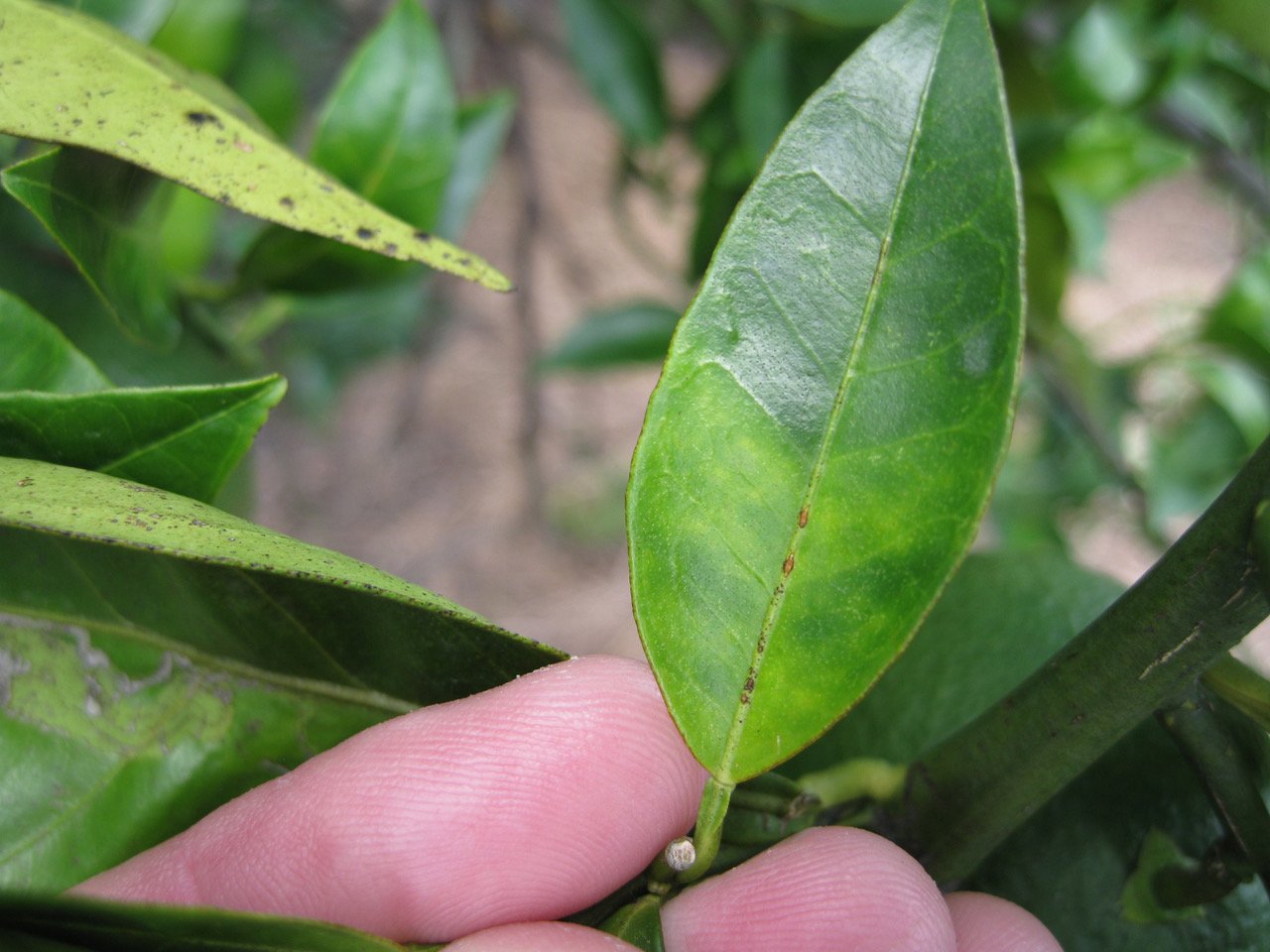
    Scientists are closer to gaining the upper hand on a disease that has wiped out citrus orchards across the globe. New models of the bacterium linked to the disease reveal control methods that were previously unavailable.

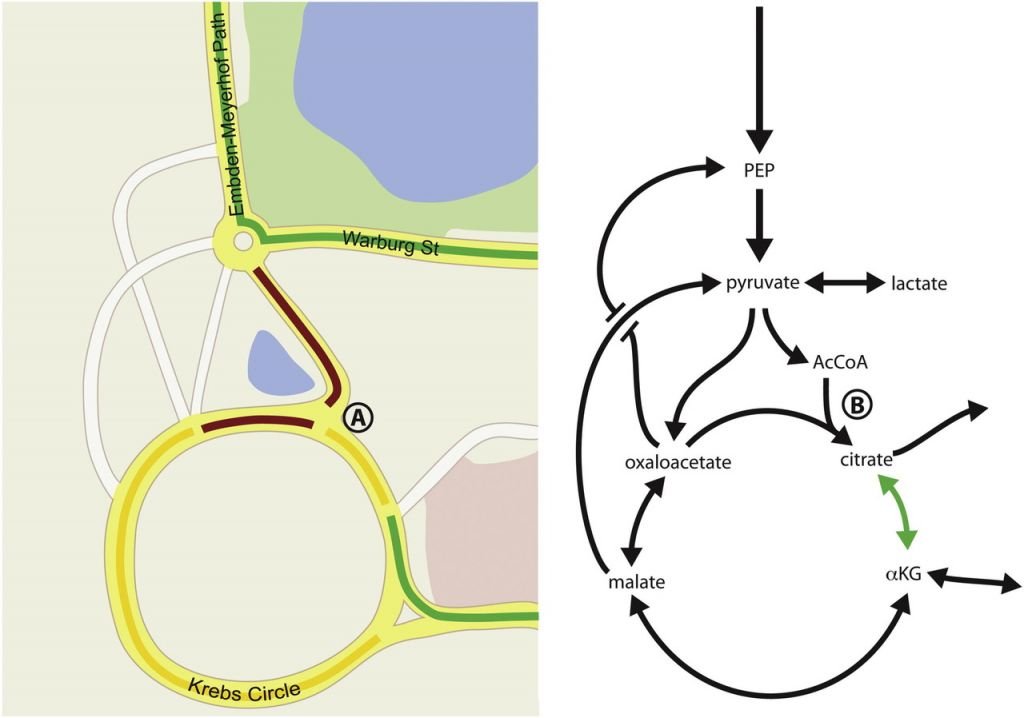
    Metabolic models of organisms are like road maps of cities. “They show you all the biological processes, and how they work together,” said UC Riverside microbiology professor James Borneman. “They also show you which molecular pathways, if blocked, will kill the organism.” 

    Simplified metabolic model and its striking similarity to a road map. (Metallo&Vander Heiden)

    In this case, researchers created the first models of the bacterium associated with Huanglongbing or HLB, also known as citrus greening disease. The team’s work is described in a new paper published in Nature’s npj Systems Biology and Applications.

    The research team made models for six different strains of the bacterium known as CLas and doing so enabled them to identify as many as 94 enzymes essential for the bacterium’s survival. These enzymes can now be considered targets for the creation of new antibacterial treatments.

    In addition, the team identified metabolites required for the bacteria to grow.

    “Just like when humans break down the food they eat into small components called metabolites, which feed our cells, bacterial cells also require metabolites for their growth,” Borneman said.

    Knowing the metabolites needed for CLas’ growth could enable scientists to cultivate it in a laboratory setting. It is not currently possible to grow CLas on its own, hindering scientists’ ability to study it and ultimately to manage it.

    This research project involved a collaboration between UC Riverside, UC San Diego, Texas A&M University, and the U.S. Department of Agriculture. In addition to Borneman, members of the modeling team included UCR plant pathologist Georgios Vidalakis and UCSD systems biologist Karsten Zengler.

    UC Riverside is at the forefront of efforts to combat Huanglongbing. Other important areas of research include antibacterial development and delivery, immune system fortification in citrus, engineering resistant citrus via a detailed understanding of host-microbe interactions, breeding resistant citrus, and insect management, among others.

    Because microbes tend to mutate and acquire resistance mechanisms in response to drugs and other efforts to thwart them, Borneman cautions that any one solution to the problem may be short-lived.

    Transmission electron microscope image of CLas bacterium. (J.M. Bové/INRA)

    “Microbes almost always adapt to control measures, perpetuating the ‘arms race’ between pathogens and hosts,” Borneman said. “There won’t be one thing that will fix this disease. We likely will need to address all three components associated with the disease — the bacterium, the insect that transmits it, and the citrus plants — to find a long-lasting solution.”

    To that end, the research team is constructing metabolic models of citrus and the insect, the Asian citrus psyllid.

    “We expect that this multiorganism modeling endeavor will provide new insights into the mechanisms underlying this disease, which will lead to effective and sustainable Huanglongbing management strategies,” Borneman said. — By Jules Bernstein, UC Riverside

  • Apple Breeding Program Takes Root Across the Country

    Apple Breeding Program Takes Root Across the Country

    Move over Johnny Appleseed! Orchards of healthier trees are taking root – and not only do these trees stay healthier when exposed to disease, but they also create the right sized tree for modern apple production across the United States.

    Apple orchards today can produce about 10 times more than they did 100 years ago, thanks to researchers at the Agricultural Research Service (ARS) Plant Genetic Resources Unit in Geneva, New York, and their partners at Cornell University. While the fruits of their labor are easy to see and taste, their most impressive work is underground.

    Roots of apple rootstock G.890

    Since 1969, researchers have been developing and improving new root systems, called rootstocks. Producers graft the apple tree of their choice to these rootstocks to create apple trees that are immune to certain diseases and insects, are the right size for their orchard, and are more productive than older rootstocks. In the lab, their rootstocks have quirky names like 75O3R5-214; commercially, it’s called G.214, where “G” stands for Geneva, a registered trademark representing a series of disease-resistant apple rootstocks.

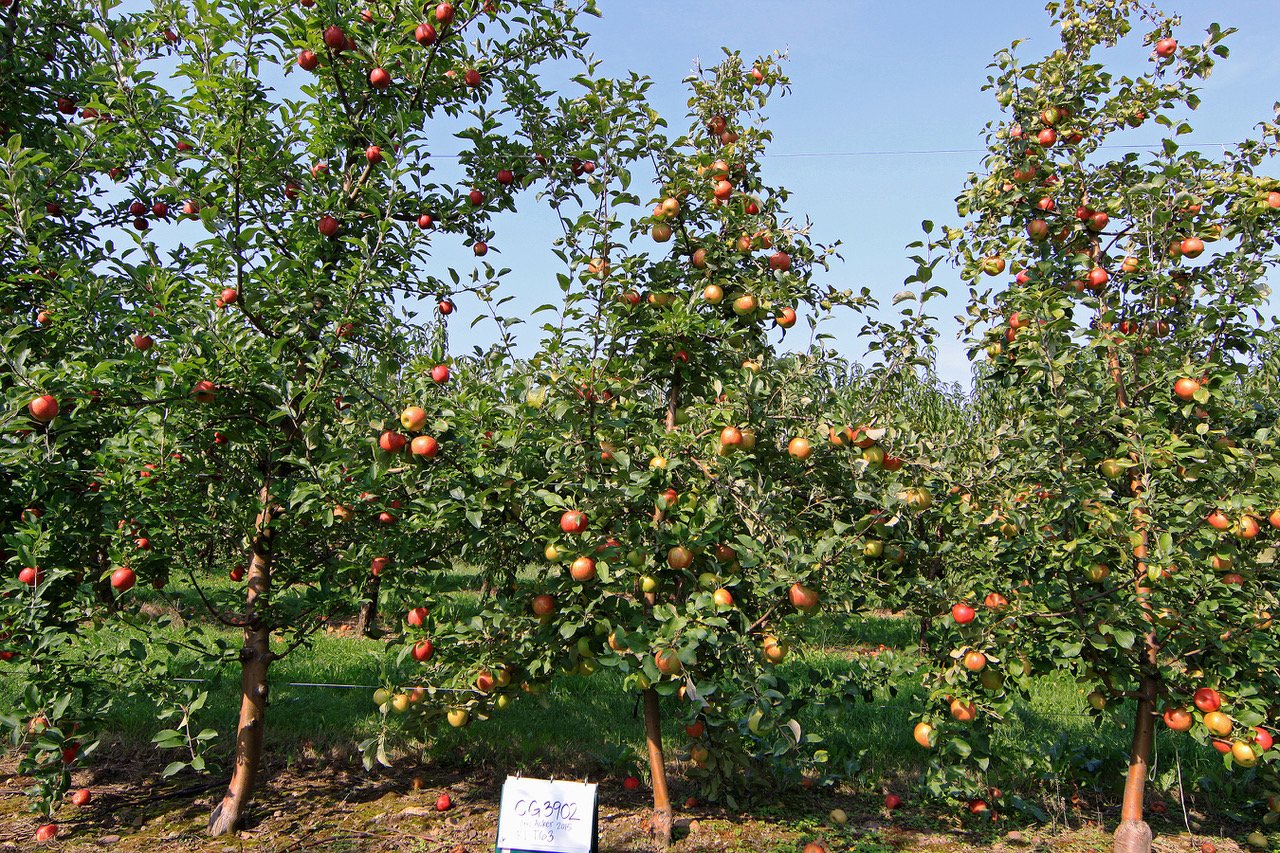
    The right-sized tree is important when planting a modern orchard because farmers increasingly depend on robotics and other technology to operate at peak efficiency. Unlike backyard apple trees that grow tall and round, today’s production orchards looks more like a series of fruit walls. Geneva rootstocks help create these walls by dwarfing the scion – the portion of the tree that is above ground – so the trees are shorter, which makes the fruit easier to reach and safer for pickers to harvest. Growing shorter trees in neat rows also allows for easy passage of harvest machinery.

    An apple orchard has a productive life span of 12-20 years, so farmers routinely uproot and replace 5-10 percent of their trees every year. In addition, trees need to be replaced in orchards that have been devastated by fire, disease, and insects. With about 500 million trees in the industry inventory, nurseries need to produce 20-25 million trees per year just to keep pace. Besides growing new rootstock plants from layer bed cuttings, the primary method for producing new rootstocks is cloning through micropropagation. Micropropagation starts with a very small stem, sometimes about 1/10th of a millimeter, that is grown in sterile conditions and fed from a nutrient-rich culture medium. A cloned rootstock is identical to the original plant so they are more consistent in their disease resistance, dwarfing effect, cold-hardiness, and enhanced productivity. Nurseries that produce rootstocks can also make more of them faster, which means they can keep up with the high demand for Geneva apple rootstocks. These protocols are now in several other countries, including Spain, Brazil, Chile, Morocco, and South Africa, where tens of millions of Geneva rootstocks have been produced by micropropagation.

    A nursery of approximately half a million G.935 apple rootstocks that have been grafted with different kinds of apple varieties, including Honeycrisp, Golden Delicious, Gala, and Fuji, will eventually be planted in orchards throughout the United States.

    As successful as Geneva rootstocks have proven to be, there is no such thing as a one-size-fits-all rootstock because soil and other environmental conditions vary by region – and sometimes even within the same region. With this in mind, researchers at ARS and Cornell continue to root out the mysteries of plant genetics so they can further improve Geneva rootstocks or create new and even better ones. – By Scott Elliott, USDA-ARS

  • More Eligible Commodities for USDA Coronavirus Aid

    U.S. Secretary of Agriculture Sonny Perdue announced today that additional commodities are covered by the Coronavirus Food Assistance Program (CFAP) in response to public comments and data. Additionally, the U.S. Department of Agriculture (USDA) is extending the deadline to apply for the program to September 11th, and producers with approved applications will receive their final payment. After reviewing over 1,700 responses, even more farmers and ranchers will have the opportunity for assistance to help keep operations afloat during these tough times.

    “President Trump is standing with America’s farmers and ranchers to ensure they get through this pandemic and continue to produce enough food and fiber to feed America and the world. That is why he authorized this $16 billion of direct support in the CFAP program and today we are pleased to add additional commodities eligible to receive much needed assistance,” said Secretary Perdue. “CFAP is just one of the many ways USDA is helping producers weather the impacts of the pandemic. From deferring payments on loans to adding flexibilities to crop insurance and reporting deadlines, USDA has been leveraging many tools to help producers.”

    Background:

    USDA collected comments and supporting data for consideration of additional commodities through June 22, 2020. The following additional commodities are now eligible for CFAP:

    • Specialty Crops – aloe leaves, bananas, batatas, bok choy, carambola (star fruit), cherimoya, chervil (french parsley), citron, curry leaves, daikon, dates, dill, donqua (winter melon), dragon fruit (red pitaya), endive, escarole, filberts, frisee, horseradish, kohlrabi, kumquats, leeks, mamey sapote, maple sap (for maple syrup), mesculin mix, microgreens, nectarines, parsley, persimmons, plantains, pomegranates, pummelos, pumpkins, rutabagas, shallots, tangelos, turnips/celeriac, turmeric, upland/winter cress, water cress, yautia/malanga, and yuca/cassava.
    • Non-Specialty Crops and Livestock – liquid eggs, frozen eggs and all sheep. Only lambs and yearlings (sheep less than two years old) were previously eligible.
    • Aquaculture – catfish, crawfish, largemouth bass and carp sold live as foodfish, hybrid striped bass, red drum, salmon, sturgeon, tilapia, trout, ornamental/tropical fish, and recreational sportfish.
    • Nursery Crops and Flowers – nursery crops and cut flowers.

    Other changes to CFAP include:

    • Seven commodities – onions (green), pistachios, peppermint, spearmint, walnuts and watermelons – are now eligible for Coronavirus Aid, Relief, and Economic Stability (CARES) Act funding for sales losses. Originally, these commodities were only eligible for payments on marketing adjustments.
    • Correcting payment rates for onions (green), pistachios, peppermint, spearmint, walnuts, and watermelons.

    Additional details can be found in the Federal Register in the Notice of Funding Availability and Final Rule Correction and at www.farmers.gov/cfap.

    Producers Who Have Applied:

    To ensure availability of funding, producers with approved applications initially received 80 percent of their payments. The Farm Service Agency (FSA) will automatically issue the remaining 20 percent of the calculated payment to eligible producers. Going forward, producers who apply for CFAP will receive 100 percent of their total payment, not to exceed the payment limit, when their applications are approved.

    Applying for CFAP:

    Producers, especially those who have not worked with FSA previously, are recommended to call 877-508-8364 to begin the application process. An FSA staff member can help producers start their application during the phone call.

    On farmers.gov/cfap, producers can:

    • Download the AD-3114 application form and manually complete the form to submit to their local USDA Service Center by mail, electronically or by hand delivery to their local office or office drop box.
    • Complete the application form using the CFAP Application Generator and Payment Calculator. This Excel workbook allows customers to input information specific to their operation to determine estimated payments and populate the application form, which can be printed, then signed and submitted to their local USDA Service Center.
    • If producers have login credentials known as eAuthentication, they can use the online CFAP Application Portal to certify eligible commodities online, digitally sign applications and submit directly to the local USDA Service Center.

    All other eligibility forms, such as those related to adjusted gross income and payment information, can be downloaded from farmers.gov/cfap. For existing FSA customers, these documents are likely already on file.

    All USDA Service Centers are open for business, including some that are open to visitors to conduct business in person by appointment only. All Service Center visitors wishing to conduct business with FSA, Natural Resources Conservation Service or any other Service Center agency should call ahead and schedule an appointment. Service Centers that are open for appointments will pre-screen visitors based on health concerns or recent travel, and visitors must adhere to social distancing guidelines. Visitors are also required to wear a face covering during their appointment. Our program delivery staff will be in the office, and they will be working with our producers in the office, by phone and using online tools. More information can be found at farmers.gov/coronavirus.