Category: Economics

  • UCCE Virtual Workshop Series on Nitrogen Management in Organic Production

    Growers of organic vegetables and strawberries across California are invited to attend an online training to learn how to manage nitrogen fertilization. UC Cooperative Extension is offering the three-part Nitrogen Planning and Management in Organic Production of Annual Crops Workshop on Nov. 29, Dec. 5 and Dec. 12.

    Growers, certified crop advisers, pest control advisers and other agricultural professionals who are interested in learning about nitrogen management in organically farmed crops are encouraged to enroll.

    The workshop is also available in Spanish.

    Tuesday, Nov. 29, 1-3 p.m. – Part 1: Understanding nitrogen: the nutrient, the role of microbes and the relevance of soil organic matter. Daniel Geisseler, UC Cooperative Extension specialist in nutrient management at UC Davis; Radomir Schmidt, program manager for the Working Lands Innovation Center at the UC Davis Institute of the Environment; and Margaret Lloyd, UCCE small farms advisor will give an overview of the sources, transformations and fates of nitrogen in soil. They also will discuss the role and dynamics of microbes in nitrogen management, and how nitrogen fixation impacts management decisions.

    Monday, Dec. 5, 1-3 p.m. – Part 2: Estimating nitrogen release from organic amendments and contributions from cover crops. Patricia Lazicki, a postdoctoral research associate at the University of Tennessee, Knoxville, and Lloyd will discuss estimating nitrogen release from compost, organic fertilizers, cover crops and crop residue and irrigation water.

    Monday Dec. 12, 1-3 p.m. – Part 3: Putting it all together: Completing a nitrogen budget, synchronizing nitrogen release with nitrogen demand, and using soil tests. Joji Muramoto, UC Cooperative Extension organic production specialist; Richard Smith, UC Cooperative Extension vegetable crops advisor; and Lloyd will address nuances of organic soil fertility management in vegetables. Discussions will include crop nitrogen demand and strategies to supply demand, as well as using and interpreting soil testing. Specific references will be made to strategies for complying with forthcoming regulations. The session will conclude with a discussion on new frontiers in organic nitrogen management.

    Registration for the virtual event is $25 and includes all three classes. A single registration can be shared by members of the same farm. Space is limited to 75 participants. To register, visit https://ucanr.edu/organiccrops22.

    Participants may earn six hours of CDFA-INMTP continuing education credits (formerly CURES CE Credits) or six hours of CCA credits.

    For more information, contact Margaret Lloyd at (530) 564-8642 or mglloyd@ucanr.edu.

    UC Agriculture and Natural Resources brings the power of UC to all 58 California counties. Through research and Cooperative Extension in agriculture, natural resources, nutrition, economic and youth development, our mission is to improve the lives of all Californians. Learn more at ucanr.edu and support our work at donate.ucanr.edu.

  • Darkling Beetle Overwintering Locations and Movement into California Tomato Fields

    Darkling beetles girdle seedlings at or below soil line by chewing which can cause significant damage and plant death when beetles are in high numbers. Darkling beetles are not usually a problem once plants are big enough to withstand the chewing damage. They move in from field edges, including weedy areas or adjacent crops like grains or alfalfa. Conventional control includes insecticide baits, but organic growers have more limited options.

    The UC Cooperative Extension conducted a study funded by the California Tomato Research Institute to better understand darkling beetle movement into tomato fields and develop a monitoring strategy to assist with control before beetles migrate into crop fields. Probable habitats for darkling beetles were scouted March-May 2022. These sites included weedy vegetation, hedgerows, field borders, and other locations in close proximity to crop fields (examples of trap sites pictured below). To determine darkling beetle presence, pitfall traps and visual observations were used. Pitfall traps consist of plastic cups buried in the soil, so that the opening is even with the soil line and filled with a preserving liquid. Insects walking across the ground fall into the cup as they travel and are unable to escape.

    Four organic field sites were monitored, with a total of 30 pitfall traps. The data is still being analyzed and beetles are currently being identified but the figure below shows a generalized overview of what was captured in the pitfall traps in Spring 2022. Because pitfall traps are better at measuring insect activity rather than density, they were not very effective at capturing darkling beetles. Darkling beetles do not move around as frequently as other insects like predatory ground beetles, which were caught in high numbers. However, darkling beetle damage was also not readily observed in these tomato fields. One field did however have significant damage from vegetable weevils which feed on foliage and stems, defoliating the plant, rather than girdle young plants at the base.

    Ground beetles were the most abundant insects captured, followed by miscellaneous beetles (not including darkling beetles) which included carrion beetles, click beetles, lady beetles, rove beetles and others in smaller numbers. Earwigs were also commonly captured along with isopods, spiders and ants (data not included). — By the UC Cooperative Extension with Funding from the California Tomato Research Institute

  • New Grant Aims to Reduce Plastic Taken From Fields to Landfills

    Washington State University is leading a new project that aims to advance soil-biodegradable mulches and develop innovative methods for recycling the plastic. The projects is funded by a $8 million, four-year Specialty Crop Research Initiative grant from the USDA National Institute of Food and Agriculture.

    Growers of crops like strawberries, raspberries, pumpkins, tomatoes, and melons depend on plastic mulch to enhance productivity. But that mulch is rarely recycled, and the soil-biodegradable version isn’t allowed in domestic organic production.

    Consequently, every year an estimated 2.5 million tons of plastic mulch is dumped into landfills, tilled into the soil, or burned, leading to global terrestrial and aquatic pollution. And that number is rising as more growers worldwide adopt plastic mulch without viable, sustainable end-of-life options for waste management.

    The new WSU-led program will focus on strawberries as a model crop because it’s a popular fruit grown throughout the country in different weather situations and soil systems. Scientists, extension specialists, and growers in California, Florida, Nebraska, and Washington will all participate. Companies such as Driscoll’s and Natureripe are also collaborating on the project.

    Plastic mulch is long black plastic strips laid down in fields to suppress weed growth, optimize soil temperatures, reduce water loss, and produce higher yields of clean fruits and vegetables free of soil debris. Its usage leads to significantly reduced herbicide application, fewer crops lost to rot from soil contact, a jump start on the growing season, yield enhancements, and improved profitability.

    “Growers are really dependent on plastic mulch,” said Lisa DeVetter, a Department of Horticulture associate professor based at WSU’s Northwestern Washington Research and Extension Center in Mount Vernon. “Every year, tens of thousands of acres of mulch are put on soil across the country, but the plastic mostly winds up in landfills and takes hundreds of years to degrade.”

    DeVetter, the lead project investigator, has collaborated on plastic mulch solutions for several years, frequently focusing on improving knowledge of soil-biodegradable mulch.

    Lisa DeVetter

    Soil-biodegradable mulch currently can’t be used in organic fields because it contains non-bio-based and synthetic materials forbidden in U.S. certified organic production. Growers are also concerned about its ability to fully biodegrade in soils and the potential long-term economic implications of degraded soil.

    Mulch recycling is a limited option because it’s coated with dirt and plant debris after being removed from the fields.

    “As much as 50 to 80% by weight of the removed mulch is contaminated with debris,” DeVetter said. “Most recycling facilities require less than 5% contamination.”

    The research team will look at methods for removing debris from the plastic and new technologies for recycling debris-laden plastic. They’ll also study ways to build the infrastructure necessary to handle potentially huge volumes of mulch, and how to incentivize more sustainable waste management behavior.

    This is the first time a research project will combine recycling and soil-biodegradable efforts to help reduce the tonnage sent to landfills and the resulting environmental impact; they’ve always been separate studies.

    “We’re leveraging our experience and network of collaborators — researchers, people in the industry, as well as allied nonprofit organizations — to come up with viable solutions to make an impact,” DeVetter said. — By

  • US Blueberry Impact Report Highlights Industry Growth, Innovation

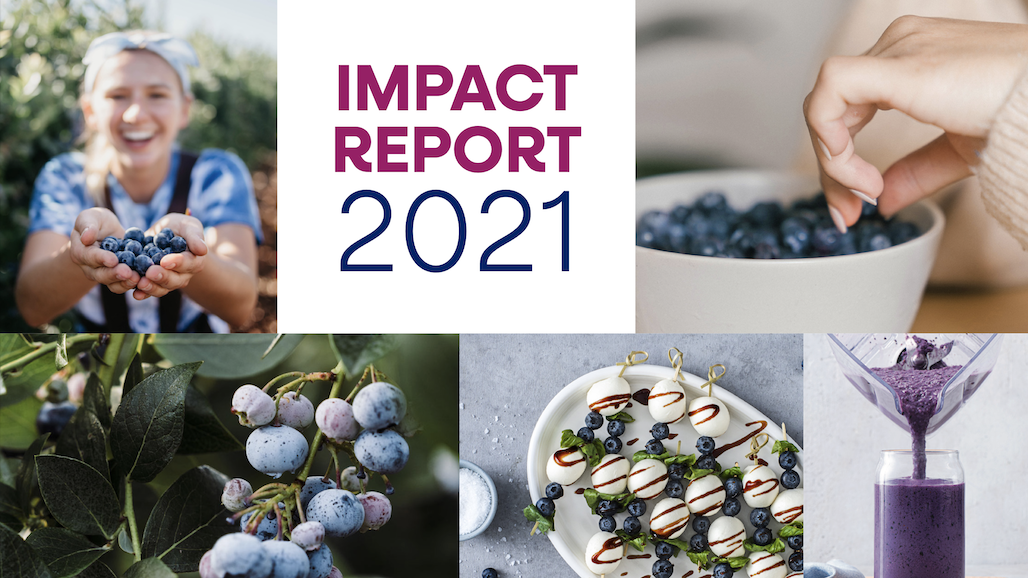
    US Blueberry Impact Report Highlights Industry Growth, Innovation

    The U.S. Blueberry Council (USHBC) has released its 2021 Impact Report that details last year’s efforts across all program areas in working toward the USHBC’s vision to make blueberries the world’s favorite fruit.

    Guided by the 2021-2025 strategic plan, USHBC recaps 2021 progress and achievements in consumer promotions, health research, foodservice, industry relations, export and food manufacturing, and annual meetings taking place in the spring and fall. An overview of the organization, its committees, staff and financials is also included.

    “Last year marked a pivotal point in time for our organization in our journey to drive the next ‘blue wave’ of growth and innovation in the blueberry industry,” said USHBC President Kasey Cronquist. “We launched Grab a Boost of Blue, our inspirational consumer call to action that’s resonating with shoppers and retailers, and being championed by industry marketers and stakeholders. Data and insights took center stage thanks to a host of new resources in our data center. And most importantly, the blueberry industry overwhelmingly recommitted to the USHBC with the passage of a referendum supporting the council’s work. With stakeholder support and involvement, we’ll continue to inspire possibilities and drive demand for our blueberry industry.”

    USHBC’s strategic plan, also developed in 2021, addresses the organization’s pillars of focus and the long-term tactics being implemented to drive domestic household penetration and demand for blueberries worldwide. View the full report HERE.

    About the U.S. Highbush Blueberry Council

    Established in 2000, The U.S. Highbush Blueberry Council (USHBC) is a federal agriculture research and promotion program with independent oversight from the United States Department of Agriculture (USDA). USHBC represents blueberry growers and packers in North and South America who market their blueberries in the United States and overseas, and works to promote the growth and well-being of the entire blueberry industry. USHBC was established by blueberry growers and currently has 2,500 growers, packers and importers. USHBC is committed to providing blueberries that are grown, harvested, packed and shipped in clean, safe environments. Learn more at ushbc.org.

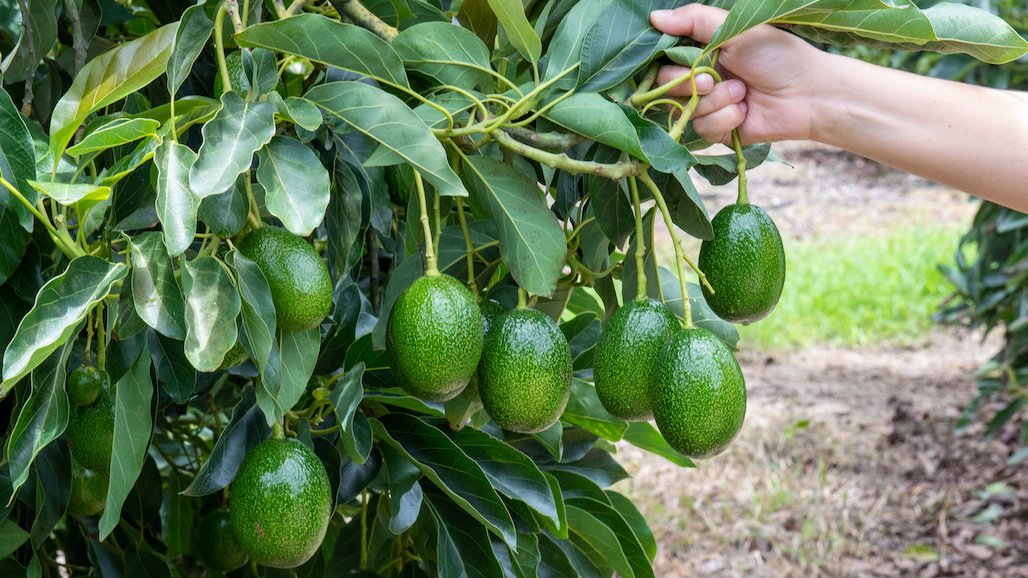
  • Upcoming SJV Avocado Meeting And GEM Grove Tours

    Upcoming SJV Avocado Meeting And GEM Grove Tours

    The San Joaquin Valley Avocado Meeting, which will occur on December 5, will feature a variety of guest speakers and visits to two local GEM avocado groves. The meeting will take place from 8:30 a.m. – 12:30 p.m. at the UC Lindcove Research and Extension Center located at 22963 Carson Avenue, Exeter, California.

    The meeting will include the following:

    • A presentation by Sam Santander, CDFA-Avocado Inspection Program
    • A presentation by Ken Melban, California Avocado Commission vice president of industry affairs and operations
    • A question and answer session concerning avocado growing in the San Joaquin Valley
    • Visits to two local GEM avocado groves (directions to the grove will be provided at the meeting)

    If you are interested in attending the workshop, please RSVP with Mary Lu Arpaia at mlarpaia@ucanr.edu with the subject line: 12/5/22 Avocado Meeting.

  • Slight Increase in Assessment Rate for California Citrus Research Program

    Slight Increase in Assessment Rate for California Citrus Research Program

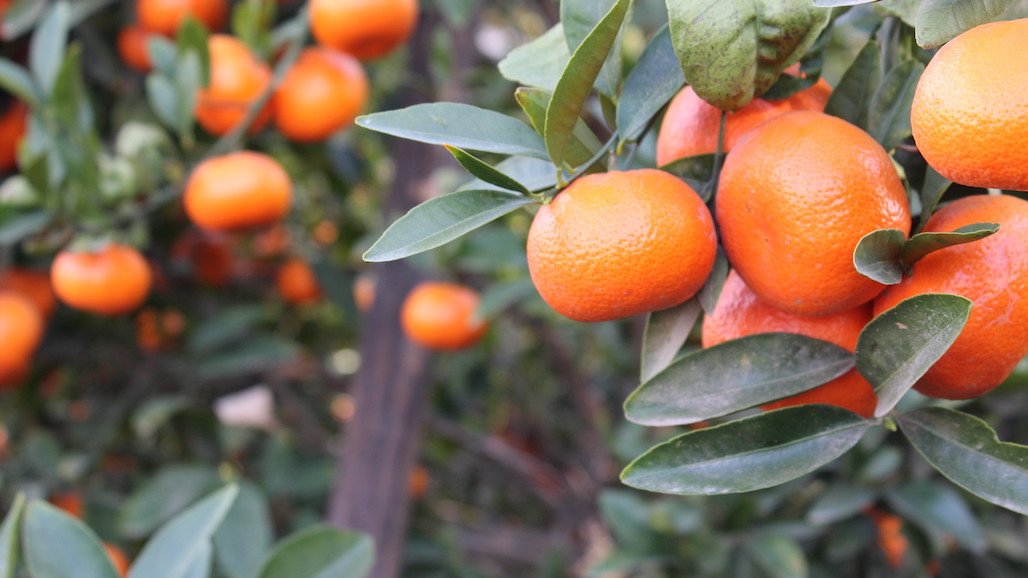
    Upon the recommendation of the Citrus Research Board (Board), the California Department of Food and Agriculture (Department) has established an assessment rate to be levied on California citrus producers during the 2022-2023 marketing season, which is the period of October 1, 2022 through September 30, 2023. The assessment rate for the 2022-2023 marketing season has been set at three and two-tenths cents ($0.032) per 40-pound standard field box, or the equivalent thereof, of all types and varieties of citrus, as defined by the California Citrus Research Program, marketed by producers and received by handlers or processors during the season. The assessment rate for the 2022-2023 marketing season is two-tenths of one cent ($0.002) per standard field box higher than last season’s rate.

    In order to facilitate the collection of assessments, each handler or processor of California citrus is required to remit assessment payments to the Board office on behalf of producers from whom they receive citrus, including their own production. In turn, handlers and processors are authorized to deduct such assessment payments from any money owed to such producers. Assessment forms and additional instructions for reporting and remitting assessments on behalf of producers will be provided to all citrus handlers and processors by the Board office.

    Funds generated by this assessment are used to conduct general production research, a variety improvement research program, a quality assurance program on agricultural chemical residues, pest and disease control functions, and other activities pertinent to the California citrus industry.

    If you have any questions regarding this assessment rate or the activities of the California Citrus Research Program, please contact Marcy Martin, President of the Citrus Research Board, at (559) 738-0246, or Steven Donaldson with the Department’s Marketing Branch at (916) 900-5018.  Joe Monson, Branch Chief CDFA Marketing Branch 

  • California Avocado Society Annual Meeting

    California Avocado Society Annual Meeting

    The California Avocado Society’s Annual Meeting will take place in person on Thursday, November 3 from 9:00 a.m. – 1:30 p.m. and feature a keynote speaker and three presentations.

    The event will include the following:

    • Bob Lucy, Keynote Speaker — The Past, Present and Future of California Avocados
    • Brad Adams, Irrometer Co. — Why Not Ask the Tree How Much Water is Needed with Root Zone Water Measurement?
    • Dan Grant and Consuelo Fernandez, Brokaw Nursery — New Rootstocks’ Performance and High Density or Conventional Plantings
    • Eddie Grangetto, Grangettos — Common Sense Approach to Growing Avocados

    The meeting will beheld at the Pauma Band of Mission Indians Ellis Ranch located at 18162 CA-76, Pauma Valley, California. Registrations prior to October 27 are $35 for members and $45 for non-members. Registrations at the event are $55. Fee includes lunch and a CAS hat. Interested participants may register online or via mail. If registering by mail, registration fees should be sent to CAS, P.O. Box 4205, Ventura, CA, 93007. Please include a list of attendees’ names if you register by mail.

  • Fumigation Considerations Before Replanting an Orchard

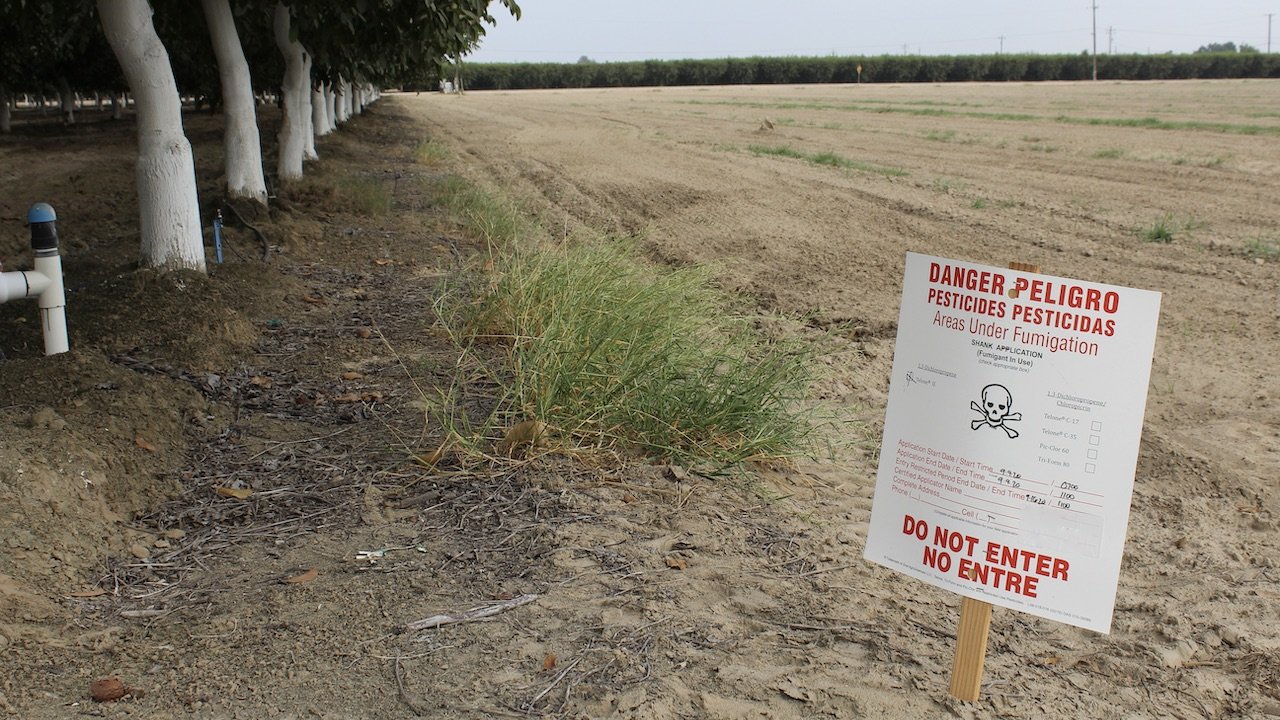
    Fumigation Considerations Before Replanting an Orchard

    It’s that time of the year when orchards are being pulled and growers begin preparing their soil for future plans.  For growers looking to replant their orchards, watch this brief interview with UC Riverside Nematologist Andreas Westphal as he shares some considerations to take for fumigation when it comes to nematode pressure.

    Please thank this video’s sponsor Suterra for their industry support.

  • New UCCE Advisor to Serve Tree Fruit & Nut Growers in Merced and Madera

    New UCCE Advisor to Serve Tree Fruit & Nut Growers in Merced and Madera

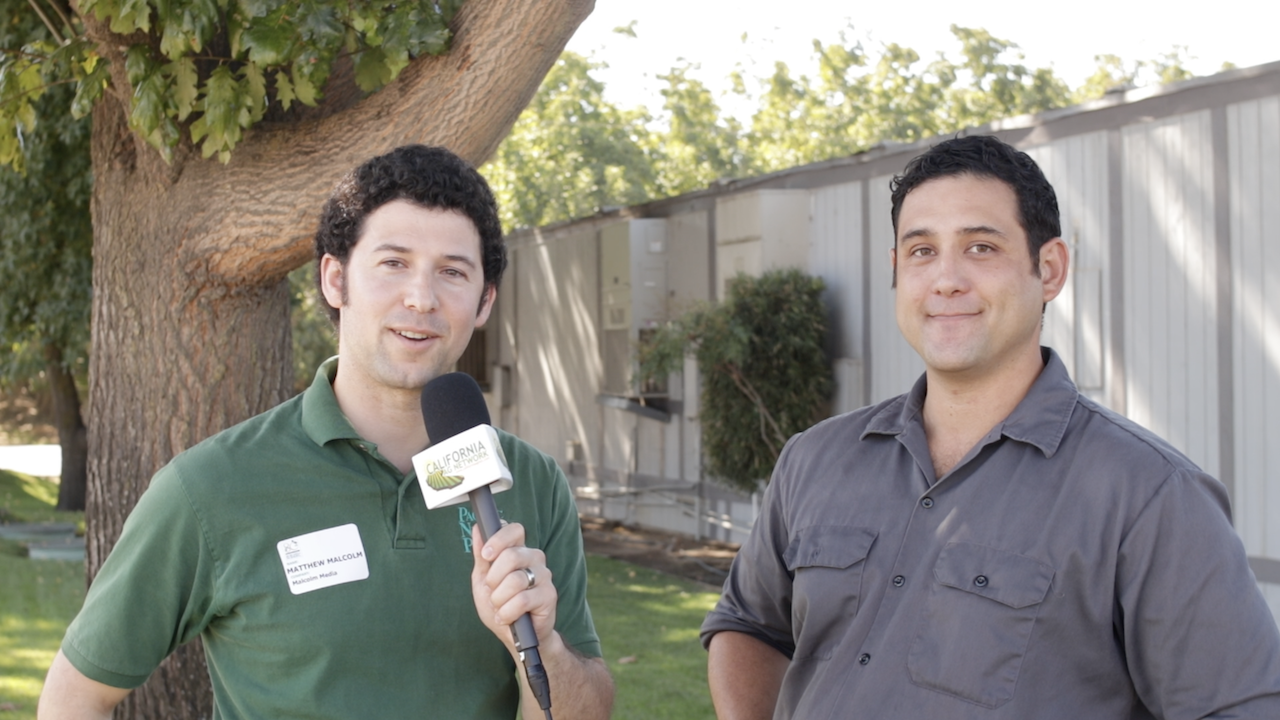
    The UC Cooperative Extension is pleased to introduce one of their newest Orchard Crops Advisors, Cameron Zuber, who will be serving tree fruit and nut growers in Merced and Madera Counties. Watch this video interview to get to know Cameron, his history with California agriculture, and what his research and extension focuses are.  Cameron can be reached at (209) 385-7403 or cazuber@ucanr.edu.

    Please thank this video’s sponsor Suterra for their industry support.

  • Fresno-Area Women in Ag to Receive Support, Learning Circle & Resource Fair Nov. 2

    Fresno-area farmers face water management and business viability challenges like never before, but financial and technical resources are available to help growers and landowners navigate these challenges. American Farmland Trust is partnering with the Sierra Resource Conservation District and USDA’s Natural Resources Conservation Service to gather women in agriculture around these issues and feature services they can lean on at a Women for the Land Learning Circle and Resource Fair on Nov. 2 from 9 a.m. to 2 p.m in Fresno.

    At this women-centered gathering, growers, landowners and others involved in agriculture will be able to share experiences, while agricultural resource providers will describe local services that support the viability of agriculture and agricultural communities. The event has been co-designed with input from a broad range of partners in the region to reach a diversity of communities engaged in Fresno agriculture, according to Caitlin Joseph, AFT’s Women for the Land Program and Policy Manager. As such, multilingual resources will be provided in English, Spanish, Hmong and Punjabi, as needed.

    “AFT is excited to bolster the work of local RCDs, NRCS staff and others, by partnering on this free event for women producers and landowners, applying a peer-to-peer learning model we have utilized nationally to great effect, says Joseph. “In addition to a farm tour led by Lilian Yang, one of the region’s innovative Hmong women farmers, there will be discussions on how the drought is impacting water and land use in the San Joaquin Valley, and what is still needed to support farm viability throughout these changes. Through our Women for the Land Initiative, we have found that learning in this type of environment can really drive women farmers to take action to support their operations.”

    “Sierra RCD is thrilled to offer this space for women farmers to build relationships with service providers who can help them access financial and technical resources,” says Karin Roux, District Development Manager at Sierra Resource Conservation DistrictWe are particularly interested in the powerful ways that AFT’s peer-to-peer learning will help women hear directly from each other on the unique challenges and successes they are experiencing farming here in the Central Valley, and receive firsthand accounts of technical and financial assistance opportunities available to improve their farms’ water efficiency and resilience.”

    Where:

    Start at Sierra RCD Office (10637 N. Lanes Road, Fresno, CA 93730), take bus to farm visit and return to office where lunch will be provided
     
    When:  Nov. 2, 2022; 9 a.m. to 2 p.m.
     
    Organizers
    Caitlin Joseph, Women for the Land Program and Policy Manager, AFT
    Anel Trujillo, California Outreach Specialist, AFT
    Vicky Espinoza, AFT and The Nature Conservancy (discussion leader)
    Alyssa Flores, Water Use, Soil Health, and Conservation Planning Support Assistant, SRCD
    Karin Roux, District Development, SRCD
    Veronica Martinez, Community Engagement Youth and Education Program Manager, SRCD
     
    For multilingual assistance, contact:
    Karin Roux (English) – (845) 527-6590
    Anel Trujillo (Español) (559) 385-1517
    Deep Singh (Pajābī) (559) 909-9962
    Vila Xiong (Hmong) (559) 402-0067 ext 108

    American Farmland Trust is the only national organization that takes a holistic approach to agriculture, focusing on the land itself, the agricultural practices used on that land, and the farmers and ranchers who do the work. AFT launched the conservation agriculture movement and continues to raise public awareness through our No Farms, No Food message. Since our founding in 1980, AFT has helped permanently protect over 6.5 million acres of agricultural lands, advancing environmentally-sound farming practices on millions of additional acres and supported thousands of farm families.

    USDA’s Natural Resources Conservation Service (NRCS) mission is “Helping People Help the Land.” NRCS helps America’s farmers, ranchers and forest landowners conserve the nation’s soil, water, air and other natural resources. All programs are voluntary and offer science-based solutions that benefit both the landowner and the environment.

    The Sierra Resource Conservation District (Sierra RCD) is a non-regulatory, non-taxing, nonprofit, Special District of the State of California; the mission and function of the Sierra RCD is to take available technical, financial, and educational resources, whatever their source, and focus or coordinate them at the local level, to meet the present and future natural resource needs of the local land user. Offices are in Auberry and Fresno, CA. More information can be found at www.sierrarcd.com

    Sierra RCD service area covers the eastern half of Fresno County and has two main programs in operation that interact with local land users and landowners: the Forestry and Watershed Program which predominantly focuses within the Sierra Nevada Mountains, and the Agriculture and Rangeland Program which focuses within the foothills of the Sierra Nevada Mountains and Central Valley floor.