Category: Non-Video

  • California Prune Board Announces 2022-2024 Officers and Board Members

    California Prune Board Announces 2022-2024 Officers and Board Members

    The California Prune Board (CPB) has officially seated its 22-member board and 16 alternates for the 2022-2024 term.  Following certification of the election by the California Secretary of Food and Agriculture, the new board approved the 2022/23 fiscal year programs and budget at its June board meeting. The CPB officers are:

    • Chair: George Sousa Jr., President of Mariani Packing Co., Inc., Vacaville, Calif. (re- elected)
    • Vice Chair: Mike Vereschagin, Vereschagin Farms, Orland, Calif. (newly elected) 
    • Secretary: Dan Bozzo, Triple B Ranch, Gridley, Calif. (re-elected) 
    • Treasurer: Rajeev Davit, Davit Ranches, Yuba City, Calif. (re-elected) 

    “Our values as a Board keep us driven towards quality and continuous improvement and I’m honored to continue serving as Board chairman alongside dedicated individuals who share a vision of creating a world more enthusiastic about California Prunes,” said George Sousa Jr., President, Mariani Packing Co. “Our industry – like all of agriculture today – has its challenges, but the CPB has been around for 70 years, and we believe in the power of our product and the importance of a vital industry for generations to come.” The newly seated board will serve through May 2024.

    “California Prune growers and handlers have proven to be resilient, strategic, and disciplined in producing a premium fruit that is enjoyed domestically and in export markets around the world,” said Donn Zea, Executive Director, California Prune Board. “Alongside our industry stakeholders, we are dedicated to helping the trade and consumers alike discover the many wonders that California Prunes offer – from health and nutrition benefits, exceptional taste, premium quality, unmatched versatility – and so much more.”

    The board will focus on advancing the key CPB priority areas that have been determined with input from numerous industry members and the executive committee. Focus areas include:

    • Nutrition research
    • Trade policy and market support
    • Industry unification
    • Production research
    • Expanding global visibility for California Prunes

    CPB membership is composed of 22-member board seats that are elected by the industry, organized by seven districts and a non-industry public member. The CPB officers are selected by the newly seated board members for their leadership roles.

    California is the world’s largest producer of prunes providing about 40 percent of the world’s supply and more than 90% of the U.S. supply. Today, there are more than 36,000 bearing acres of California Prune orchards producing an average of 80,000 tons each year. Consistency in production, driven by rigorous agricultural standards, and superior taste is keeping the demand for prunes from California strong in over 60 countries.

    ABOUT THE CALIFORNIA PRUNE BOARD

    The California Prune Board was established in 1952 to represent growers and handlers under the authority of the California Secretary of Food and Agriculture. California is the world’s largest producer of prunes with orchards across 14 counties in the Sacramento and San Joaquin valleys. Promoting a lifetime of wellness through the enjoyment of California Prunes, the organization leads the premium prune category with generations of craftsmanship supported by California’s leading food safety and sustainability standards. California Prunes. Prunes. For life.
  • Novel Strawberry IPM Tool Included in CA DPR Grant Funding

    The California Department of Pesticide Regulation (DPR) announced $1.78 million in Alliance Grants for five projects that aim to increase the speed and the scale at which safer, more sustainable pest management practices are adopted across the state. Each project will promote innovative Integrated Pest Management (IPM) systems and practices in agricultural, urban or wildland settings.

    “Alliance Grants directly support the department’s mission to foster methods and tools to reduce reliance on pesticides and their impact on human health and the environment,” said DPR Director Julie Henderson. “We are excited by the potential of these five projects and will continue to invest in projects that promote the development and use of safer, more sustainable pest management.”

    DPR’s Alliance Grants Program funds projects that promote IPM, an approach that uses the least-toxic, effective method to solve pest problems. Since 2007, DPR has awarded more than $7.8 million in Alliance Grants. The enhanced funds for the 2022 DPR Grants Programs cycle were allocated by the 2021-22 state budget and represent a more than five-fold increase in available funding opportunities compared to historical funding levels.

    Alliance Grants are awarded to groups of experts and partners, also referred to as Alliance Teams, who work collaboratively to accomplish the goals of a given project.

    Alliance projects funded for agricultural pest management:

    • Promoting IPM practices that incorporate natural-enemy habitat to control pest insects. This project’s Alliance Team will engage in outreach with producers and agricultural professionals through videos that feature producers and researchers, field days and webinars, which will include an online continuing education course for pesticide applicators. This project will be led by Jo Ann Baumgartner at Wild Farm Alliance, a local non-profit conservation group in Watsonville.
    • Promoting the adoption of UV-C light, a non-chemical control, by strawberry growers on California strawberry farms. This project’s Alliance Team will showcase UV-C light as an effective, non-chemical alternative to chemical pesticides for controlling mites, mildew and mold. This project will be led by Dr. John Lin at California Polytechnic State University, San Luis Obispo.

    Alliance projects funded for urban pest management:

    • Addressing management of Argentine ants, the most common nuisance ant for which pesticide treatments are applied in urban environments. The Alliance Team for this project is focused on the implementation and promotion of a low-impact IPM approach for pest management professionals that uses pheromone attractants during initial treatment visits and targeted chemical baiting for maintenance visits, to reduce reliance on repeated use of insecticide sprays. This project will be led by Dr. Dong-Hwan Choe at University of California, Riverside.
    • Home visits to provide IPM education and intervention to disadvantaged communities in South Los Angeles. To improve the health and well-being of South Los Angeles residents, this project’s Alliance Team will make home visits to each family that enrolls in the program. The team will assess housing conditions; provide IPM interventions, including caulking cracks and sealing large holes; and offer other IPM education on reducing pest infestations. This project will be led by Nancy Ibrahim at Esperanza Community Housing.

    Alliance projects funded for wildlands pest management:

    • Combining manual removal of invasive primrose with native plant restoration through a private property owner incentive program, and an AmeriCorps partnership that will provide education and outreach to the community. The Alliance Team for this project is focused on management of creeping water primrose, an invasive aquatic plant, that is usually controlled with chemical pesticides. This project’s combination of IPM methods will improve water quality, protect fish habitat and enhance flood protection and prevention, as well as create strong and sustainable natural vegetative wetland communities around the shores of Clear Lake, California. This project will be led by Angela De Palma-Dow at the Lake County Watershed Protection District.For details about past recipients of DPR’s Grants Programs, please visit our department’s Pest Management Grants webpage.ABOUT THE DEPARTMENT OF PESTICIDE REGULATION

      The California Department of Pesticide Regulation protects human health and the environment by fostering safer and sustainable pest management practices and operating a robust regulatory system to evaluate and register pesticides and monitor and regulate their sale and use across the state.

      DPR’s work includes conducting scientific evaluations of pesticides to assess and mitigate potential harm to human health and the environment prior to and following registration registering all pesticides prior to sale or use in California, monitoring for pesticides in the air and water, and enforcing pesticide laws and regulations in coordination with 55 County Agricultural Commissioners and their combined 400 field inspectors across the state’s 58 counties. DPR invests in innovative research, outreach, and education to encourage the development and adoption of integrated pest management tools and practices and conducts outreach to ensure pesticide workers, farmworkers and local communities have access to pesticide safety information.

  • New Board Representatives at the Olive Oil Commission of California

    New Board Representatives at the Olive Oil Commission of California

    The Olive Oil Commission of California (OOCC) recently held an election to allow California olive oil producers to select representatives to its Board of Directors. Election results were announced at the June 6 Board meeting with Larry Maben, Maben Family LLC, voted in to represent olive oil growers from District 1. Jim Lipman, California Olive Ranch, was selected as the alternate Board member from this same district, which encompasses the counties of Butte, Del Norte, Glenn, Humboldt, Lassen, Modoc, Plumas, Shasta, Siskiyou, Tehama, and Trinity.

    Samantha Dorsey, McEvoy of Marin, was re-elected to serve as the Board member representing growers in District 2, while Matt Lohse, Big W Ranch, was elected to serve as the alternate Board member from this District which includes the counties of Amador, Colusa, El Dorado, Lake, Marin, Mendocino, Napa, Nevada, Placer, Sacramento, Sierra, Solano, Sonoma, Sutter, Yolo, and Yuba.

    In District 3, Jeff Colombini, Lodi Farming, was elected to represent growers on the OOCC Board with Richard Marchini serving as the alternate. The Board also voted to appoint Dan Devico, Pomeian, to fill a vacant position as the alternate to Frank Olagaray, Blossom Farms, who is also a Board member representing growers in District 3. District 3 encompasses the remaining olive oil producing counties of Alameda, Calaveras, Contra Costa, Fresno, Imperial, Inyo, Kern, Kings, Los Angeles, Madera, Mariposa, Merced, Mono, Monterey, Orange, Riverside,

    San Benito, San Bernardino, San Diego, San Francisco, San Joaquin, San Luis Obispo, San Mateo, Santa Barbara, Santa Clara, Santa Cruz, Stanislaus, Tulare, Tuolumne, and Ventura.

    With respect to members of the Board representing olive oil handlers, Ciriaco Chavez of Boundary Bend Olives was re-elected to serve as the Handler Member for District 2. The alternate positions for handlers in both District 1 and District 2 are currently vacant. Any handler interested in serving in these positions should contact the OOCC.

    A complete list of OOCC Board members and alternates can be found on the OOCC website here.

  • North Coast Olive Oil Field Day, Aug. 16

    North Coast Olive Oil Field Day, Aug. 16

    The Olive Oil Commission of California would like to invite olive oil growers to a special day at McEvoy Ranch with presentations on olive production issues and olive oil tasting. This North Coast Olive Field Day will take place on August 16, with registration at 8:00 a.m. and the gathering ending after lunch at 1:00 p.m.

    The day’s agenda includes presentations on canopy management and nutrition; olive fruit fly; alternate bearing; olive diseases and irrigation. The course has been approved for 1 hour of Department of Pesticide Regulation Continuing Education Units and 2.5 hours of Certified Crop Advisor units.

    The event is sponsored by the University of California Ag and Natural Resources, the UC Davis Olive Center and McEvoy Ranch.

    Registration is required and space is limited. Please reserve your spot no later than August 8, 2022. Learn more and register here.

  • Nominate Blueberry Industry Standouts for NABC Awards

    Nominate Blueberry Industry Standouts for NABC Awards

    The nomination period for the North American Blueberry Council (NABC) Awards is now open! Leaders in the blueberry industry will be honored at The Blueberry Summit this fall, and NABC needs your help to identify who should be recognized. The Duke Galletta Award recognizes excellence in blueberry horticultural research, and the Alex Wetherbee Award honors outstanding contributions in marketing and promotion.

    Submit nominations for these prestigious awards by August 12. For more information about the NABC Awards, contact Amanda Griffin, vice president of engagement and education, at agriffin@nabcblues.org, or visit nabc.blueberry.org/all-resources/nabc-awards/.

  • GroPro Appoints Benito Varela as Chief Operating Officer

    GroPro Appoints Benito Varela as Chief Operating Officer

    – SPONSORED CONTENT –

    GroPro Corp. announced that veteran agriculture industry executive Benito Varela joined the team as the new Chief Operating Officer on July 1. Varela has almost 30 years of experience in agribusiness, including 25 years at Dow Agrosciences. A driven executive with broad-based expertise in leading effective strategy, Benito has a strong background in biotech as well as international territory management, market and business development and strategic alliances through multiple M&A projects. His outstanding leadership, anchored by his high integrity and personal character form the basis of his long-term professional relationships.

    Mr. Varela has a Bachelor of Science Degree in Agricultural Engineering (University of Florida) and a Master of Science Degree in Professional Business Management (Honors, University of Miami). Varela is also a Certified Mentor for entrepreneurship and small business by The Venture Mentoring Team and Certified Six Sigma Black Belt.

    “Benito’s strong history of achieving large territory growth, managing corporate innovation in biotech for agriculture and leadership skills will help GroPro accelerate its mission to become a leading international agricultural biotech company.” – said James Lamoureaux, CEO of GroPro. ” We believe that his experience, deep understanding of operational excellence, best practices, and partnering for rapid expansion in Latin American agribusiness, and strong industry connections make him an excellent leader to help expand our business.”

    About GroPro Corp:

    GroPro is an international Biotech #BioFertilizer#BioStimulant, and #BioPesticide manufacturer with a headquarters in Austin, Texas (the USA). The company’s target regions are – the USA, the Middle East, Africa, the EU, and Central America. Our products have been competing and beating the bio-industry standards. Numerous field trial results with universities, researchers, and growers confirm our effectiveness. GroPro has also efficiently provided superior efficacy against traditional\chemical inputs, allowing us to offer product lines for all growers.

    Innovations Grow Here

    groproag.com

  • Citrus Research Board Secures Immense Support from Citrus Growers

    Citrus Research Board Secures Immense Support from Citrus Growers

    California citrus growers voted to continue their support of the Citrus Research Board (CRB) by a broad margin in a state-mandated referendum.

    The just-concluded referendum, which must be held every five years, was conducted by the California Department of Food and Agriculture (CDFA). A majority of eligible citrus producers cast their vote and their support was nearly unanimous – 97.80 percent, representing 99.51 percent of the state’s citrus volume, voted in favor of continuing the CRB.

    CDFA Marketing Branch Chief Joe Monson said, “Since the referendum results exceed the criteria required for continuation stated above, the Department has authorized the Program to continue operating for another five-year period, through September 30, 2027.”

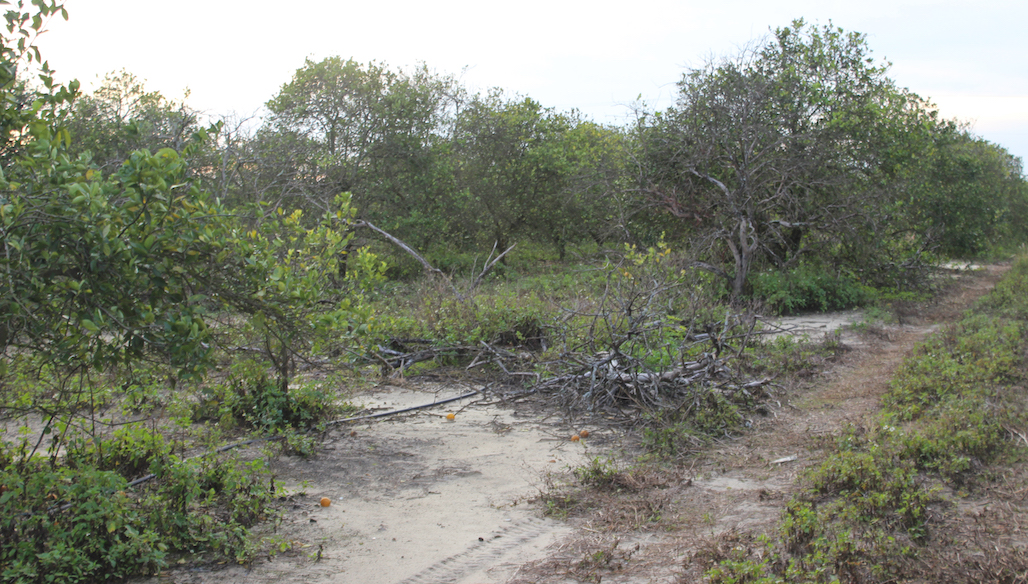
    Over the past five years, the CRB has worked continuously to advance findings within our four research priorities: vectored diseases, pest management, production and post-harvest technology, and new varieties. Much of the research has focused on the deadly disease huanglongbing (HLB) and advancements have been made to keep the infections from spreading in California. The disease has devastated other citrus growing regions, including Florida, but the diligence of California’s growers has kept HLB from entering any of the state’s commercial groves.

    “We are pleased to once again receive the support of the industry,” said CRB President Marcy L. Martin, “and we look forward to continually improving upon the scientific pillars that allow the California citrus industry to thrive.”

    The CRB administers the California Citrus Research Program, the grower-funded and grower-directed program established in 1968 under the California Marketing Act as the mechanism enabling the State’s citrus producers to sponsor and support needed research. More information about the Citrus Research Board may be found at www.citrusresearch.org.

  • Impacts of Water Restrictions on Agriculture Production Cannot Be Understated

    Impacts of Water Restrictions on Agriculture Production Cannot Be Understated

    United Vegetable Growers Cooperative — Our most precious resource is in critical condition. Chances are if you have driven through the Central San Joaquin Valley over the past 20 years you have seen prominent signs and billboards scattered along the interstate highways as well as the backroads.

    Many can attest to driving by one of these signs countless times while checking their fall lettuce in Huron. The simple five-word message has been crystal clear and prophetic for many years: “Food Grows Where Water Flows.” The message seems so basic and elementary that the critical message became tone deaf.

    West Coast farmers for generations have navigated multi-year cyclical drought conditions and have always managed to survive these conditions. Several seasons of heavy Sierra Nevada and Colorado Rockies snowpacks, along with above-average rainfall, and a short-term emergency was averted.

    The current West Coast water conditions are not an overnight development, it has been gradually building for years. As a result of the ongoing drought, the western region of the country’s most strategic water storage reservoirs have been reduced to historic levels.

    To provide context, the following are current levels of a few of California’s critical reservoir as of June 26: Lake Shasta is currently at 39% of its capacity and 50% of its historical average. Trinity is currently at 29% of its capacity and 38% of its historical average. Oroville is currently at 50% capacity and 65% of historical average. San Luis is currently at 40% capacity and 71% of its historical average.

    As a result, multiple CSJ irrigation districts have been subject to extensive water allocations, which have gotten more severe over the past two years. These allocations cover all agriculture farming, be it row crops or orchards. And as the season moves toward its midway point, unless there is record precipitation along with snowpack, conditions will remain dire. Water allocations will only be deeper next season and farm acres will continue to be furrowed.

    The challenge of this drought is not exclusive to California farmers. The Colorado River Basin is at its lowest levels ever recorded. With Lake Powell currently at 27% of capacity and Lake Mead at 29% of capacity. Now in an effort to preserve the water levels of these two critical reservoirs, drastic conservation measures are now being implemented. Targeted conservation levels of between two- and four-million-acre-feet of water (one acre-foot of water = 325,000 gallons) have been implemented to protect Lake Mead and Lake Powell reservoirs for the next four years.

    The primary effects of this conservation will be on the backs of the desert southwest agriculture, which ranges from the greater Yuma growing district to the Imperial Valley. The current outline of agriculture water conservation comes via usage restrictions, such as forcing farmers to determine which crops will be the most financially viable to farm. This is in addition to impacting the volume of crops that can be farmed, all while limiting the use of irrigation water. Keep in mind that during the winter months of November through March, over 85% of all leafy greens and vegetables consumed in North America is grown in the Greater Yuma and Imperial Valley growing districts.

    This is more than just a growing concern. The impact of agriculture production limitations based upon water restrictions cannot be understated. And long-term water storage solutions can no longer be ignored.

    Because, as the signs proclaim, only “Food Grows Where Water Flows.”

  • Best Farming Practices for Treated Seeds Underscores Commitment to Environmental Stewardship

    As planting season begins across the West, Western Plant Health is reminding farmers about the importance of following basic steps that will help ensure the ongoing stewardship of pesticide-treated seeds, which help reduce the overall use of pesticides.

    This major agricultural advance provides seed treatments that help protect developing seeds during their most vulnerable time – at planting and germination. Their highly targeted, precise application means less impact on the surrounding environment.

    Studies have shown that without this innovation, up to 5X’s more pesticides would have to be applied by traditional means to the crop. Fewer applications also require fewer tractor passes, which in turn reduces greenhouse gas emissions and offers yet another way for farmers to mitigate climate change.

    Treated seeds represent one of many valuable and innovative approaches enabling farmers in the West to be more productive, while using resources more efficiently and protecting the environment. That is why adopting these best practices is critical:

    1) Follow label directions on seed containers;

    2) Eliminate flowering plants and weeds in the field prior to planting;

    3) Minimize dust by using advanced seed flow lubricants and mechanisms;

    4) “Bee Aware” of honey bees and hives located near the field;

    5) Ensure that any spilled seeds are removed to protect wildlife and the environment; and

    6) Remove all treated seed left in containers and equipment after each planting, and dispose of any remaining seeds after planting is completed.

    These are simple, effective and important stewardship practices when it comes to treated seeds. Let’s help protect this critical technology for farmers by observing these practices. Remember, always follow label directions on seed containers for proper handling, storage, planting and disposal to minimize risk to applicators, wildlife and the environment!

    Farmers are the original environmentalists; properly using treated seeds is a way to continue that tradition and value to protect the land for future generations. – By Renee Pinel, President & CEO of Western Plant Health Association

  • Vertical, Indoor Farming Boosts Yield and Anti-Cancer Nutrition of Watercress

    How does it sound to grow plants without sunlight or soil, in racks going up and down instead of in rows on the ground? That’s how crops grow in indoor vertical farms, where nutrient-rich, recycled water feeds plants under red and blue LED lights. This innovative approach gives farmers the chance to alter crops as they like, whether that means making lettuce red or producing extra-flavorful herbs. The added benefits: Amid continuing drought across the western United States and water scarcity in many other parts of the world, this system uses up to 95% less water than traditional farming. And, it has no need for pesticides.

    Watercress is an ideal crop for vertical farming. Traditionally, this semi-aquatic, leafy green from the nasturtium family grows in high-quality chalk streams in Europe. It’s also packed with nutrients, with a distinctive peppery taste that makes it a yummy addition to salads. The flavor hints at anti-cancer benefits conferred by the same natural chemical compound that creates watercress’s flavor

    Now, scientists from the UC Davis Department of Plant Sciences have discovered that watercress grown in indoor, vertical farms has the highest phytonutrient content and yield, compared to cress grown in soil in California and in traditional, outdoor farms in the United Kingdom, according to a study just published in Scientia Horticulturae. Levels of the plant’s anti-cancer compound also were further elevated by increased blue light when grown indoors. This discovery shows how the quality of food can be improved for people’s health when crops are grown indoors.

    This work has been made possible with a new, specialized growing facility on campus for research in controlled environment agriculture. Multiple faculty members in the College of Agricultural and Environmental Sciences are working in this area. The indoor farm also is being used to train the next generation of high-tech farmers, with students visiting the facility and growing red romaine lettuce this year. — By Yufei Qian & Lauren Hibbert, UC Davis