Category: Non-Video

  • Duda Farm Fresh Foods Announces Sammy Duda as CEO-Elect of Duda

    Duda Farm Fresh Foods, a wholly owned subsidiary of DUDA and a leading grower of fresh vegetables and citrus, announces the company’s president, Samuel “Sammy” Duda, has been named CEO-elect of DUDA. This decision marks the culmination of a nearly year-long process led by DUDA’s Board of Directors with support from an international leadership advisory firm.

    Sammy will continue to fulfill the responsibilities of his existing role until transitioning to CEO of DUDA on January 1, 2023. At that time, his role will shift to one of oversight for Duda Farm Fresh Foods as he begins guiding the family-owned and operated diversified land company’s consolidated business vision, goals, and values.

    “I couldn’t be more humbled and proud to have the opportunity to lead DUDA as a fourth-generation family member and continue our commitment to our values,” says Sammy. “I look forward to learning from and working with DUDA’s leaders and Board of Directors for the continued success of the company and all of its stakeholders.”

    DUDA’s current CEO, David Duda, has served in this role since 2010 and was the first member of the Duda family’s fourth generation to earn the position. The legacy of family leadership will continue with Sammy’s selection as CEO-elect. According to noted family business experts, only three percent of family businesses make it beyond their third generation in terms of leadership succession.

    “We have been blessed with great foresight by previous generations, plus an ongoing commitment to leadership succession within this fourth generation of the Duda family,” says David. “I’m grateful to everyone for my 12 years as CEO and am excited to work closely with Sammy through the remainder of my tenure as we prepare for the transition. Sammy is skilled at building relationships, and I am confident he will do a great job as the new CEO.”

    Over the next six months, Sammy will work alongside David Duda, DUDA’s executive leadership team, and the company’s Board of Directors to make his transition as seamless and productive as possible at both the Duda Farm Fresh Foods and DUDA corporate executive levels.

    About Duda Farm Fresh Foods

    For nearly 100 years, Duda Farm Fresh Foods has been a leading grower, shipper, processor, and marketer of fresh vegetables and citrus. Known for their superior celery, the company has expanded their facilities over the years to accommodate recent developments such as celery juicing and other health and wellness trends in order to provide consumers with the freshest celery possible. With primary locations in Florida, California, Arizona, Georgia, and Michigan, Duda Farm Fresh Foods carries a commitment to innovation and sustainability and believes in growing a healthy future for generations to come. The company is a wholly owned subsidiary of A. Duda & Sons, Inc., a family-owned, diversified land company headquartered in Oviedo, Fla. For more information, please visit www.dudafresh.com.

  • Imports and Production from Mexican Tomato Industry Remain Strong

    Imports and Production from Mexican Tomato Industry Remain Strong

    Assuming normal conditions for open-field cultivation and continued growth in the sector’s use of greenhouse and shade technologies, Mexico’s fresh tomato production for October-September marketing year (MY) 2022/23 is projected to match the official production estimate for MY 2021/22 of 3.7 million metric tons (MMT). Despite abnormally dry conditions in some areas, no major production shortfalls due to weather are present at this time. The largest producing state remains Sinaloa with 23 percent of total production, followed by San Luis Potosi, Michoacan, Baja California Sur, Zacatecas, Morelos, Puebla, and Jalisco. To obtain higher yields, Mexican growers continue to transition from open field towards more controlled production under protected cultivation methods. Exports to the United States will also remain strong due to available exportable supply and flat domestic consumption.

    Production

    In MY 2022/23, Mexico’s tomato sector is expected to maintain its current productivity, assuming normal growing conditions and continued strong demand from the U.S. market, with Post projecting production will remain at 3.7 MMT. Tomatoes are grown across Mexico throughout the year with two important production/harvest peaks that overlap: from December to April with fruit from the state of Sinaloa, Mexico`s largest tomato producer, dominating the domestic market and exports to the United States; and from May to November the major suppliers in order of supply are San Luis Potosi followed by Michoacan, Baja California Sur, Zacatecas, Morelos, Puebla, and Jalisco. At the time of this report, production for MY 2021/22 is estimated to be 3.72 MMT based upon higher yields as the sector continues to expand in the greenhouse and other technological methods of production. This is occurring in both current major producing areas as well as lower volume states. The official production figure for MY 2020/21 is 3.03 MMT, according to Mexico’s Agrifood and Fisheries Information Service (SIAP). In MY 2020/21, Sinaloa produced over 709,000 MT followed by San Luis Potosi with 343,670 MT, Michoacan with 237,841 MT, Baja California Sur with 164,507 MT, and Zacatecas with 158,970 MT. For production share of major producing states in 2021 see Figure 1 below.

    According to available data from SIAP, Sinaloa remains the leading supplier of tomatoes followed by San Luis Potosi and Michoacan. These top three producing states account for over forty percent of national production, but tomatoes are grown throughout the country. For production history of the top five producing states see Figure 2 below. While Sinaloa remains the largest producer in Mexico at the state level, the majority of growth in Mexico’s national production is dispersed across San Luis Potosi, Michoacan and other smaller producing states.

    The use of different levels of technology for protected agriculture production allows Mexican growers to supply the U.S. market year-round. Greenhouse, shade houses, and high tunnel systems are in use throughout the country. According to available data, in 2010, Mexico’s production from these systems was less than 1.0 MMT. By 2012, tomatoes cultivated from these protected methods reached 1.61 MMT. This ongoing trend is due to a combination of open-field production converting to various shade and tunnel methods, as well as most new production being in the form of greenhouse, shade, and tunnel cultivation. From 2012 to the present day, non-open-field production has become an increasingly important share of national production, and accounts for most of the sector’s growth. By 2020/21, tomato production from protected sources reached an estimated 2.21 MMT, accounting for 67 percent of total tomato production. Figure 3 below shows this progression in which open-field production has become a smaller share of Mexico’s production.

    While Mexico’s domestic consumption of fresh tomatoes is not covered in depth by this report, understanding basic national attributes helps to inform trends in production and trade. Mexico exports over half of its annual production. Based upon available population and per capita consumption data, Mexico’s annual tomato consumption stands at approximately 1.75 MMT. In 2021, the Secretariat of Agriculture and Rural Development (SADER) estimated annual per capita consumption of tomatoes in Mexico at 13.4 kg/person.

    Trade

    In MY 2022/23, Post forecasts Mexico’s fresh tomato exports at 1.9 MMT due to expected rising supply, limited growth in domestic consumption, and robust U.S. demand. Mexico continues to be the largest supplier of fresh tomatoes to the United States, and is the world’s largest exporter of fresh tomatoes as a result. Based upon available data and pace of trade, post estimates exports for 2021/22 to reach 1.7MMT, a marginal decrease from the year prior. Although exports to the United States are year- round and consistently above 100,000 MT per month, the largest volume of exports generally takes place from January to March (see Figure 4). In 2020/21, Mexico exported over 1.76 MMT of tomatoes to the United States, holding an estimated 91 percent market share, with Canada and several other Latin American suppliers exporting a much smaller quantity. Likewise, the United States absorbs nearly all of Mexico’s exportable supply of fresh tomatoes. Mexican imports of fresh tomatoes are negligible, totaling just 640 MT in MY 2020/21.

    Mexican tomatoes follow well-established supply chains to markets throughout the United States. The greatest volume of Mexican tomatoes enter through the Laredo customs district, followed by the Nogales and San Diego customs districts. The reader should note that the Laredo district has four important ports of entry (POE) for the crossing of tomato shipments. In order of volume, these are: Pharr, Laredo, Brownsville, and Progreso. In comparison, the Nogales customs district consists of one crossing POE for tomatoes, as does the San Diego district. For the share of tomato exports by Customs District see Figure 5 below. Once processed and cleared by U.S. authorities, specialized wholesalers redistribute product to retail chain distribution centers further north in the United States. Product

    crossing through the Laredo POE typically reach distribution centers further north in Texas to be consolidated with other goods and distributed to points of sale.

    Policy

    The Tomato Suspension Agreement (TSA) of fresh tomatoes grown in Mexico ensures that signatory producers and exporters sell all fresh and chilled tomatoes to the United States at or above the TSA reference price. Tomatoes for processing are exempt from the reference price. Tomato shipments are inspected upon entry for compliance with existing U.S. import regulations by agencies including Customs and Border Protection (CBP), United States Department of Agriculture (USDA), and the Food and Drug Administration (FDA). The reader should be cognizant that the TSA is different from import requirements of fresh tomatoes under Section 8e of the USDA Agricultural Marketing Agreement Act of 1937 (AMAA). Also, tomatoes are inspected at U.S. ports of entry by CBP and USDA to ensure product is free of evidence of Tomato brown rugose fruit virus (ToBRFV), and are also subject to FDA inspection. — By Eduardo Lozano, USDA Foreign Agricultural Service

  • New Herbicide Research Offers Sweet (Potato) Relief

    Sweet potatoes are a favorite Thanksgiving dish. Researchers at Clemson University have found that using “safeners” in addition to herbicides can help increase yields (Credit: Canva).

    Despite being beloved by most, sweet potatoes are often misunderstood. They’re unrelated to potatoes, for starters. And they’re even different from yams.

    Yet we can’t get enough. U.S. farmers have been increasing their production of sweet potatoes for years. And now the annual crop is worth more than $600 million.

    To grow the best crop, farmers have to help their sweet friends fight back against the usual suspects: weeds. Weeds will steal water, nutrients and even sunlight. Left unchecked, weeds will completely ruin a field of sweet potatoes.

    Herbicides can help, but they’re not a cure-all. Controlling broadleaf weeds is especially tough. That’s because sweet potatoes are also broadleaf plants, which means they will also be damaged by herbicides designed to attack broadleaf weeds.

    Enter “safeners.” These chemicals can make herbicides safer, hence their name. Recently, Giovanni Caputo and his team from Clemson University and the U.S. Department of Agriculture tested several safeners to see if they could help sweet potatoes. They discovered a few new formulas that might give a boost to farmers.

    The researchers recently published their findings in Agrosystems, Geosciences and Environment Journal, a publication of the American Society of Agronomy and the Crop Science Society of America.

    They set up their experiments in a greenhouse in South Carolina, a major sweet potato producing state. The scientists tested the herbicides bentazon and mesotrione on two varieties of sweet potatoes, “Beauregard” and “Covington.” The safeners they used included two types of plant hormones, which help the plant respond to stress. They also tested melatonin which is well-known for its role in the sleep cycle in humans, but it also occurs naturally in plants and is involved in growth and photosynthesis.

    The researchers found that different safeners worked better depending on the variety of sweet potato and the herbicide being used. For example, melatonin greatly reduced how much bentazon injured “Beauregard” plants. But the Covington variety didn’t benefit as much. Instead, “Covington” plants were best protected by ascorbic acid, better known as vitamin C.

    Similarly, melatonin and ascorbic acid provided the best benefit with the mesotrione herbicide. But the other plant hormone they tried didn’t help as much for either variety.

    To make sure the safeners didn’t affect the herbicide’s ability to kill weeds, The Clemson team tested the new formulas on Palmer amaranth and yellow nutsedge, both big weedy pests. Fortunately, the new formulas were still effective weed killers. It’s not entirely clear why the safeners helped the sweet potato plants but not the weed. But more tests might reveal what causes the different reaction.

    The upshot is that these new formulas seem promising for providing farmers with new tools to protect their crops from damaging weeds. They’ll need to perform more trials, especially in real farm fields, to perfect the formula. But a new herbicide system that could better protect sweet potatoes would be a boon to farmers and Thanksgiving tables alike. Now that’s a sweet deal.

    Funding for this research was provided by Agricultural Society of South Carolina.

    Comparison photos of (left) sweet potatoes infested with broadleaf weeds, which will reduce yields. (Middle) sweet potato field treated with the herbicide Bentazon only, which can harm the sweet potatoes. (Right) sweet potato field treated with Benzaton, but also with “safeners” melatonin and brassinosteroids. The safeners provided protection to the sweet potatoes but not the weeds, increasing sweet potato yields (Credit: Clemson University)

    American Society of Agronomy, Soil Science Society of America, Crop Science Society of America: Collectively, these Societies represent more than 12,000 individual members around the world. Members are researchers and professionals in the areas of growing our world’s food supply while protecting our environment. Together we work toward solutions to advance scientific knowledge in the areas of agronomy, crop science, and soil science.

  • Researchers Create Artificial Diet to Raise Beneficial Insect

    Researchers Create Artificial Diet to Raise Beneficial Insect

    Scientists with the Agricultural Research Service (ARS) are looking for the perfect diet. Not just any diet, but one that’s special; a diet that encourages bugs to thrive.

    Most people have an aversion to bugs, so what Guadalupe Rojas and Juan A. Morales-Ramos are trying to do may seem a bit odd to some. But Rojas and Morales-Ramos, research entomologists at the ARS Biological Control of Pests Research Unit in Stoneville, MS, are actually attempting to pit insects against each other – to fight fire with fire, so to speak.

    “The pink spotted lady beetle, Coleomegilla maculate, is a predator of important pests such as the two-spotted spider mite, Tetranychus urticae, and several aphid species that attack crops and cause great economical loss,” she said.

    (Most people are familiar with the term “ladybug,” but lady beetle is more accurate. Technically, ladybugs are beetles rather than true bugs, which fall under the scientific order Hemiptera.)

    If left unchecked, Rojas said, the “bad bug” population can explode. That situation is rare in nature because of the presence of natural predators, but predators sometimes cannot keep up with their prey in large fields or greenhouses because of the abundance of food provided by crops. This situation can lead to major economic losses to farmers and less produce for consumers.

    That’s why it’s necessary to rear and mass produce predatory lady beetles, Morales-Ramos said. Releasing beneficial insects like these beetles to combat bad bugs is common practice when using integrated pest management (IPM) techniques. The key to IPM, though, often comes down to timing.

    Pink spotted lady beetle larvae of the third instar (about 7-8 days old) feeding on the new artificial diet created by ARS scientists at the Biological Control of Pests Research lab in Stoneville, MS. (Juan A. Morales-Ramos)

    “IPM uses multiple tactics to control an agricultural pest in an integrated manner, including chemical, biological, microbial, and environmental modification,” Rojas said. “Not all the tactics are compatible to use simultaneously, but they can be timed to prevent interference. The use of lady beetles follows on biological control tactics.”

    However, actual application is not so easy. While adult pink spotted lady beetles can live up to 8 months, it takes them a while to grow from larvae to maturity. Trying to feed the young lady beetles their natural diet would require greenhouses full of plants to raise spider mites and aphids, and that could lead to major expenses or other unwelcome complications. An artificial diet of proteins, carbohydrates, fats, vitamins, and mineral salts would eliminate those needs and risks.

    Creating that diet, however, is easier said than done.

    “It’s easy to create a formula that will keep beetles alive, but it may fail to get them to develop completely and later to reproduce,” Rojas said. “It’s a lengthy process of experimentation and evaluation to develop a diet that will be adequate for growth and reproduction.”

    To further complicate matters, even if the scientists find initial success, a formula may not be effective in the long run.

    “Feeding any animal with a single food formulation requires full knowledge of its nutritional needs,” Rojas said. “In most cases, the first version will lack a few nutrients and the colony will fail and we’ll need to revise the formulation. In other words, refining the diet is never completely done; it will be continuously improved to maintain the colony indefinitely.”

    The next challenge for Rojas and her colleagues is to reduce the number of ingredients or substitute them with byproducts to reduce production costs, so anybody could make it since ingredients used are from ordinary food products.

    “If lady beetles can be produced cheaply and in abundance, then they would be available for homeowners to purchase. And, biological control is more sustainable than using pesticides because using lady beetles reduces the reliance on chemical pesticides,” Morales-Ramos said.

    “Lady beetles are cool,” Rojas said. “What can be cooler than growing your own lady beetles at home?” — By Scott Elliott, USDA-ARS Office of Communications.

  • Terrestrial Fungus May be Key to Farming in Space

    Mold is something that most people try to avoid, but NASA may soon welcome a certain type of mold aboard its spacecraft.

    On long-distance space voyages of the future, astronauts will have to grow some of their own food. That could be problematic, as there is notoriously little unused space aboard ship and crops take a long time to grow. But what if science could find a way around those issues?

    Cladosporium sphaerospermum strain TC09 stimulates plant growth. (Stephen Ausmus)

    “Some plants grow extremely fast, like many common weeds, while others grow very slowly,” said Chris Dardick, molecular biologist at the Agricultural Research Service’s (ARS) Appalachian Fruit Research Station in Kearneysville, WV. “What if we could make crop plants grow as fast as weeds? We have done just that.”

    ARS scientists found that an airborne fungus, Cladosporium sphaerospermumstrain TC09, speeds up plant growth. TC09 produces gasses, known as volatiles, that dramatically accelerate plant growth. TC09 is commonly found indoors and is not known to cause disease in plants or any ailments to humans or animals.

    In a Lab at the Kennedy Space center in Florida, ARS research technician Mark Sperry evaluates the performance of the fungus Cladosporium sphaerospermum strain TC09 with lettuce and simulated soil. (Cory Spern)

    “When the mold is grown alongside plants in a sealed container, the TC09-exposed plants grow 2 to 5 times faster,” Dardick said. “And if you feed the plants sugar at the same time, they can grow 10 to 25 times faster in the presence of TC09.”

    Not only do the plants grow faster, they tend to have thicker stems, larger leaves, and a more robust root system than plants not exposed to TC09. They also produce far greater yield – pepper plants produced up to 213% more fruit. Lettuce, arugula, kale, basil, and other leafy greens showed similar results.

    “How TC09 stimulates such rapid plant growth is currently unknown,” he said, “but it has become the interest of NASA to find out.”

    According to Dardick, NASA has tested TC09 on some of their most prized crops including “outredgeous” (red romaine) lettuce and mizuna, finding that TC09 worked extremely well in the artificial media typically used in spaceflight. In addition, NASA is constructing two plant growth chambers similar to what is used on the International Space Station that will be housed at the ARS research lab in Disney’s Epcot Center.

    Discovering how TC09 works could give NASA the solutions it’s looking for, regarding space and time limitations, Dardick said. Such technology could also revolutionize food production here on Earth as farmers face the challenge of feeding a population projected to reach 9.9 billion by 2050.

    This initial investigation was sponsored by the ISS U.S. National Laboratory, which works in coordination with NASA to fully utilize the orbiting laboratory to bring value to our nation through space-based research and technology development. – By Scott Elliott, USDA-ARS Office of Communications. Autumn Canaday contributed to this story.

  • Making Yogurt Even Healthier by Adding Chickpea Flour

    The importance of foods that are nutritious and healthy is on the minds of many Americans these days. Consumers demand food that is flavorful and tasty with health promoting properties. Yogurt, whether frozen, refrigerated, or blended into a smoothie, is one product that is getting an enormous amount of attention.

    What is yogurt exactly? Yogurt is a popular dairy product obtained by fermentation of milk that is heated and mixed with good bacteria, such as Lactobacillus bulgaricus and Streptococcus thermophilus, both beneficial for digestive health. These good bacteria help keep our gut healthy.

    ARS food technologist, Mukti Singh tests yogurt in the Peoria Lab (image by Scott Bauer)

    Over the years, the popularity of yogurt in the United States has been on the rise. From 2000 to 2020, yogurt consumption in the United States has more than doubled, from 6.5 pounds per person to 13.8 pounds per person. Annual production of yogurt also has increased, from 1.84 billion pounds in 2000 to 4.52 billion pounds in 2020.

    Yogurt is considered a nutrient powerhouse, so how do you make it even healthier? Well, Agricultural Research Service (ARS) scientists have found a way – by adding chickpea flour.

    Food Technologist Mukti Singh at the ARS National Center for Agricultural Utilization Research in Peoria, IL, collaborated with the University of Central Oklahoma and Oklahoma State University on a study to evaluate the effects of adding fiber and protein-rich chickpea flour to low-fat yogurt. When adding the potentially beneficial chickpea flour to the mix, ARS scientists were determined to maintain its color, pH, and production time. The yogurt had to look good and taste good, in addition to being good for you.

    The results demonstrated that adding chickpea flour to the low-fat yogurt mix promoted the growth of beneficial bacteria that is associated with improved gut health and may help prevent colon cancer, while it decreased the production time. This study also aimed to evaluate the effects of chickpea flour added to yogurt mix to increase the prebiotics. The team found that fortification of yogurt with 1% and 2% chickpea flour provided a significant improvement in the viscosity of stored yogurt. The results suggest that the addition of chickpea flour up to the 2% level can be an option to enhance the fiber and protein level of yogurt without adverse effects on product qualities and sensorial properties.

    Yogurt fortified with Chickpea chickpea flour (lt) made from chickpeas (rt). Image by Mukti Singh

    Chickpeas contain prebiotics that promote the growth of beneficial organisms in our intestines besides being high in protein and fiber, said Mukti Singh. According to the USDA FoodData Central nutrient database, raw chickpea contains 20.5% protein, 6.0% fat, 12.2% total dietary fiber, 10.7% sugars, and 57 mg calcium per 100 g. Because chickpeas contain many minerals, including calcium, magnesium, and potassium, they are considered heart healthy because they may help prevent high blood pressure, which is a major risk factor for heart disease. Plain low-fat yogurt has 5.3% protein, 0% fiber, and 183 mg calcium per 100 g.

    Considering these values, an additional 1-5% chickpea flour to plain low-fat yogurt may result in an increase in fiber and protein content compared to yogurt without added chickpea flour, but without significantly affecting its appearance, aroma, texture, taste, and overall acceptability. And if you’re going to dive your spoon into a cup of yogurt, why not make it as protein, fiber and mineral packed as possible?

    “Yogurt is known to be nutritious and beneficial for gut health, chickpea flour enhances the benefits by the addition of prebiotics and protein content,” Singh said. – By Monica Williams, USD-ARS Office of Communications

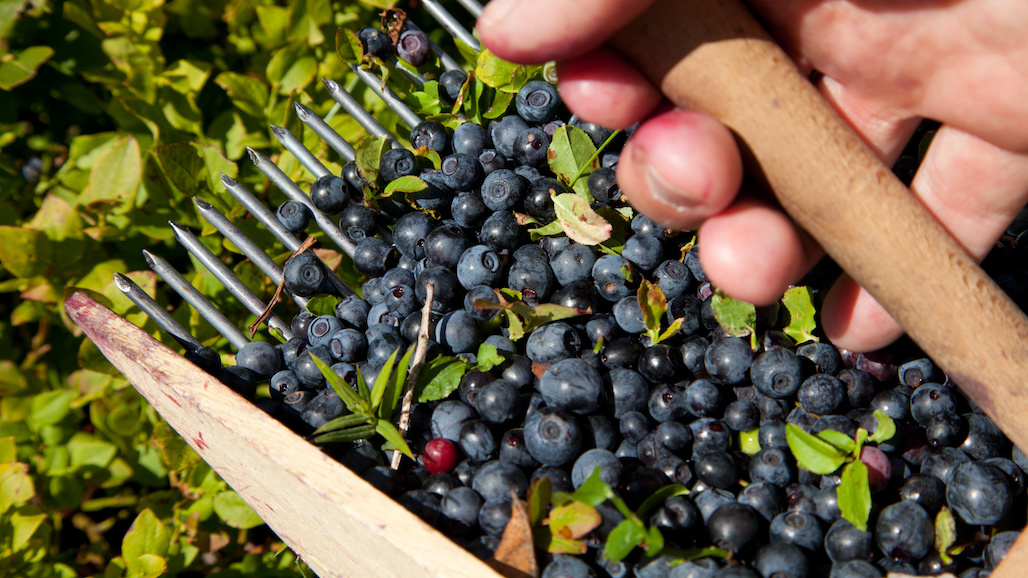
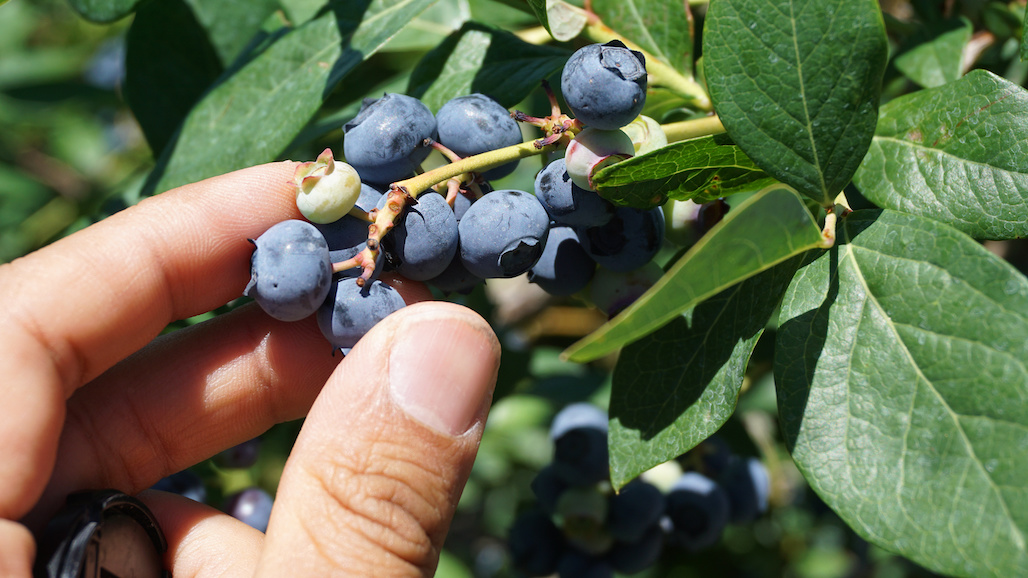
  • Women in Blueberries Webinar Series

    Women in Blueberries Webinar Series

    For women in agriculture, creating a supportive network can be one of the most important factors for career success. Fortunately, in the blueberry industry, we’re surrounded by women who are making an impact! Register for the first session of the U.S. Highbush Blueberry Council’s (USHBC) new webinar series, Women in Blueberries: The Power of Supportive Women’s Networks, on July 13 from 2-3:30 p.m. ET/11 a.m.-12:30 p.m. PT.
    This webinar will examine the power of bringing women along on your career journey, and how to be more mindful in supporting women who inspire you. During the webinar, you’ll also interact with the other participants in breakout sessions curated by USHBC. Be part of the solution by joining the discussion!
    This opportunity is limited to 100 participants so register today!
  • New York City Event to Kick Off National Blueberry Month

    New York City Event to Kick Off National Blueberry Month

    To kick off National Blueberry Month and announce the Grab A Boost, Give A Boost Challenge with No Kid Hungry, the U.S. Highbush Blueberry Council (USHBC) is hosting a media event in New York City on June 28. Our team will create a blueberry garden oasis in the heart of New York at Gallow Green in The McKittrick Hotel, best known for its interactive theater experience at the base of the Chelsea Highline. We’ll host a grower showcase farm stand, design a series of immersive visuals at the theater to showcase our influencers, and build an installation that supports our partnership with No Kid Hungry.

    Plus, fitness expert Joey Thurman will conduct demonstrations and speak about the benefits of blueberries when it comes to living an active lifestyle. Wellness and nutrition expert Mascha Davis will conduct yoga and meditation demonstrations, as well as talks on intuitive eating. As registered dietitian, Davis will also speak to the many health and lifestyle benefits of blueberries. Both experts will help shape and drive media coverage and stories about blueberries following the event.

    A final send off at the end of the evening will officially kick off National Blueberry Month and our 31-Day Challenge with No Kid Hungry, and introduce our celebrity spokesperson. A photographer will document the event, capturing guests interacting with blueberry-related experiences. A post-event sizzle reel will be created for sharing with the industry, on social media and more.

  • California Represented in First-Ever National Blueberry Industry Leadership Program

    California Represented in First-Ever National Blueberry Industry Leadership Program

    The U.S. Highbush Blueberry Council (USHBC) announced the first cohort of fellows accepted into its Blueberry Industry Leadership Program. The program, launched in March, is designed to elevate up-and-coming leaders in the blueberry industry by providing in-depth training, industry education and connection to other ag leaders for passionate blueberry professionals across the supply chain.

    “We’re thrilled to welcome this group of leaders as our inaugural class of fellows,” said Amanda Griffin, USHBC’s vice president of engagement and education. “These ag professionals will guide the blueberry industry into a bright future, and we can’t wait to be a part of their journey by helping to add to their knowledge, experience and level of connection.”

    Selected as inaugural fellows in the program are:
     Christina Butler, Director of NW and NJ Business Units, MBG Marketing
     Gonzalo de Elizalde, Blueberry Product Leadership Sr. Director, Driscoll’s
     Ernesto Diaz, Director of Operations, Berry Brothers
     Anna Jesse, Vice President, Forest Hills Farms Inc.
     Karan Kohli, Account Manager, Mastronardi Produce
     Scott Mainord, SE Regional Sales Manager, WECO
     Luke McCreesh, N.A. Blueberry Operations Manager, California Giant Berry Farms 
     Jennifer Pulcipher, Director of Food Safety & Compliance, North Bay Produce Inc.
     Darren Sinn, Northwest Business Manager, Berry Fresh LLC
     Micah Weiss, Sales and Grower Support, Fall Creek Farm & Nursery Inc.

    The Blueberry Industry Leadership Program is the first of its kind in the blueberry industry and will help fellows grow their leadership skill set, learn from decades-long industry leaders and develop their network of connections. Professional development within the industry is a priority as members of the blueberry industry work together to make blueberries the No. 1 berry in sales volume and premium value. Fellows in the new program will lead the industry into its next period of growth.

    The fellows will begin their training this summer and continue through next year, taking an interactive approach to leadership development through hands-on training, immersive learning experiences, engagement with key industry players and exposure to the many components of the produce supply chain.

    Fellows will participate both virtually and in person, traveling four times over the course of the curriculum through August 2023, with a graduation ceremony taking place at the 2023 USHBC fall meetings.

    The second group of fellows to enter the program will be selected in the fall of 2023.

  • Dandy® Celery Launches “Sweet That Can’t Be Beat” Consumer Sweepstakes

    Duda Farm Fresh Foods, a leading grower of fresh vegetables and citrus, launches the“Sweet That Can’t Be Beat” sweepstakes, encouraging consumers to get a little corny this summer with a promotion centered around Dandy® sweet corn.

    Through recipe inspiration, cooking tips, nutrition information, super corny facts, and a chance to win, the promotion seeks to elevate the consumption of fresh U.S. grown corn among shoppers and highlight Dandy sweet corn as the premier brand when grocery shopping this summer.

    “While we are known for our celery products, we are excited to showcase our Dandy sweet corn with this promotion,” said Nichole Towell, senior director of marketing and packaging procurement at Duda Farm Fresh Foods. “Not only are we able to use a fun and engaging play on words, we’re also able to offer our shoppers more insight on corn and additional ways to use aside from the usual grilling this summer.”

    Now through July 11th, consumers can enter the “Sweet That Can’t Be Beat” sweepstakes for a chance to win one of three grand prize packs that includes a colorful name brand cooler, a pool floatie, a vibrant beach towel, a seasoned cast iron double burner reversable grill / griddle, Dandy sweet corn product samples, custom stickers and coupons. The brand is also choosing one winner a week to take home Dandy sweet corn, custom stickers and coupons.

    Duda Farm Fresh Foods will utilize a 360-degree marketing strategy that includes a regional TV segment, public relations efforts, influencer support, corn use and application inspiration, online advertising, as well as email and social media campaigns to increase sweepstakes entries and drive demand for the product in stores.

    Dandy sweet corn is available in bulk as well as a pre-shucked, pre-washed and pre-cut tray pack options to help reduce meal prep time and offer a bit more convenience to cater to shoppers’ busy lifestyles. The brand takes care to grow and harvest the best sweet corn of the season from farms in Florida, Georgia, and Michigan.

    About Dandy® Celery

    For nearly 100 years, Duda Farm Fresh Foods has been a leading grower, shipper, processor and marketer of fresh vegetables and citrus. Known for their superior celery, the company has expanded their facilities over the years to accommodate recent developments such as celery juicing and other health and wellness trends in order to provide consumers with the freshest celery possible. With primary locations in Florida, California, Arizona, Georgia and Michigan, Duda Farm Fresh Foods carries a commitment to innovation and sustainability and believes in growing a healthy future for generations to come. The company is a wholly owned subsidiary of A. Duda & Sons, Inc., a family-owned, diversified land company headquartered in Oviedo, Fla. For more information, please visit www.dudafresh.com.