Category: Non-Video

  • New Dry Beans from UC Davis Combine Qualities for Both Farmers & Consumers

    Beans in the UC Davis breeding program, whose varieties have been selected to combine excellent culinary with improved yields and resistance to bean common mosaic virus. Credit: Travis Parker

    Plant breeders are constantly working to develop new bean varieties to meet the needs and desires of the food industry. But not everyone wants the same thing.

    Many consumers desire heirloom-type beans, which have great culinary quality and are visually appealing. On the other hand, farmers desire beans with better disease resistance and higher yield potential.

    The bean varieties that farmers want to grow are sometimes different than the varieties consumers want to purchase. Until now.

    Travis Parker, a plant scientist at University of California, Davis, has worked with a team of researchers to release five new varieties of dry beans that combine the most desirable traits.

    The new varieties, UC SunriseUC Southwest RedUC Tiger’s EyeUC Rio Zape, and UC Southwest Gold, were recently highlighted in the Journal of Plant Registrations, a publication of the Crop Science Society of America.

    “Our new beans combine the best of both worlds for farmers and consumers,” says Parker. “They combine the better qualities of heirloom-type beans with the better qualities of commercial types.”

    Heirloom-type beans often represent older bean types that are known for culinary qualities and seed patterns. These are highly desired by consumers. Heirloom types often fetch a higher market value than other beans.

    Commercial dry beans often have higher yields, shorter maturity times, and improved disease resistance. While they possess qualities desirable to producers, they don’t command as high of a market price compared to their heirloom counterparts.

    A comparison of the heirloom variety “Tiger’s Eye” (left, with virus symptoms) and the newly released “UC Tiger’s Eye” (right, healthy leaves). These varieties have similar culinary qualities, but UC Tiger’s Eye is resistant to the common mosaic virus and has higher yields. Credit: Travis Parker

    “Our goal was to improve field characteristics of the heirloom beans without losing culinary characteristics,” said Parker. “We have an interest in higher-value varieties and want them to grow well.”

    Farmers growing the heirloom dry beans often sell the beans to health-conscious consumers or high-end restaurants. This sale often leads to a higher price point. However, these beans are prone to disease and don’t perform well in the field.

    “We know that existing heirloom beans don’t usually do well in terms of yield,” said Parker. “Breeding beans for high yields is a major improvement for farmers. The new varieties are high-yielding, heat-tolerant, and are also resistant to bean common mosaic virus.”

    Incorporating disease resistance was essential when developing the new bean varieties. Bean common mosaic virus is a well-known problem that is hard to control in the field.

    “The only really effective means to handle the virus is through genetic resistance,” explains Parker.

    The new varieties, such as UC Sunrise, satisfy the need for farmers to have a bean that is disease resistant while also yielding 50% more than heirloom types. In addition, the beans do not take as long to grow between planting and harvest.

    UC Sunrise seeds Photo Caption: A detailed view of UC Sunrise, one of the new varieties of the heirloom-like dry bean. The colorful pattern is desirable to consumers. Credit: Travis Parker

    Commercial and heirloom beans come from the same species, but they are in different market classes. The heirloom varieties are bred with intimate knowledge of what tastes good and what works well in the kitchen.

    “In recent decades, there has been less attention paid to consumer desires during the bean breeding process,” says Parker. “There are more layers between the breeder and the consumer. We are trying to make sure to keep consumers in mind while incorporating qualities that are beneficial to the farmer.”

    With consumer desires in mind, the research team used cross-pollination to breed plants with key characteristics they selected. As Parker and the team continued the breeding process, they performed taste tests to ensure the beans met the level of culinary quality expected of an heirloom-type bean, in terms of flavor and visual appeal.

    This research was supported by the Clif Bar Family Foundation, Lundberg Family Farms, the United States Department of Agriculture Organic Agriculture Research & Extension Initiative, and the United States Department of Agriculture Western Sustainable Agriculture Research and Education program.

    To learn more about the research behind these new dry bean varieties, watch this video from Travis Parker.
  • Drier La Niña Winter Conditions Can Contribute To Sudden Freezes

    Drier La Niña Winter Conditions Can Contribute To Sudden Freezes

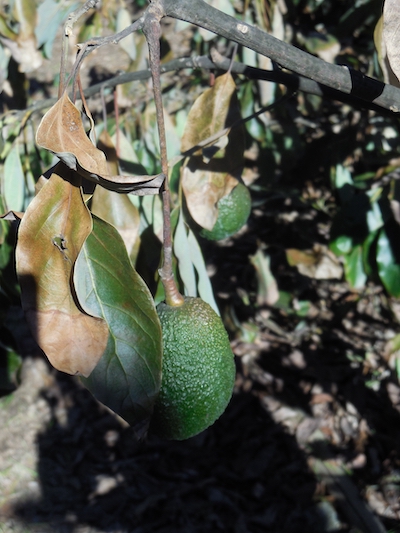
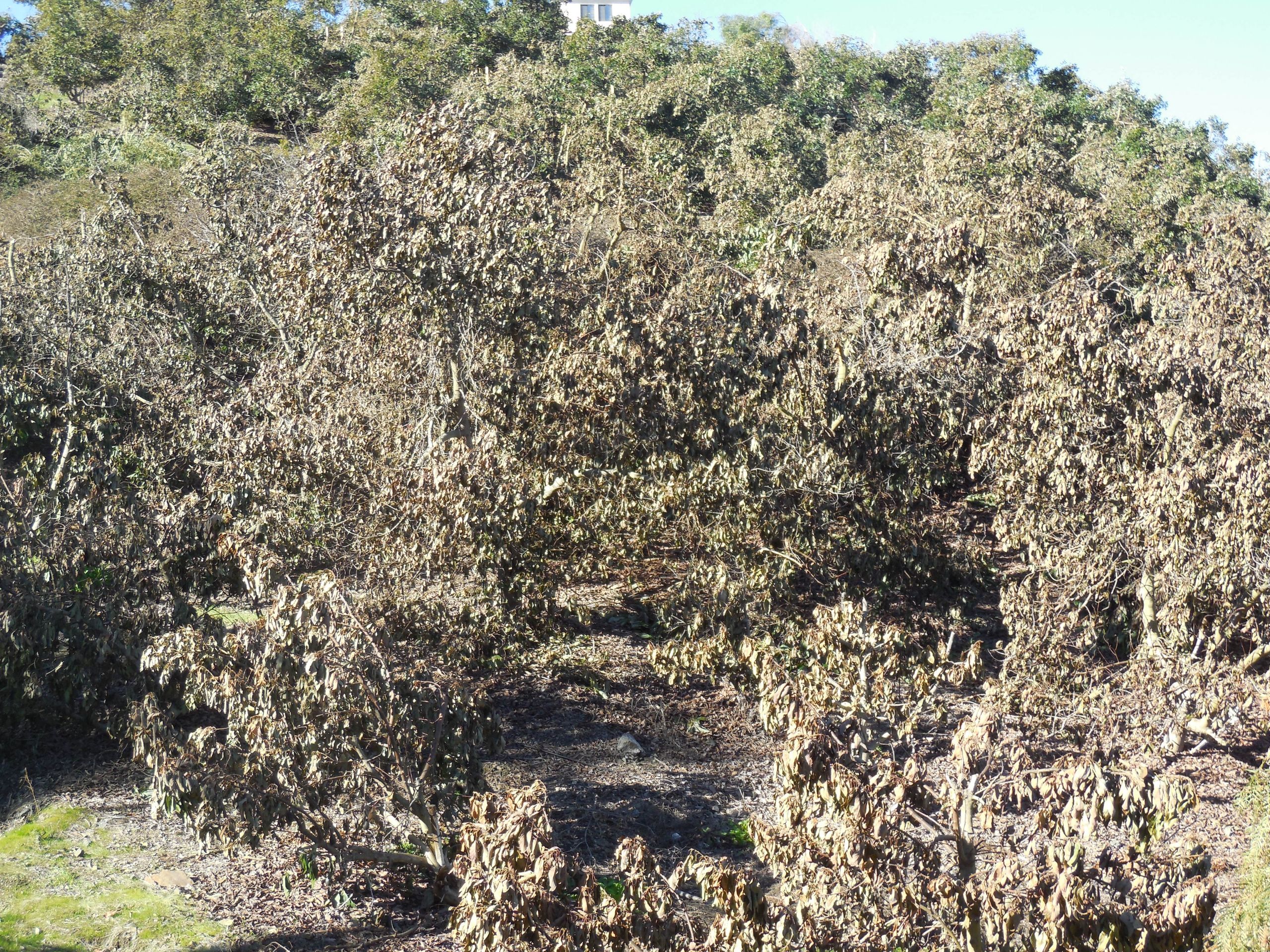
    California Avocado Commission — Although the California avocado growing regions are expected to experience a moderate La Niña phase with warmer average temperatures through spring 2021, the lower rainfall amounts associated with this climate phase can lead to sudden cold spells or freezes. As Dr. Ben Faber noted in a recent blog post, some of California’s most severe freezes have occurred during weak La Niña phases.

    Advection and radiation freezes pose the most threat to California avocado groves. Advection freezes are caused by the movement of arctic air into the region. Radiation freezes occur at night when clear skies and calm conditions are present that allow cold pockets of air to settle in low areas of the grove.

    To prepare for potential frosts or freezes, it’s important to remember that different prevention measures may be used for a frost versus a freeze. A frost is caused when objects cool at night and radiate their heat loss, thus chilling the surrounding air. In Southern California, warm air is typically close to the ground due to a low ceiling, thus causing a temperature inversion that protects orchards. However, windy conditions can disrupt this inversion and press cold air to the ground. In comparison, a freeze occurs when cold air moves in and the air temperature decreases at both high and low levels.

    • To prevent damage when cold weather events are in the forecast, consider the following.
    • To protect against frost or freeze, orchard heaters can be used to distribute heat. The downside of heaters is the cost of running them and possible fire hazards.
    • Wind machines should only be used in frost, not freeze, conditions and should not be used when it is windy. This economical option can be paired with orchard heaters to improve effectiveness.
    • If frost threatens and no temperature inversion is present, the best practice is to run microsprinklers during the day and turn off the water prior to sunset. If the temperature drops below freezing, restart the water and run it until sunrise. If ice forms on the fruit or leaves, heat will be released as the ice melts and protect the plants.
    • If watering the entire grove prior to a cold weather event is cost prohibitive, it is recommended that growers opt to water only those portions of their groves that tend to be coldest.

    If your grove is affected by a frost/freeze event, please view Post-freeze Avocado Grove Management on the California Avocado Commission’s website. For more complete information, visit the Commission’s online library of frost/freeze protection articles.

  • Using Satellites to Improve Sustainability, Yield

    Two of the nation’s great agricultural regions are the focus of new research that aims to head off emerging threats and improve sustainability.

    Scientists with the Agricultural Research Service (ARS) are joining colleagues to create and use artificial intelligence to help farmers in the Colorado River Basin and Salinas Valley, CA, improve their management of irrigation, fertilization, and pests. USDA’s National Institute of Food and Agriculture funded the University of California, Riverside-led project with a 5-year, $10 million grant.

    “This project will integrate multiple satellite and meteorological data sets to help farmers in the Southwestern United States,” said Ray Anderson, a research soil scientist with the ARS Agricultural Water Efficiency and Salinity Research Unit in Riverside. Anderson leads the ARS portion of the study, working with ARS scientists Todd Skaggs and Andrew French.

    ARS has three primary roles in the project: To calculate project area crop water use and anomalies with crop water use across the entire region; develop tools that help growers avoid salinity damage while minimizing the leaching of fertilizer; and to gather field data to validate satellite algorithms.

    Researchers will take advantage of advanced satellite technology to provide more frequent, detailed information to farmers than ever before. The plan is to integrate high-resolution commercial satellite data with established government satellite platforms and meteorological data.

    A major advance with this work will be the use of daily, high-resolution (12-foot) satellite imagery, Anderson said. Previously, data have only been available every 1-2 weeks at 60- to 100-foot resolution and were too infrequent or coarse to provide timely and actionable information to farmers.

    “By combining the new satellite data with artificial intelligence, we will be able to discover and create tools that will help farmers pinpoint areas that need better irrigation, nutrient, and pest management,” Anderson said.

    “One of the major advantages to this project is that the outputs – recommendations and highlights on a smartphone app – will be accessible to all farmers,” he said. “Previously, farmers had to pay for aircraft and specialized processing to get this level of imagery and detail. Soon, high resolution satellite imagery, machine learning, and cloud processing will be available to smaller producers in one easy-to-use tool. These algorithms will help farmers with their field scouting so that they can catch problems early, before significant yield reductions occur.”

    Agriculture in the Colorado River Basin and Salinas Valley employs more than 500,000 people and generates roughly $12 billion annually in revenue. Farmers in the regions grow fruits and vegetables that are shipped around the country all year round, particularly in winter.

    Water availability and use top the researchers’ priority list because prolonged drought has reduced agricultural water availability in the southwestern United States.

    “These valleys consume large amounts of irrigation water, but the amount and quality of irrigation water is decreasing,” Anderson said. “It is important to use existing supplies more efficiently and to protect water sources from nutrient and salinity contamination that can come from poor irrigation management.” — By Scott Elliott, USDA-ARS Office of Communications.

  • How Berry Growers Put Dairies’ Plentiful Waste Products to Use

    How Berry Growers Put Dairies’ Plentiful Waste Products to Use

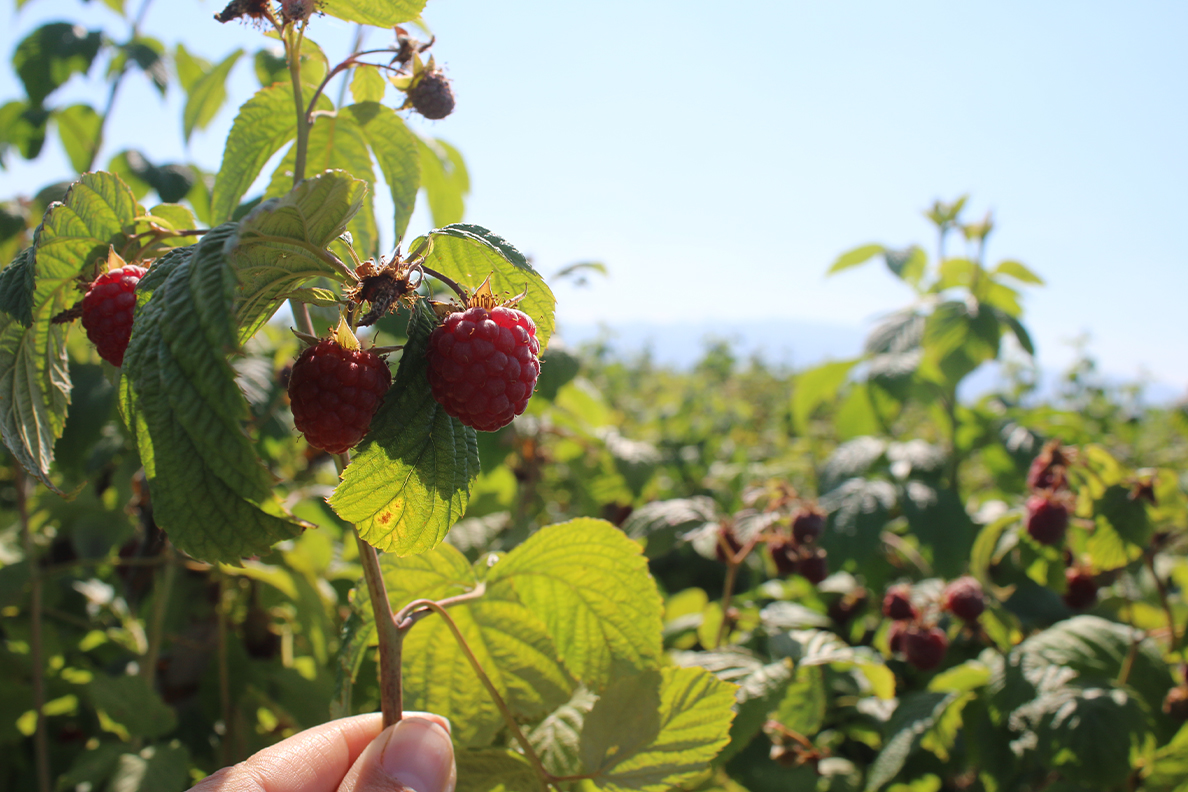
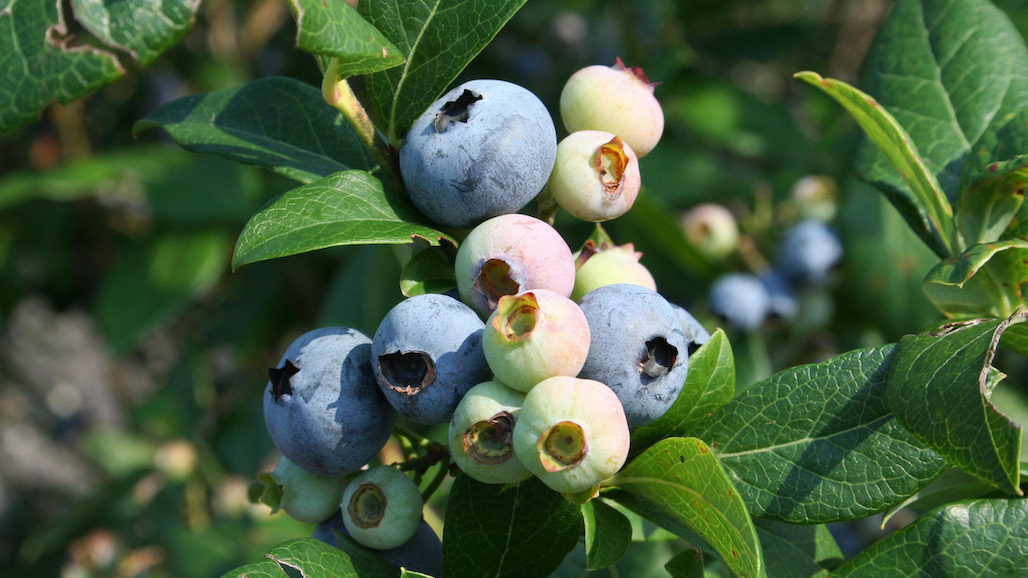
    Dairy farmers generate nutrients in the form of cattle manure. Neighboring raspberry and blueberry farmers import nutrients in the form of fertilizer to maximize production.

    To improve the nutrient loop, Washington State University assembled a team of scientists to study how berry growers can put dairies’ plentiful waste product to a use in their fields. “We want to connect those industries,” said Chris Benedict, a WSU Extension specialist.“If it works, then that will lower the risk of nutrients entering into the environment, encourage farmers in different industries to work together closely, and hopefully help everyone economically.”

    The project required scientists who are familiar with fertilizers, as well as food scientists, economists, and small fruit specialists. WSU has experts in every field, and the team came together to do the work. The results of the project can be found on WSU’s Center for Sustaining Agriculture and Natural Resources (CSANR) web site.

    The main concern about using biofertilizers on food crops is the potential of introducing foodborne pathogens. Dairy manure is a good source of nutrients for crops, but could potentially carry foodborne pathogens. To prevent illness, dairy manure is subjected to different treatments prior to field application to reduce pathogen levels and meet safety standards.

    “There has to be zero risk for berry farmers,” Benedict said. “We were pretty sure the process is safe, but we needed to prove that. So working with food scientists was key. And we had to make sure the cost/benefit worked out, since farmers are running businesses.”

    Meijun Zhu, professor in the WSU School of Food Science, performed food safety testing, while Joe Cook, associate professor in the WSU School of Economic Sciences, examined economic feasibility.

    Benedict works with small fruit producers and has collaborated with dairy farmers on projects focused on anaerobic digestion, as well as nutrient recovery technologies that generate biofertilizers derived from dairy manure. The combined processes have shown a significant reduction in foodborne pathogens in previous research.

    Considering the Economic Impact

    Biofertilizers are a relatively new product, so there isn’t much market research available, Cook said. The economics team designed a survey for local berry farmers to find out who would use them and how much they would be willing to pay.

    “Not surprisingly, cost was a major factor, the less the cost the more likely farmers were to switch,” Cook said. “The survey also instructed growers to assume the product is safe for food crops in the hypothetical, but they still commented on that aspect repeatedly. Clearly people are very concerned about that aspect of the project.”

    Keeping People Safe

    To ensure human safety, researchers had to test the biofertilizers in the field. Benedict collaborated with local small fruit farmers who donated parts of their fields for testing plots. The team applied multiple different biofertilizers to raspberries and blueberries. “We’re lucky, we have really great collaborators who were willing to sacrifice a full season of crops in several fields,” Benedict said.

    Then the berries in each test plot were carefully harvested and sent to Zhu’s lab in Pullman. “This was a big project and teamwork was very important,” Zhu said. “Everything had to be coordinated, so we talked with Chris Benedict’s team about how to properly and randomly collect samples in multiple berry fields.”

    Pathogens can spread unevenly in a single field, so truly random sampling is required to make sure the data is correct, she said.

    Zhu’s team didn’t find any pathogens harmful to humans in their testing. The processed biofertilizers are safe to apply to food crops, hopefully leading to a closing of that nutrient loop in Whatcom County and benefitting farmers and consumers around the country.

    In addition to Benedict, Zhu, and Cook, the WSU team also consisted of Betsy Schacht, Karen Hills, Chad Kruger, Georgine Yorgey, Lina Sheng, and Xiaoye Shen. This project was funded by the USDA Natural Resources Conservation Service, Conservation Innovation Grants program, and the Washington State Department of Agriculture Specialty Crop Block Grant Program. – By Scott Weybright, Washington State University College of Agricultural, Human & Natural Resource Sciences

    Check out a video explaining the research on YouTube

  • Western Growers Hires Robert Medler as New Arizona Government Affairs Manager

    Robert Medler

    Western Growers (WG) is pleased to announce the addition of Robert Medler as Arizona Government Affairs Manager. Medler brings nearly 15 years of government relations experience and will represent the most influential specialty crop producers in the fresh produce industry in the Arizona State Capitol.

    “We are very excited to have Robert joining Western Growers’ State Government Affairs team,” said Matthew Allen, Vice President of State Government Affairs at Western Growers. “He brings a wealth of experience advocating on behalf of employers and is looking forward to utilizing his skills to represent WG member interests in the state of Arizona.”

    Lobbying on behalf of the association, Medler will represent WG in all Arizona legislative and regulatory matters as well as monitor, analyze and report on policy recommendations for WG positions. Additionally, as part of his role, he will develop, draft and tactically implement policy strategies or legislation affecting agriculture, specifically relating to the fresh fruit, vegetable and nut sectors in Arizona.

    Previously, Medler led the government relations, advocacy and public policy efforts at various associations including the Tucson Metro Chamber and Southern Arizona Chamber of Commerce Association. In 2019, Medler was selected as a “40 Under 40” award recipient from the Tucson Hispanic Chamber of Commerce and the Arizona Daily Star.

    “Western Growers is the preeminent advocacy organization for the agriculture community,” said Medler. “I am humbled and honored to join the Western Growers’ team to ensure our members have a strong voice in Arizona. Today’s policy decisions will have generational impacts; let’s make sure they are the right decisions.”

    Medler earned a bachelor’s in Political Science & Communications from the University of Arizona and his master’s in Organizational Leadership from Gonzaga University in Spokane, Washington. He currently resides in Marana, Arizona.

  • CDFA Seeking New Grower Representative for Citrus Pest & Disease Prevention Committee

    CDFA Seeking New Grower Representative for Citrus Pest & Disease Prevention Committee

    The California Department of Food and Agriculture (CDFA) is seeking a grower representative with operations in the Fresno County area to sit as a member on the Citrus Pest and Disease Prevention Committee. The Committee advises the CDFA Secretary on activities associated with the statewide citrus specific pest and disease work plan that includes – but is not limited to – outreach and education programs and programs for surveying, detecting, analyzing, and treating pests and diseases specific to citrus.

    Committee members receive no compensation but are entitled to payment of necessary travel expenses in accordance with the rules of the Department of Personnel Administration. The term for one grower representative from Fresno County expires on Sept. 30, 2023. Applicants should have an interest in agriculture and citrus pest and disease prevention. Individuals interested in being considered for a committee appointment should send a resume by Feb. 15, 2021 to the California Department of Food and Agriculture, Citrus Pest and Disease Prevention Division, 1220 N Street, Sacramento, California 95814, Attention: David Gutierrez.

    For additional information on the committee vacancy, contact: David Gutierrez, Branch Chief, Citrus Pest and Disease Prevention Division at (916) 274-6300, or e-mail David.Gutierrez@cdfa.ca.gov.

  • Western Growers Inaugurates Next Generation of Agricultural Leaders

    Western Growers Inaugurates Next Generation of Agricultural Leaders

    To identify and prepare the next generation of Western Growers (WG) members for positions of leadership within the Western fresh produce industry, WG has inaugurated the sixth class of the Future Volunteer Leaders Program (FVLP). This year, for the first time in program history, the FVLP welcomes a future leader from Colorado, which became the third membership state in the WG family in 2015.

    The following nine individuals have been selected to represent the next generation of industry leaders:
    •    Phillip Adam, Innovative Produce
    •    Mason Brady, Homegrown Organics Farms
    •    Kristen Smith Eshaya, JVSmith Companies
    •    Rocky Hampton, LIDCO
    •    Tracy Jones, Booth Ranches
    •    Colby Pereira, Braga Fresh Family
    •    Garret Powell, Peter Rabbit Farms
    •    Amber Strohauer, Strohauer Farms
    •    Grant Talley, Talley Farms

    “The increasing number of FVLP alumni serving on our board of directors is testament to the value of this leadership program,” stated Western Growers President and CEO Dave Puglia. ”This incoming class is a vibrant group and I look forward to their participation and future industry leadership.”

    Over the course of the next two years, the Future Volunteer Leaders will shadow current members of the WG Board of Directors during board meetings, learning about federal, state and local issues affecting the Western fresh produce industry. Additionally, during the second year of the program, Class 6 will travel to Florida to tour a host of agricultural operations as part of an exchange program with the Florida Fruit and Vegetable Association’s Emerging Leader Development Program. Future Volunteer Leaders will also participate in agtech initiatives through the Western Growers Center for Innovation & Technology, as well as engage in media relations and social media efforts.

    Since the program’s inception in 2011, seven FVLP alumni have graduated into a seat on the WG Board of Directors, including six who are on the current 2021-2022 board: 
    •    Alexander Muller, Pasquinelli Produce
    •    Brandon Grimm, Grimmway Farms
    •    Eric Reiter, Reiter Affiliated Companies
    •    J.P. LaBrucherie, LaBrucherie Produce
    •    Neill Callis, Turlock Fruit Company
    •    Stephen Martori, Martori Farms

    Click here to visit the FVLP website and learn more about the Class 6 participants.

    About Western Growers:

    Founded in 1926, Western Growers represents local and regional family farmers growing fresh produce in California, Arizona, Colorado and New Mexico. Western Growers’ members and their workers provide over half the nation’s fresh fruits, vegetables and tree nuts, including half of America’s fresh organic produce. Connect and learn more about Western Growers on Twitter and Facebook.

  • U.S. Blueberry Farmers Testify to ITC of Import Harm

    U.S. Blueberry Farmers Testify to ITC of Import Harm

    Members of the American Blueberry Growers Alliance (ABGA), a group representing U.S. domestic blueberry farmers, today provided information to the U.S. International Trade Commission (ITC) during a hearing on the impact of rising imports during the U.S. growing and harvest seasons. American blueberry growers across the country – mostly small, family-run farms – have been devastated by an influx in blueberry imports by 75 percent in the past five years, according to U.S. import data.

    “Because of booming domestic demand, we should be enjoying a market in which there is room for both domestic and foreign growers to profit,” said Jerome Crosby, Chairman of the ABGA Board of Directors and owner of Pineneedle Farms in Willacoochee, Georgia. “However, foreign government policies targeting the United States market and large corporate import interests have combined to bring massive volumes of blueberries into our market, increasingly during periods that in the past provided growers with the bulk of their revenues and often all of their profits for the year.”

    “The massive increase in Mexican imports during our harvesting season has crippled the Florida blueberry industry and threatens its very existence,” said Brittany Lee, Executive Director of the Florida Blueberry Growers Association and owner of Florida Blue Farms. “Over the period 2009 to 2019, we saw imports from Mexico increase by 2,111 percent. We have experienced a significant decline in price per pound for fresh blueberries in Florida, and a huge loss of market share.”

    Farmers said the U.S. blueberry industry has made extensive marketing efforts over many years to educate purchasers and consumers about blueberries, which has increased demand. “Foreign producers are taking the benefit of those efforts, in some instances by creating industries out of nothing and exploiting cheap labor and poor environmental regulation overseas,” said Rex Schultz of Heritage Blueberries in Bangor, Michigan and President of the Michigan Blueberry Advisory Committee. “Producers in foreign countries are totally dependent on our market, and they have every incentive to keep shipping more and more product here. This is not a sustainable situation for the American blueberry farmer.”

    Imports have also had a devastating effect on blueberry farmers in Western states. “Ten years ago, imports filled an important role by ensuring supply of fresh berries in the few months is no longer the case,” said Jayson Scarborough, a blueberry farmer in Central California. “Imports from Mexico and Peru, in particular, now enter our market throughout our harvesting period in California. Prices for these imported berries are extremely low, which means that when we begin to sell our harvests, the price point has already deteriorated significantly due to the presence of large volumes of imported fruit in the market.”

    Farmers said that massive amounts of fresh blueberries coming in from Mexico and South America often arrive without a buyer. “Peruvian product can arrive in massive shipments, with hundreds of thousands and even millions of pounds of perishable fresh blueberries on one ocean-going vessel that has been in transit at least two weeks before being unloaded at U.S. ports,” said Shelly Hartmann, owner of True Blue Farms in Grand Junction, Michigan. “When these blueberries are released all at once onto the fresh market, they cause prices to crater. This pushes domestic production of blueberries grown for the fresh market into the frozen market.”

    In addition, several members of Congress also testified before the ITC in support of American blueberry growers, including Reps. Austin Scott (R-Ga.), Bill Huizenga (R-Mich.), Earl L. “Buddy” Carter (R-Ga.), Gregory Steube (R-Fla.) and John Rutherford (R-Fla.).

    The U.S. International Trade Commission (ITC) is conducting a global safeguard investigation into imported fresh, chilled or frozen blueberries under Section 201 of the Trade Act of 1974. The ITC will determine if the dramatic increase of foreign berries is “a substantial cause of serious injury, or the threat thereof” to American blueberry growers.

    About American Blueberry Growers Alliance

    American Blueberry Growers Alliance (ABGA) is a national association representing blueberry growers and farmers in the United States. ABGA provides a unified voice for blueberry growers in states across the country, including California, Florida, Georgia and Michigan, advocating on behalf of their interests and for the long-term viability of the domestic blueberry industry. For more information, visit: americanblueberrygrowers.com.

  • New Avocado Study Outlines Costs & Returns of High-Density Plantings

    New Avocado Study Outlines Costs & Returns of High-Density Plantings

    Growers considering producing avocados in San Diego County with high-density plantings now have help to determine the economic feasibility. A new study on the costs and returns of establishing and producing avocados in San Diego County has been released by UC Agriculture and Natural Resources’ Cooperative Extension, UC Agricultural Issues Center and the UC Davis Department of Agricultural and Resource Economics.

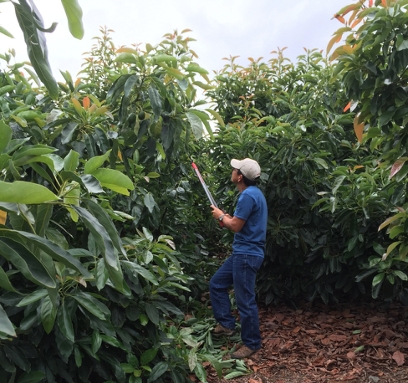
    A worker prunes weak tree branches to improve sunlight penetration in a high-density avocado orchard.

    Avocado has been one of the prominent crops produced in Southern California since the early 1950s. California avocado production peaked in 1987-88 with about 76,300 acres. San Diego had been the leading producer accounting for about 60% of the acreage.

    “Beginning in the early 1980s, there has been a continuous decline of acreage and production of avocados in San Diego County, said Etaferahu Takele, UC Cooperative Extension farm management advisor for Southern California and co-author of the study. “This is mainly because of the expansion of urban development that has increased the cost of producing the crop and especially the cost of water, reaching to up to $2,000 per acre feet in 2020.”

    The same amount of water was sufficient for the high-density avocados as it was for the traditional planting (Photo by Gary Bender).

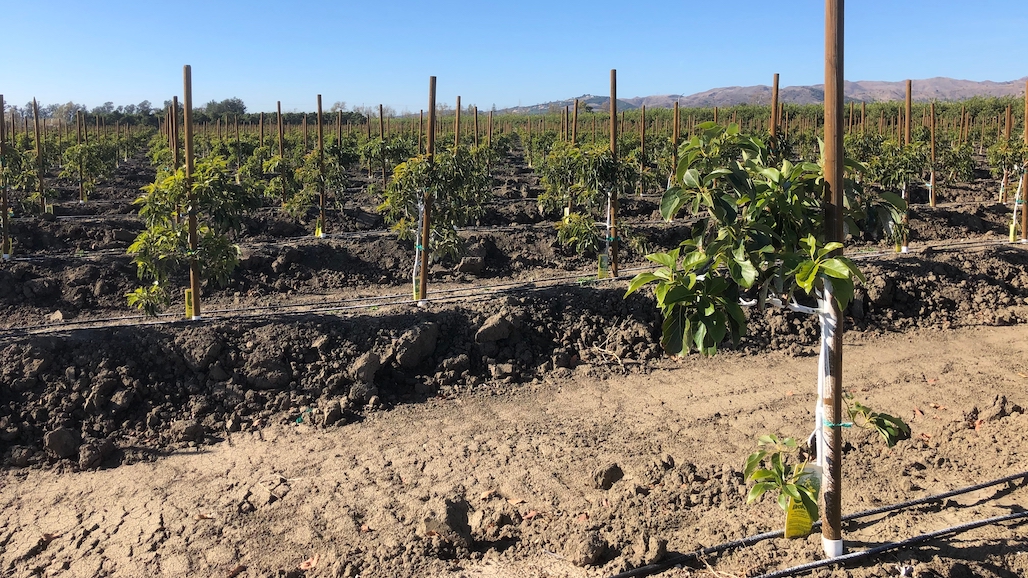
    High-density planting increases profitability of avocado production given there is suitable land for high-density orchard development.

    Although the cost of water accounts for 44% of the total production cost in the high-density planting, the water cost is proportionally less than in the conventional planting of 145 trees per acre when distributed over a higher yield per acre, the authors write.

    Their cost analysis describes production operations for avocados planted at 430 trees per acre, with an expected life span of 40 years. The study includes a detailed summary of costs and returns and a profitability analysis of gross margin, economic profit and a break-even ranging analysis table, which shows profits over a range of prices and yields. Growers can identify their gross margin and returns to management based on their yield and prices received.

    UC Cooperative Extension advisor Gary Bender checks sunlight penetration in a high-density avocado orchard.

    Input and reviews were provided by a UC Cooperative Extension farm advisor and grower cooperators in San Diego County. The authors describe the assumptions used to identify current costs for avocado establishment and production, material inputs, cash and non-cash overhead.

    The new study, “Avocado Establishment and Production Costs and Profitability Analysis in High Density Planting, San Diego County-2020,” can be downloaded for free from the UC Davis Department of Agricultural and Resource Economics website at http://coststudies.ucdavis.edu and UCCE Riverside County Farm Management website at https://ucanr.edu/sites/Farm_Management/Costs_and_Returns. Sample cost of production studies for many other commodities are also available on the websites.

    For additional information or an explanation of the calculations used in the studies, refer to the “Assumptions” section of the report or contact Takele at (951) 683-6491 Ext. 243 or ettakele@ucanr.edu or Donald Stewart at the UC Agricultural Issues Center at destewart@ucdavis.edu— By Pamela Kan-Rice, UCANR

  • First CLas-Positive Asian Citrus Psyllid Found in San Diego

    First CLas-Positive Asian Citrus Psyllid Found in San Diego

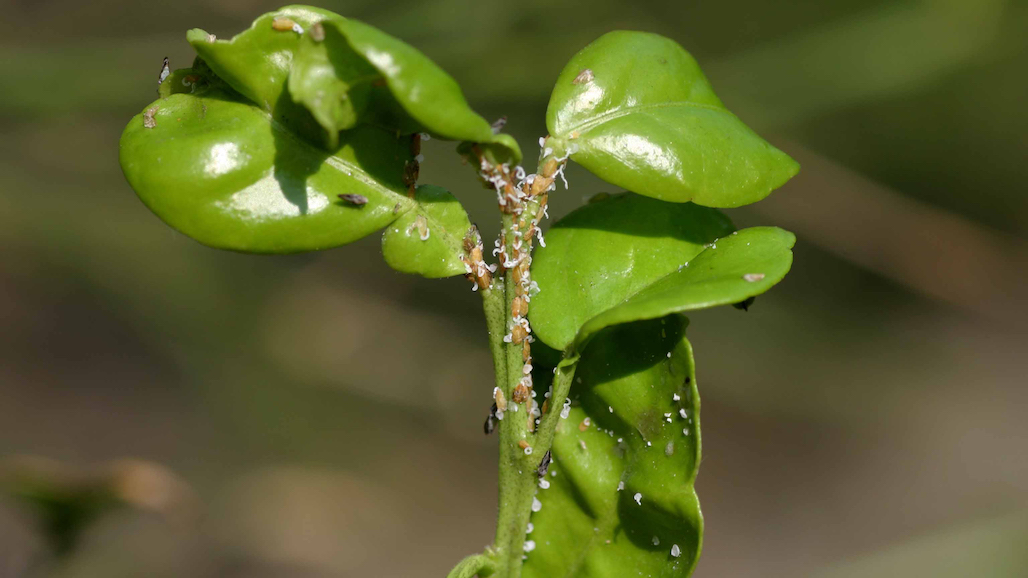
    An Asian citrus psyllid (ACP) sample – confirmed positive for Candidatus Liberibacter asiaticus (CLas), the bacteria that causes Huanglongbing (HLB) – was collected from a residential property in the Fallbrook area of San Diego County. Confirmed by Citrus Research Board’s Jerry Dimitman Laboratory, this adult psyllid sample is the first CLas-positive ACP found in San Diego County.

    While the first confirmation of a CLas-positive ACP in San Diego County is concerning, as of today, HLB has not been detected in any San Diego County trees but surveying and sampling of area trees is ongoing. This find signals a critical time for homeowners and growers alike to continue to control ACP populations to stop the potential spread of this deadly disease, as oftentimes a CLas-positive ACP precedes the detection of an HLB-positive tree.

    The HLB quarantine zone will not be expanded as a result of this CLas-positive ACP detection and CDFA staff is swiftly conducting surveys and collecting samples from HLB host plants that are located within a 250-meter radius around the find, per the ACP/HLB Action Plan.

    While treatment is not mandatory for area commercial growers as a result of the detection, San Diego County commercial growers who have additional questions can contact Sandra Zwaal, San Diego County Grower Liaison, at szwaal2@gmail.com.

    CLICK HERE for additional information from Citrus Pest and Disease Prevention Program (CPDPP) Citrus Insider.

    Source: Citrus Pest and Disease Prevention Program (CPDPP) Citrus Insider