Category: Non-Video

  • Root Bacteria Could Help Defeat Fatal Citrus Disease

    Root Bacteria Could Help Defeat Fatal Citrus Disease

    A UC Riverside-led team is looking at tiny underground microorganisms for a way to prevent a huge problem — Huanglongbing, a disease with no cure that has decimated citrus orchards worldwide.

    The disease, also known as HLB or citrus greening, has multiple names but the same ultimate result: bitter and worthless citrus fruits. By some estimates, the end of citrus orchards in California and Florida could amount to $14 billion in lost commercial revenue.

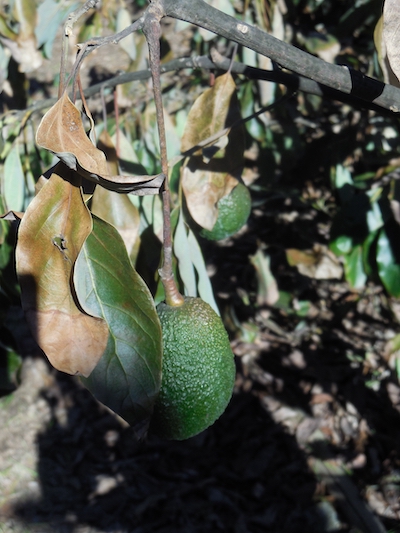
    Fruit affected by Huanglongbing. (UCR)

    “Often times, it is thought of as an above-ground disease of the fruits, leaves, and stems,” said Caroline Roper, plant pathology professor and director of the new research effort. “However, we have seen the roots of trees decline with infection, and we want to understand why.”

    The National Institute of Food and Agriculture has awarded the UCR-led team $10 million over the next five years to investigate the role of soil and root microbes in the disease.

    Roper said data from previous studies shows the microbiome of the infected tree — which includes bacteria and fungi as well as protozoa and viruses — plays a role in the disease.

    “We have seen a shift in the root microbiome as trees get sicker,” she said.

    The microbiomes shift to contain more potentially parasitic organisms that may act as secondary invaders to a tree that is suffering from HLB, according to Roper. The invasion of these root pathogens may be causing trees to die faster when they have HLB.

    Part of this new research effort will test whether soil amendments like manure and compost might suppress parasitic microorganisms in the roots as well as the soil, and give the trees more strength to combat diseases including HLB.

    In addition, the research team will try to determine the molecular basis of HLB resistance shown by citrus root stocks developed in Florida. They’ll then see how those rootstocks perform in California, which has different soil and climate conditions.

    The research team will examine both younger trees, because a lot of citrus growers have had to re-plant their orchards after infection, as well as older trees to see if mature groves can recover.

    It will also be important to note how well root stocks from Florida, where there has been a heavy infestation of HLB, perform in California, where much less of the disease has been detected.

    “One of the great things about this grant is that we’re able to leverage existing field trials being done by our collaborators in Florida and at the UC’s Lindcove Research and Extension Center in central California,” Roper said. “This may lead to faster results than we’d otherwise have had.”

    Collaborators on the project include UC Davis; California State University, Sacramento; the University of Florida; and the U.S. Department of Agriculture’s Agricultural Research Service in Ft. Pierce, Florida. — By Jules Bernstein, UC Riverside
  • U.S. Blueberry Growers Form New Alliance to Seek Import Remedies

    U.S. Blueberry Growers Form New Alliance to Seek Import Remedies

    Blueberry growers across America today established a new coalition, the American Blueberry Growers Alliance, to seek relief from rising imports that are harming their businesses. The Alliance will provide information and support to an ongoing U.S. International Trade Commission (ITC) investigation into the serious injury caused by increased imports of fresh, chilled and frozen blueberries under Section 201 of the Trade Act of 1974.
    Blueberry imports are sourced from several countries in the Western Hemisphere. Imports rose by more than 60 percent between 2015 and 2019. Imports from Peru and Mexico have increased by 1,258 and 268 percent during that same period, respectively, driving blueberry prices down by double digits, which has had a devastating impact on the domestic blueberry industry.

    Alliance members are asking for bipartisan support from the U.S. government and Congress to use existing trade laws to remedy the injury to U.S. growers, support hard-working blueberry farmers, and preserve and enhance a U.S.-grown blueberry supply. The Alliance is also warning that in addition to injuring domestic businesses and livelihoods, rising imports expose American consumers to products from countries with poor food safety protocols.

    “We have been telling Washington about unfair trade practices for years,” said Jerome Crosby, CEO of Pineneedle Farms in Georgia and head of the Alliance’s steering committee. “Our family farms continue to be harmed by a flood of blueberry imports. We need relief and for our leaders to stand with American growers.”

    “Many family farms have become a casualty of rising imports and are being forced out of commercial production as other countries increase production to deliberately target the U.S. market,” said Brittany Lee, executive director of the Florida Blueberry Growers Association. “If something is not done, we will lose the blueberry industry in the United States.”

    The Alliance includes blueberry growers in Georgia, Florida, Michigan and California.

    The Alliance recently received support from a coalition of 32 members of the U.S. House of Representatives. In a letter to the U.S. International Trade Commission, the congressional members said: “The significant surge of imports of blueberries in recent years, the timing of such imports during U.S. harvest periods, the extremely low pricing of the imports, and the targeting of the U.S. blueberry market by foreign exporters has had a devastating impact on the blueberry industry…As the Commission develops the evidentiary record in this case, it will be clear that imports are a substantial cause of serious injury to farmers. We urge the Commission to promptly make an affirmative determination in this regard.”

    The ITC plans to hold hearings in early 2021 and then deliver a report on blueberry injury and remedies to the White House. Under Section 203, the President then determines what action to take. To support this investigation, Alliance members are providing data and evidence on how blueberry imports are impacting their production, pricing and marketing activities, especially during the critical U.S. spring and summer harvesting seasons.

    For more information, please visit americanblueberrygrowers.com.

  • 2021 CA Avocado Crop Estimate & Harvest Projections

    2021 CA Avocado Crop Estimate & Harvest Projections

    The California Avocado Commission has published the 2021 California Avocado Pre-Season Crop Estimate and weekly harvest projections for the calendar year (January 1st through December 31st). The estimate and projections are the result of handler surveys submitted in early December 2020 and represent the industry’s best information on the coming season’s crop at this time.

    Further details of the estimate and harvest projections can be found online and includes the following information:

    • Pre-season industry volume estimates, broken down by variety, based on AMRIC Handler survey responses
    • Weekly harvest forecast utilizing AMRIC Handler Survey percentages for Hass variety (4-year historical forecast used for Lamb, 2-year historical used for Gem and other)
    • Weekly harvest forecast comparison of 4-year historical forecast versus AMRIC Handler Survey

    The Commission staff will remain in contact with growers, handlers and grove managers throughout the season, via surveys and telephone conversations, to track harvest strategy and will provide updated forecasts to the industry as they become available. As we have done in the past, CAC will plan to follow up with the handlers in February to discuss crop volume and harvest plans before the season gets underway.

    In addition to handler surveys and discussions, the annual grower crop survey and acreage inventory survey will be conducted in Spring 2021, with a mid-season crop estimate update available mid-May 2021.

  • $6.3 Million to Help UC Riverside Save Avocado Orchards

    $6.3 Million to Help UC Riverside Save Avocado Orchards

    New grants totaling $6.3 million will help UC Riverside solve problems facing American avocado orchards, including a lethal fungal disease called Laurel Wilt.

    Laurel Wilt can destroy an entire avocado orchard in a couple of weeks once symptoms develop. It is already present in Florida. Without effective treatments, it will inevitably spread to California, which is the nation’s leading producer of avocados.

    Laurel Wilt is caused by a fungus, Raffaelea lauricola, that the non-native redbay ambrosia beetle introduces in trees of the Laurel family, which includes avocado.

    The non-native redbay ambrosia beetle, which carries the fungus causing deadly Laurel Wilt. (UCR)

    “When the beetle attacks, the fungus enters and colonizes the tree’s vascular system, and within weeks, the tree wilts and dies if not managed properly,” said Patricia Manosalva, director of this project as well as UCR’s Avocado Rootstock Breeding Program.

    In addition to Laurel Wilt, avocado growers face numerous production challenges including devastating diseases such as Phytophthora root rot, or, PRR, and soil salinity, which in combination cause severe reduction in fruit yield and quality. This combination can also completely destroy avocado orchards.

    Avocado roots darkened and killed by Phytophthora root rot. (David Rosen/UCR)

    Avocado is also highly sensitive to salinity. Increasing levels of salinity in water and soil due to drought and the use of reclaimed water for crop irrigation purposes threatens avocado production worldwide.

    To combat the threats, the USDA’s National Institute of Food and Agriculture Specialty Crop Research Initiative has awarded UC Riverside $4.4 million. The grant will enable the development of next-generation technological solutions to these problems over the next four years in partnership with scientists at the universities of Hawaii, Florida, Texas, and Milan.

    The same grant will enable research on both short- and long-term solutions for managing avocado PRR, the major hindrance for avocado production worldwide, Manosalva said.

    “Under this grant we will select rootstocks harboring resistance to the current pathogen population and we will register new fungicides with different modes of actions to reduce avocado losses to this destructive oomycete pathogen,” Manosalva said.

    The UCR rootstock breeding program has already identified advanced rootstock lines that are tolerant to salinity and P. cinnamomi, the pathogen that causes PRR. These rootstocks may also confer resistance or tolerance to Laurel Wilt when grafted with different varieties. Field trials of these rootstocks will be conducted in California, Florida, Texas, Hawaii and Puerto Rico and will be screened for resistance at University of Florida.

    Another approach to mitigating avocado threats will be the further development of remote field sensors that can detect and differentiate drought from high salinity and Phytophthora root rot. UCR initially developed prototypes of these sensors and tested them in greenhouses. This grant will enable researchers to improve the sensors and test them in fields.

    Manosalva notes that UC Riverside is unique in having a highly recognized avocado breeding program first developed 70 years ago.

    “We’ve been developing agricultural science for a long time,” she said. “This grant will allow us to keep moving the UCR rootstock breeding program forward and continue developing hearty avocado rootstocks.”

    Through the Office of Technology Partnerships, UCR currently has three rootstocks available for licensing in the U.S. and may have up to five new rootstocks available in the next few years. The new rootstocks could provide increased tolerance to diseases, drought, heat, and soil salinity.

    In a related grant, the USDA’s National Institute of Food and Agriculture, Organic Agriculture Research and Extension Initiative awarded $1.9 million to a team of 15 scientists from five universities and the USDA Agricultural Research Service, or USDA-ARS. The grant will allow the researchers to study whether essential oils can help suppress certain pathogens and pests.

    Researchers from the University of Florida, Clemson University, the University of Georgia, the University of Hawaii at Manoa and the USDA-ARS as well as UC Riverside will collaborate on the project.

    Producers of essential oils claim their products may be able to treat plant pathogens such as gray mold, powdery mildew, algal stem blotch and brown rot as well as insects including mites, thrips and scales. This grant will enable the team to evaluate those claims.

    Manosalva said both grants underscore the importance of funding basic research in agricultural science. “California’s produce feeds the nation, and the world,” she said. “Our science will help feed people and empower growers everywhere.” — By Jules Bernstein, UC Riverside

    About UC Riverside

    The University of California, Riverside (www.ucr.edu) is a doctoral research university, a living laboratory for groundbreaking exploration of issues critical to Inland Southern California, the state and communities around the world. Reflecting California’s diverse culture, UCR’s enrollment is more than 24,000 students. The campus opened a medical school in 2013 and has reached the heart of the Coachella Valley by way of the UCR Palm Desert Center. The campus has an annual statewide economic impact of almost $2 billion. To learn more, email news@ucr.edu.

  • California Horticulture Sales Reach $2.63 Billion in 2019

    On Tuesday, December 8, the U.S. Department of Agriculture’s National Agricultural Statistics Service (NASS) released the 2019 Census of Horticultural Specialties report, the only source of detailed production and sales data for floriculture, nursery, and specialty crops for the entire United States. The data show that horticulture operations in California sold a total of $2.63 billion in floriculture, nursery and specialty crops in 2019, down 9% from the sales in 2014. California sold 19% of the total U.S. horticulture sales of $13.8 billion in 2019, more than any other state. In addition to sales, the number of horticulture operations in California decreased 22% during this time to 1,331, and the number of operations in the United States decreased 11% during this time to 20,655.

    “The horticulture census is a vital tool that highlights the contribution horticulture growers bring to our local, state, and national economies,” said Pacific Region Director Gary R. Keough. “It shows changes and trends in the industry over the past five years and beyond.”

    Horticulture production occurred primarily in 10 states, which accounted for 66% of all U.S. horticulture sales in 2019. California ($2.63 billion), Florida ($1.93 billion) and Oregon ($1.02 billion) led the nation in sales.

    The top five commodities in California horticulture sales in 2019, and compared to 2014, were:

    ·         Nursery stock, $831 million, down 13%
    ·         Potted flowering plants, $322 million, up 7%
    ·         Transplants for Commercial Vegetable and Strawberry, $266 million, up 4%
    ·         Cut flowers & cut lei flowers, $249 million, down 26%
    ·         Annual bedding/garden plants, $232 million, up 6%
     
    Other key findings for California from the 2019 Census of Horticultural Specialties report include:

    ·         Family- or individually-owned operations made up the largest number of operations, accounting for 48%, but corporately-owned operations accounted for 80% of sales ($2.11 billion).

    ·         Total industry expenses were at $2.21 billion in 2019, with hired labor being the largest cost, accounting for 36% of total expenses.

    The Census of Horticultural Specialties is part of the larger Census of Agriculture program. It provides information on the number and types of establishments engaged in horticultural production, value of sales, varieties of products, production expenses and more. All operations that reported producing and selling $10,000 or more of horticultural crops on the 2017 Census of Agriculture were included in this special study.

    For more information and to access the full report, visit www.nass.usda.gov/AgCensus.

    CA.Census_of_Hort_press_release_12092020

  • USDA Announces National Watermelon Promotion Board Appointments

    USDA Announces National Watermelon Promotion Board Appointments

    The U.S. Department of Agriculture today announced the appointment of nine members to serve on the National Watermelon Promotion Board. The appointees will serve three-year terms from Jan. 1, 2021, to Dec. 31, 2023.

    Members newly appointed or reappointed are:

    • District 1 Producer: Kyler Bishop, Punta Gorda, Florida
    • District 1 Producer: Chad Chastain, Punta Gorda, Florida
    • District 1 Handler: Stephen R. Nichols, Lakeland, Florida
    • District 1 Handler: Rob Gibson, Vero Beach, Florida
    • Importer: Matthew N. Tanner, Pompano Beach, Florida
    • Importer: Christopher M. Dyer, Mission, Texas
    • Importer: Christian Murillo, Nogales, Arizona
    • Importer: Jeff Fawcett, Edinburg, Texas
    • Public Member: Craig A. Stokes, San Antonio, Texas

    The National Watermelon Promotion Board now has 30 members composed of 10 producers, 10 handlers, nine importers and one public member. Approximately one-third of the board members are appointed each year. Members can serve up to two consecutive three-year terms.

    More information about the National Watermelon Promotion Board, including a roster of members, is available on the Agricultural Marketing Service (AMS) National Watermelon Promotion Board webpage and on the board’s website at www.watermelon.org.

    Since 1966, Congress has authorized industry-funded research and promotion boards to provide a framework for agricultural industries to pool their resources and combine efforts to develop new markets, strengthen existing markets and conduct important research and promotion activities. AMS provides oversight to 21 boards. The oversight ensures fiscal accountability and program integrity, and is paid for by industry assessments.

  • The Essential Pieces of Protecting Ag Workers, Preventing COVID-19 Spread

    The Essential Pieces of Protecting Ag Workers, Preventing COVID-19 Spread

    Christopher Valadez — As president of the Grower Shipper Association of Central California (GSA), I talk to farmers, farming companies, farm labor contractors and farm workers about the challenges faced when protecting essential employees from COVID-19 exposure. These conversations and hearing the needs firsthand formed the impetus for many of the programs established by GSA over the last few months to lessen or prevent the spread of COVID-19 among the farm worker community.

    But I also speak regularly with county health officials, local hospitals and health clinics, farm labor advocates, academics, state regulators, elected officials and local community leaders about COVID-19 and its impact on farm workers. Many have become important partners and have worked with GSA and the local ag community to develop on-farm prevention training programs led by health professionals, provide daily health checks for farm workers in GSA’s quarantined housing program, acquire additional PPE and establish expedited testing programs to provide faster results for farm workers.

    As we end the harvest season in our region, we have an opportunity to reflect and learn before workers return in the spring. What can we do better to enhance efforts to prevent the spread of this virus on the job and within our communities to keep our workforce healthy? At GSA, we hope to see more emphasis on contact tracing as well as a prioritization of farm workers to receive vaccinations against this virus. But let’s start with contact tracing.

    After a positive test is confirmed, contact tracing is the process of identification of persons who may have come into contact with an infected person and subsequent collection of further information about these contacts. It is vitally important that public health officials have the resources to conduct more extensive contact tracing once a positive test is obtained so we are effectively targeting prevention strategies with a focus on where the virus is spread – work, transit to work, at home or within our community. Otherwise we may be enacting rules and regulations in one area when better information on where the virus is being spread may indicate they are actually needed in another. Or, the solution may not address the real problem.

    While public health officials are integral to effective contact tracing, employers are also required to conduct their own tracing to determine if a COVID-positive employee may have exposed others and where – work or home. Once an employer learns of an employee potentially exposed or sick, they can then provide options and information about quarantined housing. GSA’s quarantined housing program provides COVID-positive or exposed farm workers with daily meal deliveries and health checks to ensure they can isolate or recover in a safe and comfortable environment.  And, California mandates that essential workers receive two weeks paid sick leave if they test positive or are sickened by the virus.

    Farmers and farming companies are spending significant time and monetary resources to protect workers through both regulatory compliance and their own best practices. And, as we learn more about the virus, prevention practices in agriculture are continually improving. But, we are not experts in public health and we are reliant on public health guidance. Adequate testing and effective contact tracing combined with isolation alternatives through quarantined housing is the best way to yield real results and target the spread of this virus at its source.

    While GSA will work collaboratively to ensure these crucial prevention strategies are improved and ready in 2021, it is the prioritization of providing vaccines to essential workers that will ultimately protect our workforce from this persistent and relentless virus. GSA will join with industry, local elected officials, labor groups and community leaders to advocate for vaccine prioritization so farm workers are among the first groups to receive them.

    We have learned a significant amount since the early days of the pandemic when farmers and farming companies had to quickly learn and implement prevention strategies while striving to provide healthy fruits and vegetables to consumers. I look back over these last few months and ponder what was accomplished, what has changed and what we could have done better. But one thing is clear: Our work to protect farm workers at the workplace as well as educate this community about prevention practices at home must continue to evolve and improve. The 2021 harvest season will be here before we know it. We must be ready.

  • Broccoli Rotations Lower Pathogen Populations and Reduce Disease Incidence of Verticillium Wilt

    In 1999, several UC researchers published foundational research in a paper titled, “Evaluation of broccoli residue incorporation into field soil for Verticillium wilt control in cauliflower.” Since this publication more than 20 years ago, many studies have further investigated this concept and many coastal growers, especially organic producers, have adopted broccoli rotations as a strategy for Verticillium wilt control. Today, typical implementation of this strategy is two broccoli plantings back to back prior to the crop for which Verticillium wilt suppression is desired. While California coastal vegetable production has been the framework for much of this work, the adaptability of this practice to the Sacramento Valley is very promising for management of Verticillium wilt in warm and cool season crops.

    Verticillium wilt is caused by the soilborne fungal pathogen Verticillium dahliae. Microsclerotia, the fungal inoculum that causes infection, dwell in the soil until root exudates stimulate germination and direct the fungal hyphae towards the root. In susceptible plants, infection occurs when hyphae enter the roots right behind the root tip, and continue growth into the water-conducting vascular tissue, the xylem. Once in the xylem, hyphal growth and sporulation can move the fungus into the upper plant tissue. Plant death triggers the fungus to a reproductive stage, prompting microsclerotia formation. When infected crop residue is incorporated into the soil, microsclerotia in the crop residue are incorporated, too. Management is particularly challenging because the pathogen host range is over 300 crops and the inoculum survive upwards of 13 years. To establish control of the pathogen, the key is to reduce inoculum—the number of microsclerotia, below levels damaging to susceptible crops.

    BROCCOLI SUPPRESSES VERTICILLIUM WILT AND DECREASES PATHOGEN PROPAGULES

    Broccoli is one of the few non-host vegetables and member of the Brassicaceae family. Bok choy, broccoli raab, Brussels sprouts, cabbage, cauliflower, Chinese cabbage, and rapini are susceptible to V. dahliae, as are black mustard, Indian mustard, oilseed rape, and turnip. In broccoli, no infection to minor infection from V. dahliae has been observed. In the case of minor infections, the pathogen does not progress beyond the roots and microsclerotia formation in the roots is repressed. Apart from the importance of selecting a non-host as a rotation crop, the glucosinolate profile of broccoli, the secondary compounds responsible for the toxic effect, differs from other brassicaceous crops

    Following broccoli residue incorporation, research out of Japan demonstrated Verticillium wilt incidence of eggplant decreased by 53% compared to eggplant without broccoli rotation. In California Cauliflower production, disease incidence and severity were both reduced approximately 50% following broccoli residue treatments.

    Broccoli did not just decrease disease incidence, but decreased the amount of pathogen inoculum, showing promise for longer term management. In a California study, overall reduction in the number of propagules in V. dahliae-infested plots after two broccoli crops was approximately 94%, in contrast to the five-fold increase in the number of propagules after two cauliflower crops. These findings corroborate earlier studies showing reductions in the numbers of soilborne microsclerotia of V. dahliae and incidence of wilt on cauliflower that were comparable to reductions caused by chloropicrin and metham sodium treatments. Importantly, following broccoli rotations, microsclerotia continue to decline through-out the following cropping season and remain low during the following season. In contrast, propagules in soil fumigated with chloropicrin and metham sodium declined initially but later returned to pre-treatment levels by the end of the cropping season.

    MECHANISM OF SUPPRESSION

    Shetty et al. (2000) reported that the effects of broccoli in reducing microsclerotia and suppressing disease may be associated with the following mechanisms: production of volatile antifungal substances such as allyl-isothiocyanate (ITC) by broccoli residue, increase in antagonistic microorganisms, and degradation of microsclerotia melanin by ligninase/melaninase produced by soil microorganisms in the presence of broccoli lignin. ITCs are chemically similar to methylisothiocyanate, the active agent from the chemical fumigant metam sodium. Likely associated with the ability to generate these conditions, fresh broccoli residue was shown to be more suppressive than dry residue. During tissue decomposition, the glucosinolates in crucifer crops, the characteristic sulfur-containing constituents of the members of Brassicaceae responsible for their inherent pungent odor, break down to produce sulfides, isothiocyanates, thiocyanates, and nitriles that have either fungistatic or fungicidal properties. In addition to release of toxic compounds and microbial activity provided by broccoli residue, the plant may be serving as a ‘decoy’, ‘trap crop’ or ‘dead end host’, further driving population numbers down. As described earlier, some V. dahliae infection is observed in broccoli roots, but it does not result in microsclerotia formation. By stimulating inoculum germination and preventing fungal reproduction, the number of viable microsclerotia decrease in the soil.

    GROWER IMPLEMENTATION OF RESEARCH FINDINGS

    To facilitate greater adaptation of rotations with broccoli in other crops susceptible to V. dahliae, Bhat and Subbarao asked the question whether isolates of V. dahliae originating from different susceptible hosts could cause wilt on broccoli. They evaluated 15 different host isolates against multiple broccoli varieties. This included tomato, eggplant, bell pepper, lettuce, potato, watermelon and strawberry, and found that only isolates from cabbage and cauliflower were weakly pathogenic. Broccoli cultivars Baccus, Greenbelt, Parasol, Patriot, and Symphony showed resistance to Verticillium infection. This provides some evidence for the usefulness of this method in other cropping systems.

    Implementation of broccoli rotations for Verticillium wilt management is optimized when two successive broccoli crops are grown immediately prior to desired Verticillium wilt reduction. Higher amounts of glucosinolates, specifically glucobrassicin, are found in older plants. Research has reported a complete absence of glucobrassicin in broccoli seedlings, 50% of the total in immature heads (5-10 cm diameter) and the highest levels at fully developed Packman broccoli heads (15-20 cm diameter). These results suggest that glucobrassicin synthesis is active during later stages of broccoli development. Plants should be mowed and finely chopped in order to disrupt the plant cells as much as possible. The greatest reductions in microsclerotia occur at soil temperatures above 68°F, and most of this reduction occurs within 15-30 days of incorporation. Variation in efficacy of this method is attributed to multiple factors: fluctuation in climate and cultivation conditions, physical and chemical properties of the soil, soil microbial properties, the type of broccoli cultivar used, differences in pathogen density, and variance in the susceptibility of the following crop host. The types and amounts of glucosinolates vary with the crucifer species and determine the level of plant pathogen growth reduction.

    This practice could also have other potential benefits and drawbacks. Growers in California have observed for many years that where broccoli residues from processing plants are dumped onto a field, weed populations are reduced the following year. Thus, rotations with broccoli may have multiple pest management benefits. However, in recent years in the Sacramento Valley, crop damage from bagrada bug has been significant. Although these outbreaks have largely occurred in fall, outbreaks have occurred in the spring in this region. Members of the Brassicaceae family are the host plants for bagrada and under favorable environmental conditions would support this pest population.

    This management strategy is specific to Verticillium dahliae and is not transferrable to other soilborne pathogens such as Fusarium spp.. Because these two pathogens are common in the Sacramento Valley and above ground symptoms are similar, diagnosis is important. Contact me at any time for disease diagnostic support. All visits and sample analyses are provided free of charge.

    Thousands of microsclerotia, small, black propagules of V. dahliae, formed on susceptible crop residue and remained intact post residue incorporation (Photo by M. Lloyd).

    SUMMARY

    • Two broccoli plantings immediately prior to growing the verticillium-susceptible crop is recommended for best protection
    • Fresh broccoli residue has greater reduction in V. wilt than dry residue
    • Field tarping following fresh residue incorporation did not increase (or decrease) efficacy
    • Suppression of V. dahliae is specific to broccoli and not provided by other Brassicaceae crops.
    • V. dahliae isolates from 15 host crops, including tomato, eggplant, bell pepper, lettuce, potato, watermelon and strawberry, were effectively suppressed by 5 broccoli cultivars
    • The most significant reduction in V. dahliae occurs 15 days post-incorporation, and continues to decline over the season.
    • More mature broccoli plants have higher levels of volatile antifungal substances
    • The mechanisms of action are hypothesized to include: volatile antifungal compounds, changes in the soil microbial communities and serving as a ‘dead-end host’.
    • Broccoli has been shown to reduce pathogens causing Verticillium wilt and lettuce drop, but not other soilborne pathogens such as Fusarium spp. — By Margaret Gullette Lloyd, UCCE Small Farms Advisor

    SUGGESTED READING

    Koike S, Subbarao K. 2000. Broccoli residues can control Verticillium wilt of cauliflower. Calif Agr 54(3):30-33. https://doi.org/10.3733/ca.v054n03p30.

    http://calag.ucanr.edu/archive/?type=pdf&article=ca.v054n03p30

  • NMSU Science Centers Provide Ag Industry with Solutions

    New Mexico’s $3.17 billion agricultural industry is as diverse as the state’s environmental conditions. With four crop production regions, 11 plant hardiness zones, five defined watersheds, and 126 distinct soil types in New Mexico, agricultural production varies from the north to the south, and the east to the west.

    As the state’s land-grant university, New Mexico State University and its College of Agricultural, Consumer and Environmental Sciences supports fundamental and applied research to meet the agricultural and natural resource management needs of communities in every part of the state.

    The Agricultural Experimental Station is a system of scientists who work in facilities on the main campus in Las Cruces and at the 12 agricultural science and research centers located at Farmington, Mora, Clayton, Tucumcari, Clovis, Alcalde, Los Lunas, Corona, Artesia and Las Cruces.

    “These science centers are located strategically throughout the state to support research in New Mexico’s varied environmental conditions, such as soil types, elevation, growing season, and water availability,” said Leslie Edgar, NMSU’s College of ACES associate dean and director of the Agricultural Experimental Station. 

    “If agricultural research was confined to the Las Cruces area, the findings would not be applicable to producers around the state.” 

    At these facilities, scientists are able to study practices and effects at basic and applied scientific levels in a real-world setting due to the crop fields, laboratories, and livestock facilities at the centers.

    Research is focused across four broad themes – plants, animals, energy and the environment as it applies to the full spectrum of agricultural operations from the small acreage farms and ranches in north and central New Mexico, to the large acreage farms and rangeland ranches throughout New Mexico.

    Don Bustos of Santa Cruz Farms in Espanola has taken the knowledge he gained from NMSU’s Sustainable Agriculture Center at Alcalde to turn the four-and-a-half acres of land his family has farmed for 400 years into a successful organic produce farm with an annual six-figure income.

    “It was the research being done at Alcalde that got me into strawberries, blackberries and asparagus, which are our big money makers,” Bustos said, adding these were the top sellers of the 72 different types of produce grown on the farm.

    Bustos implemented season extension techniques after viewing the demonstration greenhouses at Alcalde. “We produce hundreds of pounds of greens during the winter,” he said of the results of adopting these practices.

    Improving the state’s cow/calf herd is one of the goals of NMSU research. The Tucumcari Bull Feed Efficiency Test, established in 1961 at the Rex E. Kirksey Agricultural Science Center at Tucumcari, is the longest running study in the United States.

    The Heckendorn family J-C Angus Ranch in Moriarty has been involved with the program for 40 years.

    “As a result of the bull test, we have seen over the years tremendous progress in our herd, with improved weight gain and feed efficiency,” said John Heckendorn. “I’ve learned a lot about genetic selection and performance, which has helped make herd improvements.”

    Heckendorn has also learned a lot from the science center about farming different grasses for permanent pasture.

    He regularly attends Rancher Round Table meetings at the Corona Range and Livestock Research Center at Corona.

    “I’ve learned a lot of useful industry practices, including nutrition, mineral and protein supplementation and vaccination protocol,” he said. 

    Each science center consists of numerous faculty, staff, academic students, and season assistants who dedicate their research and educational efforts to the mission of the center.

    Grassroots advisory committees of agricultural industry members and residents provide input to each center regarding the issues the producers are facing. 

    “What I like most about the science centers is being a part of the Alcalde advisory group,” Bustos said. “They really listen to what the people doing the work think and say.”

    Information from these conversations drive the science centers’ missions.

    “During strategic planning for the center, the committee’s comments help guide the specific research aimed at improving agricultural productivity and its economic value-chain in their area,” Edgar said.

    While the research projects are a major part of the centers’ activities, the faculty and staff also conduct outreach activities through field days, workshops and other information sharing such as research and Cooperative Extension Service publications.

    “The mission of a land-grant university is to provide a path for ordinary citizens to gain information to advance their work, their community and the economy,” Edgar said. “These activities provide opportunities for people of all ages and skill sets to learn from the research.”

    One area that NMSU and the College of ACES is very aware of is the aging agriculture producer population.

    “With 59.8 as the average age of agriculture producers in our state, the centers’ staff also focus on engaging youth in farming and ranching career opportunities that range from actual farming or ranching to natural resource management,” Edgar said.

    Examples are the U.S. Beef Academy at the Corona Ranch and the U.S. Dairy Education and Training Consortium in Clovis.

    NMSU AGRICULTURAL SCIENCE CENTERS
    All of the 12 centers in the College of Agricultural, Consumer and Environmental Sciences system do research on the agricultural and natural resources needs for the area.Each one also has some project or features unique to that center, including:

    Alcalde Sustainable Agriculture Science Center
    First center that carried out research on certified organic land. Features research in fruit orchards, including AmeriZao jujubes. Housed at the hacienda once owned by Carol Bishop Stanley, who also later owned Ghost Ranch.

    Artesia Agricultural Science Center
    Unique soil conditions of Pecos Valley cannot be replicated elsewhere, so research in other parts of state not a reliable indicator for crops in the Pecos Valley.

    Chihuahuan Desert Rangeland Research Center
    Livestock grazing pastures have been observed and recorded for over 80 years to measure changes without livestock influence to study the long-term nature of grazing and climate impact. No other studies of this magnitude do not exist.

    Clayton Livestock Research Center
    The only feedlot research facility in the western United States with a focus on animal health of ranch cattle.

    Clovis: Agricultural Science Center
    Valencia peanut breeding. About 60 percent of the Valencia peanut acreage is dominated by varieties developed by NMSU. The Valencia peanut industry adds $4.5 million to the state economy annual.

    Corona Range and Livestock Research Center
    A 28,000-acre self-sustaining working ranch laboratory where research is conducted on a larger-scale.

    Farmington: Agricultural Science Center
    Only NMSU science center west of the Continental Divide and only 1862 land-grant to work directly on sovereign First Nations – Navajo – land. Unique research includes potatoes, hops and hemp.

    Las Cruces: Fabian Garcia Research Center and Leyendecker Plant Science Center
    NMSU main campus experimental farms where a wide range of plant breeding research is conducted, including New Mexico chile peppers. 

    Los Lunas: Agricultural Science Center
    Located 20 miles south of Albuquerque allows for unique urban programing from on-site faculty, including Urban Integrated Pest Management and Urban Horticulture specialists. Soil conditions, ranging from very sandy to very heavy clay, allows for broad applicability of research results on projects conducted on diverse planting media.

    Mora: John T. Harrington Forestry Research Center
    Only research program in the southwest United States that focuses on forest nursery technologies, tree improvement and ecophysiology of young forest trees to facilitate ecological restoration, especially forests. Largest producers of forest seedlings in the US Southwest with a current capacity of 300,000 per year, primarily used to restore forest after severe wildfires and mining operations.

    Tucumcari: Rex E. Kirksey Agricultural Science Center
    Infrastructure to conduct both crop and livestock research, including the Tucumcari Bull Feed Efficiency Test. Tucumcari Irrigation Project, in partnership with the City of Tucumcari and the New Mexico Water Trust Board, is permitted to reuse treated municipal wastewater for irrigation. – By Jane Moorman, New Mexico State University
  • UCCE Vegetable Crop Guru Burt Hoyle Passes

    Burton John Hoyle passed away in McKinleyville on Nov. 9, 2020, just weeks from reaching his 101st birthday.

    Burton (Burt) was born in Saranac Lake, NY, in 1919. He grew up in the Jamestown, New York, area. He graduated from high school in 1938 and spent several years pursuing odd jobs before starting college in 1941. He did not serve in WWII because of a childhood injury. In 1944, he graduated from the University of New Hampshire with a degree in horticulture.

    There was a war going on and jobs were scarce, so Burt applied to graduate schools. The University of California, Davis, wrote that classes were closed, but they did have a job opening in vegetable crops. After Burt got to Davis, classes soon resumed with the end of the war, and he graduated in 1946 with an M.S. in vegetable crops. That same year he also married True Dolson.

    As 1946 drew to a close, Burt took a job with the University of California Cooperative Extension system to pioneer the Agricultural Experimental Field Station in Tulelake, now known as the Intermountain Research and Extension Center (IREC). From 1947-1965 Burt’s research and work shaped many of the crops still grown in the Tulelake Basin today including potatoes, barley, peppermint and strawberries, according to a letter Rob Wilson, current Intermountain REC director, wrote to Burt for his 100th birthday.

    However, Burt’s big winner was the introduction of horseradish as a cash crop. In 1983, he was featured in an NBC nationally broadcast news show as the “Godfather of Horseradish.”

    Hoyle and wife True at Intermountain REC in 1947.

    In 1965, Burt relocated to Fresno where he worked as a vegetable crops specialist at the University of California’s West Side Station in Five Points. Two major publications from his many projects were A Guide to Commercial Vegetable Production (1970), Curley Top Identification Handbook (1977) [Curly top is a plant disease]. His work on “aggresizing” [a process for making the soil optimum for successful seed growth], for which he received a patent, led to widespread recognition in the agricultural research community.

    Burt and True were active in the First Presbyterian Church in Fresno. One of the ways they lived out their faith was by opening their home to many foreign students. Over a period of more than 10 years, they hosted a number of Chinese, African and Middle Eastern students. Their involvement with these students was a ministry as they helped them with practical matters, and also spent hours counseling them about their lives.

    Burt retired from UC ANR in 1983 and he and True relocated to Humboldt County. During the 1980s Burt enjoyed Rotary, his friends and taking pictures of beautiful Humboldt scenery. He traveled up and down the coast shooting pictures; then with his scanner and Adobe Photoshop, Burt explored the creative expressions of the visual, displaying some of his photos at local art shows. He and True were very involved with the Arcata Presbyterian Church and participated in many community activities. Burt and True also engaged in developing housing on land in Arcata, which True had inherited from her family.

    True Dolson Hoyle passed away in 2005, and Burt married MaryAlice Comstock in 2006. MaryAlice preceded Burt in death on Sept. 16, 2020. She was 91 years old.

    Burt was blessed by health, mental clarity and mobility throughout his life. He was known for his brilliant thinking and ever-present curiosity. During his final years, he was working on a book on statistical thinking and re-analyzing data from his field crop experiments he had collected more than 50 years ago. Even in his last days, his caretakers commented on his intellectual curiosity, his smile and sense of humor.

    He is survived by his three children, Joe and Glenn Hoyle and Pamela Lund, three grandchildren, Julie McGuffey, Karin Ballstadt and Dennis Hoyle, and 10 great-grandchildren.

    His three children remember the significant impact Burt had on their lives, but more importantly his love and concern for them, their families, and for the large number of people whom Burt influenced. — By Glenn C. Hoyle

    To read more about Hoyle’s work at IREC, see this 1964 California Agriculture article //ucanr.edu/sites/anrstaff/files/340045.pdf.