Category: Non-Video

  • Pythium & INSV Infections in Salinas Lettuce Fields

    In 2020 the incidence of Pythium wilt (caused by Pythium uncinulatum) of lettuce has increased in severity and in the number of affected fields. Pythium infections in lettuce fields have been observed frequently, but not always, occurring with INSV infection. As a result, there has been confusion distinguishing between these two diseases and the role of each of them in causing the problems in fields. In this blog we will discuss these two diseases and explain from our current state of knowledge about the disease dynamics occurring in affected fields.

     INSV has been a production problem on lettuce in the Salinas and surrounding valleys for a number of years and in 2020 it continues to be a serious production issue. Pythium wilt of lettuce is a relatively new problem and was first discussed in a blog entry in October 2015 by Steve Koike (https://ucanr.edu/blogs/blogcore/postdetail.cfm?postnum=19327 ). However, in 2019 and 2020 we have seen an increase in the number of acres affected by Pythium wilt as well as the severity within fields. Given that Pythium is a relatively new problem and the extent of the problem suddenly increased, some growers and PCAs are confronting this problem for the first time. To add to the confusion, at times INSV and Pythium infections are occurring together on the same plants which has caused confusion and has led to much speculation about the role of each disease in the observed damage.

    Symptoms of INSV

    Issues with INSV infections on head and leaf lettuce types are not a new occurrence in the Salinas Valley and many growers and PCAs are familiar with the symptoms and the patterns of infection in the field, especially on romaine. In general, INSV on lettuce causes characteristic patterns of chlorosis and necrosis on the inner leaves of the plant, as well as significant stunting (Photo 1). However, INSV can cause significant necrosis and lesions on and at the base of the ribs of lettuce plants (Photo 2). It should be mentioned that Tomato Bushy stunt virus (TBSV) can cause symptoms that can be confused with INSV and Pythium wilt; however, lettuce dieback symptoms are always seen on the outer, older leaves and the TBSV pathogen is commonly restricted to low-lying areas along the river. In addition, head lettuce varieties and some romaine varieties are resistant to this virus. When in doubt, it is important to have a sample tested. That said, INSV is the overwhelming virus issue facing growers and PCAs in 2020.

    Moderate to severe symptoms of INSV on ribs of romaine.

    Viral vs. Fungal Symptoms

    One important detail about lettuce plants infected with only INSV is that they do not exhibit wilting of the outer leaves of the plant or show root rot or root discoloration. This is important to note because in 2019 and 2020 we have visited many fields where the plants exhibit symptoms of INSV and have wilting older leaves. In these situations,  the roots and crowns of the plants should be examined for symptoms caused by soilborne pathogens such as the wilt pathogens (Fusarium and Verticillium), Sclerotinia, and Pythium. Fusarium and Verticillium do not cause rot on the fine roots or crown. However, they always cause characteristic vascular discoloration in the taproot and crown of the plant. Distinguishing these two pathogens without a laboratory evaluation is not advised, but in general, Fusarium occurs earlier in the crop cycle and often causes a red-to-brown discoloration internally along the taproot and at the base of the crown. Symptoms of Verticillium on the above ground parts of head lettuce become obvious close to harvest; the taproot and crown tissue of infected plants have dark brown-to-black discolorations. Plants with INSV can also be infected with Sclerotinia (S. minor) which is recognized by the characteristic rotting of the crown tissue of the plant and the presence of white, cottony growth and small blacksclerotia (Photo 3). Plants infected with Sclerotinia easily break off at the soil line when you gently tug on them. However, if the plants do not break off at the soil line and do not show any rot on the crown tissue but do exhibit rot on the fine feeder roots or lower down on the taproot, then Pythium wilt is suspected and can be verified by laboratory evaluation.

    Sclerotinia infection on lettuce. Note that it infects and rots crown tissue of the plant.

    Biology and Symptoms of Pythium

    Pythium wilt is caused by the water mold, Pythium uncinulatum. It infects lettuce roots with swimming spores (zoospores) that move to the roots within the water film in the soil. Additionally, it produces a second type of spore (oospore) that allows the pathogen to survive in the soil in the absence of a host plant. Previous studies have reported P. uncinulatum is almost exclusively a pathogen of lettuce and does not cause disease on other vegetable crops. However, it remains unknown whether other crops may contribute to a build-up of the pathogen in the soil. Affected plants will exhibit rotting of the fine and tap roots (Photo 4) and frequently dark discoloration of the inner core of the main root (Photo 5). Symptoms of the above ground parts of the plant include stunting, yellowing, and wilting of the outer leaves and eventual death (Photo 6). Sometimes the plants have a characteristic look where the younger leaves remain upright, but the older leaves are totally wilted down to the soil (Photo 7). This year, we frequently observed fields where plants are infected with Pythium wilt but are also infected with INSV. These mixed infections are confusing and make it more difficult to distinguish what is the cause of the damage. In our experience to date, plants that show foliar symptoms of INSV and that have wilting older leaves are typically infected with both INSV and, in many cases, Pythium wilt. It should be mentioned that we have also observed plants infected with INSV as well as Fusarium.

    Pythium wilt infection of fine lettuce roots.
    Pythium wilt infection on lettuce taproot.
    Mini romaine infected with Pythium wilt.
    Romaine infected with INSV and Pythium wilt. Note that the older leaves are wilted and lay on the ground.

    The distribution of Pythium wilt in a lettuce field can be variable. Earlier in the summer, fields with this disease typically were infected along the upper or lower ends of the field indicating that the disease may be responding to irrigation or drainage issues. It is possible that there may be a difference in the level of infection between sprinkler and drip irrigated fields, but we cannot say anything definitive at this time. The disease has been found from King City to Castroville. There is a significant difference in the susceptibility of varieties. In fields with multiple leaf type lettuce, we have observed significant differences in susceptibility among varieties with red types being less susceptible (Photo 8). Recently, there have been severe losses in some fields. It is not clear as of this writing, but it is possible that the incidences occurred in response to the heat spells. It is likely that diseased plants were not able to withstand the weather stress due to damaged roots or that extra water applied to address the heat may have stimulated the development of Pythium wilt. Another observation we have made is that at times Pythium mostly infects the fine roots higher up on the root system and in other situations it is more severe at the bottom of the taproot (Photo 9) which may indicate disease initiated farther down on the root system. Given that the disease needs a period of soil saturation for the swimming spores to travel to the roots, issues with soil preparation, drainage and irrigation management may affect the severity of the disease.

    Difference in susceptibility of two green leaf lettuces and a green leaf and red leaf lettuce to Pythium.
    Plant with Pythium wilt infection lower down on the tap root (note the plant on the top with healthy fine roots higher up and infected tip of the tap root).

    Research Efforts

    Daniel Hasegawa is conducting research on the epidemiology and spread of thrips and INSV. JP Dundore Arias is working on a project with the California Leafy Greens Research Board monitoring the occurrence of Pythium wilt in the Salinas Valley. He is also characterizing isolates of this disease to better understand the organism and will be conducting preliminary evaluations of the sensitivity of the organism to fungicides. Given the rapid onset of severe damage of Pythium and the continued severity of INSV, we are trying to better understand these diseases and how they may interact. We are interested in receiving samples of Pythium wilt. Please contact Richard (rifsmith@ucdavis.edu) or JP (jdundorearias@csumb.edu) to submit samples.

    Authors: Richard Smith, JP Dundore Arias, Daniel Hasegawa and Steve Koike

    Farm Advisor, UCCE Monterey; Plant Pathology Professor, Cal State Monterey Bay; Research Entomologist, USDA ARS; Director, TriCal Diagnostics, respectively

  • Managing Root-Knot Nematodes in Crop Rotations

    A question came up about managing root-knot nematodes in processing tomato and lima bean rotations.  Root-knot nematodes are tiny worm-like soil dwelling pests that cause root galling on plant roots, resulting in significant yield and quality losses. Symptoms of severe root-knot infestations include patches of chlorotic, stunted, necrotic, or wilted plants. These nematodes also predispose plants to other soilborne pathogens that cause root rot and wilt diseases. For example, a bean variety resistant to infection by the Fusarium wilt pathogen will become susceptible to this disease if infected with root-knot nematodes.

    What is the link between nematodes in tomatoes and limas? Dr. Phil Roberts, Nematologist at UC Riverside shared the following response:

    There are several root-knot nematode species and they differ in their response to resistance in tomato and various bean crops. Most common in our Sacramento Valley area are Meloidogyne incognita and M. javanica. These nematodes are normally controlled by Mi-1 gene based resistant tomatoes, but there are resistance-breaking populations so that could be the reason for the infection on tomato (unless the tomatoes grown were not actually resistant). A further possibility is that the species is M. hapla, which is not controlled by the tomato resistance. M. hapla tends to induce smaller pearl-like galls on tomato roots and is not common in the Sacramento and northern San Joaquin Valleys.

    Root-knot Nematodes Causing Galling on Tomato Roots

    As to rotating with lima beans, limas are susceptible to these root-knot species but there are resistant varieties available. Beja Flor baby lima has strong root-knot resistance. It was bred to contain three resistance genes that do a good job of blocking M. incognita and M. javanica. It yields well with the caveat that Steve Temple (former UCCE legume specialist) used to remark that it is more Lygus bug susceptible than some varieties, so if a grower went with UC Beja Flor they would need to keep up on the Lygus management. UC Luna baby lima has no root knot resistance. Other lines carrying M. incognita (but not M. javanica) resistance are the large limas White Ventura N and UC92.

    If root-knot nematodes are present in a field with a history of Fusarium wilt, choose varieties that are resistant to root-knot nematodes as well as to the particular Fusarium wilt race present when possible. Another option is to rotate with root-knot nematode resistant cowpeas (blackeyes) instead of limas.  Based on host-range tests, some varieties of cowpea have more root-knot nematode resistance than tomato. For example, some root-knot nematode races are virulent and highly pathogenic to Mi-1 gene based resistant tomatoes but not to nematode resistant cowpeas. — By Rachael Freeman Long & Amber Vinchensi-Vahl, UC Cooperative Extension

  • Why Aren’t My Beans Drying Down?

    Why Aren’t My Beans Drying Down?

    We cut our blackeye bean (cowpea) research plots at UC Davis almost 3 weeks ago and they’re still too green to harvest. If we tried now, the vines would get wrapped around the threshing cylinder.  Several growers in the Sacramento Valley have mentioned that their corn has sat at the same moisture level for weeks and is not drying down either, as one would normally expect for this time of year. But, nothing is normal this year!

    Why aren’t our crops drying down?

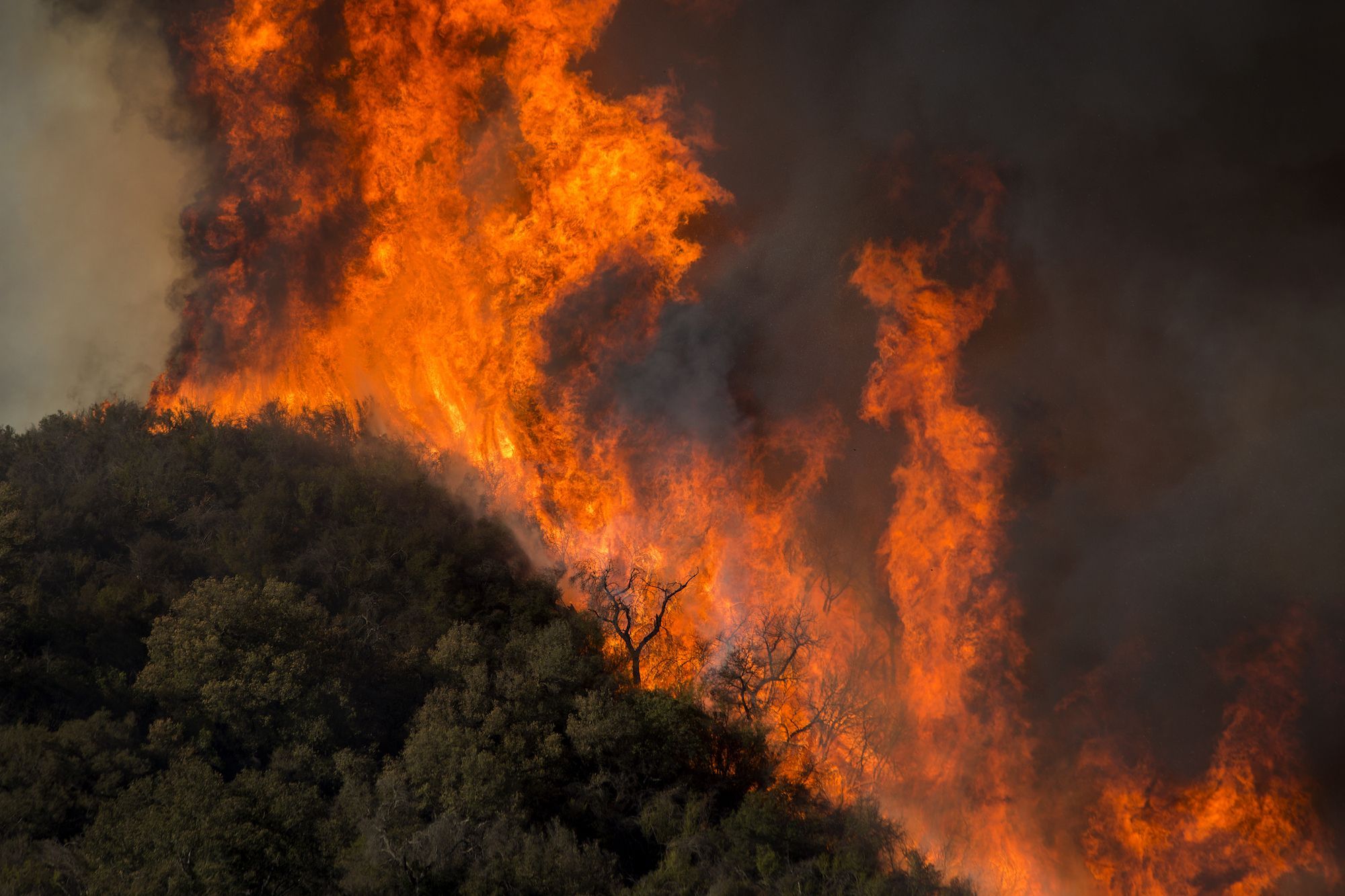
    Tragic fires throughout the West have pushed a lot of smoke and ash into the sky, creating fog-like conditions that reduce the intensity of the sun, shade crops, and lower temperatures. The blanket of smoke is like stepping into the shade under an awning on a 90oF day. This reduced sun intensity has affected the ability of crops to dry down in a timely manner. Increased humidity levels this past weeks haven’t helped either.

    While shading may be good for protecting tomatoes from sunburn with harvests running late due to COVID-related challenges, it is not good for drying down field crops.

    With the smoke finally dissipating, drying conditions are improving. We ended up turning our blackeye bean crop over to increase aeration and help it dry down.  Dry beans are sometimes turned to help dry the crop down, especially if they’re rained on, but the challenge is to be careful to prevent shattering.

    In corn, there aren’t any easy solutions.  One grower said their corn sat at 16.5% moisture for several weeks and finally they had to harvest it anyway. Dryers are available for drying corn and other crops to the proper storage moisture, but as we all know it’s expensive and with low grain prices this affects the bottom line.  — By Sarah Light & Rachael Freeman Long, UC Cooperative Extension

  • Coronavirus Food Assistance Program Round II Begins Sept. 21 (What’s Included)

    Coronavirus Food Assistance Program Round II Begins Sept. 21 (What’s Included)

    President Donald J. Trump and U.S. Secretary of Agriculture Sonny Perdue today announced up to an additional $14 billion for agricultural producers who continue to face market disruptions and associated costs because of COVID-19. Signup for the Coronavirus Food Assistance Program (CFAP 2) will begin September 21 and run through December 11, 2020.

    “America’s agriculture communities are resilient, but still face many challenges due to the COVID-19 pandemic. President Trump is once again demonstrating his commitment to ensure America’s farmers and ranchers remain in business to produce the food, fuel, and fiber America needs to thrive,” said Secretary Perdue. “We listened to feedback received from farmers, ranchers and agricultural organizations about the impact of the pandemic on our nations’ farms and ranches, and we developed a program to better meet the needs of those impacted.”

    Background:

    The U.S. Department of Agriculture (USDA) will use funds being made available from the Commodity Credit Corporation (CCC) Charter Act and CARES Act to support row crops, livestock, specialty crops, dairy, aquaculture and many additional commodities. USDA has incorporated improvements in CFAP 2 based from stakeholder engagement and public feedback to better meet the needs of impacted farmers and ranchers.

    Producers can apply for CFAP 2 at USDA’s Farm Service Agency (FSA) county offices. This program provides financial assistance that gives producers the ability to absorb increased marketing costs associated with the COVID-19 pandemic. Producers will be compensated for ongoing market disruptions and assisted with the associated marketing costs.

    CFAP 2 payments will be made for three categories of commodities – Price Trigger Commodities, Flat-rate Crops and Sales Commodities.

    Price Trigger Commodities

    Price trigger commodities are major commodities that meet a minimum 5-percent price decline over a specified period of time. Eligible price trigger crops include barley, corn, sorghum, soybeans, sunflowers, upland cotton, and all classes of wheat. Payments will be based on 2020 planted acres of the crop, excluding prevented planting and experimental acres. Payments for price trigger crops will be the greater of: 1) the eligible acres multiplied by a payment rate of $15 per acre; or 2) the eligible acres multiplied by a nationwide crop marketing percentage, multiplied by a crop-specific payment rate, and then by the producer’s weighted 2020 Actual Production History (APH) approved yield. If the APH is not available, 85 percent of the 2019 Agriculture Risk Coverage-County Option (ARC-CO) benchmark yield for that crop will be used.

    For broilers and eggs, payments will be based on 75 percent of the producers’ 2019 production.

    Dairy (cow’s milk) payments will be based on actual milk production from April 1 to Aug. 31, 2020. The milk production for Sept. 1, 2020, to Dec. 31, 2020, will be estimated by FSA.

    Eligible beef cattle, hogs and pigs, and lambs and sheep payments will be based on the maximum owned inventory of eligible livestock, excluding breeding stock, on a date selected by the producer, between Apr. 16, 2020, and Aug. 31, 2020.

    Flat-rate Crops

    Crops that either do not meet the 5-percent price decline trigger or do not have data available to calculate a price change will have payments calculated based on eligible 2020 acres multiplied by $15 per acre. These crops include alfalfa, extra long staple (ELS) cotton, oats, peanuts, rice, hemp, millet, mustard, safflower, sesame, triticale, rapeseed, and several others.

    Sales Commodities

    Sales commodities include specialty crops; aquaculture; nursery crops and floriculture; other commodities not included in the price trigger and flat-rate categories, including tobacco; goat milk; mink (including pelts); mohair; wool; and other livestock (excluding breeding stock) not included under the price trigger category that were grown for food, fiber, fur, or feathers. Payment calculations will use a sales-based approach, where producers are paid based on five payment gradations associated with their 2019 sales.

    Additional commodities are eligible in CFAP 2 that weren’t eligible in the first iteration of the program. If your agricultural operation has been impacted by the pandemic since April 2020, we encourage you to apply for CFAP 2. A complete list of eligible commodities, payment rates and calculations can be found on farmers.gov/cfap.

    Eligibility

    There is a payment limitation of $250,000 per person or entity for all commodities combined. Applicants who are corporations, limited liability companies, limited partnerships may qualify for additional payment limits when members actively provide personal labor or personal management for the farming operation. In addition, this special payment limitation provision has been expanded to include trusts and estates for both CFAP 1 and 2.

    Producers will also have to certify they meet the Adjusted Gross Income limitation of $900,000 unless at least 75 percent or more of their income is derived from farming, ranching or forestry-related activities. Producers must also be in compliance with Highly Erodible Land and Wetland Conservation provisions.

    Applying for Assistance

    Producers can apply for assistance beginning Sept. 21, 2020. Applications will be accepted through Dec. 11, 2020.

    Additional information and application forms can be found at farmers.gov/cfap. Documentation to support the producer’s application and certification may be requested. All other eligibility forms, such as those related to adjusted gross income and payment information, can be downloaded from farmers.gov/cfap/apply. For existing FSA customers, including those who participated in CFAP 1, many documents are likely already on file. Producers should check with FSA county office to see if any of the forms need to be updated.

    Customers seeking one-on-one support with the CFAP 2 application process can call 877-508-8364 to speak directly with a USDA employee ready to offer assistance. This is a recommended first step before a producer engages with the team at the FSA county office.

    All USDA Service Centers are open for business, including some that are open to visitors to conduct business in person by appointment only. All Service Center visitors wishing to conduct business with FSA, Natural Resources Conservation Service or any other Service Center agency should call ahead and schedule an appointment. Service Centers that are open for appointments will pre-screen visitors based on health concerns or recent travel, and visitors must adhere to social distancing guidelines. Visitors are also required to wear a face covering during their appointment. Our program delivery staff will be in the office, and they will be working with our producers in the office, by phone and using online tools. More information can be found at farmers.gov/coronavirus.  

  • Coronavirus Food Assistance Program Round II Begins Sept. 21 (What’s Included)

    Coronavirus Food Assistance Program Round II Begins Sept. 21 (What’s Included)

    President Donald J. Trump and U.S. Secretary of Agriculture Sonny Perdue today announced up to an additional $14 billion for agricultural producers who continue to face market disruptions and associated costs because of COVID-19. Signup for the Coronavirus Food Assistance Program (CFAP 2) will begin September 21 and run through December 11, 2020.

    “America’s agriculture communities are resilient, but still face many challenges due to the COVID-19 pandemic. President Trump is once again demonstrating his commitment to ensure America’s farmers and ranchers remain in business to produce the food, fuel, and fiber America needs to thrive,” said Secretary Perdue. “We listened to feedback received from farmers, ranchers and agricultural organizations about the impact of the pandemic on our nations’ farms and ranches, and we developed a program to better meet the needs of those impacted.”

    Background:

    The U.S. Department of Agriculture (USDA) will use funds being made available from the Commodity Credit Corporation (CCC) Charter Act and CARES Act to support row crops, livestock, specialty crops, dairy, aquaculture and many additional commodities. USDA has incorporated improvements in CFAP 2 based from stakeholder engagement and public feedback to better meet the needs of impacted farmers and ranchers.

    Producers can apply for CFAP 2 at USDA’s Farm Service Agency (FSA) county offices. This program provides financial assistance that gives producers the ability to absorb increased marketing costs associated with the COVID-19 pandemic. Producers will be compensated for ongoing market disruptions and assisted with the associated marketing costs.

    CFAP 2 payments will be made for three categories of commodities – Price Trigger Commodities, Flat-rate Crops and Sales Commodities.

    Price Trigger Commodities

    Price trigger commodities are major commodities that meet a minimum 5-percent price decline over a specified period of time. Eligible price trigger crops include barley, corn, sorghum, soybeans, sunflowers, upland cotton, and all classes of wheat. Payments will be based on 2020 planted acres of the crop, excluding prevented planting and experimental acres. Payments for price trigger crops will be the greater of: 1) the eligible acres multiplied by a payment rate of $15 per acre; or 2) the eligible acres multiplied by a nationwide crop marketing percentage, multiplied by a crop-specific payment rate, and then by the producer’s weighted 2020 Actual Production History (APH) approved yield. If the APH is not available, 85 percent of the 2019 Agriculture Risk Coverage-County Option (ARC-CO) benchmark yield for that crop will be used.

    For broilers and eggs, payments will be based on 75 percent of the producers’ 2019 production.

    Dairy (cow’s milk) payments will be based on actual milk production from April 1 to Aug. 31, 2020. The milk production for Sept. 1, 2020, to Dec. 31, 2020, will be estimated by FSA.

    Eligible beef cattle, hogs and pigs, and lambs and sheep payments will be based on the maximum owned inventory of eligible livestock, excluding breeding stock, on a date selected by the producer, between Apr. 16, 2020, and Aug. 31, 2020.

    Flat-rate Crops

    Crops that either do not meet the 5-percent price decline trigger or do not have data available to calculate a price change will have payments calculated based on eligible 2020 acres multiplied by $15 per acre. These crops include alfalfa, extra long staple (ELS) cotton, oats, peanuts, rice, hemp, millet, mustard, safflower, sesame, triticale, rapeseed, and several others.

    Sales Commodities

    Sales commodities include specialty crops; aquaculture; nursery crops and floriculture; other commodities not included in the price trigger and flat-rate categories, including tobacco; goat milk; mink (including pelts); mohair; wool; and other livestock (excluding breeding stock) not included under the price trigger category that were grown for food, fiber, fur, or feathers. Payment calculations will use a sales-based approach, where producers are paid based on five payment gradations associated with their 2019 sales.

    Additional commodities are eligible in CFAP 2 that weren’t eligible in the first iteration of the program. If your agricultural operation has been impacted by the pandemic since April 2020, we encourage you to apply for CFAP 2. A complete list of eligible commodities, payment rates and calculations can be found on farmers.gov/cfap.

    Eligibility

    There is a payment limitation of $250,000 per person or entity for all commodities combined. Applicants who are corporations, limited liability companies, limited partnerships may qualify for additional payment limits when members actively provide personal labor or personal management for the farming operation. In addition, this special payment limitation provision has been expanded to include trusts and estates for both CFAP 1 and 2.

    Producers will also have to certify they meet the Adjusted Gross Income limitation of $900,000 unless at least 75 percent or more of their income is derived from farming, ranching or forestry-related activities. Producers must also be in compliance with Highly Erodible Land and Wetland Conservation provisions.

    Applying for Assistance

    Producers can apply for assistance beginning Sept. 21, 2020. Applications will be accepted through Dec. 11, 2020.

    Additional information and application forms can be found at farmers.gov/cfap. Documentation to support the producer’s application and certification may be requested. All other eligibility forms, such as those related to adjusted gross income and payment information, can be downloaded from farmers.gov/cfap/apply. For existing FSA customers, including those who participated in CFAP 1, many documents are likely already on file. Producers should check with FSA county office to see if any of the forms need to be updated.

    Customers seeking one-on-one support with the CFAP 2 application process can call 877-508-8364 to speak directly with a USDA employee ready to offer assistance. This is a recommended first step before a producer engages with the team at the FSA county office.

    All USDA Service Centers are open for business, including some that are open to visitors to conduct business in person by appointment only. All Service Center visitors wishing to conduct business with FSA, Natural Resources Conservation Service or any other Service Center agency should call ahead and schedule an appointment. Service Centers that are open for appointments will pre-screen visitors based on health concerns or recent travel, and visitors must adhere to social distancing guidelines. Visitors are also required to wear a face covering during their appointment. Our program delivery staff will be in the office, and they will be working with our producers in the office, by phone and using online tools. More information can be found at farmers.gov/coronavirus.  

  • Plant, Insect Viruses Work Together to Spread Disease

    Plant, Insect Viruses Work Together to Spread Disease

    In what may be a first for science, researchers with the Agricultural Research Service (ARS) have found an example of plant and insect viruses working together to increase their spread.

    Molecular biologist Michelle Heck, of the ARS Emerging Pests and Pathogens Research Lab in Ithaca, NY, scouts for aphids (Photo by Jennifer Wilson, Cornell University).

    Michelle Heck, an ARS research molecular biologist, was leading research into poleroviruses, a type of plant virus spread by aphids, when she and Cornell University graduate students Jenny Wilson and Patricia Pinheiro made the surprising discovery. Heck is in ARS’s Emerging Pests and Pathogens Research Unit at the Boyce Thompson Institute, on the campus of Cornell University, in Ithaca, NY.

    “Poleroviruses produce a molecule, called P Zero (P0), which dampens the aphid’s immune system,” Heck said. “When the aphid immune’s system is turned down, it allows an aphid virus called a densovirus to infect the insect at very high levels.”

    Densoviruses have a curious effect on aphids: Aphids usually develop wings when the weather begins to cool, but densoviruses can induce the insects to sprout wings. When poleroviruses and densoviruses interact in this way, it allows them to carry the polerovirus farther and faster.

    “We think this is the result of evolution,” Heck said. “Both the plant virus and the insect virus have evolved to manipulate the aphid. Our work shows they are in cahoots to promote virus spread, though possibly at the aphid’s expense.”

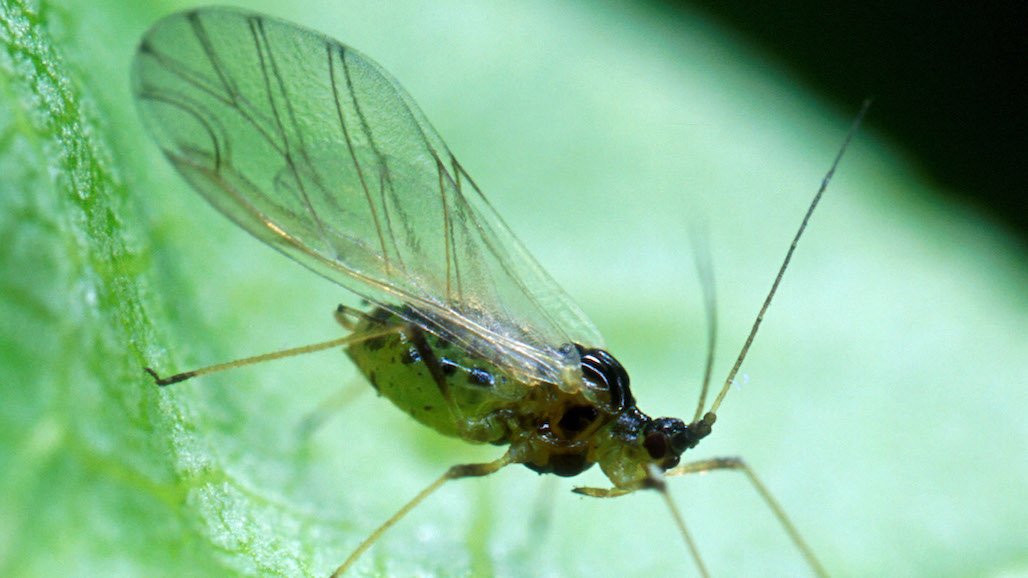
    The research is vital to crop producers because aphids transmit more than 100 different viruses to peaches, tomatoes, potatoes, apples, cotton, cabbage, corn, and other plants. In particular, the potato leafroll virus can reduce the worldwide potato yield by more than 50 percent, causing the loss of 20 million tons of crop each year. There is a new and emerging polerovirus infecting cotton, cotton leafroll dwarf virus, that Heck and her team are now studying.

    “Aphids are resistant to many commonly used insecticides, so chemical treatment is not effective in killing them and blocking the spread of viruses,” Heck said. “By the time a farmer notices aphids in the field, it is too late to block the spread of these viruses by aphids.”

    Follow-on research includes a quest to understand how the polerovirus protein, P0, suppresses the aphid’s immune system at the molecular level. Heck is also looking at exactly how the densovirus triggers the aphid to grow wings.

    “We now know that poleroviruses can interfere with the aphid’s immune response to densoviruses,” she said. The question Heck hopes to answer is, can the densovirus infection be made so severe that it kills the aphids, and if so, could it be used as a biological control tool? – By Scott Elliott, ARS Office of Communications

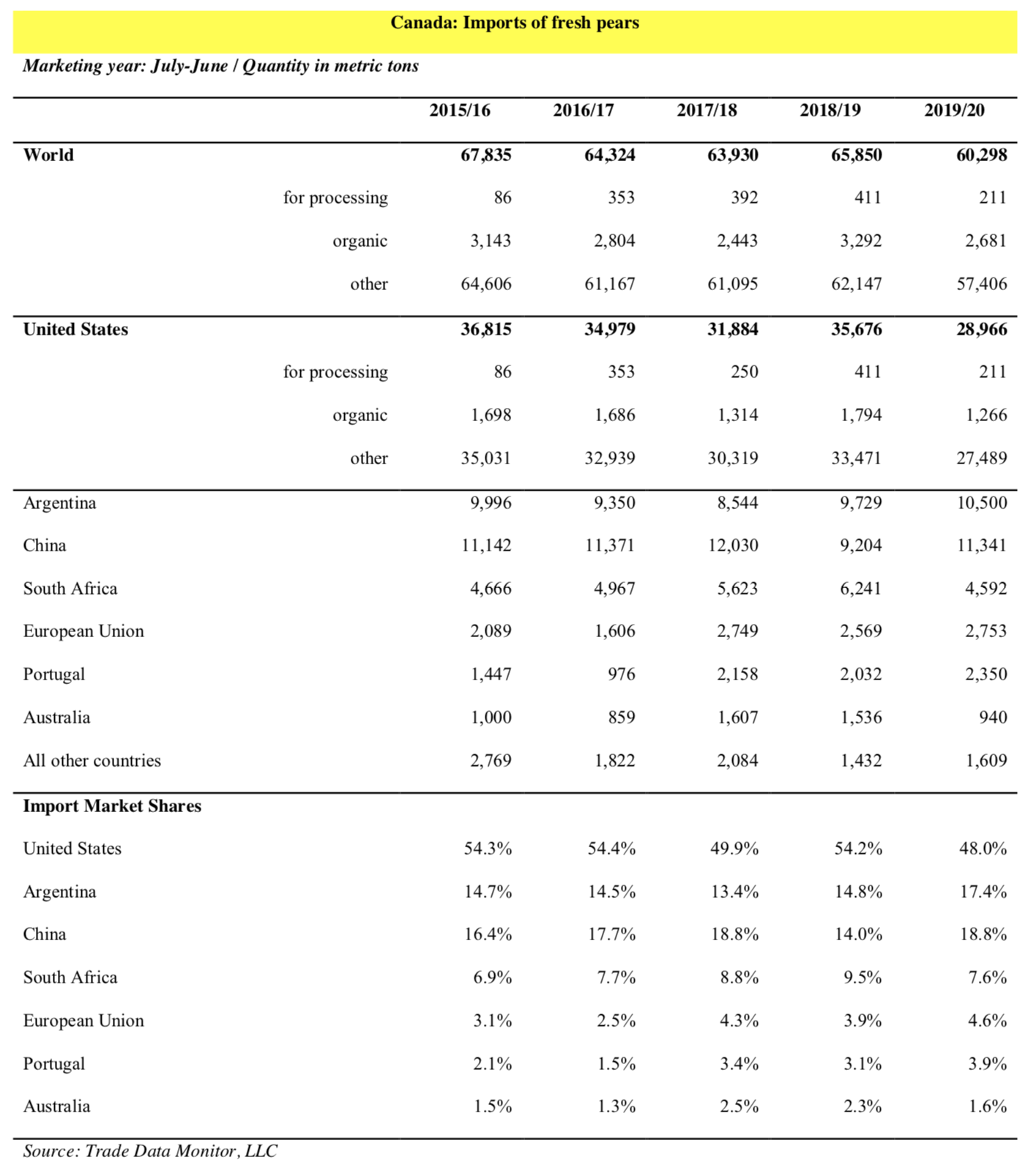
  • Chile Continues Ramping Up Stone Fruit Production & Market Share

    Chile Continues Ramping Up Stone Fruit Production & Market Share

    For marketing year (MY) 2020/21, due to favorable climatic conditions and increasing planted area, Post estimates a 12.1 percent cherry production increase over MY2019/20, totaling 286,000 metric tons (MT), and 13 percent increase in exports reaching 259,000 MT. For MY2020/21, Post projects fresh peaches and nectarines production will reach 169,000 MT while exports will reach 106,000 MT, a three percent increase from the previous marketing year assuming unchanged planted area and higher yields. Read the full report from the USDA Foreign Agricultural Service HERE

  • EU Stone Fruit Production & World Market Share Declines

    EU Stone Fruit Production & World Market Share Declines

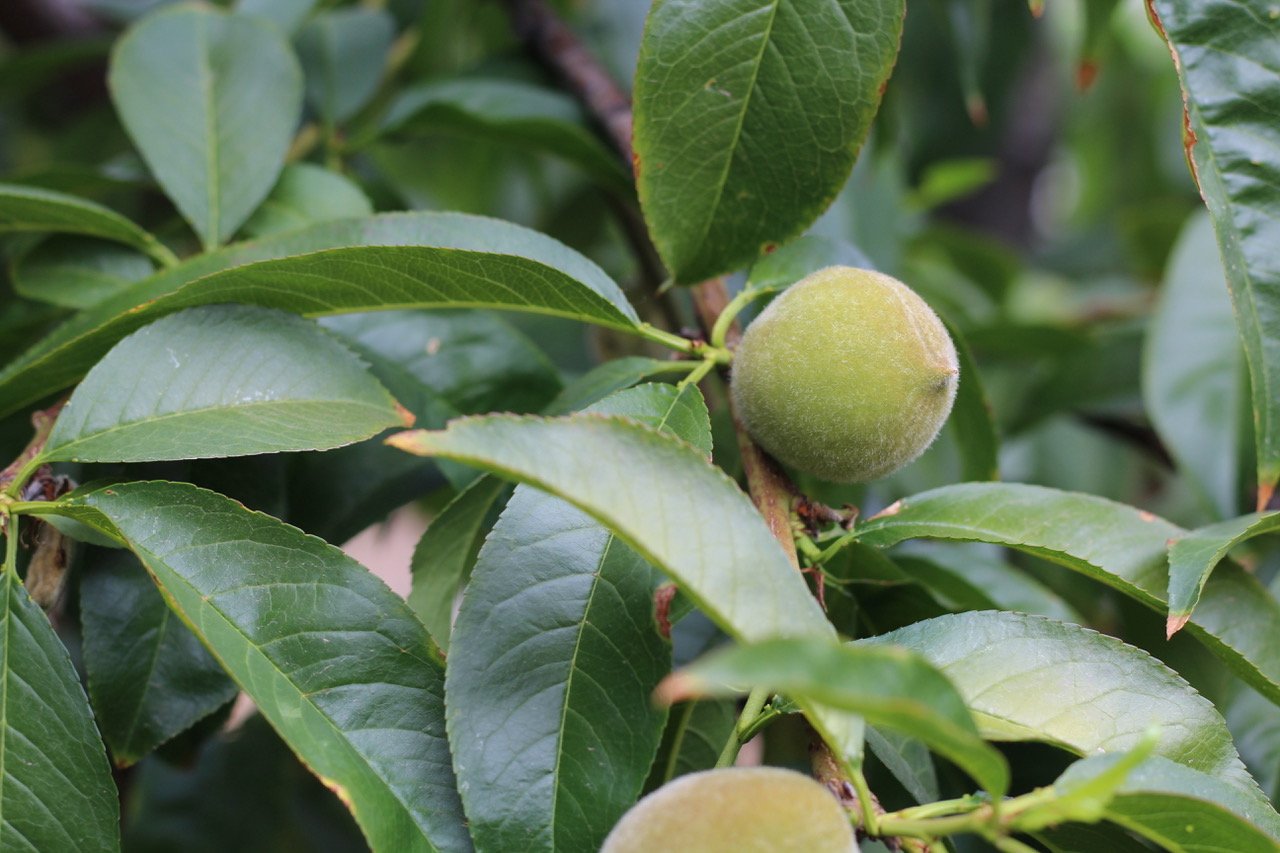
    In market year (MY) 2020/21, EU production of peaches and nectarines may decline 15 percent to 3.4 million metric tons (MT). The drop is due to unfavorable weather conditions and a continuous decrease in total European Union (EU) planted area in response to low profits. Similarly, EU cherry production is projected to lower almost five percent compared to last season to 702,700 MT. During this marketing year, the expected drop in EU stone fruit production may rebalance the market and improve EU stone fruits prices. EU stone fruit exports continue to decline because of the 2014 Russian embargo imposed on EU food products. In MY 2020/21, in response to EU domestic supplies, EU imports of stone fruits may increase. The United States is the fifth largest non-EU supplier of cherries, but imports are trending down. The EU stone fruit sector was not negatively impacted by the COVID-19 pandemic and harvest season developed normally. Read the full report from the USDA Foreign Agricultural Service HERE.

  • Plant, Insect Viruses Work Together to Spread Disease

    Plant, Insect Viruses Work Together to Spread Disease

    In what may be a first for science, researchers with the Agricultural Research Service (ARS) have found an example of plant and insect viruses working together to increase their spread.

    Molecular biologist Michelle Heck, of the ARS Emerging Pests and Pathogens Research Lab in Ithaca, NY, scouts for aphids (Photo by Jennifer Wilson, Cornell University).

    Michelle Heck, an ARS research molecular biologist, was leading research into poleroviruses, a type of plant virus spread by aphids, when she and Cornell University graduate students Jenny Wilson and Patricia Pinheiro made the surprising discovery. Heck is in ARS’s Emerging Pests and Pathogens Research Unit at the Boyce Thompson Institute, on the campus of Cornell University, in Ithaca, NY.

    “Poleroviruses produce a molecule, called P Zero (P0), which dampens the aphid’s immune system,” Heck said. “When the aphid immune’s system is turned down, it allows an aphid virus called a densovirus to infect the insect at very high levels.”

    Densoviruses have a curious effect on aphids: Aphids usually develop wings when the weather begins to cool, but densoviruses can induce the insects to sprout wings. When poleroviruses and densoviruses interact in this way, it allows them to carry the polerovirus farther and faster.

    “We think this is the result of evolution,” Heck said. “Both the plant virus and the insect virus have evolved to manipulate the aphid. Our work shows they are in cahoots to promote virus spread, though possibly at the aphid’s expense.”

    The research is vital to crop producers because aphids transmit more than 100 different viruses to peaches, tomatoes, potatoes, apples, cotton, cabbage, corn, and other plants. In particular, the potato leafroll virus can reduce the worldwide potato yield by more than 50 percent, causing the loss of 20 million tons of crop each year. There is a new and emerging polerovirus infecting cotton, cotton leafroll dwarf virus, that Heck and her team are now studying.

    “Aphids are resistant to many commonly used insecticides, so chemical treatment is not effective in killing them and blocking the spread of viruses,” Heck said. “By the time a farmer notices aphids in the field, it is too late to block the spread of these viruses by aphids.”

    Follow-on research includes a quest to understand how the polerovirus protein, P0, suppresses the aphid’s immune system at the molecular level. Heck is also looking at exactly how the densovirus triggers the aphid to grow wings.

    “We now know that poleroviruses can interfere with the aphid’s immune response to densoviruses,” she said. The question Heck hopes to answer is, can the densovirus infection be made so severe that it kills the aphids, and if so, could it be used as a biological control tool? – By Scott Elliott, ARS Office of Communications

  • USDA Assists Farmers, Ranchers & Communities Affected by Western Wildfires

    USDA Assists Farmers, Ranchers & Communities Affected by Western Wildfires

    The U.S. Department of Agriculture (USDA) today announced the availability of assistance for residents and agricultural producers affected by recent wildfires.

    As of today, wildfires have burned nearly 6.9 million acres across 11 states. More than 31,000 personnel from the local, state and federal levels are working to contain 61 large fires. The USDA Forest Service has more than 7,800 personnel committed to firefighting efforts along with airtankers, helicopters, and other air and ground firefighting resources.

    Food waivers and flexibilities

    On August 27, 2020, USDA’s Food and Nutrition Service (FNS) approved California’s waiver request to allow for the purchase of hot foods with Supplemental Nutrition Assistance Program (SNAP) benefits in select counties. As many California residents are not able to store food or access cooking facilities, households in those counties can purchase hot foods with SNAP benefits through September 23, 2020.

    On September 3, 2020, FNS also approved California’s request to issue automatic mass replacements of SNAP benefits to impacted households. This waiver allows households in certain counties and zip codes to receive replacement of 50% of their August SNAP benefits as a result of wildfires and power outages that began on August 17, 2020. For more information on either of these actions, contact the California Department of Social Services.

    Helping producers weather financial impacts of disasters

    When major disasters strike, USDA has an emergency loan program that provides eligible farmers low-interest loans to help them recover from production and physical losses. This program is triggered when a natural disaster is designated by the Secretary of Agriculture or a natural disaster or emergency is declared by the President under the Stafford Act. USDA also offers additional programs tailored to the needs of specific agricultural sectors to help producers weather the financial impacts of major disasters and rebuild their operations.

    Livestock owners and contract growers who experience above normal livestock deaths due to specific weather events, as well as to disease or animal attacks, may qualify for assistance under USDA’s Livestock Indemnity Program.

    Livestock producers who have suffered grazing losses due to a qualifying drought condition or fire on federally-managed land during the normal grazing period for a county may qualify for help through USDA’s Livestock Forage Disaster Program. Producers of non-insurable crops who suffer crop losses, lower yields or are prevented from planting agricultural commodities may be eligible for assistance under USDA’s Noninsured Crop Disaster Assistance Program.

    Helping operations recover after disasters

    USDA can also provide financial resources through its Environmental Quality Incentives Program to help with immediate needs and long-term support to help recover from natural disasters and conserve water resources. Assistance may also be available for emergency animal mortality disposal from natural disasters and other causes.

    Farmers and ranchers needing to rehabilitate farmland damaged by natural disasters can apply for assistance through USDA’s Emergency Conservation Program. USDA also has assistance available for eligible private forest landowners who need to restore forestland damaged by natural disasters through the Emergency Forest Restoration Program. USDA’s Emergency Watershed Protection Program can also help relieve imminent threats to life and property caused by fires and other natural disasters that impair a watershed. Orchardists and nursery tree growers may be eligible for assistance through USDA’s Tree Assistance Program to help replant or rehabilitate eligible trees, bushes and vines damaged by natural disasters.

    Producers with coverage through the Risk Management Agency (RMA) administered federal crop insurance program should contact their crop insurance agent for issues in filing claims. Those who purchased crop insurance will be paid for covered losses. Producers should report crop damage within 72 hours of discovering damage and follow up in writing within 15 days. The Approved Insurance Providers (AIP), loss adjusters and agents are experienced and well trained in handling these types of events. As part of its commitment to delivering excellent customer service, RMA is working closely with AIPs that sell and service crop insurance policies to ensure enough loss adjusters will be available to process claims in the affected areas as quickly as possible. Visit the RMA website for more details.

    Helping with the long-term recovery of rural communities

    USDA Rural Development has more than 50 programs available to rural and tribal communities for the rebuild, repair or modernization of rural infrastructure including drinking and waste water systems, solid waste management, electric infrastructure, and essential community facilities such as public safety stations, health care centers and hospitals, and educational facilities. Visit theUSDA Rural Development website for more information on specific programs.

    Visit USDA’s disaster resources website to learn more about USDA disaster preparedness and response. For more information on USDA disaster assistance programs, contact your local USDA Service Center.