Category: Non-Video

  • Heat Damaged Groves MAY BE Eligible for Tree Assistance Program Funding

    Heat Damaged Groves MAY BE Eligible for Tree Assistance Program Funding

    California Avocado Commission— In early September much of California experienced excessive heat, including many avocado growing regions. A few growing areas reported sustained temperatures of around 120 degrees. Understandably, due to this extreme heat some trees are experiencing severe damage. The California Avocado Commission immediately contacted the United States Department of Agriculture’s Farm Service Agency (FSA) to pursue possible funding for growers under the Tree Assistance Program (TAP).

    Under the TAP, “To be considered an eligible loss: Eligible trees, bushes, or vines must have suffered more than a 15 percent mortality loss in a stand (adjusted for normal mortality) due to an eligible natural disaster.” Here is a TAP Fact Sheet.

    However, FSA has ruled “heat” is not an eligible event under the TAP program. In 2016, when a similar heat event occurred resulting in California avocado tree damage, the Commission was successful in getting FSA to include heat-related damage. Considering that FSA currently lists “freeze” (an extreme low temperature event) as a TAP-eligible event, there seems to be no basis to exclude extreme high temperature events.

    The Commission is once again strongly advocating with FSA for the inclusion of “heat” as an eligible natural disaster and therefore inclusion in the TAP. As the Commission continues to pursue eligibility for the recent heat event, FSA is asking growers to submit their TAP application if they believe they have suffered the minimum threshold of damage. At this point, pending the FSA final determination, the applications will be rejected. Growers must then ask for an appeal.

    While submitting a TAP application now —knowing it will initially be rejected — is not ideal, there is a 90-day timeline that must be adhered to for any future ruling on eligibility. According to TAP growers must apply “within 90 calendar days of the disaster event; or the date when the loss is apparent to the producer.” Thus, in order to ensure growers meet the 90-day rule, they should apply for TAP now while the Commission continues to advocate for the inclusion of “heat” as an eligible event. If growers do not apply within the prescribed 90 days of the heat event or appearance of loss, they will not be eligible for TAP in the event FSA rules in our favor.

    If you believe your grove may meet the 15% mortality loss, you are encouraged to apply. The Commission will continue to work with FSA and keep you posted as additional information becomes available. 

    Applications can be submitted to your local FSA office as follows:

    Ventura, Santa Barbara, and San Luis Obispo Counties:
    Santa Barbara County Farm Service Agency
    Brenda Estrada, County Executive Director
    920 E Stowell Rd., Santa Maria, CA 93454-7008
    (805) 928-9269; (844) 206-7010 Fax
    Brenda.Estrada@ca.usda.gov

    Riverside, San Diego Counties:
    Riverside County Farm Service Agency
    81077 Indio Blvd. Ste. A, Indio, CA 92201
    (760) 347-3675; (844) 206-6978 Fax
    Desiree.Garza@usda.gov

  • To all San Joaquin Valley Citrus Growers

    To all San Joaquin Valley Citrus Growers

    The ACP/HLB San Joaquin Valley Task Force called a meeting on October 8, 2020 due to the increased number of ACP trap finds in the southern part of Kern County. In the last month (September and into October), there

    have been a total of 35 ACP trap finds in the areas of the south part of Bakersfield, Arvin, Lamont, Mettler, and Maricopa. There were 15 residential and 20 commercial citrus sticky trap finds. While there have been finds in

    some of these areas in the past, the amount of detections in this last 30-day period is alarming. The Asian citrus psyllid, as a reminder, transmits Huanglongbing; the best way to avoid HLB is to control ACP which the valley has been successfully doing. 2020 has been a suspiciously quiet year for ACP finds but now, it is time to act.

    We are now in the late part of the season where most spray programs have already been executed. A coordinated spray is not recommended at this time. Kern County growers are encouraged to use an ACP effective material if they have not done so in the last six weeks. It is prudent for all growers to use ACP effective materials when treating other pests. Regarding the residential finds, CDFA is at various stages of treating them. Prior to these finds, CDFA had released Tamarixia radiata in certain residential areas of Kern County. Future Tamarixia releases are scheduled.

    The task force wants to convey the seriousness of what is being seen and what it means to our industry. Unfortunately, the suspicion is that these finds in commercial citrus are spilling over from residential properties. It is up to the citrus industry to deal with this threat. San Joaquin Valley citrus growers have done a good job using ACP effective materials when treating. The cooperation shown by growers during coordinated treatments reflects their commitment to keeping ACP suppressed. Nevertheless, task force members wished to highlight what should be done to help control the Asian citrus psyllid here in the valley.

    It is even more imperative to control the psyllid due to the find of a CLas positive ACP in commercial citrus down in the Riverside area. That was a wake-up call. We cannot, as an industry and in good conscience, dismiss that find. Growers and Pest Control Advisors need to be diligent. The following best practices must be a part of the regime tending to citrus groves.

    What do Growers and Pest Control Advisors need to do? It is easy to say, “follow the best practices”, but there are key elements that the task force believes is important. All the guidelines should be adhered to, but these are the key elements:

    A. Know When and Where Asian citrus psyllids might be present.
    – flush is what attracts the psyllid. Nice, tender leaves and stems. Like candy to an ACP.
    – citrus varieties matter. Lemons flush constantly. Grapefruit, oranges, and mandarins will have fewer flush cycles.
    – know when flushes occur. Spring, late summer for established trees. Younger trees have extensive, prolonged flush. Topping and hedging will produce flush. Spraying with kaolin stimulates flush also.

    – temperature determines how long a flush will last. Hot temps lead to quick hardening of the plant growth. Cooler temps prolong flush.

    1. Scout for Asian citrus psyllids (Yellow sticky traps are a passive method to determine presence of ACP).

      – use both visual and tap surveying.
      – survey along the borders, psyllids tend to not go deeper into groves unless the population is high (they do not like each other very much). If very wide plantings or very wide wind machine rows exist, then check along them too. Younger trees and shorter trees will allow the psyllids to travel farther into the grove.
      – do more frequent surveys during flush. Monthly surveys work when the vegetation is hardened off, unless the trees are close to a find, then sampling frequency should increase.

    2. Be aware of inadvertently transporting ACP.
      – clean equipment used before moving to the next property. Applies to anyone working in a grove; especially picking crews, trimming crews, irrigators, Pest Control Advisors, and the growers themselves.
      – check clothing and vehicles for insect hitchhikers. Shake out hats, bags, clothing. Sweep down vehicles.
      – do not park vehicles in the rows, park outside of the grove.

    3. If possible, use ACP effective materials when treating other pests, following label instructions.

    4. Follow the requirements when moving bulk harvested citrus.

    5. Be aware of developments!
      – receive newsletters from San Joaquin Valley Grower Liaisons.

    Fresno County Northern Tulare County Southern Tulare County Kern County

    – subscribe to industry publications.

    Sylvie Robillard Teri Blaser Jessica Leslie Judy Zaninovich

    These were felt to be the most important points of the voluntary best practices. The ACP/HLB San Joaquin Valley Tack Force felt it was important to write this letter to all the valley citrus growers because as of this moment, the valley has not discovered a CLas positive Asian citrus psyllid or a CLas positive tree. The members of the task force believe that the industry must operate under the assumption that there are positive psyllids and trees in the valley; they just have not been found yet. If the industry relaxes its vigilance that is when Huanglongbing will become established and cause havoc. Thank you for taking the time to read this and may each and all stay safe and well.

    Sincerely,

    The ACP/HLB San Joaquin Valley Task Force 

  • National Project Tackles Virus Threats to Potato Industry

    A University of Idaho-led team will tackle a pair of viruses that cause major losses to the potato industry.

    U of I researcher and potato virus expert Alex Karasev will lead the project funded by a $5.8 million grant from the U.S. Department of Agriculture National Institute for Food and Agriculture.

    The team of two dozen scientists will target potato virus Y (PVY) and potato mop top virus (PMTV) in seed potatoes, the first level of commercial potato production, and in potatoes grown for market.

    The project involves seed improvement organizations nationally that certify seed potatoes are disease free.

    Long known as a serious problem for growers, PVY damages plants and reduces yields and the size of the potatoes, making the crop less valuable. An earlier U of I study estimated losses from PVY cost Idaho’s potato industry $34 million a year and reduced potential yields by 10 to 50%.

    PMVT presents the potato industry with a new problem. Six states have found the virus in their seed potato crops. An estimated 5% of Maine’s seed potatoes carry PMTV. The virus is transmitted by protists, microbes that have qualities of fungi and algae.

    The project includes university researchers in 10 potato-growing states, including Idaho, Colorado, New York and Oregon, and USDA Agricultural Research Service scientists based in Prosser, Washington, and Aberdeen, Idaho. U of I researchers in Idaho Falls, Kimberly and Moscow will work on the project.

    The new four-year project continues work Karasev participated in that was originally led by a New York-based researcher who retired earlier this year.

    “Because of its position as the nation’s top potato-producing state, it is fitting that Idaho is leading the project,” Karasev said.

    The most immediate goal is to give potato growers tools to control the viruses with better ways to test plants and fields. A key medium-range goal focuses on strategies to control pests that spread the viruses and to educate growers. A long-range priority is identifying genes that can provide resistance to the viruses and their vectors. Those genes can help potato breeding programs to develop new varieties.

    Developing better testing can help seed potato producers to limit the spread of the viruses and prevent losses in the field and storage.

    Researchers will study the economic impacts of the viruses and develop ways to communicate with and educate growers about the best strategies to reduce the viruses’ impacts.

    Karasev won a mid-career award from U of I in 2013 partly for his work on PVY, which became an issue for Idaho growers in the early 2000s. He recently turned his attention to PMTV as its threat to the potato industry increased.

    This project, titled “Development of Sustainable System-based Management Strategies for Two Vector-borne, Tuber Necrotic Viruses in Potato,” is funded under the U.S. Department of Agriculture National Institute of Food and Agriculture grant No. 2020-51181-32136. The total project funding is $5,756,299 of which 100% is the federal share.

  • New California Mandarin Objective Measurement Survey

    New California Mandarin Objective Measurement Survey

    USDA’s National Agricultural Statistics Service, Pacific Regional Field Office conducted the Mandarin Objective Measurement Survey for the first time this year. A sample of 271 Tango, W. Murcott Afourer, and White Murcott Mandarin varieties were randomly selected proportional to county and variety bearing acreage. Initial results show an average fruit set of 945 fruit per tree and an average fruit size of 1.49 inches in diameter for these varieties. Because this is a new survey, a production forecast will be not be made for at least three years.

    Fruit counts were made from two trees per orchard, and fruit diameter measurements were taken on the right quadrant of four trees surrounding the two sampled trees.

    California Mandarin Objective Measurement Survey Results, October 1, 2020
    County Number of samples Average set per tree Average diameter (inches)
    Fresno 31 1,378 1.57
    Kern 66 1,005 1.52
    Madera 34 694 1.34
    Tulare 132 912 1.48
    Other1 8 367 1.57
    State Survey Avg. 271 945 1.49

    1Other includes Imperial, Riverside, and Ventura counties.

    This and all NASS Pacific Regional reports are available at www.nass.usda.gov/ca. For more information, contact the NASS Pacific Regional Field Office at 1-800-851-1127.

  • Grafting Watermelon Prevents Disease, WSU Study Shows

    A new study from Washington State University’s Department of Horticulture found that splice grafting helps watermelons resist disease.

    For more than 10 years, watermelon growers in Washington’s Columbia Basin have been struggling with a disease called Verticillium wilt, caused by the fungus Verticillium dahliae.

    The findings were recently published in the American Society for Horticulture Science.

    For decades, methyl bromide, a fumigant used to control pests in agriculture, was used to control plant diseases like Verticillium wilt. The colorless, odorless gas was used for protecting crops, and shipments, but methyl bromide was phased out in 2005 due to one of its side effects: depleting the ozone layer.

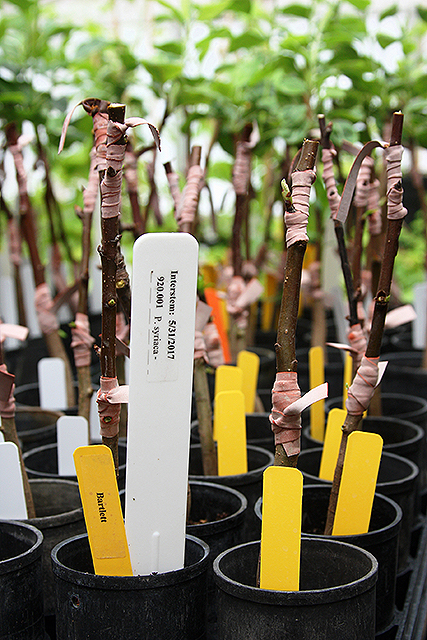
    Successful watermelon grafts growing at WSU Mount Vernon NWREC.

    “When methyl bromide was disallowed, farmers no longer had access to it, which meant they had less control over disease spread,” said Carol Miles, interim director of the Northwestern Washington Research and Extension Center in Mount Vernon, Wash., who led the study.

    Miles started searching for answers. She looked to other countries who had given up the use of methyl bromide a decade before the United States, wondering how they were dealing with this issue.

    “What many of the growers worldwide were doing was grafting,” she said. This horticulture technique joins parts from two plants together so they grow as a single plant, with the upper part, or scion, of one plant growing on the root system, or rootstock, of a different plant.

    “Grafting watermelon has been used on a commercial scale in Japan for almost 100 years,” Miles said. “This is not a new concept – it’s just new to us.”

    As a professor in the Department of Horticulture, Miles and her team experimented with grafted and non-grafted watermelon plants. The healthy rootstocks, resistant to the pathogen, are squash plants.

    “The study revealed that we can produce grafted watermelon crop yields that are better than non-grafted plants when there is disease pressure,” she said.

    Non-grafted plants died during the study, but the grafted plants survived due to their healthy rootstocks.

    “The fruit from the grafted watermelon is as good, and in some cases better than non-grafted fruit,” she said.
    Miles said the study bodes well not just for watermelon survival, but for agriculture.

    “Having the grafting industry here in western Washington would be a great benefit,” said Miles, who pointed out that purchasing rootstocks from countries abroad isn’t always convenient.

    Splice-grafted watermelon where both cotyledons (embryonic leaves in seed bearing plants) are removed from the rootstock.

    Due to Washington’s relatively low energy costs, the Pacific Northwest is the prime location for grafted transplant production, Miles said.

    “There is the potential for a greenhouse industry we don’t currently have,” said Miles, who is hopeful that transplant production takes off on Washington’s west side where the climate is moderate, year-round.

    “Right now, transplants are expensive, due in part to the grafting methods that are commonly used for this crop,“ said Pinki Devi, a graduate research assistant for the Department of Horticulture. “Our recent research found that grafting watermelon using the splice grafting method could significantly decrease costs of grafting.”

    Watermelons continue to surprise Miles, and she and her team plan to continue studies on melons.
    “I’ve said for a long time that watermelon was my ‘fun crop,’ because it was just delicious,” Miles said.

    She was pleasantly surprised by a recent study by the USDA which found the amount of a compound called lycopene in watermelon is greater than the lycopene in a tomato.

    Lycopene is often heralded as an antioxidant for the prevention of cancer, so that sweet slice of summer fruit packs a healthy punch.

    “Watermelon is actually a very healthy crop,“ Miles said. —By Lauren Paterson

    WSU College of Agricultural, Human & Natural Resource Sciences

  • Five Steps for Ag Processors to Adapt their COVID-19 Incident Response Approach

    Five Steps for Ag Processors to Adapt their COVID-19 Incident Response Approach

    COVID-19 is a health crisis in the United States but major industries, like agriculture, chemical manufacturing, oil and gas exploration and production, all need to keep functioning as essential businesses in the midst of the crisis.  The response to COVID-19 has core parallels to major industrial accident response, which involves deploying the right resources for the task.  Every incident, be it a fire, explosion, or a government inspection and citation for regulatory compliance failures involves four key elements of response:  (1) the immediate response; (2) the extended response; (3) compliance and prevention; and (4) preparedness/lessons learned to improve.  This lifecycle of an incident applies equally to a COVID-19 contact among your employees or customers.  Make no mistake.  The stakes are high.  Recently, Cal/OSHA issued COVID-19 related citations to two companies of over $200,000 each, one to a frozen food manufacturer and the other to a temporary employment agency.  New legislation that becomes effective next year gives Cal/OSHA expanded authority to issue Orders Prohibiting Use for workplaces that pose risk of an “imminent hazard” relating to COVID-19.  In other words, they can shut your plant down if you don’t have the right procedures in place to respond to a COVID-19 incident.

    Processing plant managers are accustomed to incidents, such as injuries, agency inspections, or citations (hopefully not too frequently with respect to citations); applying the process in the context of COVID-19 can work extremely well, even where handling these situations requires adjustment for the particular crisis at hand.  In every crisis, the approach needs to be tailored, and COVID-19 incidents are no different.

    Examples of how a COVID-19 response needs to be tailored include determining work-relatedness to a positive test to COVID-19, identifying close contacts, identifying the agencies to whom notifications must be provided, and contact tracing for potentially exposed employees, testing, and implementing isolation protocols.  In the context of COVID-19, agriculture companies need to be keenly aware of increased Cal/OSHA oversight, as the agency has identified agricultural processing as a priority for enforcement because agricultural processing facility workers have been disproportionately impacted.

    When confronting a COVID-19 incident, follow these useful tips to help minimize liability and potential for citation by the government.

    1. Familiarize yourself with the Extensive Government Guidance Issued, Especially that Tailored to Your Industry

    There’s a saying in incident response:  your greatest exposure is not the incident itself but whether you follow the regulations for reporting and responding to the incident.  That’s true for a major chemical release from your operations and a COVID-19 incident, alike.  When the crisis emerged, several federal and state agencies provided guidance documents to companies on how to address potential cases of COVID-19.  Like the crisis, the guidance is evolving.  The government continues to update its approach and has even offered tailored to specific industries.  Following the agency guidance will put a facility in a much stronger compliance position when faced with a compliance inspection or determination of work-relatedness.

    Some key recent government guidance specific to the agricultural processing industry is listed below:

    • September 18, 2020, California Department of Public Health (CDPH) updated Guidelines intended for use by employers experiencing an outbreak of COVID-19 in their workplace.  It emphasizes that employers should be proactive and keep in mind that identification of even a single positive case among employees may quickly develop into an outbreak.
    • July 29, 2020, California COVID-19 Guidance for the agriculture and livestock industry to support a safe, clean environment for workers.  Recommendations include that an employer investigate any COVID-19 illness and determine if any work-related factors could have contributed to risk of infection;    identify close contacts (within six feet for fifteen minutes or more) of an infected worker and take steps to isolate COVID-19 positive worker(s) and close contacts; implement the necessary processes and protocols when a workplace has an outbreak, in accordance with the CDPH guidelines.
    • July 21, 2020, Cal/OSHA updated Guidance for the agriculture industry.  This provides:
    • COVID-19 Daily Checklist for Agricultural Employers
    • COVID-19 General Checklist for Agricultural Employers
    • Infection Prevention for Agricultural Employees and Employers
    1. Make Required Government Notifications

    Understand requirements for reporting employee cases to Cal/OSHA.  Any serious injury, illness, or death occurring in any place of employment or in connection with any employment must be reported by the employer to the local Cal/OSHA district office immediately.  For COVID-19, this includes inpatient hospitalizations and deaths among employees.

    On September 17, 2020, Governor Newsom also signed into law AB 685 which enhances reporting requirements to local health authorities in the event of a COVID-19 outbreak in the worksite.  The law takes effect on January 1, 2021.

    Employers should also check local guidance to determine if there are other investigation, reporting, or recording obligations triggered by a positive COVID-19 case.

    Finally, recognize that if an employee is out with COVID-19 or quarantined, other government obligations, like environmental reporting may fall by the wayside in their absence.  Develop a plan to ensure your ongoing government reporting obligations are being met, even those not COVID-19-related.  Having an employee out due to COVID-19 is likely not going to serve as an acceptable excuse for environmental noncompliance.

    1. Do the Investigation

    To comply with Cal/OSHA requirements, plant managers should ensure their companies are investigating positive COVID-19 determinations in a timely manner to identify any work-related factors and to identify close contacts.  This will protect employees, comply with Cal/OSHA requirements, and provide information that may be needed to in regards to the “disputable presumption” that exists in California for an employee who suffers illness or death resulting from COVID-19 on or after July 6, 2020 through January 1, 2023.

    COVID-19 related citations recently issued by Cal/OSHA included a failure to investigate about 20 COVID-19 illnesses and one death for a food manufacturer. Cal/OSHA’s news release highlighted that Cal/OSHA created guidance for many industries in multiple languages including videos, daily checklists and detailed guidelines on how to protect workers from the virus. This guidance is meant to provide a roadmap for employers on their existing obligations to protect workers from COVID-19.  If you don’t conduct required investigations, you will be placing your company at risk of being shut down through Cal/OSHA’s expanded authority to issue Orders Prohibiting Use for workplaces that pose a risks of an “imminent hazard” relating to COVID-19.

    1. Meet Requirements for Identifying and Notifying Potentially Affected Employees

    As part of the investigation, additional employee cases and close contacts (within six feet for fifteen minutes or more) should be identified in accordance with the regulations and guidance.  The facility will then need to conduct testing or alternative methods (e.g., contact tracing or quarantining) in consultation with the local health department to control the outbreak.

    All potentially exposed employees must be notified and employers must meet obligations regarding confidentiality of employees with suspected or confirmed COVID-19 infection as required by the Americans with Disabilities Act (“ADA”) and Health Insurance Portability and Accountability Act (“HIPAA”).

    1. Review and Update the Facility COVID-19 Plan to Apply Lessons Learned and Improve

    In the July 29, 2020 COVID-19 Guidance for agriculture and livestock, the state of California  recommended that each facility establish a written, workplace-specific COVID-19 prevention plan, perform a comprehensive risk assessment of all work areas and work tasks, and designate a person at each facility to implement the plan. The plan should include sanitation practices, physical distancing, individual control measures, screening, and other incidental practices to prevent the spread amongst workers. Upon completion of the incident investigation, the facility should update the plan as needed to prevent further cases.

    Conclusion

    COVID-19 presents unique challenges to processing plant managers responding to incidents because of the difficulty in determining the source of infection, agency notification and attention, contact tracing, employee notification, testing, control measures, and return to work. Like any incident, COVID-19 incident response should focus on:  (1) the immediate response by making required agency notifications and dealing with the immediate employee concerns including contact tracing; (2) the extended response by conducting an incident investigation; (3) compliance and prevention by conducting testing or implement isolation protocols; and (4) preparedness/lessons learned to improve by reviewing and updating the facility COVID-19 plan. Processing plant managers who work quickly and diligently to respond to a COVID-19 incident will reap the benefit of minimizing regulatory scrutiny protecting employees and comply with legal reporting and notification requirements. They should also regularly check local, state, and federal guidance to determine if there are new or revised investigation, reporting, or recording obligations triggered by a positive COVID-19.   By Daniel J. Grucza & Shannon S. Broome

    Dan Grucza is Counsel with Hunton Andrews Kurth LLP. He regularly advises companies on health and safety issues and has been a speaker and author on COVID-19 response issues and is a lead member of the firm’s incident response practice.

    Shannon S. Broome is the Managing Partner of Hunton Andrews Kurth’s San Francisco office and leads its environmental practice in California.  She routinely advises clients on Cal/OSHA compliance issues and on major accident and other incident response for industrial facilities.

  • Five Steps for Ag Processors to Adapt their COVID-19 Incident Response Approach

    Five Steps for Ag Processors to Adapt their COVID-19 Incident Response Approach

    COVID-19 is a health crisis in the United States but major industries, like agriculture, chemical manufacturing, oil and gas exploration and production, all need to keep functioning as essential businesses in the midst of the crisis.  The response to COVID-19 has core parallels to major industrial accident response, which involves deploying the right resources for the task.  Every incident, be it a fire, explosion, or a government inspection and citation for regulatory compliance failures involves four key elements of response:  (1) the immediate response; (2) the extended response; (3) compliance and prevention; and (4) preparedness/lessons learned to improve.  This lifecycle of an incident applies equally to a COVID-19 contact among your employees or customers.  Make no mistake.  The stakes are high.  Recently, Cal/OSHA issued COVID-19 related citations to two companies of over $200,000 each, one to a frozen food manufacturer and the other to a temporary employment agency.  New legislation that becomes effective next year gives Cal/OSHA expanded authority to issue Orders Prohibiting Use for workplaces that pose risk of an “imminent hazard” relating to COVID-19.  In other words, they can shut your plant down if you don’t have the right procedures in place to respond to a COVID-19 incident.

    Processing plant managers are accustomed to incidents, such as injuries, agency inspections, or citations (hopefully not too frequently with respect to citations); applying the process in the context of COVID-19 can work extremely well, even where handling these situations requires adjustment for the particular crisis at hand.  In every crisis, the approach needs to be tailored, and COVID-19 incidents are no different.

    Examples of how a COVID-19 response needs to be tailored include determining work-relatedness to a positive test to COVID-19, identifying close contacts, identifying the agencies to whom notifications must be provided, and contact tracing for potentially exposed employees, testing, and implementing isolation protocols.  In the context of COVID-19, agriculture companies need to be keenly aware of increased Cal/OSHA oversight, as the agency has identified agricultural processing as a priority for enforcement because agricultural processing facility workers have been disproportionately impacted.

    When confronting a COVID-19 incident, follow these useful tips to help minimize liability and potential for citation by the government.

    1. Familiarize yourself with the Extensive Government Guidance Issued, Especially that Tailored to Your Industry

    There’s a saying in incident response:  your greatest exposure is not the incident itself but whether you follow the regulations for reporting and responding to the incident.  That’s true for a major chemical release from your operations and a COVID-19 incident, alike.  When the crisis emerged, several federal and state agencies provided guidance documents to companies on how to address potential cases of COVID-19.  Like the crisis, the guidance is evolving.  The government continues to update its approach and has even offered tailored to specific industries.  Following the agency guidance will put a facility in a much stronger compliance position when faced with a compliance inspection or determination of work-relatedness.

    Some key recent government guidance specific to the agricultural processing industry is listed below:

    • September 18, 2020, California Department of Public Health (CDPH) updated Guidelines intended for use by employers experiencing an outbreak of COVID-19 in their workplace.  It emphasizes that employers should be proactive and keep in mind that identification of even a single positive case among employees may quickly develop into an outbreak.
    • July 29, 2020, California COVID-19 Guidance for the agriculture and livestock industry to support a safe, clean environment for workers.  Recommendations include that an employer investigate any COVID-19 illness and determine if any work-related factors could have contributed to risk of infection;    identify close contacts (within six feet for fifteen minutes or more) of an infected worker and take steps to isolate COVID-19 positive worker(s) and close contacts; implement the necessary processes and protocols when a workplace has an outbreak, in accordance with the CDPH guidelines.
    • July 21, 2020, Cal/OSHA updated Guidance for the agriculture industry.  This provides:
    • COVID-19 Daily Checklist for Agricultural Employers
    • COVID-19 General Checklist for Agricultural Employers
    • Infection Prevention for Agricultural Employees and Employers
    1. Make Required Government Notifications

    Understand requirements for reporting employee cases to Cal/OSHA.  Any serious injury, illness, or death occurring in any place of employment or in connection with any employment must be reported by the employer to the local Cal/OSHA district office immediately.  For COVID-19, this includes inpatient hospitalizations and deaths among employees.

    On September 17, 2020, Governor Newsom also signed into law AB 685 which enhances reporting requirements to local health authorities in the event of a COVID-19 outbreak in the worksite.  The law takes effect on January 1, 2021.

    Employers should also check local guidance to determine if there are other investigation, reporting, or recording obligations triggered by a positive COVID-19 case.

    Finally, recognize that if an employee is out with COVID-19 or quarantined, other government obligations, like environmental reporting may fall by the wayside in their absence.  Develop a plan to ensure your ongoing government reporting obligations are being met, even those not COVID-19-related.  Having an employee out due to COVID-19 is likely not going to serve as an acceptable excuse for environmental noncompliance.

    1. Do the Investigation

    To comply with Cal/OSHA requirements, plant managers should ensure their companies are investigating positive COVID-19 determinations in a timely manner to identify any work-related factors and to identify close contacts.  This will protect employees, comply with Cal/OSHA requirements, and provide information that may be needed to in regards to the “disputable presumption” that exists in California for an employee who suffers illness or death resulting from COVID-19 on or after July 6, 2020 through January 1, 2023.

    COVID-19 related citations recently issued by Cal/OSHA included a failure to investigate about 20 COVID-19 illnesses and one death for a food manufacturer. Cal/OSHA’s news release highlighted that Cal/OSHA created guidance for many industries in multiple languages including videos, daily checklists and detailed guidelines on how to protect workers from the virus. This guidance is meant to provide a roadmap for employers on their existing obligations to protect workers from COVID-19.  If you don’t conduct required investigations, you will be placing your company at risk of being shut down through Cal/OSHA’s expanded authority to issue Orders Prohibiting Use for workplaces that pose a risks of an “imminent hazard” relating to COVID-19.

    1. Meet Requirements for Identifying and Notifying Potentially Affected Employees

    As part of the investigation, additional employee cases and close contacts (within six feet for fifteen minutes or more) should be identified in accordance with the regulations and guidance.  The facility will then need to conduct testing or alternative methods (e.g., contact tracing or quarantining) in consultation with the local health department to control the outbreak.

    All potentially exposed employees must be notified and employers must meet obligations regarding confidentiality of employees with suspected or confirmed COVID-19 infection as required by the Americans with Disabilities Act (“ADA”) and Health Insurance Portability and Accountability Act (“HIPAA”).

    1. Review and Update the Facility COVID-19 Plan to Apply Lessons Learned and Improve

    In the July 29, 2020 COVID-19 Guidance for agriculture and livestock, the state of California  recommended that each facility establish a written, workplace-specific COVID-19 prevention plan, perform a comprehensive risk assessment of all work areas and work tasks, and designate a person at each facility to implement the plan. The plan should include sanitation practices, physical distancing, individual control measures, screening, and other incidental practices to prevent the spread amongst workers. Upon completion of the incident investigation, the facility should update the plan as needed to prevent further cases.

    Conclusion

    COVID-19 presents unique challenges to processing plant managers responding to incidents because of the difficulty in determining the source of infection, agency notification and attention, contact tracing, employee notification, testing, control measures, and return to work. Like any incident, COVID-19 incident response should focus on:  (1) the immediate response by making required agency notifications and dealing with the immediate employee concerns including contact tracing; (2) the extended response by conducting an incident investigation; (3) compliance and prevention by conducting testing or implement isolation protocols; and (4) preparedness/lessons learned to improve by reviewing and updating the facility COVID-19 plan. Processing plant managers who work quickly and diligently to respond to a COVID-19 incident will reap the benefit of minimizing regulatory scrutiny protecting employees and comply with legal reporting and notification requirements. They should also regularly check local, state, and federal guidance to determine if there are new or revised investigation, reporting, or recording obligations triggered by a positive COVID-19.   By Daniel J. Grucza & Shannon S. Broome

    Dan Grucza is Counsel with Hunton Andrews Kurth LLP. He regularly advises companies on health and safety issues and has been a speaker and author on COVID-19 response issues and is a lead member of the firm’s incident response practice.

    Shannon S. Broome is the Managing Partner of Hunton Andrews Kurth’s San Francisco office and leads its environmental practice in California.  She routinely advises clients on Cal/OSHA compliance issues and on major accident and other incident response for industrial facilities.

  • Evaluating Biological Fungicides Against Fruit Rot in Strawberry

    Several crown, fruit, and foliar diseases cause significant yield losses to strawberry.  Gray mold or Botrytis fruit rot caused by Botrytis cinerea, mucor fruit rot by Mucor spp., and Rhizopus fruit rot by Rhizopus spp. are common fungal diseases in California.  Botrytis cinerea is more prevalent and damaging fungus among these pathogens warranting regular fungicidal applications.  Fungal spores survive in plant debris and soil and infection can occur before flower initiation.  Both flowers and fruits are subjected to infection.  Severely infected flowers fail to develop into fruits.  Infection on developing or ripe fruit occurs as brown lesions, usually under calyxes.  Infected areas rot and become dry and leathery under dry conditions or produce a thick, gray mat of spores under cool, moist conditions.

    Mucor spp. invade the fruit through ruptured skin and cause leaky fruit rot.  Under high humidity, profuse fungal growth of white, tough filaments with black spore-bearing structures is seen covering the fruit.  In the case of Rhizopus fruit rot, discolored, water-soaked spots develop on fruit eventually leading to wilting.  Similar to the Mucor fruit rot, Rhizopus rot also leads to leaky fruits and development of black spore-bearing structures on white mycelia under high humidity.  Both pathogens survive in dead and decaying plant material and can persist in the field.

    In a fall-planted conventional strawberry, growers usually make 12 or more fungicidal applications during a four-month period to control Botrytis and other fruit rots.  Although fungicides with different modes of action are present and growers try to rotate them, fungicide resistance in B. cinerea is common and effective integrated disease strategies are necessary.  Using biostimulants that might improve plant’s ability to withstand diseases and alternating chemicals with biological fungicides could be some options to mitigate chemical fungicide resistance.  Previous studies looked at the response of fruit diseases to various treatments that received biological soil amendments (Dara, 2020a), soil fungicides (Dara, 2020b), or chemical and biological fungicides (Dara, 2019).  This study was conducted to evaluate the efficacy of some biological fungicides along with a chemical fungicide primarily against Botrytis fruit rot.

    Methodology

    This study was conducted at a research strawberry field at the Shafter Research Station.  Strawberry cultivar San Andreas was planted on 31 October 2019.  Other than regular irrigation and fertigation, plants in this study were not treated with any agricultural inputs for agronomic or pest management purposes.  Treatments included i) untreated control, ii) Elevate 50 WDG (fenhexamid) at 8 oz/ac, iii) Serifel (Bacillus amyloliquefaciens) at 8 oz/ac, iv) ProBlad Verde (Banda de Lupinus albus doce – BLAD, a polypeptide from sweet lupine) at 36 fl oz with Cinnerate (cinnamon oil) at 0.25% followed by ProBlad Verde at 36, 43, and 43 fl oz/ac on subsequent applications, and v) ProBlad Verde at 36 fl oz with Cinnerate at 0.25% followed by three subsequent applications of ProBlad Verde at 32 fl oz/ac.  Each treatment had a 3.2′ wide and 14′ long plot with two rows of plants and replicated four times in a randomized complete block design.  Treatments were applied using a CO2-pressurized backpack sprayer using a 45 gpa spray volume on 26 March, 2, 10, and 20 April 2020.  Flowers and fruits were removed from all the plants before the first application.  Fruit was harvested on 14 and 27 April and 2 and 10 May and stored in vented plastic containers for postharvest quality assessment.  The severity of Botrytis and other fruit rots was recorded 3 and 5 days after harvest on a scale of  0 to 4 where 0=no disease, 1=1-25% fruit with fungal infection, 2=26-50% infection, 3=51-75%, and 4=76-100%.  Compared to Botrytis fruit rot, other rots occurred as mixed infections at different times and it was not possible to accurately measure them separately.  Data presented in this study primarily represent Botrytis fruit rot with other fruit rots included on some data sets.  Data were subjected to analysis of variance using Statistix software to compare disease severity for individual harvest dates and their average.

    Results

    Fruit rots occurred from low to moderate levels during the observation period.  Disease severity followed the usual trend with higher levels 5 days after harvest compared to 3 days after harvest.  Compared to untreated control, disease severity was numerically lower in some treatments especially 3 days after harvest, but differences were not statistically significant (P > 0.05) when individual harvest dates or their average were considered.  The average disease severity from four harvests was 0.25 in Elevate and Serifel, 0.50 in ProBlad Verde low rate with Cinnerate, and 0.81 in ProBlad Verde high rate with Cinnerate treatment and untreated control 3 days after harvest.  The average disease severity was 1.13 for Serifel, 1.19 for Elevate and the low rate of ProBlad Verde with Cinnerate, 1.81 for the high rate of ProBlad Verde with Cinnerate, and 2.0 for untreated control 5 days after harvest.  Although statistically significant differences could not be found among treatments, this study indicates the potential of non-chemical alternatives and warrants additional studies for further investigation. -By Surendra Dara


  • California Ag Leadership Foundation Announces New Leadership

    The California Agricultural Leadership Foundation (CALF) has announced the hiring of two individuals to its leadership team, Dwight Ferguson and Abby Taylor-Silva, to lead the organization which operates one of the foremost leadership development experiences in the United States, the California Agricultural Leadership Program (CALP).
    “I am excited to announce that we are cultivating a new way forward as we continue to provide the premier leadership program in the nation,” said CALF Board Chairman Michael Young. “By building a strong team to meet these challenging times, we can continue to grow leaders who make a difference.”

    Ferguson has been selected to serve as president and CEO of the foundation. His predecessor, Barry Bedwell, is retiring after more than four years as CALF’s president and over four decades in representing production agriculture in the state. Ferguson has spent 30 years in the produce and floral businesses, largely in senior leadership roles, at top industry companies. His most recent position was with Naturipe Farms in Salinas, Calif.

    “Dwight has a track-record of growing ag businesses and the teams needed to build them,” said Young. “He is a recognized industry leader who is known for his management, interpersonal and problem-solving skills.”

    Ferguson earned a bachelor’s degree in communications from Ohio University and a master’s degree in management from Aquinas College. He and his wife, Nancy, have two grown children.

    “I could not be happier joining Ag Leadership as president/CEO,” said Ferguson. “I believe in the mission and vision of the foundation and very much appreciate its history, culture and contributions made to California agriculture. I also recognize the excellent quality of its programs and look forward to working with all stakeholders, especially the board, alumni and staff, to build on CALF’s rich tradition of success.”

    Taylor-Silva will serve as the foundation’s executive vice president. She comes to the foundation after ten years as vice president of policy and communications for the Grower-Shipper Association of Central California (GSA), an agricultural trade association spanning the coastal region that includes Monterey, Santa Cruz, San Benito and Santa Clara counties.

    “We are extremely pleased to have Abby join our new leadership team,” said Young. “She is a true servant leader who will help move the foundation forward through these uncertain times.”

    Abby is a native of Monterey and San Benito counties and serves on the boards of the Salinas Rotary Club and the Community Foundation for Monterey County. She is a proud alumnae of the Ag Leadership Program’s Class 45.

    “I am delighted to join this team,” said Taylor-Silva. “The foundation made a distinctive and long-lasting impact on my personal and professional development, providing me with tools, perspective and an awareness-of-self that directly impacted my ability to effectively lead in various capacities. I look forward to the opportunity to build upon this extraordinary program, serve the foundation and support the next generation of California agricultural leaders.”

    The foundation’s board of directors recently welcomed Michael Young to serve as its new chairman. Young, an alumni of Class 35, is principal of Wegis & Young, a diversified farming operation which grows a variety of tree and row crops and manages agricultural property for individual and institutional investors.

    Three alumni of the program have been newly appointed to serve on the foundation’s board: Correen Davis (Class 45), Yissel Barajas (Class 40) and Paul Parreira (Class 44).

    “The addition of our new board members, along with our existing board, round out what is a dynamic leadership group that is reflective of the diverse nature of California agriculture,” said Young. “They, along with our new leadership team, will propel the foundation on a path of new horizons, positive growth and a sustainable future.”

  • HLB Detection Triggers Quarantine Expansion in San Bernardino & Los Angeles Counties

    HLB Detection Triggers Quarantine Expansion in San Bernardino & Los Angeles Counties

    A quarantine expansion has been declared following the detection of the citrus disease Huanglongbing (HLB), or citrus greening, in five residential citrus trees located in Rancho Cucamonga. This is the first time the disease has been confirmed in Ranch Cucamonga, marking the fifth city in San Bernardino County to have had a positive detection of HLB. The California Department of Food and Agriculture (CDFA) is working with the United States Department of Agriculture (USDA) and San Bernardino County to remove the HLB-infected tree and prevent the spread of HLB into neighboring areas.

    The expanded quarantine area will merge with the existing quarantines in San Bernardino and Los Angeles Counties. The expanded portion is bordered on the north by Big Tree Cucamonga; on the west by Pauda Avenue in Claremont and Mount Baldy Road; on the east by Interstate 15; and on the south by Foothill Boulevard and Interstate 10 in San Bernardino County.

    The updated HLB quarantine maps for San Bernardino and Los Angeles counties are available online. Please check this link for future quarantine expansions in these counties, should they occur.

    The quarantine prohibits the movement of all plant parts or citrus nursery stock out of the quarantine area. Provisions exist to allow the movement of commercially cleaned and packed citrus fruit. If you are a grower within the new quarantine expansion area, please contact CDFA’s emergency quarantine response program at 916-654-0312 for information on these provisions.

    Fruit that is not commercially cleaned and packed, including residential citrus, such as oranges, lemons, grapefruits and kumquats, must not be moved from the property on which it is grown, although it may be processed (removal of stems and leaves, and a thorough washing) and/or consumed on the premises.

    Residents are urged to take several steps to help protect citrus trees:

    • Do not move citrus plants, leaves, or foliage into or out of the quarantine area or across state or international borders. Keep it local.
    • Cooperate with agricultural officials placing traps, inspecting trees, and treating for the pest.
    • If you no longer wish to care for your citrus tree, consider removing it so it does not become a host to the pest and disease.

    CDFA staff have scheduled removal of the infected tree and are in the midst of a treatment program for citrus trees within 250-meters of the find site. By taking this action, a critical reservoir of the disease and its vectors will be removed, which is essential to protect other citrus trees on the property, neighbors’ trees and the community’s citrus from this deadly disease. CDFA, in partnership with USDA, local county agricultural commissioners and the citrus industry, continue to pursue a strategy of controlling the spread of the Asian citrus psyllids while researchers work to find a cure for HLB.

    Questions? If you are a citrus grower in San Bernardino County and have questions about this detection, please contact your grower liaison Sandra Zwaal at szwaal2@gmail.com.