Category: Non-Video

  • Western Growers’ Jason Resnick Promoted to Senior Vice President

    Western Growers’ Jason Resnick Promoted to Senior Vice President

    Western Growers’ veteran Jason Resnick has been promoted to Senior Vice President and General Counsel.

    “Over the past 17 years, Jason has demonstrated an unrivaled commitment to Western Growers and our membership and has provided indispensable counsel to the senior leadership team throughout his tenure with the organization,” said Western Growers President & CEO Dave Puglia. “In addition to his core responsibilities as General Counsel, Jason has helped shape our work on important public policy issues, especially immigration. His strategic mind and trusted counsel are of immense importance to me and our Board of Directors.”

    Resnick joined Western Growers in 2003 as a staff attorney and most recently served as Vice President and General Counsel. The promotion is in recognition of the additional duties he has assumed, such as managing the affairs of the Board of Directors as corporate secretary, establishing Western Growers H-2A Services as a premier H-2A services agency and overseeing the Legal and Trade Practices and Commodity Services Departments.

    “It’s truly an honor, and I’m humbled and grateful for this opportunity,” said Resnick. “During my time at Western Growers, I have learned so much about this wonderful industry from extraordinary colleagues, past and present, our visionary members, and the dedicated attorneys who have been zealous advocates for the industry for many years. I am inspired every day by my colleagues who continue to raise the bar for serving our members.”

    Resnick is “AV” Peer Review Rated by Martindale-Hubbell and is a frequent speaker and contributor to Western Grower & Shipper magazine on employment law and ag labor issues. He serves as vice president on the board of directors for the Agricultural Personnel Management Association (APMA), is on the board of iFoodDecisionSciences, Inc. and is a past co-chair of the Agribusiness Committee of the State Bar of California.

    Resnick received his bachelor’s degree from the University of California, Irvine and his JD from the University of the Pacific, McGeorge School of Law.

  • Fire Blight in Pear: Getting to the Root of the Matter

    Fire Blight in Pear: Getting to the Root of the Matter

    Pear producers are turning to science in order to take a bigger bite out of the fruit market. U.S. pear production is only about one-seventh that of apple production. Reasons for this shortfall include relatively limited areas with a favorable growing climate; the large size of pear trees; and susceptibility to storm damage, climate change, and disease – particularly fire blight. These conditions caused pear producers in Washington State to lose nearly 70,000 tons of their crop last year alone (not to mention the major losses in California as well).

    According to Nahla Bassil, plant geneticist, and Joseph Postman, pear curator, at the Agricultural Research Service’s (ARS) National Clonal Germplasm Repository (NCGR) in Corvallis, OR, developing superior new rootstocks is the number one research priority of the U.S. pear industry. Their research team includes postdoc Jason Zurn and crop manager Barbara Gilmore. Bassil’s research focuses on developing DNA markers that enable diagnosing host-plant resistance to the fire blight pathogen in breeding material, resulting in new cultivars that are resistant to the most devastating disease of pears worldwide.

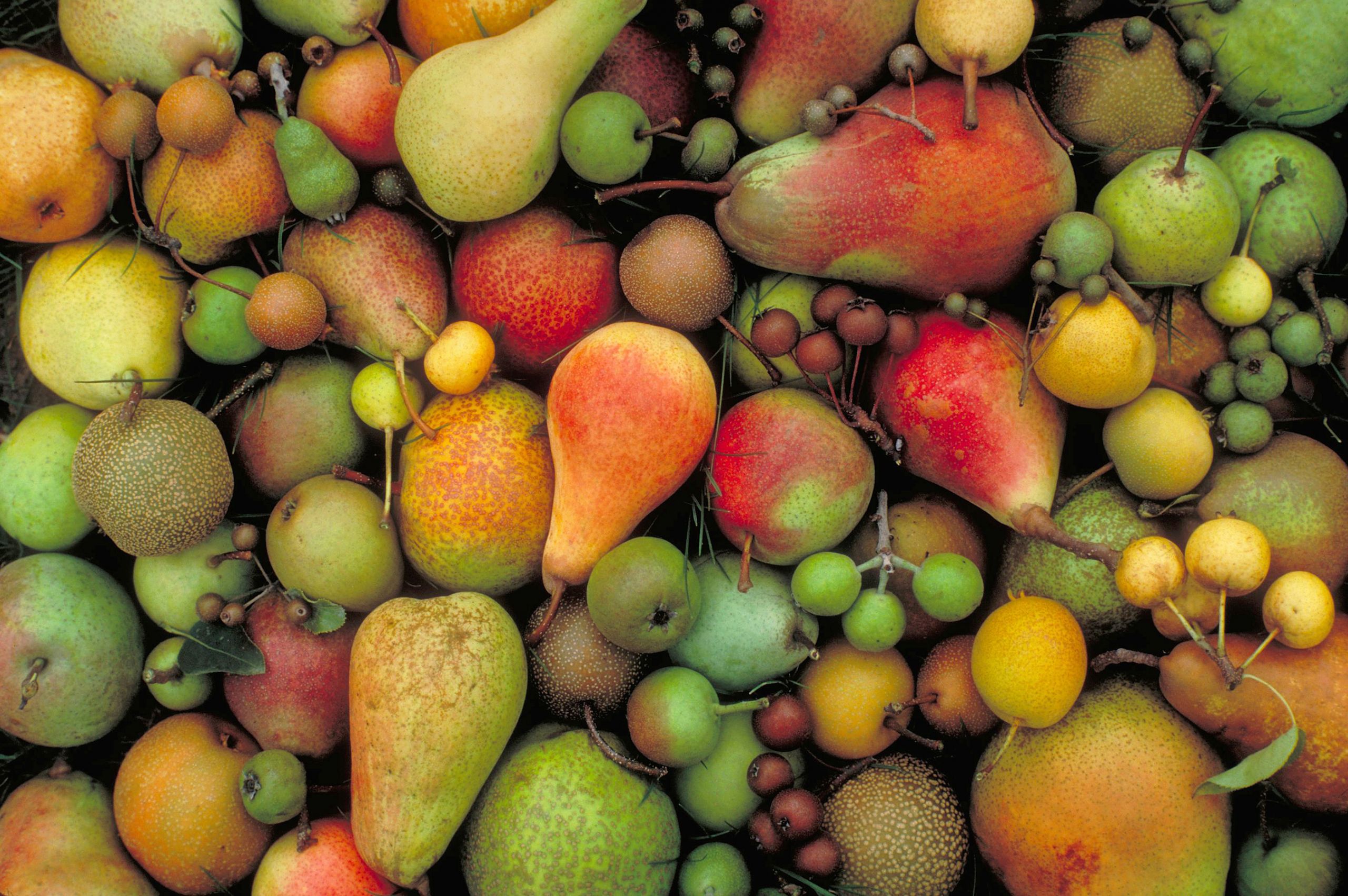
    Overview of the interstem plot of young pear trees in 2019 (Photo by Joseph Postman)

    While there are numerous root systems, called rootstocks, available for apples that can produce trees ranging in size from super-dwarf to super-vigorous, very few rootstock options are available for pears, Bassil said. Currently, pear trees grown on vigorous rootstocks are large, must be planted far apart, and can take 5 years to come into production. In addition, large trees are more dangerous and time-consuming to prune and harvest, larger amounts of pesticides are needed to control pests, and pesticide coverage is less efficient compared to low-growing compact trees.

    Commercial apple producers primarily plant highly productive dwarf trees that are grafted onto specially designed rootstocks, developed by ARS scientists. Now, pear growers are looking to solve their production problems through genetic solutions.

    A few dwarfing rootstocks are available for pears, but they all have problems, ranging from susceptibility to disease to longer production times. That’s where the NCGR’s research comes in.

    “The USDA world pear collection in Corvallis contains many species and varieties that are potentially better rootstocks or have unique genetic characteristics that are not found in commonly grown varieties,” Bassil said. “Genetic solutions for production problems are economical and efficient in the long run, but there are challenges to identifying new genetic materials with the needed traits.”

    Postman’s search for a productive pear rootstock has taken him one step beyond the techniques used by his ARS colleagues who studied apples. Rather than grow a new pear tree by grafting the desired fruit tree atop a rootstock, as apple tree nurseries do, Postman uses a double-graft system.

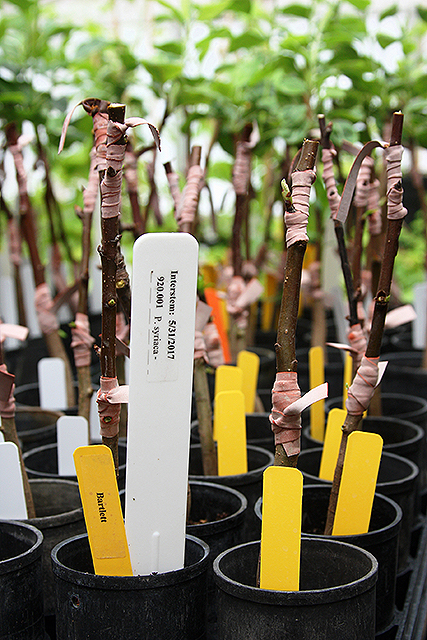
    Interstem pear grafts in pots (Photo by Joseph Postman)

    “Pears do not root easily from cuttings,” he said. “We are using ‘interstems’ of potential rootstock varieties to overcome this difficulty.” An interstem is grafted onto a seedling rootstock, then a shoot of an edible cultivar is grafted onto the interstem. “We are hoping that an interstem piece will have the same dwarfing effect as commercial apple trees that are grafted onto dwarfing rootstocks.”

    As part of the RosBREED project, USDA scientists in Corvallis also identified natural resistance to fire blight that combined disease resistance with horticultural quality. “New genetic markers are being developed to identify and eliminate susceptible seedlings from a breeding program,” Bassil said. “These genetic markers can also select better parents, thus increasing the number of resistant seedlings in the next generation. This will save time, space, and dollars.” – by Scott Elliott, ARS Office of Communications.

  • US Continues to Dominate Canadian Market for Fresh Apples, Pears & Table Grapes

    US Continues to Dominate Canadian Market for Fresh Apples, Pears & Table Grapes

    The United States will remain the largest exporter of fresh apples, pears, and table grapes to the Canadian market in marketing year (MY) 2020/21. FAS/Ottawa forecasts a five percent growth in Canadian apple production for MY 2020/21 with fewer weather-related challenges. A reduction in the marketed production of Canadian pears and table grapes is anticipated as a result of weather and COVID-19 labor challenges during harvest; forecast down seven percent for pears and 13 percent for table grapes. Canadian exports of fresh apples will grow slightly in MY 2020/21. The United States will remain the main market for Canada’s apple exports.

    Executive Summary:

    –  In MY 2020/21 Canadian imports of fresh apples will see a decline while exports will grow modestly compared to MY 2019/20. The United States will remain as Canada’s main trading partner.

    –  FAS/Ottawa forecasts growth in Canadian apple production as a result of improved weather conditions predominately in Ontario and Quebec.

    –  Pear production for MY 2020/21 is forecast to decline as a result of drought in Ontario and labor issues impacting harvest in British Columbia.

    –  Canadian imports of fresh pears will see modest growth in MY 2020/21 as a result of a reduced domestic crop. U.S. pears will remain as the highest market share but will continue to face competition from Argentina, China, and South Africa.

    –  FAS/Ottawa forecast a decline in Canadian table grape production for MY 2020/21 primarily as a result of summer drought conditions in Ontario growing regions.

    –  Imports of fresh table grapes with increase slightly as a result of the reduced Canadian crop. Consumer interest in organic grapes will continue to be supported.

    APPLES

    NOTE: “NEW FAS/Ottawa” data reflect FAS/Ottawa’s assessments and are NOT official USDA data

    Production:

    FAS/Ottawa forecasts five percent growth in Canadian apple production in marketing year (MY) 2020/21 despite some production challenges. Over 90 percent of Canadian apple production is concentrated in British Columbia, Ontario, and Quebec. While weather presented many challenges for the Eastern Canada crop in 2019/20, conditions were more favorable for the 2020/21 crop. Despite dry conditions during the summer, moisture was reportedly received in time to produce a good quality crop for size and color in Ontario. Quebec is also reporting a strong crop. In British Columbia, hail damage in the spring impacted crop quality and smoke from wild fires along the west coast of the United States affected coloration of some varieties. The Maritime Provinces experienced drought through the summer, which is believed to have reduced apple production. However, despite these challenges, early estimates indicate an overall larger apple crop in MY 2020/21 compared to last year. Honeycrisp acres are forecast to see higher production in MY 2020/21 compared to 2019/20.

    FAS/Ottawa forecasts a slight gain in cultivated acreage, in 2020/21, compared to 2019/20, as more Honeycrisp, Gala, and other premium varieties are planted. Bearing acreage will also increase as previously planted acreage matures into fruit production. However, these gains are expected to be offset by continued reduction in McIntosh acreage. Planted acreage suffered a 3.5 percent drop in 2019/20 according to Statistics Canada. In addition to the shift to production of premium varieties, producers are moving to higher density plantings for production efficiency.

    Canadian apple growers have experienced labor challenges related to COVID-19. Spring orchard maintenance, such as thinning and pruning, was affected as fewer temporary foreign workers (TFW) entered Canada due to Canadian travel restrictions implemented in mid-March. At the urging of industry, government eventually designated TFW as essential, though they still had to observe a mandatory 14-day quarantine upon arrival in country. TFW admitted under Canada’s Seasonal

    Agricultural Worker Program can transfer between employers provided appropriate approvals are received; this likely mitigated labor shortfalls in some locations. Recruitment of Canadian workers to fill the gaps met with only limited success. The worker shortage persisted into harvest time, which may have negatively impacted actual crop size despite strong production estimates. This issue is reportedly most significant in British Columbia, which has struggled with low TFW arrival numbers throughout 2020.

    Certain growing regions are better suited to specific apple varieties. British Columbia, Nova Scotia, and Ontario have a greater variety diversification owing to the climactic conditions in the Okanagan, Annapolis Valley, and Niagara growing regions, respectively. Quebec growers typically embrace more durable and resilient varieties due to colder growing conditions. Changes to variety acreage and production will continue to vary by province. The general trend points to increases in Ambrosia, Gala, and Honeycrisp.

    Consumption:

    Approximately 70 percent of apples grown in Canada go to fresh consumption. FAS/Ottawa forecasts growth in both fresh and processing apples for MY 2020/21 on an overall larger crop. Fresh demand will be strong as consumers seek a cost competitive fruit with a longer storage duration. As a result of COVID-19 consumers appear to have shifted their purchasing habits, reducing their perceived COVID- 19 risk by limiting themselves to fewer grocery store visits but spending more per visit. In the spring, retailers shifted from bulk displays of apples to consumer pre-packaged in response to changing consumer purchase patterns and hygiene concerns within the retail environment. Indications are that bulk displays and local apples features will resume this fall despite rising COVID-19 cases in Canada. Food service was also impacted as provinces and regions implemented restrictions on restaurant

    Pecent Total Production

    activities. Apples have been less susceptible to food service disruptions than other commodities. With restrictions on gatherings and food service businesses, demand for desserts such as pies has been reduced and there has been a negative impact to processing apples that go into desserts. Despite this, FAS/Ottawa forecasts processing numbers will increase because of an abundance of lower quality apples harvested in British Columbia and the Maritimes subsequent to the adverse weather conditions in those provinces.

    Per capita consumption of fresh apples is forecast to remain static in MY 2020/21. However, due to a growing Canadian population the overall quantity of apples consumed fresh will increase in Canada in MY 2020/21. Apples face increasing competition with other fresh fruit products on the market but will continue to be a popular snack given their convenience. Their longer duration storage life and cost- competitiveness with other fruits will also support consumption as consumers look for stability and savings in the face of COVID-19-related uncertainties expected to remain for some time to come.

    Trade:

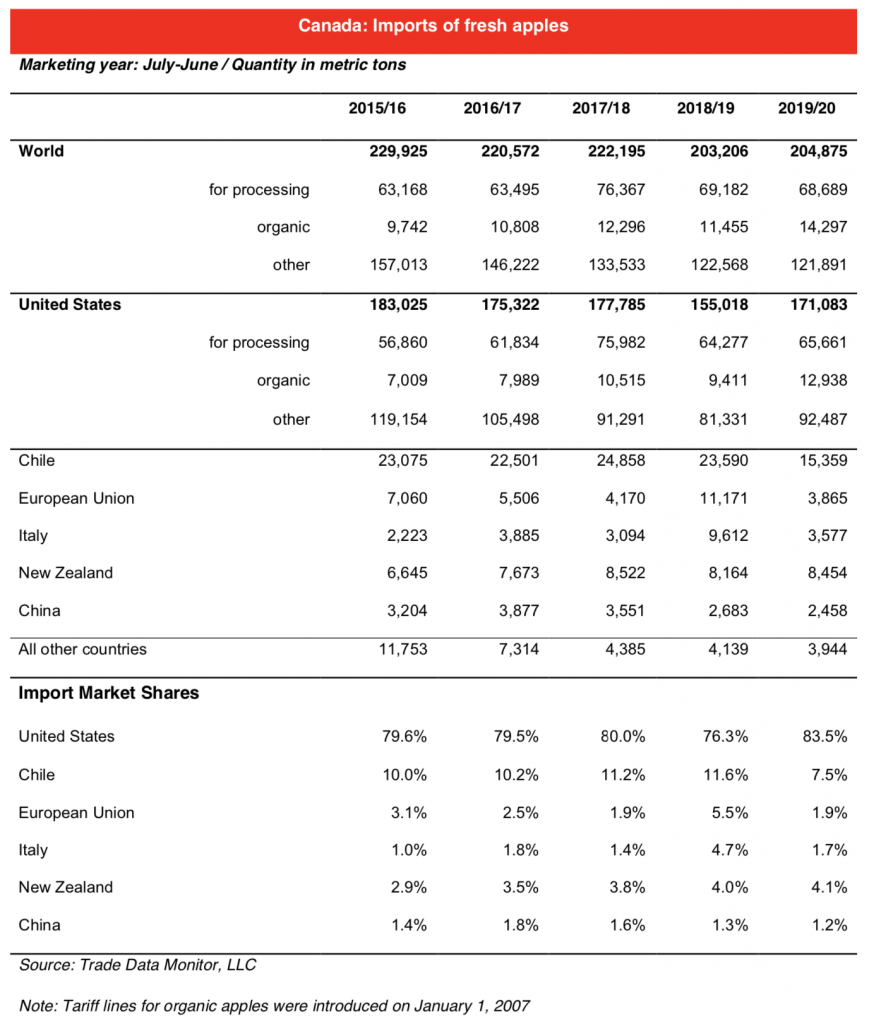
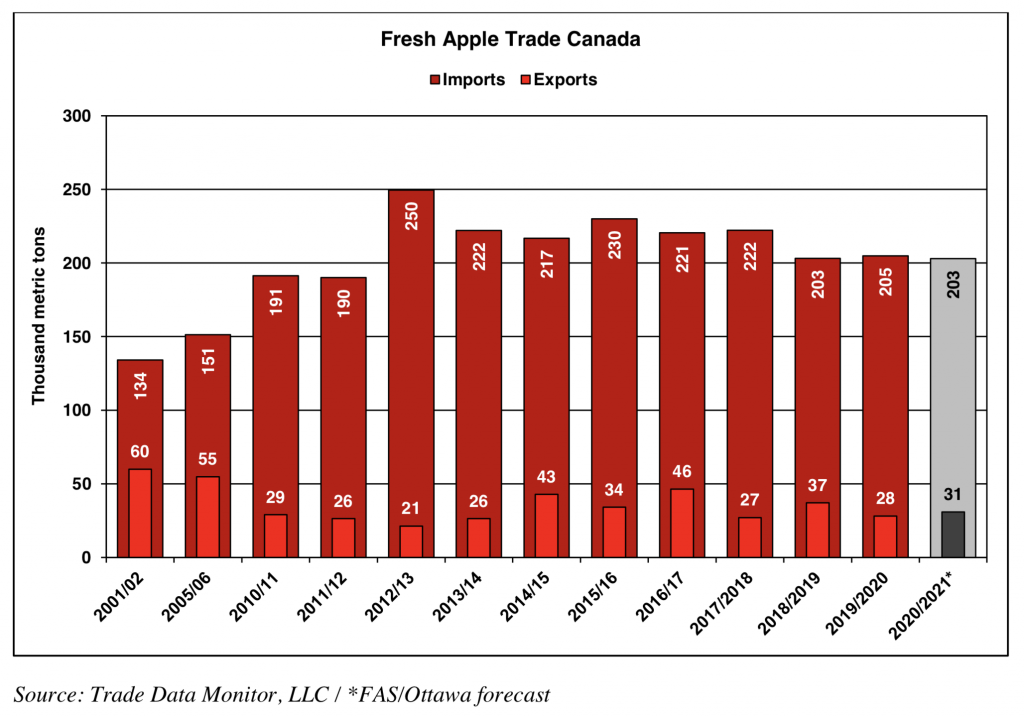
    FAS/Ottawa forecasts a one percent decline of imports of fresh apples into Canada for MY 2020/21. An increased Canadian apple crop and reduced processing demand due to COVID-19, will generate lower demand for imports. The United States will remain the dominant supplier of apples to Canada. The U.S. market share increased to 84 percent in MY 2019/20 following a decline in MY 2018/19 owing to increased imports from Chile and the EU and a smaller U.S. apple crop. Market share was regained in MY 2019/20 due to a larger U.S. crop and a reduced EU crop. Reduced crop expectations for the U.S. and EU crops in MY 2020/21 will also support a decrease in Canadian import volumes.

    Despite a smaller 2019/20 crop, Canadian fresh storage volumes were up 29 percent in June 2020 compared to June 2019. With ample supplies remaining until the 2020/21 crop begins to be marketed, reductions in imports have already been witnessed in MY 2020/21. However, support will remain for imports of U.S. fresh apples to supplement Canadian fresh demand. The majority of U.S. apples are imported into Canada from Washington State followed by New York. Canada is the top market by value for fresh apple exports from both states.

    Imports of organic apples have increased steadily year-over-year since MY 2015/16. Consumer surveys have shown that Millennial Canadians, currently the largest generational cohort in Canada, are driving growth in organic purchasing. Generation Z (post-millennials) also are contributing and are expected to further contribute as their cohort continues to age into the workforce. However, it appears likely that the economic effects of the COVID-19 pandemic will constrain this preference for organic products, which tend to be higher priced, in MY 2020/21.

    Approximately 10 percent of fresh apple production in Canada is exported depending on the Canadian apple crop size. FAS/Ottawa forecasts that exports will grow 10 percent in MY 2020/21 as a result of the increase in the Canadian apple crop. However, outyear exports will remain below the five-year average due to decreased processing demand and COVID-19 disruptions. The United States was, as usual, the top market for Canadian fresh apple exports in MY 2019/20 and will remain as such in MY 2020/21. Canadian apple exporters may also look to continue expansion into CPTPP markets as tariffs under the trade agreement have become more favorable (see Policy section). With a smaller EU crop there is likely to be supply gaps in these markets.

    PEARS

    NOTE: “NEW FAS/Ottawa” data reflect FAS/Ottawa’s assessments and are NOT official USDA data 

    Production:

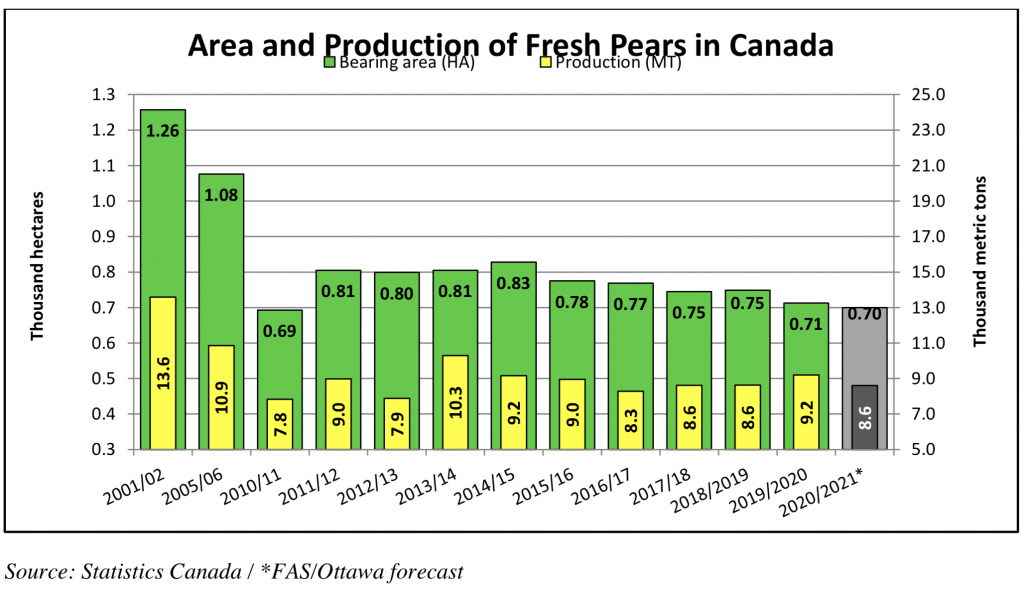
    FAS/Ottawa forecasts a seven percent decline in fresh pear production for MY 2020/21. Marketed production is projected to be less than the five-year average due to harvest challenges in British Columbia combined with reduced labor availability and drought conditions in Ontario. Area planted is expected to remain static in MY 2020/21 while area harvested will decline two percent as a result of labor and weather issues.

    Ontario and British Columbia account for over 90 percent of the Canadian pear crop and these two provinces will continue to dominate domestic production. British Columbia experienced a favorable growing season for MY 2020/21 and though smoke from west coast fires did cause some harvest delays the smoke is not expected to impact fruit quality. British Columbia also struggled with obtaining sufficient numbers of workers for the MY 2020/21 harvest as a result of COVID-19. The available local workforce is limited and growers typically rely on workers from other regions of Canada, such as Quebec, as well as international and temporary foreign workers. COVID-19 restrictions, travel disruptions, and government support programs viewed by some as a disincentive to work have constrained the availability of both domestic and foreign workers. As a result, not all fruit is expected to be harvested, which will reduce marketed production. While Ontario has also seen reductions in the number of foreign workers arriving in MY 2020/21, the pear crop declined primarily due to dry summer weather conditions. Pear production industry estimates indicate that production will be 20 percent or more below MY 2019/20 in some regions. Bartlett and Bosc varieties will continue to dominant Canadian pear acreage but producers are exploring new varieties. In British Columbia, Bosc acreage is reportedly increasing while Bartlett and Anjou acreage has been in decline due to shifts in consumer preference and poorer returns. Anjou is not well suited to the Ontario growing climate, where Bartlett and Bosc dominate production and acreage.

    Consumption:

    Fresh consumption is expected to experience minimal growth in MY 2020/21 due to lower production. Canadian per capita consumption of fresh pears has been on a declining trend since 2013 as pears face increased competition from other fruits.

    Fresh consumption accounts for over 80 percent of the pear market in Canada. There are a limited number of processors and with a smaller 2020/21 crop, processing will remain static on MY 2019/20.

    Trade:

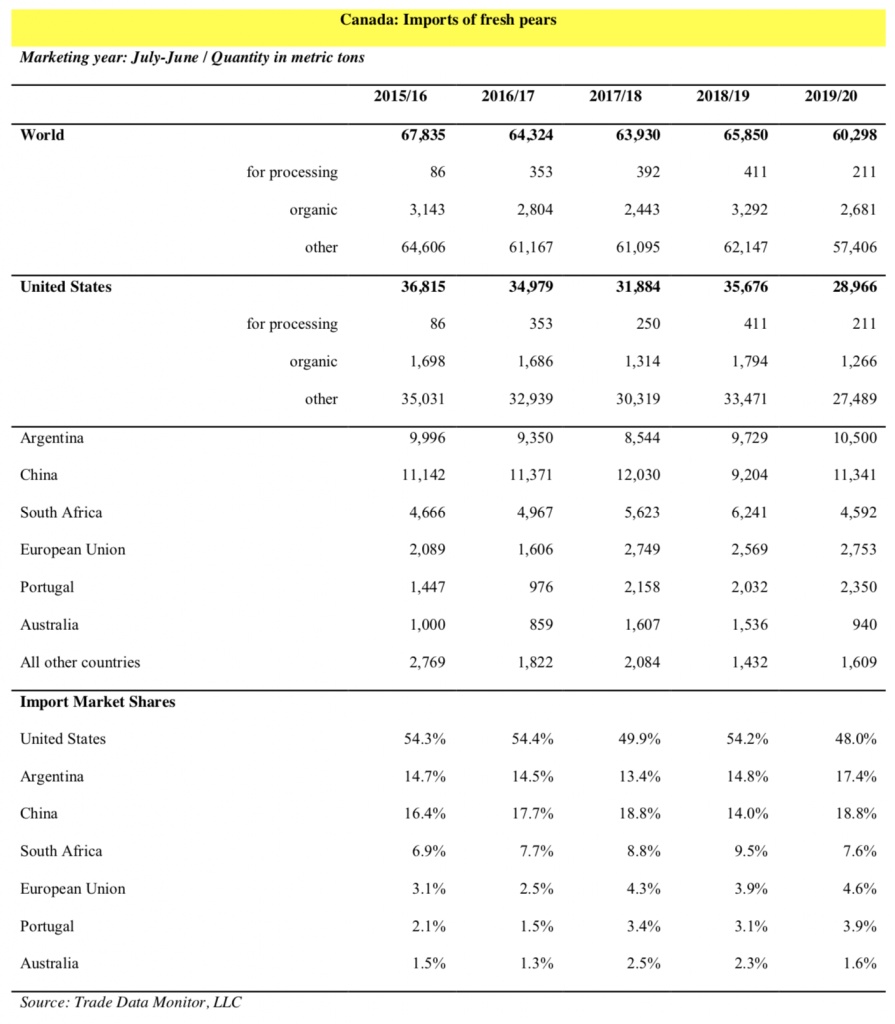
    FAS/Ottawa forecasts a three percent growth in fresh pear imports for MY 2020/21 although imports will remain below the five-year average. Increased imports will offset the reduction in Canadian production for MY 2020/21. However, competition from other fruit varieties is expected to limit expansion of pear imports. The United States will continue to supply around 50 percent of total Canadian imports of fresh pears.

    Imports of organic fresh pears continue to be between four and five percent of total pear imports. FAS/Ottawa forecasts that Canadian demand for organic fresh pears will remain constant for MY 2020/21.

    Canadian exports of fresh pears are negligible in comparison to fresh pear production and imports. Canadian MY 2019/20 pear exports jumped 25 percent over 2018/19 levels, yet were still only four percent of domestic production. While growers may continue efforts to expand export opportunities to higher value markets in MY 2020/21, FAS/Ottawa anticipates pear export volumes will remain below one percent of import volumes.

    FRESH TABLE GRAPES

    NOTE: “NEW FAS/Ottawa” data reflect FAS/Ottawa’s assessments and are NOT official USDA data

    Production:

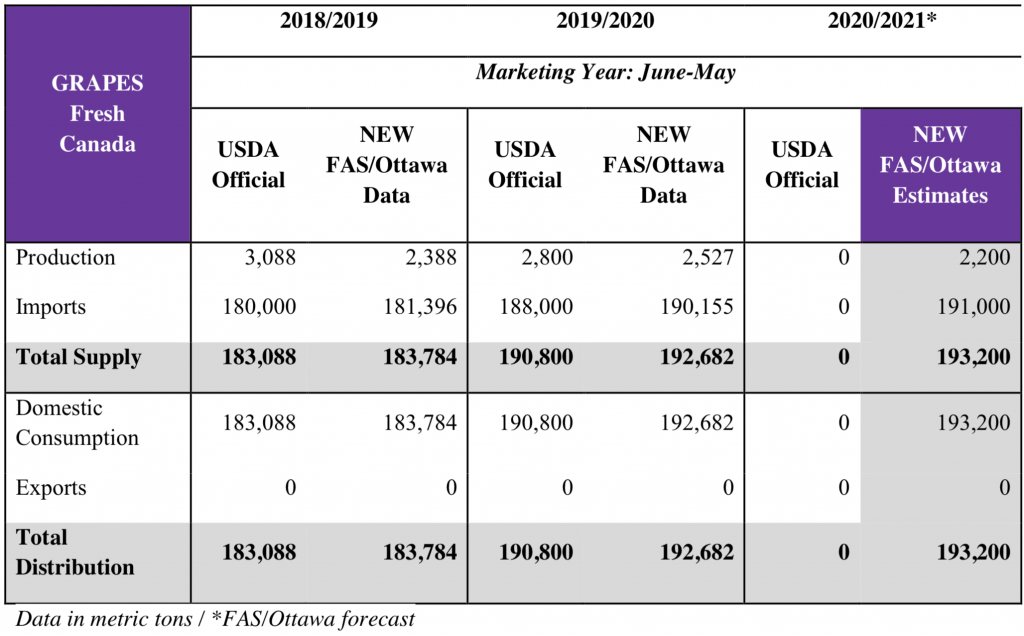
    FAS/Ottawa forecasts a 13 percent decline in table grape production for MY 2020/21. Fresh production will be 10 percent below the five-year average. Drought conditions in Ontario, coupled with labor challenges in British Columbia, will see the crop reduced by over 20 percent in some regions according to industry estimates, as well as a reduction in marketed production. Acreage is forecast to remain stable although fruit bearing acreage will be reduced.

    Ontario will continue to be the main province for Canadian table grape production, accounting for over three-quarters of Canadian production. British Columbia is the second largest producing province accounting for over 20 percent of production. Though Ontario table grape production is mostly limited to the Sovereign Coronation variety, Ontario growers and researchers are exploring new varieties in response to changing consumer demands. While drought will negatively impact Ontario production volumes for MY 2020/21, British Columbia experienced more favorable growing conditions. However, COVID-19 has impacted the labor pool in British Columbia with fewer foreign workers arriving in the province and fewer domestic workers travelling from Eastern Canada to work during harvest.

    Additionally, smoke from fires on the West Coast caused harvest activity delays. Crop quality is not expected to be negatively impacted. Due to these challenges, marketed production volumes will be less than total production volumes.

    Compared to wine grapes, table grape acreage and production is nominal in Canada and acreage is unlikely to see a significant increase in the short-term.

    Consumption:

    FAS/Ottawa forecasts very limited growth in fresh table grape consumption for MY 2020/21 supported by increased imports. Per capita table grape consumption will remain static compared to MY 2019/20. Canadian consumption of fresh table grapes has been relatively stable since 2011.

    Trade:

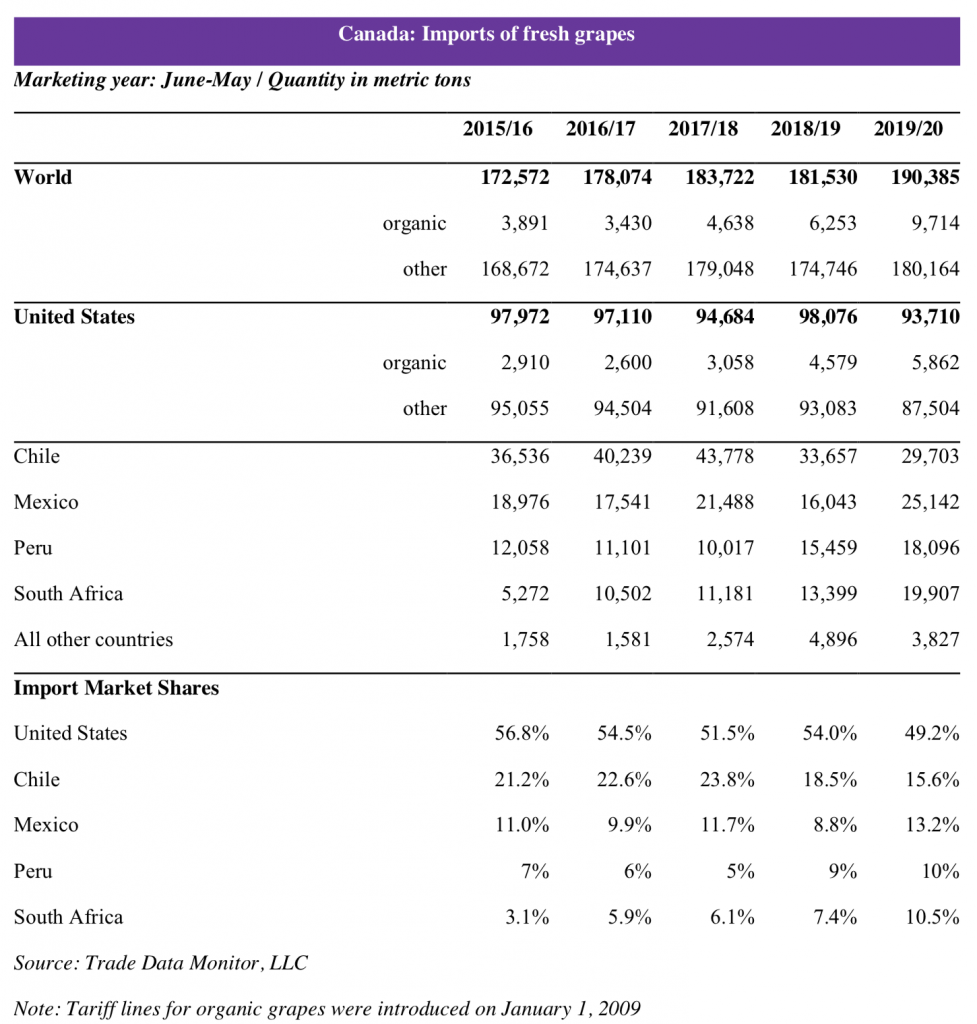
    FAS/Ottawa forecasts imports of fresh grapes to grow slightly in MY 2020/21 in order to supplement the reduced domestic crop. Given the limited production of table grapes in Canada, consumer demand is primarily met through imports. The United States typically supplies over 50 percent of Canadian imports. The United States will remain the dominant supplier with competition from South Africa. Imports from Mexico are forecast lower for MY 2020/21 as a result of a smaller Mexican crop. Demand for fresh table grapes is not anticipated to be significantly impacted by COVID-19 although transport logistics from overseas markets may impact volumes.

    Imports of organic fresh table grapes have experienced steady volumetric growth since MY 2016/17. In MY 2019/20, organic grape import volumes increased 48 percent year-over-year, though organic still only comprises five percent of total imports. Similar to apples, younger consumers are driving the demand for organic products. FAS/Ottawa forecasts that imports of organic grapes will continue to see

    some growth in MY 2020/21 but economic challenges related to COVID-19 will mitigate some demand. The United States is the main supplier of organic grapes to Canada but in MY 2019/20 did see a reduction in market share as a result of increased imports from Mexico and South Africa.

    Canadian exports of fresh table grapes are extremely minimal though Canada does import some fresh table grapes which are then re-exported. These re-exports account for all of Canada’s exports of fresh table grapes according to sources. The majority of Canadian grape production is of wine varieties with limited table grape production. The lack of production and strong Canadian domestic demand limits any fresh table grape exports.

    ADDITIONAL INFORMATION

    Prices

    Agriculture and Agri-Food Canada (AAFC) monitors fresh apple, pear and grape prices in the major Canadian wholesale markets. Any daily and weekly market wholesale prices are made available electronically at the AAFC InfoHort website.

    Retailer Fees

    In July 2020, Walmart Canada announced that it would be implementing fees on suppliers as part of a cost-offsetting measure for CAD 3.5 billion in upgrades that the company will undertake. The fee structure involves a 1.25 percent infrastructure development fee to suppliers for its retail stores and 5 percent for products sold on its e-commerce site. In October 2020, Canada’s largest grocery retailer, Loblaw Companies Ltd., also announced that it would be implementing extra fees for certain suppliers to offset the cost of upgrades it will be undertaking. Loblaws indicated that suppliers received different fee structures and that smaller suppliers would have an exemption; more specific details have not yet been made public. In response to the Walmart announcement, another major Canadian grocery retailer, United Grocers Inc., informed suppliers that while it is not implementing supplier fees that it would expect equal treatment if cost reductions are given to competitors. Several Canadian food industry associations have expressed strong opposition to these announcements indicating that this will further erode profits in thin margin businesses at a time when they are already facing additional costs due to COVID-19. Further, they anticipate that this will stifle businesses ability to invest in improving their infrastructure and innovating.

    Policy:

    Safe Food for Canadians Regulations

    Many provisions of the Safe Food for Canadians Regulations (SFCR) were implemented in January 2019 with some elements scheduled to be phased in through 2021. The Canadian Food Inspection Agency contains more information on these regulations. Lot code provisions were scheduled to come into force January 15, 2020 for fresh fruits and vegetables. While traceability requirements must be met, industry has been given until January 15, 2021 to use remaining packaging and to update packaging labels to meet lot code requirements.

    Single Use Plastics Ban

    In October 2020, the Government of Canada announced proposed regulatory changes as part of a broader initiative aiming towards achieving a zero plastic waste strategy by 2030. Under this proposal 6 single-use plastic products (listed below) were identified as highly problematic and are proposed to be banned. The public consultation runs until December 2020 with a final decision expected in 2021. At this time, consumer pre-packaged produce for retail does not appear to be targeted.

    –  plastic checkout bags

    –  stir sticks

    –  6-pack rings

    –  cutlery

    –  straws

    –  food service ware made from problematic/hard-to-recycle plastics

    Surplus Food Rescue Program

    In June 2020, the Government of Canada announced a CAD 50 million Surplus Food Rescue Program. The initiative was designed to provide funding to help re-distribute food displaced by COVID-19 disruptions in processing and food service to vulnerable Canadians at the cost of production. To date, FAS/Ottawa is not aware that apples, pears, or table grapes have been involved in this program.

    CPTPP

    Canada was one of the first six countries to ratify the Comprehensive and Progressive Agreement for Trans-Pacific Partnership (CPTPP). CPTPP entered into force for Canada, Australia, Japan, Mexico, New Zealand, and Singapore on December 30, 2018. Vietnam entered CPTPP into force on January 14, 2019. The first six countries saw the first tariff reductions occur upon CPTPP implementation. Five of the original six countries applied the year 2 tariff reductions on January 1, 2019. Moving forward, further tariff reductions will continue to occur on January 1 of each year until the step-down process is complete. Japan is the exception, where the second tariff reduction occurred on April 1, 2019 with step- downs occurring on April 1 for subsequent years. Despite not being in the original six ratifying countries, Vietnam and Canada agreed to recognize both tariff reductions when CPTPP entered into force for Vietnam. Tariff reductions and eventual eliminations on apples will be most impactful for Canada. Canada will see tariffs on fresh apple exports to Japan reduce from the MFN rate of 17 percent to elimination of tariffs after 2029; currently 12.7 percent reducing to 11.4 percent in 2021. For Vietnam, the MFN tariff of 10 percent on fresh apples will be phased out under CPTPP by 2021; currently 5 percent for 2020. Canada already has tariff-free access for fresh apples to Mexico under NAFTA.

    USMCA

    On November 30, 2018 the United States, Canada, and Mexico signed the new United States-Mexico- Canada Agreement. This agreement updates the 1994 North American Free Trade Agreement (NAFTA) and came into force on July 1, 2020.

    Promotion and Research Agency

    The Canadian apple industry has been discussing the idea of establishing a national marketing agency to promote the consumption of apples and conduct various research projects for several years. This discussion is still occurring although no formal proposals have been put forth at this time. Such an agency would collect levies on both the domestic production and on imports of apples to fund its activities. — By Alexandrea Watters, USDA Foreign Agricultural Service

  • 2020 CA Avocado Acreage & Condition Report

    2020 CA Avocado Acreage & Condition Report

    To ensure the California Avocado Commission can make informed marketing and budgeting decisions, it has partnered with LandIQ to conduct statewide spatial land use surveys via digital satellite imagery, aerial photography and analytical tools. This data is compiled in a comprehensive land use database and an annual summary is prepared. The 2020 Statewide Avocado Acreage and Conditional Analysis is now available online.

    Highlights from this year’s survey are as follows:

    • Planted avocado acreage in the state totaled 54,017
    • The planted avocado acreage for avocado growing counties is as follows:
      • Riverside — 5,046
      • Santa Barbara — 6,741
      • San Diego — 16,488
      • San Luis Obispo — 4,043
      • Ventura — 19,754
      • Minor county total (Fresno, Kern, Los Angeles, Monterey, Orange, San Bernardino, Tulare) — 1,945
    • As concerns the growing regions, their acreage is divided as follows:
    • The report also has tables detailing acreage by zip code, new acres by county and planting year, a breakdown of avocado acreage by planting density (high density versus standard), the net change in producing/young/stumped acreage by county, and various maps noting the acreages of avocados planted.
    • The age of planted acreage breaks down as follows:
      • Planting to 4 years — 4,417 acres (8%)
      • 5 – 8 years — 9,289 acres (17%)
      • 9 – 15 years — 7,717 acres (14%)
      • 16 – 20 years — 8,989 acres (17%)
      • 21 years + — 23,604 acres (44%)
  • CA Avocado Commission Reduces Assessment Rate & Elects New Leaders

    CA Avocado Commission Reduces Assessment Rate & Elects New Leaders

    At the October 7, 2020 meeting, the California Avocado Commission Board of Directors took action to approve the assessment rate for the upcoming 2020-21 fiscal year, reducing the assessment rate to 1.75% of the gross dollar value of fruit sold. The new assessment rate is effective from November 1, 2020 through October 31, 2021. The CAC Board and management are committed to prudently managing growers’ assessment dollars, with the current rate reflecting a quarter percent reduction from the 2019-20 assessment rate of 2.00% and more than one-half a percent reduction from the 2018-19 assessment rate of 2.30%. During these past two years, despite the reduction in assessment rate, a larger percentage of the budget has been allocated toward marketing activities, with 2020-21 representing the highest allocation ever at more than 70% of the total budget. We thank the outgoing 2019-20 CAC Board, under the direction of Chairman John Lamb, for their work to build balanced budgets and prioritize spending.

    The California Department of Food and Agriculture seated newly elected California Avocado Commission board members at the Commission’s November 19, 2020 board meeting. The following new members shall serve a two-year term (November 1, 2020 through October 31, 2022).

    District 1 Member: Jessica Hunter (Re-elected; existing District 1 Member)

    District 2 Member: John Cornell (New Member; previously District 2 Alternate)*
    District 3 Member: John Lloyd-Butler (New Member; previously District 3 Alternate)*
    District 4 Member: Rachael Kimball Laenen (New Member)
    District 5 Member: Andrew Prechtl (New Member)
    Handler Member: Gary Caloroso,  Giumarra (Re-elected; existing Handler Member)
    *With previous alternates assuming member seats in District 2 and District 3, there now exist vacancies for alternate seats in these two districts. These vacancies will be filled by a majority vote of the board at an upcoming Commission board meeting.
    The following newly elected Executive Officers shall serve a one-year term (November 1, 2020 through October 31, 2021).
    Chairman – Rob Grether, District 3 Member
    Vice-Chairman – Ryan Rochefort, District 2 Member
    Treasurer – Jason Cole, District 4 Member

    Secretary – Jessica Hunter, District 1 Member

  • Assessing the Costs & Benefits of Winter Cover Cropping in CA

    Winter cover cropping is a promising agricultural management practice that boosts soil health. This article discusses a benefit-cost analysis of winter cover crop adoption and introduces a web-based interactive calculator for farmers to assess changes to baseline farm profits.

    Winter cover cropping is an agricultural management practice that can enhance soil health while protecting fields from soil erosion and compaction. Cover crops are typically grown on farmland that would otherwise be left fallow in the wintertime, such as fields used for annual spring-summer crops, or in between rows of trees or vines, and thus do not replace a cash crop. Despite its well-known soil health and ecological benefits, and popularity in other parts of the U.S., winter cover crop adoption rates are low across California’s specialty crops. To better understand drivers and incentives for adoption, we created a benefit-cost calculator that estimates how baseline profits change as a farmer integrates winter cover cropping.

    This tool was designed for specialty-crop farmers who are interested in growing winter cover crops and want to understand how long it will take for that investment to break even. However, the tool is useful for anyone interested in better understanding the financial implications of cover cropping. In this article, we explain the methodology behind the tool and how to use it.

    Methodology

    We developed a calculator that estimates the expected changes in expenses and revenues associated with the introduction of winter cover cropping for a given farming operation. We started by modeling the implications of winter cover crops to average farms that grow processing tomatoes and almonds, two of California’s most important agricultural commodities. The model estimates a benefit-cost ratio in present value terms, i.e., the ratio of the sum of benefits over the sum of costs accumulated over time and discounted to the present.

    In our baseline analysis, we considered cover crop seed mixes that are commonly used for winter cover cropping in California’s Central Valley. For tomato operations, this was assumed to be a small grain forage mix (e.g., bell beans, winter peas, common vetch) and for almonds, this was assumed to be a more expensive clover mix.

    Table 1 lists potential benefits and costs of winter cover cropping. Benefits and costs are not the same every year. The monetary values for each of these components are incorporated into the model at the specific time when that benefit or cost is likely to be experienced.

    Benefits include increased income from greater yields, which results from improvements in soil quality, fertility, and soil-water relations due to cover cropping. Benefits also include reductions in expenses associated with soil erosion control, nutrient cycling, weed control, mycorrhizal fungi colonization, and reduced tillage operations. Almond growers may also benefit from lower beehive prices.

    The potential for cover crops to affect the irrigation requirements of cash crops is debated in the scientific literature. Cover crops may lead to higher water infiltration (resulting from improved porosity of the top soil), which can lead to increased capture of winter and spring rainfall, increased soil-water storage, which in turn can delay irrigation start and eventually reduce spring/summer irrigation requirements slightly; however, these effects are soil-specific and difficult to quantify and generalize and, thus, are not included in the baseline model. Other potentially valuable aspects of cover cropping that were not explicitly accounted for in the analysis include reduced soil sealing and compaction, better soil oxygen concentration and diffusion rates, as well as increased effectiveness of salt-leaching practices.

    Furthermore, while cover cropping has been shown to improve ecosystem services and downstream user benefits, these are not included in the baseline benefit-cost calculations. These societal benefits, which include increased soil organic matter, the protection of downstream surface water quality via reduced runoff, and carbon sequestration through enhanced soil-carbon storage, were not included because they would not accrue as a revenue flow to the farmer choosing to adopt.

    Costs include the initial expenses associated with cover crop seeds, planting, and termination, depreciation of machinery used for this management practice, and time spent learning how to incorporate cover crops into an operation, as well as disseminating new instructions to crewmembers. The model accounts for financial losses due to potential harvest complications with cash crops. For example, a heavy rain at the end of March could delay termination of cover crops, and thus delay the planting of tomato seedlings, which can postpone the timing of tomato harvest. This poses a potential complication for farmers who contract with tomato canneries, resulting in penalties.

    To quantify these benefits and costs, we collected data from UC Ag Issues Center’s Cost and Return Studies, scientific publications, semi-structured farmer interviews, and field experiments to establish an average value of each benefit and cost component. We then aggregated these components to estimate benefit-cost ratios for tomato and almond production systems, where a value of the ratio greater than 1 indicates a net positive change in profits. The interactive calculator is seeded with the average value for each benefit and cost component, but can be adjusted by the user to reflect a specific farming operation. While our model attempts to be as comprehensive as possible, some potential benefits or costs are not included, such as interactions with pruning or other practices.

    Results

    When using average values for all the benefit and cost components, we find that almond systems have a benefit-cost ratio greater than 1 when considering a 30-year time horizon, meaning that benefits are likely to exceed costs on average. When using average values for the tomato system, we find the benefit-cost ratio to be less than 1, given their assumed 10-year time horizon. The time horizons of 10 and 30 years were chosen for tomato and almond operations, respectively, to reflect typical rotation patterns and crop life cycles. Figure 1 displays these results year-over-year. At the 10-year mark for tomatoes and the 30-year mark for almonds, the average benefit-cost ratios are 0.5 and 1.3, respectively, indicating that total benefits eventually outweigh total costs for almond operations, but not tomatoes.

    Winter cover cropping is an investment in the long-term viability of agricultural operations. The benefits and costs accrue differently over time and may vary from year to year. Harvest complications with a cash crop reduce profitability but can be avoided with flexible contractual obligations or by growing a cover crop with predictable senescence. Overall, our results show the value of this soil management practice is greatest for California farmers with a longer time horizon and willingness to manage a cover crop as carefully as their cash crop.

    Interactive Web-based Calculator

    The web-based cover crop calculator, partially shown in Figure 2 and available here, is an interactive decision-support tool that calculates the benefits and costs of winter cover cropping in almond and processing tomato operations. The tool estimates how much farmers can expect their profits to change after growing winter cover crops for a certain number of years. All values used in the calculator are flexible and can be adjusted to match the reality on any commercial farm. The calculator is seeded with the average values for each cost and benefit component that we considered, but the user can easily adjust or remove any component.

    The calculator assumes continuous cover cropping after the year of adoption (first year), and that all benefits of cover crops begin accruing within the first five years. Importantly, the tool may not capture every potential benefit and cost from introducing cover crops into a farming operation. It simply serves as a guide to when a farm can expect to experience economic returns, based on the monetized benefits and costs.

    As mentioned previously, cover crops could either increase or decrease spring-summer irrigation requirements. Although this component is not included in the baseline net present value model, the calculator is flexible in this variable. The user can specify the extent to which cover crops increase or decrease irrigation requirements in the growing season and can add irrigation costs to germinate the crop if needed, and then observe how their baseline profits shift accordingly. Users can also explore how a financial incentive, in the form of an annual subsidy payment per acre of cover-cropped farmland, will affect their outcomes. The calculator allows one to value the social benefits of cover cropping (ecosystem services, carbon sequestration, and downstream water quality) via this subsidy component. – By Ellen Bruno, Alyssa DeVincentis, Samuel Sandoval Solis, and Daniele Zaccaria, UC Giannini Foundation of Agricultural Economics, University of California

    Authors’ Bios

    Ellen Bruno is an assistant Cooperative Extension specialist in the ARE department at UC Berkeley. Alyssa DeVincentis is a Ph.D graduate from UC Davis in Hydrologic Sciences. Samuel Sandoval Solis is an associate professor and Cooperative Extension specialist and Daniele Zaccaria is an associate Cooperative Extension specialist, both in the Department of Land, Air and Water Resources at UC Davis. They can be reached at ebruno@berkeley.edu, ajdevincentis@ucdavis.edu, samsandoval@ucdavis.edu, and dzaccaria@ucdavis.edu, respectively. 
  • Purple Sweetpotatoes for Thanksgiving, Christmas & More

    Bright-orange sweetpotatoes are a staple of many American Thanksgiving dinners and are often prepared with a traditional family recipe. But this year, why not start a new tradition with purple-fleshed sweetpotatoes?

    Both colors of sweetpotato are high in dietary fiber, vitamins, and minerals, but the purple varieties are also rich in health-beneficial antioxidants called anthocyanins and phenolic acids. Anthocyanins are plant pigments that make blueberries blue and cherries cherry-red, and the antioxidant activities in purple sweetpotatoes can be at similar levels to these antioxidant-rich fruits. Various studies have indicated that anthocyanins and phenolics from purple‐fleshed sweetpotatoes may have potential health benefits.

    A team of scientists from the Agricultural Research Service’s Food Science and Market Quality and Handling Research Unit in Raleigh, NC, collaborated with researchers at North Carolina State University to find ways to preserve purple-fleshed sweetpotatoes’ anthocyanin levels during processing into products like juice or natural colorants. Typically, heat is used during processing, but heat changes the flavor and prevents isolation and use of sweetpotato starch and fiber. But if heat is not used, then the flesh quickly browns due to the same enzymes that turn sliced apples brown.

    The scientists wanted to figure out a heat-free way to extract the juice and pigments directly from the raw purple sweetpotato. After those are extracted, what’s left is raw starch and fiber (pomace), each with its own uses and benefits.

    The team successfully used water containing a small amount of citric acid, a substance naturally present in citrus fruits, to inactivate the browning enzymes and preserve an appealing reddish-purple color in the fresh juice and pomace. Preserving the high anthocyanin content makes these products desirable as functional ingredients in beverages and other food products. This research can pave the way for sweetpotato processors to produce new, value-added products. The team published the study in the Journal of Food Science in 2019.—By Sue Kendall, USDA ARS Office of Communications.

  • New Bean Defeats Both Leafhoppers & Drought

    New Bean Defeats Both Leafhoppers & Drought

    Agricultural Research Service (ARS) scientists in Puerto Rico have developed a new pinto bean germplasm that may increase a farmer’s yield, reduce production expenses, and help the environment.

    The new bean, called TARS-LH1, is resistant to two types of leafhopper – Empoasca fabea, the potato leafhopper, which can reduce common bean yield by 20 percent in temperate areas, and the tropical leafhopper, E. kraemeri, which can reduce yield by almost 80 percent in tropical areas.

    Further, TARS-LH1 is resistant to the bean common mosaic virus and drought stress. It also yields well and has good seed size, said Tim Porch, research geneticist at the ARS Tropical Agriculture Research Station in Mayagüez, Puerto Rico.

    Beans are among the most important crops grown worldwide, Porch said. “They are a nutrient-dense food and an excellent source of protein and fiber,” he said. “Eating more beans can potentially reduce the chances of heart disease, diabetes, and certain types of cancer.”

    In addition, the properties of the TARS-LH1 pinto bean offer economic benefits to farmers around the world by reducing pesticide input and increasing organic dry bean production. “Beans are primarily a crop of poor farmers worldwide, so reducing the amount of pesticide could increase farmer income and food security, and decrease the environmental impact of production.”

    Pinto beans are also a favorite of U.S. bean growers, accounting for about one-third of America’s bean crop.

    The new pinto bean variety has been released publicly in the form of germplasm, intended for use by plant breeders to incorporate traits of interest – in this case, leafhopper and drought resistance – into the varieties that farmers ultimately grow.

    The Porch research team tested the bean’s resistance to leafhopper in several locations, including the Michigan State University Crop and Soil Science Research Farm, in Haiti, and in Puerto Rico.

    It’s important to improve beans, Porch said, because pests and pathogens are constantly evolving and the climate is changing. “The next step will be to incorporate this resistance into other seed classes grown in the United States and into varieties grown by farmers around the world,” he said. Other potential improvements include heat tolerance and resistance to pathogens like rust and common bacterial blight. – By Scott Elliott, USDA-ARS Office of Communications

  • FDA, CDFA, Western Center for Food Safety, and CA Ag Stakeholders Partner to Enhance Food Safety

    California leads the world in leafy greens production and innovation. Industry and food safety officials are proud to partner on this in-depth scientific study protecting public health.” — CDFA Secretary Karen Ross

    The U.S. Food and Drug Administration is announcing the launch of a multi-year study to improve food safety through enhanced understanding of the ecology of human pathogens in the environment that may cause foodborne illness outbreaks. This initiative is being launched with partners including the California Department of Food and Agriculture (CDFA), the University of California, Davis, Western Center for Food Safety (WCFS), and agricultural stakeholders in the Central Coast of California.

    The launch of this study follows a series of E. coli O157:H7 outbreaks in recent years linked to California’s lettuce production regions, particularly the most recent three outbreaks in the fall of 2019 which collectively resulted in 188 people falling ill. In response, FDA launched an investigation, the findings of which are outlined in a report released in May 2020. The FDA also published a Leafy Green STEC Action Plan to address issues associated with leafy green Shiga toxin-producing E.coli (STEC) contamination. This new longitudinal study is included in the action plan, as well as the continuation of a similar study being conducting in the Yuma, Arizona, growing region.

    A key component of the Leafy Green STEC Action Plan is the need to address knowledge gaps in order to advance prevention. The multi-year study will examine how pathogens survive and move through the environment and possibly contaminate produce through work with water quality, food safety, and agricultural experts from the Western Center for Food Safety, representatives from various agriculture industries, and members of the leafy greens industry.

    Research teams will be collecting and examining samples from the environment including adjacent land, well and surface waters, soil inputs that include compost, dust and animal fecal samples.

    The California Central Coast region grows a significant portion of the nation’s leafy greens. The findings from this study will contribute new knowledge on how various environmental factors may influence bacterial persistence and distribution in this region, and how those factors may impact the risk of leafy greens becoming contaminated. Results from this collaboration will lead to improved practices to prevent or mitigate food safety risks, and ultimately enhance the safety of leafy greens grown in California.

  • Grimmway Farms Donates $5 Million to Cal Poly to Establish Center for Organic Production & Research

    Cal Poly is set to change the landscape of organic agriculture with a $5 million donation made to the College of Agriculture, Food and Environmental Sciences by Grimmway Farms, the global leader in organic produce and the world’s largest producer of carrots.  

    With this gift, Cal Poly will expand its emphasis on applied research in organic production and soil health by providing a unique, collaborative platform for academia, industry and government from across California and beyond to come together to advance the organic industry.

    Announced this week, the partnership between Cal Poly’s College of Agriculture, Food and Environmental Sciences and Grimmway will establish a unique learning model that will enable research and innovation across disciplines, focusing on real-world issues that directly impact the state’s $10 billion organic industry. The Grimmway Farms donation will be used to launch the Center for Organic Production and Research on campus, as well as build the Grimmway Farms/Cal-Organic Soil Health and Sustainability Laboratories to provide research and teaching opportunities in topics related to healthy soils, water and air.

    “Our partnership with Grimmway will facilitate bringing increased science and technology to the production of organic food,” said Andre Thulin, dean of the College of Agriculture, Food and Environmental Sciences. “Cal Poly is at the forefront of using the power of collaboration to solve real world problems. This new center will integrate the greatest talents in academia, private industry, government and a wide range of disciplines to benefit the organic industry as a whole.”

    The need to increase focused efforts on organic research and create pathways for students to enter the industry is clear. The organic industry is one of the fastest growing agricultural segments in the United States, according to the U.S. Department of Agriculture’s National Institute of Food and Agriculture. This emphasis on organic production and research is of particular importance in California, which accounts for 40 percent of all organic production in the nation. 

    “This is an amazing gift and investment in the future of California agriculture and a perfect match with Cal Poly’s excellence in applied research and Learn by Doing model that prepares students for collaborative problem-solving in their careers,” said Karen Ross, California Department of Food and Agriculture secretary. “I want to thank Grimmway Farms and the Grimm family for their generosity, leadership and confidence in the future of California agriculture — one that is built on innovation.”

    Nationally, consumer demand for organic products continues to grow — sales of organic fruits and vegetables in the U.S. reached $18 billion in 2019, up nearly 5 percent from the year prior.

    Barbara Grimm Marshall, co-owner of Grimmway Farms and Cal-Organic

    “We believe that lives are transformed through education, and that certainly applies to agricultural education,” said Barbara Grimm Marshall, co-owner of Grimmway Farms and Cal-Organic. “Ever-evolving technologies and more sophisticated business practices mean that students who wish to pursue a career in agriculture must spend as much time in the classroom as in the field. We are thrilled to be providing an avenue for these students to work with the best minds in agribusiness and soil sciences today.”

    “With this commitment, the families and Grimmway Farms/Cal-Organic are affirming our belief that agriculture is the economic and cultural cornerstone of our future,” said Brandon Grimm, grower relations manager and co-owner of Grimmway Farms and Cal-Organic. “Our company has been a leader in innovative and advanced farming practices since my father and uncle founded the company 51 years ago. Today we take the next step to build on that legacy by investing in vital organic and soil health research.”

    Brandon Grimm, grower relations manager and co-owner of Grimmway Farms & Cal-Organic

    “The future of this industry depends solely on the ability to prepare, educate and excite the next generation of growers in organic production,” said Jeff Huckaby, president of Grimmway Farms and Cal-Organic. “We look forward to partnering with this dynamic educational institution to cultivate those who will ensure we continue to meet the ever-growing demand for healthy and nutritious organic produce.”

    Cal Poly is uniquely positioned to drive these initiatives forward with its polytechnic educational model and more than 10,000 acres of land for hands-on research and learning. Cal Poly’s location on California’s Central Coast surrounded by a diverse number of specialty crops that are the foundation of the state’s agricultural production, as well as the university’s strong ties with industry, gives students and faculty the opportunity to work directly with companies such as Grimmway Farms and other top producers in the organic industry through internships, research collaborations and more. 

    Jeff Huckaby, President of Grimmway Farms & Cal-Organic

    “Our partnership will increase opportunities for students, faculty and staff to gain first-hand experience in the organic food industry and beyond,” said Cal Poly President Jeffrey D. Armstrong. “This new center for organic production and research emphasizes our Learn by Doing philosophy and will give students the tools to lead impactful careers addressing the agricultural challenges that face California and the world.” 

    The new Center for Organic Production and Research will serve as a hub for students to work with experts from across the industry to develop solutions to the most pressing issues related to organic production and agriculture. Research of soil structure and biodiversity, nutrient cycling, carbon sequestration, water quality, composting and organic matter and technology innovation will be at the forefront of the new Center for Organic Production and Research. The new Grimmway Farms/Cal-Organic Soil Health and Sustainability Laboratories will be located in Cal Poly’s planned Plant Sciences Complex.  

    “Grimmway Farms’ generous support of Cal Poly and its talented students embodies the increasingly vital partnership between the private sector and the California State University,” said CSU Chancellor-select Joseph I. Castro. “I deeply appreciate Grimmway’s partnership with several CSU campuses, including Cal Poly, and their strong commitment to supporting and preparing the next generation of our nation’s agricultural leaders.”

    A national recruitment for a director to lead the center will begin in 2021. Cal Poly’s model for the new Center for Organic Production and Research will emulate its demonstrated success with the Cal Poly Strawberry Center (strawberry.calpoly.edu), a collaborative partnership focused on increasing the sustainability of the strawberry industry through research and education that addresses the needs of the $3.5 billion industry.

    About Cal Poly’s College of Agriculture, Food and Environmental Sciences

    Cal Poly is a nationally ranked, comprehensive polytechnic university. The university’s College of Agriculture, Food and Environmental Sciences is comprised of expert faculty members who take pride in their ability to transform academically motivated students into innovative professionals ready to solve the complex challenges associated with feeding the world in sustainable ways. Students have access to state-of-the-art laboratories, including organic and conventional crop land, orchards, vineyards, forests, and rangeland, all of which provide the basis for Cal Poly’s Learn by Doing methodology. It is the fifth-largest college of agriculture in the country with more than 4,100 undergraduate students. For more information visit CAFES.calpoly.edu.

    About Grimmway Farms

    Family-owned and headquartered in Bakersfield, California, Grimmway Farms (grimmway.com) traces its roots to a produce stand opened by the Grimm brothers in the early 1960s. Grimmway is a global produce leader and the world’s largest producer of carrots. Grimmway supplies more than 65 organic, USA-grown crops and brands include Cal-Organic Farms and Bunny-Luv. Grimmway is committed to caring for customers and employees, honoring sustainable practices and preserving natural resources for future generations. For more information visit Grimmway.com.