Category: Non-Video

  • Does Growing Location Influence Garlic Flavor and Health Benefits?

    Does Growing Location Influence Garlic Flavor and Health Benefits?

    Garlic is mainly consumed as a spice or condiment, giving flavor and aroma to other foods. And what gives garlic those wonderful aromas and flavors? Mainly, substances called “organosulfur compounds” that are stored in the bulbs.

    Different garlic cultivars accumulate varying amounts and types of these compounds, resulting in garlics with different flavor intensity and aromas.

    Examples of the phenotypic diversity in four Argentine garlic cultivars. Garlic gets is flavor and aroma from organosulfur compounds, which can also have health benefits. Credit: Pablo Cavagnaro

    In addition to its use in adding flavor to foods, folk medicine has attributed a multitude of health benefits to garlic consumption for centuries. These range from treating heart disease to its use as an antiparasitic agent. It wasn’t until recently that some of these claims were backed up by scientific research. Among them are blood thinning, antihypertensive, antioxidant, and anti-cancer properties.

    Most of these health-enhancing properties have been attributed, at least partially, to the same type of organosulfur compounds that account for garlic’s flavor. In addition, garlic contains phenolic compounds which seem to contribute to the antioxidant health effects. Research suggests that garlics with greater concentrations of these compounds will have greater health benefits.

    As with many other vegetables, a quality trait in garlic is how well the crop stores after harvest, called postharvest conservation. This allows garlic growers and packers to store the garlics until a more convenient price is reached in the market. It also allows a longer shelf-life in the grocery store with reduced sprouting, dehydration, and softening of the bulbs.

    Garlic cultivars vary in the expected length of their postharvest conservation. Research has shown that garlic – and other bulbous vegetables like onion – had better postharvest conservation as the water content in their bulbs decreased. So, if the bulbs have more solid content (and less water content) at harvest, their postharvest performance is better. Thus, because total solids content is easy to measure, this trait is often used to predict the postharvest quality of garlics and onions.

    Garlic cultivars vary genetically in their ability to accumulate these compounds that influence the flavor, health-related properties, and postharvest conservation of garlic bulbs. Our team tested growing location and environment to find if they also influenced these attributes.

    For our research project, we cultivated 12 Argentine garlic cultivars in four locations of Mendoza, Argentina, over two years. This is the main region for garlic production in Argentina. The locations vary in climatic and soil characteristics. Once we harvested the garlics at each location, we analyzed them for total organosulfur, phenolics, and solids content, as indicators of their flavor intensity, health-related properties, and postharvest quality.

    Examples of the phenotypic diversity in four Argentine garlic cultivars. Garlic gets is flavor and aroma from organosulfur compounds, which can also have health benefits. Credit: Pablo Cavagnaro

    We found that among all the cultivars and locations, the level of organosulfur compounds in the garlic bulbs varied more than fourfold. Most of this variation was due to the location and interactions between the cultivars and the locations. Only 30-40% of the variation was due to the genetic variation among the cultivars.

    These results indicate that the growing conditions, and some interactions between cultivars and locations, are more important than the cultivar itself for flavor development and health-related properties associated with organosulfur compounds levels. Interestingly, we found substantial variation between Lujan de Cuyo and Santa Rosa. Lujan de Cuyo has colder temperatures, and soils containing greater organic matter and low salinity. Santa Rosa has higher temperatures, low organic matter and high soil salinity. This means that the Santa Rosa location is recommended for producing pungent garlics with high nutraceutical value. Lujan de Cuyo can be used to produce garlics with mild flavor.

    Similar results were found for phenolics concentration. The results suggest that to produce garlics with high phenolic content and antioxidant activity, selecting the best location in combination with particular cultivars is perhaps more relevant than the cultivar itself.

    Field trial of the garlic cultivars evaluated in San Martin, Mendoza, Argentina. Scientists studied whether location influenced the flavor and aroma in garlic in 4 different areas. Credit: Pablo Cavagnaro

    Solids content – which influences the postharvest conservations – was the trait less influenced by the environment. A single garlic cultivar, called Castaño INTA, had the highest solids content across all the locations tested. Coincidently, this cultivar usually has the longest postharvest conservation among the Argentine garlic cultivars.

    Altogether, our results indicate that garlic flavor, health-enhancing properties, and postharvest quality are strongly influenced by the growing conditions and their interactions with the cultivar. They are influence to a lesser extent by the cultivar itself. In conclusion, it is important to characterize these garlic attributes under different growing conditions to identify suitable cultivars and locations for specific production purposes (e.g., obtaining mild or pungent garlics, or garlics with high organosulfur and phenolic content to produce dietary supplements with high levels of phytochemicals). The identification of cultivars that consistently yield high levels of these compounds across different growing conditions is particularly valuable for garlic breeding programs. — By Pablo Cavagnaro and Karina Barboza, National Council of Scientific and Technical Research (CONICET) and the National Institute of Agricultural Technology (INTA), Argentina

  • Could Stingrays be the Key to Saving Citrus from Deadly HLB Disease?

    Could Stingrays be the Key to Saving Citrus from Deadly HLB Disease?

    Imagine a devastating plant disease that sweeps the land, decimating crops. For Florida’s citrus growers, that apocalyptic vision is not a horror movie, but a reality: since it was first identified in the Sunshine State in 2005, citrus greening disease has reduced Florida’s citrus production by a whopping 70%, and threatened other major citrus producing states such as California and Texas. Without any treatment or cure available, desperate growers have cut down infected trees or abandoned their groves entirely. Scientists have been racing to come up with a solution. Now, one enterprising team believes it may have one, in the form of: stingrays.

    Like other organisms, stingrays have an immune system. Unlike most organisms, however, the rays’ system produces an antibody with a functional domain that is both far smaller and more stable than most. These special antibodies, or nanobodies – termed “mantabodies” by the research team – are specialized proteins that can help other organisms fight off infection. Essentially, the researchers plan to treat the rays as a sort of all-purpose pharmacy, where they can introduce a novel pathogen like the citrus greening bacteria, and the rays will generate an immune response specific to that pathogen. The genetic material (gene) encoding this specifically-targeted antibody can then be placed in modified plant cells that grow as a symbiont – an organism that lives in a close, mutually beneficial relationship with the diseased organism.

    Alternatively, researchers can culture the modified plant cells in large vessels and then harvest the antibodies that the cells produce for inoculation into citrus trees. The resulting antibody therapy would prevent or cure disease development in the trees. The approach could, in theory, be applied to other organisms too, and the researchers plan to use the technology to target pathogens that invade farmed fish, honey bees, and more.

    This project was a 2022 winner of ARSX, an annual competition that asks ARS scientists to propose innovative, high-risk, high-reward ideas that cross disciplines and break boundaries to solve our most pressing challenges.

    A southern stingray, Hypnum americanus, swims along the seabed. (Photo courtesy of Matt Ajemian, Ph.D., director of the Fisheries Ecology and Conservation Lab at FAU-HBOI)

    The project team includes researchers from ARS, the Florida Atlantic University Harbor Branch Oceanographic Institute, in Fort Pierce, FL, and the and U.S. Department of Energy Oak Ridge Institute for Science and Educationin Oak Ridge, TN. Team member and ARS research molecular biologist Michelle Heck is using USDA’s SCINet high performance computing clusters to analyze the stingray genomes, and she is applying a powerful artificial intelligence (AI) approach called AlphaFold to identify the mantabody genes.

    “Using AlphaFold, which was just released two years ago, we can rapidly and accurately predict the shape of all the stingray proteins,” explained Heck, who works at ARS’s Robert W. Holley Center in Ithaca, NY, “And we can find the ones that look most like what we think a mantabody protein should look like.”

    The researchers are also taking advantage of other advances in biotechnology, like the mRNA technique that was used to deliver Covid-19 vaccines. They believe that their project could, in turn, advance biotechnology even farther.

    “You can modify almost anything with an antibody treatment,” said Joseph Krystel, a team member and research biologist at the ARS U.S. Horticultural Research Lab (USHRL) in Fort Pierce, FL. “You could stimulate the immune system of a citrus tree, or you could suppress a particular set of genes if you wanted to. The reason we don’t do it now is that it’s cost-prohibitive. But the mantabody platform could give us a more cost-effective way to do it.”

    It could also provide farmers with more sustainable biological alternatives to many current practices. Robert Shatters, a team member and research molecular biologist at the USHRL, explained that, “Mantabodies could be applied to veterinary aspects of agriculture, and a number of plant pathogen issues. We think this project would have a really broad impact, and that’s why we’re excited about it.” – By Kathryn Markham, USDA-ARS Office of Communications

  • The Seven Deadly Sins That Impact Produce Quality

    The Seven Deadly Sins That Impact Produce Quality

    Produce quality may seem to lie in the eye of the beholder, but there are seven deadly sins that can cause produce to lose quality before it is purchased or received by the customer. The first deadly sin observed by produce buyers is that many growers do not harvest produce at the correct maturity stage. In many cases, the produce is harvested overripe, leading to increased spoilage and waste.

    Years ago, I sold at a famers’ market and needed to augment my early-season tomato supply with a few boxes of tomatoes purchased from the local wholesale outlet. I could not make the trip to purchase the tomatoes myself, so I had my partner make the trek to the wholesaler. When he delivered the 30 lb. boxes of tomatoes, I could see tomato juice oozing through the boxes and fruit flies covering the lids. Each box was filled with overripe and soft tomatoes. At best, the tomatoes were canners, and none of them would grace my display at the farmer’s market. As a grower, ensure you are harvesting your crop at the proper stage of development for your market channel.

    The second deadly sin involves the careless handling, packing, and shipping of produce. When fruit is cracked, bruised, or crushed, it has no market value and will reduce your profit margins. One operation that I worked with meticulously harvested tomatoes in their fields and transported them in their truck from their field to their broker.

    The boxes were new, the fruit were harvested at the correct stage for the market channel, and the tomatoes were delivered promptly to the broker. The broker called the grower later in the week after receiving the product and informed the grower that they had received complaints from the end customer about the damaged and bruised tomato fruits. At first, the grower was defensive until he realized how badly his dirt driveway was rutted. When he transported the tomatoes from the field, he drove up a driveway that had ruts that would swallow most vehicles. He pleaded with the broker to give him another chance, and prior to his next shipment, he re-graded the farm driveway to eliminate the ruts.

    When the tomatoes were delivered to the broker, the grower waited anxiously by phone for another round of complaints. When no complaints emerged, the grower reached out to the broker to check on the last order and hopefully obtain a new one. The broker told the grower that he received no complaints and doubled the tomato order for the next week. Something simple like re-grading the driveway improved his product quality and helped him to retain a valued customer.

    The Food Safety Modernization Act has hopefully improved the sanitation of produce in the marketplace, but there are still instances where produce quality has been compromised by soil and organic debris. Improper sanitation is another deadly sin when it comes to marketing fresh produce. When produce is soiled by debris of any kind, it may represent a food safety hazard. When a buyer purchases a soiled product, they will need to wash and re-sanitize the produce before sale, which cuts into their profit margin. When growing and shipping produce, always consider the safety of the produce being shipped and make sure that it is free of soil and debris.

    Another of the seven deadly sins for produce growers deals with delays in pre-cooling or suboptimal cooling of produce after harvest. Wholesale market channels like supermarkets and wholesale distributors desire to maximize the shelf-life and quality of the produce that they receive from growers. Sub-optimal cooling or delays in precooling robs produce of its shelf-life and hastens the deterioration and decay of produce.

    Sweet corn is one of the most popular fresh market vegetables, but it will ‘lose” approximately 50% of its natural sugars through respiration in one day at room temperature. Sweet corn stored at 32°F will only convert 5% of the sugars in a day, so if the sweet corn is handled properly, a higher quality product will be delivered to the end-consumer.

    Improper shipping and storage of fresh produce can significantly impact produce quality and can hasten deterioration and decay. When produce is shipped or stored above the optimal temperature for the crop, it will lose quality due to respiration. If produce is shipped or stored too cold or below the optimal temperature, it may develop cold injury symptoms that may mar its appearance while impacting shelf-life and produce quality.

    One Amish tomato grower that I work with has raised high-quality tomatoes for years and sells them through wholesale channels on a regular basis. A new buyer approached him about selling breakers (tomatoes starting to turn color) for distribution through their company. The Amish grower would harvest the tomatoes, sanitize them in his packing house, and then deliver them to the buyer’s warehouse in new, clean, labeled boxes. The grower took great care in handling his tomatoes and was selling to multiple wholesalers in addition to this new buyer.

    About two weeks after the first shipment to this new buyer, the grower received an angry call and was told that he was not going to be paid for any of his tomatoes because they were unsaleable. The Amish grower was upset but did not want to be taken advantage of by the new buyer, so he asked if he could pick up any of his tomatoes that had been shipped to the new buyer’s warehouse that had not been sold or distributed. The buyer reluctantly agreed, so the grower arranged to have his tomatoes brought back to his farm so he could see what the buyer was talking about.

    When the truck pulled into his farm lane, the Amish grower dropped everything and began examining the boxes of tomatoes that he had shipped to the buyer. The first thing that struck him was that the buyer had returned 100% of the tomatoes that had been shipped. The second thing that he noticed was that the tomatoes had not ripened and that much of the fruit was soft and contained black lesions that were not on the fruit when they were sent to the buyer.

    Initially perplexed, the grower decided to contact me (his local Penn State Extension Educator) to visit his operation to look at the tomatoes that had been returned to him. When I looked at the fruit, I told him that it looked like a chilling injury on the fruit, and since he had not received any complaints from his other buyers, I suspected that the problem was probably the result of his buyer storing the tomatoes at suboptimal temperatures in their warehouse.

    Improper cooling and handling of produce at any level can impact product quality and marketability. In this case, poor temperature management at the warehouse facility caused the Amish grower to lose revenue even though it was beyond his control. Temperature management is critical when shipping and storing all produce.

    Ethylene exposure is one deadly sin that is often ignored by many growers. Ethylene exposure can hasten the ripening and deterioration of some produce. Ethylene is a natural gaseous hormone that is generated in climacteric fruit/vegetables. Climacteric fruits/vegetables are ethylene producers and will continue to ripen after harvest. Non-climacteric fruits/vegetables must be harvested when mature (fully ripe) because they will not continue to ripen after leaving the plant. Tomatoes and cantaloupe are excellent examples of climacteric fruit/vegetables that will ripen after harvest. Common non-climacteric fruits that will not ripen after they leave the plant include strawberries, blueberries, and grapes. Eggplant and cucumber are non-climacteric vegetables and must be harvested when fully ripe for the best consumer quality.

    Climacteric fruits/vegetables, as ethylene producers, have the potential to ripen too quickly or deteriorate after harvest. Exposure to ethylene gas in the storage facility or warehouse can hasten the ripening, deterioration, and decay of climacteric fruits and vegetables. Growers can preserve fruit/vegetable quality by carefully managing ethylene gas levels in the produce storage areas.

    Air exchange (ventilation) in the storage facility with fresh atmospheric air is the traditional method of ethylene management on the farm and in many storage facilities. Replenishing or replacing the air at regular intervals with ethylene-free air will lower the concentration of ethylene gas in the storage facility, thus delaying the ripening, deterioration, and decay of the produce being stored.

    Ethylene gas can also be absorbed or adsorbed through the use of highly porous sheets or pads containing activated carbon or zeolite in the storage facility. Other techniques used to remove ethylene gas in produce storage facilities are primarily used by large facilities because of the cost of implementation and management. Some of the techniques used to manage ethylene gas in storage facilities include ozone-based oxidation, thermal catalytic oxidation, photocatalytic oxidation, biofiltration, vacuum ultraviolet radiation photolysis, plasma, and potassium permanganate. While each of these various systems has a place in the produce industry for ethylene management, most of the growers that I work with utilize ventilation-based systems to manage ethylene levels in their storage facilities to maintain high-quality produce.

    The last of the dead seven deadly sins for produce growers involves relative humidity management in a storage facility or warehouse. Too much humidity coupled with poor temperature management creates the perfect environment for post-harvest diseases to inflict damage on the crop in storage. One potato grower that I worked with stored potatoes in a modified bank barn with fresh air inlets providing ventilation to the stored potatoes. This grower could not use electricity because of his religious beliefs and had to rely on natural ventilation to manage the humidity levels in his storage facility.

    The grower contacted me to visit his operation because he was observing a significant level of decay in his stored potatoes. When I inspected his storage facility, I needed an umbrella because of the amount of free water in the form of condensation that was forming on the sheet metal that he had affixed to the barn floor above. It was apparent to both of us that we had to increase the air movement in the storage area.

    After my visit, the grower modified his storage facility by increasing cross ventilation and by installing a fan that operated off hydraulic pressure. The increased air circulation, coupled with some strategic placement of insulation between the ceiling and the barn floor, reduced the condensation and the subsequent humidity levels in the storage facility. While the storage conditions were not perfect, the grower was able to reduce his storage rot issues dramatically.

    Low relative humidity in a storage facility can be just as problematic as excess humidity. When the crop’s relative humidity is below optimum, the stored produce will lose moisture, and the skin will shrivel. Some small-scale growers try to use standard refrigerators for storing produce on their farms. These units are frequently designed to maintain a relative humidity lower than what is recommended for many crops. Refrigerator temperatures may also fluctuate wildly because of their smaller size.

    One grower who was using a refrigerated unit could not understand why the produce quality stored in the refrigerated unit was relatively poor when he took it to market. The grower had no way to “audit” the refrigerated unit to evaluate the temperature and relative humidity levels, so I lent him a data logger that he could place in his refrigerated unit that would monitor temperature and relative humidity levels at 15-minute intervals for 24 hours a day for seven days. When I retrieved the datalogger, we plugged it into my laptop and reviewed the data. The temperature in the unit was inconsistent, and it frequently exceeded the recommended 32°F storage temperature that is recommended by postharvest experts for green beans.

    When we looked at the relative humidity values in the refrigerated unit, we found that the unit was maintaining a relative humidity level between 65-70%, which was too low for most crops. Most vegetable crops are recommended to be stored at a relative humidity level of 95% to prevent a loss in quality. By auditing the refrigerated unit with the datalogger, this grower realized for the first time that his refrigerated unit was contributing greatly to the quality issues that he was observing in his green beans and other stored crops. — By Thomas Ford, Penn State University Extension
  • Brighter Bites Welcomes Gabriela D’Arrigo to It’s Board of Directors

    Brighter Bites Welcomes Gabriela D’Arrigo to It’s Board of Directors

    Brighter Bites, a national nonprofit that delivers fresh fruits and vegetables directly into families’ hands, announces Gabriela D’Arrigo, VP of Communications and Marketing at D’Arrigo New York, as its newest board member.

    “We are honored to welcome Gabriela as the newest member to our board,” said Rich Dachman, chief executive officer at Brighter Bites. “She and the D’Arrigo family have been large supporters of our work over the years and in helping us make a difference in the communities we serve. Our relationship is a wonderful example of when the produce industry locks arms with us in order to make healthy changes in lives across the country.”

    D’Arrigo, a family owned and operated fresh fruits and vegetables supplier serving the Northeast since 1948, has been a Brighter Bites partner following the organization’s launch in NYC schools in 2018. The company has donated a variety of unique fruits and vegetables to the New York programming produce bags and boxes, including plums, mangos, dragon fruit, pumpkins, Brussels sprouts, asparagus, and kiwi.

    In addition to donating produce, D’Arrigo advocates for Brighter Bites’ work and mission with consistent involvement in fresh produce industry networking events. Through this type of support, Brighter Bites has been able to connect with key members of the industry to continue growing its program base.

    “Gabriela has been instrumental to Brighter Bites programming since we began our efforts in New York,” said Shey Hall, northeast regional director at Brighter Bites. “She is always thinking about Brighter Bites and how she can bring us into conversations and present us with opportunities to further expand our mission.”

    “I’ve said this before, but I will say it again, this is the only organization I’ve seen that has the vision and the ability to execute and deliver it,” said Gabriela D’Arrigo, VP of Communications and Marketing at D’Arrigo. “It’s an honor and a privilege to join the Brighter Bites team and have the opportunity to contribute to its future goals.”

    Since launching in 2012, Brighter Bites has distributed more than 50 million pounds of produce and hundreds of thousands of nutrition education materials to over 500,000 individuals through schools, after school programs and summer camps in the cities in which it serves. Brighter Bites uses a simple formula for introducing healthy lifestyles to families: produce distribution, nutrition education, and a fun food experience that helps to demystify produce and show just how great it can taste.

    About Brighter Bites:

    Brighter Bites is a nonprofit that creates communities of health through fresh food with the goal of changing behavior among children and their families to prevent obesity and achieve long-term health. Brighter Bites is an evidence-based, multi-component elementary school, preschool, and summer camp program that utilizes reliable access to fruits and vegetables, nutrition education, and consistent exposure to recipes and messages that feature fresh food. Since 2012, Brighter Bites has provided over 50 million pounds of produce and millions of nutrition education materials to more than 500,000 individuals (including teachers) in Houston, Dallas, Austin, New York City, the Washington, D.C. Metropolitan area, Southwest Florida, Salinas, Los Angeles, Bakersfield, and San Antonio. To learn more about Brighter Bites, visit www.brighterbites.org.

  • UC Cooperative Extension Weed Expert Passes

    UC Cooperative Extension Weed Expert Passes

    David W. Cudney, UC Cooperative Extension specialist emeritus, passed away in Riverside on March 30. He was 82.

    Cudney joined UCCE in 1964 as a farm advisor for Imperial County. In 1978, he became a UCCE weed science specialist for Southern California, based at UC Riverside. While working as a specialist, he earned his Ph.D. from UC Riverside in 1989.

    In 1992, Cudney and six Extension specialist colleagues from all over the western United States, published Weeds of the West, a guide book to identifying weeds in Arizona, California, Colorado, Hawaii, Idaho, Montana, Nevada, New Mexico, Oregon, Utah, Washington and Wyoming. The 11th edition, containing more than 900 color photographs showing the early growth stages, mature plants and features for positive identification of each weed, was published in 2012.

    Cudney, who was active in professional organizations, served as president of the California Weed Society in 1995. He retired in 2003.

    “I met Dave as a grad student at UC Davis when I started my program working on a basic study of herbicide resistance,” said Jodie Holt, director of the UC Riverside Botanic Gardens and professor emerita. “Dave’s the one who cajoled me into presenting a poster at a Weed Day and becoming active in the weed science community. Throughout my career he was a great mentor who kept me and my students connected to on-the-ground weed science.”

    Jodie Holt, left, and Dave Cudney inspect perennial ryegrass for bermudagrass invasion in the 1990s.

    Holt also remembered Cudney’s kindness as a friend.

    “On a personal note, when our son was interested in flight simulation software, for his 14th birthday, Dave surprised him by taking us all on a flight and letting Doug fly the plane,” she said. “He was a wonderfully positive, kind and generous friend and colleague!”

    Cudney is survived by his wife, Loretta Cudney, and his children Michael Cudney of Riverside; Jana Cudney of Ontario; and Lisa Zaldivar and her husband, Anthony Zaldivar, and their children Alyssa and Christopher, all of San Dimas and Anthony Zaldivar of Palm Desert; his sister, Rita Suminski and her husband, Russell Suminski of Minden, Nevada. — By Pam Kan-Rice, UCANR

    Read more about Cudney’s life at  https://www.dignitymemorial.com/obituaries/riverside-ca/david-cudney-11228967.

  • Helping Reduce Methane Emissions by Solving a Sticky Problem for U.S. Produce Exporters

    Helping Reduce Methane Emissions by Solving a Sticky Problem for U.S. Produce Exporters

    USDA Foreign Ag Service — We see them every time we purchase fresh fruits and vegetables: price look up (PLU) labels. The little coin-size stickers are stuck to everything from apples, bananas, and cantaloupes to watermelons, yams, and zucchini.

    According to the Sustainable Packaging Coalition , PLU labels have been used globally for more than 30 years with the International Federation for Produce Standards issuing more than 1,400 PLU codes.

    PLU labels offer many benefits to the agriculture, trade, and retail industries. The labels lower costs and optimize handling by digitizing supply chain management, minimizing packaging, and reducing time at the point of purchase – something we can all appreciate when rushing through the self-checkout lane. When it comes to agricultural trade, PLU codes also help exporters and importers consistently and quickly identify and track products across the globe. Whether you purchase a Red Delicious apple in the United States, Mexico, or Vietnam, the PLU code is the same.

    USDA Research Chemist Dr. Gabriel Patterson pours one of the experimental home compostable adhesives to sticker backing during the research process. The team tested more than 100 formulas to determine the top three adhesive (photo by James McManus).

    Unfortunately, PLU labels have also created a sticky situation for composters, the environment, and even U.S. exporters. Why? PLU labels are not biodegradable, which means they contaminate produce that’s tossed in the compost pile or sent to commercial composting facilities. As a result, the produce generally ends up in landfills, which creates more food waste, increases methane emissions, and negatively affects climate change.

    Several countries, led by France and New Zealand, have enacted legislation that will require PLU labels to be certified home compostable. This has posed a challenge for U.S. exporters by creating a trade barrier that puts millions of dollars of U.S. fresh fruit and vegetable exports at risk. The U.S. Department of Agriculture (USDA) has stepped in to help solve the problem in an effort to help reduce trade barriers and mitigate climate change.

    With research and development funds provided by USDA’s Foreign Agricultural Service’s (FAS) Technical Assistance for Specialty Crops Program, FAS and USDA’s Agricultural Research Service are working to produce compostable PLU labels. FAS and ARS are collaborating with the International Fresh Produce Association (IFPA) and Sinclair Systems International to meet the EU standards. The goal is to develop adhesives that are both food-safe and compostable. When achieved, this will allow American companies to export fruits and vegetables as usual while helping to decrease food waste and methane emissions.

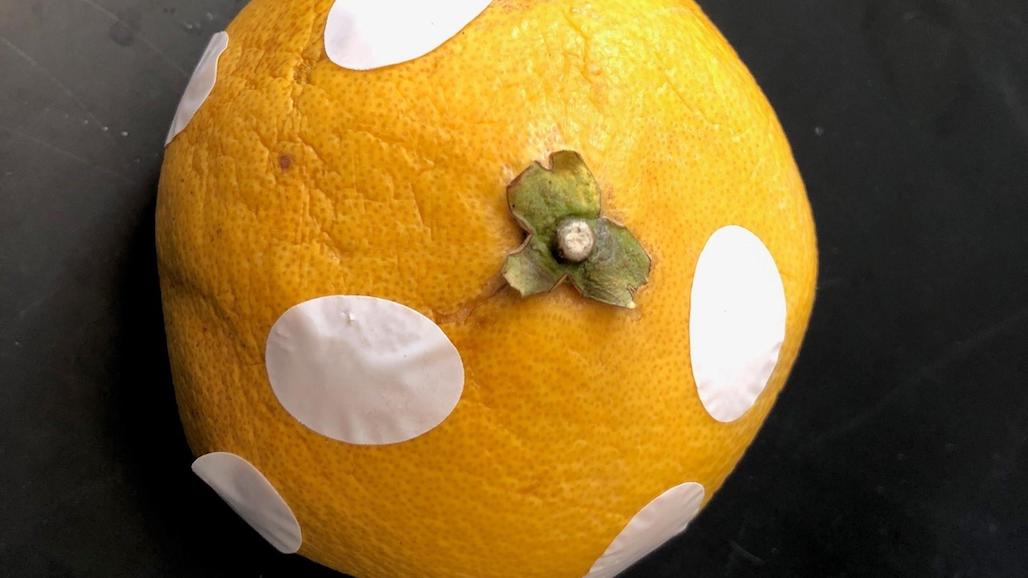
    Scientists at the USDA Western Regional Research Center in Albany, CA apply test and control PLU labels to grapefruits and sweet potatoes to evaluate their effectiveness (photo by James McManus).

    To date, the research team has tested more than 100 formulas to determine the top three adhesives that produce the desired biodegradation process. The team is performing final tests to confirm that these bio-based adhesives pass the home-compostable degradation test. They will then tackle scale-up adhesive coating trials as a key milestone toward commercialization.

    USDA has also coordinated closely with the IFPA on outreach and education to U.S. produce exporters to demonstrate the benefits of greener, environmentally friendly PLU labels and adhesives. Once implemented, the new PLU labels and adhesives will solve a sticky problem for U.S. exporters and ultimately help reduce methane emissions, another step towards more sustainable agricultural production and trade.

  • ARS Team Fights Blueberry Virus to Help Growers Keep Fruit on the Shelves

    ARS Team Fights Blueberry Virus to Help Growers Keep Fruit on the Shelves

    In the United States, blueberries are the second-most produced berry, and their popularity has grown exponentially in less than 30 years – up from 45,000 tons grown in the 1990s to 339,000 tons in 2019. ARS researchers are working hard to help farmers keep up with consumer demand.

    Researchers at the Horticultural Crops Production and Genetic Improvement Research (HPCGIR) Unit in Corvallis, OR, are developing new cultivars of not just blueberry, but also blackberry, red raspberry, black raspberry, and strawberry to meet the needs of western growers.

    “In blueberry, we focus on improving the shelf life of fruit so that it reaches consumers with consistently better texture and flavor,” said Claire Luby, plant geneticist with HCPGIR. “This also means developing new types of blueberries that are easier to harvest using mechanical harvesting equipment.”

    Blueberries are notorious for being difficult to harvest with machinery because they bruise so easily.

    Perhaps a larger challenge for Luby and her colleagues is developing a cultivar that is resistant to a disease known to be a scourge of the berry: blueberry shock virus.

    “We’re studying diverse blueberry plants to understand the genetic basis for blueberry shock virus, which can significantly impact yields for farmers,” she said. “Our hope is to use the insights from this project to develop new cultivars that are resistant, or at least more tolerant to, the disease.”

    Blueberry shock virus has caused annual crop losses of 34-90% in the Pacific Northwest.

    “The fruits that we focus on in this project are some of the most consumed fruits in the United States and contribute important nutritional benefits to consumers,” Luby said. The fruits are also economically important to the region, with Washington and Oregon being the nation’s top two producers.

    According to Luby, researchers combine traditional plant breeding with genomics to find the right genetic mix for their disease-resistant cultivars.

    Their plant breeding programs use traditional techniques of taking pollen from one plant and using it to pollinate a different plant with complementary characteristics. They then determine if the progeny of these crosses have the new characteristics that meet the goals of the breeding programs. In general, these techniques have been used in one form or another by people trying to improve agricultural crops for millennia.

    “Where the genomics piece comes in is to try to improve the accuracy and speed of the plant breeding process,” Luby explained. “We are now able to obtain a lot more genetic information about the plants and we can use that information to potentially predict whether an offspring of a given cross might have the characteristics we are looking for before we plant it out in the field. This is important because it can increase the speed of the plant breeding process.”

    Traditional blueberry breeding can take more than 20 years from the time an initial cross is made to when a consumer might eat from a resulting cultivar.

    “Our goals are to develop blueberries that require fewer chemical inputs to fight disease, which can be better for both the environment and for growers’ bottom lines,” Luby said. – By Scott Elliott, USDA-ARS Office of Communications

  • Ocean Mist® Farms Declares Excellent Quality, Volume On Spring Artichokes

    Ocean Mist® Farms Declares Excellent Quality, Volume On Spring Artichokes

    Ocean Mist Farms, the leading year round producer of fresh California artichokes, is expecting an outstanding 2023 spring crop of artichokes from their northern California growing region in Castroville.

    “The storms that devastated parts of California during the winter months put the season behind about 4 weeks,” said Ben Wilson, Ocean Mist Farms artichoke commodity manager. “That being said, we have recovered nicely, and are seeing outstanding quality artichokes focused primarily on large sizes – jumbos/12-count.”

    “We are excited to see the way our spring crop has lined up this year across our entire family of artichoke offerings,” continued Wilson. “We are expecting excellent quality and plentiful volumes of both our conventional and organic green artichokes, as well as our proprietary and sought-after purple artichoke variety.”

    Ocean Mist Farms Sr. Director of Marketing, Mark Munger

    Sr. Director of Marketing, Mark Munger noted, “Our spring crop peak is an excellent opportunity for our customers. Our research shows that when retailers create displays with a variety of packs, products, and colors, it generates excitement with consumers resulting in increased sales.”

    This abundant volume ensures retailers will have:

    • Promotable volumes through the end of May
    • Great promotional opportunities with multiple artichoke products
    • Availability on various packs and sizes

    Ocean Mist Farms is currently running the “Gold Standard” promotion, which is a national consumer sweepstakes aimed to get consumers primed and excited about the spring artichoke season.

    To learn more about Ocean Mist Farms, visit www.oceanmist.com. To receive weekly trade information, please sign up HERE.

    About Ocean Mist Farms

    Ocean Mist Farms, a fourth-generation family-owned business in Castroville, CA, the largest grower of fresh artichokes in North America, is committed to delivering the highest standards in the industry for food safety, product quality, customer service, innovation, and sustainability. The company’s full line of 30+ fresh vegetables include their award-winning green and purple artichokes, as well as their Season & Steam value-added line of products. To stay up to date on the 2023 artichoke season, follow Ocean Mist on Instagram. To learn more about Ocean Mist Farms, visit www.oceanmist.com. For great recipe inspiration and preparation tips, consumers can follow the brand on Pinterest, Facebook, Instagram, LinkedIn and Twitter.

  • Farm Labor Contractors ACP Citrus Harvest Compliance Agreements Due June 15

    Farm Labor Contractors ACP Citrus Harvest Compliance Agreements Due June 15

    Announced by the California Department of Food and Agriculture’s (CDFA) Citrus Pest and Disease Prevention Division (CPDPD), the CDFA’s Asian citrus psyllid (ACP) quarantine program now requires all harvesters/farm labor contractors (FLCs) – referring to any person/establishment who employs people to perform work related to grove management and/or harvesting commercial citrus fruit – to have a valid compliance agreement to harvest citrus groves.
    FLCs will have until June 15, 2023 to obtain and sign a compliance agreement. Any FLCs operating in citrus groves without a compliance agreement by the June 15th deadline will be in violation of quarantine requirements.
    Compliance agreements can be provided to you by directly reaching out to your local CDFA ACP/HLB Program contact. Completed compliance agreements can be returned to CDFA via local regulatory staff or by email to ACPCompliance@cdfa.ca.gov. Contact details by region can be found below:

    Los Angeles/Orange Counties – Stephanie Fragoso 
    Stephanie.Fragoso@cdfa.ca.gov
    Phone: 323-576-2762

    Riverside/San Bernardino Counties – Christina Huggins
    Christina.Huggins@cdfa.ca.gov
    Phone: 951-880-9447

    San Diego/Imperial Counties – Jemellee Urbino
    Jemellee.Urbino@cdfa.ca.gov
    Phone: 619-698-0211

    San Joaquin Valley – Lea Pereira
    Lea.Pereira@cdfa.ca.gov
    Phone: 559-625-1040

    Ventura County/Central Coast – Nathan Rosenblum
    Nathan.Rosenblum@cdfa.ca.gov
    Phone: 805-437-8726

    CDFA Sacramento HQ
    ACPCompliance@cdfa.ca.gov
    Phone: 916-274-6300

  • CA Valencia Orange Production Forecast At 16.2 Million Cartons

    CA Valencia Orange Production Forecast At 16.2 Million Cartons

    The 2022-23 Valencia orange forecast is 16.2 million cartons. This forecast was based on the results of the 2022-23 Valencia Orange Objective Measurement (O.M.) Survey, which was conducted from January 9 to February 28, 2023. Estimated fruit set per tree, fruit diameter, trees per acre, bearing acreage, and oranges per carton were used in the statistical models estimating production.

    The season experienced scattered precipitation in some areas which caused a rainy start to the growing season. Survey data indicated an average fruit set per tree of 616, a 13.9% increase from the previous year and 12.2% above the five-year average of 549. The average March 1 diameter was 2.391 inches, down 2.8% from the previous year and 5.1% below the five-year average of 2.520.

    SURVEY HISTORY

    A Valencia Orange Objective Measurement Survey was conducted from the 1985-86 to 1993-94 seasons before suspension due to a lack of funding. The survey has been conducted since it was reinstated for the 1999-00 season, with the exception of the 2006-07 season due to a substantial freeze. The data from the first three years after the survey was reinstated were used for research purposes in developing crop- estimating models.

    SURVEY SAMPLE

    A sample of 375 Valencia orange groves were randomly selected proportional to acreage, county, year planted, and variety representation in the state, with 340 of these groves being utilized in this survey. Once a grove was randomly chosen and grower permission was granted, two trees were randomly selected for each grove. For each randomly selected tree, its trunk was measured along with all connected branches. A random number table was then used to select a branch, and then all connected branches from the randomly-selected branch were measured.

    This process was repeated until a branch was reached with no significant limbs beyond it. This randomly-selected branch, called the terminal branch, was then closely inspected to count all fruit connected to it, as well as all of the fruit along the path from the trunk to the terminal branch. Since each selected path has a probability of selection associated with it, a probability- based method was then applied to estimate a fruit count for the entire tree.

    In the last week of the survey period, fruit diameter measurements were collected on the right quadrant of four trees surrounding the two sampled trees of every third sampled grove. These measurements were used to estimate an average fruit diameter per tree. The sampled groves were primarily in the top Valencia orange producing counties of Tulare, Kern, Fresno, Ventura, and San Diego.